
News
Catch up on what’s happening in the world of global citizenship education.
1,668 results found
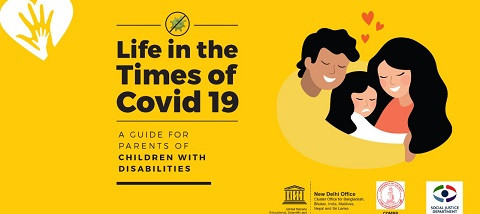 Another COVID-19 Front line: Parents of children with disabilities 2020-05-06 Parenting is never easy, but parenting during a pandemic poses entirely different challenges. The burden is especially unique for parents of children with disabilities, as they take over both roles, that of parents and caregivers. To ease and help parents cope with these challenges, UNESCO New Delhi and the UNESCO Chair in Community Management of Disabilities (University of Calicut) are proud to launch a booklet for parents and caregivers of children with disabilities, entitled Life in the Times of COVID-19: A Guide for Parents of Children with Disabilities. The guide explains and illustrates the different aspects that a parent/caregiver must take into account while taking care of children with disabilities. It also addresses the need to maintain the mental health of such parents/caregivers and their various duties and responsibilities, during these unusual times. The guide is action-oriented and would help serve all families with special needs in dealing with the extreme crisis of COVID-19. We would like to thank the University of Calicut and the Social Justice Department (Kerala) for their continuous efforts in creating an inclusive approach in raising awareness through the Community Disability Management and Rehabilitation Programme (CDMRP)-- Eric Falt, UNESCO New Delhi Director The radical changes and ensuing stress brought about by COVID-19 and the lockdown in the lives of people may also result in different sorts of difficulties among children with disabilities. Hence, their parents and caregivers must know how to manage and guide them during this pandemic-- Prof K. Manikandan, UNESCO Chair on Community Based Disability Management and Rehabilitation Studies Children with disabilities may have underlying health conditions that increase their risk of serious complications from COVID-19. In addition, with regular operations of schools and businesses coming to a halt, the inaccessibility to therapy and support for these children may exert effects that are long lasting and significant. As such, it becomes equally important to take care of their physical as well as mental health. UNESCO is committed to promote and ensure equitable access to quality education for all. Inclusive education comes out of a vision of the world based on equity, justice and fairness. In this regard, UNESCO New Delhi office launched, ‘N FOR NOSE - State of the Education Report for India 2019: Children with Disabilities’, in 2019. It aims to articulate a vision of education for children with disabilities for 2030 as set out in national and international policy documents and legislative frameworks and has been widely shared across the country. URL:https://en.unesco.org/news/another-covid-19-front-line-parents-children-disabilities
 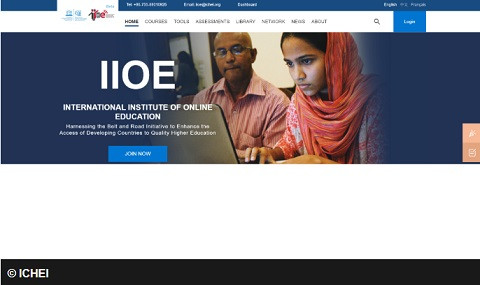 International Institute of Online Education co-launched online to support remote learning in developing countries 2020-05-05 On April 2, the International Institute of Online Education (IIOE) was co-launched online by the International Centre for Higher Education Innovation under the auspices of UNESCO (UNESCO-ICHEI), together with 11 higher education institutions (HEIs) partners in Africa and Asia-Pacific, and 4 HEIs and 8 high-tech enterprises in China. It was in response to UNESCO’s global call on supporting countries to mitigate the adverse impacts of school closures. The mission of IIOE is to harness the Belt and Road Initiative to enhance the access of developing countries to quality higher education. IIOE is a robust platform that allows teachers to gain most in-demand comprehensive skills, access quality cutting-edge courses and pragmatic web tools, witness self-improvement through the ICT-competency assessment, gain on-site training opportunities, co-create local digital learning resources database and much more.Please visit https://iioe.ichei.org/ for details. URL:http://en.unesco.kz/international-institute-of-online-education-co-launched-online-to-support-remote-learning
  In these Uncertain Times, the Importance of Investing in Learning and Education is Crystal Clear 2020-05-04 Digital leap, claustrophobia, insecurity, anxiety, anger, relaxation and freedom. Emotions and thoughts like these seem to revolve in people’s minds around the world right now. In order for individual actions to remain more permanent and guide us more systematically towards change that targets society as a whole, we also need policies and changes in structures. COVID-19 connects, whether we like it or not, people in different situations on an emotional level, both those in welfare state services and those living in a refugee camp. Each of us has had to adapt and learn something new in our own situation. We will need new skills. Corona leaves its mark on the world in some way anyway. UNESCO is currently gathering ideas on what kind of education and learning we will need in the future to make sustainable development a reality. The horizon is as high as 2050, but virtually every one of us needs these skills today. Last week, we organized an event in Finland for interested organizations and the following skills emerged: arousing curiosity, looking at what has been learned in a new light, growing to its full potential in dialogue with others, adaptive thinking, developing creativity and bringing about change together. The reflection highlighted the fact that we would have to learn to dream different utopias, not to give way to dystopias and negativity. Easy to say and a little harder to implement. However, new things need to be practiced in order for the skills to eventually accumulate - as well as future thinking. The learning of the new must be repeated so that skills also accumulate. Skills don’t necessarily have to always be about mastering a new digital tech. In the Bridge 47 network, we have also had discussions with colleagues around the world about the situation we now live in and the same things are emerging there as well. Many old means have risen to a new faith. Sending and receiving a postcard seems to be important. Surprisingly, parents who have become home teachers appreciate both the teachers and the material produced by the organizations and at the same time learn for themselves. On the other hand, learning something new can be learning out, for example, giving up something that is detrimental to a sustainable future. There are concerns about how the narrowing of public space now, in exceptional circumstances, may remain permanent or how those unfamiliar with the use of social media or computers will be marginalized. Joy is produced by individual innovations from concerts on balconies and a hundred year old grantparents of jogging. Some weeks ago, an ngo called Global Citizen, which has been hosting a massive concert event in Central Park for five years in New York during the UN General Assembly, produced a live concert led by Lady Gaga. Whether one concert event leaves a lasting change in the world remains to be seen, but at least it brought momentary joy to millions. The Finland Works campaign, supported by the Prime Minister's Office in Finland, seeks to support a somewhat similar positive change, inviting everyone to join in the communication to strengthen confidence in the management of one's own life, institutions and communities in the new situation. In order for individual actions to remain more permanent and guide us more systematically towards change that targets society as a whole, we also need policies and structural changes. The Finnish Ministry of Education and Culture has just drawn up guidelines to guide its own administration on a sustainable basis, playing its part in implementing Agenda2030. According to the Ministry, its special responsibility lies in social sustainability, such as strengthening civilization and human well-being. It means, for example, equal enjoyment of cultural rights, high-quality early childhood education, raising the level of skills and education, lifelong learning, access to information, cultural rights and well-being and inclusion. We also consider these issues to be important for the stakeholders involved in the preparation of the guidelines, and we want to continue to promote them together. The activities of the administrative branch of the Ministry promote cultural change, which is a prerequisite for change towards comprehensive sustainable development. This is a great start to promote internal coherence in the implementation of sustainable development. To go even further, we need to invest more in society through learning and education. You can use and refer to, for example, recommendations of the Envision 4.7 conference last November. The conference brought together 200 actors from around the world to create a common vision of how the European Union could better support active citizenship. You can find the Envision 4.7 Roadmap here. A sustainable future requires every individual to take a leap of sustainability, but at the same time to support national and international structures that support activity. Author: Rilli Lapalainen URL:https://www.bridge47.org/blog/04/2020/these-uncertain-times-importance-investing-learning-and-education-crystal-clear
 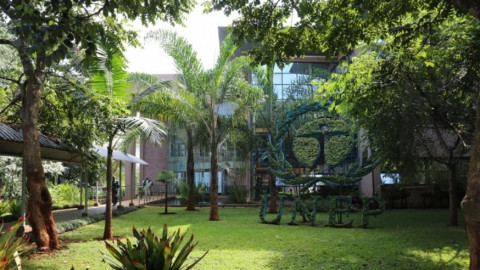 Global public tells the United Nations: Take action on climate change and the environment 2020-05-04 The United Nations is marking its 75th anniversary at a time of great upheaval, as COVID-19 continues to spread, exacting a heavy toll on lives, societies and economies in all regions of the world. In January 2020, the UN75 initiative launched a global conversation, inviting people around the world to discuss their priorities for the future, obstacles to achieving them, and the role of global cooperation in overcoming these challenges. As of March 2020, over 13 million people in nearly all UN Member States had taken part in the initiative, with more than 40,000 completing the one-minute survey, and more than 330 dialogues held in 87 countries. Respondents placed great emphasis on climate change and the environment, with protection of the environment one of the top three priorities. Climate and the environment were also identified as one of the top three global trends, and widely discussed in the dialogues. The vast majority of respondents agreed on the need for closer international cooperation to make progress in these and other areas. COVID-19 has revealed the vulnerability of global systems to protect the environment, health and economy. There is an increasing recognition of how multiple economic, social and institutional drivers exacerbate environment risks, impacting on human health and increasing the burden on health services. The United Nations Environment Programme (UNEP), as the authoritative voice on the environment within the UN system, is well placed to help its member countries rise to the challenge of delivering a better future. UNEP will celebrate its own anniversary in 2022, having been at the heart of the environmental movement since the Stockholm Conference in 1972. UNEP is also working with partners to implement the 2030 Sustainable Development Agenda, particularly in areas that have a direct link to the environment such as hazardous waste, governance, wildlife conservation, climate change and ecosystems. Find out what UNEP is doing to achieve the Goals. For instance, a key UNEP report is the annual Emissions Gap Report, the most recent issue of which says we must cut global emissions 7.6 per cent every year of the next decade if we are to limit temperature rise per the Paris Agreement to 1.5°C. A just-released international survey by Ipsos MORI Public opinion on the COVID-19 coronavirus pandemic says: “Seven in ten consider climate change as serious a crisis as COVID-19, and a similar proportion feel their government will be failing them if it doesn’t act on climate change now. Two thirds globally support a green economic recovery from the crisis.” Over the course of 2020, the UN75 team will gather public perspectives on global challenges and solutions on how to tackle them through a one-minute survey (in 53 languages) and dialogues – now the bulk of which will be online online – organized by partners across the world. Nature is in crisis, threatened by biodiversity and habitat loss, global heating and toxic pollution. Failure to act is failing humanity. Addressing the current coronavirus (COVID-19) pandemic and protecting ourselves against future global threats requires sound management of hazardous medical and chemical waste; strong and global stewardship of nature and biodiversity; and a clear commitment to “building back better”, creating green jobs and facilitating the transition to carbon neutral economies. Humanity depends on action now for a resilient and sustainable future. For more information, please contact Lisa Laskaridis lisa.laskaridis@un.org URL:https://www.unep.org/news-and-stories/story/global-public-tells-united-nations-take-action-climate-change-and
 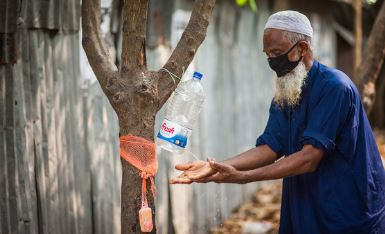 ‘Rights and dignity’ of older people must be respected during COVID-19 and beyond 2020-05-02 The COVID-19 fatality rate for people over 80-years-old, is five times the global average, the UN Secretary-General said on Friday, launching a new policy initiative to address this and many other challenges faced by the elderly, during and after the biggest public health crisis to hit the world in a century. “Our response to COVID-19 must respect the rights and dignity of older people”, Secretary-General António Guterres said launching the report. Against the backdrop of age discrimination, autonomy for older people, disparities in social protection and healthcare - as well as a lack of decision-making power - he maintained that for older persons, the crisis is “exacerbating existing human rights protection gaps and socio-economic challenges”. “We need to stand up now for older person’s rights”, the UN Independent Expert on the enjoyment of all human rights by older persons Rosa Kornfeld-Matte had said. “Pervasive gerontophobia, the fear of age-related self-degeneration and death, nurtures prejudice against older people, discrimination and ultimately the denial of human rights in older age”. It’s personal “As an older person myself, with responsibility for an even older mother, I am deeply concerned about the pandemic on a personal level, and about its effects on our communities and societies”, the UN chief shared. At the same time, he pointed out that older people contribute “immeasurably” to their families and communities – commonly sacrificing their own well-being to care for others, including helping with children and grandchildren: “Our COVID-19 response must be cognizant of all of these matters” and “must respect the rights and dignity of older people.” Addressing elderly needs “No person, young or old, is expendable”, underscored Mr. Guterres. The impact on health and long-term care services for older persons must recognize and confront the particular challenges they face, including their ability to access medical treatment and care. “Older people have the same rights to life and health as everyone else”, spelled out the UN chief. “Difficult decisions around life-saving medical care must respect the human rights and dignity of all”. And while physical distancing is crucial, he flagged the need to remember that “we are one community and we all belong to each other”. Digital technology must be improved to mitigate movement restrictions that can disrupt essential care, support and social inclusion for older persons. “That is vital to older people who may face great suffering and isolation under lockdowns and other restrictions”, maintained Mr. Guterres. Beyond the pandemic’s immediate health impact, it is putting older people at “greater risk of poverty, discrimination and isolation”, he said, most likely causing “a particularly devastating impact” on those in developing countries where public health care and social protection services will likely be overwhelmed by the virus. Moreover, all social, economic and humanitarian responses must take into consideration the needs of older people, particularly in terms of universal health coverage, pensions, jobs and social protection. “The majority of older people are women, who are more likely to enter this period of their lives in poverty and without access to healthcare”, explained the Secretary-General. “Policies must be targeted at meeting their needs”. Support the elderly’s response Older people must not be treated as invisible or powerless but recognized for their diverse experiences and the multiple ways in which they are contributing to overcoming this crisis. “Many older people depend on an income and are fully engaged in work, in family life, in teaching and learning, and in looking after others,” he argued. Their agency, participation and responses to the pandemic must be supported and their knowledge and good practices shared as part of the recovery. “Their voices and leadership count”, stressed the UN chief. Recovering better together “To get through this pandemic together, we need a surge in global and national solidarity and the contributions of all members of society, including older people” he asserted. This requires appropriate legislation at the national level, a push toward an international convention on the human rights of older persons at the global level, and sustainable investment in health, care and social protection systems that ensure the dignity and right of older persons. “As we look to recover better, we will need ambition and vision to build more inclusive, sustainable and age-friendly societies that are fit for the future”, concluded the Secretary-General. URL:https://news.un.org/en/story/2020/05/1063052
 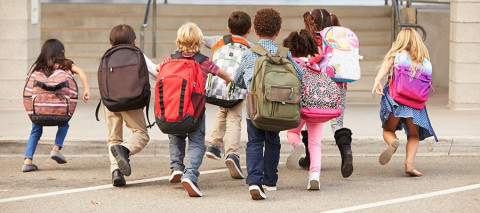 新指南为学校安全复课提供路线图 2020-05-02 UNESCO, UNICEF, WFP and World Bank today issued new guidelines on the safe reopening of schools amidst ongoing closures affecting nearly 1.3 billion students worldwide. The guidelines caution that the widespread closures of educational facilities in response to the COVID-19 pandemic present an unprecedented risk to children’s education and wellbeing, particularly for the most marginalized children who rely on school for their education, health, safety and nutrition. The guidelines offer practical advice for national and local authorities on how to keep children safe when they return to school. “While many students are falling behind in their learning journey because of prolonged school closures, the far from straightforward decision of when and how to reopen schools, should be a priority,” said UNESCO Director-General Audrey Azoulay. “Once there is a green light on the health front, a whole set of measures will need to be in place to ensure that no student is left behind. These guidelines provide all-round guidance for governments and partners to facilitate the reopening of schools for students, teachers and families. We share one goal, to protect and advance the right to education for every learner,” “Rising inequality, poor health outcomes, violence, child labour and child marriage are just some of the long-term threats for children who miss out on school,” said Henrietta Fore, UNICEF Executive Director. “We know the longer children stay out of school, the less likely they are to ever return. Unless we prioritize the reopening of schools – when it is safe to do so – we will likely see a devastating reversal in education gains.” The guidelines note that while there is not yet enough evidence to measure the impact of school closures on disease transmission rates, the adverse effects of school closures on children’s safety and learning are well documented. Gains made in increasing access to children’s education in recent decades risk being lost and, in the worse cases, reversed completely. “In the poorest countries, children often rely on schools for their only meal of the day. But with many schools now closed because of COVID, 370 million children are missing out on these nutritious meals which are a lifeline for poor families. They are also being denied the health support they normally get through school. This could do lasting damage, so when schools reopen it is critical that these meal programmes and health services are restored, which can also help to draw the most vulnerable children back to school,” said David Beasley, WFP Executive Director. The best interests of children and overall public health considerations – based on an assessment of the associated benefits and risks to education, public health and socio-economic factors – must be central to national and local authorities’ decisions to reopen schools, the guidelines say. Schools must look at how they can reopen better – with improved learning and more comprehensive support for children at the school including health, nutrition, psychosocial support and water, sanitation and hygiene facilities. As countries grapple with when to reopen schools, UNESCO, UNICEF and WFP – as part of the Global Education Coalition – urge governments to assess the benefits of classroom-based instruction compared to remote learning, and the risk factors related to reopening of schools, noting the inconclusive evidence around the infection risks related to school attendance. Jointly presented for the first time during a meeting of education ministers convened by UNESCO yesterday on planning for the reopening of schools, the guidance includes: Policy reform: Policy implications address all dimensions of the guidelines, including clear policies for school opening and closure during public health emergencies, reforms needed to expand equitable access for marginalised and out of school children as well as strengthen and standardize remote learning practices. Financing requirements: Address the impact of COVID-19 on education and invest in strengthening education systems for recovery and resilience. Safe operations: Ensure conditions that reduce disease transmission, safeguard essential services and supplies and promote healthy behaviour. This includes access to soap and clean water for safe handwashing, procedures on when staff or students feel unwell, protocols on social distancing and good hygiene practices. Compensating learning: Focus on practices that compensate for lost instructional time, strengthen pedagogy and build on hybrid learning models such as integrating approaches in remote and distance education. This must include knowledge on disease transmission and prevention. Wellness and protection: Expand the focus on students’ well-being and reinforce the protection of children through enhanced referral mechanisms and the provision of essential school-based services including healthcare and school feeding. Reaching the most marginalised: Adapt school opening policies and practices to expand access to marginalised groups such as previously out-of-school children, displaced and migrant children and minorities. Diversify critical communications and outreach by making them available in relevant languages and in accessible formats. "Once schools begin to reopen, the priority becomes reintegrating students into school settings safely and in ways that allow learning to pick up again, especially for those who suffered the biggest learning losses. This is a critical moment as it is the launching pad for a new normal that should be more effective and equitable. To manage reopenings, schools will need to be logistically prepared with the teaching workforce ready. And they will need to have plans specifically for supporting learning recovery of the most disadvantaged students. The guidelines offer a framework for moving forward that the major UN agencies are aligned around," said Jaime Saavedra, World Bank Global Director for Education. ***** Notes to editors About UNESCO: UNESCO is the United Nations Educational, Scientific and Cultural Organization. It seeks to build peace through international cooperation in Education, the Sciences and Culture. UNESCO's programmes contribute to the achievement of the Sustainable Development Goals defined in Agenda 2030, adopted by the UN General Assembly in 2015. About UNICEF: UNICEF works in some of the world’s toughest places, to reach the world’s most disadvantaged children. Across more than 190 countries and territories, we work for every child, everywhere, to build a better world for everyone. About World Food Programme: The United Nations World Food Programme is the world’s largest humanitarian organization, saving lives in emergencies, building prosperity and supporting a sustainable future for people recovering from conflict, disasters and the impact of climate change. For further information, please contact: Georgina Thompson, UNICEF, +1 917 238 1559, gthompson@unicef.org David Orr, WFP, +39 340 246 6831, David.orr@wfp.org George Papagiannis, UNESCO: Tel: +33 1 45 68 17 06, g.papagiannis@unesco.org URL:https://en.unesco.org/news/new-guidelines-provide-roadmap-safe-reopening-schools
 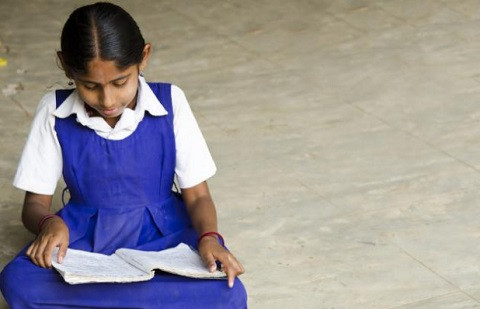 COVID-19 school closures: Why girls are more at risk 2020-05-01 Countries worldwide have closed schools at an unprecedented rate in an attempt to slow the spread of the COVID-19 pandemic. It is therefore easy to assume that learners will be safer or better off staying at home than mixing with others in the classroom. The reality, however, is that for millions of girls and young women, particularly those in the world’s least developed countries, school shutdowns bring other risks. Speaking at a recent UNESCO webinar, Suzanne Grant Lewis, IIEP Director, emphasized that ‘evidence shows that both education and gender are neglected in responses to disease outbreaks. We need to pay more attention to the gender dimensions of the coronavirus school closures.’ What are the gender dimensions of the closures? Domestic burdensIn many societies, women and girls take on the majority of unpaid domestic and childcare tasks, which will increase when schools and workplaces close and people are confined to their homes. This affects women, who make up the majority of the teaching force in many contexts, as well as girls, who are unable to continue their learning at a distance. Healthcare demandsWomen and girls form the majority of the healthcare workforce, whether paid or unpaid. They are therefore more exposed to the coronavirus, whether caring for others at home or in healthcare facilities. For instance, data show that in Spain and Italy respectively, 72% and 66% of infected healthcare workers are female. Domestic violenceThe health risks for girls who can no longer attend school are not limited to the virus itself. Without school – a place of safety as well as education – as a lifeline, home confinement means there is a heightened risk of domestic violence and sexual abuse. Data available so far indicate that domestic violence rates have increased in countries as varied as Argentina, France, and Singapore. Sexual and reproductive healthFollowing the Ebola crisis, Sierra Leone saw a huge rise in adolescent pregnancy, which, according to the children themselves, was directly linked to school closures. In some communities, pregnancy will be a permanent barrier to a girl returning to education even once the COVID-19 crisis ends. Moreover, during the crisis, maternity and reproductive resources and facilities are likely to be redirected to counter the pandemic, posing additional threats to the health and safety of adolescent girls and young women. What can be done to overcome these problems? With these issues in mind, and the knowledge that girls are less likely to return to school after a prolonged absence, education authorities must take steps to avoid a disastrous reversal of the recent progress made in girls’ and women’s learning. In her opening remarks, Ms Grant Lewis warned that COVID-19 will exacerbate gender inequalities. She urged communities to act quickly, suggesting a number of measures including: ensuring equitable representation of women and men in crisis-related decision-making and tapping into women’s’ expertise; producing gender-sensitive data relating to the crisis; using women’s networks at the community level to organize responses to the crisis; encouraging girls to continue learning during and after the crisis and to support their peers; encouraging men and women to share childcare and domestic work in the household and community; denouncing domestic violence as well as putting in place safe environments for female victims of abuse. Education planners should be aware of the particular threat that the coronavirus school closures pose to girls and women, and ensure that plans for learning continuity take this into account. The digital gender divide needs to be overcome if girls are to benefit from online distance learning solutions; studying schedules must be flexible where possible so that learning can take place around the domestic demands that are disproportionately made on girls and women; and targeted measures should be taken to ensure that as many female learners as possible return to schools when they reopen. ‘A universal issue’ No country can afford to ignore the gender dimensions of COVID-19 school closures. As Ms Grant Lewis said, ‘this is a universal issue. All countries must consider how this crisis might widen inequalities, and all countries need to take action to address them.’ The full impact of this crisis will not be known for some time, but it is crucial to make sure that girls do not miss out on their education and on their futures. URL:http://www.iiep.unesco.org/en/covid-19-school-closures-why-girls-are-more-risk-13406
 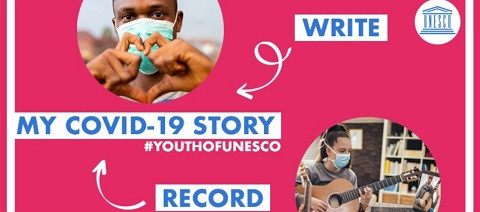 MY COVID-19 STORY: launch of a youth storytelling campaign 2020-04-30 Sharing is caring… and there is no better time to share inspiration, ideas, and stories than now! The MY COVID-19 STORY #YouthOfUNESCO campaign is a UNESCO initiative that gives the floor to young people to inspire the world during this challenging COVID-19 context. Many young people are day-in-day-out proving to be key actors when it comes to finding solutions to global problems – from the fight against discrimination and climate change, to gender equality and many other issues. Today, during this unprecedented health crisis, youth are once again on the front line, particularly when it comes to inventing new forms of solidarity. This storytelling initiative is part of UNESCO’s response to the COVID-19 pandemic. It is meant to put the spotlight on young people – how they feel, how they act, how they thrive during these challenging times. Over the past weeks, maybe months, young women and men have been taking action and developing many creative ideas to face these challenging times, whether by helping their community, finding innovative learning ways, keeping a positive spirit, taking care of their relatives and loved ones, and much more. My COVID-19 Story is an open invitation to all young people to share their stories by means of written testimonials or the recording of their own video. To amplify their voices further, UNESCO invites young people to share their stories through its social media channels, its website, its Field Offices and its networks all over the world. The written and video testimonies collected will also contribute to the "Youth as Researchers - COVID-19" project, which will collect and consolidate knowledge and data on, by and with young people around a series of key issues related to the COVID-19 crisis (e.g. inequality and discrimination). The project will examine the impact of the crisis on young people (especially young women - out of school or unemployed because of the crisis), and how they affect or trigger resilience. The project - developed in collaboration with UNESCO Chairs (National University of Galway (Ireland) and Penn State University (United States of America)) - will provide a basis for skills development and virtual mobilization of young people for the collection and analysis of data. Read more about the campaign URL:https://en.unesco.org/news/my-covid-19-story-launch-youth-storytelling-campaign
 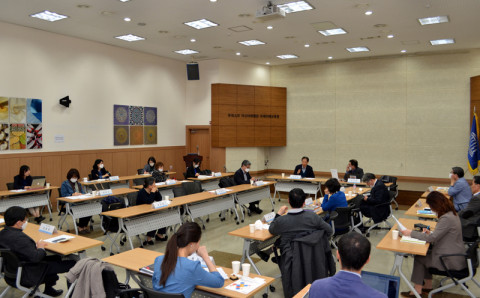 Global Citizenship Education and COVID-19 Pandemic held 2020-04-30 On 17 April 2020, APCEIU held a consultation meeting with the theme “Global Citizenship Education and COVID-19 Pandemic” within its premises. Representatives of relevant organizations, academia and civil society participated in this consultation meeting who shared their activities and plans to strengthen the promotion of GCED in the Republic of Korea and beyond, in response to the challenges in education imposed by the current pandemic. The participants discussed the importance of and challenges in promoting GCED in face of this unprecedented global crisis, the need for further investigation and discussion, and the need to have a sustainable platform to strategize and share information to develop on future direction. All participants agreed on the urgency of spreading GCED to prevent conflicts that may occur due to the crisis, as well as the need to explore synergies to maximize the impact of future actions to be taken. URL:Global Citizenship Education and COVID-19 Pandemic held > APCEIU News - APCEIU (unescoapceiu.org)
  UNESCO webinar supports media in the Eastern African region to deconstruct misinformation, hate speech, and racism during COVID-19 pandemic 2020-04-30 On 14 April 2020, UNESCO Regional Office for Eastern Africa organized an online conference for media stakeholders from the region to discuss their role in fighting misinformation, discrimination and hate speech linked to the COVID-19 pandemic as well as the opportunity for promoting cultural diversity and intercultural dialogue On 14 April 2020, UNESCO Regional Office for Eastern Africa organized an online conference for media stakeholders from the region to discuss their role in fighting misinformation, discrimination and hate speech linked to the COVID-19 pandemic as well as the opportunity for promoting cultural diversity and intercultural dialogue. During the current global COVID-19 pandemic, digital platforms have become vehicles for the unfettered spread of misinformation, hate speech, and enablers of racism and cultural division. As a result, journalists and other media professionals are facing increased difficulties in effectively reporting and covering the COVID-19 pandemic. The new dynamic and challenges posed by this pandemic, accompanied by the proliferation of “fake news” on digital media platforms, poses serious challenges to journalists and professional media organizations as well as to individuals, groups and communities receiving and reacting to this misinformation, hate speech, racism and cultural divide. UNESCO organized this webinar to allow media stakeholders in the region to identify challenges and opportunities to effectively reporting and covering the COVID-19 pandemic as well as to share available resources and help strengthen national and regional networks in line with the UNESCO Media Information Literacy (MIL) Programme and the UNESCO 2005 Convention on the Protection and Promotion of the Diversity of Cultural Expressions. UNESCO mobilized panelists from around the region who shared concrete case studies and examples demonstrating how to increase citizens’ Media Information Literacy (MIL) skills and promote cultural diversity through various media channels. Sixty (60) participants from the Eastern Africa region joined the webinar, which featured a Keynote Speech by Prof. Suraj Olunefesi, Senior Lecturer, University of Lagos, Nigeria. Sharing of Regional Experiences on “Misinformation, hate speech, and racism in media’s coverage and representation of the COVID-19 pandemic and presentations on country contexts” were presented by: Mr. Victor Bwire, Deputy CEO and Head of Programme, Media Council of Kenya (Kenya); Mr. Emmanuel Mugisha, Executive Director, Rwanda Media Council (Rwanda); Prof. Peter G. Mwesige, Ph.D., Executive Director, African Centre for Media Excellence (Uganda); and Mr. Oliver Modi Taligi, President, Union of Journalists of South Sudan (South Sudan). Perspectives on “Promoting Cultural diversity and intercultural dialogue during the COVID-19 pandemic” were shared by Ms. Joy Mboya, Executive Director, The GoDown Arts Centre (Kenya); Mr. Wani Francis Joseph (aka Yuppie Jay), Chief Executive Director and Founder of the Street Beats Foundation (South Sudan); and Mr. Jon Stever, CEO of i4Policy (Rwanda). Experiences on “Fact checking: Sorting, facts, myths, fake news, dodgy health advise, and fake ‘cures’ related to the COVID-19 pandemic” were shared by: Mr. Alphonse Shiundu, Country Editor, Africa Check (Kenya); Mr. Richard Kagoe, Senior Broadcast Journalist at BBC Africa (Kenya); and Mr. Eric Mugendi, Managing editor of PesaCheck East Africa (Kenya). Lastly, Ms. Sasha Rubel, UNESCO Programme Specialist in the Digital Innovation and Transformation, Communication and Information Sector, shared information on UNESCO Resources, Programmes and Activities linked to the COVID-19 pandemic response. Although some technical difficulties were experienced, the webinar empowered media to be agents of change for the dissemination of accurate information about the COVID-19, and increased awareness of issues, best practices and challenges related to misinformation, hate speech, and racism during the COVID-19 pandemic. Media have such an important role to play in not only fighting this disinformation but also in ‘bringing people together’ metaphorically during this time of confinement, by promoting our ‘unity in diversity’ through your reporting, Accurate, credible media coverage is crucial to stimulating informed public debate and educating the public about the global pandemic. It is fundamental and now urgent in the current climate of the COVID-19 pandemic for individuals to understand how, by improving their information, media, and technological knowledge, skills, and attitude as well as by broadening their appreciation of cultural diversity, they can more meaningfully engage in intercultural dialogue, peace building and sustainable development, while respecting human rights and promoting better governance -- Ms. Ann Therese Ndong-Jatta, Director of the UNESCO Regional Office for Eastern Africa Prior to this pandemic, the UNESCO Regional Office has been working with media on national levels to strengthen capacities for media diversity and cultural pluralism. Through this webinar, UNESCO aims to strengthen cooperation with governments, journalists, media regulatory bodies, media organizations, and non-state actors in the Eastern Africa region. Following this regional webinar, UNESCO will continue to work with media stakeholders on national levels for follow-up actions in the region. URL:https://en.unesco.org/news/unesco-webinar-supports-media-eastern-african-region-deconstruct-misinformation-hate-speech-and