
News
Catch up on what’s happening in the world of global citizenship education.
1,668 results found
 New UNESCO study highlights achievements and gaps in the area of climate change education 2019-12-10 As United Nations leaders and delegates from around the world meet in Madrid for COP25 – the UN two-week conference on climate change, UNESCO is releasing a new analysis of country submissions on climate change education, training and public awareness. Climate change is the defining challenge of our time and education plays a critical role in designing appropriate responses to it. Since its entry into force, the 1992 United Nations Framework Convention on Climate Change (UNFCCC) in Article 6 has recognized the importance of ‘education, training and public awareness’ in mitigating ‘dangerous human interference with the climate system’. The Paris Agreement, in its article 12, reaffirmed this recognition in 2015. Countries are expected to submit national reports to the UNFCCC on a regular basis on the actions they have already taken to address climate change and the commitments they plan for the future. Analyzing these submissions, UNESCO provides a timely status report on the implementation of climate change education around the world, highlighting achievements and remaining gaps. The research recalls that almost all countries included some reference to climate change education in their country submissions under the UNFCCC reporting processes. This demonstrates a certain level of commitment to climate change education, providing a good basis to further scale up educational responses to the world’s greatest challenge. According to the submissions analyzed, countries mostly reference climate change education in relation to public awareness, suggesting that it will be necessary for them to expand their activities and address more systematically the other elements of climate change education, especially formal education and training. Submissions also indicate that, at all levels of formal education, countries have heavily emphasized cognitive learning over social-emotional and behavioral learning, which are crucial tools to empower learners and make change happen. The data also show that countries are slow to address climate change education when preparing their Nationally Determined Contributions under the Paris Agreement. This indicates a need for more technical support for countries on climate change education in preparing these reports which play an important role in setting targets and committing to take action against climate change. Ultimately, UNESCO’s study stresses the need for further research, in order to get a more comprehensive picture of country implementation of climate change education under the UNFCCC process. Among other things, future research should examine the process countries go through in formulating and implementing their national adaptation plans, adaptation communications and long-term climate strategies. Download the study: Country progress on Climate Change Education, Training and Public Awareness Learn more about the study and Climate Change Education at COP25: Attend one of UNESCO’s events URL:https://en.unesco.org/news/new-unesco-study-highlights-achievements-and-gaps-area-climate-change-education
 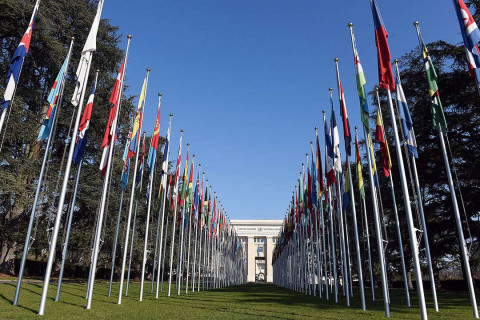 UNECE Launches Regional Resources on SDG Statistics 2019-12-10 Story Highlights The Knowledge Hub provides producers of national official statistics and other statistical experts with a set of guidelines and tools. UNECE plans to launch a database on SDG indicators, presented through an interactive dashboard, in March 2020. The UN Economic Commission for Europe (UNECE) has launched a Knowledge Hub on Statistics for SDGs to help countries develop and communicate statistics on the SDGs, and formulate and evaluate evidence-driven policies. The Knowledge Hub is the first part of the UNECE Regional Platform on Statistics for the SDGs. SDG 17 (partnerships for the Goals) recognizes the essential role of data and statistics in achieving the SDGs. SDG target 17.18 calls for increased availability and quality of data, and SDG target 17.19 recommends statistical capacity building for improved measurement of progress. In line with these targets, UNECE’s Knowledge Hub, launched on 3 December 2019, seeks to contribute to coordination and promotion of statistically sound methodology. The Hub is also a direct response to a declaration adopted by European chief statisticians at a conference in 2015. The ‘Declaration on the role of national statistical offices in measuring and monitoring the Sustainable Development Goals,’ adopted by the Conference of European Statisticians (CES), calls on national governments to support national statistical offices (NSOs) in measuring and monitoring the SDGs, underscores the importance of high-quality statistics in informed decision-making, and acknowledges the importance of sharing experience and learning from each other to monitor and report on the SDGs. The Knowledge Hub provides producers of national official statistics and other statistical experts with a set of guidelines and tools, including a practical guide to developing national reporting platforms and tools for countries to conduct self-assessments of their data and indicator availability. The Knowledge Hub also compiles summaries of progress in producing SDG indicators across UNECE countries, and shares work on national reporting platforms, statistical capacity development and data flows. The platform highlights global, regional and national events and initiatives. Countries also can use the Hub to share technical materials. For instance, Ireland has shared its code and shapefiles for combining geospatial and statistical data. In addition to the Knowledge Hub, the UNECE Regional Platform on Statistics for the SDGs will include a database on SDG indicators, presented through an interactive dashboard. UNECE anticipates launching the dashboard in March 2020, in advance of the UNECE Regional Forum on Sustainable Development (RFSD). [UNECE Press Release] [Knowledge Hub on Statistics for SDGs] [Publication: Declaration on the role of national statistical offices in measuring and monitoring the SDGs] URL:http://sdg.iisd.org/news/unece-launches-regional-resources-on-sdg-statistics/
 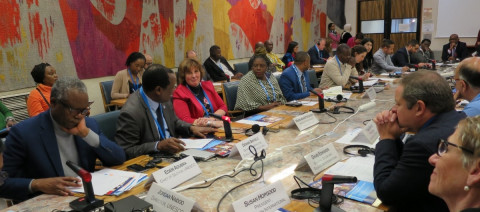 40th UNESCO General Conference: Teachers and educators at the core of achieving SDG 4 2019-12-10 Education International and its member organisations have been active at UNESCO’s 40th General Conference, where teachers and educators were high on the agenda. The UNESCO general conference, taking place from 12-27 November, has been debating the future of multilateralism in today’s rapidly changing world. At the Education Commission, UNESCO member states have made multiple important decisions that will push forward progress towards achieving quality education for all. Key resolutions adopted so far include: a convention on the recognition of higher education qualifications, a resolution on coordination and progress on Sustainable Development Goal (SDG) 4, a new framework on Education for Sustainable Development, a strategy for literacy, as well as a recommendation on open educational resources. The General Conference also took a decision to develop a new UNESCO standard-setting instrument on the ethics of artificial intelligence. Giving an overview of UNESCO’s programme to achieve SDG 4, Assistant Director-General for Education, Stefania Giannini, highlighted four key trends that are impacting and transforming education: demographics, climate change, migration, and technology. She outlined how UNESCO’s work aimed to bring about strengthened social cohesion in the context of these trends. UNESCO, she said, would fast track initiatives on inclusion and innovation, continue to provide leadership on SDG 4, invest in foresight and research, and support system strengthening at the country level. Gender would be a cross-cutting focus, whilst Africa would be prioritised and the budget allocated to the region would be doubled. There was strong support for UNESCO as the coordinating agency for SDG 4 but many delegates also called on the institution to strengthen its leadership role as other actors and initiatives have emerged in recent years. Giannini assured the General Conference that UNESCO would be more accountable, more understandable, and more visible in the education sector. However, she also called on member states to do their part, emphasising that governments had a responsibility to make SDG 4 a reality through strong political will and increased investment in education. Notably, after years of intensive advocacy work from Education International, teachers were repeatedly framed as crucial actors for quality education throughout the Education Commission. Gianni remarked that ministers’ interventions during the week showed that there is a common understanding that teachers are at the core of achieving SDG 4: “Without highly qualified, well trained teachers, everything else is pure literature.” Education unions representatives were active in the debates, ensuring that teachers and education support personnel’s views were voiced. Speaking at a ministerial meeting on enhancing inclusion and mobility in higher education, Haldis Holst, EI Deputy General Secretary, stressed that for higher education to truly be inclusive it cannot become a market-place under the guise of increasing mobility. Furthermore, inclusion and mobility of higher education staff must be considered alongside that of students. Jean Portugais, FQPPU President, Canada, also spoke on the topic, pointing out that the quality assurance component of the Global Convention must not be used to undermine academic freedom and professional autonomy, as is currently the case in many universities Speaking on UNESCO’s work on SDG 4, EI Senior Coordinator, Dennis Sinyolo, stressed that at the current pace, SDG 4 will not be achieved by 2030 as countries are not investing enough in education, there is a shortage of qualified teachers and too many marginalised children are denied access to education. Governments need to dramatically step up their investments in education, invest in teachers and work together with their unions, and ensure that no-one is left behind. EI and UNESCO launch the first Global Framework of Professional Teaching Standards The Framework was launched at the UNESCO General Conference on 16 November, in the presence of education ministers, EI member organisations and policy experts. Developed in close collaboration with UNESCO, the Framework is the result of a participatory process that responds to the wish and the right of educators to be at the table when education policy decisions are made. In front of a packed room, Susan Hopgood, EI president, took the floor to present the new instrument and underlined that teaching standards – when developed and controlled by the teaching profession – can play an important role in improving teaching and learning globally. “We encourage teacher unions and governments to use this framework to strengthen their national professional teaching standards, teaching and learning practices in order to ensure equitable, inclusive, free, quality education for all”, urged Hopgood. UNESCO Assistant Director General for Education, Stefania Giannini, added that “professional teaching standards designed with the aim to define what quality teaching means for delivering quality education are a powerful instrument in the hands of educators. Their development is one of the critical steps in order to increase the supply of qualified and trained teachers necessary to ensure quality education for all children and adolescents by 2030.” Recommendation on Open Educational Resources In a very welcome move, on 19 November, the UNESCO General Conference adopted the Recommendation on Open Educational Resources which paves the way towards increased access to teaching materials: an essential part of the right to education, SDG 4, as well as UNESCO’s 2030 Framework for Action. The recommendation also enables teachers to exercise their academic freedom and professional autonomy (UNESCO/ILO Conventions on the status of teachers/researchers) in choosing and adapting materials for teaching and learning. Throughout its involvement in the development of the recommendation, EI worked to ensure that several key elements were included in the instrument: consulting teachers and their unions in the development and use of Open Educational Resources (OER); provisions for continuous professional development; quality assurance (i.e. sensitive to local needs, gender issues, disability sensitive, indigenous knowledge etc.); allocation of adequate public funding; privacy and data protection for students and teachers working with OER platforms and services; adequate copyright exceptions to create quality OER, including the consideration to develop an international instrument on the topic. As an official UNESCO instrument, the recommendation will provide national governments with advice on OER policies and practices and will ask countries to report on their efforts and progress. The recommendation will also be a valuable tool to ensure more sustainable and affordable access to openly licensed textbooks and will help to challenge traditional commercially driven publishing markets for education. Beyond the Conference Over this marathon conference, hundreds of ministers will have reported on the good policies they have implemented and hundreds will have expressed their good intentions to make further progress. We call on all governments to keep the promises and pledges made during the conference in the years to come. After all, with increased investment, strong political will and adequate cooperation, achieving SDG 4 is still possible. URL:https://ei-ie.org/en/detail/16559/40th-unesco-general-conference-teachers-and-educators-at-the-core-of-achieving-sdg-4
 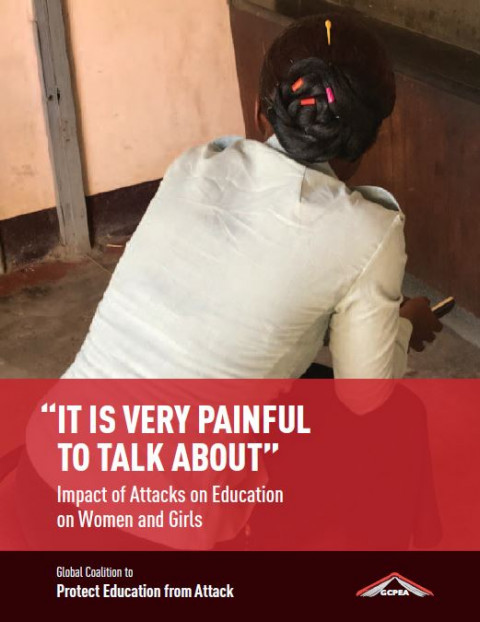 Girls Targeted When Schools Attacked, Impacting Lives, Education: Endorse and Use Safe Schools Declaration to Eliminate Violence Against Women 2019-12-06 (New York, November 25, 2019) – In conflicts around the world, female students and educators suffer horrific acts of violence within their schools and universities, including rape, forced marriage, and sexual slavery, said the Global Coalition to Protect Education from Attack (GCPEA) in a report released on the United Nations International Day for the Elimination of Violence against Women. Attacks on education have a devastating impact on all students and teachers, but they can have particularly debilitating long-term consequences for girls and women, including early pregnancy, stigma associated with sexual violence and children born from rape, and lost education. The 74-page report, “It is Very Painful to Talk About”: The Impact of Attacks on Education on Women and Girls, is based on extensive GCPEA research, including the Education Under Attack series, and field research in Nigeria and the Democratic Republic of Congo. The report also draws from interviews with country and regional experts and a review of secondary data sources. “The impact of attacks on girls and women in education is profoundly injurious and long-lasting, and can dramatically affect their future prospects, as well as the futures of their communities and countries,” said Diya Nijhowne, GCPEA’s Executive Director. “Governments have an obligation to make schools safe and to protect female students and teachers from the recruitment, abduction, and sexual violence they suffer far too often.” GCPEA found that some armed groups warn girls not to go to school, demand that teachers and parents close girls’ schools, or try to restrict the way female students and teachers dress. When girls continue to pursue their education, armed groups have responded with violence, damaging or destroying school structures and educational materials. Armed parties commit sexual violence during attacks on schools or while students are fleeing an attack, as well as when girls are walking to and from school. In other cases, armed groups abducted female students and teachers from their schools, and some were then raped and abandoned or forcibly “married” to one or more fighters. Some reported being held for extended periods of time for purposes of sexual slavery. Non-state armed groups sometimes forcibly recruit girls and women from schools to support their military operations, including by cooking, cleaning, and carrying supplies. In some cases, girls are used in direct combat or as suicide bombers. GCPEA found that armed parties often use education facilities for military purposes, exposing students and teachers to the risk of retaliatory attacks. The presence of armed parties in or near schools presents particular dangers for females, including a heightened risk of sexual violence. Both government security forces and non-state armed groups have used schools for military purposes, including as detention areas, and have held and raped women and girls in the schools. “It is very painful to talk about. I had three different husbands…. Even now, I cannot forget the smell, the odor, the horror of them coming to rape me. If you tried to resist – to say no – they would just put a gun to your head and threaten to shoot you. And then they would rape you anyway. It was sexual slavery.” --Sadiya S., a young teacher abducted from her school in Damasak, Nigeria and held for three years by Boko Haram [1] Girls and young women often continue to experience a wide range of harmful repercussions long after the immediate attack. One of the most devastating is the loss of education. The long-term consequences of attacks on education create almost insurmountable obstacles for girls to return to school or enjoy the benefits of an education. During insecurity, parents often pull their children out of school as a precautionary measure. Parents tend to be particularly concerned about the risk of sexual violence for their daughters and are more likely to keep them home. The suffering of women and girls who have experienced abduction, forcible recruitment, sexual violence and a range of other abuse during attacks on education, is often compounded by the social exclusion they endure as victims of sexual violence, as well as their perceived association with militia groups. Ridicule and rejection by family and friends is particularly painful; stigma often prevents survivors from returning to school or seeking medical and psychosocial care. Being out of school, even for relatively short periods, increases the risk of early and forced marriage for girls. Once married, girls often find it difficult to return to school because of household responsibilities, opposition from their husbands, or early pregnancy, with its accompanying host of health risks. Girls and women have the right to education without fear of abduction, recruitment, or sexual violence. Governments can reduce harm to students and educators by endorsing and implementing the Safe Schools Declaration, an intergovernmental political commitment to protect education from attack and education institutions from military use. The Declaration has been endorsed by 100 states to date, over half of all United Nations member states. GCPEA offers guidance on how to implement the Declaration in a way that takes into account the specific needs and experiences of women and girls. “The extreme violence suffered by female students and teachers in armed conflict underscores the urgent need for governments to adopt a no-tolerance approach to attacks on education and ensure accountability for abuses committed against girls and women,” said Nijhowne. “The Safe Schools Declaration is an effective tool for protecting education and eliminating violence against women in armed conflict. All governments should endorse and use it.” [1] GCPEA interview, Maiduguri, Nigeria, February 11, 2018 Click here for the source article » URL:http://www.protectingeducation.org/news/girls-targeted-when-schools-attacked-impacting-lives-education
 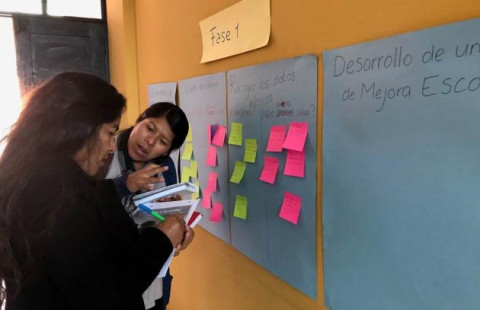 New book puts the spotlight on open school data in Latin America 2019-12-06 The latest IIEP book in our global exploration of open school data to combat corruption in education is now out, with an in-depth look at initiatives from across Latin America. Readers are presented with a regional snapshot of how ministries of education and other school actors are embracing information as a means for greater transparency and accountability. A survey of 15 countries in the region identified over 80 school report cards, of which some 70 percent are available online. The book by Alejandra Brito (available in Spanish), Información y transparencia: cuadros de indicadores de las escuelas en América Latina, then delves into seven of these initiatives in greater depth: Mejora tu Escuela (Mexico), Ficha Escolar (Guatemala), Sistema de Análisis de Indicadores Educativos y Alerta Temprana (Dominican Republic), Índice Sintético de Calidad Educativa (Colombia), Semáforo Escuela (Peru), EDU-Q Card (Peru), Reportes de escuela in Jujuy (Argentina). The book concludes with recommendations on how to maximize the power of open school data in Latin America. These include: Prioritise the data that are of greater interest to parents, i.e.: financial resources, school infrastructure and equipment, and academic standards; Involve communities in the data collection process; Present data in a format that is accessible, simple, and easy-to-understand; Share data at an appropriate time and when users can take action; Set clear consequences for complying or not complying with expected performance, and for corrupt behaviours; Make communities aware of education performance standards, their right to participate and give their opinion, as well as channels to raise complaints against corruption. IIEP’s research on open school data will soon culminate with a synthesis publication on key findings from Asia and the Pacific, sub-Saharan Africa, and Latin America. If you would like to receive further information, please fill out this form. URL:http://www.iiep.unesco.org/en/new-book-puts-spotlight-open-school-data-latin-america-9166
 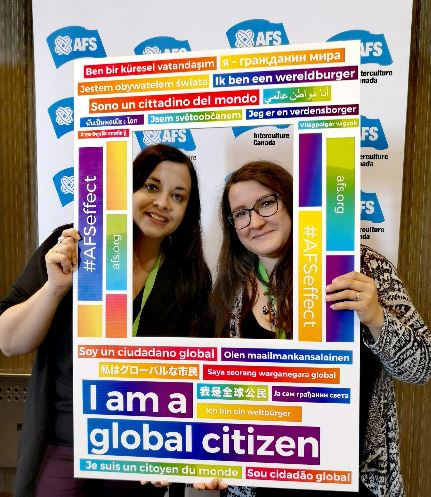 Bridge 47 brings Target 4.7 to the Americas at AFS Global Conference in Montreal 2019-12-05 Bridge 47 held an interactive workshop on strategies to advance Global Citizenship Education (GCE) as part of this year’s AFS Global Conference in Montreal, Canada. (Partnerships team members Maeve Galvin and Patricija Virtic at the 2019 AFS conference) Partnerships team members; Maeve Galvin, Agne Kuimet and Patricija Virtic led the workshop which was at full capacity. The session showcased all four outcomes of the Bridge 47 project; how to build effective networks, advocate for better policies that reflect the role of GCE, develop partnerships with diverse stakeholders and implement innovative techniques for GCE. A workshop highlight was when participants were engaged in an experiential role-play where they were given personas of various stakeholders and asked to develop uncomfortable partnerships. “We had a great response to our workshop and participants stayed in the room for about 45 minutes afterwards speaking to us about ideas on how to work together,” said Maeve Galvin, Partnerships Coordinator, Bridge 47. “It was wonderful to see how strong the appetite is for Global Citizenship Education and our ideas on how to achieve SDG target 4.7 among Canadian and United States organisations, most of whom we were meeting for the first time. We made good connections with educators, technology companies and other civil society that we are hopeful will lead to some impactful work.” Five hundred participants from more than one hundred organisations participated in this year’s AFS Global Conference bringing together government representatives, education practitioners, NGOs and private sector. The conference theme was Active Global Citizenship and how to educate for it. AFS, an intercultural learning organization which began as the American Ambulance Field Service, a volunteer ambulance corps created in April 1915 convenes this annual event to stimulate collaboration and cooperation among leaders in education, NGOs, business and government committed to make this learning available to young people and empowering them to become active changemakers in their community and the world. To find out more please visit:https://conference.afs.org/ URL:https://www.bridge47.org/news/10/2019/bridge-47-brings-target-47-americas-afs-global-conference-montreal
 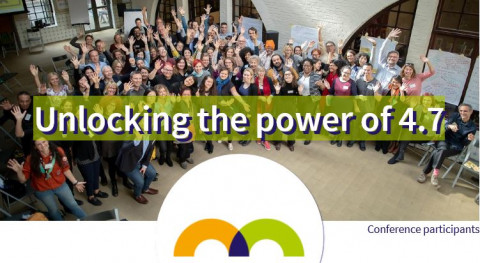 Unlocking the power of 4.7 2019-12-05 On 3 October, 100 civil society representatives gathered in Brussels to discuss the role of Global Citizenship Education in achieving sustainable development. This was the first of several international conferences organised by Bridge 47 – Building Global Citizenship. The conference brought together representatives of different types of value-based education to learn from each other, get inspired and find new strategies for promoting Global Citizenship Education together. Maya Menezes from the Leap Manifesto shared an inspiring story of the power of working together from Canada. “To change everything, you need everybody”, she stressed, while encouraging the participants to look beyond their traditional allies. “If we are all agreeing with each other all the time, then maybe the right people are not in the room.” In order to make sustainable development a reality, we need decision-makers to recognize the crucial role of Global Citizenship Education. The participants of the conference recognized several key components in bringing decision makers on board. As civil society, we should build coalitions, create change from the bottom up, embrace discomfort and uncertainty, understand the needs of different stakeholders, see decision-makers as people, not positions, have clear messages and stories, and be persistent. Four participants – Sandy Morrison (ICAE), Claudia Cassoma (CIVICUS), Loizos Loukaidis (Association for Historical Dialogue and Research, Cyprus) and Shirley Walters (ICAE) shared their stories during the day. Sandy Morrison stressed the importance and value of traditional knowledge systems. Claudia Cassoma reminded the participants that we are all pieces of a larger puzzle. Loizos Loukaidis pointed out that if we do not teach children peace, someone else will teach them war. Shirley Walters reminded the participants of the importance of working together and to dream and imagine an alternative system. Several participants volunteered to host workshops. The workshops touched upon topics such as embracing and learning from failure, how to measure target 4.7. of the Sustainable Development Goals, the role of Adult Learning and Education in achieving sustainable development, how to avoid common problems in Global Citizenship Education through the use of the HEADS UP -tool, what resilience as learning could mean and how Global Citizenship Education can promote social civic movements. After a day full of insight and inspiration, Rilli Lappalainen, Bridge 47 Steering Group chair, and Taina Riski, Project Manager, closed the day – “Global Citizenship Education is a language. We may speak different dialects, but we all understand each other.” See pictures from the conference URL:https://www.bridge47.org/news/10/2018/unlocking-power-47
 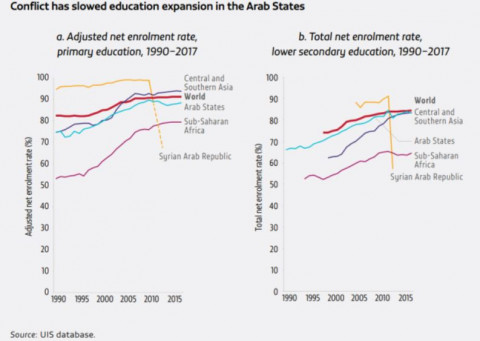 Leveraging technology to tackle the migrant education crisis in the Arab States 2019-12-05 Samia was 10 when she left her home for the first time and became a refugee. She was just about to enter 5th grade. Forcefully displaced from her home country, she was unable to pursue her right to an education. Moving from one location to the next, caregivers and teachers at makeshift schools were unable to provide her with the needed resources and support to continue learning. More than 5 years later, Samia is 15 years old and yet to be provided with regular access to formal education. Samia is just one of millions of refugee children around the world. Today, no part of the world is affected by migration and displacement more than the Arab States. Globally, out of every three displaced people, globally one is from the region. As the Arab States 2019 GEM Report released last week shows, this stark reality has had a tangible impact on the performance of regional education systems – especially when it comes to basic indicators such as enrollment. Over the past thirty years, states across the region invested heavily in providing access to primary and secondary education (admittedly sometimes at the risk of quality provision). But many of the gains in enrollment have now been reversed – partly due to the refugee crisis. Unless regional and state actors come together with dedicated and innovative efforts the region risks losing out on all its previous investments in education – and most importantly resulting in a “lost generation”. Our team at Edraak, an Arabic platform for open online education launched by the Queen Rania Foundation, is bringing international and regional entities together to explore how we can play a larger role in providing access to education for refugees and host communities. While initially, we launched the platform with a focus on higher education reaching almost 3 million learners, with the support from key partners like Google.org and the Jack Ma Foundation, we expanded into the K-12 space in 2017. Starting with teaching the foundational skills of mathematics and English language, today Edraak supports over 300,000 K-12 learners with the three functional uses: structured sequential learning material along predefined paths aligned with national curricula; student-centered inquiry-based learning that allows users to search for concepts or skills; and finally a mixture of the first two focused on remedial education. In early 2020, the platform aims to provide refugee and host community learners with access to free English placement tests that will place them into customized pathways towards mastering English – a key skill for the modern economy. Our experience at Edraak has shown us that technology is no silver bullet but that it can nevertheless provide a necessary part of any global response to the ongoing challenge of educating both host and migrant populations. The scalability, speed, mobility and portability of technology-enhanced solutions promise powerful elements desirable in any education system. However, as it has been documented widely, there are large risks to working with education technology – especially if we forget to put education before the technology (even in well-resourced contexts). There are four key principles that must govern the leveraging of technology in similar situations. Solve a defined problem first Technology provides scalability and portability. Yet that is not necessarily always the right remedy to the existing problem. Technologists, entrepreneurs and policy makers must first ensure they have a full understanding of the existing problem, and a solution that remedies or tackles that challenge. Scaling a program in a language that beneficiaries don’t understand (apparently not as uncommon as you’d expect – despite all the good intentions) can do more harm than good. Be mindful of access As we’ve argued before at Queen Rania Foundation, the ubiquity of Internet connectivity has led to in some cases a dangerous and uncritical approach to how well-minded technologist and donors develop solutions to the refugee crisis. Technical solutions such as online learning platforms aren’t always the most convenient or desirable for refugee students – although of course they can be made to work. In Jordan, for example, Internet-based solutions work best for refugees outside the camps, where access to technological devices and Internet service is more likely, and are more effective when optimized for mobile phones. Building on this finding, we’ve worked with local telecom operators to provide internet access at zero cost to learners in Jordan (and are hoping to get other national carriers across the region to follow suit). However, we know that is not enough. Notably, our research shows that the majority of refugee learners strongly prefer a blended learning approach that includes face-to-face interactions with their instructors. As a rule of thumb, it’s important that actors do not equate access to social media platforms such as WhatsApp or Facebook with the ability to learn online. The word “connected” must take on a more thoughtful definition – particularly one that considers refugees’ preferences and abilities. Make migrant-friendly credentials Thirdly, it is painfully obvious that when you are fleeing your home, packing your learning certificates is not (and should not) be a consideration – a point the Arab States 2019 GEM Report highlights. Nevertheless, countless refugees around the world are unable to access and continue education or benefit fully from technology solutions because they lack the appropriate educational credentials. Storing student progress on educational platforms like Edraak and others is a step in the right direction – but not enough. Thankfully, there are several ongoing efforts – not least of which by the MIT Media Lab – to leverage different technologies to create portable and secure digital academic credentials. Make Arabic content, make it free and make it useful Lastly, there is a general consensus about the disproportionate lack of Arabic content online – most estimates put it less than 1%. In light of the overwhelming number of displaced migrants coming from the Arab States, investing in the creation and curation of high quality Arabic content is an imperative. Recent research shows that refugees become more dependent on the internet as things around them change drastically in the real world. It is important that technologists and other actors create relevant Arabic educational and license it openly when possible. Finally, when creating content particularly for the K-12 level it is important to align it as closely as possible with national curricula and provide the needed scaffolding to ensure teachers know how to leverage it – within their demanding and busy schedules. Obviously (and painstakingly so), following these principles alone will not necessarily guarantee success in attempting to respond to the largest humanitarian crisis in our lifetimes. It is a long and difficult road ahead but we have no other choice but to dedicate all needed resources to avert a lost-generation – especially making sure that technology plays its part. URL:https://gemreportunesco.wordpress.com/2019/11/25/leveraging-technology-to-tackle-the-migrant-education-crisis-in-the-arab-states/
 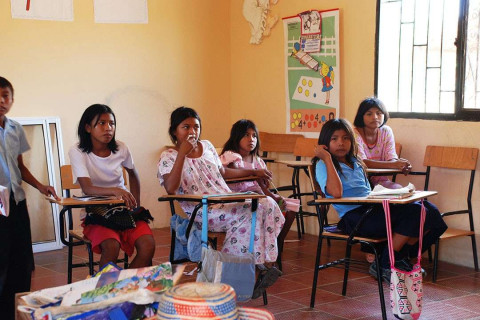 World Bank Launches Learning Poverty Target in Support of SDGs 2019-12-05 Story Highlights The newly-launched learning indicator brings together schooling and learning indicators: it begins with the share of children who have not achieved minimum reading proficiency as measured in schools, and is adjusted by the proportion of children who are out of school and are assumed not able to read proficiently. The World Bank will help countries reach the Learning Poverty Target by providing a literacy policy package, a “refreshed” education approach to strengthen entire education systems, and an “ambitious” measurement and research agenda The World Bank has adopted a Learning Poverty Target that aims to cut the global rate of learning poverty by at least 50% by 2030, with “learning poverty” defined as the percentage of ten-year-olds who cannot read and understand a simple story. The World Bank’s estimates show that 53% of children in low- and middle-income countries and 80% of children in poor countries cannot read and understand a simple story by the end of primary school. This represents “the leading edge of a learning crisis that threatens countries’ efforts to build human capital and achieve the SDGs,” the Word Bank notes. Even though several developing countries such as Kenya, Egypt and Viet Nam are showing that accelerated progress is possible, in many other countries the current pace of improvement is still “worryingly slow,” the World Bank says. It warns that even if countries reduce their learning poverty at the fastest rates seen over the past 20 years, the goal of ending it will not be reached by 2030. The World Bank explains that, as a major contributor to human capital deficits, the learning crisis undermines sustainable growth and poverty reduction, and poor education outcomes have major costs for future prosperity as human capital is the most important component of wealth. The new Learning Target aligns with the Human Capital Project’s efforts to build political commitment for accelerating investment in people, emphasizing that much of the variation in the Human Capital Index – which is used to track countries’ progress in health, education, and survival – is due to differences in educational outcomes. The new concept of Learning Poverty draws on new data developed in coordination with the UN Educational, Scientific and Cultural Organization (UNESCO) Institute for Statistics. The indicator brings together schooling and learning indicators: it begins with the share of children who have not achieved minimum reading proficiency as measured in schools, and is adjusted by the proportion of children who are out of school and are assumed not able to read proficiently. To help countries reach the Learning Poverty Target, the World Bank will use three pillars of work: A literacy policy package consisting of country interventions that have proven to be effective in promoting reading proficiency at scale such as: ensuring political and technical commitment to literacy grounded in adequately funded plans; ensuring effective teaching for literacy through tightly structured and effective pedagogy; preparing teachers to teach at the right level; ensuring access texts and readers to all; and teaching children in their home language; A “refreshed” education approach to strengthen entire education systems, comprised of five pillars: prepared and motivated learners; effective and valued teachers; classrooms equipped for learning; safe and inclusive schools; and a well-managed education system; and An “ambitious” measurement and research agenda, to include measurement of both learning outcomes and their drivers, as well as continued action-oriented research and innovation. The World Bank notes that open-source digital infrastructure and information systems will be used to ensure that resources reach all teachers, students and schools. Furthermore, the partnership between the World Bank and the UNESCO Institute for Statistics will seek to help countries strengthen their learning assessment systems and improve the breadth and quality of country data on learning to better monitor performance over time and in internationally comparable ways. The World Bank’s new Learning Assessment Platform will also support countries in evaluating student learning. To accompany the launch of the Learning Poverty Target, the World Bank published Country Learning Poverty Briefs assessing learning poverty and its accompanying indicators in more than 100 countries, based on the latest available data on learning poverty. [World Bank Brief on Learning Poverty] [World Bank Press Release on Learning Poverty Target] URL:http://sdg.iisd.org/news/world-bank-launches-learning-poverty-target-in-support-of-sdgs/
 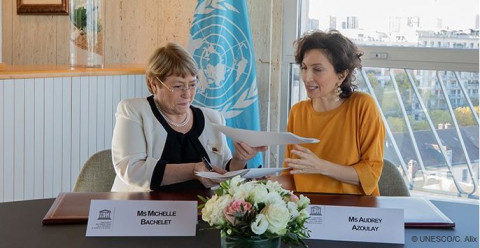 UNESCO and OHCHR strengthen cooperation to advance human rights 2019-12-04 A fast changing world requires quick, but meaningful responses to challenges that can tear at the fabric of our communities. In order to ensure that human rights are respected and protected, UNESCO Director General Audrey Azoulay and Michelle Bachelet, UN High Commissioner for Human Rights, today signed a new memorandum of understanding to promote joint action for advancing human rights. “At a time when human dignity, equality and justice are under attack, UNESCO and OHCHR reaffirm their resolve to work closer together towards a stronger implementation of human rights in response to new challenges worldwide,” said Ms. Azoulay following the signing. The agreement focuses on emerging trends and new fields of human rights today, especially human rights-based responses to new scientific and technological developments, notably on artificial intelligence. This comes at a time when UNESCO Member states are expected to launch the elaboration of a normative instrument on the ethics of artificial intelligence upon its conclusion of its General Conference on 27 November. UNESCO and OHCHR will also strengthen their work tackling racist propaganda and hate speech online and offline, linked to the UN Strategy and Plan of Action on Hate Speech (2019). Looking ahead to the anticipated development of new standard setting frameworks for AI at UNESCO, Ms. Bachelet sees opportunities emerging from this new agreement. “Taking these steps will guide technology for all the good it can produce,” she says, “but we can avoid the misuse in terms of hate speech, and also in terms of harassing journalists, human rights defenders or critics.” This new cooperation also identifies areas of convergence across the mandate of UNESCO. These include the advancement of the right to education, the right to take part in cultural life; the right to enjoy the benefits of scientific progress and its applications and the right to water and sanitation. It also includes the right to freedom of expression and access to information, in line with the UN Plan of Action on the Safety of Journalists and the Issue of Impunity spearheaded by UNESCO. URL:https://en.unesco.org/news/unesco-and-ohchr-strengthen-cooperation-advance-human-rights