
News
Catch up on what’s happening in the world of global citizenship education.
316 results found
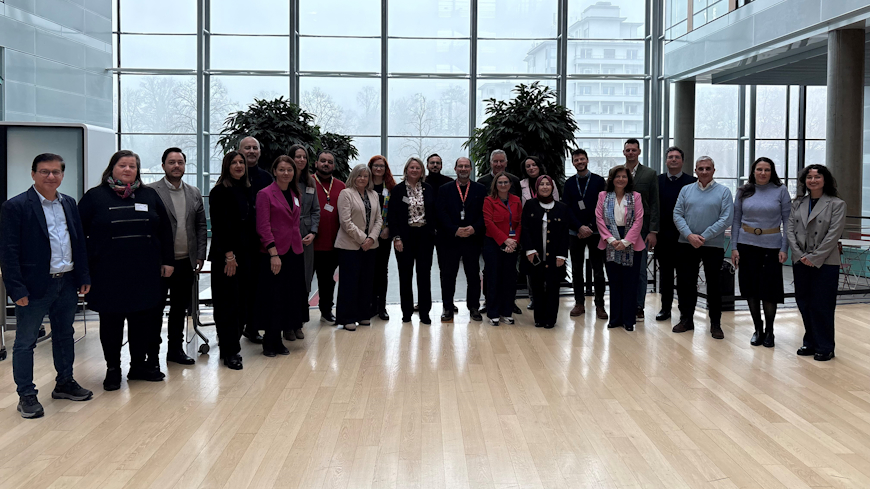 Les promoteur·rices de l'éducation à la citoyenneté numérique tiennent leur 8e réunion plénière à Strasbourg 2026-03-04 4 février 2026Le réseau des promoteur·rices de l'éducation à la citoyenneté numérique (ECN) a clôturé avec succès sa 8e réunion plénière aujourd'hui, marquant une avancée significative pour la poursuite des efforts coordonnés en matière de citoyenneté numérique à travers l'Europe. Cet événement de deux jours a réuni les membres du réseau et des expert·es clés afin de réfléchir aux réalisations et aux défis récents, d'évaluer les menaces mondiales actuelles et de définir l'orientation stratégique pour les années à venir.La réunion a été l'occasion d'examiner l'impact du réseau au cours de son mandat actuel, qui prend fin en juin 2026. Les participant·es ont évalué collectivement les progrès réalisés, en particulier dans le contexte de l'Année européenne de l'éducation à la citoyenneté numérique 2025, ont identifié les domaines nécessitant une attention particulière et ont discuté de l'évolution du paysage de la citoyenneté numérique. De nouvelles fonctions à inclure dans le mandat actualisé ont également été discutées et approuvées.La réunion a principalement porté sur l'examen final du projet de feuille de route pour le renforcement de l'éducation à la citoyenneté numérique 2027-2031 et la promotion du planificateur ECN. Ces documents de référence visent à garantir une action plus dynamique, diversifiée et représentative dans tous les États membres, tout en renforçant la collaboration avec les parties prenantes concernées aux niveaux local et international.Avec des plans visant à améliorer la rotation structurelle, à renforcer l'engagement des parties prenantes et à mettre en place des initiatives éducatives innovantes, les promoteur·rices de l’ECN ont réaffirmé leur engagement à faire progresser l'éducation à la citoyenneté numérique dans les États membres du Conseil de l'Europe. Les résultats de la réunion ont ouvert la voie à une future collaboration et à une croissance stratégique, avec un mandat clair de donner aux citoyen·nes numériques les moyens de relever les défis et de saisir les opportunités auxquels nous sommes confrontés aujourd'hui.
  Série de webinaires « Un moment pour l'EDD » 2026-03-04 Un moment pour l'EDD à midi : jusqu'aux vacances d'été, éducatione21 vous invite chaque dernier mercredi du mois à venir chercher quelques idées pour l'EDD. Nos webinaires d'une heure abordent de manière concise des thèmes, méthodes ou ressources. Ils vous proposent des pistes pour mettre en œuvre et promouvoir facilement et de manière pratique des thèmes complexes et des compétences en EDD.La série de webinaires s'adresse aux enseignant.e.s, directions d'établissement et intervenant.e.s externes qui souhaitent réfléchir à l'EDD, l'approfondir et la développer avec une orientation vers l'action. Sauf indication contraire, les webinaires s'adressent à tous les niveaux scolaires, du cycle 1 au secondaire II. L'inscription est gratuite mais obligatoire.25 février 2026 : 17 objectifs de développement durable (ODD) – Guide pour l'école de demainCe webinaire vous offre un aperçu concis des 17 objectifs de développement durable (ODD) et de leur importance pour l'école et l'enseignement. Nous vous présentons des exemples pratiques d'enseignement et vous expliquons comment les ODD peuvent être intégrés dans le développement de l'école. Vous découvrirez également le dossier thématique « ODD : ensemble pour demain » et apprendrez comment l'utiliser de manière concrète et simple dans votre quotidien scolaire.→ Inscription→ Dossier thématique « ODD : ensemble pour demain »25 mars 2026 : Exemples de pratiques EDD pour l'enseignement - idées concrètes pour faire la différence !Découvrez des exemples de pratiques EDD déjà éprouvés en classe et à l’école – des projets interdisciplinaires aux démarches participatives. Ce webinaire vous apporte idées, méthodes et échanges pour nourrir et enrichir votre pratique enseignante.À travers deux exemples concrets issus de cycles et thèmes différents, apprenez à lire et exploiter les exemples de pratiques d’éducation21 pour transformer facilement ces idées en projets EDD réalisables dans votre classe. Des pistes pratiques, des ressources complémentaires et des suggestions d’adaptation vous aideront à passer de l’idée à l’action en toute simplicité.→ Inscription → Exemples de pratiques29 avril 2026 : Place aux films pour l’EDDDécouvrez dans ce webinaire comment des films peuvent être utilisés en classe comme moyen d'aborder les thèmes d’une éducation en vue d’un développement durable.Les films permettent d’aborder des contenus complexes à travers l’image. Ils éveillent la curiosité et offrent une entrée pour promouvoir les compétences EDD chez les élèves. Les films que nous proposons sont accompagnés de pistes pédagogiques qui permettent de les mettre en œuvre en classe et d'approfondir les thèmes de manière adaptée à l'âge des élèves.Ce webinaire vous propose des suggestions thématiques et méthodologiques, des questions de réflexion et un espace d'échange d'expériences – idéal pour utiliser les films de manière pertinente et en lien avec le programme scolaire et pour enrichir vos cours grâce aux médias.→ Inscription→ Catalogue de films27 mai 2026 : Découvrir l'EDD par le jeuLe jeu n'est pas seulement une méthode pour l'enseignement, il est aussi un droit de l'enfant qui doit être pris en compte (Convention relative aux droits de l'enfant, 1989). Le jeu offre un espace de liberté pour expérimenter, il éveille des émotions et favorise le développement de compétences cognitives, linguistiques et socio-émotionnelles essentielles.Dans ce webinaire, nous vous montrerons comment le jeu peut être utilisé de manière ciblée comme méthode pour l'EDD. Vous découvrirez des idées de jeux concrètes et des possibilités de mise en œuvre simples que vous pourrez utiliser directement dans votre quotidien scolaire afin de renforcer chez vos élèves des compétences clés de l'EDD.→ Inscription→ Focus sur le jeu24 juin 2026 : “Mysterys” au cycle 1 – Sur les traces de l'EDD !Les « Mysterys » placent les élèves dans le rôle de détectives. À l'aide de cartes d'information, ils résolvent un événement mystérieux ou explorent une question complexe. Cette méthode est principalement utilisée dans les degrés scolaires supérieurs. Mais comment peut-elle être mise en œuvre de manière adaptée au cycle 1 ?Découvrez comment les « Mysterys » sont structurés au cycle 1 et comment ils peuvent être utilisés pour initier les jeunes élèves aux questions écologiques et sociales de manière ludique. Les exemples concrets peuvent être directement mis en œuvre en classe ou facilement adaptés à d'autres thèmes.→ Inscription→ Méthode Mystery
  UN’s ‘Responsibility to Deliver’ Will Not Waver, after US Announces Wthdrawal from Dozens of International Organizations 2026-01-13 By Vibhu Mishra8 January 2026 ❙ UN AffairsSecretary-General António Guterres has expressed regret over the decision by the United States to withdraw from a number of UN entities, while underscoring that the system will continue to deliver on all its mandates.“As we have consistently underscored, assessed contributions to the United Nations regular budget and peacekeeping budget, as approved by the General Assembly, are a legal obligation under the UN Charter for all Member States, including the United States,” a statement issued by the UN Spokesperson said on Thursday.Wednesday night’s presidential memorandum directs US executive departments and agencies to take immediate steps to withdraw from dozens of international organizations, conventions and treaties deemed by Washington to be contrary to US interests.According to the US memorandum, the decision affects 31 UN agencies and entities. These include:the UN Population Fund (UNFPA), which supports maternal and child health, and combatting sexual and gender-based violence;the UN Framework Convention on Climate Change (UNFCCC), which fosters global cooperation against climate change;the UN Democracy Fund, which funds and mentors civil society projects for democracy;other offices of the UN Secretariat based in New York and elsewhere, such as those dealing with children in armed conflict and ending sexual violence as a weapon of war.The list also includes four of the five UN regional commissions (Asia-Pacific, Western Asia, Africa, and Latin America and the Caribbean), which are key platforms for multilateral cooperation.For UN entities, “withdrawal means ceasing participation in or funding to those entities to the extent permitted by law,” the memorandum states.The work will continue: GuterresDespite the announcement, the Secretary-General stressed that the work of the Organization would continue.“All United Nations entities will go on with the implementation of their mandates as given by Member States,” the statement said.“The United Nations has a responsibility to deliver for those who depend on us. We will continue to carry out our mandates with determination.”Under the UN Charter, assessed contributions to the Organization’s regular and peacekeeping budgets are approved by the General Assembly and are considered binding obligations for all Member States.For 2026, the General Assembly approved $3.45 billion regular budget – a sharp reduction from previous years – including a 15 per cent reduction in financial resources and a nearly 19 per cent cut in staffing.A blow to climate cooperationResponding specifically to the US decision to withdraw from UNFCCC, its Executive Secretary Simon Stiell said the move marked a step back from global climate cooperation.“The United States was instrumental in creating the UN Framework Convention on Climate Change and the Paris Agreement, because they are both entirely in its national interests,” Mr. Stiell said in a separate statement on Thursday.“While all other nations are stepping forward together, this latest step back from global leadership, climate cooperation and science can only harm the US economy, jobs and living standards, as wildfires, floods, mega-storms and droughts get rapidly worse. It is a colossal own goal which will leave the US less secure and less prosperous.”Mr. Stiell noted that UNFCCC would keep working tirelessly, adding, “the doors remain open for the US to reenter in the future, as it has in the past with the Paris Agreement.”
 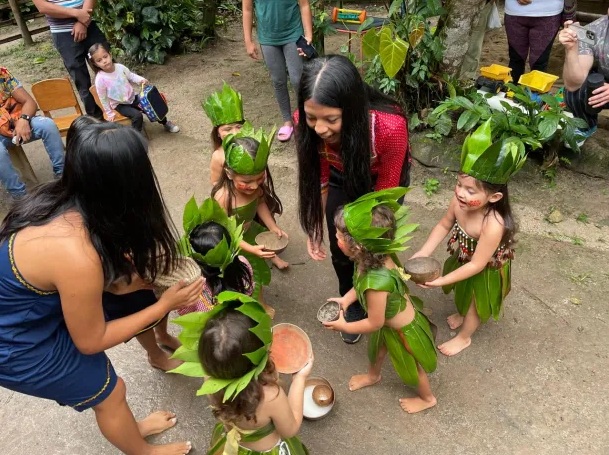 Projects from Ecuador and the United Republic of Tanzania Win First Edition of UNESCO Global Citizenship Education Prize 2025-12-15 Two exceptional projects from Ecuador and the United Republic of Tanzania were recognized in the inaugural edition of the new UNESCO Prize for Global Citizenship Education (GCED), funded by the Republic of Korea.9 December 2025 - Last update:10 December 2025The 2025 edition honoured a school project in the Amazon rainforest in Ecuador that guides children to become empathetic community leaders and forest guardians, and a youth-led non-governmental organization in the United Republic of Tanzania that mobilizes youth nationwide to counter hate speech and promote peace and security.The two laureates were selected out of 150 nominations from 76 countries, submitted by UNESCO Member States or by non-governmental organizations in official partnership with UNESCO. An independent international jury of five experts reviewed the nominated applications. The two initiatives were recognized for their excellence in promoting the values of global citizenship education and addressing some of the interconnected and complex challenges of the twenty-first century by helping learners or community members to collaborate, overcome differences, promote values of understanding and empathy and make a meaningful impact at local, national or regional levels.Awarded every two years, the UNESCO Prize for Global Citizenship Education (GCED), recognizes outstanding efforts in promoting and advancing GCED principles and values by two categories of applicants: 1) youth-led organizations and 2) a general category of applicants, which includes individuals, institutions, non-governmental organizations and other entities.Each laureate received an award of USD 50,000 during a ceremony held at UNESCO Headquarters in Paris on 9 December 2025, also coinciding with the International Day of Commemoration of the Victims of Genocide, Affirmation of their Dignity and Prevention of this Crime. African Leadership Initiatives for Impact (ALII), United Republic of TanzaniaThe African Leadership Initiatives for Impact (ALII), a youth-led NGO in the United Republic of Tanzania, received the UNESCO GCED Prize in the youth category for its Youth4Peace Agenda project. The project places young people at the center to promote social cohesion, peace and security. They are trained, connected and empowered across different groups to become changemakers, and to create unity, social cohesion and promote sustainable development at community level while countering misinformation, hate speech and discrimination.Grounded in local needs and youth priorities, the project promotes key universal values of global citizenship, such as dialogue and understanding, conflict resolution, and cross-cultural collaboration. The organization has reached over 50,000 young people through targeted and mass educational online campaigns, educational outreach through secondary schools, youth peace festivals, and the annual national Forum on Youth, Peace and Security. Through its Youth for Peace Coalition and Agenda, young change- and policy-makers have a platform to co-create and inform the country’s National Action Plan on Youth, Peace and Security. Bosque Escuela Tena, EcuadorBosque Escuela Tena, a school in the Kichwa Tamia Yura community of Tena, in the Amazon forest region of Ecuador, received the 2025 Prize for its Guardians of the forest, builders of the future programme. Founded in 2023, the school guides children from preschool to high school to protect nature and to become guardians of a more just and sustainable future. Amazonian and ancestral wisdom are interwoven with innovation in the school’s multicultural and multilingual spaces, fostering respect for diversity and heritage through creative, hands-on educational activities that nurture global citizenship and empathetic action in learners.Transforming the surrounding forest into a living classroom, the programme addresses today’s challenges, including climate change and community marginalization, by valuing cultural diversity and connecting youth to their heritage, and by developing ecological awareness and personal responsibility. By engaging with elders, artists, and scientists, students are exposed to multiple approaches to learning skills for intercultural dialogue, conflict resolution, leadership and ecological stewardship. Since 2023, the programme has enrolled over 110 children and youth with a vision to reach many more. Other shortlisted candidatesThe international Jury also recognized outstanding efforts in the field by 6 runners-up, three in each category, further highlighting the diversity in GCED approaches and initiatives, and their relevance and impact in all the regions of the world.The runners-up for the category of youth-led organizations were:Cordilleran Youth Center (CYC), Philippines, for their project Youth in Action (Ilocano language: Tignay Agtutubo)Asociación Latinoamericana Ímpetu, Ecuador, for their project Ímpetu Liderando la Educación Sin Fronteras (ILESF)Associação Internacional de Estudantes em Ciências Económicas e Empresariais, Portugal, for their project: Global Volunteer.The runners-up for the general category of individuals, institutions, nongovernmental organizations and other entities are:Mouza Ali Ahmed Alsaadi, Citizenship Education specialist, Ministry of Education, Oman, for the project Digital Citizenship for Empowered LearnersDominique Paola Dakouri, Founder and Director of Centre Esther and Coeur d’Esther, Côte d’Ivoire, for the project To the table... Green futureCool.org, Australia, for their project Equipping Educators –Empowering young people About global citizenship educationThere is an urgent need to address global challenges, such as the resurgence of armed conflicts and community tensions, worsening climate change, rising forms of hatred, polarization, discrimination and racism, and persistent and growing inequities at both local and global levels.The UNESCO Recommendation on Education for Peace, Human Rights and Sustainable Development (2023) provides a framework to address these issues through education.Global Citizenship Education (GCED) is an approach which responds to such challenges by promoting a sense of belonging to a global community and encouraging the active participation of every person to collaborate, bridge inter-group divides and find solutions in solidarity. UNESCO Prize for Global Citizenship EducationLearn more →
 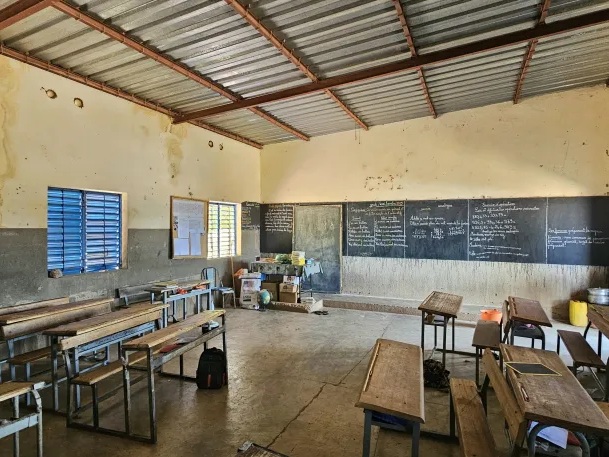 Au Burkina Faso, de nouveaux référentiels pour hisser la qualité de l’enseignement, portés par le Cadre Commun d’Orientation Curriculaire (CCOC) du projet Sahel 2025-12-15 Le Burkina Faso franchit une étape majeure dans la professionnalisation du métier d’enseignant avec la validation, du 5 au 7 novembre 2025 à Ouagadougou, de ses nouveaux référentiels métier, de compétences, de formation et d’évaluation pour les enseignants du préscolaire et du primaire.10 décembre 2025Cette avancée nationale est le fruit d’un travail progressif, engagé tout au long de l’année. À Koudougou, deux sessions d’ateliers se sont tenues du 16 au 20 septembre, puis du 29 septembre au 4 octobre 2025, pour finaliser les référentiels de formation et d’évaluation. Ces rencontres prolongent le premier chantier lancé en janvier 2025, consacré aux référentiels métier et de compétences. Sous la coordination de la Direction Générale de la Qualité de l’Éducation Préscolaire et de l’Enseignement Primaire (DGQEP) du Ministère de l’Enseignement de Base, de l’Alphabétisation et de la Promotion des Langues Nationales (MEBAPLN) Point Focal du Projet Sahel au Burkina Faso, les équipes techniques composées de représentants de l’Institut National de Formation des Personnels de l’Éducation (INFPE), de directions centrales, d’experts, de structures de formation et ministères partenaires, ont structuré les contenus, clarifié les standards attendus et défini les critères d’évaluation.Ces référentiels s’inscrivent dans le cadre plus large de l’opérationnalisation du Cadre Commun d’Orientation Curriculaire (CCOC), élaboré dans le cadre du projet « Améliorer l’enseignement dans la région du Sahel », financé par l’Union européenne et mis en œuvre par l’UNESCO. Le CCOC a été co-construit et adopté par les cinq pays du projet (Burkina Faso, Mali, Mauritanie, Niger et Tchad) en 2022 à Niamey, pour harmoniser les standards de formation et d’évaluation des enseignants, faciliter leur mobilité régionale et offrir un cadre de référence commun pour renforcer leur professionnalisation dans la région. Il répond aux défis partagés par ces pays : qualité de l’enseignement, accès équitable, promotion de l’égalité filles-garçons, développement du préscolaire, intégration des langues nationales, utilisation des TIC, et mise en œuvre effective de la formation continue.L’atelier de Ouagadougou a permis d’examiner l’ensemble des référentiels, d’en confirmer la cohérence et la pertinence, et d’adopter une feuille de route nationale pour leur mise en œuvre. Cette feuille de route prévoit la diffusion des documents, leur intégration dans les dispositifs de formation initiale et continue et l’accompagnement des acteurs de terrain, notamment au sein de l’Institut national de formation des personnels de l’éducation et de ses directions régionales.Grâce à cette démarche, le Burkina Faso illustre concrètement l’application du CCOC au niveau national, démontrant que le cadre régional peut soutenir la professionnalisation des enseignants et améliorer la qualité de l’éducation dans le Sahel. En adoptant ces outils structurants, le pays contribue également à la réalisation de la cible 4.c de l’Objectif de développement durable 4, qui vise à augmenter le nombre d’enseignants qualifiés d’ici 2030.Le CCOC constitue ainsi un outil de plaidoyer puissant pour l’ensemble de la région : il permet aux États du Sahel de s’appuyer sur un cadre commun pour aligner leurs politiques et pratiques de formation initiale et continue, renforcer les compétences des enseignants et favoriser la coopération régionale face aux défis éducatifs partagés.
 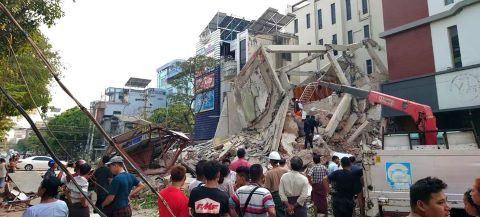 Myanmar earthquake: Search and rescue efforts continue in race against time 2025-03-31 30 March 2025 | Humanitarian Aid The human toll of the earthquake which devastated central Myanmar continues to rise, UN humanitarians warned on Sunday, putting more pressure on nearly 20 million people who were already in need of aid. According to news reports citing Myanmar’s military leader, around 1,700 are confirmed dead from Friday’s 7.7 magnitude quake, with some 3,400 injured and hundreds still missing.In the Thai capital Bangkok which was also rocked by the seismic event, 76 construction workers are reportedly still missing following the collapse of an unfinished skyscraper. The death toll there now stands at 17.The search and rescue effort in Myanmar is focused on the major cities of Mandalay and the capital, Nay Pyi Taw. Some survivors continue to be pulled from the rubble and multiple international aid teams have reached the stricken areas – although the aid effort is being hindered due to damage to airports. Shelter, medicine, water “People urgently need shelter, medical care, water and sanitation support. This disaster puts more pressure on already vulnerable people facing an alarming crisis,” the UN aid coordination office in the region, OCHA, said on X.Burmese civilians are also stuck between forces of the military junta and numerous armed militia battling for control of the country since the February 2021 coup. More than three million have been displaced by the fighting.The National Unity Government which represents the democratically-elected civilian administration overthrown by the coup, called on rebel fighters to observe a two week ceasefire to allow humanitarian aid to reach those in need.But the military regime is reportedly continuing to carry out airstrikes, including in areas close to the epicentre of the earthquake Call for ‘immediate ceasefire’ The Human Rights Council-appointed independent expert who monitors the situation in Myanmar, Tom Andrews, said in a social media post on Sunday that the junta should follow opposition forces and declare an immediate ceasefire.“Military conscription should be suspended; aid workers should not have to fear arrest and there should be no obstructions to aid getting to where it is most needed. Every minute counts,” he added.The UN reproductive health agency, UNFPA, is one of the agencies on the ground urgently working with partners and local communities to assess critical needs and deliver life-saving aid – particularly for women and girls. Women and girls face ‘increased risks’ In an update, UNFPA said early assessments highlight significant damage to health facilities, population displacement and the disruption of essential services, including sexual and reproductive healthcare.“In emergencies like this, women and girls face increased risks, from compromised access to life-saving maternal healthcare to heightened risk of gender-based violence, " said Jaime Nadal Roig, UNFPA Representative for Myanmar.“UNFPA is committed to supporting relief efforts, placing the well-being of women and girls – including pregnant women, mothers, and adolescents – at the heart of our humanitarian response efforts.”UNICEF Myanmar's Ko Sai, said in a post on X from Mandalay, that the quake was “an absolute catastrophe” for children in the region, with many youngsters and families in Mandalay still missing.“We need urgent assistance, especially for the children, who often suffer the most in this kind of situation,” he added. Lifesaving medical supplies The UN World Health Organization, WHO, has rushed nearly three tonnes of medical supplies from its emergency stockpile in Myanmar’s largest city, Yangon, to hospitals in Mandalay and Nay Pyi Daw.The UN World Food Programme (WFP) Country Director in Myanmar, Michael Dunford said in a tweet that the agency carried out its first emergency food distribution in Nay Pyi Taw on Sunday which included high energy biscuits “and we're about to scale up our assistance.”WHO on Sunday issued a 30-day flash appeal for $8 million to deliver trauma care, prevent disease outbreaks and restore essential services that have been decimated by the quake. Click here to donate to the UN emergency appeal for Myanmar © UNICEF / A major road in Nay Pyi Taw shows severe structural damagefollowing the 7.7 magnitude earthquake that struck Myanmar. URL: https://news.un.org/en/story/2025/03/1161716
 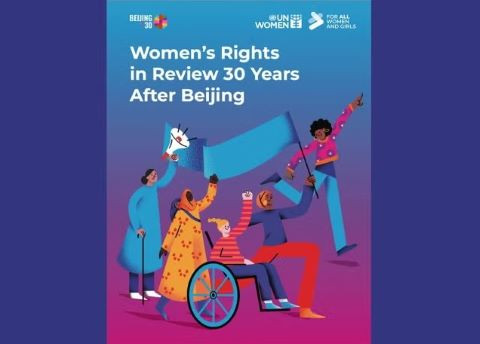 One in Four Countries Report Backlash on Women’s Rights in 2024 2025-03-11 On International Women’s Day, UN Women calls on everyone to stand up for Rights, Empowerment and Equality for ALL Women and Girls 6 March 2025 Women’s and girls’ rights are facing unprecedented growing threats worldwide, from higher levels of discrimination to weaker legal protections, and less funding for programmes and institutions that support and protect women.UN Women’s latest report “Women's Rights in Review 30 Years After Beijing”, published ahead of the UN 50th International Women’s Day on 8 March, shows that in 2024 nearly a quarter of governments worldwide reported a backlash on women’s rights. Despite important progress, only 87 countries have ever been led by a woman, and a woman or girl is killed every 10 minutes by a partner or member of her own family. Digital technology and artificial intelligence spread harmful stereotypes, while the digital gender gap limits women’s opportunities. In the past decade, the world registered a disturbing 50 percent increase in the number of women and girls living in conflict, and women’s rights defenders confront daily harassment, personal attacks and even death. Recent global crises—like COVID-19, the climate emergency, soaring food and fuel prices—are only increasing the urgency to respond. “When women and girls can rise, we all thrive. Yet, globally, women’s human rights are under attack. Instead of mainstreaming equal rights, we’re seeing the mainstreaming of misogyny. Together, we must stand firm in making human rights, equality and empowerment a reality for all women and girls, for everyone, everywhere,” said António Guterres, UN Secretary-General. “UN Women is committed to ensuring that ALL Women and Girls, everywhere, can fully enjoy their rights and freedoms,” affirmed UN Women Executive Director Sima Bahous. “Complex challenges stand in the way of gender equality and women’s empowerment, but we remain steadfast, pushing forward with ambition and resolve. Women and girls are demanding change—and they deserve nothing less.” 2025 marks 30 years of progress since the Beijing Declaration and Platform for Action, the most visionary roadmap on women’s rights. The “Women's Rights in Review 30 Years After Beijing” report, which draws on feedback provided by 159 Governments to the United Nations Secretary-General, shows progress that must be acknowledged - since 1995, parity has been achieved in girls’ education and maternal mortality has dropped by a third. Women’s representation in parliaments more than doubled, and countries continue to remove discriminatory laws, with 1,531 legal reforms between 1995 and 2024 in 189 countries and territories. It demonstrates that when women’s rights are fully upheld in their countries, families, communities, and economies flourish. Yet, significant efforts are still required to achieve gender equality and bring us closer to the 2030 Agenda for Sustainable Development. That’s why today’s report also features the new Beijing+30 Action Agenda, a courageous roadmap to complete our unfinished business by focusing on: A digital revolution for all women and girls: We must ensure equal access to technology, equip women and girls to lead in AI and digital innovation, and guarantee their online safety and privacy. Freedom from poverty: Investments in comprehensive social protection, universal health coverage, education, and robust care services are needed for women and girls to thrive and can create millions of green and decent jobs. Zero violence: Countries must adopt and implement legislation to end violence against women and girls, in all its forms, with well-resourced plans that include support for community-based organizations on the front lines of response and prevention. Full and equal decision-making power: Temporary special measures like gender quotas have proven their effectiveness in rapidly increasing women’s participation. Peace and security: Fully finance national plans on women, peace and security and gender-responsive humanitarian aid are essential. Frontline women’s organizations, so often the first responders to crisis, must receive dedicated, sustained funding to build lasting peace. Climate justice: We must prioritize women’s and girls’ rights in climate adaptation, center their leadership and knowledge, and ensure they benefit from new green jobs. Across these six Actions, putting young women and girls at the heart of our efforts is the best way to guarantee success, both today and tomorrow. These six plus one actions have the potential to unleash progress on women’s rights and put us back on track for 2030. The Beijing+30 commemoration and the forthcoming UN Commission on the Status of Women (CSW69) are clear opportunities to enshrine this Action Agenda into national policies, regional strategies, and global agreements. In a pivotal year for women and girls, that is also a year of pushback and crises like no other, let us push women’s rights forward to create a world where all women and girls enjoy equal rights and equal opportunities. We can be the first generation that can live in an equal world. Read UN Women’s full report.
 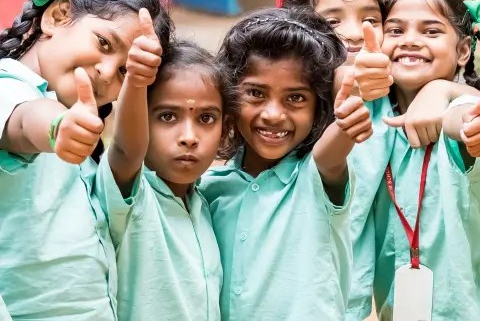 How Marriage Laws Can Contribute to Protecting Every Girl’s Right to Education 2025-03-11 Every girl has the right to education. Yet, across the world, gender-based discrimination continues to deny millions of girls this right. A striking example of discriminatory practice against girls is child marriage, a practice that disproportionately affects girls, with 19 per cent of girls and 3 per cent of boys married before the age of 18. 7 March 2025 As recalled by the United Nations Committee on the Elimination of Discrimination against Women and the Committee of the Rights of the Child (Recommendation N°31, General Comment N°18), “child marriage, also referred to as early marriage, is any marriage where at least one of the parties is under 18 years of age. (…) A child marriage is considered to be a form of forced marriage, given that one or both parties have not expressed full, free and informed consent” (para. 20).For many girls, marriage often marks the abrupt end of their education. Once married, their likelihood of remaining in school drops dramatically. An alarming 87 per cent of adolescent girls (aged 15–17) who are married or in union are no longer in school. Child marriage and early pregnancy are closely linked, with 76 per cent of childbearing among girls under 18 occurring within marriage. This cycle of early marriage and motherhood reinforces dependency and limits opportunities, curbing girls’ potential and future prospects. Marriage laws worldwideThe interactive world map HerAtlas, through its global legal monitoring of the right to education, has been tracking marriage laws worldwide, including recent progress in raising the age of marriage and removing exceptions.Under Article 16.2 of the CEDAW Convention, States must ensure that child marriage and betrothal hold no legal validity. Both the CEDAW Committee and the Committee on the Rights of the Child call for the elimination of harmful practices. Both Committees emphasize the need for a comprehensive, rights-based strategy that integrates supportive policies, social measures, and strong political commitment, ensuring real accountability at all levels to protect children’s rights and end child marriage (Recommendation N°31, General Comment N°18). Source: HerAtlas data, as of February 2025© UNESCO As of early 2025, 18 per cent of countries still allow marriage before the age of 18 for girls in their legislation, while only 26 per cent of countries have set the legal age at 18 without exceptions. The remaining 54 per cent permit marriage at 18 but allow exceptions, often requiring parental or judicial consent, sometimes with no absolute minimum age in place.A closer analysis of HerAtlas data reveals that among the countries allowing exceptions, 65% have at least set an absolute minimum age under which marriage is strictly prohibited. However, in some cases, that minimum is alarmingly low—the most common absolute minimum age is 16 (75 per cent), but in some countries, it drops to just 13 years old. Source: HerAtlas data, as of February 2025© UNESCO Since 2019, governments around the world have been stepping up to explicitly ban child marriage without exceptions, marking a growing commitment to gender equality and education. Fourteen countries have amended their marriage laws to set the legal minimum at 18 years old without exceptions. Progress towards the end of child marriageIn just the past two years, notable reforms include: Belize (2024): Amended its Marriage Act to raise the legal age of marriage from 16 to 18 years old, without exception. Colombia (2025):Repealed a Civil Code provision that previously allowed minors over 14 to marry with parental or legal consent. Sierra Leone (2024): Adopted the Prohibition of Child Marriage Act, eliminating all exceptions that previously allowed marriage before the age of 18. Bulgaria (2023): Repealed legal provisions that had allowed marriage exceptions for minors as young as 16. Zambia (2023): The legal age of marriage is set at 21 years old. Previously, exceptions allowed marriage from 16 years old with parental consent and below with judicial consent. However, with the adoption of the Marriage Amendment Act in 2023, these exceptions were restricted, establishing an absolute minimum age at 18 years old. This positive tendency is continuing as several countries are following the same path and are currently in the process of amending their laws to progress towards the end of child marriage: Bhutan (2024): A new Marriage (Amendment) Bill has been adopted by the National Assembly and is now being considered by the National Council, aiming to align the legal marriage age for boys and girls at 18. South Africa: the Marriage Bill of December 2023 has been debated over the last year, one of the proposed amendments is to raise the legal age of marriage at 18 years without exception. Morocco: Following a two-year consultation process, discussions on the Family Law include a proposal to set an absolute minimum age of marriage 17, where currently none exists. Marriage laws: a powerful tool in protecting girls' education While many nations are moving in the right direction, some setbacks threaten progress. In a couple of countries, legislative discussions are underway—or decisions have already been made—to lower the legal age of marriage, putting even more girls at risk of being pulled out of school and denied their future.The evidence is clear: strengthening marriage laws is a powerful tool in protecting girls' education. Governments must take decisive action to close loopholes, enforce 18 as the absolute minimum age for marriage, and ensure that every girl has the right to learn, grow, and thrive—free from the constraints of child marriage. → HerAtlas→ Protect her rights, strengthen your laws: Her Atlas: status report on girls’ and women’s right to education→ Pregnancy and the right to education→ Right to education handbook URL: https://www.unesco.org/en/articles/how-marriage-laws-can-contribute-protecting-every-girls-right-education?hub=701
 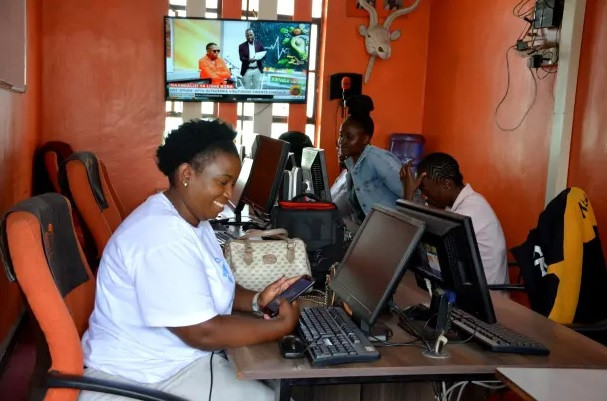 UNESCO - EU Partnership Grows: Tackling Disinformation and Hate Speech Globally 2025-02-28 The EU-funded Social Media 4 Peace (SM4P) project has kick-started 2025 with a significant expansion to Iraq, South Africa and Kyrgyzstan. 21 February 2025Building on success in Bosnia and Herzegovina, Colombia, Indonesia and Kenya, UNESCO continues to strengthen societal resilience against online hate speech, disinformation, and other harmful content while promoting peace through social media.Initially launched in 2021 with a 4 million-euro contribution from the EU, SM4P has successfully engaged key national stakeholders to develop locally informed responses to the challenges posed by harmful online content in Indonesia, Kenya, Bosnia and Herzegovina, and Colombia. With a new contribution of 4 million euros in 2025, the project will extend its impact in Iraq, Kyrgyzstan, and South Africa while reinforcing achievements in Indonesia and Kenya. "The partnership between UNESCO and the Service for Foreign Policy Instruments at the EU is allowing us to address fast and with flexibility the impact of harmful content in societies in conflict-prone and polarized environments, while protecting freedom of expression and the rights of the most vulnerable and marginalized communities." Tawfik JelassiAssistant Director-General for Communication and Information, UNESCO To date, SM4P project has mobilized over 80 partners through national multistakeholder coalitions in Bosnia and Herzegovina, Colombia, Indonesia and Kenya. The project has produced ground-breaking research to better understand the real-life impacts of hate speech and disinformation on societies, especially communities in situation of marginalization and vulnerability, developed over 20 advocacy and user empowerment tools, and trained over 3,000 youth, journalists and CSO leaders. These efforts have enhanced fact-checking, advocacy, Media and Information Literacy, and peacebuilding narratives while protecting freedom of expression. The national multistakeholder coalitions have successfully engaged digital platforms to address the local challenges of the spread of harmful content online. Anida Sokol from Media Centar Sarajevo explains: "In BiH, we have a vibrant civil society that has been engaged in monitoring and countering hate speech. Before, although our country has been facing pressing challenges related to online hate speech, major social media platforms didn’t have any local presence or engagement in the country. Thanks to the multistakeholder coalition, this has changed. We are establishing meaningful dialogues with digital platforms and demanding more accountability."Anida Sokol Similarly, the project has strengthened coordination among stakeholders. Rosemary Mwangi from Communication Authority of Kenya shares her experience: In Kenya, all our efforts suffered from an inconsistent exchange of knowledge and experiences among us. Now, we joined forces through our multi-stakeholder coalition, FeCoMo. We are taking joint positions about emerging issues of digital spaces, and we are much more powerful in voicing what the needs for our communities are when we speak as one. Rosemary Mwangi SM4P’s influence extends beyond its target countries, contributing to global policy discussions on platform governance. At the 2024 International Conference on Digital Platform Governance in Dubrovnik, co-hosted by UNESCO and the National Regulator of Croatia, SM4P partners played a pivotal role in shaping the vision of the Global Forum of Networks. Their participation bridged knowledge gaps and advanced collective goals in digital governance.Looking ahead, SM4P will continue until December 2027, fostering multistakeholder collaboration and strengthening resilience against online harm. A key focus will be implementing UNESCO’s Guidelines for the Governance of Digital Platforms, ensuring human rights and freedom of expression remain central to digital governance. The multistakeholder coalitions established through SM4P will be instrumental in applying these Guidelines locally while informing their broader implementation. The project's national coalition of Kenya participates in a training workshop in 2023,during which the coalition adopts a joint resoultion for a multisectoral approach and actionto address gendered disinformation and hate speech on digital platforms. UNESCO On February 12, 2025, Christina Kokkinakis, Permanent Representative ofthe European Union to UNESCO, delivers an opening remark and partipatesin the kick-off workshop for the expansion ofthe Social Media 4 Peace project at UNESCO HQ in Paris. UNESCO URL: https://www.unesco.org/en/articles/unesco-eu-partnership-grows-tackling-disinformation-and-hate-speech-globally?hub=701
 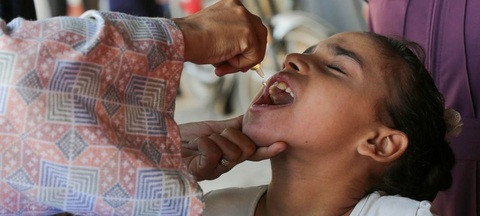 UN Regrets US Exit from Global Cooperation on Health, Climate Change Agreement 2025-02-10 21 January 2025 - Humanitarian Aid UN agencies responded on Tuesday to President Trump’s executive orders ending US membership of the World Health Organization (WHO) and its adherence to the Paris Climate Agreement, highlighting the massive potential negative impact on public health and efforts to curb global warming.“The WHO regrets the announcement that the United States of America intends to withdraw from the Organization…We hope the United States will reconsider,” said WHO spokesperson Tarik Jasarevic, hours after the new President signed an executive order at the White House, bringing US involvement in the UN agency to an end in 12 months. The US joined WHO in 1948 after a joint resolution was passed by both chambers of Congress. The resolution requires the country to provide one year’s notice to leave the organization. President Trump took steps to withdraw from the WHO in 2020 during his first term – but the move was reversed by the Biden administration. Responding to journalists’ questions in Geneva, Mr. Jasarevic insisted that WHO “plays a crucial role in protecting the health and security of the world’s people, including Americans, by addressing the root causes of disease, building stronger health systems, and detecting, preventing and responding to health emergencies, including disease outbreaks, often in dangerous places where others cannot go.” Asked about the impact of the US withdrawal, Mr. Jasarevic pointed out that he saw the executive order “this morning like everyone else” and that further analysis will be needed. He confirmed that the US was WHO’s largest single donor, accounting for 18 per cent of the agency’s budget in 2023. Also in Geneva, UN humanitarian affairs office (OCHA) spokesperson Jens Laerke highlighted the UN health agency’s importance, saying that “the world lives longer, healthier, perhaps a little bit happier because of WHO”. “WHO is in places where others cannot go,” Mr. Laerke said, including Gaza, Yemen, Afghanistan and Sudan. “It is an indispensable part of the international humanitarian system,” he insisted. Climate shock From the UN World Meteorological Organization (WMO), spokesperson Clare Nullis reacted to President Trump’s vow to quit the universally adopted 2015 Paris Agreement - marking an immediate return to the policies of his first presidential term, which ended in January 2021. The need for all countries to respect the accord was “pretty obvious”, she said, given that 2024 “was the hottest year on record”, at about 1.55°C above the pre-industrial era. “It is the defining challenge of our time,” she insisted. In the wake of the recent devastating and deadly massive wildfires that ripped through Los Angeles, the WMO spokesperson also noted that the US had suffered the bulk of global economic losses from weather, climate and water-related hazards. “It has sustained 403 weather and climate disasters since 1980 where overall damages/costs reached or exceeded $1 billion. The total cost of these 403 events exceeds $2.915 trillion, according to US figures,” Ms. Nullis said. Her comments echoed those of the UN Spokesperson’s Office late on Monday which responded to journalists’ questions insisting that “the transformation envisaged in the Paris Agreement is already underway”, with a renewable “energy revolution” offering opportunities for jobs and prosperity. “The Secretary-General remains confident that cities, states and businesses within the United States - along with other countries - will continue to demonstrate vision and leadership by working for the low-carbon, resilient economic growth that will create quality jobs and markets for 21st century prosperity," the statement continued. “It is crucial that the United States remains a leader on environmental issues,” it concluded. URL: https://news.un.org/en/story/2025/01/1159211