
News
Catch up on what’s happening in the world of global citizenship education.
316 results found
 Students take on global challenges during virtual AI hackathon 2021-07-03 UNESCO YouthMobile and Microsoft have partnered to host the Imagine Cup Junior Virtual AI Hackathon, a practical journey into digital literacy on the theme “AI for Earth”. From 18 to 20 June 2021, high-school students from Europe, the Middle East and Africa engaged in an intensive online experience to understand what AI is, learn how to adapt to a constantly changing intelligence landscape, and build the skills they need to take ethical control of the development and use of AI. Following the highly successful All-Girls hackathon earlier this year, the event aimed at emphasizing the impact that AI can have on the future of our planet: the practical exercises and real-life examples used during the event all focused on the use of AI to better understand and address sustainability, particularly climate change and the loss of biodiversity. These issues are all relevant to the United Nations’ Sustainable Development Goals (SDGs), which recognize the importance of tackling climate change and working to preserve our oceans and forests. The hackathon culminated in a design challenge, where participants from Egypt, Russian Federation, Spain, Romania, Ireland, Nigeria, Morocco and Oman worked in teams to envision an AI solution to a real-world problem that would benefit the Earth. A panel of judges ultimately awarded 4 ideas: Team Autonomus from Egypt proposed a project that would enable governments and wildlife organizations to track elephant populations using a combination of acoustic sensors, bioacoustics recorders, camera traps and aerial imagery. Team Regression from Egypt exposed a solution to protect elders who live alone during emergency situations, in which they are unable to call for help, through an AI supervised learning and classification to correctly identify an emergency. Team Gauss from Romania worked on preservation of tiger subspecies by tracking tigers through social media and using classification for discerning pictures. Team Binary from Russian Federation proposed to mitigate the effects of the ongoing pandemic by developing an AI that can predict the degree of congestion in various areas, letting users know which high-risk places they need to avoid. I really enjoyed this Hackathon, I expected it to be harder than what we actually do but I learned things that I can’t learn at school in a “magic, interesting and unseen” way. This Hackathon showed me what I really want to do with my life and that I can actually do a lot of things that I like. It was a pleasant experience and I can’t wait to learn new things and participate to the next Hackathon.-- One of the participating students Supported by their teachers and by mentors volunteers, students started their journey by learning how to think like a programmer, break down a problem into a precise sequence of instructions, and create coding solutions that include sequences, events, loops and conditionals. On the second day, students were driven through the history of AI – from the first conceptualization of an automaton in the Greek myth of Talos to the super AIs of today. They learned about the pioneers who first defined what constitutes an AI and were shown the difference between narrow, general and super AIs. There were discussions on ethics and the responsible use of AI before moving on to more technical insights and machine learning techniques. Finally, to prepare for the design challenge, they underwent a series of exercises exploring various applications of AI in the context of sustainability. Using their knowledge of regression, classification and clustering, students were able to work in various tools and languages to solve a series of challenges, including predicting water consumption, deciding which is the best place to plant trees, and saving endangered species like penguins or the elusive snow leopard. UNESCO leverages young people’s digital creativity to shape solutions for the world. In today’s world, becoming digitally literate requires to further explore, understand, push limits and learn complex skills, such as the basics of AI. Equipped with digital skills, young people could develop digital solutions to address local challenges, supporting themselves and their communities. In consideration of recent developments in the social and digital domains, including artificial intelligence, privacy issues, the increasing importance of social competencies such as digital citizenship and education for sustainable development, UNESCO recently launched its updated curriculum on media and information literacy: “Think critically, Click Wisely: Media and Information Literate Citizens”. The event was a contribution to the Global Education Coalition, launched by UNESCO in 2020, which brings together more than 175 members from the UN family, civil society, academia and the private sector to ensure that #LearningNeverStops. Related links UNESCO YouthMobile UNESCO's programme on Media and Information Literacy Girls design artificial intelligence solutions during virtual hackathon held by Microsoft and UNESCO UNESCO’s Global Education Coalition Keeping girls in the picture campaign #LearningNeverStops UNESCO’s work on education and gender equality Artificial intelligence in education Girls’ and women’s education in science, technology, engineering and mathematics (STEM) ICT in Education URL:https://en.unesco.org/news/students-take-global-challenges-during-virtual-ai-hackathon
  UNESCO makes commitments to key-drivers to gender equality: education, science and culture 2021-07-02 As the world meets at the Generation Equality Forum, UNESCO is launching a set of concrete commitments to achieve tangible progress towards gender equality in key areas over the next five years while COVID-19 has magnified deeply rooted structural gender inequalities: On Girls’ Education, UNESCO will continue to lead a multi-stakeholder global coalition to support girls’ education in the wake of COVID-19, reaching 28 million learners in more than 80 countries with quality gender-transformative teaching and learning that promotes gender equality; On Technology and Innovation, UNESCO will work to close the digital gender divide, empower women scientists, and promote the ethical use of Artificial Intelligence which is free of gender bias and sexism. UNESCO will, for example, enable 10,000 women physicists to take leadership roles and provide access to at least 10,000 girls in Africa to studies on microscience; On Creativity, UNESCO will work to economically empower women artists and those working in the creative industries in Africa, by improving their access to audiences, funds, social protection schemes and increasing the number of creative industries enterprises owned and led by women, while promoting women’s rights to create, free of violence, sexism, and sexual harassment. Gender Equality is a global priority for UNESCO that cuts across its fields of competence: education, science, culture and communication. Gender equality cannot be achieved without concrete measures. Access to education for women and girls is a priority for UNESCO. Among other efforts, we are strengthening their access to scientific training where they are still under-represented. Our work also focuses on culture, where women’s representations are essential and where they are the most affected by the pandemic.-- Audrey Azoulay, Director-General of UNESCO Although women have been on the front lines of the crisis, they are suffering sever backlashes. In education, 767 million young women and girls were impacted by school closures and 11 million may never return to class, joining the 132 million who were already out of school before the crisis struck. From the economic perspective, the recession is pushing 47 million more women and girls into poverty, destroying their economic independence and making them more vulnerable to gender-based discrimination and violence. We must ensure that progress achieved by countries around the world is sustained notably in education, where, according to a new UNESCO report, girls’ primary school completion rates have reached 87%, almost 20 percentage points more than 25 years ago. Women still face all too many obstacles in science, despite the brilliant success of researchers like Kati Kariko, from Hungary, who contributed significantly to the creation of the Pfizer-BioNTech mRNA vaccine against coronavirus. UNESCO’s data shows that women make up only one out of three scientific researchers although they constitute 45 to 55% of all university students and 44% of PhD students. Only 3% of female higher education students, however, choose to study information and communication technologies. This is why UNESCO funds young women PhD researchers through its Organization for Women in Science for the Developing World. It also provides STEM mentorship programmes for high school girls to nurture their interest in the sciences through role models and provides courses in coding, robotics and Artificial Intelligence. UNESCO further promotes the careers of young women scientists and gives visibility to their achievements through the annual UNESCO/L'Oréal For Women in Science Award. Since 1998, more than 3,600 women scientists have been recognized, 3,500 Young Rising Talents, PhD candidates and post-doctorates, were supported through financial support and leadership training. In addition, 117 Laureates have been honored for their excellence in science, including five who have gone on to win a scientific Nobel Prize. In the field of culture, UNESCO’s recent publication Gender & Creativity: Progress on the Precipice, analyses the gender gaps in the cultural and creative industries where women artists and creators continue to face unequal access to decent work, unfair remuneration, marginalization, as well as limited access to information and communication technologies. Related links: UNESCO Priority Gender Equality UNESCO Report: “I’d blush if I could” URL:https://en.unesco.org/news/unesco-makes-commitments-key-drivers-gender-equality-education-science-and-culture
  Appel à articles : « Les modes d’engagement des jeunes, dans et hors l’école, en contexte de crise. » 2021-06-30 Jean-Charles Buttier, Stéphanie Demers, Aurélie De Mestral, Charles Heimberg et David Lefrançois Argumentaire La polysémie de la notion d’engagement telle qu’elle est mobilisée autour de la question scolaire et dans le contexte de l’école oscille entre inculcation et ouverture de possibles, ce qui en fait une question discutée. L’engagement des jeunes relève parfois d’une adhésion à des valeurs prônées par l’école. Il peut également s’exprimer en dehors de l’école et s’orienter vers une critique de l’idéologie dominante qui prévaut dans la société. Il est dès lors nécessaire d’articuler les visions normatives et émancipatrices de l’engagement pour comprendre comment ces conceptions antinomiques s’articulent dans et hors l’école, en tenant compte aussi de ce qui distingue la fin de la scolarité obligatoire de l’enseignement secondaire ultérieur. La pluralité des acceptions de la notion d’engagement (éthique, sociologique, psychologique, etc.) témoigne des multiples références mobilisées par l’éducation à la citoyenneté (histoire, sociologie, philosophie, science politique, droit, géographie, etc.). L’analyse des engagements devient alors un angle d’attaque pertinent pour étudier les contenus et modalités didactiques développés dans le domaine de l’éducation à la citoyenneté, une « discipline » hybride qui demeure constamment en construction. Bien que datant de 2015, l’Enseignement moral et civique en France a ainsi fait l’objet d’analyses qui montrent son caractère pluriel et controversé (Kahn, 2015 ; Desmery, 2020). Cette notion peut concerner les élèves, mais aussi les enseignant-es (sur le plan professionnel, syndical, politique, etc.), et surtout rassembler sous le même terme des engagements multiples (civique, social, politique, scolaire, etc.). Le lien entre engagements et école recèle nombre d’ambiguïtés, notamment celle de l’injonction prescriptive, c’est-à-dire la distinction de bons et de mauvais engagements, et des acteurs et actrices qui la déterminent. En témoigne par exemple la virulence des réactions actuelles face à l’engagement d’une lycéenne dans un combat contre le réchauffement climatique, faisant face à des critiques genrées, mais aussi quant à sa jeunesse et son statut d’« écolière ». Dans la même veine, les interrogations que soulève le statut de la grève dans un contexte scolaire sont une preuve de la dimension sensible de ces questions. Les engagements de la jeunesse dans des contextes nationaux variés sont un sujet de premier plan à l’heure des grèves pour le climat ou des luttes féministes, même si ces mouvements d’ampleur planétaire ont subi une réorganisation du fait du contexte pandémique actuel. Cette crise sanitaire interroge d’ailleurs les relations entre les générations ainsi que les engagements subis ou choisis de la jeunesse. L’enjeu central de cet appel à articles est ainsi de questionner la pluralité des engagements provoqués ou attendus à l’école et hors de l’école et de comprendre la relation entre injonction normative et promotion de l’émancipation. Diverses catégories de références sont mobilisables pour penser l’engagement à l’école :- Dans la perspective de la mise en œuvre d’une école émancipatrice (Freire, 1983 [1968]) qui ne soit pas fondée sur la simple prescription de valeurs qui se vident de leur dimension politique pour se réduire à de simples civilités, il s’agira de réfléchir aux conditions (pédagogiques mais aussi organisationnelles) qui permettent aux élèves d’exercer une réflexionautonome, notamment par le biais de l’examen de problèmes de société susceptibles de les engager en tant que sujets agissants. La notion d’émancipation (Freire, 1983 [1968] ; Garnier, 2014) est intimement liée à cette pluralité des formes d’agentivité des élèves et interroge sa signification du point de vue de leur autonomie d’action et de pensée, mais également de la reconnaissance (Honneth, 2000) de cette autonomie par les adultes.- Reinhart Koselleck (2000 [1979]) a également mis en lumière l’articulation entre un champ d’expérience et un horizon d’attente qui marquent le passé et l’avenir de tout un chacun, celle-ci constituant un moteur de la prise de décision, ce qui la lie à l’agentivité (agency) qui s’oppose au fatalisme. Cet appel postule que la crise contemporaine des horizons d’attente a une influence majeure sur les engagements de la jeunesse, qu’ils se manifestent dans ou hors école, qu’ils soient encouragés ou empêchés. Il ne s’agit donc pas de traiter de la crise de l’école ou de celle de la société, mais de la façon dont ces horizons d’attente troublés entrent dans l’école. Cette pénétration est souvent accompagnée d’une injonction à l’engagement des élèves encore mineur-es, cette posture étant perçue comme une réponse à ladite crise. - Le contexte scolaire nord-américain est traversé de tensions autour du rapport dialectique entre reconnaissance et universalité, certains groupes minoritaires exprimant le constat d’une forme d’assignation à l’universalisme. Abordé sous l’angle de la philosophie politique notamment, ce débat concerne l’éducation à la citoyenneté en mettant en tension les concepts d’universalisme et de particularisme (Sant, 2019). - L’engagement de la jeunesse, dans et hors école, ne se restreint pas à la citoyenneté politique à venir (pour les mineur-es) puisque le choix de s’engager dans certains clubs (pour pratiquer un sport, apprendre un art créatif, etc.) peut aussi mener à des formes d’engagements proto-politiques. Cela illustre la capacité des élèves à choisir leurs engagements en toute connaissance de cause et à faire ainsi preuve de discernement, y compris dans le choix de ne pas s’engager. Cette attitude peut ainsi être conçue comme une forme de contre-engagement (Robert-Mazaye, Demers, Boutonnet et Lefrançois, 2017).- L’étude des formes d’engagement des jeunes doit permettre de déterminer quel-les citoyen-nes l’école entend former et d’évaluer la réalité de cette formation civique. Il serait par exemple fructueux de réfléchir au rapport dialectique entre les engagements prescrits et l’encouragement à faire preuve de discernement. La notion de justice sociale transmise aux élèves, vers laquelle tend la taxonomie de Westheimer & Kahne, prend un sens particulier dans le contexte de mouvements sociaux contemporains qui touchent la jeunesse un peu partout dans le monde. Et de se demander enfin, en mobilisant par exemple la didactique de la citoyenneté comment faire face au dilemme moral qui consiste à faire valoir sans prescrire (Heimberg, 2011). La didactique de l’enseignement des questions sensibles en classe pourra être examinée en la confrontant notamment aux critiques d’un enseignement de nature dogmatique (Legardez & Simonneaux, 2006). Cet appel ne se limite pas à l’aire francophone, tous les pays pouvant être concernés par une telle approche. La jeunesse, dans sa pluralité, doit être entendue ici au sens large, bien qu’il semble intéressant de relier l’engagement des jeunes à leur minorité civique et politique, ce qui permet de prendre en compte une participation qui va au-delà du vote. D’autre part, des articles historiques traitant de crises passées (guerres, famines, épidémies) permettraient d’éclairer les enjeux contemporains de cette entrée des crises dans l’École. Ce questionnement peut ainsi s’inscrire dans plusieurs champs disciplinaires afin d’aborder aussi bien des formes passées d’engagements que des expériences contemporaines, voire des projets à venir. La perspective diachronique doit permettre un mouvement de va-et-vient entre passé et présent en historicisant les débats contemporains sur l’éducation à la citoyenneté notamment. Cet appel encourage enfin à analyser la reconnaissance de la parole et des points de vue diversifiés des jeunes, ce qui repose la question du lien entre engagement et insertion, mais montre aussi le caractère parfois normatif de celle-ci. Le concept de reconnaissance apparaît alors fondamental à prendre en compte dans le cas d’engagements moraux ou en vue d’un résultat pratique. Axes de travail Les propositions pourront s’articuler selon les trois axes suivants qui ne sont pas exclusifs : Axe 1 : Analyser la crise des horizons d’attente comme facteur et ressort d’engagements pour changer le monde de l’école ou par l’école dans des contextes traumatiques passés (guerres, catastrophes, etc.). Quelles sont les tensions, présentes et passées, liées à la conception de l’école en examinant le lien dialectique entre les contenus et les procédures ? Certains contenus peuvent être émancipateurs mais transmis par des dispositifs qui contreviennent par leur essence même à ce processus, comme la pédagogie catéchistique (Buttier, 2016 et 2017). Il est alors nécessaire de questionner la possibilité même d’un enseignement des enjeux politiques et sociaux à l’école, voire d’une éducation au politique (Mougniotte, 1999). Comment transposer les savoirs savants en savoirs enseignables à tous, en les élémentant et non en les abrégeant pour reprendre des réflexions pédagogiques héritées du Siècle des Lumières et de la Révolution française, réactivées au XXème siècle en didactique avec le concept d’élémentation des savoirs (Astolfi, 2014). Axe 2 : Examiner les engagements pédagogiques et didactiques et leur puissance émancipatrice potentielle. Comment mobiliser les travaux menés par Westheimer & Kahne (2004) qui constituent une tentative de typologie, ou taxonomie selon Éthier & Lefrançois (2015), non pas des engagements, mais des élèves engagé-es, pour étudier les diverses formes d’engagements ? Il importe donc également de partir des programmes et plans d’études afin d’identifier les attentes réglementaires concernant l’engagement à l’école. Heimberg (2007) a justement posé la question de la prescription en plaidant pour « ouvrir des perspectives de réflexion autonome pour les jeunes ». Des formes d’engagement inédites se font jour en niant parfois la capacité même de l’école à permettre aux élèves de s’engager, lorsqu’il s’agit de grèves scolaires par exemple. Quels types d’engagement découlent-ils de la pénétration de débats controversés dans l’école, quel sont ceux qui sont promus, quels engagements sont-ils empêchés, en fonction de ces questions sensibles dans la classe, dans la société mais aussi, parfois, dans les savoirs de référence ? Sachant que la citoyenneté scolaire peut se révéler très fortement normée, dessinant en creux le projet politico-éducatif d’une société, quel peut être le bénéfice d’une approche comparatiste des formes d’engagements selon les contextes culturels considérés ? Axe 3 : Interroger l’éducation aux enjeux politiques et sociaux dans l’école d’aujourd’hui : s’agit-il d’un encouragement ou bien d’un obstacle aux engagements des élèves ? Ce dossier encourage à interroger l’existence d’une volonté émancipatrice qui semble plus être le fait de certains protagonistes (individuels ou collectifs) que des institutions en charge de l’école. L’école est souvent mobilisée face à ce qui est qualifié de « déficit d’engagement » de la jeunesse, les espoirs se reportant notamment sur l’éducation à la citoyenneté, bien que l’impact de celle-ci reste largement inconnu. L’injonction à s’engager pour la démocratie dans sa forme traditionnelle et minimaliste (voter, s’insérer dans des institutions ou des structures pré-existantes) peut-elle ainsi être perçue comme un engagement forcé ? Quelles sont les formes d’engagement politique reconnues : voter aux élections, connaître les institutions, être membres des sections jeunes des partis, se syndiquer, etc. ? Un engagement peut ainsi être valorisé tout en méconnaissant certaines formes alternatives de participations à la sphère publique qui peuvent être plus engageantes pour certain-es élèves. La notion de neutralité scolaire doit être interrogée en l’historicisant et en adoptant également une démarche comparatiste pour tenir compte des contextes particuliers dans lesquels elle s’exprime (Potvin, 2015). L’engagement peut être à la fois le but à atteindre lorsqu’il vise à fabriquer des citoyen-ne-s autonomes et responsables, ou bien le repoussoir lorsqu’il se manifeste dans une radicalisation politique ou religieuse pouvant aboutir à la négation la plus extrême de l’altérité. La question doit également se poser de savoir comment traiter des effets de l’éducation à la citoyenneté sur les élèves, dans un contexte troublé comme celui des attentats qui ont touché la France en 2015 par exemple ? (Bozec, 2016). En sachant, comme le soulève l’auteure, que les attentats en France ont une influence très forte sur les finalités de l’école en matière d’éducation à la citoyenneté. Dans ce contexte de crise des horizons d’attente, l’évolution de l’enseignement devient une réponse aux tensions sociale, économique, politique, environnementale ou encore sanitaire. L’éducation à la citoyenneté et tous les enseignements qui participent de la formation civique sont perçus comme autant de leviers de transformation en même temps qu’ils sont soumis à une demande sociale. Ces quelques questions n’épuisent pas les sujets qui pourront être traités et visent à susciter des propositions aussi riches que variées. Calendrier Les articles complets sont attendus pour le 30 juin 2021 au plus tard (les adresser à Jean-Charles Buttier, à l’adresse suivante : Jean-Charles.Buttier@unige.ch)Les auteurs et autrices recevront les résultats des expertises au 30 octobre 2021 au plus tard pour permettre les allers-retours nécessaires avant les versions définitives. La parution est prévue pour fin décembre 2021. Pour toutes demandes de renseignements, contacter Jean-Charles Buttier (Jean-Charles.Buttier@unige.ch). Normes de présentation Les propositions d'articles doivent faire apparaitre Titre, sous-titre, nom et prénom de l’auteur ou des auteurs, fonction, équipe de recherche et organisme d’appartenance, un résumé de 350 à 500 signes maximum, en français et en anglais ainsi que 3 ou 4 mots-clés, en français et en anglais. Les articles doivent respecter les normes APA mises à jour : https://journals.openedition.org/trema/876 URL:https://journals.openedition.org/trema/6397?fbclid=IwAR1yjOGu973RpEx0C3Zt6ajboQigInVOstVvDECty_mA9MkRpKa4-7RtvAw#tocto1n3
 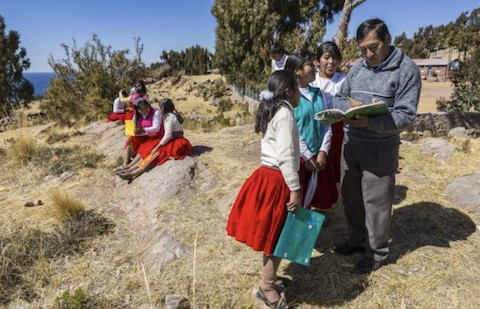 Teaching in the local language: Teacher training in question 2021-06-22 Millions of children around the world do not speak the same language at school and at home. While many countries have policies supporting the use of local languages in the classroom, implementing bilingual or multilingual education remains a challenge. In Latin America, the training of indigenous teachers is a key issue, as shown by a recent comparative study by the IIEP-UNESCO Bueons Aires office. Multilingualism: A reality in many parts of the world It has long been known that children learn best in their first language. In contexts where several languages coexist, bilingual or multilingual education is a strategy recommended by the United Nations to achieve equitable, inclusive and quality education by 2030. In India, teachers work in classes where up to 20 different languages are spoken. In Africa, it is estimated that only 5-15% of students know the official international language before they start school. As for Latin America, Spanish or Portuguese coexist with indigenous languages in communities that are still the most disadvantaged within education systems – both in terms of access to education and learning outcomes. One of the reasons for this is the lack of attention paid to the training of indigenous teachers. This is the subject of the comparative analysis of educational policies (in Spanish), carried out by Sylvia Schmelkes and Ana Daniela Ballesteros for the IIEP-UNESCO Buenos Aires office. The cases of Peru, Bolivia, Mexico and Colombia are studied in more detail. "The poor planning of indigenous peoples' education, manifested in the neglect of bilingual teacher training ... explains, but does not justify, the serious educational situation in which [these communities] find themselves.”Sylvia Schmelkes and Ana Daniela Ballesteros Rethinking and strengthening indigenous teacher training The model of bilingual intercultural education has been widely developed in the educational and linguistic policies of Latin American countries over the last 25 years. The aim has been both to combat discrimination against indigenous populations and to preserve the languages and culture of the communities. The continent is home to some 560 languages in total, most of which are in decline and some in serious danger of extinction. Indigenous communities represent at least 45 million people. This corresponds to 8% of the continent's population but 14% of the poor and 17% of those in extreme poverty. Despite policies that favour the training of indigenous teachers, the continent continues to suffer from a large deficit of qualified teachers who are able to speak the local language in addition to the official national language and to teach in bilingual schools. Among the many obstacles mentioned in the report are: historically weak basic education in indigenous communities due to lack of resources; difficulties related to language harmonization and teaching materials, as some languages are not documented; and what the authors call the "colonization of the consciousness" of indigenous populations in general, and of teachers in particular. "During their time in an assimilationist education system, many indigenous teachers have learned to devalue their language and culture, to integrate as much as possible into the dominant culture,” the authors explain. “And, as a result, to refuse to teach their culture and language in the classroom.” Despite the specific historical and cultural context of Latin America, similar obstacles can be found in many other parts of the world, hindering the effective integration of local languages and cultures into education systems. On the IIEP Learning Portal, discover a selection of resources from our library on language of instruction and learning outcomes. In Colombia, a system by and for indigenous people Among the national policies analyzed in the report, the Colombian case is particularly interesting and successful. As an alternative to the 'ethno-educational' model that had been prevailing in the country, a truly indigenous education system (Sistema de Educación Indígena Propia) was created in 2007 through the initiative of the communities. It was recognized by the Colombian government two years later. Within this framework, the Autonomous Indigenous Intercultural University (Universidad Autónoma Indígena Intercultural), based in the Cauca region in the southwest of the country, trains indigenous teachers for all levels of education, with its own curricula and content. It has developed courses of four to eleven semesters for different professional, technical or university qualifications, recognized by the State. For example, it has developed a 'Community Pedagogue' or a 'Mother Earth Revitalization Professional' titles. "Indigenous Colombians have struggled for many years to have their own needs, values, and rights recognized. The content of the programmes is based on these community and family needs," explains Ana Daniela Ballesteros. However, the approach is not closed and manages to articulate this approach with more universal educational objectives. As such, it is considered good practice. URL:http://www.iiep.unesco.org/en/teaching-local-language-teacher-training-question-13800
  Addressing hate speech through education: United Nations Global Education Ministers Conference and Multi-stakeholder Forum 2021-06-15 Hate speech is on the rise worldwide, with the potential to incite violence, undermine social cohesion and tolerance, and cause psychological, emotional and physical harm based on xenophobia, racism, antisemitism, anti-Muslim hatred and other forms of intolerance and discrimination (UN, 2020). History has shown us that genocide and other atrocity crimes begin with words – there is a collective responsibility to address hate speech in the present day to prevent further violence in the future. In June 2019, UN Secretary-General António Guterres launched a strategy to enhance the United Nations response to the global phenomenon of hate speech. As part of the implementation of the UN Strategy and Plan of Action on Hate Speech, the Secretary-General called upon UNESCO in partnership with the United Nations Office on the Prevention of Genocide and the Responsibility to Protect (OSAPG) to convene the ‘Global Education Ministers Conference and Multi-stakeholder Forum on addressing hate speech through education’, to be held respectively on 30 September – 1 October 2021 and 26 October 2021. In this context, education can play a fundamental role to address hatred both on- and offline, and help to counter the emergence of group-targeted violence. Strengthening educational responses to build the resilience of learners to exclusionary rhetoric and hate speech also lies at the core of the Education 2030 Agenda, and more specifically Target 4.7 of Sustainable Development Goal 4 (SDG 4), which touches on the social, moral and humanistic purposes of education. Global Education Ministers Conference 26 October 2021 A half-day, high-level online conference, in the presence of Heads of State and Government, Ministers of Education, the United Nations Secretary-General and UNESCO Director-General to endorse global commitments to address hate speech, both on- and offline, through education. Multi-stakeholder Forum 30 September – 1 October 2021 Two days of high-level online dialogues, bringing together civil society organizations, human rights experts, tech and social media companies, and government representatives, with a view to promote meaningful engagement and identify key recommendations for a way forward. URL:https://en.unesco.org/news/addressing-hate-speech-through-education-united-nations-global-education-ministers-conference
  UNESCO’s “Digital Creativity Lab” funds 4 new projects to address digital gap in the creative sector 2021-06-07 Cultural and Creative Industries (CCIs) are among the most hit by the COVID-19 crisis, and the pandemic witnessed a massive migration of cultural activities to online and hybrid forms. As the pandemic triggered the digitization of culture, new challenges are posing to the diversity of cultural expressions with amplified gaps in access, creation, and remuneration. The International Year of Creative Economy for Sustainable Developmentoffers a timely opportunity to broadly reflect this new reality on unprecedented challenges and opportunities. Against this backdrop, UNESCO is launching a new project “Digital Creativity Lab” with the funding from the Republic of Korea to address the digital skills gap in the cultural and creative industries and to strengthen policy frameworks. The UNESCO Korea Funds-In-Trust (KFIT) for the Development of Cultural and Creative Industries has, for over a decade, invested in the development of creative sectors. Building on this momentum and fully embracing the expanding digital environment, KFIT is now shifting its strategic turn toward supporting cultural entrepreneurship in the digital era. Inspired by the “Content Korea Lab” initiated by the Ministry of Culture, Tourism and Sport of the Republic of Korea, “Digital Creativity Lab” will support training programmes that strengthen digital skills and competencies in the CCIs. The UNESCO “Digital Creativity Lab” will fund 4 new projects, which are: Protecting Musicians’ Intellectual Property in Digital Platforms in Indonesia, led by UNESCO Jakarta Office Digital Transformation of Cultural and Creative Industries in the Republic of Moldova, led by UNESCO Venice Office Strengthening digital capacity for cultural and creative entrepreneurs in Mekong cluster, led by UNESCO Bangkok Office Strengthening Digital Literacy Skills and Competencies and Promoting Gender Equality in Cultural and Creative Sectors in Central Asia, led by UNESCO Almaty Office These projects range from supporting actions to protect musicians’ intellectual property in digital platform, piloting a 3 month-long creative digital incubation programme for female creative professionals aged under 45, and analyzing data on women working in the digital cultural and creative sectors followed by the online training programme to strengthen digital skills and competencies. With this new initiative, it is expected to pilot innovative practices in developing countries to implement the 2005 Convention in the Digital environment. For more information on Korea Funds-in-Trust (KFIT), see this brochure. To see an Open Roadmap for the implementation of the 2005 Convention in the Digital environment, click here. URL:https://en.unesco.org/creativity/news/unescos-digital-creativity-lab-funds-4-new-projects
  De FACTO : Science Po, l’AFP et le CLEMI unissent leurs expertises autour d’un projet Européen 2021-06-02 Le CLEMI membre du projet DE FACTO sélectionné par la Commission européenne pour mener des actions autour des médias numériques et de la désinformation à l’échelle de l’UE. Apprendre à s’informer est un enjeu majeur de nos sociétés européennes tant les citoyens de tous âges sont aujourd’hui soumis à un flux continu d’informations, d’images, de vidéos dont ils ne sont pas toujours en mesure d’identifier la source ou d’évaluer le contenu. Ce projet, coordonnée par le Médialab de Sciences Po en partenariat avec l’Agence France Presse (AFP) et le CLEMI associe chercheurs, fact-checkers, journalistes et experts de l’éducation aux médias et à l’information pour : - créer un réseau autour des pratiques informationnelles et des enjeux de désinformation ;- constituer une plateforme de recherche et d’échanges autour du décryptage des circuits de l’information et des mécanismes d’information et de désinformation, notamment en ligne ;- sensibiliser les professionnels et le grand public autour de ces problématiques. Il s’inscrit dans le cadre de la création, le 1er juin 2020 du European Digital Media Observatory (EDMO), observatoire visant à soutenir la création et les activités de communautés de recherche interdisciplinaires sur les problématiques de désinformation et les outils permettant de la contrer. L’objectif est de créer des synergies entre les activités de recherche, fact-check et d’éducation aux médias et à l’information et de donner accès aux enseignants, journalistes, décideurs et aux familles à des contenus et ressources proposés par le consortium. La participation du CLEMI à ce projet est un prolongement de l’action entreprise à l’échelle européenne au sein des institutions et avec les partenaires engagés en éducations aux médias et à l’information à travers le continent. URL:https://www.clemi.fr/fr/evenements/toutes-les-actualites/actualite/news/detail/News/de-facto-science-po-lafp-et-le-clemi-unissent-leurs-expertises-autour-dun-projet-europeen.html
  Reconciliation and Global Citizenship Education in Canada 2021-05-30 What we have learned Our lessons learned in Canada related to education on reconciliation with Indigenous Peoples have been profound, empowering, and full of hope for our future. These lessons may well be universal paths to peace, respect and solidarity no matter our geography or circumstances. They remind us that: The younger we start reconciliation education, the more certain our success in equipping learners with the knowledge, values and capacity required to live together in peaceful, respectful coexistence. Reconciliation is not possible without first fearlessly and openly seeking out all aspects of truth. Acknowledgement and recognition of each human being’s truth is essential to the establishment of respectful relationship. There is far greater honour of earning a global reputation as a country that demonstrates the courage and integrity to face our colonial history, accept responsibility and take action toward reconciliation than to continue to enjoy a national notoriety based on mistruth and flawed historical narratives. In matters of the heart and humanity children are often the teachers of their parents and grandparents, and are most certainly the most courageous agents of social change. The journey from the heart to the head is a long one but is possible with genuine intention and commitment to humanity, one person at a time. A context for reconciliation in Canada In recent history in Canada, the term “reconciliation” is most commonly associated with the work of the Truth and Reconciliation Commission of Canada (TRC) that officially launched on June 2, 2008 and held closing ceremonies on June 3, 2015 (delivering the final report on December 15, 2015). One of five components of the Indian Residential School Settlement Agreement (IRSSA), the TRC was a process through which survivors of the Indian Residential School system would educate all Canadians in their own words. The mandate of the TRC was “to inform all Canadians about what happened in Indian Residential Schools (IRS). The Commission will document the truth of survivors, families, communities and anyone personally affected by the IRS experience.” In the broadest of terms, most Canadians consider reconciliation as the concept of repairing and rebuilding the relationship between Indigenous (First Nations, Metis and Inuit) peoples and non-Indigenous Canadians. Some Canadians chose what could be considered the path of least resistance, or of least personal responsibility. In their estimation the federal government and the churches that operated the schools are solely responsible to make right the historical, political and ethical wrongs of the country. Indeed, early steps were taken in this direction in the form of apologies delivered by the Prime Minister of Canada and the leaders of each federal political party on June 11, 2008. This was followed immediately by compensation made available to Indigenous Peoples, specifically those who were forcibly removed from their homes, families and communities to be placed in Indian Residential Schools. The Independent Assessment Process and the Common Experience Payment were designed to address for the human rights violations perpetrated against them in those schools. But we know that financial compensation is not enough and that countries, organizations, agencies don’t reconcile. People reconcile. For the survivors of Indian Residential School who represented their fellow survivors in the negotiations of the IRSSA, the education of Canadians in the truth regarding their treatment, experiences and impacts, both direct and intergenerational, was of highest priority. That said, over the operational period of the TRC and beyond, the term ‘reconciliation’ has garnered more attention and debate than perhaps the actual processes that were established under the Indian Residential School Settlement Agreement. One of the most common question posed in forums on truth seeking and reconciliation during the time of the TRC was “What is reconciliation?” followed closely by “How do we achieve reconciliation?” It has become abundantly clear that reconciliation means different things to different people. For some residential school survivors, it means reconciling with the facts about how the system evolved and why their families and communities were targeted in such inhumane ways by government and churches. Many intergenerational survivors of residential school cited a need to reconcile with the anger, bitterness and resentment that they had long harboured toward their survivor parents, for the pain that they had suffered as children. Most had no knowledge of the trauma that their parents had suffered and subsequently passed on to them. For many non-Indigenous Canadians reconciling with the shock and devastation around our colonial history and who we really are as a country has been overwhelming. Some have responded with denial, others with shame and disillusionment. But a large portion of the population has chosen to take action for reconciliation: to learn more, to live differently; in essence to educate themselves for the benefit of all. In a similar vein of looking toward authentic and unabridged education as a path to a more peaceful Canadian society, many Indigenous peoples maintained the mantra “Truth before Reconciliation”. Indeed, what is “truth seeking” if not education. The Truth and Reconciliation Commission of Canada was certainly heavily focused on education, both formal and public education, to address the demands of survivors and the majority of Canadians who reported being completely ignorant of the Indian Residential School System that had operated officially for over 160 years in Canada. In the 94 Calls to Action released by the TRC on June 3, 2015, the Commissioners dedicated two sections of their directives specifically to education. Calls to Action 6-12, Education, very pointedly called upon the federal government to address the education inequities that Indigenous, and more specifically First Nations, students face in Canada on a daily basis. Inequities including funding levels, relevant curricula, Indigenous language rights, Treaty relationships, and Indigenous participation in all decisions aimed at resolving these issues, at the family, community and Nation levels. In a second education focused section of the TRC Calls to Action, Education for Reconciliation, there is a clear and direct alignment between Calls to Action 62-65 and the basic principles of Global Citizenship Education (GCED), a principle promoted by UNESCO. In these Calls to Action, the Commissioners call upon all levels of government to provide funding and to collaborate with Indigenous Peoples to develop Indigenous focused, mandatory education curricula, resources, and programs for all students across the country. Specifically, the Commission calls for “age-appropriate curriculum on residential schools, Treaties, and Aboriginal peoples’ historical and contemporary contributions to Canada a mandatory education requirement; curriculum and learning resources on Aboriginal peoples in Canadian history, and the history and legacy of residential schools; to utilize Indigenous knowledge and teaching methods in classrooms.” This section of the Calls to Action sets out parameters and processes to facilitate action on these required changes including the calls for identifying teacher-training needs and to “provide the necessary funding to post-secondary institutions to educate teachers; establish senior-level positions in government at the assistant deputy minister level or higher dedicated to Aboriginal content in education; establish a national research program with multi-year funding to advance understanding of reconciliation with the goal of building student capacity for intercultural understanding, empathy, and mutual respect.” The importance of education in the pursuit of reconciliation emerged more and more clearly as the mandate of the TRC unfolded. So much so that in the analysis of the 94 Calls to Action, in which only 2 of the 22 headings name education in their titles, one can identify education activities in approximately 80% of the actions identified in the document. As Truth and Reconciliation Chief Commissioner, Justice Murray Sinclair, has stated on many occasions, “education is what got us here, and education is what will get us out.” The role of education in reconciliation in Canada What better model of education to light the pathway out of such a dark legacy in Canada than that of Global Citizenship Education. The commitment and courage of classroom teachers has been key to answer the calls, not only from the TRC Commissioners, but those of survivors, families and communities, to seek truth and take reconciliACTION (a term coined by intergenerational survivor Stan Wesley, Cree from Moose Factory, Ontario). Many of these agents of change have accessed excellent education resources from the Legacy of Hope Foundation or their respective teachers’ associations, at a time when there were very few resources readily available to teachers. Many others created their own lessons, modules and resources as they learned alongside their students. One such program, Project of Heart, began with a query from a student and grew to become a nationally acclaimed education programme that has provided a critical learning path for thousands of teachers and students in every province and territory of Canada. Ottawa high school teacher Sylvia Smith immediately recognized the importance of her student’s query about residential schools and took action to develop a brilliant inquiry-to-action learning initiative driven by her students. Smith then reached out to engage teachers and students across the country to join the movement. There are several characteristics that make Project of Heart such an excellent example of how education not only supports reconciliation, but actually drives it. The fact that Ms. Smith developed Project of Heart through a responsive and engaging process of learning with her students is key. She facilitated the truth-seeking journey of her students, guided them with value-based markers, trusted them as active and responsible learners and empowered them to become the authors of their own narratives and agents of change. Together teacher and students created a step-by-step critical learning path that provided for -- in fact required -- place-based adaptation of the learning that positions students as players in the narrative of history and social change. The Project of Heart inquiry-to-action learning journey is fired by each student’s desire for raw truth from which they can draw their own conclusions. Students’ pursuit of knowledge and understanding are derived from primary source documents, both survivor voices and little-known documentation crafted and held by governments and churches. As a tangible way to both acknowledge the truth and commit to action for social change, each learner creates physical representations of reconciliation in the form of small wooden tiles, each one to honour the life of a child lost to the Indian Residential School system. Finally, and most importantly, students are challenged to undertake acts of social justice, things that they can do to make a difference, and contribute to achieving reconciliation in Canada. To bring the learning full circle, in a process of active and responsible citizenship and solidarity, students and teachers compile a compelling and concise blog post. They then submit the post to the keepers of the Project of Heart website, the now retired founding teacher Sylvia Smith and her family, to be shared on the public access site. The collection of posts inspires and engages other teachers and students across the country and beyond to seek truth and take action for reconciliation in their respective communities, situated within the territories of the original peoples of the land. Conclusion Reconciliation education is fundamental to a new way for people to live together on these lands, in justice and peace. Based in honest and courageous seeking of the truth, and tangible acts of reconciliation and social justice, it transforms students from mere learners to active changemakers. This is the heart of Global Citizenship Education, and it gives real hope for our future. ------------------------------------------------------------------ Author Charlene Bearhead, Director of Reconciliation at the Royal Canadian Geographical Society and education. Within the context of the TRC National Events between 2012-2015, she coordinated the Education Days for the Truth and Reconciliation Commission of Canada. Bearhead served as the first Education Lead at the National Centre for Truth and Reconciliation at the University of Manitoba, the first Education and Programming Lead at the Indian Residential School History and Dialogue Centre at the University of British Columbia, and the Education Coordinator for the National Inquiry Into Missing and Murdered Indigenous Women and Girls in Canada. URL:https://en.ccunesco.ca/idealab/reconciliation-and-education-in-canada
 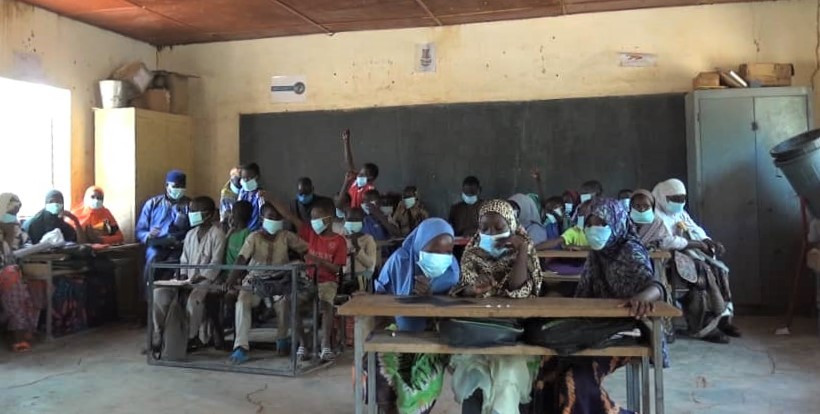 Des enseignants du Niger apprennent à prévenir l'extrémisme violent et à introduire la culture de la paix en classe 2021-05-24 In target schools in Niger’s Tillabéri region, teachers participate in workshops on youth empowerment and peacebuilding ©INDRAP/Issaka Harouna In the Diffa and Tillabéri regions of Niger, insecurity caused by violent extremism is undermining stability and hindering the right to access quality education for all. To address this situation, UNESCO's Capacity Development for Education (CapED) Programme supported the contextualization of a teacher's guide on the prevention of violent extremism for the Sahel region, designed by the International Institute for Capacity Building in Africa (IICBA). Following the validation of the guide in 2019, UNESCO conducted a pilot test of the guide in schools in the Diffa region, which was followed by a training workshop for 65 teachers from targeted primary and secondary schools in the Tillabéri region in April 2021. For the teachers in training, the first step was to identify the values to be transmitted to prevent violent extremism. "We discovered pedagogical approaches that can help build resilience and prevent violent extremism through the development of values in students, such as empathy, respect, tolerance, dialogue, and reconciliation" -- Djamila Gado Abdou, a teacher working in Torodi.Once these values were identified, it was necessary to find anchor points in the official curriculum, according to the subjects and grade. Through transformational pedagogy, which places students at the heart of the learning process, learners will be instilled with these values, and will be able to use and transmit them in contexts outside of school. "Transformational pedagogy [...] can positively impact students’ communities" says Yayé Touré, regional pedagogical inspector and trainer. "Little by little, the prevention of violent extremism and the resilience of communities will increase, with behavioral changes occurring first at the student level, and then transferred to the community level." -- Yayé Touré, regional pedagogical inspector and trainerThe trainers believe that this training should be replicated to maximize the expected results in other Sahel regions. "My wish is to expand this training beyond the pilot schools, because almost all of our schools exist amid insecurity, hence the absolute need to instill everyone with this innovative transformational pedagogy. This training is relevant for teachers as it allows them to take charge of insecurity issues, and thus prevent violent extremism. Thanks to this, there will be a change in behavior in regard to the violence that we experience on a daily basis" -- Issaka Halidou, deputy regional director and trainer in the Tillaberi region Following this training, the teachers' guide will be revised to better consider lessons learned. Trained teachers will continue to be supported by regional supervisors and trainers to develop ways to apply the transformational pedagogy, help students gain autonomy, and support youth in peace building, resilience, and prevention of violent extremism through education. This workshop, organized by the Niger technical team, accompanied by UNESCO's Multisectoral Regional Office for West Africa (Sahel), took place from 19 - 30 April 2021. It was co-financed by CapED in Niger and by a voluntary contribution from France. URL:https://en.unesco.org/news/teachers-niger-learn-prevent-violent-extremism-and-bring-culture-peace-classroom
  Appel à candidatures : Récompense UNESCO des villes apprenantes 2021 2021-05-23 Celebrating cities’ innovation in lifelong learning The UNESCO Institute for Lifelong Learning (UIL) is calling for applications for the UNESCO Learning City Award 2021. The award recognizes impactful, creative and innovative lifelong learning strategies and practices at urban level. All 229 members of the UNESCO Global Network of Learning Cities (GNLC) are invited to apply by 25 June 2021. Awardees will be honoured on 27 October 2021 during the fifth International Conference on Learning Cities in Yeonsu, Republic of Korea. Education is key to sustainable development and, with more than half of humanity living in urban areas, cities are at the forefront of efforts to live more sustainably. The cities making up the UNESCO GNLC aim to provide quality education and lifelong learning opportunities within their local communities to people of all ages and from all socio-economic and cultural backgrounds. While each learning city has its unique story, all UNESCO GNLC members benefit from the sharing of best practices within the network. UNESCO established the UNESCO Learning City Award in 2015. It is open to all member cities of the UNESCO GNLC and recognizes best practice in lifelong learning at urban level, the promotion of lifelong learning through effective and innovative projects or programmes, and innovative work in the field of lifelong learning. Key dates25 June 2021: Submission of application by the applicant city to the National Commission for UNESCO in the respective country.16 July 2021: National Commissions approve applications for a maximum of two cities per country.1 September 2021: Awardees decided by an international jury on behalf of the UNESCO GNLC; announcement of awardees.27 October 2021: Award ceremony during the fifth International Conference on Learning Cities in Yeonsu, Republic of Korea. Share your learning city story with us and apply for the 2021 Learning City Award! Further information How to apply Learning City Award concept note Learning City Award flyer with key dates URL:https://uil.unesco.org/lifelong-learning/learning-cities/call-applications-unesco-learning-city-award-2021-0