
News
Catch up on what’s happening in the world of global citizenship education.
316 results found
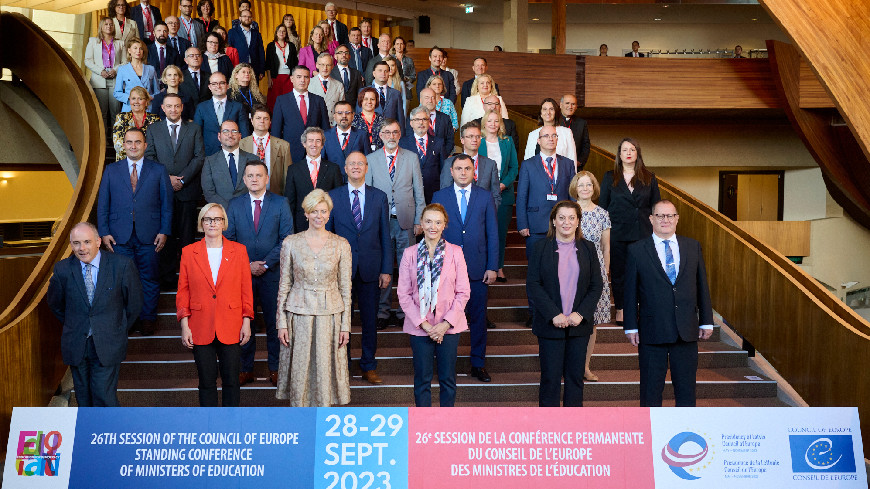 « Priorité aux apprenants » : lancement de la nouvelle stratégie du Conseil de l’Europe pour l’éducation 2023-10-23 Renouveler la mission démocratique et civique de l’éducation ; renforcer sa responsabilité sociale et sa réactivité ; la faire évoluer dans une perspective de transformation numérique fondée sur les droits humains : tels sont les trois piliers de la nouvelle stratégie du Conseil de l’Europe 2024-2030 pour l’éducation, lancée lors de la 26e Conférence des ministres de l’Éducation, qui s’est achevée aujourd’hui à Strasbourg. « J’ai insisté sur les dangers que représente le retour de formes extrêmes de populisme et de nationalisme dans certaines parties de notre continent et sur le recul démocratique que ces phénomènes ont provoqué. Nous devons apporter une réponse énergique, qui soit fondée sur les valeurs européennes et centrée l’éducation », a déclaré la Secrétaire Générale, Marija Pejčinović Burić, dans son discours de clôture. « Cela fait 25 ans que le Conseil de l’Europe travaille sur l’éducation à la citoyenneté démocratique et aux droits humains. Notre Organisation défend depuis longtemps l’accès de toutes et tous à une éducation de qualité », a-t-elle ajouté. « La nouvelle stratégie offre un programme ambitieux, qui donne la priorité au bien-être des apprenants, en vue d’en faire des citoyens confiants et engagés au sein de nos démocraties, sereins face à des thématiques complexes et des communautés diversifiées, et à l’aise avec des technologies numériques qui offrent de nouvelles perspectives d’apprentissage, mais dont les dangers – comme la désinformation, la manipulation et les discours de haine – peuvent être repérés, interprétés et rejetés », a expliqué la Secrétaire Générale. La stratégie vise principalement à promouvoir la souplesse dans la conception des programmes et des cursus, l’autonomie des apprenants, le développement professionnel des enseignants, ainsi que la gouvernance démocratique et participative des systèmes éducatifs et des établissements d’enseignement. Pour que les apprenants puissent s’épanouir et réussir, ils doivent se sentir soutenus et intégrés. URL: https://www.coe.int/fr/web/portal/-/-learners-first-the-new-council-of-europe-education-strategy-launched
 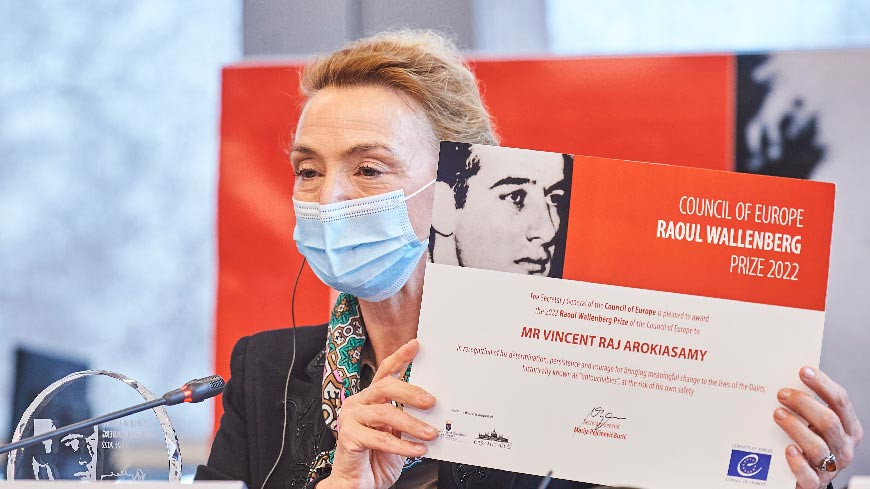 Lancement de l'appel à candidatures du Prix Raoul Wallenberg 2024 2023-09-26 Célébrons les personnes qui aident les autres. Reconnaissons leurs réalisations dans le domaine des droits de l’homme !A l'initiative du Gouvernement suédois et du Parlement hongrois, le Conseil de l'Europe a créé le Prix Raoul Wallenberg, afin de perpétuer la mémoire des accomplissements hors du commun de ce diplomate suédois.A partir de 2014, le Prix Raoul Wallenberg, d'un montant de 10 000€, récompense tous les deux ans les accomplissements humanitaires exceptionnels d'une personne, d'un groupe de personnes ou d'une organisation.
  Citoyenneté et fraternité journée nationale 2023-09-26 Voici une liste d’initiatives pouvant être prises pour la Journée Nationale Citoyenneté et Fraternité, ainsi que des ressources mises à votre disposition pour faciliter leur mise en œuvre. Cette journée sera l’occasion de valoriser les actions déjà menées tout au long de l’année dans chaque territoire et les personnes qui y contribuent. Elle offre aussi la possibilité d’inventer et de mettre en place de nouvelles initiatives, comme celles proposées sur le site dédié à cette journée (jncf.fr). Enfin cette journée se traduira aussi par des moments festifs (repas de quartiers) ou plus solennels.
  Appel à propositions de KIX : Réaliser l'égalité des genres et l'inclusion social à l'école 2023-07-04 Le Centre de recherches pour le développement international (CRDI) et le Partenariat mondial pour l’éducation (GPE) sollicitent des propositions de projets de recherche appliquée visant à produire et à mobiliser des données probantes à l’appui de la contextualisation et de la mise à l’échelle d’approches novatrices visant à renforcer l’éducation sensible au genre et socialement inclusive. Les propositions couvriront aussi les expériences scolaires sécuritaires pour tous les enfants, en particulier ceux qui font face à plusieurs formes d’inégalités et de marginalisation, dans les pays partenaires du GPE. Cet appel fait partie du Programme Partage de connaissances et d’innovations du GPE (KIX), une initiative conjointe du GPE et du CRDI. Une récente étude exploratoire a identifié deux sous-thèmes interconnectés comme étant prioritaires : Leadership, pédagogies et programmes d’études inclusifs et sensibles au genre Écoles sûres, inclusives et favorables à tous Les objectifs de cet appel sont les suivants : Produire des données probantes sur la façon de mettre à l’échelle l’impact des approches innovantes pour relever les défis de l’égalité des genres et de l’inclusion sociale à l’école. Renforcer les capacités des parties prenantes concernées à utiliser ces connaissances et ces innovations. Mobiliser les données probantes développées pour améliorer les politiques et les pratiques dans les systèmes éducatifs. Les propositions sélectionnées se verront attribuer des subventions allant de : 300 000 $ à 500 000 $ CA pour les projets d’incidence dans un seul pays 800 000 $ à 1 500 000 $ CA pour les projets d’incidence dans trois pays ou plus avec un lien direct avec les priorités politiques particulières de ces pays Jusqu’à 2 500 000 $ CA pour des projets visant un impact plus général au niveau régional ou mondial, avec un travail de fond dans au moins trois pays, et générant des biens publics tels que des boîtes à outils ou des plates-formes. L’appel est ouvert aux propositions d’organisations individuelles ou de consortiums de trois organisations au maximum. Veuillez consulter le document détaillé de l’appel pour connaître les critères d’admissibilité généraux et spécifiques à chacun des trois types de subventions. En savoir plus et soumettre une proposition La date limite de soumission est le 28 août 2023 à 23 h 59 ET. URL: https://www.globalpartnership.org/fr/news/appel-propositions-de-kix-realiser-legalite-des-genres-et-linclusion-social-lecole
 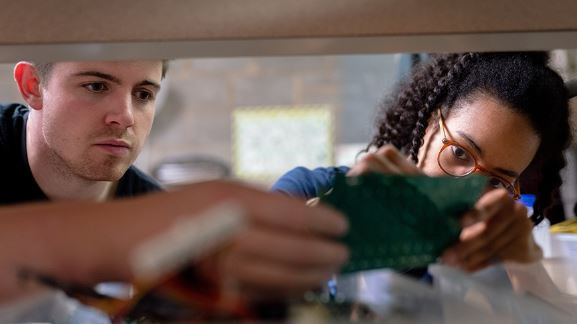 Lancement de la Semaine de l'éducation à la citoyenneté mondiale 2022: vaste mobilisation à travers l'Europe et au-delà pour promouvoir la solidarité et l'équité par l'éducation 2022-11-16 ⓒ thisisengineering-raeng on unsplash From 14 to 20 November practitioners and citizens are organising and attending thousands of activities online and onsite with a common goal: raising awareness for a more sustainable and equitable World. The Global Education Week (GEW) is an annual Worldwide awareness raising initiative unfolding during the third week of November. It is a call to rethink our world together, using Global Education as a tool for solidarity and change and contribute for a more and sustainable and equitable world. In preparation and during the Week pedagogical approaches and awareness-raising activities are shared amidst practitioners to rethink our habits, contributing to a sustainable future through sustainable lifestyles.The Global Education Week relates to the 17 United Nations Sustainable Development Goals (SDG’s) which aim to eliminate extreme poverty, reduce inequalities and combat the threat of climate change by 2030.Through its GEW webpage and its GEW Toolkit the North-South Centre offers practitioners guidance to implement awareness-raising activities tackling one or more of the five distinctive areas of the SDGs: Planet, People, Prosperity, Peace and Partnership. In the context of current crisis, namely the war in Ukraine and other ongoing tensions in the world, the GEW 2022 edition – in consultation and collaboration with the GE network national coordinators - will privilege the pillars People, Peace and Partnership, while not neglecting Planet and Prosperity. Everyone is invited to participate. The GEW campaign is a kick-off momentum to raise-awareness about GE for a yearlong period. Therefore activities can be scheduled beyond the Week itself. If you wish to discover the activities already registered for this year edition, we invite you to visit the GEW webpage (Activities taking place during the GEW are displayed through an interactive map and a scrolling list per countries), or to follow the Global Education Network Facebook page to be updated on the last news. The North-South Centre of the Council of Europe (NSC) objective as regards global education is to develop, enhance and sustain strategies, competence development and capacity-building for global education, targeting institutions and practitioners from the formal and non-formal educational sector. Global Education is understood as a holistic education dealing with the growing interconnectedness between local and global realities. It aims at developing learning communities in which practitioners are encouraged to work cooperatively and develop skills for a participatory global citizenship. Global Education aims at enabling learners to understand world issues while empowering them with knowledge, skills, values and attitudes desirable for world citizens to face global problems. One of the core competences of Global Education is the ability to understand facts holistically, fostering multiperspectivity and the deconstruction of stereotypes. It helps learners to understand the complexity of the world, be aware of contradictions and uncertainties and understand that there is no onedimensional solution for complex problems. It helps learners to deal with cultural variety of languages and codes so that mutual understanding can be achieved. URL:https://www.coe.int/en/web/north-south-centre/newsroom/-/asset_publisher/AtheQYwOmkWU/content/launch-of-the-global-education-wek-2022-large-mobilisation-across-europe-and-beyond-to-promote-solidarity-and-fairness-through-education-?inheritRedirect=false&redirect=https%3A%2F%2Fwww.coe.int%2Fen%2Fweb%2Fnorth-south-centre%2Fnewsroom%3Fp_p_id%3D101_INSTANCE_AtheQYwOmkWU%26p_p_lifecycle%3D0%26p_p_state%3Dnormal%26p_p_mode%3Dview%26p_p_col_id%3Dcolumn-4%26p_p_col_count%3D1
 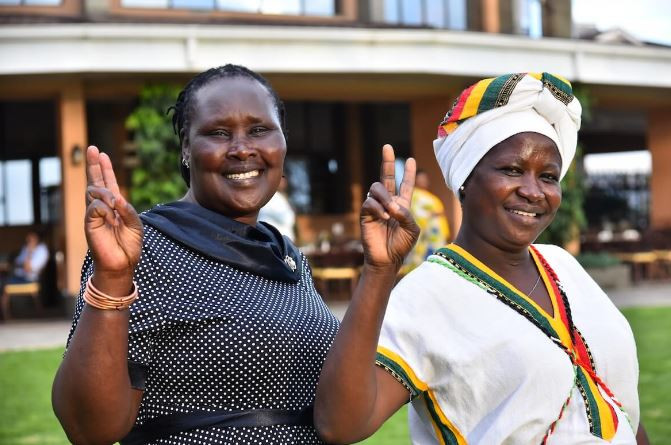 Kenyan women lead peace efforts in longstanding conflicts 2022-11-11 Mary Mariach and Christine Lemuya come from two tribes that have been involved in continual clashes in Kenya's ASAL (Arid and Semi-Arid Lands) regions where resources are scarce. Photo: UN Women/Luke Horswell Across Kenya, local conflicts driven by diverse factors have one thing in common: they’re increasingly being mediated by women. From ethnic tensions to land disputes, some of these conflicts stretch back decades; remaining unresolved despite the lasting instability and violence they create among communities. So women are stepping up to end longstanding strife through local dialogues and outreach, approaches male-dominated leadership has not always been willing to take. But in order to build lasting peace, they need support from both their communities and the state—which some are receiving, and many are not. Old conflicts, new harm In the country’s western region, longstanding tensions are driving new security risks in the neighbouring counties of Kisumu and Nandi. Their predominant ethnicities mirror the tribal background of the two leading presidential candidates in this year’s election, and the border region has been identified as a hotspot for elections-related violence. Dorothy Bonyo, treasurer of the sub-county peace committee in Muhoroni, a town in Kisumu, is witnessing the escalation first-hand: "Tension is increasing […] Our neighbours are effectively political opponents and in the marketplace we are beginning to see hate speech.” Beneath these simmering tensions are sustained economic pressures that continue to plague the area. It once thrived from a sugar industry that employed around 20,000 people—until corruption and misappropriation of profits decimated the trade, leading to job losses and low cash flow for many families. Oscar Ochieng, secretary of the Muhoroni sub-county peace committee as well as the Kisumu and Nandi cross-border peace committee, explains that in addition to political factors, there is a historical disagreement over land: "With low employment and little cashflow, kids drop out of school, and there’s a large number of disengaged youth. This leads to stock theft and eventually violent conflict. These companies are located right on the borders and much of the land is fallow. But it is also highly fertile and both communities feel it belongs to them." Oscar Ochieng, 35, explaining the region's conflict dynamics in front of a near-derelict sugar mill—one of the drivers of crime and stock theft. Photo: UN Women/Luke Horswell Among Kenya’s pastoral communities, several hundred miles to the north, competition over resources also drives strife. These tribes rely almost exclusively on livestock for their livelihood: moving with their herds, communities have significantly limited access to state provisions, often reporting the highest levels of poverty in the country. Scarcity of water, food and land leads to violent conflict between the tribes—a situation being exacerbated by the current drought crisis in East Africa. Armed bandits launch attacks to steal livestock and property, with people dying in the process. In the neighbouring communities of Turkana and Pokot, these clashes have been going on for decades. “The two tribes continually raid each other and the other seeks revenge, and it continues,” says Mary Mariach, a member of the Pokot tribe who has been the chairperson of the West Pokot County Peace Committee for 15 years. “This is the main cause of conflict between the Turkana and Pokot communities.” Christine Lemuya, a peace activist from the Turkana community, describes how the violence spills over into the lives of uninvolved community members, including women and children: “In 2019 I was stopped during a car journey by the Pokots. They stole everything and wanted to shoot us. I persuaded them to take our phones and possessions and let us go.” But, she adds, not everyone is so lucky: “Recently, there was a shooting on the highway and a boy of 13 was killed.” Building peace and tearing down patriarchy In Kisumu and Nandi, community action—particularly from the community’s women—has been crucial in negotiating peace. "Our women’s contribution to local peace infrastructure is what has contributed to the little peace we have enjoyed,” says Oscar. “For example, in 2014, a month-long conflict halted trade between the two communities. It was the women from both sides who met and brokered peace.” Community dialogues, called barazas, have been effective platforms for discussing such concerns. “My recommended approach has always been consistent dialogue—plenty of meetings—to drive home that there are alternative means to resolve our differences,” says Dorothy. A recent meeting between the two communities was joined by voices young, old, male and female, with state security actors and religious leaders also in attendance. A local choir performs during a community dialogue or "baraza" in Kisumu County, Kenya. Ethnic groups from Kisumu and neighbouring Nandi County have been experiencing increased tension ahead of the country's general elections. Photo: UN Women/Luke Horswell One of those voices was Maureen Omwiti, single mother of three and bar owner in Muhoroni. Ethnic tensions have been the source of intense trauma for Maureen and many others, but she is committed to showing her community that vengeance is not the answer: "As an ambassador of peace, it starts with yourself. The community see me, and they know that I was once a victim. It makes them think, reflect, and that has an impact." Oscar agrees: “Women play a fundamental role in peace advocacy in this region," he says. Maureen Omwiti at a community peace dialogue in Kisumu County. She is a member of a voluntary arts performance group that uses theatre to approach sensitive topics and promote peace. Photo: UN Women/Luke Horswell In Turkana and West Pokot, however, women have not always been allowed to play that role. For Mary and Christine, leading peacebuilding efforts has meant confronting fast-held patriarchal norms that marginalise the role of women. “In pastoral communities, women are considered like children,” explains Mary. “They’re not included in conversations on peace. The men hide their issues from the rest of the community, particularly when they are planning raids across the border. They feel that women might try to stop these activities.” In fact, that’s what Mary and Christine are trying to do. In 2016 the two women, with a wider group of like-minded individuals, set up the POTUMA Women’s Forum—an organisation bringing women from the Pokot, Turkana and Marakwet communities together to try and deescalate the shared insecurities of their tribes, as well as to challenge the patriarchy that limits women’s participation in peace and security issues. The group has allowed the women “to establish our shared experience of the same problem—losing family members, livestock, and property”, explains Mary. “Women are also the ones treating those injured in the fighting.” The POTUMA women have had some success in creating peace through dialogues with young men and boys. “We’ve been securing community radio space in local radios in local languages,” explains Christine. “Raising simple questions like ‘why are we killing each other?’ has an effect. People call the station, and it creates discussion.” Mary Mariach and Christine Lemuya during meeting of the National Women's Peace Committee Network in Naivasha, Kenya. Photo: UN Women/Luke Horswell But conflict in the region remains in flux, with periods of relative peace revolving into periods of heightened violence. Both women call for more involvement from state actors to help broker peace, particularly during the election year. “We need more dialogue on the ground,” says Mary. “We need to share the situations in our areas. Since COVID-19, we’ve only met once, and it depends on funds. When there are no resources, it’s hard to facilitate a simple village meeting.” For Mary, it is important to be able to understand and localise available policy frameworks like the Kenya National Action Plan: “It clearly shows women have a place in their community’s peace and security development—it is recognised in national policy. This policy is supposed to ensure active participation of women in peace and security spaces at the grass roots.” Christine adds, “Around 80 per cent of people in Turkana are below the poverty line, according to government data, and it has been increasing. Only 9 per cent of children are enrolled in secondary school; 11 percent of homes have access to electricity. At the end of the day, conflict always erupts. We need to uncover the root causes. We therefore need to address issues of poverty and the scarcity of resources in this region.” UN Women efforts to strengthen the women, peace and security (WPS) agenda in Kenya is supported by the Governments of Finland and Japan. Working with over 1,000 grassroots peacebuilders since 2019, Kenya’s National Action Plan (KNAPII) is being localized across the country to foster meaningful inclusion of women in community conflict issues. URL:https://www.unwomen.org/en/news-stories/feature-story/2022/10/kenyan-women-lead-peace-efforts-in-longstanding-conflicts
 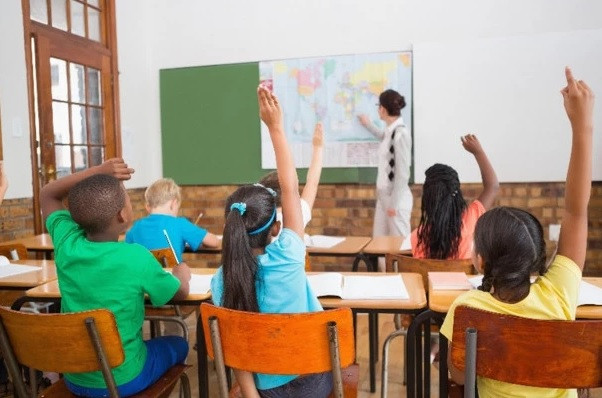 La UNESCO renueva su compromiso en favor de la educación inclusiva en un mundo plurilingüe 2022-11-11 "Language is a tool, but the goal is not simply to exchange one language for another, but to have an educational and social project", explained Adama Ouane, former staff at the UNESCO Institute of Lifelong Learning (UIL), in Hamburg, Germany. In a world where 7,097 known languages cohabit and 2.3 billion people lack access to education in their own language, making education inclusive is a challenge. The challenge becomes bigger in a multilingual country, where learners’ mother tongues are different from the language of instruction. Due to this lack of diversity in languages of instruction, many learners are disadvantaged in mainstream education systems. “Multilingual education must be anti-racist and anti-discriminatory”, explained Tarcila Rivera, Quechua activist and member of the United Nations Permanent Forum on Indigenous Issues. “One of the many reasons why parents and grandparents from indigenous and minority societies do not pass on languages to new generations is because of the persistence of racism, discrimination, Eurocentrism and the coloniality of power, knowledge and speech.” A multilingual education is a challenge that requires solutions relevant to learners needs and the reality of their lives. UNESCO encourages and promotes multilingual education based on mother tongue or first language. It is a type of education that begins in the language that the learner masters most and then gradually introduces other languages. This approach enables learners whose mother tongue is different from the language of instruction to bridge the gap between home and school, to discover the school environment in a familiar language and thus learn better. UNESCO convened language experts, including indigenous language experts, to advance multilingual education based on mother tongues, multilingualism, and linguistic diversity. Discussions explored the challenges and opportunities surrounding multilingual education, its fundamental role in the development agenda as well as UNESCO’s guidance on multilingual education. Today, more than half of all languages are in danger of falling into disuse. When a language disappears, the knowledge and socio-cultural diversity of a language community disappear with it, particularly among indigenous communities. To address this, an updated position paper by UNESCO will integrate additional areas of work such as the recovering of languages or language revitalization. Aligning with recommendations made during the Transforming Education Summit, an emphasis was also placed on Indigenous people’s education and languages. In his Vision Statement on Transforming Education, the United Nations Secretary General calls for equitable investments in education, to reach those who have been traditionally excluded from quality education, including Indigenous people. Similarly, a discussion paper on inclusive, equitable, safe and healthy schools calls for textbooks and curricula to be inclusive of all groups, and teacher training curricula to better address inclusive education principles. What’s next?The updated UNESCO Position Paper “Education in a Multilingual World” will be published in early 2023 and support countries to implement multilingual education and respond to the needs of marginalized and excluded learners, including indigenous peoples. To further support the work on multilingual education, UNESCO will publish a language and inclusion Policy brief as well as a background document on early childhood care and education and languages for the UNESCO World Conference on Early Childhood Care and Education in November 2022. UNESCO will also celebrate International Mother Language Day 2023 around promising policies and practices on Multilingual Education focusing on indigenous and other languages. UNESCO work in Inclusion in education UNESCO work in Languages in education URL: https://www.unesco.org/en/articles/unesco-doubles-down-its-commitment-inclusive-education-multilingual-world
 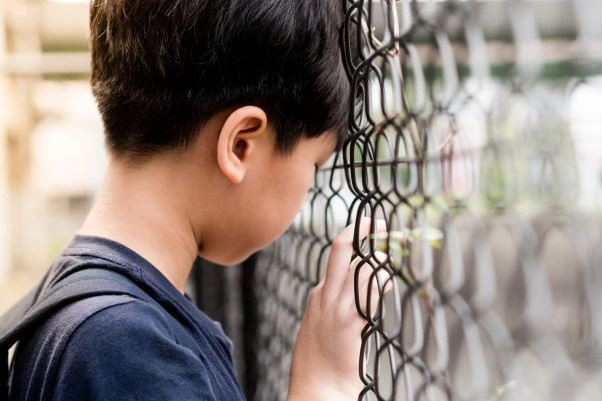 Q&A: The Role of Teachers in Preventing and Addressing School Violence 2022-10-29 ⓒ myboys.me/Shutterstock.com What is school violence? School violence refers to all forms of violence, that takes place in and around schools and is experienced by students and perpetrated by other students, teachers and other school staff. This includes bullying and cyberbullying. Bullying is one of the most pervasive forms of school violence, affecting 1 in 3 young people. What forms may school violence take? Based on existing international surveys that collect data on violence in schools, UNESCO recognizes the following forms of school violence (recognising crossover between categories): Physical violence, which is any form of physical aggression with intention to hurt and includes: Physical violence perpetrated by peers, including physical fights (two students of about the same strength or power choosing to fight each other and physical attacks (one or more people hitting or striking a student with a weapon such as a stick, knife or gun). Physical violence perpetrated by teachers, which includes the intentional use of physical force with the potential to cause death, disability, injury or harm, regardless of whether it is used as a form or punishment (corporal punishment) or not. Psychological violence as verbal and emotional abuse, which includes any forms of isolating, rejecting, ignoring, insults, spreading rumors, making up lies, name-calling, ridicule, humiliation and threats, and psychological punishment. Sexual violence, which includes intimidation of a sexual nature, sexual harassment, unwanted touching, sexual coercion and rape, and it is perpetrated by a teacher, school staff or a schoolmate or classmate, and affects both girls and boys. Bullying as a pattern of behaviour rather than isolated incidents, which can be defined as intentional and aggressive behaviour occurring repeatedly against a victim where there is a real or perceived power imbalance and where the victims feel vulnerable and powerless to defend themselves. Bullying can take various forms: Physical bullying, including hitting, kicking and the destruction of property; Psychological bullying, such as teasing, insulting and threatening; or relational, through the spreading of rumours and exclusion from a group; and Sexual bullying, such as making fun of a victim with sexual jokes, comments or gestures, which may be defined as sexual ‘harassment’ in some countries. Cyberbullying is a form of psychological or sexual bullying that takes place online. Examples of cyberbullying include posting or sending electronic messages, including text, pictures or videos, aimed at harassing, threatening or targeting another person via a variety of media and social platforms such as online social networks, chat rooms, blogs, instant messaging and text messaging. Cyberbullying may also include spreading rumours, posting false information, hurtful messages, embarrassing comments or photos, or excluding someone from online networks or other communications. © UNESCO Who perpetrates school violence? School violence is perpetrated by students, teachers and other school staff. However, available evidence shows that violence perpetrated by peers is more common than by teachers and other school staff. What are the main reasons why children are bullied? All children can be bullied, yet evidence shows that children who are perceived to be “different” in any way are more at risk. Key factors include: Physical appearance; ethnic, linguistic or cultural differences including migrant and refugee status; gender, including not conforming to gender norms and stereotypes; social status including poverty; disability; and age. What are the consequences of school violence? Global comparable data are available only for the consequences of bullying, not for the consequences of other forms of school violence. Educational consequences – Being bullied undermines the sense of belonging at school and affects continued engagement in education. Children who are frequently bullied are more likely to feel like an outsider at school, and more likely to want to leave school after finishing secondary education. Children who are bullied have lower academic achievements than those who are not frequently bullied. Health consequences – Children’s mental health and well-being can be adversely impacted by bullying. Bullying is associated with higher rates of feeling lonely and suicidal, higher rates of smoking, alcohol and cannabis use and lower rates of self-reported life satisfaction and health. School violence can also cause physical injuries and harm. Why are teachers such an important part of the holistic approach to prevent and address school violence? Teachers are key to building a positive and supportive learning environment. They can: Provide quality education that develops students’ self-awareness, self-control, and interpersonal skills that are vital for healthy and respectful relationships; create psychologically and physically safe school and classroom environments; model caring and respectful relationships, and positive approaches to conflict management or discipline; guide students to take action themselves through student-led initiatives and peer approaches; recognize and respond to incidents of violence and connect students with referral services when needed; provide a link between school and community through their relationship with parents; and generate evidence and assessing what works at the school level. What support do teachers need to help create safe learning environments? A global online survey of teachers’ perceptions and practice in relation to school violence conducted by UNESCO in 2020 revealed that not all teachers are fully prepared to fulfill the role in preventing and addressing school violence: Almost half of the teachers surveyed say they received little or no training on school violence during their pre-service education, and more than two-thirds say that they have learned how to manage school violence through experience. Three in four teachers surveyed can identify physical and sexual violence yet are less likely to recognize some forms of psychological violence. Even if the teachers surveyed can identify school violence, and four in five say it is their responsibility to create a safe learning environment, they do not always intervene. Four in five help victims, but only half engage with students who witness violence. Teachers’ ability to positively influence school environments and to prevent or respond to violence, depends heavily on their preparation, in-service professional development, teaching standards, duties and workload. Other considerations include political leadership, legal and policy frameworks at national, local and school level, and support, resources and training. What are the linkages between school violence, school-related gender-based violence (SRGBV) and violence based on sexual orientation and gender identity or expression (SOGIE)? School violence may be perpetrated as a result of gender norms and stereotypes and enforced by unequal power dynamics – it is referred to as school-related gender-based violence. It includes, in particular, a specific type of gender-based violence, which is linked to the actual or perceived sexual orientation and gender identity or expression of victims, referred to as violence based on sexual orientation and gender identity or expression, including homophobic and transphobic bullying. School-related gender-based violence is a significant part of school violence that requires specific efforts to address. Does school-related gender-based violence refer to sexual violence against girls only? No. School-related gender-based violence refers to all forms of school violence that is based on or driven by gender norms and stereotypes, which also includes violence against and between boys. Is school violence always gender-based? There are many factors that drive school violence. Gender is one of the significant drivers of violence but not all school violence is based on gender. Moreover, international surveys do not systematically collect data on the gendered nature of school violence, nor on violence based on sexual orientation and gender identity or expression. Based on the analysis of global data, there are no major differences in the prevalence of bullying for boys and girls. However, there are some differences between boys and girls in terms of the types of bullying they experience. Boys are much more exposed to physical bullying, and to physical violence in general, than girls. Girls are slightly more exposed to psychological bullying, particularly through cyberbullying. According to the same data sexual bullying (sexual jokes, comments and gestures) affects the same proportion of boys and girls. Data coming from different countries, however, shows that girls are increasingly exposed to sexual bullying online. How does UNESCO help prevent and address school violence? The best available evidence shows that responses to school violence including bullying that are effective should be comprehensive or holistic, i.e. made of a combination of policies and interventions. Often this comprehensive response to school violence is referred to as a whole-school approach. Based on an extensive review of existing conceptual frameworks that describe that whole-school approach, UNESCO has identified the key components of a response that goes beyond schools and could be better described as a whole-education system or whole-education approach. These components are the following: Strong political leadership and robust legal and policy framework to address school violence; Training and support for teachers on school violence prevention and positive classroom management Curriculum, learning & teaching to promote, a caring (i.e. anti- school violence/anti-bullying) school climate and students’ social and emotional skills A safe psychological and physical school and classroom environment Reporting mechanisms for students affected by school violence, together with support and referral services Involvement of all stakeholders in the school community including parents Student empowerment and participation Collaboration and partnerships between the education sector and a wide range of partners (other government sectors, NGOs, academia) Evidence: monitoring of school violence including bullying and evaluation of responses - UNESCO’s work to prevent and address school violence and bullying URL:https://www.unesco.org/en/articles/qa-role-teachers-preventing-and-addressing-school-violence
 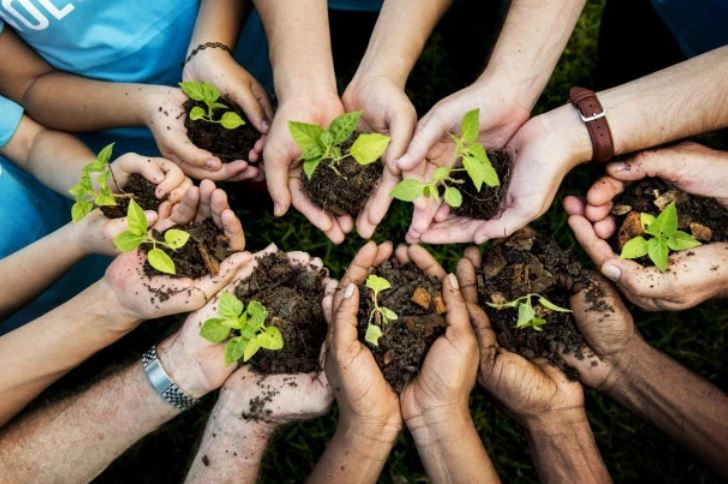 L'UNESCO lance le réseau mondial de l'EDD pour 2030 2022-10-24 ⓒ Rawpixel.com/Shuttersock.com ESD for 2030 Global Network (ESD-Net 2030). With the support of the Government of Japan, UNESCO’s new network aims to facilitate the implementation of the ESD for 2030 framework and its Roadmap by enhancing knowledge sharing, collaboration, mutual learning, advocacy, monitoring, and evaluation, among a wide range of education stakeholders. The launch webinar introduced the objective and planned activities of the Network and featured interventions from several Member States as well as an interactive session highlighting the relationship between culture and sustainability. "What we need to do is make continuous efforts to make the concepts of ESD always fresh and updated, and I hope this network will provide the opportunities at which we can keep ourselves updated and learn with each other." -- Mr Shun Shirai, Deputy Secretary-General, Japanese National Commission for UNESCO The webinar provided an overview of the ESD for 2030 Country Initiatives – country plans that map, mobilize and create synergies among ongoing and new ESD activities that Member States are currently developing and implementing as part of the ESD for 2030 Roadmap. It is now time to systematically embed ESD in all aspects of education systems, and that this can only be possible when all stakeholders talk to each other, break down silos, and connect the dots. Emphasis on collaboration and networking Panelists from Saint Kitts and Nevis, Oman, Zambia, Germany and Lao PDR shared experiences and lessons learned on how they have prepared or are preparing their own ESD for 2030 country initiative including challenges and triumphs within their specific contexts. For example, Bianca Bilgram, Head Task Force Education for Sustainable Development at the German Commission for UNESCO shared the development process for their country initiative. To achieve the goal of empowering all learners by 2030 to act sustainably, Germany established a National Platform (NP) for ESD with over 300 national stakeholders from various sectors and industry, including government, science, civil society, youth, and academia to implement the national action plan on ESD. © UNESCO Further, the speakers shared how they have embraced the opportunity for collaboration and cooperation. Khalid Al Mawali, Head of Higher Education and Scientific Research Section of the National Commission for Education of Oman, described the country’s efforts to diversify their financial resources through collaboration with private sector partners in implementing ESD activities. Professor Overson Shumba, Director Centre for Academic Development of Copperbelt University in Zambia, explained that one of the challenges was that National Working Group members were coming from different sectors and had never worked in collaboration before. The perception was that education is the exclusive role of the Minister of Education. "There's a lot of work happening within our country, but sometimes there's a need for more coherence and a greater need for people to understand how their activities and their work connect to this overarching concept, which is education for sustainable development." -- Ms Tricia Esdaille, Senior Assistant Secretary, Ministry of Education, St. Kitts and Nevis The ESD country initiatives, and ESD-Net 2030, provide an opportunity to overcome some of these challenges, by fostering collaboration and cooperation across a variety of stakeholders. Culture, art and sustainability An example of this intersectoral collaboration was highlighted in the second half of the webinar, as part of ESD-Net 2030’s series of global interactive learning workshops on ESD pedagogy, highlighting the unique role of art and culture in mainstreaming ESD. © UNESCO Organized by Ki Culture, an international nonprofit organization working to unite culture and sustainability, the workshop invited participants as the leaders on ESD, to think about culture and about the opportunities that the cultural sector offers. For example, the facilitators highlighted the importance of museums and cultural institutions, with more than 95,000 museums in the world just waiting to educate and engage people with topics of sustainability. They provide informal learning spaces for all types of audiences from young children to elderly people, from all different backgrounds and really from everywhere on the on the planet. They provide opportunities for us to educate people about the holistic approach to sustainability through not just the lens of climate change, but also social justice, for example. The workshop was then divided into 4 breakout rooms to dive deeper into innovative opportunities for ESD: Utilizing cultural centers as informal learning platforms for education for sustainable development How to use art to as an expressive tool for connecting people with sustainability Practicing effective communication to empower us to become leaders for ESD in our daily conversations Taking action in our workplace and daily lives to engage in sustainability. Participants were then encouraged to try out some of these practices and prepare a short video or photo essay of their experiences. "Art and culture can connect with people on an emotional and personal level not only through experiences and engagement, but also through creative expression." -- Caitlin Southwick, Founder and Executive Director of Ki Culture and Sustainability in Conservation This call to action not only sets a precedent for potential collaboration on ESD, and also mobilizes key stakeholders to accelerate initiatives centered on promoting and implementing ESD and efforts aimed at overcoming common local, national, and regional challenges. More on UNESCO’s work in education for sustainable development URL:https://www.unesco.org/en/articles/unesco-launches-esd-2030-global-network
  Afghanistan: UNESCO and the European Union join forces to support media resilience 2022-10-24 © UN Photo/Richard Wolf UNESCO and the European Union are joining forces to support Afghan media outlets and journalists, through a new 18-month initiative, which will enhance Afghan media resilience and foster their role in providing access to information for Afghan citizens. "UNESCO is proud to announce this new partnership with the generous funding of the European Union. By supporting independent Afghan media outlets and specialized civil society organizations, the project will be an important contribution in ensuring access to lifesaving, humanitarian and conflict-sensitive information for millions of Afghan citizen." -- Tawfik JelassiAssistant Director General for Communication and Information, UNESCO UNESCO will provide support to Afghan media outlets in the production of conflict-sensitive, humanitarian, health and educational public interest content. The project will benefit at least 6 million Afghan citizens, with a specific focus on reporting addressed at women, girls and youth. UNESCO will also be partnering with civil society organizations and local journalists’ unions to train an estimated six hundred journalists on conflict-sensitive reporting, digital and physical safety, and train journalism students and community volunteers on journalism best practices and community reporting. The project will be fully aligned with the United Nations Transitional Engagement Framework (UN TEF) and funded by the European Union Neighborhood Development and International Cooperation Instrument – Global Europe (NDICI-GE) under the crisis response window of the rapid response pillar. In his most recent report on the situation in Afghanistan and its implications for peace and security, (A/77/340-S/2022/692), the Secretary General of the United Nations has documented repeated human rights violations against journalists and media outlets, curtailing freedom of the media and the safety of journalists in the country. The report details the rising humanitarian needs of around 24.4 million people (59 percent of the Afghan population), which have been further exacerbated by the sharp economic decline and economic crisis, protracted vulnerability and recent earthquakes and natural hazards affecting the country. "Freedom of expression, media freedom and women's rights are at the heart of our engagement in Afghanistan. The partnership between the European Union and UNESCO reflects our commitment to protecting these human rights. Together, we are taking concrete steps to support the survival of Afghan media, promote access to verified information, and mitigate the impact of disinformation." -- Raffaella IodiceChargée d’Affaires a.i. and Deputy Head of the European Union Delegation to Afghanistan In an appeal entitled “Afghan journalism is threatened with extinction”, published by Reporters Without Borders in response to the events of August 2021, more than hundred Afghan journalists still working in the country appealed to the international community to provide immediate support to the Afghan media sector having also to cope with a financial crisis. A report published by the International Federation for Journalists (IFJ) in February 2022, which is based on a survey conducted by its local affiliate the Afghanistan National Journalists Union (ANJU), found that across 33 provinces, 318 media outlets closed since August 2021. Out of the 623 outlets previously operating in the country, only 305 remained open in February 2022. Women journalists have been especially hard-hit. According to a recent survey by ANJU, which was supported by UNESCO, 80% of women journalists have lost their job in the radio sector alone. In total, 98 radio stations have ceased operations since August 2021, with 91% of those surveyed stating they were in need of financial support. URL:https://www.unesco.org/en/articles/afghanistan-unesco-and-european-union-join-forces-support-media-resilience