
News
Catch up on what’s happening in the world of global citizenship education.
316 results found
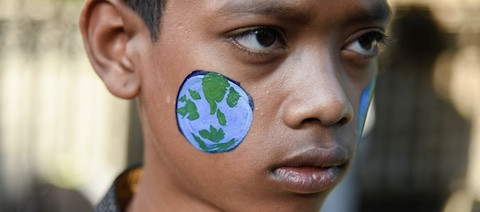 UNESCO declares environmental education must be a core curriculum component by 2025 2021-05-21 Over 80 ministers and vice ministers and 2,800 education and environment stakeholders committed to taking concrete steps to transform learning for the survival of our planet by adopting the Berlin Declaration on Education for Sustainable Development (ESD) at the end of a three-day virtual World Conference held from 17 to 19 May. The Conference, followed online by over 10,000 viewers, was organized by UNESCO in cooperation with the Federal Ministry of Education and Research of Germany and the German Commission for UNESCO as advisory partner. UNESCO has called for Education for Sustainable Development to be a core component of all education systems at all levels by 2025. Education can be a powerful tool for transforming our relationship with nature. We must invest in this field in order to preserve the planet.-- Audrey Azoulay, UNESCO Director-General UNESCO’s launch of a new publication, which analyzed educational plans and curricula frameworks in close to 50 countries informed the discussions. UNESCO found that more than half make no reference to climate change, while only 19% speak about biodiversity. The Berlin Declaration on Education for Sustainable Development outlines a range of policies to transform learning encompassing teaching, learning, professional training and civic engagement. It also highlights the need to implement Education for Sustainable Development with focus on cognitive skills, social and emotional learning, collaboration skills, problem solving, resilience-building. We need training for sustainable development not to be a privilege but accessible to all people. The success of the Education for Sustainable Development programme for 2030 will bring us closer to all the SDGs.-- Angela Merkel, German Chancellor “We need training for sustainable development not to be a privilege but accessible to all people. The success of the Education for Sustainable Development programme for 2030 will bring us closer to all the SDGs,” said German Chancellor Angela Merkel in her welcoming address, describing Germany’s broad network of partners working on sustainability at all levels of education and training. Throughout the Conference, countries shared plans to integrate Education for Sustainable Development. Ms Anja Karliczek, Germany’s federal minister of education and research, shared the commitments of 18 countries of the European Union to implement the Education for Sustainable Development for 2030 framework, underscoring it as a driver for the achievement of all the SDGs. We must focus not only expanding access and improving learning outcomes, but also on the kind of education needed in our world. Education for Sustainable Development will be at the core of reimagining education.-- Amina Mohammed, UN’s Deputy Secretary-General Laurent Fabius, who presided COP21 where the Paris Agreement was sealed, stated the “fight against climate change begins at school.” He recalled commitments in the Paris Agreement to education, and called for increased efforts to improve teacher training on ESD and increase financing. “2021 is the year in which we will overcome the pandemic and embark on a sustainable development model for the future that must include ESD. If we miss this occasion, we will lose decades. This is a race against the clock.” The voices of young people were given a platform throughout the Conference, as those leading the call for change so that they can #LearnForOurPlanet. Building a whole new lifestyle is not an easy, but slowly and together I’m sure we can do it. But education needs to give us the tools to do this. Learning not just about our planet but for our planet needs to be part of every young person’s education, everywhere in the world.-- Rajwa Pandhita, a student from Indonesia The adoption of the Berlin Declaration will create momentum for the implementation of ESD for 2030 Roadmap – the framework for this decade of Education for Sustainable Development. Every UNESCO Member State will be asked to create a network of actors who together can implement the ambitious vision for education. From Berlin, 2021 will provide key opportunities for governments to apply this commitment, including the United Nations Biodiversity Conference (COP 15) and the United Nations Climate Change Conference (COP26) in Glasgow. URL:https://en.unesco.org/news/unesco-declares-environmental-education-must-be-core-curriculum-component-2025
  International Research Centre on Artificial Intelligence launches call for AI powered solutions for sustainable development 2021-05-19 The International Research Centre on Artificial Intelligence (IRCAI), a Category 2 centre under the auspices of UNESCO, is launching a call for proposals for the top 100 projects harnessing Artificial Intelligence (AI) to meet the Sustainable Development Goals. Themes range from education, healthcare and climate to assistive technologies and circular economy. The top 10 projects will receive support through training, advisory, networking and mentoring activities across IRCAI partners. The Center is partnering with Village Capital to support the Top 10 projects with an investment readiness training session and social finance to provide training on innovative finance and outcome measurement. The selected submissions will be presented in IRCAI’s Global Top 100 List to showcase researchers, entrepreneurs and thinkers, as well as projects using AI to make significant impact. In addition, IRCAI will publish a report highlighting 10 of the most compelling cases and solutions of Artificial Intelligence and their contribution to sustainable development. It will celebrate leaders that make change possible and describe the mindset and strategies that drive them in their work. Under the auspices of UNESCO, IRCAI was launched on 29 March 2021 with the aim to advance research on the use of AI to achieve the Sustainable Development Goals (SDGs) by showcasing relevant projects across the world. More information on the Call for Proposal and additional information on how to nominate a project can be found here. Submissions are open until 30 June 2021. Related links Call for Proposals on IRCAI Global Top 100 International Research Center on Artificial Intelligence under the auspices of UNESCO UNESCO Artificial Intelligence URL:https://en.unesco.org/news/international-research-centre-artificial-intelligence-launches-call-ai-powered-solutions
 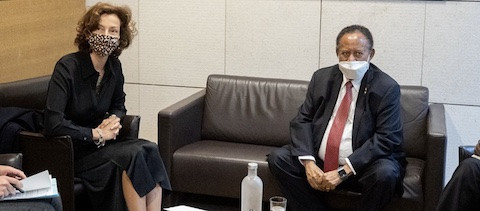 Sudan Conference: UNESCO intensifies cooperation on press freedom, a key driver of democratic transition 2021-05-19 Meeting in Paris ahead of the International Conference convened by France to Support the Sudanese Transition, Abdalla Hamdok, Prime Minister of Sudan, and the Organization’s Director-General Audrey Azoulay agreed to reinforce ongoing cooperation to support press freedom and media development, key pillars of the democratic transition underway in the country. Press freedom is a cornerstone of any democratic society, and a key driver of the democratic transition in Sudan. UNESCO is committed to provide its expertise and guidance for a safe press environment. Working closely with Sudan since 2019, we have put together a Media Reform Roadmap to be implemented over the next 3 years, and we stand ready to step up our efforts.-- Audrey Azoulay, UNESCO Director-General On 25 September 2019, the Prime Minister of Sudan requested UNESCO's support to introduce media reforms as part of the transitional process during the UN General Assembly Event on Media Freedom, when he announced Sudan's signing of the Global Pledge for Media Freedom spearheaded by Canada and the United Kingdom. In response, UNESCO launched a first assessment of the country’s media environment using its Media Development Indicators. In September 2020, the outcomes of these consultations were consolidated and published in the form of a Media Reform Roadmap. The next stage of UNESCO’s cooperation with Sudan in this area will consist of implementing the Roadmap over the next three years. The areas to be reinforced in line with the Roadmap concern: legislative reform, institution building, training and employment of media professionals, and investment in technical infrastructure. Since 2019, Sudan established a National Team for Media Reform, comprised of media experts, media owners and managers, journalists, officials of the Ministry of Culture and Information and civil society representatives who took part in the assessment of the media landscape. UNESCO is promoting the participation of women in the media and has supported safety training for over 250 women journalists. UNESCO has also trained security officers on freedom of expression and the safety of journalists. Also in February 2020, UNESCO launched an assessment of internet development in Sudan based on its Internet Universality Indicators, which is scheduled to be completed by the fourth quarter of 2021. This project is funded by the Swedish International Development Cooperation Agency (SIDA) through UNESCO's International Programme for the Development of Communication. Financial support for these activities has been sourced through UNESCO's Multi-Donor Programme on Freedom of Expression and Safety of Journalists. Throughout 2020, UNESCO launched a series of capacity-building sessions for over 300 Sudanese journalists to address disinformation and prevent violent extremism and hate speech. UNESCO is seeking additional support to build capacities of the media and strengthen national institutions such as the Sudanese National Commission on Human Rights. URL:https://en.unesco.org/news/sudan-conference-unesco-intensifies-cooperation-press-freedom-key-driver-democratic-transition
 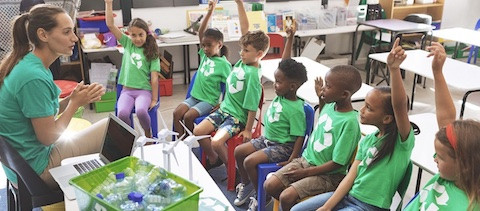 UNESCO urges making environmental education a core curriculum component in all countries by 2025 2021-05-14 Education is not giving students sufficient knowledge to adapt, act and respond to climate change and environmental crises, according to a new report published by UNESCO on the eve of the World Conference on Education for Sustainable Development, which will take place on line from Berlin (Germany), from 17 to 19 May. The study, Learn for Our Planet, analyzed educational plans and curricula frameworks in close to 50 countries across all regions. More than half make no reference to climate change while only 19% speak about biodiversity. The study notes a lack of attention to socio-emotional skills and action-oriented competences that are central to environmental and climate action. In an on-line survey of some 1,600 teachers and education leaders conducted for the study, one third of respondents indicated that environment-related issues were not part of teacher training. Education must prepare learners to understand the current crisis and shape the future. To save our planet, we must transform the way we live, produce, consume and interact with nature. Integrating education for sustainable development into all learning programmes must become fundamental, everywhere.-- Audrey Azoulay, UNESCO Director-General UNESCO has therefore set a new target: to make environmental education a core curriculum component in all countries by 2025. The Organization is working with its 193 Member States to support curriculum reform and track progress to ensure everyone acquires the knowledge, skills, values and attitudes to introduce positive change and protect our planet’s future. The World Conference will bring together some 2,500 participants, including 81 education ministers and leading players committed to the transformation of education so that all learners can address the climate crisis, biodiversity loss and all other sustainable development challenges. It will aim to create strategies for the integration of education for sustainable development into every level of education and training, in line with a new framework. Over three days, sessions will focus on optimal ways to harness education to address interconnected global challenges such as climate change, biodiversity loss, green and circular economies, technological advancement and building resilient relationships with the planet through education. It will look at ways to reinforce the capacity of educators, empower youth and take local actions through education for sustainable development. All participants will be called upon to commit to the Berlin Declaration on Education for Sustainable Development that will outline a range of policies encompassing teaching, learning, professional training and civic engagement. High-level participants scheduled to attend the conference: Audrey Azoulay, Director-General, UNESCO Angela Merkel, Chancellor, Germany Amina Mohamed, Deputy Secretary-General of the UN Patricia Espinosa, Executive Secretary, UNFCCC Princess Lalla Hasnaa, President, Mohammed VI Foundation for Environmental Protection, Morocco Laurent Fabius, President of COP21 (France) Alexander Gerst, European Space Agency Astronaut and advocate for sustainability (Germany) Jeffrey Sachs, Director, the Center for Sustainable Development, Columbia University and President, the UN Sustainable Development Solutions Network Andreas Schleicher, Director of Education and Skills and Special Advisor on Education Policy to the Secretary-General, Organization for Economic Cooperation and Development (OECD). In the lead-up to the Conference, people have been adding their voices to a global campaign launched by UNESCO to call for changes in education so we can all #LearnForOurPlanet, for our own survival and for the future of life on earth. UNESCO is the leading United Nations organization on Education for Sustainable Development, which aims to ensure that all learners acquire the knowledge, skills, values and initiative to act for the planet and live sustainably. In 2019, the UN General Assembly adopted a resolution calling on the international community to scale up education for sustainable development in order to achieve the 2030 Agenda. The resolution recognized UNESCO’s leadership in this field. The conference is organized in cooperation with Germany’s Federal Ministry of Education and Research and with its generous support. URL:https://en.unesco.org/news/unesco-urges-making-environmental-education-core-curriculum-component-all-countries-2025
  With UIL support, six countries develop their education systems from a lifelong learning perspective 2021-05-14 On 21 and 22 April 2021, the UNESCO Institute for Lifelong Learning (UIL) brought together representatives of six UNESCO Member States – Cambodia, Kenya, Namibia, the People’s Republic of China, the Philippines and Viet Nam – to discuss the development of education systems from a lifelong learning perspective. The online meeting built on previous capacity-building workshops by UIL and Shanghai Open University (SOU) in 2018 and 2019 and showed impressive progress in advancing national policies and lifelong learning implementation strategies despite the challenges of the COVID-19 pandemic. The follow-up meeting was organized to provide country teams with the opportunity to share their progress, exchange ways to overcome the challenges presented by the COVID-19 pandemic and reinvigorate the process of making lifelong learning a reality in UNESCO Member States. One delegate, Mr Mok Sarom, Deputy Director General of Education in Cambodia’s Ministry of Education, Youth and Sport, commented: Experiences from the UIL meeting on lifelong learning helped me understand and appreciate systematic educational differences and increase my professional awareness. Indirectly, my work will increase the number of youth and adults with strong literacy, numeracy and soft-skills, combined with technical and vocational skills, for employment and entrepreneurship in the Kingdom of Cambodia. Presentations showed that several themes were key to all participating countries, such as the development of national qualifications frameworks and the recognition, validation and accreditation (RVA) of learning outcomes, the building of learning territories (including learning cities), the provision of lifelong learning through community learning centres, the strengthening of advocacy for and understanding of lifelong learning, and the inter-governmental and sub-national coordination of lifelong learning. UIL shared recent and current projects linked to these cross-cutting themes and SOU described how it has continued to provide lifelong learning opportunities during the COVID-19 pandemic. By the conclusion of the meeting, representatives of the six countries had planned a series of priority actions to further the development of their education systems from a lifelong learning perspective. Mr Li Jiacheng, Deputy Director of the Shanghai Municipal Institute for Lifelong Education in the People’s Republic of China, said:It is very exciting listening to, talking with, and working with the colleagues from UIL and different countries! As lifelong learning is so important for human being, we need to work together with the belief of making learning a reality. UIL will support the countries’ priority actions in the coming months. In November 2021, the series of capacity-building workshops will continue with the third instalment, again co-organized by UIL and SOU. It will take place online. URL:https://uil.unesco.org/lifelong-learning/uil-support-six-countries-develop-their-education-systems-lifelong-learning
 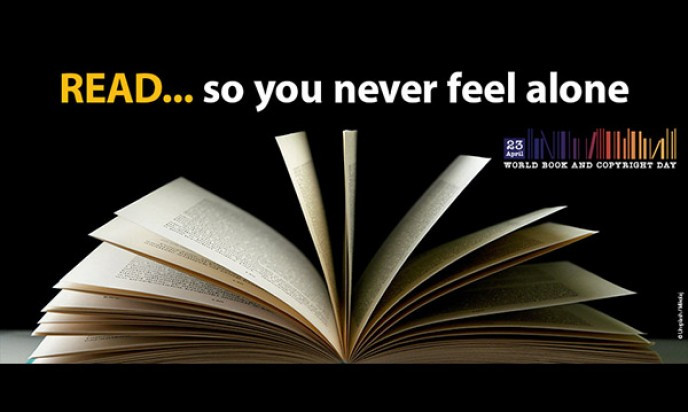 Interview ‘Transforming lives through reading’ 2021-05-10 As we mark World Book Day, the UNESCO Institute for Lifelong Learning spoke to Dawn Stitzel, National Program Director of the Library of Congress Literacy Awards (USA), about the importance of literacy and the response to the COVID-19 pandemic of two internationally-focused Library of Congress Literacy Award-winning organizations. Dawn, what is the importance of reading in your view? Reading and the information obtained from books and other sources are essential to life’s basic functions as well as to more elevated technical and cultural pursuits. As Carla Hayden, the United States’ Librarian of Congress, observes, ‘Literacy powers the pursuit of learning, knowledge and opportunity around the world’. Beyond the classical library work, how does the Library of Congress promote a culture of reading? Through its outreach programmes, the Library of Congress seeks to nurture and expand this culture of literacy and reading. The Literacy Awards Program is one such effort. David M. Rubenstein launched the literacy awards with the Library of Congress in 2013 to honour national and international nonprofit organizations that were doing exemplary, innovative and replicable work to advance literacy in their communities. Each year, the Library of Congress awards close to $350,000 to deserving organizations. What impact did the COVID-19 pandemic have on your awardees? With the arrival of COVID-19 and the closure of schools and other (physical) learning spaces, learners served by literacy organizations have been among the hardest hit. In the best of times, these learners are more likely to struggle with their own education as well as that of their children. Access to the internet and digital devices is often limited and there may be fewer literacy resources at home. The pandemic highlights the need for additional assistance to support these learners to continue building essential digital skills for themselves and to facilitate the remote learning of their children. In sum, the COVID-19 pandemic and the consequences of lockdown are magnifying existing literacy challenges. Therefore, calling attention to the work of these remarkable organizations and sharing how they have adjusted to their new circumstances is more important than ever. Could you name two examples of projects that have been successful in promoting literacy skills throughout the pandemic and explain how they do so? While many of our awardees deserve to be highlighted, let me name two: Pratham Books in Bangalore, India, and Room to Read in San Francisco, California. Both organizations are fully engaged in ensuring that learners in many parts of the world continue to build critical literacy skills through an emphasis on books and reading and via innovative and inclusive distance learning opportunities. © Pratham Books Pratham Books is a recipient of the 2017 International Prize and the 2020 David M. Rubenstein Special Response Award. It is a children’s book publisher that has helped millions of children gain access to engaging, affordable books in multiple languages. As demand surged during the pandemic for digital learning resources, Pratham Books created programmes that can be used in low-resource environments, including a Learn at Home programme, thematic reading lists, audio-visual books and a phone-based dial-a-story programme that allows a child to locate a story in a chosen language by dialing a toll-free number. StoryWeaver, Pratham’s online, openly licensed, digital repository of multilingual children’s stories, allows users free access. The platform also enables the creation, translation, downloading and printing of stories. The repository has over 23,000 stories in 259 languages and continues to grow. In addition, StoryWeaver translated 3,000 books into 28 new languages, including books about the coronavirus, health and hygiene, and social and emotional issues. UNESCO and the World Bank listed StoryWeaver as a resource for homebound children during the pandemic. © Room to Read A second example is Room to Read, which is also featured in UIL’s literacy database. Room to Read received the David M. Rubenstein Prize in 2014 and the David M. Rubenstein Special Response Award in 2020. It seeks to transform the lives of children in low-income communities by focusing on literacy and gender equality in education. Its Literacy in Primary School initiative helps children become independent readers through community engagement, provision of quality books and teaching tools, and advocacy beyond the classroom. The Girls’ Education in Secondary School Initiative supports girls in building skills to succeed academically and make key life decisions through mentorship and other means. To date, Room to Read has worked in 16 countries and benefited 20 million children. How did the project respond to learners’ needs during the pandemic? During the pandemic, Room to Read’s digital platform, Literacy Cloud, originally developed for educators and book creators in Indonesia, expanded exponentially. It now includes over 1,000 original Room to Read children’s book titles in 19 languages. The titles are available as a free resource for students, parents and teachers. Simultaneously, the organization is working to harness the power of education to end systemic inequality and to build a more inclusive view of the human experience. Room to Read’s 1,600 culturally diverse book titles teach children how to relate to others with empathy, tolerance and justice. What is your key take-away from the pandemic when looking at the development of these two initiatives? As COVID-19 and recent social unrest continue to divide us, Pratham Books and Room to Read have found multiple ways to promote books and reading to connect to their audiences and adapt to the evolving circumstances and needs of the communities they serve. The pandemic has been a stark reminder of how critical the work of literacy organizations can be as they enhance distance learning opportunities and provide resources for learning at home. Such programmes are critical as they assist learners in adapting to new learning environments. The Library of Congress Literacy Awards Program website and interactive map provide additional information on the awards and previous winners. URL:https://uil.unesco.org/literacy/interview-transforming-lives-through-reading
  Lancement du Nouveau Québec sans frontières 2021-05-10 Le gouvernement du Québec dévoile aujourd'hui un nouveau programme en solidarité internationale et lance son premier appel à propositions. La ministre des Relations internationales et de la Francophonie, ministre de l’Immigration, de la Francisation et de l’Intégration et ministre responsable de la région des Laurentides, Nadine Girault, annonce la mise en œuvre d’un nouveau programme de solidarité internationale : le Nouveau Québec sans frontières (QSF). Une somme de plus 6 M$ sera dédiée à ce programme en 2021-2022, soit une augmentation de près de 740 000 $ de l’enveloppe accordée en 2020-2021. La ministre lance du même souffle le premier appel à propositions, qui a lieu jusqu’au 22 juin. Le Nouveau QSF regroupe les trois programmes de solidarité internationale auparavant offerts par le ministère des Relations internationales et de la Francophonie : le Programme québécois de développement international (PQDI), Québec sans frontières (QSF) et le Programme d’éducation à la citoyenneté mondiale (PECM). Il s’adresse aux organismes de coopération internationale (OCI) québécois, au bénéfice de la population du Québec et des pays en situation de vulnérabilité, prioritairement situés en Afrique francophone, en Amérique latine et aux Antilles. Il vise à contribuer à l’effort international de lutte contre la pauvreté et l’exclusion sociale, dans une perspective de développement durable, de droits de la personne, incluant l’égalité entre les femmes et les hommes, et d’autonomisation des femmes. Le Nouveau QSF permettra d’apporter un soutien financier davantage axé sur la mission des OCI. Ces derniers pourront ainsi agir avec une plus grande souplesse administrative et une prévisibilité accrue au regard du financement. Avec cette réforme, les actions des OCI sur les territoires priorisés seront sans aucun doute renforcées au bénéfice des communautés ciblées. Ce programme comporte deux volets, l’un pour soutenir la mission globale des OCI et l’autre pour appuyer la réalisation de projets ponctuels. L’appel à propositions concernant le premier volet est ouvert jusqu’au 22 juin 2021. L’appel à propositions du deuxième volet sera lancé en juin 2021. « Je suis fière de dévoiler le Nouveau Québec sans frontières. Ce nouveau programme de solidarité internationale est en continuité avec l’approche québécoise et avec nos valeurs de solidarité internationale, reconnues depuis plus de 25 ans, mais se retrouve renforcé en intégrant les forces et les initiatives soutenues par les anciens programmes du gouvernement du Québec. Je remercie le milieu québécois de la solidarité internationale d’avoir contribué à son élaboration en prenant part aux consultations que nous avons tenues. Leurs réflexions et préoccupations ont grandement été prises en compte. En finançant davantage la mission des organisations, ce nouveau programme renforcera la capacité d’action de nos organisations de coopération internationale sur le terrain et sera bénéfique pour les communautés ciblées. Le Nouveau QSF permettra de maintenir des emplois dans ces organismes, notamment en région, et fera rayonner l’expertise québécoise à l’étranger, tout en contribuant à la création d’un monde plus stable, durable et plus prospère. » Nadine Girault, ministre des Relations internationales et de la Francophonie, ministre de l’Immigration, de la Francisation et de l’Intégration et ministre responsable de la région des Laurentides Faits saillants et détails du programme :Plus de 60 organismes de coopération internationale sont présents dans 13 régions du Québec. Ils mènent des activités sur le territoire québécois ainsi que dans plus de 110 pays à travers le monde. Le secteur génère plus de 700 emplois et mobilise 9 000 bénévoles. Le nouveau programme s’inscrit en droite ligne avec la Politique gouvernementale en action communautaire, laquelle vise à valoriser, à soutenir et à consolider l’action communautaire autonome, ainsi qu’avec la Vision internationale du Québec. Le Nouveau QSF vise à : faciliter la mise en œuvre d’initiatives par un financement davantage axé sur la mission des OCI, pour améliorer la condition de vie des populations situées en priorité en Afrique francophone, en Amérique latine et dans les Antilles; contribuer au développement d’actions d’éducation à la citoyenneté mondiale (ECM) à travers les régions du Québec; promouvoir et consolider l’expertise des OCI et celle de leurs partenaires locaux; favoriser la création et le maintien de partenariats en encourageant la contribution des femmes et les organisations qui les représentent; favoriser l’initiation à la solidarité internationale, plus particulièrement auprès des jeunes, et ainsi contribuer à la relève en solidarité internationale, en veillant à ce que cette relève reflète la diversité et l’inclusion. Le Nouveau QSF maintient des exigences élevées en matière de santé, de sécurité et d’éthique dans l’élaboration et la mise en œuvre des projets des organismes. En savoir plus Nouveau QSF: https://www.quebec.ca/quebecsansfrontieres Consulter le communiqué original : http://www.newswire.ca/fr/releases/archive/May2021/06/c7057.htmlURL:https://aqoci.qc.ca/lancement-du-nouveau-quebec-sans-frontieres/
  Call for applications and nominations for the 2021 edition of UNESCO International Literacy Prizes 2021-05-07 UNESCO has just opened its call for applications and encourages all champions in the field of literacy learning to apply for the prestigious UNESCO International Literacy Prizes. This is also a call for nomination entities to be ready to engage and nominate their favorite candidates from around the world. Like every year, UNESCO rewards six individuals or organizations for their outstanding projects that promote literacy learning. This year the projects and programmes are requested to reflect the theme ‘Inclusive distance and digital literacy learning’. The theme highlights innovative practices that literacy promoters have been initiating as a way to ensuring the continuity of literacy learning during the COVID-19 crisis. By finding solutions for continuing literacy learning for even the most vulnerable populations has made a difference during a critical time, where face-to-face teaching and learning is restricted. In line with the UNESCO Strategy for Youth and Adult Literacy, the focus is, but not limited to, literacy learning in a lifelong learning perspective. Throughout the pandemic, distance learning has shown many faces and been supported by high-, low- and no tech solutions as well as hybrid learning that combined face-to-face learning. The laureates will be celebrated on International Literacy Day, on 8 September. Since 1967, the UNESCO International Literacy Prizes have rewarded excellence and innovation in the field of literacy. Over 500 projects and programmes around the world have already received recognition and support for their excellent work. Who can apply and who can nominate? Governments, non-governmental organizations and individuals who promote literacy through projects and programmes are welcome to apply. All applications should be submitted to nominating entities, such as the National Commission for UNESCO in the country of the programme, or an NGO that is in an official partnership with UNESCO. Candidates can submit their applications through the online platform. Details about the application and nomination process are on the UNESCO International Literacy Prizes’ website. National Commissions and non-governmental organizations (NGOs) in official partnership with UNESCO are encouraged to nominate individuals, institutions and organizations who are making outstanding contributions to promoting literacy and who request a nomination. Deadline for candidates to submit applications to nominating entities: 13 June 2021 (midnight, Paris time). Deadline for nominating entities to submit their nominations to UNESCO: 27 June 2021 (midnight, Paris time). The nominations will be assessed by an independent International Jury, composed of five experts on the basis of the selection criteria. Based on the recommendations of the International Jury, the Director-General of UNESCO will select the finalists to be awarded at the occasion of International Literacy Day (8 September). About the Prizes Through two prestigious literacy Prizes, UNESCO supports effective literacy practices and encourages the promotion of dynamic literate societies to close the literacy gap of approximately 773 million of people. UNESCO distinguishes between two Literacy Prizes which are given to six laureates in total: The UNESCO King Sejong Literacy Prize (3 awards), was established in 1989 and is supported by the Government of the Republic of Korea. It gives special consideration to programmes that promote mother language-based literacy development. Each UNESCO King Sejong Literacy Prize winner receives a medal, a diploma and US$20,000. The UNESCO Confucius Prize for Literacy (3 awards), was established in 2005, and is supported by the Government of the People’s Republic of China. This Prize recognizes programmes that promote literacy, including functional literacy, leveraging technological environments, in support of adults in rural areas and out-of-school youth. Each UNESCO Confucius Prize for Literacy winner receives a medal, a diploma and US$30,000. More information: UNESCO International Literacy Prizes International Literacy Day What UNESCO does on Literacy Contact: literacyprizes@unesco.org URL:https://en.unesco.org/news/call-applications-and-nominations-2021-edition-unesco-international-literacy-prizes
 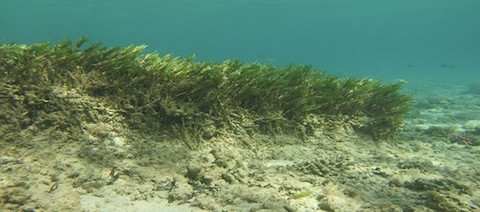 UNESCO cautions ocean risks losing its ability to absorb carbon, exacerbating global warming 2021-05-05 In absorbing carbon dioxide (CO2), the oceans play a crucial role in regulating the climate, a role yet to be fully understood. However, the oceans’ ability to contribute to climate regulation may decline and even be reversed in the future. The oceans that are now the blue lungs of our planet, could end up contributing to global warming. Integrated Ocean Carbon Research: A Summary of Ocean Carbon Knowledge and a Vision for Coordinated Ocean Carbon Research and Observations for the Next Decade, a report newly published by UNESCO’s Intergovernmental Oceanographic Commission (IOC) sets out to accomplish the vital task of studying the evolution of CO2 uptake. It presents a synthesis of the state of knowledge about the oceans’ role in the carbon cycle and points to the way ahead. Its objective is to provide decision-makers with the knowledge needed to develop climate change mitigation and adaptation policies for the coming decade. The report also emphasizes the importance of scientific knowledge to the taking of informed decisions within the United Nations Framework Convention on Climate Change in order to achieve the goals of the Paris Agreement and build more resilient societies. The report highlights the role of the ocean since the industrial revolution as a sink for carbon generated by human activity. Indeed, without ocean and land sinks, atmospheric CO2 levels would be close to 600 ppm (parts per million), 50% higher than the 410 ppm recorded in 2019, which is already well above the agreed target of limiting global warming to two degrees Celsius. But there is a danger that this process will be reversed. Instead of absorbing carbon, the oceans could contribute to the warming greenhouse effect of CO2 emissions. The IOC report thus examines available observations and research to determine whether the oceans will continue to “help” humanity or whether they will turn against it, making mitigation and adaptation to warming more difficult. The broader question is how humanity is altering the ocean carbon cycle, including through carbon dioxide removal schemes, and how this impacts marine ecosystems. In developing the report, the IOC brought together experts from the five [1] international research and coordination programmes on ocean-climate interaction, which have been working together since 2018 in the IOC Working Group on Integrated Ocean Carbon Research (IOC-R). Together they propose an innovative joint programme of medium- and long-term integrated ocean carbon research to fill the gaps in this field. The report was developed as part of the ongoing UN Decade of Ocean Sciences for Sustainable Development (2021-2030). This is a unique opportunity to bring together all stakeholders around common scientific priorities to strengthen action on the changing ocean carbon cycle.-- Audrey Azoulay, UNESCO Director-General Report: Integrated ocean carbon research: a summary of ocean carbon research, and vision of coordinated ocean carbon research and observations for the next decade Study on the role of 'blue carbon' in World Heritage sites United Nations Decade of Ocean Science for Sustainable Development (2021-2030) Media contact: Clare O'Hagan(link sends e-mail), +33(0)145681729 [1] The International Ocean Carbon Coordination Project (IOCCP), the Integrated Marine Biosphere Research Project (IMBeR), the Surface Ocean – Lower Atmosphere Study (SOLAS), the Climate and Ocean Variability, Predictability and Change (CLIVAR) project and the Global Carbon Project. URL:https://en.unesco.org/news/unesco-cautions-ocean-risks-losing-its-ability-absorb-carbon-exacerbating-global-warming
  UNESCO and the Republic of Serbia help people have fuller advantage of information flows 2021-05-03 As Internet use and access to information continue to rise at a rapid rate, so does the amount of beneficial and harmful content. The concerns are dual. They are obviously about the dangers of harmful content itself to all people. There are also worries about how the detrimental content crowd out and makes it difficult to identify beneficial content. What started as trickle of digital pollution decades ago, is now a flood that is becoming increasingly harder to handle. The impact to the world is an environment in which people are confronted with disinformation on a daily basis and where lies can cost lives. This will be treated at the thematic webinars on 27 and 29 April 2021 presenting various experiences, innovation and policy dialogue on media and information literacy from experts and practitioners. The webinars are open to the public and will discuss UNESCO’s and the Republic of Serbia’s jointly launched publication: Media and Information Literate Citizens: Think Critically, Click Wisely (Second Edition of the UNESCO Model Media and Information Literacy Curriculum for Educators and Learners). The four webinars will cover issues such as: Media and information literacy as a prerequisite to tackle disinformation and conspiracy theories Policies and practices: Futures media and information literacy Media and information literacy as a backbone for intercultural dialogue, and anti-hate speech Media and information literacy by design: can media, artificial intelligence and libraries help? The publication is meant to counteract this spread of disinformation in a sustainable manner and to help people to have fuller advantage of new information flows. It promotes media and information literacy at the root, which is an effective way to change toxic online and offline behaviours that are nowadays prevalent on many digital platforms and at various parts of society. It was launched on 22 April 2020, by high-level speakers from UNESCO, Serbia, the European Commission and the African Union. Disinformation is always harmful. But lies on a mass scale, a disinfodemic, is particularly potent during a pandemic, where “fake news” can prevent people getting treatment or acknowledging they are even ill. COVID-19 saw a wave of such falsehoods spread across the world, which hampered the effectiveness of governments’ measures around the world. "We are always running behind lies, we never manage to catch up, neither to lies or rumours and sometimes it can be counterproductive to try to do away with them with a counterargument, because the counter argument will just fuel the fire." -- Audrey Azoulay, Director-General of UNESCO Mr Xing Qu, in his introductory remarks highlighted that: “Media and Information Literacy has the potential to empower citizens with the necessary competencies to address key issues of our time”. He continued in noting the timeliness and relevance of the updated Media and Information Literacy Curriculum in responding to the COVID-19 disinfodemic. This sentiment was echoed by the Prime Minister of the Republic of Serbia, Ms Ana Brnabić, who drew from personal experience when recounting that: “All of the 'fake news' that was coming up on a daily basis, driven both from some media outlets as well as, and perhaps much more so from the social networks, meant that for all of those involved in the fight against COVID found the struggle twice as difficult.” COVID-19 hasn’t created the problem, but it has exasperated it and shone a light on just how important action is on the issue. According to ITU, some 70% of all youth globally are now online. Unsurprisingly, this acknowledgement is acutely felt by the youth, who have grown up digitally native and potentially more aware of the digital problems than with its wealth of benefits. "Today, in the European Union, over 40% of young people consider that critical thinking, media and democracy are not taught sufficiently in school. This is why we are now increasing our efforts to support media literacy through various funding instruments and initiatives, and even by our EU law." -- Vera Jourova, Vice President and Commissioner of the European Commission H. E. Dr Monique Nsanzabaganwa, Deputy Chairperson, African Union Commission, supported this approach at the event. "Education should more actively help learners to develop the ability to critically approach, filter, and assess information, and more importantly, to identify disinformation. Online and offline safety is paramount in achieving these, as more children use the internet for learning. They become increasingly vulnerable to online forms of exploitation and abuse." -- Monique Nsanzabaganwa, Deputy Chairperson, African Union Commission Join the 27 and 29 April 2021 webinars to continue this urgent international dialogue here. Related Links: Media and Information Literacy Event website Media advisory URL:https://en.unesco.org/news/unesco-and-republic-serbia-help-people-have-fuller-advantage-information-flows