
News
Catch up on what’s happening in the world of global citizenship education.
316 results found
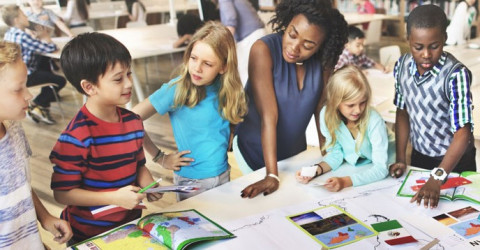 European Ministers back education for democracy to counter extremism, racism 2016-09-12 Education ministers and officials from 50 countries attended the Council of Europe Standing Conference of Ministers of Education, in Brussels from 11-12 April, 2016, to discuss the theme “"Securing democracy through education: The development of a Reference Framework of Competences for Democratic Culture".Speaking at the event, which focuses on the democratic mission of education to face the challenges of violent extremism, migration and racism, Mr Qian Tang, UNESCO Assistant Director-General for Education, commended the Council of Europe for “giving such high attention to the fundamental role of education in building and maintaining democracy and peace.”Mr Tang presented UNESCO’s pioneering work on Global Citizenship Education and on Preventing Violent Extremism through Education, including the new UNESCO Teachers’ Guide on the Prevention of Violent Extremism and a forthcoming Guide for Policymakers to be launched in September this year in Paris.In his welcoming remark, Mr Thorbjørn Jagland, Secretary General of the Council of Europe said: “If we want to promote democratic ideals we need to promote values, teach children to live with others equally.”Minister of Education for the Flemish Community of Belgium Ms Hilde Crevits said: “In the long term education will be more important than any anti-terrorist law. Education plays a pivotal role in safety and security in Europe and beyond.”The European Commissioner for Education, culture and sports Mr Tibor Navracsics added “While education is not the only solution, there is no other solution without education.”New education tool to teach democratic valuesThe event also launched a new tool for teaching democracy and democratic values. The Reference Framework of Competences required to participate in Democratic Culture, developed by the Council of Europe with input from over a thousand teachers and experts across the continent, was launched at the event. “UNESCO is supporting countries to deliver education programmes that build young people’s resilience to violent extremist messaging and foster a positive sense of identity and belonging” said Mr Tang. He also expressed the hope that the event would help strengthen collaboration between UNESCO and the Council of Europe in providing effective citizenship education to prevent extremism and combat radicalization and a look at the relationship between European and global challenges.In a Final Declaration, the Ministers of Education invite the Council of Europe to reinforce cooperation with strategic partners in order to further support education reforms in member States, including the United Nations system and its agencies, notably UNESCO, for its work on global citizenship education and the prevention of violent extremism.
  UNESCO highlights links between peace and Education 2030 Agenda at Amsterdam meet 2016-09-12 he role of education in peacebuilding is the theme of the UNESCO keynote speech at a research findings seminar in Amsterdam on April 20-22.Mr Jordan Naidoo, Director, Division of Education 2030 Support and Coordination, UNESCO will address the Research Consortium on Education and Peacebuilding on April 22 on the links and interdependence between Sustainable Development Goal 4 and peacebuilding.UNESCO’s constitution enshrines its mission to “build peace in the minds of men and women.” The issue of peace and education is dealt with in the new education agenda in target 4.7 of SDG4 which calls for the “promotion of a culture of peace and non-violence and global citizenship.” The Framework for Action, the implementation guide for the SDG4-2030 Agenda, contains 17 references to peace.During times of conflict SDG4 specifies that efforts must be made to:Ensure that education institutions are protected as zones of peace, free from violence, including school-related gender-based violence;Schools and educational institutions – and the routes to and from them – must be free from attack, forced recruitment, kidnapping and sexual violence; andActions must be taken to end impunity for persons and armed groups that attack education institutions.Building global citizensUNESCO encourages Global Citizenship Education to enable learners of all ages and backgrounds to develop into informed, critically literate, socially-connected, and ethical and engaged global citizens.The consortium is a partnership between the University of Amsterdam, the University of Sussex, Ulster University and UNICEF and aims to contribute to UNICEF’s Learning for Peace programme.
 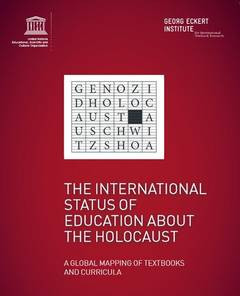 UNESCO releases Holocaust education recommendations in six languages 2016-09-12 The purpose of the recommendations, the work of UNESCO and the Georg Eckert Institute for International Textbook Studies, is to help education policy-makers ensure that educational media meet standards of historical accuracy and are enabled to place the Holocaust in perspectives which bear resonance in given local environments.They also provide advice on conceptual and narrative standards that will help learners acquire historical knowledge and deeper understanding of the nature, the complexity, and the impact of crimes perpetrated by the Nazi regime, in particular the genocide against the Jewish people.These recommendations will thus provide guidance on how educational media can help raise awareness among leaners of how to prevent similar events from occurring.The recommendations draw on an extensive research performed by the Georg Eckert Institute and UNESCO to map Holocaust education worldwide, and compare representations of the Holocaust through the analysis of 272 valid curricula in 135 countries and 89 textbooks in use in 26 countries.The research, titled The International Status of Education about the Holocaust, A Global Mapping of Textbooks and Curricula, was published in 2015. The recommendations are preceded with a summary of the research.
 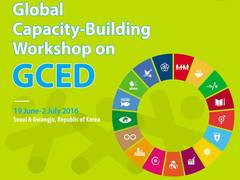 L'UNESCO lance une nouvelle formation pour aider les éducateurs à lutter contre l'extrémisme violent 2016-09-12 UNESCO and the Asia Pacific Centre of Education for Intercultural Understanding (APCEIU) are developing a new partnership to boost training for educators worldwide on the prevention of violent extremism.As part of APCIEU’s Global Citizenship Education international and regional trainings new modules will be introduced by UNESCO to sensitize educators to the issue of violent extremism and to the educational measures that can build learners’ resilience to extremist narratives.In addition, the APCEIU and UNESCO have agreed to introduce sessions dealing with the history of genocides, in particular the Holocaust, as a means to raise awareness of the dangers of mass violence in contemporary societies, and help young people become critical thinkers able to oppose group-targeted violence.Regional seminars to follow opening workshopThe first training seminar, titled Global Capacity-Building Workshop is taking place in Seoul, Korea, from 19 June to 2 July 2016. It gathers teacher-trainers and teachers from 26 countries including Mongolia, Cambodia, Uganda, Lebanon and Colombia and covers all aspects of Global Citizenship Education, from policy design to pedagogy and teaching practices, in workshops partly led by UNESCO.It will also include sessions conducted in partnership with the Radicalisation Awareness Network (RAN), a European Union body supporting youth stakeholders confronted with violent extremism, and of the United States Holocaust Memorial Museum, one of the world’s leading institutions for Holocaust education and research and genocide prevention. The workshop will be followed throughout 2016 and 2017 by several similar training seminars with a more regional scope.UNESCO is engaged in a programme to contribute to the prevention of violent extremism through education, within its work on Global Citizenship Education. This includes the development of guidance for policy-makers and to support the work of teachers in the classroom and capacity-building for education stakeholders.
 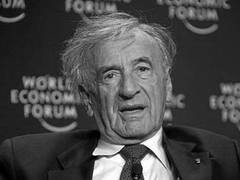 UNESCO Director-General pays tribute to the memory of Elie Wiesel 2016-09-12 The UNESCO Director-General, Ms Irina Bokova, paid tribute to Elie Wiesel, Nobel Peace Prize Laureate, and author of a unique body of work on the memory of the Holocaust."Elie Wiesel was a pillar of the conscience of humanity, a moral compass for human rights, human dignity, human strength," said Irina Bokova. "Through his work, he put words on the unspeakable, to awaken all minds to the horror of the Holocaust. His legacy is unparalleled and his message is more relevant than ever to fight against antisemitism in all its forms. We all owe him an immense debt, and this is our duty to take forward.""Elie Wiesel was a great friend and champion of UNESCO, presiding the Universal Academy of Cultures, founded by Federico Mayor. His thinking informed the work of the Organisation across many years, as he embodied UNESCO's mission to 'build the defences of peace in the minds of women and men."
  UNESCO 1974 Recommendation used to measure progress towards education target 4.7 2016-09-12 The UNESCO Director-General has launched the Sixth Consultation on the implementation of the 1974 Recommendation concerning Education for International Understanding, Cooperation and Peace and Education relating to Human Rights and Fundamental Freedoms for the period 2012-2015. Every four years, as part of its standard-setting and monitoring role, UNESCO invites Member States to report on progress made in implementing the 1974 Recommendation. The principles of the 1974 Recommendation are closely aligned to Target 4.7 of the Sustainable Development Goal on education. Target 4.7 is concerned with sustainable development and sustainable lifestyles, human rights, gender equality, the promotion of a culture of peace and non-violence, global citizenship and appreciation of cultural diversity, as well as on culture’s contribution to sustainable development. Therefore, this four-year reporting process has been recognized by the 199th Session of the UNESCO Executive Board, as the main source of data to chart progress towards the achievement of Target 4.7. The deadline for submission of country reports to UNESCO is 30 September 2016. Member States are invited to compile their reports in consultation with relevant national stakeholders, NGOs working in these areas, and National Commissions for UNESCO. All relevant information and data should be included. Questions concerning the 6th Consultation process can be directed to UNESCO’s Section of Education for Sustainable Development and Global Citizenship at: gced(a)unesco.org. Link: The Sixth Consultation on the implementation of the Recommendation concerning Education for International Understanding, Cooperation and Peace and Education relating to Human Rights and Fundamental Freedoms (1974)