
News
Catch up on what’s happening in the world of global citizenship education.
316 results found
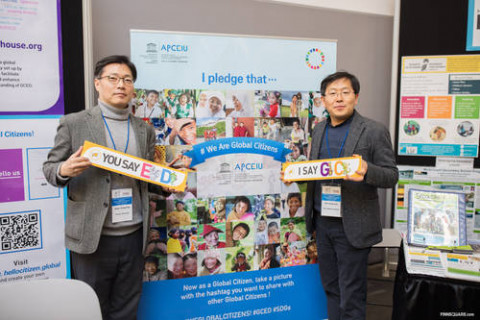 UNESCO Forum on Global Citizenship Education provides a platform for innovative teaching 2017-03-17 The Third UNESCO Forum on GCED, which opened on 8 March 2017 in Ottawa, Canada, brought together leading experts, practitioners and policymakers from around the world to examine pedagogical approaches and teaching practices, and to ensure that practical change is brought into classrooms.“Teachers are on the frontlines of bringing GCED into learning environments. Without confident, qualified and well-prepared teachers, we cannot advance GCED,” said UNESCO Assistant Director-General for Education, Qian Tang, at the official opening of the Forum. Ambassador Elaine Ayotte, Permanent Delegate of Canada to UNESCO, underlined the essential contribution of educators in building competencies that foster awareness of today’s realities that affect all peoples from all cultures.Ambassador Choong-hee Hahn, Deputy Permanent Representative of the Republic of Korea to the United Nations, described the momentum building among policy makers at the global level, and Member States’ commitment to equip the next generation with the tools of tolerance and cultural literacy.Utak Chung, Director of the Asia-Pacific Centre of Education for International Understanding, renewed the Centre’s support towards global advancement of GCED and reaffirmed that fostering global citizenship is not just the UN or UNESCO’s agenda, but ultimately a global agenda. Teachers’ crucial role for achieving Target 4.7With teachers as the central theme of the third UNESCO GCED Forum, the focus has been to draw attention to educators’ fundamental role in improving learning about, and for, global citizenship. In a context where learners are increasingly learning through a diversity of channels, the role of teachers is bound to evolve. Teachers are not only the transmitters of knowledge. They have a role to play in developing learners’ knowledge, skills and attitudes that promote peace and sustainable development. Teachers are the agents of change who can ensure countries achieve of Target 4.7 of the SGD on Education. The event also included the active participation of teachers from UNESCO’s Associated Schools Network (ASPnet) along with 50 youth delegates selected by the Mahatma Gandhi Institute for Peace and Sustainable Development (MGIEP).The UNESCO Week for Peace and Sustainable Development: the Role of Education (6-10 March 2017) also included the GAP Review Forum, as well as a joint day where the official opening took place. The UNESCO Week is organized jointly by UNESCO and the Canadian Commission for UNESCO with financial support from UNESCO, the Canadian Commission for UNESCO, the Canada Council for the Arts and the Ministry of Education, Culture, Sports, Science and Technology of Japan through the UNESCO Japanese Funds-in-Trust for ESD. Additional support for the Week is provided by the Council of Ministers of Education, Canada, the Global Centre for Pluralism and the Canadian Museum of History. Follow the GCED Forum on Twitter using #UNESCOweekED.Links: UNESCO Week for Peace and Sustainable Development website Global Citizenship Education Learning to live together sustainably (SDG4.7): Trends and Progress UNESCO Associated Schools URL:http://www.unesco.org/new/en/education/resources/online-materials/single-view/news/unesco_forum_on_global_citizenship_education_provides_a_plat/
 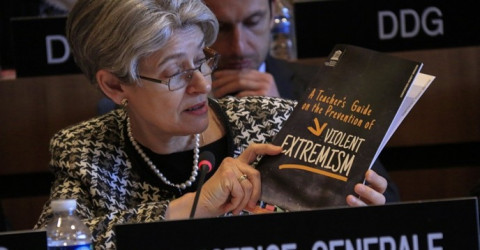 UNESCO Launches Teacher’s Guide on the Prevention of Violent Extremism 2017-03-17 UNESCO’s Teacher Guide on the Prevention of Violent Extremism just released, provides practical tips to educators seeking guidance on how to discuss the subject in classrooms.The Guide was developed within the framework of UNESCO’s work on Global Citizenship Education and in response to the request of UNESCO’s Member States for assistance in strengthening their education sector responses to violent extremism. It seeks to help teachers to create a classroom climate that is inclusive, and conducive to respectful dialogue, open discussion and critical thinking. The publication also recommends resources to develop a deeper understanding of the phenomenon of violent extremism and responds to frequently asked questions.Whether discussions on violent extremism are pre-planned or not, a well-managed conversation on the subject should seek to reinforce skills that enable learners to participate more generally in civic life as informed global citizens. This implies ensuring that the information exchanged during the discussion, as well as the way the debate is handled, develop skills, attitudes and behaviours that foster mutual respect, critical thinking and a sense of belonging to a common humanity.The Guide will be complemented by a second guidance document, to be released in September 2016, targeting policy-makers within ministries of education. This tool will provide a set of resources that can help reinforce national capacities to address the drivers of violent extremism through holistic and pragmatic education sector-wide responses.The publication was peer reviewed by a host of international experts in the field of education, as well as Associated Schools Project Network (ASPnet) schools and students of the Teachers College of Columbia University.The Guide will be translated initially into French and then other languages. It will also be used as a basis for capacity building workshops on the prevention of violent extremism through education.This Guide constitutes UNESCO’s first contribution to the implementation of the UN Secretary-General’s Plan of Action to Prevent Violent Extremism, announced in January 2016.Links A Teacher's Guide on the Prevention of Violent Extremism United Nations Plan of Action to Prevent Violent Extremism Global Citizenship Education UNESCO’s role in promoting education as a tool to prevent violent extremism (197 Executive Board/Decision 46)
 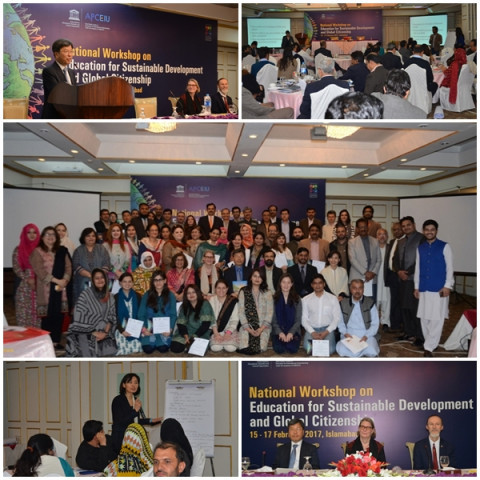 National Workshop on “Education for Sustainable Development and Global Citizenship” in Islamabad, Pakistan 2017-03-08 Co-organized by APCEIU, UNESCO Islamabad and UNESCO Headquarters, a National Workshop on “Education for Sustainable Development and Global Citizenship Education” was held on 15 - 17 February in Islamabad, Pakistan. This three-day national workshop was especially for the education stakeholders in Pakistan to raise their awareness and understanding on the concept of Education for Sustainable Development and Global Citizenship focusing on the Sustainable Development Goals target 4.7. Aimed to ensure that all leaners are provided with the knowledge, attitudes and skills to promote sustainable development and global citizenship, this workshop was a forum of discussing issues around SDG 4.7 by participants from Ministry of Federal Education and Professional Training, provincial/area education department offices, civil society organizations, research institutes, academia and youth organizations. This national workshop was facilitated in the participatory format through presentations, group works and activities to help participants deepening their understanding on ESD and GCED as well as internalize its concepts to develop action plans respective to their own educational contexts. As one of the sessions, Prevention of Violent Extremism through Education (PVE-E) was focused by reflecting current situation of incidents by extremists especially in Pakistan. During the workshop, participants worked in groups to share their best practices and at the end of workshop, established key recommendations and detailed action plans in three areas of Education Policies, Curriculum and Teacher Education. At the closing of the workshop, Director Utak Chung expressed his gratitude to the workshop participants and UNESCO Islamabad, and promised continuous support from APCEIU for future cooperation as follow-up on this opportunity. He mentioned that “as a partner of SDG 4.7, we look forward to working together with educators in Pakistan to enhance GCED and ESD through diverse opportunities and APCEIU programmes.” URL:National Workshop on “Education for Sustainable Development and Global Citizenship” in Islamabad, Pakistan > APCEIU News - APCEIU (unescoapceiu.org)
 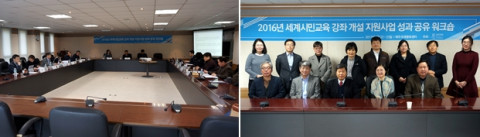 Workshop for sharing the outcomes of 2016 ‘Support for GCED Course Development 2017-03-06 An academic workshop to share the outcomes of 2016 ‘Support for GCED Course Development’ was held at the Jeju International Peace Center on 22-23 February this year. The workshop was attended by the professors who had designed and implemented GCED courses at 9 different universities in the Republic of Korea during the 2016 Autumn semester (July to December) under the support of APCEIU. It was an opportunity to share and discuss among professors the outcomes, operational strategies and teaching methods with regard to the implemented GCED courses. Throughout this workshop, the participants could share and learn about newly developed GCED curricular implemented in each university/department. In addition, in-depth discussions on shaping the future of GCED course development and implementation was continued, such as finding ways to link the existing GCED courses to students’ career paths and out-of-school education programmes as well as on the importance of developing a necessity for development of common GCED reference materials and GCED courses assessment mechanism. URL: Workshop for sharing the outcomes of 2016 ‘Support for GCED Course Development’ > APCEIU News - APCEIU (unescoapceiu.org)
 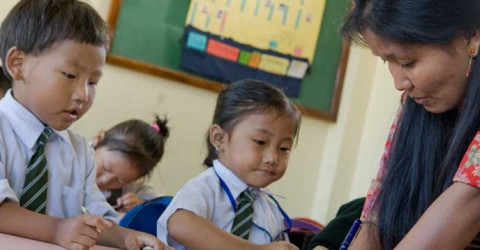 UNESCO Week for Peace and Sustainable Development highlights teachers’ role in achieving Global Development Agenda 2017-03-06 02 March 2017More than 400 experts, practitioners and policymakers from the public, non-governmental and private sector from all regions will attend UNESCO Week for Peace and Sustainable Development: The Role of Education, in Ottawa, Canada from 6 to 10 March.Organized by UNESCO and the Canadian Commission for UNESCO, the event will focus on Education for Sustainable Development (ESD) and Global Citizenship Education (GCED) and their contribution to achieving the Sustainable Development Goals (SDGs), notably Target 4.7 of SDG 4 on Education. During the Week, experts will examine pedagogical approaches and teaching practices in promoting ESD and GCED.“Learning to live together and protecting our planet are basic conditions for securing a more peaceful and sustainable future,” says UNESCO Director-General, Irina Bokova. “This is about daily actions, attitudes and behaviours that are guided by awareness of our interdependence, respect for shared values and openness to other cultures. These must be integrated into education systems everywhere, so that every student grows up to become a caring and responsible global citizen.”UNESCO will launch a new publication on this occasion, “Education for Sustainable Development Goals: Learning Objectives,” to support policy-makers, curriculum developers and educators to promote learning for the SDGs. The publication contains suggestions and classroom activities to address each goal.Teachers of UNESCO’s Associated Schools (ASPnet) will also be attending the event, along with 50 young delegates.From 6 to 8 March, the Global Review Forum for the Global Action Programme (GAP) will take stock of progress since 2014, when the programme was launched, and examine the way forward.From 8 to 10 March, the Third GCED Forum will highlight good policies and practices for teachers and teacher trainers.Ms Bokova, Catherine McKenna, Canada’s Minister of Environment and Climate Change, Mitzie Hunter, Minister of Education (Ontario Provincial Parliament), Ambassador Dessima Williams, Special Adviser to the President of the 71st Session of the United Nations General Assembly, and Fred van Leeuwen, Secretary-General of Education International, will take the floor on 8 March, when the two fora come together.This session will be followed by an intergenerational dialogue between youth and senior officials, organized by the UNESCO Mahatma Gandhi Institute of Education for Peace and Sustainable Development (MGIEP). This “Talking Across Generations” (TAGe) session will be broadcast on webstream with live discussions on Twitter under the hashtag #UNESCOWeekED.In support of the Week, the UNESCO Global Education Monitoring (GEM) Report will also launch a youth photo contest on ESD and GCED on 6 March.Finally, UNESCO’s MGIEP will launch an SDG-inspired video game in which players help solve global problems such as displacement, disease, deforestation, drought and pollution at the community level.*The UNESCO Week is organized with financial support from UNESCO, the Canadian Commission for UNESCO, the Canada Council for the Arts and the Ministry of Education, Culture, Sports, Science and Technology of Japan through the UNESCO Japanese Funds-in-Trust for ESD. Additional support for the Week is provided by the Council of Ministers of Education, Canada, the Global Centre for Pluralism and the Canadian Museum of History.
 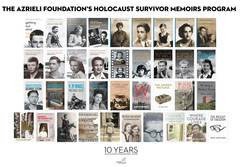 UNESCO and Azrieli Foundation distribute Holocaust survivors’ memoirs 2017-02-07 UNESCO and the Azrieli Foundation are working together to distribute Holocaust survivors’ memoirs.As part of activities to promote education about the Holocaust, UNESCO is partnering with the Azrieli Foundation to provide access to testimonies of Holocaust survivors through the UNESCO Associated Schools Network (ASPnet).ASPnet links educational institutions across the world around a common goal: to build peace in the minds of children and young people. The 10,000 ASPnet member schools, present in over 180 countries, work to support international understanding, peace, intercultural dialogue, sustainable development and quality education in practice.The Azrieli Foundation launched the Holocaust Survivors Memoirs Program in 2005 with a view to collect and publish memoirs and diaries of Holocaust survivors in Canada. Personal accounts of survivors of genocide have proven to be very important educational tools to help students empathise, connect better with the past and understand how violence begins and how it can be prevented. Agents for positive change“UNESCO considers its ASPnet students as agents for positive change. The memoirs provided to UNESCO by the Azrieli Foundation are an important and innovative learning tool for our students to truly understand, through personal accounts, the consequences of antisemitism, racism and all forms of intolerance. These books support the wider ASPnet goals of international understanding and instilling peace in the minds of young people,” said Sabine Detzel, International ASPnet Coordinator.The memoirs will be used mostly in sub-Saharan Africa to help interested schools promote education about the history of genocides in support of UNESCO’s programmes in the region. The memoirs will support awareness-raising among students and teachers about the importance of teaching about violent events of the past as a means to build a culture of prevention.“We are proud to partner with UNESCO in sharing these memoirs and are excited by the connection and lessons these books will provide between generations and cultures across the globe,” says Naomi Azrieli, Chair and CEO, The Azrieli Foundation.
  Towards a promising collaboration on citizenship and innovation in West Africa 2017-01-25 Established in 2015, the École Citoyenne de l’Afrique de l’Ouest (ECAO) aims to contribute to the consolidation of the rule of law in West Africa, in particular. This association is dedicated to inculcate the culture of dialogue, to promote the rule of law and human rights and to bring young people to further engage in socio-political life.UNESCO-Dakar is implementing a programme on global citizenship education and supports innovation in education to enhance youth employment and entrepreneurship.Within the framework of their respective programmes, UNESCO Office in Dakar and ECAO discussed, on January 19, on concrete regional and national actions to be implemented in 2017, around two main thematic areas: peace and citizenship on one side, innovation and entrepreneurship, on the other side. Collaboration between the two organizations will enable to mutualize their advantages towards achievement of their respective objectives.
 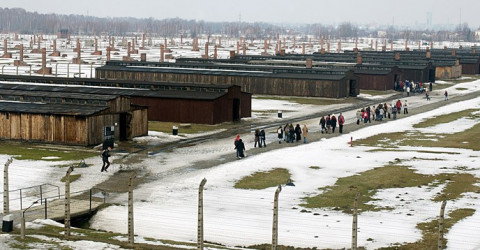 International Day of Commemoration of the Victims of the Holocaust to focus on education, sites and museums 2017-01-20 UNESCO will focus on the role of historic sites and museums in Holocaust education during this year’s International Day of Commemoration in Memory of the Victims of the Holocaust. Events marking the commemoration will take place at the Organization’s Headquarters from 24 to 26 January, ahead of the official Day, 27 January, which is the anniversary of the liberation of the concentration and extermination camps of Auschwitz-Birkenau. Every year around this date, UNESCO commemorates the genocide perpetrated against the Jewish people and other Nazi crimes, reaffirming its commitment to promote education about the history of the Holocaust, and fight racism and antisemitism. The theme of this year’s commemoration, Educating for a Better Future: The Role of Historic Sites and Museums in Holocaust Education, will be the subject of a keynote address (26 January, 3 pm) by Serge Klarsfeld, UNESCO Honorary Ambassador and Special Envoy for Education about the History of the Holocaust and the Prevention of Genocide. It will be followed by a round table discussion with Piotr Cywiński, Director of the Auschwitz-Birkenau State Museum (Poland), Jacques Fredj, Director of the Shoah Memorial (France), Dorit Novak, General Director of Yad Vashem, the World Holocaust Remembrance Center (Israel), and Agnès Sajaloli, Director of the Memorial of the internment camp of Rivesaltes (France). It will be moderated by historian Jean-Yves Potel. The debate will focus on the challenges facing historic sites of massacre and persecution, memorials and museums, and examine their testimonial and educational functions, which are growing in importance in view of the declining number of survivors of the Nazi’s crimes. Relics bearing testimony to Nazi violence will be featured in an exhibition of objects excavated near the crematoria of Auschwitz-Birkenau, which were lost during half a century and only recently rediscovered by the Auschwitz museum. The display of the last personal effects people had managed to keep up to the time of their execution will be inaugurated by the Director of the Auschwitz-Birkenau State Museum and Irina Bokova, Director-General of UNESCO (26 January, 2.30 pm, open to the public until 17 February). An Official Ceremony will close the Day of Commemoration (26 January, 7 pm), with a concert by world-renowned musicians Martha Argerich (piano) and UNESCO Goodwill Ambassador Ivry Gitlis (violin). The ceremony will also feature a personal testimony by Raphael Esrail, President of the Union of Auschwitz Deportees, and a reading by actress Anne-Catherine Dutoit of texts written by Holocaust survivor and Nobel Peace Prize laureate Elie Wiesel. Also ahead of the Day, on 24 January young students and history teachers will examine the challenging question of How to Deconstruct Hate Speech? This youth event is held as part of the UNESCO Campus conferences organized in partnership with the Engie Foundation. Also on 24 of January, there will be a preview of the documentary film In Search of the Last Music by director Alexandre Valenti, which celebrates women and men who went on composing music in camps and ghettos and the man who tracked and preserved their work, Francesco Lotoro. The screening is organized in partnership with Les Bons Clients production company. **** UNESCO’s events for the International Day of Commemoration in Memory of the Victims of the Holocaust are organized in partnership with the Shoah Memorial (France) and the Auschwitz-Birkenau State Museum (Poland), with support from the Permanent Delegation of France to UNESCO, the Permanent Delegation of the Principality of Monaco to UNESCO and Metin Arditi, UNESCO Special Envoy for Intercultural Dialogue. **** About UNESCO’s support for education on the history of the Holocaust and other genocides: http://www.unesco.org/new/holocaust-remembranceMedia contact: Agnès Bardon, UNESCO Press Service, a.bardon@unesco.org +33 (0)1 45 68 17 64Media accreditation: Djibril Kebe, UNESCO Press Service,d.kebe@unesco.org +33(0)1 45 68 17 41
 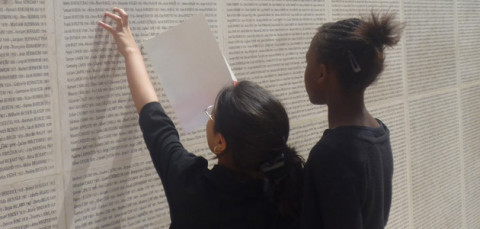 Holocaust Education on the GCED Clearinghouse 2016-10-31 UNESCO encourages Member States to develop programmes that strengthen a culture of prevention and foster understanding of the causes and consequences of the Holocaust and how genocide can happen so that young people become more aware of the processes that can lead societies to descend into violence. Education about the Holocaust and other cases of genocide in history can be a means to foster the knowledge, skills and behaviours that will help learners become critical thinkers, and active global citizens who value human dignity, reject antisemitism, racism and other forms of prejudice that can lead to group-targeted violence and genocide. The UNESCO GCED Clearinghouse contains the largest database to date of education materials and research pertaining to education about the Holocaust or other genocides.
  UNESCO international conference seeks common understanding on educational measures to prevent violent extremism 2016-09-19 Violent extremists are made, not born. But why do people engage in such actions and what can education do to prevent them?This is the subject of high-level discussions to take place at the first International Conference on the Prevention of Violent Extremism through Education: Taking Action (PVE-E), co-organized by UNESCO and the UNESCO Mahatma Gandhi Institute of Education for Peace and Sustainable Development (MGIEP), on 19-20 September 2016, in New Delhi, India.Over 150 participants from around 70 countries including Ministers of Education, senior education policy-makers, experts and youth activists in the field, will come together to build a common understanding about how education systems can appropriately and effectively prevent violent extremism.At the event UNESCO’s Teacher’s Guide on the Prevention of Violent Extremismwill be presented. The first draft of the Policy Guide on the Prevention of Violent Extremism through Education, developed by UNESCO, will also be discussed, providing participants with the opportunity to share comments during the Conference.At the conference, UNESCO MGIEP will also be hosting its first Talking Across Generations on Education (TAGeDelhi) in which 50 youth delegates from around 30 countries will engage in a forthright dialogue on the prevention of violent extremism through education without the artificial barriers of podia. The session will be moderated by acclaimed author, journalist and educator Irshad Manji and the objective will be to mainstream youth voices to the highest level of policy-making.Daily discussions can be followed on Twitter and Facebook with outcomes of the discussions and videos posted on the Conference website.