
News
Catch up on what’s happening in the world of global citizenship education.
311 results found
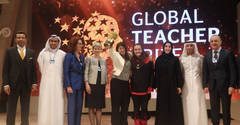 Global Citizenship Takes Centre Stage at Dubai Forum 2017-04-25 UNESCO Director-General Irina Bokova asserted the capital role of global citizenship education for peace, sustainable development and human dignity during her participation in the fifth Global Education & Skills Forum (GESF) in Dubai, on 18 and 19 March.Gathering over 2,000 delegates from public, private and social sectors, the Forum focused on the theme “How to make real global citizens.” The Director-General recalled that UNESCO, a partner of the Forum, had fought hard for global citizenship education to be featured as a target in Sustainable Development Goal 4, encompassing “a holistic vision of why education cannot wait.”During a panel on education in emergencies organized with Plan International, Dubai Cares and the World Food Programme, she stressed the urgent need for political and financial mobilization. “We must look at the consequences of not acting – in terms of poverty reproduction, the destruction of the fabric of communities and societies. This is not only a humanitarian concern but one about peace and security.”During a parliamentarian-style chamber debate with Camfed’s Lucy Lake, former Greek Prime Minister George Papandreou and Rebecca Winthrop from Brookings, she defended education as an answer to the rise of populism. This calls for educational transformation through two angles: first universal access to quality education with equity and inclusion as yardsticks; second, a fresh focus on contents that foster new values and skills for new times. “We need education that both provides relevant skills for the markets of today and tomorrow and education that promotes critical thinking, understanding between cultures, that strengthens democratic values, and the resilience of societies and the planet based on new forms of global citizenship.”She also participated in the first meeting of the Atlantis Group, which brings together former ministers of education to help address global education challenges. Against the backdrop of rising inequality, climate change and technology disruptions, she stated that “the prerequisite should be that education is a public good. This should be the basis of all work to empower teachers, leverage technology, match skills with work, promote social mobility and living together.”Opening the Forum, Mr Sunny Varkey, founder and chairman of the Varkey Foundation, affirmed that education should help children from every country, culture and faith learn that there is more that unites than divides and provide the inspiration and tools to make a positive imprint on the lives of others. OECD’s Andreas Schleicher emphasized the potential of technology to “liberate learning from past conventions, connect learners and create a more collaborative culture.”Announced from the European space station in a star-studded ceremony, the USD 1 million Global Teacher Prize was awarded to Canada’s Maggie MacDonnell, who teaches in Salluit, an Inuit community deep in the Arctic. The 50 finalists of the Prize, now in its third edition, were at the Forum giving master classes and participating in debates. The Prize is awarded by the Varkey Foundation, under the patronage of HH Sheikh Mohammed bin Rashid Al Maktoum, UAE Vice President, Prime Minister and Emir of Dubai.On the sidelines of the Forum, the Director-General met with the Deputy Ruler of Dubai and Minister of Finance of the UAE, HH Sheikh Hamdan bin Mohammed bin Rashid Al Maktoum. She expressed profound gratitude for his contribution to the renovation of Room I at UNESCO Headquarters, as well as his generous support to education through a number of initiatives, including the UNESCO-Hamdan Prize for Outstanding Practice and Performance in Enhancing the Effectiveness of Teachers, a post-diploma course on curriculum design and the literacy and life skills project for youth and women in Somalia. In exchanging views on the refugee crisis, His Highness shared his concerns and commitment to assist in meeting educational needs.During the Forum, the Director-General also met with Mr Jamiyansuren Batsuuri, Minister of Education, Culture, Science and Sports of Mongolia, Mr Orhan Erdem, Deputy Minister of National Education of Turkey, and Mr Nikolay Denkov, Minister of Education of Bulgaria.
 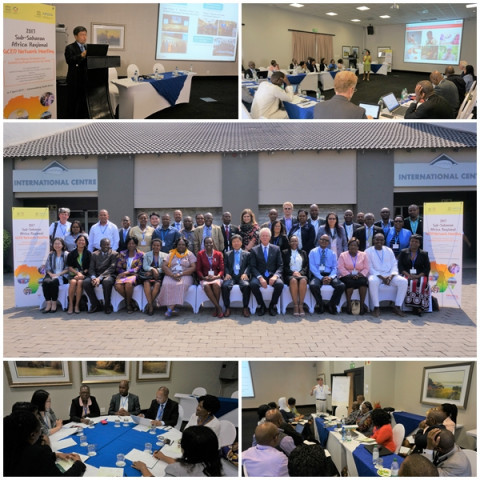 Johannesburg Meeting explored solidifying GCED Action in Africa 2017-04-20 Co-organized by APCEIU and the UNESCO Regional Office for Southern Africa (ROSA), the 2017 Sub-Saharan Africa Regional Global Citizenship Education (GCED) Network Meeting was held on 6-7 April 2017 in Johannesburg, South Africa. The meeting brought about 50 representatives from Sub-Saharan Africa education-related ministries, civil society organizations, universities and research institutions and UNESCO entities to develop strategies and solidify regional action for GCED, in light of its realization as an integral part of the Sustainable Development Goals (SDGs). The meeting held discussions and group work that identified existing action of different stakeholder groups on GCED, challenges, and ways forward. In particular, the meeting shone light on the importance of GCED in promoting transformative education and developing solutions with the region’s pressing challenges. The meeting also identified ways on how to implement SDG Target 4.7, to ensure that learners in the region are provided with knowledge and skills that promote sustainable development and global citizenship.Representing the host country, Ms Lefika Chetty, Deputy Secretary-General of the South African National Commission for UNESCO, at the opening of the meeting highlighted the urgency of GCED to leave no one behind in her congratulatory remarks, saying that, “It is obvious, especially within the overall context of accelerating global peace, that individuals and communities without a satisfactory level of basic education risk becoming marginalized not only within their own society but from the global society too.” Initiating the opening remarks from the organizing institutions, Mr Hubert Gijzen, Director of the UNESCO Regional Office for Southern Africa, explained that GCED, while relatively new to Africa, has existed in the region, and is an opportunity to rethink about the role of education, and a way to integrate all the dimension of sustainable development. In his words, he mentioned that “Global Citizenship may be a relatively new term in African countries. However, components of GCED such as human rights, citizenship, international relations, peace, conflicts resolution, democracy, and environmental education are not new in the lexicon of Africa.” Mr Utak Chung, Director of APCEIU, urged participants towards collaboration towards GCED, as it is everyone’s agenda. “Fostering global citizenship is not just one of the UN or UNESCO’s agenda. It is every educator’s agenda, every teacher’s agenda. It is everyone’s agenda,” he said. The meeting showcased the diverse efforts of institutions in the various sub-regions of Sub-Saharan Africa towards the promotion of GCED. It highlighted the different perspectives of stakeholder groups, ranging from governments, civil society organizations including the youth, research groups, higher education institutions, and international organizations including UNESCO and its related entities. At the same time, the meeting showed the diverse concepts embedded in GCED, including human rights, peace, and gender equality, among others, which has been implemented in the region for a long time. Participants voiced the importance of GCED in reinforcing the role of education in addressing current challenges of the region, including resolving conflict and the prevention of radicalization amongst the youth. They also discussed on strategies at the organizational, thematic and regional levels, identified priorities, and developed strategies to strengthen promotion of GCED. With the development of the strategies, follow-up plans were drawn where the key message is coordination and communication. Ms Ann Therese Ndong-Jatta, Director of the UNESCO Regional Office for Eastern Africa, congratulated the participants for their seriousness and commitment for GCED. She urged that participants to utilize the network formed in this meeting as a stepping stone towards building peace through education for Africa building on existing work, and to promote inclusiveness. The meeting jumpstarted the formation of the Africa Regional GCED Network, which is expected to map different GCED programmes and explore possible collaboration in light of solidifying regional action for GCED in Africa. Related Link: http://www.unesco.org/new/en/harare/about-this-office/single-view/news/identifying_strategies_and_solidifying_regional_action_for_g-1/ URL: Johannesburg Meeting explored solidifying GCED Action in Africa > APCEIU News - APCEIU (unescoapceiu.org)
 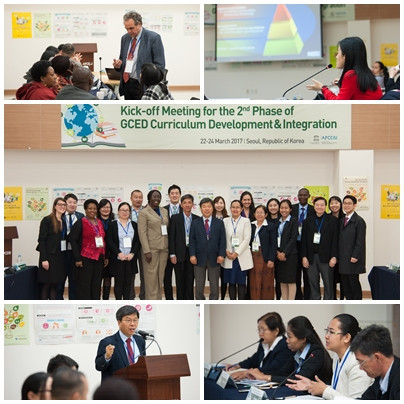 Kick-off Meeting for the 2nd Phase of GCED Curriculum Development & Integration 2017-04-04 The 2nd Phase of GCED Curriculum Development & Integration has officially kicked off with the International Bureau of Education(IBE-UNESCO) as well as the four partner countries(Cambodia, Colombia, Mongolia and Uganda)from 22-24th March at APCEIU GCE Hall. Delegates from Cambodia, Colombia, Mongolia and Uganda shared the progress made during the 1stphase in setting up the GCED Curriculum Development & Integration Committee and carrying out a needs assessment and situational analysis of its curriculum. The four countries proposed their 2nd phase action plan, which elaborated specific details and relevant information to fulfil the following goals: First, to integrate global citizenship into the curriculum and/or produce GCED materials according to their needs, and second, to conduct a pilot test of the output. The kick-off meeting was successful with the enthusiastic participation of partner countries and IBE-UNESCO. This meeting will provide assistance in setting out a clear path for the year ahead. Also, it will aid further cementing every stakeholder’s resolve in implementing the course of action they came to adopt. In addition, APCEIU had the opportunity to present its Policy Guide on Global Citizenship Education to gain feedback from the participants. The draft guide, which is due to be published later this year, is expected to serve as a frame of reference for policy makers. The main contents of the draft guide aim to integrate and strengthen GCED in educational policies, strategies and plans. URL:Kick-off Meeting for the 2nd Phase of GCED Curriculum Development & Integration > APCEIU News - APCEIU (unescoapceiu.org)
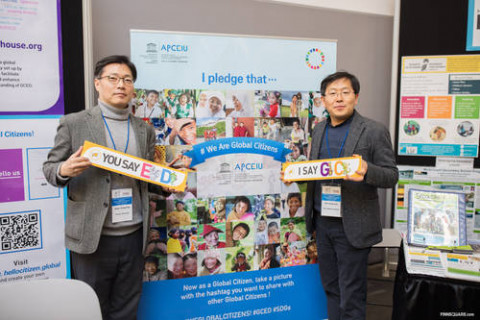
 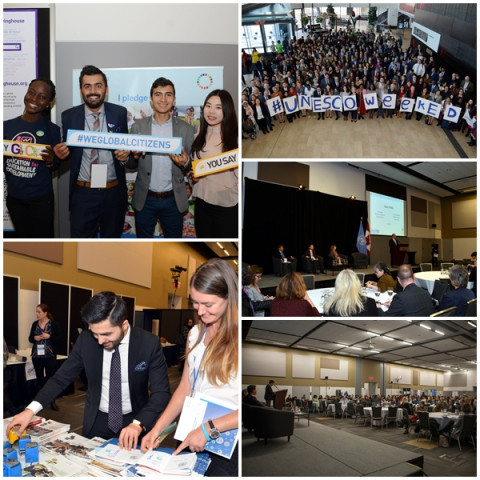 Examining practices for educators to empower learners to become global citizens: UNESCO Week for Peace and Sustainable Development 2017-03-22 More than 500 experts, practitioners and policymakers from across the world gathered in Ottawa, Canada and explored pedagogical approaches and teaching practices to achieve the Sustainable Development Goals (SDGs) through Education for Sustainable Development (ESD) and Global Citizenship Education (GCED). The UNESCO Week for Peace and Sustainable Development: the Role of Education (6-10 March 2017) brought together the Global Review Forum for the Global Action Programme on ESD (GAP) and the Third UNESCO Forum on GCED representing UNESCO's two major educational approaches. Participants examined good policies and practices for educators and teacher trainers to empower learners to become global citizens. On 8 March, UNESCO Director-General Irina Bokova officially opened the 5 - day event and an exhibition of 42 booths showcasing a wide variety of practices and approaches to ESD and GCED. “We need the education that promotes understanding between cultures, that strengthens the resilience of societies. And we need teachers equipped with the skills and confidence to foster these competences.” She highlighted the importance of teachers’ role to cultivate global citizenship. APCEIU participated in the exhibition under the name of ‘Global Citizen Campus’ which consists of hands-on activities related to GCED as well as SGDs, Global Citizen Passport, online materials such as GCED Clearing House, APCEIU’s publications including GCED best practices, etc. The APCEIU’s booth drew the attention of many participants, providing a platform for sharing practices, ideas, and insights on GCED. The Third UNESCO Forum on GCED, which opened on 8 March, drew together GCED experts, educational practitioners, civil society organizations, young people, research institutions and universities, UN agencies and other partners from the public, non-governmental and private sector from all regions. “Teachers are on the frontlines of bringing GCED into learning environments. Without confident, qualified and well-prepared teachers, we cannot advance GCED,” said UNESCO Assistant Director-General for Education, Qian Tang, at the official opening of the Forum. Utak Chung, Director of APCEIU, in remarks at the opening of the Forum, pledged that APCEIU will continue to support promoting GCED with UNESCO and other partners. He also renewed the APCEIU’s endeavours towards the global advancement of GCED and reaffirmed that fostering global citizenship is not just the UN or UNESCO’s agenda, but ultimately a global agenda for all. During the Forum, APCEIU co-organised and supported two concurrent sessions. In collaboration with the UNESCO Bangkok Office, APCEIU organised a session titled “Preparing teachers for global citizenship education in Asia: what works?” on 9 March. Inviting two experts from the region, Francis Daehoon Lee (Sungkonghoe University) and Toh Swee-Hin (University of Alberta), the session explored themes and pedagogical methods through which GCED can be approached. On 10 March, APCEIU supported a session titled “Teaching with young people: What do learners expect from GCED?”, led by the GCED Youth Network. The GCED Youth Network was established by a group of youth advocates for GCED who participated in APCEIU’s annual programme for youth. Anna Susarenco from Moldova and Lorena Gamarra from Peru introduced advocacy techniques which teachers and educators can use to engage young people in GCED. The third UNESCO Forum on GCED focused on teachers’ crucial role for pioneering frontline to bring GCED into classrooms and for achieving SDGs. Throughout the Forum, participants exchanged ideas and information on GCED and strengthened networks to ensure that practical change is brought into learning environment. URL:Examining practices for educators to empower learners to become global citizens: UNESCO Week for Peace and Sustainable Development > APCEIU News - APCEIU (unescoapceiu.org)
 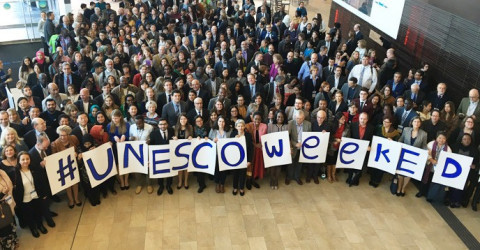 Education connects peace and development in sustainable ways says Director-General at UNESCO Week opening 2017-03-17 UNESCO Director-General Irina Bokova officially opened the UNESCO Week for Peace and Sustainable Development: The Role of Education in Ottawa, Canada on 8 March together with Catherine McKenna, Minister of Environment and Climate Change, Government of Canada, and Mitzie Hunter, Minister of Education, Government of Ontario.The 5-day event is gathering more than 400 experts, practitioners and policymakers from across the world to examine pedagogical approaches and teaching practices to achieve the Sustainable Development Goals (SDGs) through Education for Sustainable Development (ESD) and Global Citizenship Education (GCED). Teachers of UNESCO’s Associated Schools Network (ASPnet) are also attending the event, along with 50 young delegates from all around the world.“We need new forms of education that promotes understanding between cultures, that strengthens the resilience of societies and provides the relevant skills to navigate the future,” said Ms Bokova, emphasizing the need to promote human rights, dignity, diversity and inclusion. “We now have to reinforce efforts, translate results into educational practices, into teacher training and into concrete transformations of curricula. To succeed, we need teachers equipped with the skills and confidence to foster these competences. We must share, analyse and innovate – this is the aim of this Week.”The Week brings together the Global Review Forum for the Global Action Programme on ESD (GAP) and the Third UNESCO Forum on GCED. ESD and GCED represent UNESCO's two major educational approaches that strive to provide everyone with the opportunity to acquire the knowledge, skills, attitudes and values needed to shape a just, peaceful and sustainable future.All speakers of the opening acknowledged the important role of women and indigenous knowledge in achieving a sustainable future. “I know the transformative power of education and what it does for my people”, said Maliseet Elder Mac Saulis, who offered a welcome to the traditional territory.Minister McKenna affirmed that “No change will be more monumental than that of climate change. It won’t be easy to overcome this challenge but it should not be passed on to the generations that follow us.”Ambassador Dessima Williams, Special Adviser for Implementation of the SDGs, also spoke at the opening on behalf of the President of the Seventy-First Session of the United Nations General Assembly. “There can be no sustained peace without sustainable development”, she said. “The work of UNESCO and its partners are both commendable and encouraging. We cannot do such a job of transforming the world alone, but together, we are able to achieve much.”Focusing on those who are on the frontlines in the classroom, Fred van Leeuwen, Secretary-General of Education International said: “Teachers create bonds within groups and build bridges across groups and communities. It is clear that efforts to improve teaching and learning will not succeed unless we trust, value and support teachers. We see this Conference as a clear token of UNESCO to support the teaching profession worldwide". ”Minister Hunter, together with Ms Bokova, inaugurated an exhibition of 42 booths showcasing a wide variety of practices and approaches to ESD and GCED, stating that “for students to achieve excellence, they must be in an environment that enables them to do so.”The opening was followed by “Talking Across Generations,” an event gathering youth from all regions, policymakers and academics, including several UNESCO Chairs, organized by the UNESCO Mahatma Gandhi Institute for Education for Peace and Sustainable Development (MGIEP). A rich diversity of voices shared views on the 21st century classroom, how to empower teachers to promote peace and global citizenship, use technology and drive transformative change. The Director-General emphasized the importance of support to teachers, through training, professional development, decent salaries and respect for their status in society.“World Rescue”, an SDG-inspired video game, was launched by MGIEP at the event. It allows players to take the role of young heroes to help solve global problems such as displacement, disease, deforestation and pollution in their communities. UNESCO also presented a new publication “Education for Sustainable Development Goals: Learning Objectives”, which highlights recommendations for classroom activities to address each of the SDGs as well as guidance on how to integrate ESD into policies and teaching.In support of the Week, the UNESCO Global Education Monitoring (GEM) Report has launched a youth photo contest on ESD and GCED.The Week will run until 10 March when the GCED Forum examines good policies and practices for educators and teacher trainers to empower learners to become global citizens. Follow the conversation on Twitter under #UNESCOweekEDThe UNESCO Week is organized jointly by UNESCO and the Canadian Commission for UNESCO with financial support from UNESCO, the Canadian Commission for UNESCO, the Canada Council for the Arts and the Ministry of Education, Culture, Sports, Science and Technology of Japan through the UNESCO Japanese Funds-in-Trust for ESD. Additional support for the Week is provided by the Council of Ministers of Education, Canada, the Global Centre for Pluralism and the Canadian Museum of History.
  UNESCO Forum on Global Citizenship Education provides a platform for innovative teaching 2017-03-17 The Third UNESCO Forum on GCED, which opened on 8 March 2017 in Ottawa, Canada, brought together leading experts, practitioners and policymakers from around the world to examine pedagogical approaches and teaching practices, and to ensure that practical change is brought into classrooms.“Teachers are on the frontlines of bringing GCED into learning environments. Without confident, qualified and well-prepared teachers, we cannot advance GCED,” said UNESCO Assistant Director-General for Education, Qian Tang, at the official opening of the Forum. Ambassador Elaine Ayotte, Permanent Delegate of Canada to UNESCO, underlined the essential contribution of educators in building competencies that foster awareness of today’s realities that affect all peoples from all cultures.Ambassador Choong-hee Hahn, Deputy Permanent Representative of the Republic of Korea to the United Nations, described the momentum building among policy makers at the global level, and Member States’ commitment to equip the next generation with the tools of tolerance and cultural literacy.Utak Chung, Director of the Asia-Pacific Centre of Education for International Understanding, renewed the Centre’s support towards global advancement of GCED and reaffirmed that fostering global citizenship is not just the UN or UNESCO’s agenda, but ultimately a global agenda. Teachers’ crucial role for achieving Target 4.7With teachers as the central theme of the third UNESCO GCED Forum, the focus has been to draw attention to educators’ fundamental role in improving learning about, and for, global citizenship. In a context where learners are increasingly learning through a diversity of channels, the role of teachers is bound to evolve. Teachers are not only the transmitters of knowledge. They have a role to play in developing learners’ knowledge, skills and attitudes that promote peace and sustainable development. Teachers are the agents of change who can ensure countries achieve of Target 4.7 of the SGD on Education. The event also included the active participation of teachers from UNESCO’s Associated Schools Network (ASPnet) along with 50 youth delegates selected by the Mahatma Gandhi Institute for Peace and Sustainable Development (MGIEP).The UNESCO Week for Peace and Sustainable Development: the Role of Education (6-10 March 2017) also included the GAP Review Forum, as well as a joint day where the official opening took place. The UNESCO Week is organized jointly by UNESCO and the Canadian Commission for UNESCO with financial support from UNESCO, the Canadian Commission for UNESCO, the Canada Council for the Arts and the Ministry of Education, Culture, Sports, Science and Technology of Japan through the UNESCO Japanese Funds-in-Trust for ESD. Additional support for the Week is provided by the Council of Ministers of Education, Canada, the Global Centre for Pluralism and the Canadian Museum of History. Follow the GCED Forum on Twitter using #UNESCOweekED.Links: UNESCO Week for Peace and Sustainable Development website Global Citizenship Education Learning to live together sustainably (SDG4.7): Trends and Progress UNESCO Associated Schools URL:http://www.unesco.org/new/en/education/resources/online-materials/single-view/news/unesco_forum_on_global_citizenship_education_provides_a_plat/
 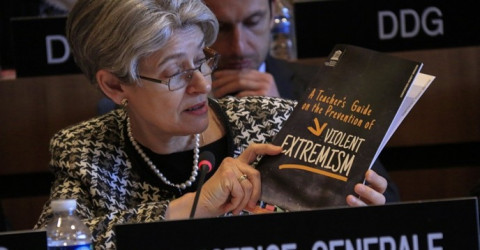 UNESCO Launches Teacher’s Guide on the Prevention of Violent Extremism 2017-03-17 UNESCO’s Teacher Guide on the Prevention of Violent Extremism just released, provides practical tips to educators seeking guidance on how to discuss the subject in classrooms.The Guide was developed within the framework of UNESCO’s work on Global Citizenship Education and in response to the request of UNESCO’s Member States for assistance in strengthening their education sector responses to violent extremism. It seeks to help teachers to create a classroom climate that is inclusive, and conducive to respectful dialogue, open discussion and critical thinking. The publication also recommends resources to develop a deeper understanding of the phenomenon of violent extremism and responds to frequently asked questions.Whether discussions on violent extremism are pre-planned or not, a well-managed conversation on the subject should seek to reinforce skills that enable learners to participate more generally in civic life as informed global citizens. This implies ensuring that the information exchanged during the discussion, as well as the way the debate is handled, develop skills, attitudes and behaviours that foster mutual respect, critical thinking and a sense of belonging to a common humanity.The Guide will be complemented by a second guidance document, to be released in September 2016, targeting policy-makers within ministries of education. This tool will provide a set of resources that can help reinforce national capacities to address the drivers of violent extremism through holistic and pragmatic education sector-wide responses.The publication was peer reviewed by a host of international experts in the field of education, as well as Associated Schools Project Network (ASPnet) schools and students of the Teachers College of Columbia University.The Guide will be translated initially into French and then other languages. It will also be used as a basis for capacity building workshops on the prevention of violent extremism through education.This Guide constitutes UNESCO’s first contribution to the implementation of the UN Secretary-General’s Plan of Action to Prevent Violent Extremism, announced in January 2016.Links A Teacher's Guide on the Prevention of Violent Extremism United Nations Plan of Action to Prevent Violent Extremism Global Citizenship Education UNESCO’s role in promoting education as a tool to prevent violent extremism (197 Executive Board/Decision 46)
 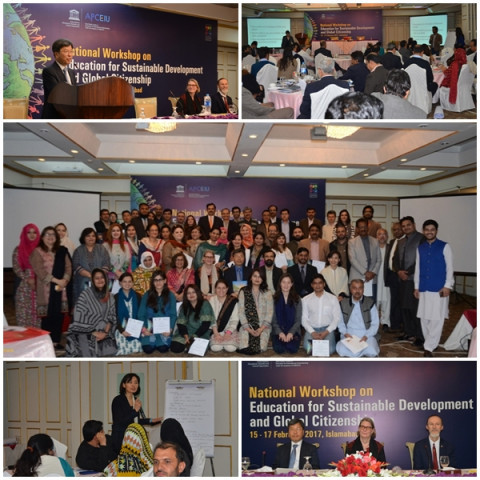 National Workshop on “Education for Sustainable Development and Global Citizenship” in Islamabad, Pakistan 2017-03-08 Co-organized by APCEIU, UNESCO Islamabad and UNESCO Headquarters, a National Workshop on “Education for Sustainable Development and Global Citizenship Education” was held on 15 - 17 February in Islamabad, Pakistan. This three-day national workshop was especially for the education stakeholders in Pakistan to raise their awareness and understanding on the concept of Education for Sustainable Development and Global Citizenship focusing on the Sustainable Development Goals target 4.7. Aimed to ensure that all leaners are provided with the knowledge, attitudes and skills to promote sustainable development and global citizenship, this workshop was a forum of discussing issues around SDG 4.7 by participants from Ministry of Federal Education and Professional Training, provincial/area education department offices, civil society organizations, research institutes, academia and youth organizations. This national workshop was facilitated in the participatory format through presentations, group works and activities to help participants deepening their understanding on ESD and GCED as well as internalize its concepts to develop action plans respective to their own educational contexts. As one of the sessions, Prevention of Violent Extremism through Education (PVE-E) was focused by reflecting current situation of incidents by extremists especially in Pakistan. During the workshop, participants worked in groups to share their best practices and at the end of workshop, established key recommendations and detailed action plans in three areas of Education Policies, Curriculum and Teacher Education. At the closing of the workshop, Director Utak Chung expressed his gratitude to the workshop participants and UNESCO Islamabad, and promised continuous support from APCEIU for future cooperation as follow-up on this opportunity. He mentioned that “as a partner of SDG 4.7, we look forward to working together with educators in Pakistan to enhance GCED and ESD through diverse opportunities and APCEIU programmes.” URL:National Workshop on “Education for Sustainable Development and Global Citizenship” in Islamabad, Pakistan > APCEIU News - APCEIU (unescoapceiu.org)
 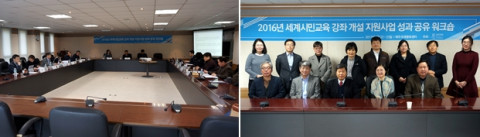 Workshop for sharing the outcomes of 2016 ‘Support for GCED Course Development 2017-03-06 An academic workshop to share the outcomes of 2016 ‘Support for GCED Course Development’ was held at the Jeju International Peace Center on 22-23 February this year. The workshop was attended by the professors who had designed and implemented GCED courses at 9 different universities in the Republic of Korea during the 2016 Autumn semester (July to December) under the support of APCEIU. It was an opportunity to share and discuss among professors the outcomes, operational strategies and teaching methods with regard to the implemented GCED courses. Throughout this workshop, the participants could share and learn about newly developed GCED curricular implemented in each university/department. In addition, in-depth discussions on shaping the future of GCED course development and implementation was continued, such as finding ways to link the existing GCED courses to students’ career paths and out-of-school education programmes as well as on the importance of developing a necessity for development of common GCED reference materials and GCED courses assessment mechanism. URL: Workshop for sharing the outcomes of 2016 ‘Support for GCED Course Development’ > APCEIU News - APCEIU (unescoapceiu.org)
  UNESCO Week for Peace and Sustainable Development highlights teachers’ role in achieving Global Development Agenda 2017-03-06 02 March 2017More than 400 experts, practitioners and policymakers from the public, non-governmental and private sector from all regions will attend UNESCO Week for Peace and Sustainable Development: The Role of Education, in Ottawa, Canada from 6 to 10 March.Organized by UNESCO and the Canadian Commission for UNESCO, the event will focus on Education for Sustainable Development (ESD) and Global Citizenship Education (GCED) and their contribution to achieving the Sustainable Development Goals (SDGs), notably Target 4.7 of SDG 4 on Education. During the Week, experts will examine pedagogical approaches and teaching practices in promoting ESD and GCED.“Learning to live together and protecting our planet are basic conditions for securing a more peaceful and sustainable future,” says UNESCO Director-General, Irina Bokova. “This is about daily actions, attitudes and behaviours that are guided by awareness of our interdependence, respect for shared values and openness to other cultures. These must be integrated into education systems everywhere, so that every student grows up to become a caring and responsible global citizen.”UNESCO will launch a new publication on this occasion, “Education for Sustainable Development Goals: Learning Objectives,” to support policy-makers, curriculum developers and educators to promote learning for the SDGs. The publication contains suggestions and classroom activities to address each goal.Teachers of UNESCO’s Associated Schools (ASPnet) will also be attending the event, along with 50 young delegates.From 6 to 8 March, the Global Review Forum for the Global Action Programme (GAP) will take stock of progress since 2014, when the programme was launched, and examine the way forward.From 8 to 10 March, the Third GCED Forum will highlight good policies and practices for teachers and teacher trainers.Ms Bokova, Catherine McKenna, Canada’s Minister of Environment and Climate Change, Mitzie Hunter, Minister of Education (Ontario Provincial Parliament), Ambassador Dessima Williams, Special Adviser to the President of the 71st Session of the United Nations General Assembly, and Fred van Leeuwen, Secretary-General of Education International, will take the floor on 8 March, when the two fora come together.This session will be followed by an intergenerational dialogue between youth and senior officials, organized by the UNESCO Mahatma Gandhi Institute of Education for Peace and Sustainable Development (MGIEP). This “Talking Across Generations” (TAGe) session will be broadcast on webstream with live discussions on Twitter under the hashtag #UNESCOWeekED.In support of the Week, the UNESCO Global Education Monitoring (GEM) Report will also launch a youth photo contest on ESD and GCED on 6 March.Finally, UNESCO’s MGIEP will launch an SDG-inspired video game in which players help solve global problems such as displacement, disease, deforestation, drought and pollution at the community level.*The UNESCO Week is organized with financial support from UNESCO, the Canadian Commission for UNESCO, the Canada Council for the Arts and the Ministry of Education, Culture, Sports, Science and Technology of Japan through the UNESCO Japanese Funds-in-Trust for ESD. Additional support for the Week is provided by the Council of Ministers of Education, Canada, the Global Centre for Pluralism and the Canadian Museum of History.