
News
Catch up on what’s happening in the world of global citizenship education.
311 results found
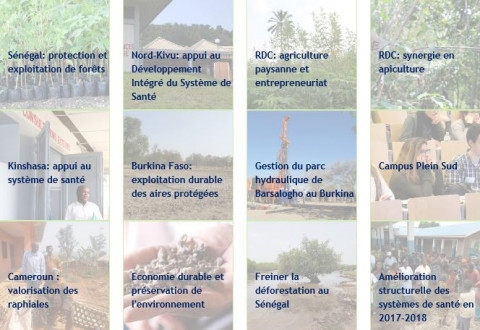 Le changement aux échelles locale et internationale, vu par ULB-Coopération 2018-10-08 Tel que l’indique son site web, « ULB-Coopération, actrice du développement et de la coopération Nord-Sud, est l’ONG de l’Université libre de Bruxelles, née de l’association entre les ONG CEMUBAC, SLCD et SEDIF, ainsi que des partenaires et des membres de la communauté universitaire. [Sa triple mission consiste à] co-créer des espaces permettant le changement, stimuler et alimenter la recherche, l’innovation et la créativité et promouvoir les échanges de savoir entre les acteurs de changement. »(Pour en savoir plus sur ULB-Coopération, consultez:https://www.ulb-cooperation.org/fr/vision-missions-et-valeurs) ULB-Coopération collabore avec les membres de l’Université libre de Bruxelles pour favoriser l’acquisition de connaissances et d’un esprit critique aiguisé pour adresser la coopération internationale et le développement et adopter des stratégies de plaidoyer visant à influencer les décideurs. L’engagement d’ULB-Coopération en Belgique, au Burkina Faso, au Sénégal et en République démocratique du Congo s’inscrit dans une approche respectueuse des particularités individuelles et locales et vise une transformation durable. Les actions de l’ONG touchent à la santé, au territoire et aux ressources, à l’entreprenariat et à l’éducation à la citoyenneté. (Pour découvrir les projets d’ULB-Coopération, consultezhttps://www.ulb-cooperation.org/fr/nos-projets) Au quotidien, ULB-Coopération offre et participe à des activités éducatives, telles que le colloque « Comment susciter l’engagement à la citoyenneté mondiale et solidaire des jeunes dans l’enseignement supérieur ?» qui a eu lieu du 19 au 21 septembre derniers à l’Université de Namur. (Pour connaître les activités de l’ULB-Coopération, consultezhttps://www.ulb-cooperation.org/fr/node/152) L’image vient du site web suivant : https://www.ulb-cooperation.org/fr/nos-projets
 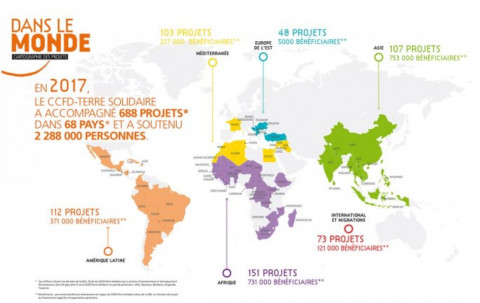 Le CCFD-Terre Solidaire outille les professionnels et le grand public 2018-10-08 Fondé dans les années 60, le Comité catholique contre la faim et pour le développement-Terre solidaire (CCFD-Terre Solidaire) est, selon son site web, la première ONG française de développement. Son bureau-chef se situe à Paris. Les actions de l’organisme visent à enrayer la faim en luttant contre ses causes plutôt qu’en atténuant ses conséquences. En préconisant une approche d’autonomisation, plutôt que d’intervention, le CCFD-Terre Solidaire « soutient plus de 697 projets initiés par des acteurs locaux dans 66 pays. Le CCFD-Terre Solidaire s’appuie sur un réseau de 15 000 bénévoles pour sensibiliser les Français à la solidarité internationale et agit auprès des décideurs par des actions de plaidoyer pour construire un monde plus juste. » (Pour en connaître davantage sur les projets soutenus par le CCFD-Terre Solidaire, consultez:https://ccfd-terresolidaire.org/projets/) Le CCFD-Terre Solidairepublie 5 fois par an son magazine Faim et Développement et affiche régulièrement sur son site des communiqués et des dossiers qui documentent, analysent et font des recommandations sur divers enjeux actuels. Par ailleurs, le CCFD-Terre Solidaire a élaboré une trousse d’outils d’éducation à la citoyenneté destinée au grand public, dont trois sont adaptés spécialement pour les enseignants du primaire au lycée. (Pour explorer les outils du CCFD-Terre Solidaire, consultez :https://ccfd-terresolidaire.org/mob/nos-outils-d-animation/) Chaque année, le CCFD-Terre Solidaireco-organise le Week-end de Formation à l’animation en Éducation à la citoyenneté et à la Solidarité Internationale (WESCI) pour permettre aux professionnels du milieu de renforcer leurs connaissances et leurs pratiques. L’édition de 2018 s’est tenue du 2 au 4 février à Paris.(Pour obtenir plus de renseignements sur le WESCI, consultez :https://ccfd-terresolidaire.org/IMG/pdf/bull_presentation_programme_2018.pdf) L’image vient du site web suivant : https://ccfd-terresolidaire.org/projets/
 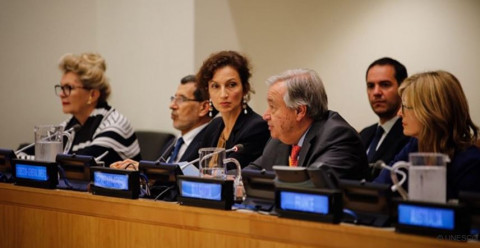 Education to prevent racism and discrimination: the case of anti-Semitism 2018-10-08 Education as the primary factor in preventing all forms of racism and discrimination was the main focus of a high-level event organized by UNESCO at the 73rd United Nations General Assembly today. Through the lens of its program to prevent anti-Semitism, UNESCO sought to mobilize Member States’ commitment in the fight against all forms of intolerance and to strengthen the organization’s overall efforts to prevent racism and discrimination. In her remarks opening the session on The power of education to prevent racism and discrimination: the case of anti-Semitism, Director-General Audrey Azoulay highlighted the importance of working as one: “this requires the mobilization of all member states”, she said, “and education is the best tool at our disposal to prevent all forms of intolerance and discrimination and to ensure equal respect for every woman and man,” adding “antisemitism undermines fundamental rights in general. To address it is to defend fundamental freedoms. It is to defend the equal dignity of all human beings.” In the presence of Antonio Guterres, Secretary General of the United Nations, the event included the participation of the Prime Minister of Morocco, Saadeddine Othmani, and Ministers representing Argentina, Australia, Bulgaria, France, Hungary, Mexico, the Netherlands, Norway, Spain, and the United Kingdom. Several hundred government officials and senior representatives of civil society organizations were also in attendance. Ronald S. Lauder, President of the World Jewish Congress, also delivered a speech. Professor Deborah Lipstadt, of the Modern Jewish History and Holocaust Studies program at Emory University and Mina Abdelmalak, Arab Outreach Specialist at the Initiative on Holocaust Denial and Antisemitism of the United States Holocaust Memorial Museum were also among the speakers. UNESCO’s extensive work in the field of preventing violent extremism through education has included publications such as Guidelines for Educators on Countering Intolerance and Discrimination against Muslims and co-publishing earlier this year with the Organization for Security and Cooperation in Europe (OSCE), the first-ever policy guidelines on Addressing anti-Semitism through education. *** Media contact: Aurélie Motta-Rivey, +33 7 72 44 89 91, a.motta-rivey@unesco.org URL:https://en.unesco.org/news/education-prevent-racism-and-discrimination-case-anti-semitism
 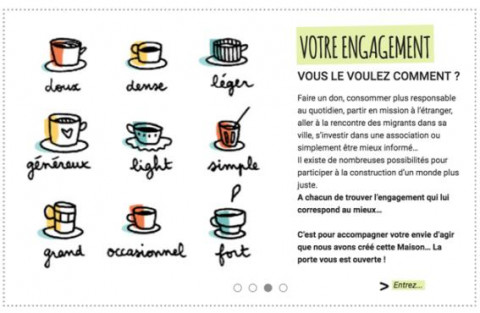 La Maison des solidarités locales et internationales offre des animations 2018-10-05 « Créée en 2013 à l’initiative du Collectif des Associations de Développement en Rhône Alpes (CADR), la Maison permet à chacun de développer son projet autour de valeurs collectives comme la citoyenneté, la convivialité, la coopération, la diversité culturelle et la justice. »(Pour en savoir plus sur la Maison des solidarités, consultez :http://maisondessolidarites.org/nos-valeurs/) Selon le site de la Maison des solidarités locales et internationalesen France,« La Maison des solidarités est un espace de débats et de rencontres avec des acteurs solidaires, mais aussi un lieu de rendez-vous pour échanger entre citoyens sur des sujets de société actuels.Commerce équitable, économie solidaire, égalité femmes-hommes, volontariat au Sud, engagements ici, solidarité internationale… des thématiques très variées sont débattues tout au long de l’année. »(Pour connaître les prochaines activités organisées par la Maison des solidarités, consultezhttp://maisondessolidarites.org/category/animations-solidaires-debats-citoyens-lyon/) Il y avait plusieurs animations en juin 2018 en lienavec le soutien à la parentalité, ainsi qu’une conférence sur des « armes à la non-violence » et « la marche de Lyon-Genève pour l’écologie ». La catalogue d’outils qui inclut de nombreux jeux, activités et ressources est accessible ici :http://maisondessolidarites.org/wp-content/uploads/2015/08/Catalogue-des-outils-de-la-Maison_FINAL.pdf Pour de plus amples renseignements sur La Maison des solidarités locales et internationales ainsi qu’un calendrier d’activités, consultezhttp://maisondessolidarites.org/. L’image vient du site web suivant : http://maisondessolidarites.org/
  New data reveal that one out of three teens is bullied worldwide 2018-10-03 Almost one-third of young teens worldwide have recently experienced bullying, according to data released for the first time by the UNESCO Institute for Statistics (UIS), which is the official data source for the Sustainable Development Goal on education. The new data show that bullying affects children everywhere, across all regions and countries of different income levels. They were collected from in-school surveys that track the physical and emotional health of youth. The Global School Health Survey (GSHS) focuses on children aged 13 to 17 years in low-income regions. Similarly, the Health Behavior in School-Age Children (HBSC) targets young people aged 11 to 15 years in 42 countries, primarily in Europe and North America. Bullying refers to violence between peers/students which is characterised as “intentional and aggressive behavior occurring repeatedly where there is a real or perceived power imbalance.” “Data are the key to change,” said Silvia Montoya, UIS Director. “They can reveal who is affected by bullying and point the way to better programming by both national governments and international and non-government organizations. Over time, trends can point out whether interventions are working. Ultimately, the more knowledge we have, the more we are able to channel resources to children who need help the most.” Globally boys are slightly more at risk of bullying in schools than girls. The data – which do not include sexual or other forms of gender-based violence – show that more than 32% of boys experience bullying in school, compared to 28% of girls. Yet when looking at the 10 countries where children report the highest incidences of bullying, the median rates tell a slightly different story. In these 10 countries, a staggering 65% of girls and 62% of boys report bullying, revealing that where bullying is most pervasive, girls are more widely impacted. External factors also have a role in bullying Socioeconomic and immigrant status also play a part in bullying, according to the HBSC data on children from Europe and North America. In these regions, socioeconomic status – based on parents’ wealth, occupation and education level – is the most likely predictor of bullying: two out of five poor youth are negatively impacted. This compares to one-quarter of teens from wealthier families. Finally, also based on the HBSC data, immigrant children tend to be more vulnerable to bullying than their locally-born counterparts. As migration around the world reaches new peaks, it is worth asking whether bullying will further complicate the ability of this vulnerable group to learn. UNESCO will release a short report on 8 October 2018, looking deeper at a large number of international data sources on bullying and other forms of school violence, and revealing trends in prevalence over time. A full version of the report, available in January 2019, will present an analysis of effective national responses to school violence and bullying through country case studies. Together with the annual compilation and analysis of global data on bullying by UIS, these reports will help countries understand the scale of school violence and bullying, and put in place the policies and actions needed to ensure that all children learn in safe, supportive and inclusive school environments, as agreed in the SDG4 framework. What are the main takeaways of the data? One-third of youth globally experience bullying in school. Boys experience slightly higher rates of bullying than girls overall, but in countries where bullying is most pervasive, girls are more vulnerable. Low socioeconomic status is the main predictor of whether young teens in wealthy countries will experience bullying in schools. Immigrant youth in wealthy countries are more likely to experience bullying in schools than locally-born youth. *** For more information, contact: Amy Otchet, UNESCO Institute for Statistics, Montreal (Canada), a.otchet@unesco.org, tel: +1 514 343 7933 URL:https://en.unesco.org/news/new-data-reveal-one-out-three-teens-bullied-worldwide
 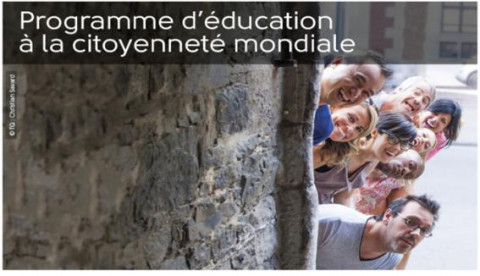 Un nouveau Programme d’éducation à la citoyenneté mondiale (PECM) au Québec, Canada 2018-10-02 En vue de promouvoir la solidarité internationale, le gouvernement du Québec (Canada) a développé une nouvelle Politique internationale du Québec. (http://www.mrif.gouv.qc.ca/fr/solidarite-internationale/programmes-de-solidarite/programme-education-citoyennete-mondiale). Selon le site web du ministère des Relations internationales et de la Francophonie, le PECM «appuie les organismes de coopération internationale (OCI) et leurs activités d’ÉCM visant à sensibiliser le public québécois aux Objectifs de développement durable (ODD) et à la solidarité internationale, tout en favorisant l’acquisition de connaissances, de valeurs et de comportements qui contribuent à la mise en place d’un monde plus juste, durable et équitable. » Les orientations générales du programme incluent : « La poursuite d’un ou de plusieurs ODD, en particulier les enjeux suivants : l’égalité entre les femmes et les hommes, la croissance inclusive, l’éradication de la pauvreté et des inégalités, la lutte contre les changements climatiques ainsi que la promotion et la défense des droits de la personne. La sensibilisation et la promotion de la solidarité internationalecomme un moyen indispensable de résoudre les problèmes mondiaux et d’atteindre les ODD. La participation de publics diversifiés, situés sur une large portion du territoire québécois, en particulier celle des jeunes, qui sont des agents de changement. Le développement ou le renforcement de partenariats et d’alliances entre les OCI et avec d’autres acteurs des milieux communautaire, syndical, académique, tant au Québec que dans les pays du Sud, afin de permettre à ces milieux d’apporter une contribution aux activités d’ÉCM. La poursuite d’une pluralité d’actions et d’approches éducativesqui suscitent un ou plusieurs niveaux d’engagement : Sensibilisation et acquisition de connaissances sur les ODD et les enjeux mondiaux ainsi que du rôle et des responsabilités de chacun. Adhésion à des valeurs associées à la citoyenneté mondiale telles que la solidarité, le respect de la diversité, l’inclusion, le vivre-ensemble ainsi que la responsabilité citoyenne. Mobilisation et engagement de la population québécoise dans l’action locale et internationale, en accompagnant les citoyens dans la modification de leurs comportements et attitudes. » Le PECM, en collaboration avec l’Association québécoise des organismes de coopération internationale (AQOCI) (http://www.aqoci.qc.ca/), vise à soutenir des organismes membres de l’AQOCI à plusieurs niveaux en lien avec l’éducation à la citoyenneté mondiale dans un sens large tout en créant des opportunités pour augmenter, renforcer et améliorer la solidarité internationale. L’image vient du site web suivant :http://www.mrif.gouv.qc.ca/fr/solidarite-internationale/programmes-de-solidarite/programme-education-citoyennete-mondiale
 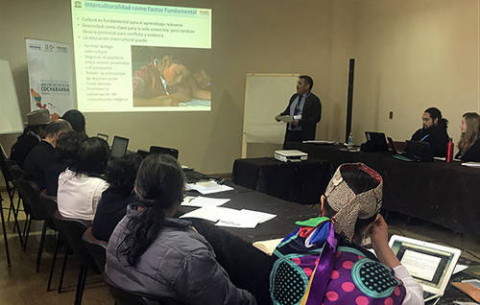 Specialists on indigenous knowledge provide recommendations on intercultural education to Latin American and Caribbean ministers 2018-10-01 The proposals on education, which were the result of discussions held at the II International Workshop on Indigenous Knowledge in Latin America, are part of UNESCO's work on intercultural issues. The points raised adopt a comprehensive and human rights approach and are linked to the global aims of the 2030 Agenda. These recommendations are intended to guide actions in education and intercultural issues through to 2030. A proposal prepared by experts in indigenous themes in education, with contributions from leaders and ministerial representatives from Mexico, Guatemala, Ecuador, Peru, Bolivia, Chile, Paraguay, Panama and Argentina, was presented to the Education Ministers of Latin America and the Caribbean on July 26 during the II Regional Ministerial Meeting in Cochabamba, Bolivia. The recommendations focus on respect for and appreciation of indigenous knowledge in education; the incorporation of indigenous knowledge as a prerequisite of interculturality in state policies at all levels of education; the progress made in terms of gender equity and inclusion of indigenous knowledge; and strengthening the commitment of states to foster policies that revitalize and promote indigenous languages. Points of the proposals The recommendations are the result of discussions held at the II International Workshop on Indigenous Knowledge in Latin America, held on July 24, 2018 in Cochabamba. In his inauguration speech, Roberto Aguilar, Minister of Education of the Plurinational State of Bolivia and host of the meeting, stressed the importance of these issues in the region: "As countries of Latin America and the Caribbean, one of our fundamental objectives is to bring renewed value to, recover, strengthen and project in time all that is represented by native peoples within the framework of our existence as peoples and states, and which are projected as part of the rights of indigenous peoples and nations." The presentation of the workshop’s conclusions to the ministers detailed the following points: Respecting and recognizing the value of indigenous knowledge in education: Recover and recognize the value of indigenous knowledge from a complementary perspective in terms of multicultural and intercultural societies; incorporate and expand indigenous knowledge in various areas; promote research policies, documentation and the deepening of indigenous knowledge through community methodologies and practices specific to peoples and on the basis of their languages. Incorporating indigenous knowledge as a prerequisite of intercultural issues and state policy at all levels of education: Ensure the binding and protagonistic participation of indigenous peoples in the definition of policies and implementation of inter-, intra- and multilingual education; make progress in the area of teacher training, recognizing teachers as central subjects, and with the participation of parents in intercultural, bilingual, intracultural and multilingual education, ensure pertinent and relevant training processes, certifying their work and paying decent wages; and promote the development of autonomous regional curricula in accordance with the socio-cultural characteristics of the indigenous peoples. Making progress in gender equity and the inclusion of indigenous knowledge: Promote debate and research, from the worldview of indigenous peoples and women, the issues of gender inequality, sexuality and sexual diversity; guarantee institutional mechanisms for recognizing and certifying authorship and intellectual property rights with respect to the wisdom and knowledge acquired and researched by indigenous women; ensure access to quality education at all levels and promote the participation of indigenous women in positions of leadership and political decision making; and promote procedures for presentations against any type of discrimination and violence against indigenous girls and women. Strengthening the commitment of states with respect to the promotion of policies for the revitalization and promotion of indigenous languages: Create and strengthen institutions dedicated to the research and promotion of indigenous languages; implement linguistic policies from within the communities that allow progress to be monitored in the teaching and training processes of teachers of indigenous languages; promote the use of indigenous languages as a right in all public and private institutions and services; make legal progress with policies for the dissemination and assessment of indigenous languages and multilingualism in the media and social networks (ICTs); promote the generation and financing of materials and books in indigenous languages; develop, together with indigenous organizations in Latin America, a common reference framework for teaching indigenous languages, taking into account local realities; and promote a regional indigenous knowledge network that will be at the forefront of actions carried out within the framework of the International Year of Indigenous Languages in 2019. The document emphasizes that the Education 2030 Agenda is also a call to value the diversity and multilingualism that characterizes the peoples and territories of the region. Its implementation requires a special political will on the part of states to ensure the full development of indigenous knowledge and languages in educational processes, thus ensuring quality lifelong education for all. In this regard, Atilio Pizarro, Chief of the Planning, Management, Monitoring and Evaluation Section of the Regional Bureau for Education in Latin America and the Caribbean (OREALC/UNESCO Santiago) indicated that these recommendations will imply "the coordination of actions that are already being developed. What UNESCO offers is to help coordinate these proposals, contribute towards efforts and resources, and provide assistance so that this issue is recognized and incorporated into the educational policies of the region, in accordance with the challenges presented by the E2030 Agenda." Más información: Download the recommendations presented to the ministers (pdf) II International Workshop on Indigenous Knowledge in Latin America II Regional Meeting of Ministers of Education of Latin America and the Caribbean https://connect.unesco.org/new/es/santiago/education-2030/cochabamba-meeting-2018/side-events/ii-international-workshop-on-indigenous-knowledge/,DanaInfo=www.unesco.org+ ***** In its 2018-2019 Action Plan, the Indigenous Knowledge Network, coordinated by the Regional Bureau for Education in Latin America and the Caribbean (OREALC/UNESCO Santiago), will continue to coordinate meetings on intercultural issues, as well as to provide advice on the development of national and subregional reports, among other interventions. Similarly, it was announced in Cochabamba that the III International Workshop on Indigenous Knowledge in Latin America will be held in Santiago, Chile in January 2019. URL:http://www.unesco.org/new/en/media-services/single-view/news/especialistas_sobre_saberes_indigenas_entregaron_recomendac/
 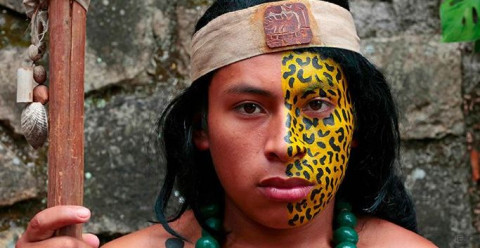 L’UNESCO inaugure le site web de l’Année internationale des langues autochtones 2018-10-01 The International Day of the World's Indigenous People's is well-timed for UNESCO to launch a special website dedicated to the International Year of Indigenous languages (IY2019) which will be commemorated by UNESCO’s members and partners throughout 2019. The website will contribute to raising the awareness about this International Year and about the urgent need to preserve, revitalize and promote indigenous languages around the world. There are some 6.000-7.000 languages in the world today. About 97% of the world’s population speaks only 4 % of these languages, while only 3 % of the world speak 96% of all remaining languages. A great majority of those languages, spoken mainly by indigenous peoples, will continue to disappear at an alarming rate. Without appropriate measure to address this issue, the further loss of languages and their associated history, traditions and memory would considerably reduce the rich tapestry of linguistic diversity worldwide. On the website iyil2019.org, relevant stakeholders and interested parties can find information about the plans for celebrating the IY2019, the actions and measures to be taken by United Nations Agencies, Governments, indigenous peoples’ organizations, civil society, academia, public and private sector, and other interested entities. Furthermore, this website will include a calendar of events, partners’ space for collaboration, access to resources in video, audio, image and text formats, and information about different partnership modalities and sponsorship benefits. Users will learn as well about events in their respective regions, discover how to participate, contribute and benefit from the rich variety of activities. Please register and become a part of this global initiative. https://en.iyil2019.org/ URL:https://en.unesco.org/news/unesco-launches-website-international-year-indigenous-languages-iyil2019
  Le Campus pour la Démocraties’ouvre sur les expériences de participation démocratique à l’étranger 2018-10-01 Le Campus pour la Démocratie, basé à Berne, est une « plateforme pour les acteurs de la pratique et du domaine de la science qui promeut l’éducation civique et la participation politique, en particulier celles des enfants, adolescents et citoyens sans nationalité suisse. [Elle tente de] conforter et accompagner ces acteurs dans leurs activités, démontrer des synergies, promouvoir l’échange du savoir et créer un réseau vivant et hétérogène d’écoles, d’associations, de partis, de villes et de communes, de cantons, du travail social, d’institutions publiques, de hautes écoles, de projets, d’entreprises, d’ONG et de fondations. », comme on peut le lire sur sa page web. (Pour obtenir plus de renseignements sur le Campus pour la Démocratie, consultez :https://campusdemokratie.ch/fr/qui-sommes-nous/) Sur son site, le Campus a une rubrique «ABC de l’éducation à la citoyenneté et à la participation politique», où il recense des ressources pédagogiques disponibles sur Internet, des projets et organismes ainsi que des fondations et des prix donnant accès à des subventions. (Pourprendre connaissance de l’ABC de l’éducation à la citoyenneté et à la participation politique, consultez :https://campusdemokratie.ch/fr/abc/) De plus, le Campus pour la Démocratie organise des évènements en allemand, italien, anglais et français et publicise ceux de ses collaborateurs sur son site. Le 3 octobre prochain se tiendra une conférence «Nouvelles expériences de participation démocratique», à Genève, où seront présentés, entre autres, des projets citoyens genevois, une discussion sur l’enseignement de la démocratie et des perspectives internationales en compagnie de VirginioMerola, maire de la Ville de Bologne et deRuth BetsaidaItamari Choque, députée bolivienne.(Pour connaître d’autres évènements organisés par le Campus pour la Démocratie et ses partenaires, consultez:https://campusdemokratie.ch/fr/events/) L’image vient du site web suivant : https://campusdemokratie.ch/fr/abc/
  Gender Views: Understanding gender identity, gender expression and sexual orientation, and promoting the inclusion of LGBTI people 2018-09-24 The Division for Gender Equality has recently launched Gender Views, a new version of the “brown bag lunches”. The very first meeting took place on 18 September at UNESCO Headquarters in Paris. UNESCO’s Director for Gender Equality, Ms Saniye Gülser Corat launched the series and presented the speaker of the day, Mr Damiano Giampaoli, a Programme Specialist in the Division for Gender Equality and also UN-Globe Co-coordinator for UNESCO. He gave a talk on “Understanding gender identity, gender expression and sexual orientation, and promoting the inclusion of LGBTI people”. Addressing and preventing violence and discrimination is key to achieve Agenda 2030 and its fundamental principle of leaving no one behind. For Mr Giampaoli, “understanding gender diversity is crucial to promote human rights for all”. Around 50 colleagues participated at the meeting, both in person and online. One of them mentioned feeling “very comfortable asking questions on a topic of my interest, the atmosphere was very open”. Ms Christelle Delarue, founder of Mad&Women and next speaker at the Gender Views meeting, was also present and gave a short introduction on the next debate, which will be on the theme “Fighting gender stereotypes through innovative solutions in ‘feminist advertising’”. The next meeting will take place on 25 October at UNESCO Headquarters, from 12.30 to 13.30, Room 6.080. The series of meetings are an opportunity to address some of the most compelling questions and aspects of UNESCO work on Gender Equality as well as to share experiences and perspectives. Participation is open to all UNESCO personnel at HQ and colleagues in field offices will be able to join through videoconference. You can also volunteer to come and present during one of the future sessions! For more information, please contact Damiano Giampaoli: d.giampaoli@unesco.org; and gender.equality@unesco.org See all the pictures here URL:https://en.unesco.org/news/gender-views-understanding-gender-identity-gender-expression-and-sexual-orientation-and