
News
Catch up on what’s happening in the world of global citizenship education.
311 results found
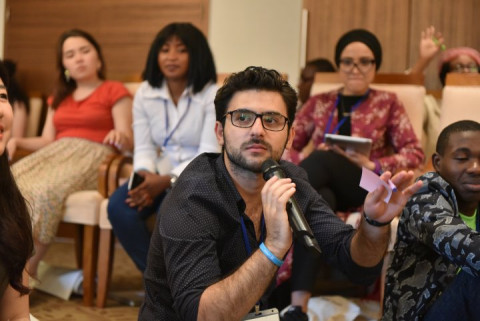 ‘J'ai commencé à zéro’: comment un réfugié syrien est en train de reconstruire sa vie à travers l’éducation 2017-12-25 When HadiAlthib fled Syria to escape military service in 2016, his education was not the first thing on his mind. Althib, 23, was most concerned about settling into his new life in Turkey. Once he arrived in Gaziantep, a city not far from the Syrian border, he focused on finding a job and a place to live. But as he settled into his new role managing youth development programs remotely for refugee camps and shelters in Syria, Lebanon and Jordan, he knew he wanted to go back to school. "I was struggling to have education. It was very hard because when I arrived to Turkey, I have nothing, nothing, nothing at all. I started at zero, maybe before zero," he told TIME. "I had no place to stay, I had nothing to do, but I had a plan that I should study." Nearly 18 months after his arrival in Turkey, Althib has found a way to continue his education. Like thousands of other refugees across the world, he has been taking online courses offered by universities as far-flung as Amsterdam and Baltimore, through programs that offer free classes to those who are displaced from their homes. For the full article, please follow the link below:http://time.com/4825289/world-refugee-day-education-hadi-althib/
  Gambian Youth Engage in the Promotion of Peace, Sustainable Development and Global Citizenship 2017-12-11 From 3 to 8 July 2017, within the framework of the UNESCO Participation Programme, the Gambian National Commission for UNESCO, in partnership with UNESCO and UNFPA, gathered more than 200 young people from all regions of the country and their teachers, for a weeklong training at the Independence Stadium, Bakau, The Gambia. Students and their teachers learned how to promote fundamental values of peaceful co-existence, and better understand the concepts of Global Citizenship, Sustainable Development and Peacebuilding. At the end of the event, the participants adopted a Declaration calling youth organizations and national authorities for actions in favour of the integration of Global Citizenship Education and Education for Sustainable Education into the education system, the development of education and entrepreneurship programmes and the participation of community-based youth organization to decision-making processes.After 22 years of autocratic rule and with 58% of the population under 25 years of age in the Gambia, young women and men are major agents of political change. “Young people are engine of growth, as they constitute the labour force of the Gambia. The peace and development of this country is in the hands of young people” emphasized Mr. Kunle Adeniji, head of the UNFPA Gambia Office. They have a very important role to play to ensure sustainable and peaceful development in the country. “Today, more than ever, it is important to raise awareness on the role that Gambian youth can play to support the implementation of Sustainable Development Goals (SDG). Their active participation is fundamental to the achievement of a peaceful and sustainable development and a proper management of issues related to education and skills, illegal migration, rise in crime rates, and climate change”, explained Hadjan Doucouré, Coordination officer of the Banjul Liaison Desk of the UNESCO Dakar Office.This 6-days workshop aimed at empowering the Gambian youth from ASPNet, UNESCO Clubs Networks and Youth Organizations by providing them with the necessary life skills, and introducing them to the concepts of Global Citizenship and Sustainable development.During the first 3 days, participants were introduced to SDG 16 which promotes peaceful and inclusive societies for sustainable development, and SDG 4 which calls on countries to ensure that all learners are provided with the knowledge and skills to promote sustainable development. SDG Target 4.7 particularly stipulates: “By 2030, ensure that all learners acquire the knowledge and skills needed to promote sustainable development, including, among others, through education for sustainable development and sustainable lifestyles, human rights, gender equality, promotion of a culture of peace and non-violence, global citizenship and appreciation of cultural diversity and of culture’s contribution to sustainable development.To encourage the participants to engage their communities, families and friends through innovative way and contribute to socio-economic transformation of their communities, the organizers devoted 2 days of training to the development of entrepreneurial skills and creative thinking.The 6-day event concluded with one-day sports competition supported by the Youth Empowerment though Education and Sports Foundation
 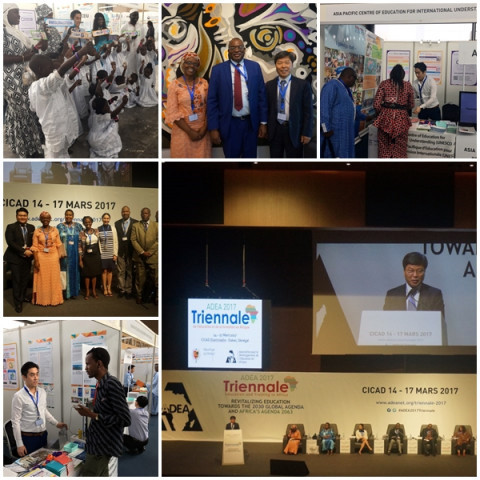 APCEIU’s Presentation and Exhibition on GCED at the ADEA 2017 2017-12-04 APCEIU participated in the ADEA 2017 Triennale held from 14 - 17 March in Dakar, Senegal. Association for the Development Education in Africa (ADEA) consists of 54 ministries of education in Africa. Under the theme of ‘Revitalizing education towards the 2030 Global Agenda and Africa’s Agenda 2063’, the event took place at Abdou Diouf International Conference Center located in Dakar. On 16 March Utak CHUNG, director of APCEIU presented in the parallel session of sub-theme 4 “Building Peace Education and Global Citizenship Education” under the title: “Implementing Global Citizenship Education in the SDG Era: Lessons and Challenges.” Director CHUNG explained about the implication, concept and the background of initiating GCED as a global education agenda included in Sustainable Development Goals (SDGs) and Global Education First Initiative (GEFI). Particularly, he discussed challenges to practice GCED in Africa and Asia-Pacific region, suggesting the direction of the policy implementation and improvement for GCED based on the experiences and practices APCEIU has accumulated during the past 16 years. Furthermore, director CHUNG shared the experience of APCEIU to implement, practice, evaluate and follow-up GCED projects and presented the cases of the national policy on GCED (Uganda and Republic of Korea). He also advised to the stakeholders of African region on the importance of implementing and fortifying GCED as part of SDGs until 2030. During the ADEA Triennale, APCEIU exhibited the core contents of the Global Citizen Campus with ICT-based GCED materials to promote GCED. APCEIU’s Global Citizen Campus consists of the programme including Model UNESCO Conference and Global Citizen Experiential Programme where students are provided with enough opportunity to experience GCED. On the occasion of ADEA 2017 Triennale, APCEIU promoted GCED through presentation and exhibition among educators and stakeholders from African region. It is expected that GCED will solidify its position as key educational agenda in Africa. URL:APCEIU’s Presentation and Exhibition on GCED at the ADEA 2017 > APCEIU News - APCEIU (unescoapceiu.org)
 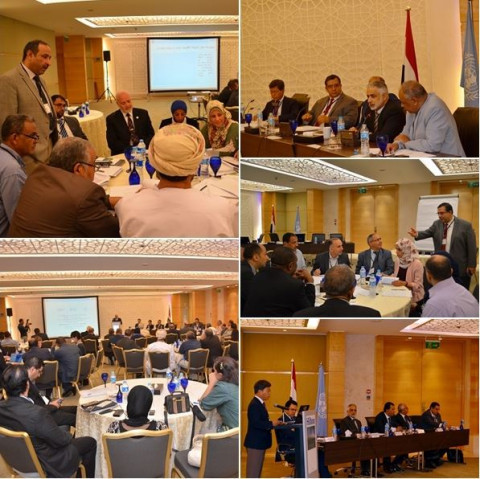 Commitment of Stakeholders to the Realization of GCED Network in the Arab States 2017-11-07 Co-organized by APCEIU and the UNESCO Regional Bureau of Education for the Arab States (UNESCO Beirut) and King Abdullah Bin Abdulaziz International Centre for Interreligious and Intercultural Dialogue (KAICIID), the 2017 Arab States Regional Global Citizenship Education (GCED) Network Meeting was held during 13-14 October 2017 in Luxor, Egypt. The meeting brought about 50 representatives from 30 GCED-implementing institutions in the region and this included participants representing the government, national, regional and global organizations, teacher training institutes, universities and civil society organizations. They gathered to develop strategies towards the scaling-up of efforts in the global promotion of GCED, especially in the context of the Arab region. The meeting was composed of plenary sessions and working group discussions to share good practices and effective implementation strategies for GCED. In particular, the meeting sessions were divided into three main topics: framing GCED within a global/regional agenda-setting process, scaling up of good GCED initiatives and developing network strategies. The meeting also facilitated institutions to form and strengthen a regional network for GCED. In the opening speech, Mr. Chung Utak, Director of APCEIU mentioned the goal of the GCED Network Meeting and emphasized the importance of network and partnership among the stakeholders, stating that “We are gathered here to take a step further in the realization of GCED by exploring potential collaboration through forming human and institutional network for GCED in the Arab States”. Dr. Hamed Al Hammami, Director of UNESCO Regional Bureau for Education in the Arab States emphasized new paradigm shifts in education, saying that “We need to have changes. If we need to have new pedagogies ? all should be based on human rights ?. Once again, we would be sincere to have a new form of education that focuses on new variables ? education that is human based ? we should focus on students ? to have social development.” During the session of ‘Scaling up of good GCED initiatives’, participating institutions provided presentations on GCED such as practices and activities. Dr. Reda Hegazi, First Under Secretary for Education from Egypt presented GCED in the New National Education Strategy. Also, Dr. Hassan Nazem, UNESCO Chair for Intercultural and Interreligious Dialogue at the University of Kufa in Iraq emphasized the role of youth as global citizens and presented about promoting citizenship among youth in Iraq. During the second day of the meeting, participants had an interactive group discussion in working groups on developing network strategies. Facilitated by Dr. Mohammed Abou Nimer, Professor of American University and Senior Adviser to KAICIID, led the working groups to discuss challenges, needs and upscaling opportunities and tools regarding the promotion GCED. Participating institutions agreed on Terms of Reference about the aim of the Network and identified role and responsibilities of network members. All agreed that the goals of the Arab States Regional GCED Network are to become “Accelerator”, “Bridge” and “Community” for GCED. Network members are expected to meet regularly through a webinar or e-conference and report about their work on GCED. Also, they are encouraged to share information about upcoming events and to collect publications and resources for the UNESCO GCED Clearinghouse. APCEIU expects that the Arab States Regional GCED Network would enable to promote the commitment of stakeholders through sustained advocacy and outreach, as well as continuous exchange of information on GCED and co-organization of collaborative activities such as meetings, conferences and research programmes in order to scale-up efforts on promoting GCED in the regional and global level.URL:Commitment of Stakeholders to the Realization of GCED Network in the Arab States > APCEIU News - APCEIU (unescoapceiu.org)
 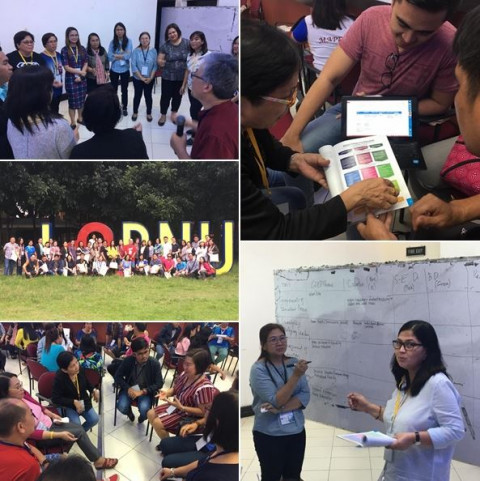 A Workshop on Embedding GCED in the New Teacher Education Curriculum in the Philippines 2017-11-07 APCEIU co-organized a workshop on embedding GCED in the new teacher education curriculum in the Philippines from 24 to 26 October 2017. This workshop was co-organized by the Philippine Normal University, the Philippine National Commission for UNESCO, and the National Association of UNESCO Clubs in the Philippines. A total of 50 participants consisting of deans and professors of colleges of education and basic education teachers from all regions of the Philippines attended the workshop with the objective of reinforcing the effective incorporation of GCED in the teacher education curriculum in the Philippines. In the Philippines, a new teacher education curriculum has been introduced to prepare teachers for the newly approved K-12 (Kindergarten to Grade 12) curriculum in the basic education sector. Against this background, the workshop aimed to raise participants' awareness about GCED and enhance their understanding of the key concepts, practices, pedagogy and facilitation strategies for GCED and discussed methods for embedding GCED into the new teacher education curriculum. By the last day of the workshop, the participants shared their ideas on measures for incorporating GCED into the mandatory courses offered at teacher education institutions in the Philippines including: Assessment, Teaching Profession and Pedagogy. Finally, the participants presented their action plans to put GCED into practice in their respective institutions. As this workshop was also a realization of an action plan of a Filipino participant of the 17th Asia-Pacific Training Workshop held by APCEIU in July 2017, the workshop built a positive outlook on the continuous spread of GCED in teacher education in the Philippines. URL:A Workshop on Embedding GCED in the New Teacher Education Curriculum in the Philippines > APCEIU News - APCEIU (unescoapceiu.org)
 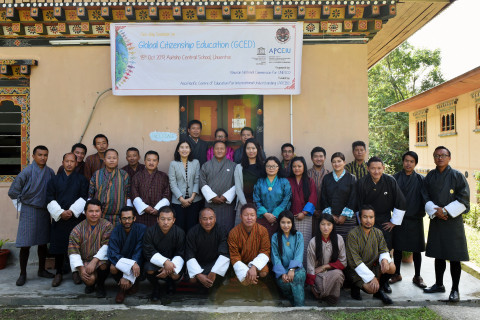 Teacher’s Seminar in GCED: Spreading the Culture of Peace to Teachers in Bhutan 2017-11-07 Co-organized by Asia-Pacific Centre of Education for International Understanding (APCEIU) and Bhutan National Commission of UNESCO (BNCU), Workshop in Bhutan on GCED (Global Citizenship Education) took place for two days between 14 and 15 of October 2017 in Lhuentse District(Dzongkhag), Bhutan. The Workshop in Bhutan on GCED is the second post-Fellowship programme, Fellowship Good Practices & On-site Training, following the workshop held in Lesotho last July. The case of Ms. Dechen Pelden (2014 Fellowship Participant from Bhutan) on “Teacher Training on Project-based Learning(PBL) and GCED Pedagogies” has been selected as one of the three good practices, and the Workshop has been implemented to further encourage her efforts to enhance the capacity of the teachers in the district of Lhuentse, Bhutan. After the completion of the Fellowship Programme in 2014, Ms. Dechen has shared the knowledge gained during the two months training by hosting teacher’s workshop on Project-based Learning and GCED at her school as well as assisting her colleagues to carry out actual projects with their students in the classroom scene. The first day of the Workshop invited teachers of Autsho Central School located in Lhuentse District to learn about Project-based Learning and ways of materializing it in class. Ms. Dechen facilitated the session by first giving the basic concept and the steps of constructing projects in classes. She also provided several examples from her past experiences where she co-taught project-based classes on accounting. Discussions and dialogues on ways of implementation were carried out, and the teachers of Autsho Central School were grouped together based on the subjects they teach to generate actual lesson plans to be utilized in classes. The second day of the workshop was a platform for teachers in Lhuentse District to build the participants’ capacities and share their own experiences in the field of GCED. The Workshop gathered 26 principals, UNESCO Club/ASPnet coordinators and district focal persons to deepen their understanding on GCED and present their practices of integrating GCED during classroom teaching or club activities. The participants also addressed challenges they have faced while implementing GCED initiatives and discussed on ways of further enabling Global Citizenship Education in the context of Bhutan. Ms. Dechen will continue to share her knowledge on Project-based Learning with other teachers in Bhutan through facilitating six more workshops across the Lhuentse District. URL:Teacher’s Seminar in GCED: Spreading the Culture of Peace to Teachers in Bhutan > APCEIU News - APCEIU (unescoapceiu.org)
 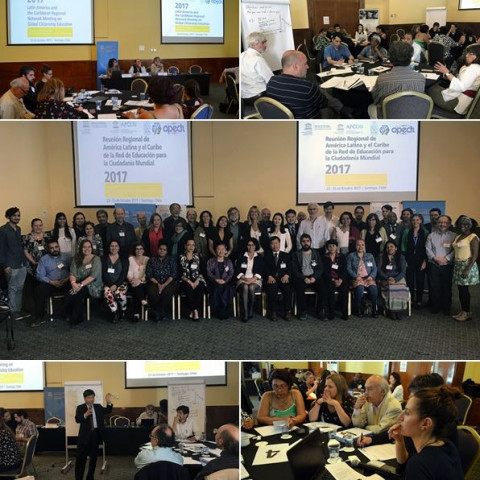 Building Solidarity and Contextualizing GCED in Latin America and the Caribbean through a Regional Network 2017-11-06 Co-organized by APCEIU and the UNESCO Regional Bureau of Education in Latin America and the Caribbean (OREALC/UNESCO Santiago) in collaboration with the University of Chile’s Chilean Observatory of Educational Policies (OPECH), the Latin America and the Caribbean Regional Network Meeting on Global Citizenship Education; “Towards a world without walls: global citizenship education in the SDG 4 - E2030 Agenda” took place on October 23-24, 2017 in Santiago, Chile. There were 45 participants representing civil society organizations, academic/research institutions and authorities from the region. This regional meeting built upon the achievements thus far in promoting GCED in the region. The meeting was composed of panel discussions and working groups on the concept of GCED and the implementation of SDG 4 Target 4.7 in Latin America and the Caribbean. On the first day, the sessions and panel discussions dealt with the concept of GCED and its adaptation in the varied contexts of Latin America. Also, panel discussion suggested the role of education systems and pedagogical strategies in the construction of a just, peaceful and more inclusive society. On the last day, the sessions included indicators and measurements of GCED and the formation of the LAC (Latin America and the Caribbean) GCED Network. The meeting discussions led to designing a framework for a LAC GCED Network. Initiating the meeting, Ms. Cecilia Barbieri, Director ai of OREALC/UNESCO Santiago expressed appreciation to APCEIU and OPECH for co-organizing the network meeting and emphasized the significance of promoting GCED in Latin America and the Caribbean. She mentioned that “The role of educational systems such as informal and non-formal pedagogy is important in developing the concept of GCED in the specific contexts within the region.” Following Ms. Barbieri, Mr. Utak Chung, Director of APCEIU, in his remark asserted that “GCED should be contextualized in the region to promote the universality of the world and particularities of the region” and quoted ‘Buen vivir’ and ‘La Convivencia’, the essential philosophy of ‘Learning to Live Together’ manifested in Latin America. To contextualize and regionalize GCED, participants discussed on ‘Hidden Citizenships’, ‘Excluded Citizenships’ and ‘Emerging Citizenships’ in Latin America. In the presentations and discussion, it was said that ‘Hidden Citizenships’ are historically denied and marginalized citizenships such as those of Afro-descent, indigenous and rural communities and ‘Excluded Citizenships’ are citizenships of migrants, children, women and displaced populations. ‘Emerging Citizenships’ suggests the rights of women and youth as deliberative actors. Also, participants debated on the global, regional and local measurements of GCED. The discussion focused on the indicators, learning assessments and evaluations to measure social transformation in Latin America. Afterwards, Mr. Jesus Redondo from Chile and Mr. Nestor Lopez from Argentina gave presentations on the importance and development of networks, followed by practical participatory activities and interactive group works where participants discussed strategies and mapped out the short/long-term objectives and activities of the regional network for GCED. Participants agreed in continuing to develop a community of practice on GCED for the region that will enhance information exchanges among network participants. Follow-up activities of the regional network for GCED is expected to be implemented leading to the next high-level education meeting of the region. URL:Building Solidarity and Contextualizing GCED in Latin America and the Caribbean through a Regional Network > APCEIU News - APCEIU (unescoapceiu.org)
 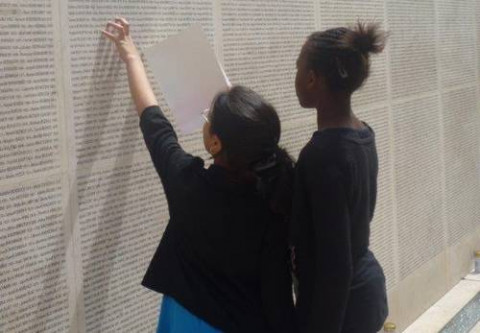 UNESCO publishes policy guide on education about the Holocaust and preventing genocide 2017-05-12 UNESCO ‘s policy guide on Education about the Holocaust and preventing genocide provides effective responses and a wealth of recommendations for education stakeholders who wish to engage in or to reinforce this education. The publication will serve as a resource for policy-makers, curriculum developers, textbooks writers and publishers, and teacher educators. It suggests key learning objectives for education about the Holocaust, as well as topics and activities aligned with educational frameworks relevant to Global Citizenship Education, a priority of the 2030 Education Agenda and a pillar of the Sustainable Development Goal 4 on Education. The policy guide shows how education about the Holocaust, and more broadly genocide and mass atrocities, can meet some of the world's educational policy priorities. It also provides policy-makers with rationales to teach about the history of genocides in a variety of contexts. The policy guide identifies key areas of implementation: curricula, textbooks, professional development, classroom practices, cooperation with museums, memorials and the civil society, adult education, and commemorative activities. The new publication builds on the expertise of many Holocaust and genocide related organizations, including the United States Holocaust Memorial Museum. It contains various links to historical and educational resources relating to several cases of genocides and mass atrocities and explains how they can be taught. The guide focuses primarily on the history of the genocide of the Jewish people by Nazi Germany and its collaborators. Some principles and policies outlined are applicable to other cases of genocide and mass atrocities. Examining difficult pasts such as the Holocaust has a powerful impact on young people because it helps learners identify the roots of prejudice and enhance their critical thinking against racism, antisemitism and all forms of prejudice. It allows them to navigate moral dilemmas of the past as well as of the present, and reflect on their role as citizens to protect and uphold human rights. As people commemorate Yom HaShoah, UNESCO encourages programmes that strengthen a culture of prevention and foster understanding of the causes and consequences of the Holocaust and how genocide can happen.
 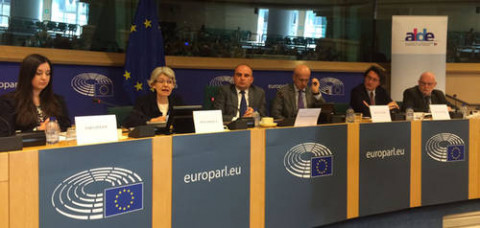 L’UNESCO et le Parlement européen s'unissent contre l'extrémisme violent 2017-04-25 “Building a more just, more peaceful, more sustainable future for all must start on the benches of school,” said the UNESCO Director-General, Irina Bokova, in her keynote address on 21 March, during an event on the role of “Education for preventing violent extremism” held at the European Parliament, organized in partnership with UNESCO. This was held on the eve of the first anniversary of devastating terrorist attacks in 2016 against Brussels. The event took place in the presence of Mr Pavel Telicka, Vice-President of the European Parliament, and was led by Mr Ilhan Kyuchyuk, Member of the European Parliament, as well as Members of the European Parliament. On this occasion, the Director-General called for new forms of education and for new approaches to education. “We need education of quality that reaches every girl and boy, education that promotes dialogue and understanding between cultures,” she said. “Education today must be about learning to live in a world under pressure, it must be about new forms of cultural literacy.” This was echoed by Pavel Telicka, who said young people "are not born as terrorists," and Ilhan Kyuchyuk, who underlined the vital importance of education, skills and opportunities for employment, "to empower young people while respecting human rights and fundamental freedoms." Irina Bokova said “we must act early, not just to counter violent extremism, but to prevent its rise,” underlining that education as the most powerful way to build peace, to disarm processes that can lead to violent extremism. “We need to build the defences of peace in the minds of women and men, starting with education,” declared the Director-General highlighting the importance of ‘soft power’ to counter a threat that draws on an exclusive vision of the world, based on false interpretations of faith, hatred and intolerance. The event featured a Panel Discussion that explored “How to prevent violent extremism and radicalisation through education”. Paolo Fontani, UNESCO Representative to the European Institutions, moderated the panel that included Professor Pat Dolan, UNESCO Chair Child and Family Research Centre, Hans Bonte, Federal Representative for the constituency of Brussels-Halle-Vilvoorde and Mayor, and Sara Zeiger, Senior Research Analyst, Hedayah. Professor Pat Dolan stressed the vital importance of nurturing empathy in young people, to build engagement and advance empowerment while deepening solidarity. "For all this, education is key." Mayor and MP Hans Bonte shared the experience of the city of Vilvoorde in preventing and countering radicalisation leading to violent extremism -- the city having seen a steep challenge of radicalised young people travelling to Syria. "Young people face enormous stress today," he said. "This is something we must face in discussing what education we need and the shape of educational systems, to support young people, keep them in learning. We have to work on all sides, with youth and on schools -- this is where we will win or lose." He underlined the need for bridge-building at the local level to deepen the sense of belonging and solidarity for young people of all backgrounds. Sara Zeiger, of Hedayah, the International Centre of Excellence for Countering Violent Extremism, based in Abu Dhabi, UAE, spoke of the need for comprehensive approaches to education for maximal impact, tailored to specific contexts. She shared good practices from two cases in Pakistan and in Nigeria, to foster critical thinking and resilience building as well as employment skills, in young women and men. Discussion followed on the importance of strengthening media literacy with young people as well as deepening dialogue with religious representatives -- including to counter hate speech on the Internet, while respecting human rights. The vital role of supporting teachers was underlined in all this. "We must provide young people with a renewed sense of belonging, with new skills, and new confidence in the future -- and this must start on the benches of schools," concluded Irina Bokova.