
News
Catch up on what’s happening in the world of global citizenship education.
311 results found
 Participate in the citizen awareness survey on disaster preparedness 2018-06-14 Earthquakes, floods, wildfires and other natural hazards can have disastrous effects, causing massive losses and damages all over the world. Scientists and practitioners, national authorities at all levels, non-governmental organizations and associations, UN and international organizations are working on activities and programmes aiming to prevent disasters. However, the impact of these efforts is rather limited, if the local population is not aware of their area's environmental risks. To build a more resilient society, citizens should be part of the disaster risk management systems at local and national levels. In line with the actions on disaster risk reduction, UNESCO strengthens the resilience of communities to withstand natural hazards and climate change impacts. UNESCO encourages the development of technological systems and devices - such as I-REACT (Improving Resilience to Emergencies through Advanced Cyber Technologies), the VISUS school safety assessment method and the educational TANAH application, and assists governments and communities in coping with natural hazards. UNESCO along with the I-REACT project partners is launching this survey to assess the readiness of citizens around the world to cope with natural hazards. Should you live in a region exposed to earthquake, floods, wildfires or other natural hazards, please take a few minutes to fill in this survey, available in English, French, Spanish and Chinese. URL:https://en.unesco.org/news/participate-citizen-awareness-survey-disaster-preparedness
 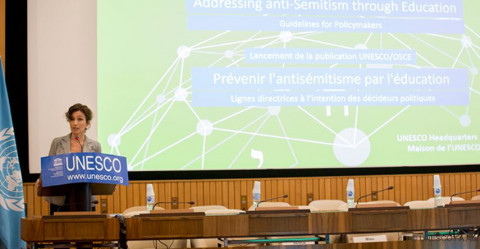 Preventing anti-semitism through education: UNESCO and OSCE launch first guide for education community 2018-06-06 UNESCO and the OSCE Office for Democratic Institutions and Human Rights (ODIHR) today released a joint publication, Addressing Anti-Semitism through Education – Guidelines for Policymakers, at a launch event at UNESCO Headquarters in Paris. The publication, Addressing Anti-Semitism Through Education – Guidelines for Policymakers, is the first on the subject by a United Nations agency. Produced with experts from the countries of Europe, Central Asia and North America, it examines the many and complex manifestations of anti-Semitic prejudice and discrimination and offers best practice recommendations to fight them through education. UNESCO is strongly committed to work on the prevention of violent extremism as part of its core mandate to promote global citizenship, a priority for the 2030 Sustainable Development Agenda. In this context, UNESCO promotes education systems that are able to equip learners with skills, attitudes and behaviours that allow them to assume active roles in facing and resolving global challenges, and to become proactive contributors to a more peaceful, tolerant and secure world. The publication is a new example of UNESCO’s contribution to the fight against anti-Semitism. UNESCO will organize a high-level debate on the subject within the framework of the General Assembly of the United Nations next September to mobilize the international community. “The struggle against anti-Semitism cannot be undertaken by Jewish communities alone. Fighting it means defending human rights and liberties, because racism and anti-Semitism are one and the same in that they share hate of otherness,” declared UNESCO Director-General Audrey Azoulay, at the launch ceremony. “In this fight, education is a major factor. It must be harnessed to prevent the rise in extremism and violence. It is our responsibility to support teachers and educators in their mission, those who sometimes feel helpless in facing the scope of unbridled prejudice.” ODIHR Director Ingibjörg Sólrún Gísladóttir, stressed the vital role of education in countering anti-Semitism, and all forms of intolerance: “Educators have access to a uniquely large audience of young people and have the opportunity to help them foster mutual respect and understanding, and thereby become responsible citizens. Resilience to language and ideas that incite discrimination can only be ensured by educating young people so that they are mindful of their own and others’ prejudices and capable of critical thinking, and that they feel responsible for making the societies in which they live cohesive ones.” On 22 May, UNESCO and ODIHR presented an outline of the publications to ministers responsible for education, culture, youth, media, communication and sport of the European Union’s 28 Member States, at a meeting chaired by Bulgaria. UNESCO and the Office for Democratic Institutions and Human Rights had earlier worked together on the publication of Guidelines for Educators on Countering Intolerance and Discrimination against Muslims (2011). **** More information Download the publication Media contact: Agnès Bardon, UNESCO Media Section: 33(0)145681764 a.bardon@unesco.org Thomas Rymer, ODIHR Spokesperson: +48 609 522 266, thomas.rymer@odihr.pl URL:https://en.unesco.org/news/preventing-anti-semitism-through-education-unesco-and-osce-launch-first-guide-education
  UNESCO and OSCE Publish Guidelines to Reduce Prejudice and Promote Tolerance through Education 2018-05-31 UNESCO and the Office for Democratic Institutions and Human Rights (ODIHR) of the Organization for Security and Co-operation in Europe (OSCE) will launch new guidelines on Preventing Anti-Semitism through Education, Guidelines for Policy Makers on 4 June, at UNESCO Headquarters (11 a.m.-1 p.m., Room XI). The publication is designed to serve political leaders, teachers and young people with concrete ways to combat anti-Semitism. It also provides education systems with tools to strengthen young people's resilience to anti-Semitic ideas, violent extremism and all forms of discrimination. The guidelines notably explore ways of sensitizing educators’ to anti-Semitic stereotypes and conspiracy theories and responding to anti-Semitic acts and language at school, as well as developing learners’ understanding of news and media so as to resist manipulation. The publication is the UN’s first treatment of the subject in such a comprehensive manner. UNESCO and the ODIHR, with the support of the Council of Europe, had already worked together in 2013 on guidelines to combat intolerance and discrimination against Muslims. The publication’s launch event will begin with addresses by the Director-General of UNESCO, Audrey Azoulay, and the Director of OSCE/ODIHR, Ingibjörg Sólrún Gísldóttir. It will also feature testimonies of anti-Semitism today by the UNESCO Chair on Genocide Education at the USC Shoah Foundation. A roundtable discussion entitled “What educational policies to prevent antisemitism?” will follow with the participation of: Mina Abdelmalak, Arab Outreach Specialist, US Holocaust Memorial Museum, Washington D.C. Johanna Barasz, Deputy Deputy Head of the French Government’s Inter-ministerial Delegation for the Fight Against Racism, Anti-Semitism and anti-LGBT Hate Alina Bricman, President of the European Union of Jewish Students Jeremiah Ellis, Founder of the World Mosaic Project and member of the Advisory Group of Canada’s National UNESCO Commission Igor Ujhazi, in charge of the fight against anti-Semitism, World Jewish Congress UNESCO's action to combat anti-Semitism is part of the Organization's efforts to prevent violent extremism through education and to strengthen the capacities of education systems in this field. **** Media Accreditation: Djibril Kebe, UNESCO Media Section, d.kebe@unesco.org +33(0)145681741 Media Contact: Agnès Bardon, UNESCO Press Office, a.bardon@unesco.org, +33 (0) 1 45 68 17 64. URL:https://en.unesco.org/news/unesco-and-osce-publish-guidelines-reduce-prejudice-and-promote-tolerance-through-education
  Vienna+25: Building Trust – Making Human Rights a Reality for All 2018-05-30 “UNESCO works to ensure that women and men equal enjoy the right to access, participate in and contribute to cultural life. The International Cultural Conventions promote the inclusion of all community members in their implementation, enabling women and men to benefit equally from heritage and creativity”. The Vienna Declaration and Programme of Action was adopted by consensus at the World Conference on Human Rights on 25 June 1993 in Vienna, Austria. This Declaration together with the World Conference is considered a landmark document for the promotion and protection of human rights. From 22 to 23 May 2018, on the occasion of its 25th anniversary, the Austrian Federal Ministry for Europe, Integration and Foreign Affairs, in cooperation with the Office of the UN High Commissioner for Human Rights, the City of Vienna and the Ludwig Boltzmann Institute of Human Rights organised a High Level Expert Conference in Vienna to encourage States and other stakeholders to pursue further legal, institutional and practical improvements of human rights protection, both domestically and internationally. This conference brought together human rights stakeholders from diverse backgrounds, including Ms Saniye Gülser Corat, UNESCO’s Director for Gender Equality, who participated in the Working Group on Promotion of Equality in our Societies. While noting how progress in gender equality is stalling if not deteriorating in many parts of the world, Ms Corat discussed with experts how to address and prevent the further aggravation of inequalities along the trajectories of not only gender but ethnicity, age, disability, sexual orientation, religious, political, social or other status. She highlighted UNESCO’s unique and holistic contribution in overcoming such setbacks and presented examples of substantial progress especially focusing on gender equality. URL:https://en.unesco.org/news/vienna25-building-trust-making-human-rights-reality-all
 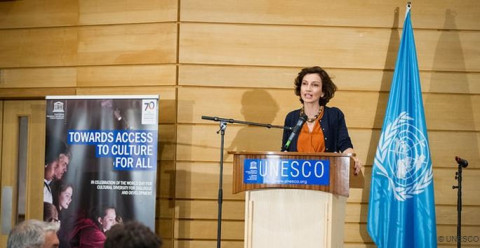 UNESCO Advocates Access to Culture on World Day for Cultural Diversity for Dialogue and Development 2018-05-25 UNESCO hosted an event, Towards Access to Culture for All, on 22 May at its Headquarters to celebrate World Day for Cultural Diversity for Dialogue and Development, and the 70th anniversary of the Universal Declaration of Human Rights. In her opening address, UNESCO Director-General Audrey Azoulay highlighted the importance of defending and promoting cultural diversity as a tool for dialogue and peace. “Cultural diversity is a fight, a political fight par excellence. A fight to defend the right to cultural diversity that is rooted in human consciousness, and to reaffirm the legitimacy of public policies to support culture and creativity.”In the two panel discussions that followed, high-level actors from the world of museums, the tech industry and international organizations offered a series of strategies to ensure that all people – regardless of age, gender, nationality or disability – are able to exercise the basic Human Right right to access culture. Karima Bennoune, the UN Special Rapporteur in the field of cultural rights, declared that “culture is not a luxury”, but is rather an integral part of human rights that States in particular have a responsibility to protect. Speaking of the link between culture, peace and development, she highlighted the example of Medellin, Colombia, a city that successfully employed a strong cultural policy to overcome conflict and division.Youma Fall, Director of “French language, culture and diversity” at l’Organisation internationale de la Francophonie, and Ghita Khaldi, Vice-President of the pan-African Arterial Network, stressed the importance of grassroots action, particularly in the African context, to promote access to culture and cultural diversity. As new technologies make culture appear more accessible than ever before, Octavio Kulesz, founder of the first e-publishing house in Latin America and one of the authors of the 2018 UNESCO report Re|Shaping Cultural Policies, emphasized the importance of ensuring cultural diversity in the digital environment. This environment should be inclusive and open to smaller independent players in addition to the dominant platforms, he argued.Amit Sood, Director of Google Arts & Culture, discussed how technology is responding to peoples’ demand to “access culture in different ways and different contexts.” He said that Google, through the Google Arts & Culture app, makes more than 6 million artefacts available online, supporting museum curators in telling the stories of objects in their collections. Vincenza Lomonaco, Ambassador and Permanent Delegate of Italy to UNESCO, described initiatives undertaken in Italy to expand cultural access for young people and among migrant communities. Léontine Meijer-van Mensch, Member of the International Council of Museums (ICOM) Executive Board, stressed that making museums more accessible means fostering diversity. She agreed that “digital technology is changing museums” and said that ICOM is working on a new Code of Ethics for Museums that responds to the new professional paradigm. A performance by Ensemble Son Joropo, a group of young musicians and singers from Puerto Carreño, Colombia, featured as the opening of the event. URL:https://en.unesco.org/news/httpswwwflickrcomphotos131897504n0827409205477inalbum-72157667222527757
  Regional Workshop: Advancing Education for Sustainable Development Policies in Eastern Africa 2018-05-24 UNESCO organises a regional workshop on advancing Education for Sustainable Development (ESD) policy development in Eastern Africa from 8 to 10 May, 2018, gathering 13 countries in Eastern Africa to learn from each other's experiences on national policies on ESD and to promote a sector-wide approach with various stakeholders in the countries collaborating to integrate ESD into their curricula and national education systems. UNESCO defines ESD as a concept that 'empowers learners to take informed decisions and responsible actions for environmental integrity, economic viability and a just society, for present and future generations, while respecting cultural diversity. It is about lifelong learning, and is an integral part of quality education. ESD is holistic and transformational education that addresses learning content and outcomes, pedagogy and the learning environment. It achieves its purpose by transforming society'. As the lead agency for ESD, UNESCO promotes and coordinates the Global Action Programme (GAP) on ESD endorsed by the UNESCO General Conference. For the UN General Assembly, the GAP is a follow-up to the UN Decade for Sustainable Development, around five Priority Action Areas: 1) Advancing policy; 2) Transforming learning and training environments; 3) Building capacities of educators and trainers; 4) Empowering and mobilizing youth; 5) Accelerating sustainable solutions at local level. In this context, UNESCO supports countries to develop or strengthen policies on ESD based on cross-sector and multi-stakeholder approaches including integrating ESD into international and national policies on education and sustainable development. UNESCO helps ministries of education and other sectors worldwide to design and implement policies on ESD to integrate ESD into curricula and national quality standards and develop indicators to establish standards for learning outcomes. Venue: Southern Sun MayfairDates: 8-10 May 2018Location: Nairobi, Kenya Contacts:Virginia Mumo Ntheketha, v.ntheketha@unesco.orgGaia Paradiso, g.paradiso@unesco.org Related documents: Education for Sustainable Development Goals: Learning Objectives (2017) UNESCO roadmap for implementing the Global Action Programme on Education for Sustainable Development Information Folder, Global Action Programme on Education for Sustainable Development (2017) Education 2030, Incheon Declaration and Framework for Action for the implementation of SDG4, Ensure inclusive and equitable quality education and promote lifelong learning opportunities for all (2016) URL:http://www.unesco.org/new/en/nairobi/about-this-office/single-view/news/regional_workshop_advancing_education_for_sustainable_devel/
 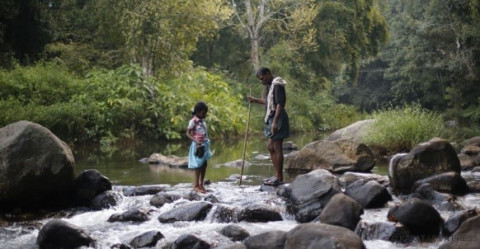 UNESCO Green Citizens exhibition at the European Parliament 2018-05-23 The UNESCO Green Citizens: Pathfinders for Change exhibition presents ten remarkable projects featuring men and women making a real contribution to education for sustainable development. It will be presented at the European Parliament in Brussels until 18 May. This edition, inaugurated in 14 May, is organized in partnership with Klorane Botanical Foundation and SIPA PRESS, under the patronage of Ms Elizabeth Morin-Chartier, MEP and Quaestor at the European Parliament, and with the support of the Mohammed VI Foundation for Environmental Protection. The UNESCO Green Citizens initiative has been launched in October 2015 on the occasion of the COP21 to shift the spotlight on men and women around the world - Pathfinders for change - who have launched remarkable projects in education or awareness for sustainable development to build a better future. Everyone can become a citizen of the planet The exhibition, through portraits and documentaries, pays tribute to people who give life to educational projects for sustainable development worldwide and help us move towards fairer and more inclusive green societies. In highlighting 30 amazing pathfinders for change for sustainable development who share their stories, it shows that everyone can become a citizen of the planet. The exhibition debuted at UNESCO Headquarters, Paris, in October 2015 and was subsequently seen on board the COP21 Climate Train, at the United Nations Headquarters in New York from February to April 2016, at the United Nations Office at Geneva from June to September 2016, at COP22 on November 2016 and on Moroccan airports from November 2016 to April 2018. Are you a pathfinder for change? Do you see people in your community making a change toward a more sustainable future? Or do you want to take part yourself and encourage others to learn about sustainable development? Then participate in the UNESCO Green Citizens web platform on which you can share your projects and discover other initiatives being implemented throughout the world. URL:https://en.unesco.org/news/unesco-green-citizens-exhibition-european-parliament?language=en
  Towards Access to Culture for All: Advancing Universal Access to Culture in its Diversity 2018-05-18 UNESCO will celebrate World Day for Cultural Diversity for Dialogue and Development, 21 May, and this year’s 70th anniversary of the Declaration of Human Rights, with a panel debate on ways to ensure everyone’s right to access culture. Taking place at UNESCO Headquarters on the afternoon of 22 May (Room IV, 3pm to 5.30 pm,), the event will bring together UN representatives, museum directors, artists, tech leaders, and experts including the Director-General of UNESCO, Audrey Azoulay, who will open the debate and the Organization’s newly appointed Assistant Director-General for Culture, Ernesto Ottone, who will moderate the panel discussions. Considering the potential of culture and intercultural dialogue as means of achieving peace and sustainable development, participants will seek ways to reconcile the paradox inherent to cultural globalization, which has led to tremendous growth in access while contributing to growing cultural uniformity, posing a threat to the diversity and wealth of the world’s cultural landscape. The debate will focus on the enforcement of Article 27 of the Universal Declaration of Human Rights, which states that, “everyone has the right freely to participate in the cultural life of the community, to enjoy the arts and to share in scientific advancement and its benefits.” Key participants will include: Karima Bennoune, Special Rapporteur in the Field of Cultural Rights (Office of the UN High Commissioner for Human Rights), Youma Fall, Director of French Language, Culture and Diversity (Organisation internationale de la Francophonie), Ghita Khaldi, Vice-President of Arterial Network (the Pan-African, network of artists, cultural activists, entrepreneurs, enterprises, NGOs, institutions, and donors), Amit Sood, Director of Google Arts and Culture, Vincenza Lomonaco, Ambassador and Permanent Delegate of Italy to UNESCO, Léontine Meijer van Mensch, Member of the Executive Board of the International Council of Museums (ICOM), Octavio Kulesz, UNESCO expert in digital publishing and media. **** Media Contact: Roni Amelan, UNESCO Media Section, r.amelan@unesco.org, +33(0)145681650For journalist’s accreditation please contact :Djibril Kébé, UNESCO Media relations, Tel : +33 (0) 1 45 68 17 47, d.kebe@unesco.org URL:https://en.unesco.org/news/towards-access-culture-all-advancing-universal-access-culture-its-diversity
 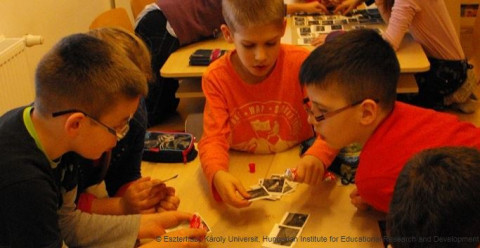 Students take the lead to spread an eco-schools initiative in Hungary 2018-05-11 An eco-schools programme in Hungary is so successful it has taken on its own momentum with students leading its growth. The flexible programme, developed by the Hungarian Institute for Educational Research and Development (HIERD), was established in 2000 with 40 pilot schools. It uses a whole-school approach to introduce the principles of sustainability in a practical way as well as through study subject matter. Team Leader and Senior Researcher of the Eco-Schools Programme, Attila Varga said: “The best surprise is to find that what we thought of as a top down initiative is more often than not led by children actively wanting to join. Since the adoption of the Sustainable Development Goals, society in Hungary is getting greener which helps enormously as more and more schools want to feel active in this field. We even have an environmental sustainability directorate in the President’s office!” Hungary has particular environmental challenges. Currently poor air quality is the focus, with the problem often worse in villages than in the cities because people burn wood and rubbish for heating. The Eco-Schools programme makes educational establishments more sustainable and embeds environmental issues in the school work plan. It is already installed in a quarter of Hungary’s school, or more precisely, by the end of 2017, 1134 Hungarian schools held an Eco-School title with 350,012 pupils and 34,890 teachers reached. Schools volunteer to join the network and work towards the Eco-School title beginning with a complete and detailed assessment of the school environment and pedagogy. “We provide a flexible framework and points system for schools which differ obviously depending on context. A village school may get points for creating a school garden while an urban school may get its points for water-saving techniques,” said Mr Varga. What they all have to provide is an annual action plan and then continuous evaluation of the success of their schemes. Children are involved from the beginning through deciding where their studies will focus up to the development of a student council to undertake parts of the self-evaluation and assessment. At the staff level each employee of the school is involved in the development of the vision of the school. In teacher education, the teaching aids and in-service trainings of the programme support student engagement in creating experience-based learning environments. Activities range from excursions to environmental projects and exhibitions made for the local community to school patrols where students check and collect data on energy consumption and local Green Parliaments where students are involved in real decision-making with local town halls. The programme also extends beyond the school gates. Since 2015 criteria for the title includes community service which empowers teenagers to transform themselves and the community they live in. “Above all, schools have to continue developing. We say that no school is ever ‘finished’ in its sustainable development work,” Mr Varga said. So successful has the programme been that it has been extended to the Green Kindergarten Programme and also reaches up to higher education and teacher training. “Yes, we have a little brother or sister of the Eco-school network which involves 1,000 kindergartens,” said Mr Varga. “It helps that kindergarten is compulsory for 3 to 6-year olds in Hungary and already has an emphasis on outdoor activities. In a sense it is even easier to include ESD in working with younger children as study is more flexible and freeform.” Activities for younger children include forest kindergartens where children spend several days outdoors learning about plants and animals. Approaching local traditions at festivals like Christmas in an environmentally-friendly way through making presents is also an important way to introduce sustainability related issues for children. “The programme is successful but there is still a lot of work to be done. The long-term goal is to reach all Hungarian schools. Most importantly, we are working to change young people’s mindsets from pessimistic to optimistic. We tell them the future is not decided, it is up to you,” said Mr Varga. Learn more on Education for sustainable development. URL:https://en.unesco.org/news/students-take-lead-spread-eco-schools-initiative-hungary
  New project to tackle youth unemployment in the south Mediterranean region 2018-05-11 Countries in the south Mediterranean region have been subject to political and socio-economic challenges and instability, which has resulted in high unemployment, especially among youth, and in economies that are not creating a sufficient number of skilled job opportunities for those who need and want them. UNESCO will be launching a new regional project, Youth Employment in the Mediterranean (YEM) in collaboration with nine countries (Algeria, Egypt, Israel, Jordan, Lebanon, Libya, Morocco, Palestine and Tunisia) to respond to these challenges. The project will support national and regional efforts over a three-year period (2018-2020), towards job creation and youth employment through the improvement of skills anticipation systems and the promotion of technical and vocational education and training (TVET) including digital skills, especially among women. Skills forecasting and quality TVET can support youth employment and professional aspirations The YEM project will include national authorities, the private sector, TVET providers and youth organisations in the process. Borhene Chakroun, Chief of Section of Youth, Literacy and Skills Development at UNESCO’s Education Sector, explains how collaboration, skills forecasting and quality TVET will contribute to youth employment in the South Mediterranean region: “The issue of youth unemployment is major policy concern in each of the beneficiary countries. By supporting the nine Member States in assessing and strengthening their national skills anticipation systems, their TVET policies, curricula and programmes will become better informed and able to promote quality TVET, as well as closing the gap between education and the world of work for young people.” The YEM project recently had a national consultation workshop in Tunisia where Hajer Ben Abid Slim, Senior Adviser in curricula development at the National Institute for Curricula Development (CENAFFIF) participated. Reflecting on the potential of improved skills forecasting she says: “The YEM project will give young jobseekers better information and orientation for their career decision. Within this framework and through regional cooperation, this will incite vocations and help young people to acquire the vocational skills necessary for their career development.” “Young people will be involved through the organizations that are assisting them in their career projects and start-ups,” she says. Other participants at the national consultation workshop in Tunisia, Mohamed Yahyaoui, Director, and Rym Ben Slimene, Assistant Director at the National Observatory of Employment and Qualifications (ONEQ) say: “Given that Tunisia is characterized by a young population and the unemployment rate in this category exceeds 30%, it will be useful to establish a system for evaluating TVET policies, programmes and strategies and adopt adequate tools for the forecasting of skills. To succeed, it will be important to rely on a national body such as the ONEQ, which will be responsible for coordinating these activities with various national partners.” The project is funded by the European Union and part of their Neighbourhood Policy, and is building on the achievements of the Employment Component of the Networks of the Mediterranean Youth Project (NET-MED Youth, 2014-2018). Visit the YEM project website. Find out more about UNESCO’s work on skills for work and life. URL:https://en.unesco.org/news/new-project-tackle-youth-unemployment-south-mediterranean-region