
News
Catch up on what’s happening in the world of global citizenship education.
311 results found
 Young leaders and UN join forces to prevent violent extremism 2018-05-01 A new two-year project on “Prevention of Violent Extremism through Youth Empowerment in Jordan, Libya, Morocco and Tunisia” was launched by young leaders, UNESCO and the United Nations Counter-Terrorism Centre (UNCCT), at UNESCO Headquarters in Paris, on 24 April 2018. The new project will support youth driven initiatives on the ground in education, sciences, culture, and the media to prevent violent extremism. Youth organizations, education stakeholders and media professionals will be mobilized around programmes that will include cross-cultural youth dialogues, training in conflict-sensitive reporting, and critical thinking labs. The launch event, moderated by Nada Al-Nashif, UNESCO Assistant Director-General for Social and Human Sciences, featured the participation of several young people from the region affected by violent extremism, and initiators of concrete and hopeful projects. It was the occasion to witness their stories: Loubna Bensalah (Morocco), best known for her project I Walk With Her, a 1000 km journey on foot in Morocco to encourage dialogue with women, also replicated in Tunisia; Nada Elfeituri (Libya), architect, activist and blogger engaged in Libya’s civil society for the past seven years; Hayfa Mansouri (Tunisia) who was indoctrinated by radical islamists at the age of 14 and now works to awaken the consciousness of young people; and Saddam Sayyaleh (Jordan), a social entrepreneur who employs a community-based approach to empower youth and children in disenfranchised communities. "It is through young people that we empower young people. We want to be like our peers rather than like our fathers," explained Loubna. According to Hayfa “any strategy to prevent violent extremism must put young people first, not because they are the main targets for radicalization, but because young people are the most capable of circulating a message among themselves and finding solutions to the problems they face. Youth are the most ambitious in society, which means that, to them, the process of change and progress has no limits.” UNESCO Director-General, Audrey Azoulay, and Under-Secretary-General of the United Nations Office of Counter-Terrorism, Vladimir Voronkov, also had a public conversation on the UN and UNESCO’s response to violent extremism with two young actors of change from the Arab region, Hajer Sharief (Libya) and Aslam Souli (Tunisia). “Today, 46 per cent of the world’s population is twenty-four-years-old or younger. Africa and the Middle East, in particular, have the highest proportions of young people. They are a positive asset and source of leadership – they themselves represent hope and promise, and they are leaders today,” said Vladimir Voronkov. Audrey Azoulay added “At UNESCO we work for but especially with youth. I believe that you, youth, are the vector and the message in itself”. Maha Bouzerda, young cultural project manager from Morocco, and Sami Hourani, young social entrepreneur from Jordan, concluded the event. “Innovation through this youth empowerment project resides in its opportunity-based approach that engages youth and integrate them through offering them comprehensive, multi-dimensional empowerment. From today on, youth in Jordan, Tunisia, Morocco and Libya and the world, get ready to break the vicious cycle of extremism, challenge yourself, get involved, be prepared to and equip yourself and architect a violence-free world, full of peace and hope, ” according to Sami. “Today young people are able to revolutionize the world in a negative or a positive way. It is the responsibility of international organizations to support young people so that this revolution takes a positive direction,” Maha concluded. The one-hour event gathered 150 participants, including permanent delegations of Canada, Jordan, Libya, Morocco, Tunisia and other delegations, the Project’s partners including civil society organizations, UNESCO Chairs, experts, and research institutes, and colleagues from UNESCO. During the event, participants were also invited to walk through the photo exhibition “A new Generation of young urban artists”, by Emeric Fohlen, and to listen to the pop/soul music band, Bénarès. Programme and speakers of the event Learn more about the Project Learn more about the United Nations Counter-terrorism Centre (UNCCT) Related link:https://www.facebook.com/unesco/videos/10156356687788390/URL:https://en.unesco.org/news/young-leaders-and-join-forces-prevent-violent-extremism
 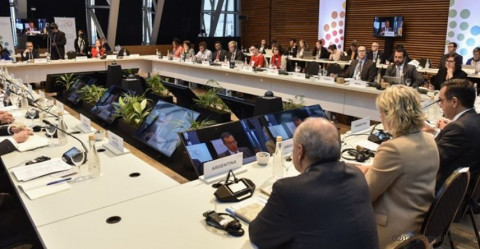 UNESCO at G20: promoting policies to shape the future of education, life and work 2018-04-24 As major transformations arise from globalization, digitalization and more complex and diverse societies, there is a growing need to develop education policies that equip children, young people and adults for an uncertain and changing future. The introduction comes from the agenda of the G20 meeting in Buenos Aires, Argentina, where UNESCO, as well as representatives from the world’s 19 major economies, met on the 12-13 April to discuss how to promote public policies that can unleash people’s potential and address the future of work. The Education Working Group was coordinated by the Argentine Ministry of Education and addressed two main issues: Skills for life and work and the Financing of education in their discussion about public policies. The questions raised were such as: how can we achieve a future where all citizens are fully involved and integrated; how can we ensure high-quality and inclusive education systems in a rapidly changing society; and what skills and education policies are needed to foster an active citizenship that is committed to sustainable development. Financing education and identifying skills for the future The Education Working Group agreed that there is a pressing need to identify the skills that will be required to achieve full integration of citizens in the labour market and society, and guarantee their full human development in a lifelong learning perspective. The Group addressed the need in promoting cognitive, non-cognitive and digital skills through inclusive education policies, with a special focus on the most vulnerable groups. Participating at the event’s opening were Marcos Peña, Chief of the Cabinet of Ministers of Argentina; Alejandro Finocchiaro, Minister of Education; Pedro Villagra Delgado, Argentine G20 sherpa; and Shiro Terashima, Director at the Japanese Ministry of Education, Culture, Sports, Science and Technology. “We are living in exciting times of technological transformation, with new challenges facing governments, civil societies, and the academic sector on how we educate our children,” said Marcos Peña. “This group can help our leaders, giving them ideas on how to advance and work together to adapt our education and training systems to this new reality,” he added. UNESCO was represented by Borhene Chakroun, Section Chief of Youth, Literacy and Skills Development, Manos Antoninis, Director of the Global Education Monitoring Report (the GEM Report) and Jordan Naidoo, Director of the Division for Education 2030 Support and Coordination at UNESCO. Borhene Chakroun emphasised that only a lifelong learning approach with a focus on learning pathways can support the workforce transitions and simultaneously equip the current and next generation of the workforce with the skills they will need for a not-yet-imagined future. The Group of Twenty (G20) is a leading forum made up of 19 countries and the world's major economies, that seeks to develop global policies to address today’s most pressing challenges. It started out in 1999 and is today a major forum for dialogue and decision-making attended by world leaders from vital economies. The new Education Working Group will hold meetings on 12-13 April, 11-12 June, and 3-4 September, and a joint session with the Employment Working Group on 4 September. More information about the Education Working Group on the G20 website. UNESCOs work in the field of skills for work and life Original press release from the G20 meeting. URL:https://en.unesco.org/news/unesco-g20-promoting-policies-shape-future-education-life-and-work
  Launch of Project to Tackle Violent Extremism in Jordan, Libya, Morocco and Tunisia 2018-04-20 UNESCO and the United Nations Counter-Terrorism Centre (UNCCT) will launch a two-year project on “Prevention of Violent Extremism through Youth Empowerment in Jordan, Libya, Morocco and Tunisia” with an event at UNESCO Headquarters in Paris, on 24 April (Miro Space, 10.30 a.m. to 1 p.m). During the launch event UNESCO Director-General Audrey Azoulay and Under-Secretary-General of the United Nations Office of Counter-Terrorism, Vladimir Voronkov will have a public conversation on the UN and UNESCO’s response to violent extremism with two young actors of change from the Arab Region, Souli Aslam (Tunisia) and Hajer Sharief (Libya). The launch will also feature the participation of six young people from the region who have been affected by violent extremism and who will speak of their experience. The new project will support youth driven initiatives on the ground in education, sciences, culture, and the media to prevent violent extremism. Youth organizations, education stakeholders and media professionals will be mobilized around programmes that will include cross-cultural youth dialogues, training in conflict-sensitive reporting, and critical thinking labs. As of 2016, violence or armed conflict in some way affected at least one in four youth (15 to 29 year-olds). The world’s 1.2 billion young people regularly demonstrate the ability to capitalize on their resilience constructively against all odds. Yet, some prove vulnerable to the appeal of the all-embracing solutions proposed by violent extremist groups. The project, co-funded by Canada, is a collective move towards engaging youth in the prevention of violent extremism, an issue that disproportionately affects young people throughout the region. The launch event will be accessible on Facebook Live. **** The young leaders will be available for interviews after 1 p.m. #YouthPVE Media contact for accreditation: Djibril Kébé, UNESCO Media Section, d.kebe@unesco.org, +33(0)145681741 More on the Project About the United Nations Counter-terrorism Centre (UNCCT) URL:https://en.unesco.org/news/launch-project-tackle-violent-extremism-jordan-libya-morocco-and-tunisia
  Paving the way for women's education in indigenous communities of Guatemala 2018-04-19 Magdalena Cox Xum is a modern day hero and role model. She is the first educational coordinator for the UNESCO-Malala Center in Guatemala’s San Andres Xecul, Totonicapán, created as part of the new project supported by the UNESCO Malala Fund for Girls’ Right to Education. Her work for the Center began in March 2018, but her contribution to women´s education started many years ago in her village, Nimasac. Role models Magdalena is the youngest woman in her family of four sisters and five brothers. She is also the only one, along with her youngest brother, to have graduated school and chosen to teach. But as a young girl, Magdalena feared she would not be able to follow her dream of becoming a teacher. She thought she would only complete 6th grade like her eight siblings and like many young girls in her municipality. In San Andres Xecul, Totonicapán, according to the 2016 Ministry of Education Statistical Yearbook, the enrolment rate of school-age girls in primary school was 35%, with only 10% of women aged 12 to 21 enrolled in middle school and a mere 1% in high school. Despite her father´s initial resistance, Magdalena’s mother recognized her drive to study and supported her until graduation as a teacher of bilingual intercultural primary education. Her mother became the first example of what she wanted to be for her community, a woman who recognized in other women their potential and desire to excel and who helped them achieve it. Education is a priority Since she became a teacher, Magdalena has been committed to help women in her community even though education is not always seen as a priority there. Why should we let them study? This is one of the most common questions she receives. Magdalena has told her own story to inspire parents and community members about the importance of education and the advantages of non-formal education programs. Her work went beyond that of a teacher. She knocked on doors and met women who wished to study but did not have the possibility, due to the lack of flexibility of formal education programs or their cultural or economic context. She opened the doors of her own house to give lessons to her students, putting in her own resources to buy a whiteboard and benches. To a woman, Magdalena said:“in the morning you can shepherd the animals and in the afternoon you come with me to study.” This woman completed 6th grade. The UNESCO-Malala Centers, supported by the the UNESCO Malala Fund for Girls’ Right to Education, enable education to take its righteous place in communities. With the help of committed coordinators like Magdalena, young girls and women will select the appropriate non-formal education program, hand in the required educational materials, and establish the location and schedule for the study groups. Center coordinators, native to the region, who communicate in the relevant indigenous language and understand the cultural context, will also support communities to take ownership of the project, which is key to its sustainability. Through the Center and her work as a UNESCO-Malala Center educational coordinator, Magdalena will have the space and the opportunity to amplify her heroic efforts to provide education to the indigenous girls and young women of San Andres Xecul, Totonicapán, and hopefully of Guatemala more broadly. New project to improve the education of indigenous girls and women in Guatemala UNESCO Malala Fund for Girls’ Right to Education Saqilaj B’e (in Spanish) Indigenous girls on a clear path to become leaders in Guatemala URL:https://en.unesco.org/news/paving-way-women-s-education-indigenous-communities-guatemala
  UNODC and UNESCO join up to promote the rule of law through education 2018-04-18 UNESCO and UNODC have announced the launch of a new partnership to provide Global Citizenship Education in response to some of the world’s most pressing challenges to peace, justice and the rule of law. The ‘Initiative on Global Citizenship Education: Educating for a Culture of Lawfulness’ is developed jointly by UNESCO and UNODC to equip education policy-makers, primary and secondary level teachers and educators with tools to empower learners to engage in society as constructive and ethically responsible agents of change, supporting justice and strong institutions. Welcoming the initiative, Qian Tang, Assistant Director General for Education, said: “Global Citizenship Education offers a powerful approach to address contemporary challenges to the rule of law. By strengthening learners’ ability to think, act responsibly and share, we can build the defences of peace in the minds of men and women… Through this new partnership with UNODC we look forward to developing the tools that teachers and educators need to help learners act and engage in society as constructive and ethically responsible agents of change, supporting peace, justice and strong institutions.” The initiative will be rolled out over the next two years and pools existing expertise from the two organizations. It is being implemented in the framework of UNESCO’s activities relating to Global Citizenship Education and is designed to support UNODC’s Education for Justice (E4J) initiative. The Education for Justice initiative is part of the Global Programme for the Implementation of the Doha Declaration, adopted following the 13th United Nations Congress on Crime Prevention and Criminal Justice in 2015. Funded by the State of Qatar, the initiative seeks to prevent crime, corruption and promote a culture of lawfulness through education activities designed for primary, secondary and tertiary levels. UNESCO’s work in support of Global Citizenship Education and the prevention of violent extremism through education seeks to strengthen the capacities of national education systems to appropriately and effectively contribute to national prevention efforts. This work supports the implementation of UNESCO Executive Board Decision 197 EX/Decision 46: “UNESCO’s role in promoting education as a tool to prevent violent extremism” and the UN Secretary-General’s Plan of Action to Prevent Violent Extremism. The work is set in the broader context of the two agencies’ contribution towards achieving the 2030 Agenda for Sustainable Development, in particular, Sustainable Development Goals 4 and 16, which call for quality education and the building of peace, justice and strong institutions. These efforts are also expected to build young people’s resilience to violent extremist messaging and foster a positive sense of identity and belonging. URL:https://en.unesco.org/news/unodc-and-unesco-join-promote-rule-law-through-education
 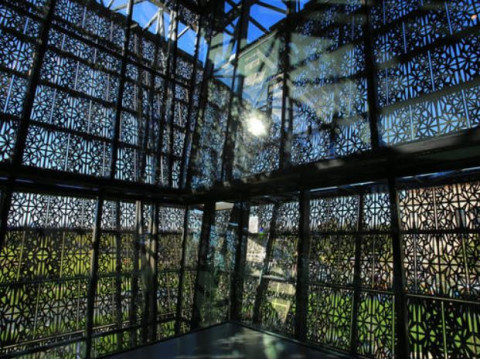 New Approaches in Interpreting and representing Slavery in Museums and Sites 2018-04-08 An international Seminar was organized by UNESCO's "Slave Route Project: Resistance, Liberty, Heritage", in close collaboration with the University of Virginia, the US National Committee of the International Council on Monuments and Sites(US/ICOMOS), Thomas Jefferson Foundation and the National Museum of African American History and Culture (NMAAHC), in Charlottesville, United States of America, from 19 to 22 March 2018.Experts from a variety of fields, academic scholars, researchers, representatives of the government and civil society from around the world shared expertise and experience with regard to the interpretation of slavery in museums and memorial sites. During the plenary sessions, participants were requested to answer specific questions regarding approaches, methodologies and tools that would be best suited to inform the public about this tragedy and its many consequences. They made concrete proposals on the development of a guide for professionals dealing with these sensitive issues in museums and other public spaces. The UNESCO’s "Slave Route Project" will set up an international working group to develop, based on the seminar's recommendations, a new handbook that will complete the guide for memory site managers, which is in the process of being published. A special session was held on 20 March to discuss the implications of some of the most prestigious American universities in the horrors of the slave trade. Some of these institutions are part of the Consortium of Universities Studying Slavery, which includes more than 38 universities. The consortium has already begun a process of introspection to assess their level of involvement and to reflect on measures to redress these injustices. On 22 March, participants were given a guided tour of the National Museum of African American History and Culture (NMAAHC). This museum was inaugurated in 2016 in Washington DC, after a century of struggle, and addresses African-American history and culture through four major themes: slavery, segregation, culture and sport. According to Ali Moussa Iye, Head of the Slave Route Project, NMAAHC is a remarkable example of a museum institution using the latest technologies to illustrate the complexity of the history of slavery and honoring the significant contributions of the African diaspora to the world. The American Actor, director, and producer, Forest Whitaker sent a message to all conference participants. He talked about the attacks carried out by white supremacists in Charlottesville: “[…] it reminds us that the legacies of slavery, particularly racial prejudices, still need to be addressed […] the conflicting interpretations of theses legacies [slavery legacies] continuing to fill misunderstandings, hatred and violence”. In response to such events, he has emphasized the importance of the topics discussed during the seminar: "When the tragedy of slavery is properly commemorated, interpreted, represented, the tragedy of slavery can [...] help us to look through and work through reconciliation, mutual respect, and forgiveness”. In his speech, Forest Whitaker also highlighted the importance of UNESCO's initiatives such as "The Slave Route" in recognizing the social and psychological consequences of this tragedy in contemporary societies. The international Seminar was organized in the context of the “International Decade of Persons of the International Decade for People of African Descent (2015-2024)”, the “International Day for the Elimination of Racial Discrimination (21 March 2018)”, the “International Day of Remembrance of the Victims of Slavery and the Transatlantic Slave Trade (25 March 2018)”, and the 70th Anniversary of the Universal Declaration of Human Rights. More information about the seminar UNESCO’s "Slave Route Project" Contact: Ali Moussa iye, a.moussa-iye@unesco.orgURL:http://www.unesco.org/new/en/media-services/single-view/news/new_approaches_in_interpreting_and_representing_slavery_in_m/
 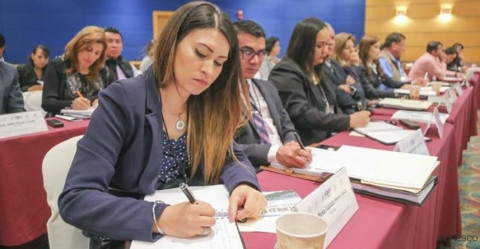 UNESCO Mexico & UNESCO Associated Schools focus on Education about the Holocaust and Genocide 2018-04-04 The UNESCO Mexico Office participated in a meeting of UNESCO Associated Schools Network (ASPnet) State coordinators in Mexico that took place from 15 to 16 March 2018 in Monterrey, Mexico. Organized by the Mexican Commission for Cooperation with UNESCO (CONALMEX) and the Secretary for Public Education, the reunion set a focus on education about the Holocaust and genocide. The theme is in line with the values and principles promoted by ASPnet, including fundamental rights and human dignity, respect for diversity and international solidarity. During the meeting, UNESCO’s Policy Guide on Education about the Holocaust and preventing genocide was presented to the participating coordinators of the 310 UNESCO ASPnet member- and 395 “ASPnet collaborating” schools in Mexico. Further topical input was provided by the exhibition “State of Deception: The Power of Nazi Propaganda”, on display on the conference premises. The exhibition was originally created by the United States Holocaust Memorial Museum (USHMM) in cooperation with The Holocaust and the United Nations Outreach Programme, to explain how the Nazi party used innovative propaganda techniques to come to power through elections and then drive the country to war and the systematic murder of 6 million Jews in Europe. The exhibit is a tool to help young people better evaluate the messaging they receive, in particular online and through social media. In this context, Adolfo Rodríguez, education specialist from the UNESCO Mexico Office presented UNESCO’s publication Rethinking Education: Towards a global common good?, and highlighted how dealing with such cases of violent pasts relates to the broader role of education in promoting peace, tolerance and contributing to the prevention of violent extremism. In a dedicated session on the second day of the meeting, Yael Siman Druker, from the Ibero-American University in Mexico City, presented on “Holocaust, Genocide and Global Citizenship”. Yael Siman Druker has been part of the two Mexican national teams that participated in the 2015 and 2017 International Conference on Education and the Holocaust (ICEH), jointly organized by UNESCO and the USHMM. The conference trains and supports education stakeholders in their efforts to advance education about the Holocaust through the development of initiatives tailored to their respective national contexts. As outcome of the 2015 ICEH, the Mexican national team has implemented a two-day academic conference at the Ibero-American University in cooperation with the Museum of Memory and Tolerance in Mexico City in fall 2016, published an educational handbook for teachers and piloted a bi-national teacher training program with Chile. The 2017 team builds on the success of this first series of projects. Over the course of 2018, the team plans to cooperate with the Mexican Ministry of Education and experts from selected Mexican universities and institutes to continue to advance education about the Holocaust and genocide in Mexico. Mexico has been increasingly advancing its efforts towards strengthening Education about the Holocaust and genocide in Mexican schools and higher education institutions. Since 2014, Mexico is a member of the UNESCO Latin American Network on Education about the Holocaust. UNESCO Education about the Holocaust and genocide United States Holocaust Memorial Museum UNESCO Associated Schools Network (ASPnet) UNESCO Associated Schools Network in Mexico URL:https://en.unesco.org/news/unesco-mexico-unesco-associated-schools-focus-education-about-holocaust-and-genocide
 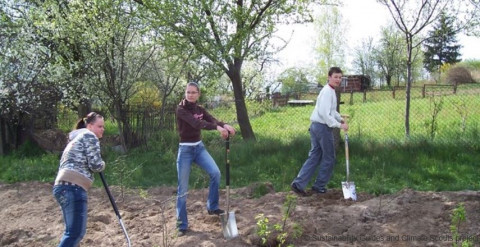 Teaching youth to plant for the planet and change the world from the heart of Europe 2018-03-29 A project run from a remote and beautiful part of the German countryside is transforming young people into climate scouts with a powerful message to share. The Sustainability Guides and Climate Scouts project is run from the International Meeting Centre, St. Marienthal in Ostritz in the Free State of Saxony near the border with Poland. Established in 1992, the centre conducts around 60 Education for Sustainable Development (ESD) events for more than 2,500 families, youths, adults and experts each year. The guides and scouts project started in 1998 and welcomes groups of students for intensive courses that combine study with practical outdoor activities, and make good use of its forest experience trail and nature protection station. Over 1,100 youth have taken part so far including 680 learning-disabled and socially disadvantaged young people who traditionally have very little access to ESD. Its geographical location means it is perfectly placed to bring together students from Germany, Poland and Czech Republic. And a new model project is currently underway which opens the door to ESD for refugees as well. One of the most exciting aspects of the project is the Plant for the Planet scheme where children have planted around 34 hectares of forest and undertaken more than 30 small-scale energy and water conservation initiatives. Project Manager Georg Salditt said: “Our message is really twofold: we are teaching peace and the environment. We are well placed at the very heart of Europe to bring young people together who may not normally have met and to demonstrate to them that we are all human beings and we must respect each other and the planet.” The work with refugees who come from Syria, Afghanistan and African countries and elsewhere also has a double aim. “We want to make sure that if they make their lives here they know how important it is to protect the environment, but also if they are able to return home or to another country that they carry those messages back with them,” said Georg. Not only is the centre itself a model of sustainability with its own environment management system: when children leave the course they take back with them ideas on how to transform their own schools. The centre ties all theory very tightly to practice. In some schools, environmental representatives have been appointed and students introduced permanent energy saving routines for heating and ventilation and for the reduction of paper use and waste. As part of the project young people also learn about the effects of climate change on societies in the form of soil erosion, extreme weather phenomena , rural depopulation, economies and the environment especially with regard to forest damage. They are motivated by quick feedback on successes in energy and water conservation and updates on the amount of forest planted. Crucially children also take part in communication workshops to learn how best to share and pass on what they have learned at open school days or town halls. For Georg one of the most satisfying aspects of his work is watching the transformation take place before his eyes. “It might sound silly but students do actually write to me one or two years after the course and say that these five days changed their lives not only as far as the environment is concerned but as a human experience. Some had never met anyone from another country at all. And they got to plant a tree!” And there is a new project already underway. “We are now working to introduce a project to protect bees and insects. Everyone loves honey and honeybees so we think it will be a success,” he said. More on Education for sustainable development. URL:https://en.unesco.org/news/teaching-youth-plant-planet-and-change-world-heart-europe
  New Report: How to Measure Equity in Education 2018-03-29 Methodologies and indicators to reveal the inequalities facing marginalized groups A new report shows how countries can measure the education progress of the most marginalized populations to ensure no one is left behind. Sustainable Development Goal 4 (SDG 4) calls for inclusive and equitable quality education for all, spanning not only gender parity in learning but also equitable educational opportunities for persons with disabilities, indigenous peoples, disadvantaged children and others who are at risk of exclusion from education. Yet today, these groups are extremely difficult to track because they are often invisible in education data. The new Handbook on Measuring Equity in Education, produced by the UNESCO Institute for Statistics (UIS), the FHI 360 Education Policy Data Centre, Oxford Policy Management and the Research for Equitable Access and Learning (REAL) Centre at the University of Cambridge, provides practical guidance on the calculation and interpretation of indicators designed to target the most disadvantaged groups. It is intended for anyone involved in the measurement and monitoring of equity in education, especially those concerned with national policymaking. It addresses the current knowledge gaps and provides a conceptual framework to measure equity in learning, drawing on examples of equity measurement across 75 national education systems. The handbook explains what it means to measure equity in learning, recognising that equity itself is a political issue and cannot be isolated from political choices. It focuses on two key principles – impartiality and equality of condition. Impartiality zooms in on the idea that it is unfair to discriminate by characteristics such as gender, wealth or ethnicity when it comes to the distribution of education. Measures of impartiality quantify the extent to which an educational input or outcome differs by such characteristics. Equality of condition focuses on the dispersion of education in the population, without regard for differences between groups. While perfect equality of condition in education outcomes might not be possible or desirable, wide or growing gaps between the least and most educated are likely to be a cause for concern. The handbook introduces visualization and measurement techniques related to impartiality and equality of condition, the requirements for the use of underlying data to measure both, and the advantages and disadvantages of each technique for generating insights into the magnitude and nature of any inequality. It provides solid examples of national efforts to track progress towards equity in both educational access and learning, highlighting positive country examples and stressing the need to include a wider range of dimensions of disadvantage in education plans. Allocating education funding more equitably Finally, the handbook examines government spending on education to reveal who benefits, who misses out, and how resources could be redistributed to promote equity. It points out that in many countries, the children and young people who are the hardest to reach are often the last to benefit from government spending. It is simply more expensive to ensure their quality education, given the cost of measures to tackle the root causes of their disadvantage, from poverty to discrimination – and this should inform the distribution of resources. While equal funding means the same amount of money for each student or school, equitable funding means additional resources for the most disadvantaged children to ensure that every child can enjoy the same educational opportunities. As the handbook argues, progress towards SDG 4 demands the equitable distribution of resources within education systems, with the most disadvantaged receiving the largest share of government resources, and paying the smallest share from their own pockets. The new handbook has been inspired by the urgent need to position educational equity at the heart of global, national and local agendas to promote access and learning for all children, young people and adults. With countries under pressure to deliver data on an unprecedented scale, the handbook also recognises that no country can do this alone, making a strong case for greater cooperation and support across governments, donors and civil society. URL:http://uis.unesco.org/en/news/new-report-how-measure-equity-education
  Education is key to deconstruct racial narratives 2018-03-27 The role of education at all social levels and in particular of young generations, remains one of the best ways to stop the proliferation of racist and discriminatory discourses and to foster intercultural exchanges. This is the message of experts who gathered on 21 March at UNESCO in Paris for a Round table on Deconstructing racial narratives: challenging assumptions and fostering diversity, organized in the context of the International Day for the Elimination of Racial Discrimination. The event started with a presentation by Evelyne Heyer, Professor of the National Museum of Natural History of France, who explained the scientific evidence against the notion of race, which has resulted in practices ranging from discrimination to extermination of “the other” throughout history. “Races do not exist in the sense we thought in the 19th century, but even if the word ‘race’ is removed, racism will continue to exist. The term ‘race’ has a history, so we need to use this concept, if only to deconstruct it,” said Heyer. According to the professor, the DNA of all human beings is 99.9% identical, and we all are of African origin, dating back 100,000 years. With only 0.1% of differences in the genomes of people from across the world, the notion of race is not justifiable, she says. “Racism is not just about skin color, but about discrimination against individuals who are physically, culturally or morally different,” Heyer explained, adding that our genetic diversity is the result of adaptations to environments and our geographical origins. Three key components are at the basis of the definition of racism: categorization, hierarchization and essentialization. Categorization is a mental operation that simplifies the world. People classify individuals based on their appearance, their religion, their geographical origin, etc. Hierarchization involves a value judgment based on regarding one group or category of individuals as being superior or inferior to another. Essentialization is a process by which individuals are reduced to moral characteristics, intellectual faculties or psychological traits alleged to be an immutable and inherited feature of that particular group. Victoria Tauli-Corpuz, UN Special Rapporteur on the Rights of Indigenous Peoples, described racism from the perspective of indigenous communities and movements. “Indigenous peoples have experienced racism and discrimination since colonization. Racism was used deliberately to make them feel inferior and to take the resources from their lands. The strategy was to make them forget who they are,” she said. “The good news is that indigenous peoples are waking up, asserting their identities, and using the legal framework to protect their lands and fight against discrimination.” For Rita Izsák-Ndiaye, expert member of the Committee on the Elimination of Racial Discrimination, the fight against racial discrimination starts at home, in our own families: “I am a white Roman Christian and my husband is a Black Muslim. When I look at my family, I see that, because of love and being bound by the same values, we can deal with intercultural and interreligious tensions.” Noting the spread of hateful messages and the reinforcement of stereotypes through social media, Izsák-Ndiaye says it is necessary to stimulate constructive debates. “We cannot remain quiet in the face of hatred. We need a critical mass of anti-racist people active on social media fighting against the wrong discourses,” she commented. “Everyone owns society. Education, arts, music, literature and science need to include everyone.” At the end of the panel, the discussants agreed that the only way to fight racism is through education and action. “At the early stages of education, children need to be taught that they should look at others as equal to them. Promoting intercultural exchanges is crucial for the education system to build more harmonious societies,” said Tauli-Corpuz. The event was followed by the inauguration of the abridged version of the travelling exhibition “Us and Them – From Prejudice to Racism” with welcoming remarks from André Delpuech, Director of the Musée de l’Homme. It offers a journey that deciphers the reasons for racist and discriminatory behavior during certain moments of history and sheds light on racist behavior and prejudices. Conceived by the National Museum of Natural History of France, and shown at the Musée de l’Homme from March 2017 to January 2018 under the patronage of UNESCO, the exhibition will travel to different member cities of UNESCO’s International Coalition of Inclusive and Sustainable Cities – ICCAR. Interview with Evelyne Heyer, Professor of the National Museum of Natural History of France: Click here Interview with Rita Izsák-Ndiaye, member of the Office of the United Nations High Commissioner for Human Rights (OHCHR): Click here URL:https://en.unesco.org/news/education-key-deconstruct-racial-narratives