
News
Catch up on what’s happening in the world of global citizenship education.
311 results found
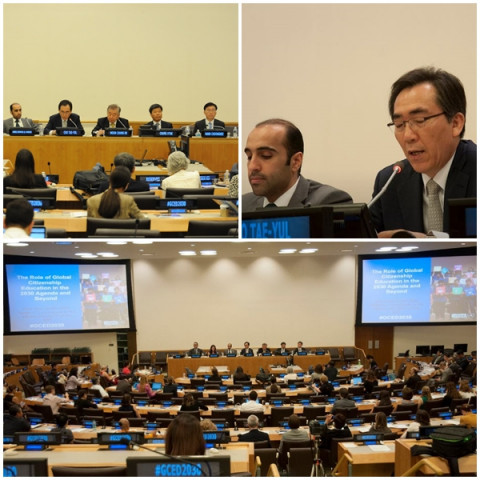 Value of GCED for the United Nations highlighted in 2017 UN GCED Seminar 2018-12-26 On 19 June 2017, APCEIU, together with the Permanent Missions to the United Nations of the Republic of Korea and Qatar, as well as the World Federation of United Nations Association (WFUNA) co-organized the 2017 UN Global Citizenship Education (GCED) Seminar at the United Nations (UN) Headquarters in New York. With the title “The Role of Global Citizenship Education in the 2030 Agenda and Beyond” the seminar focused on answering the question of how does Global Citizenship Education (SDG Target 4.7) contribute to the values and visions of the United Nations. An annual event since 2015, the discussions in the 2017 also touched on best practices that contribute to the realization of SDG Target 4.7, the Sustainable Development Goal for GCED. Ambassador Cho Tae-yul, Permanent Representative of the Republic of Korea to the United Nations, emphasized on the significance of GCED with the current global challenges faced mutually by humanity, and its role in realizing the mission of the United Nations. “GCED educates people to become active and responsible global citizens…towards sharing and realizing the universal values and visions which the United Nations upholds.” Ambassador Cho further mentioned that GCED contributes to the UN beyond its inclusion in the SDGs as it serves as, “…an important element of the UN’s holistic approach, strengthening the nexus among peace and security, development and human rights.” He further addressed that in line with the mainstreaming action needed at the United Nations, the “Group of Friends on Global Citizenship Education” was established, co-chaired by the Republic of Korea and the State of Qatar. The inaugural meeting of the group was held last 1 June where 60 representatives from 35 UN Member States as well as UN Department of Public Information, UNESCO and UN Alliance of Civilizations participated. As a reply, Ambassador Abdulrahman Yaaqob Y. A. Al-Hamadi, Deputy Permanent Representative of the State of Qatar to the United Nations, expressed their pride in co-chairing the group, a common platform for member states and key stakeholders to discuss challenges and opportunities to promote GCED. Ambassador Al-Hamadi also stressed the various efforts of Qatar to promote GCED, including through its support of intercultural dialogue, and the organization of the 2017 World Education Summit for Education (WISE) with the theme “Co-exist, Co-create, Learning to Live and Work Together”. The WISE will be held in Doha from 14 to 16 November 2017. In the opening remarks, Utak Chung, Director of APCEIU, explained that in light of the effort to prevent violent extremism, the implementation of GCED is crucial. He mentioned the full commitment of APCEIU in implementing GCED, shown in its various efforts such as the annual UN GCED Seminar, building capacities of teachers, development of curricula and policy guidance on GCED, and opening of platforms such as the International Conference on GCED and the GCED Global Network to exchange ideas and develop strategies for GCED. On a similar note, Bonian Golmohammadi, Secretary-General of WFUNA, highlighted their work on GCED, towards the goal of empowering young people to become global citizens that contribute and engage with the work of the UN and the realization of the SDGs. On a special video message, Madame Irina Bokova, Director-General of UNESCO, expounded that the inclusion of GCED in the SDGs is recognition of its role to support an education that meets the needs and challenges of the 21st century, “…convinced that (GCED) is essential to empower learners with skills and values they need to be positive change actors.” Furthermore, she recognized the leadership role of APCEIU in the promotion of GCED, working closely together within UNESCO towards stronger and more efficient programming. For the keynote speech, Moon Chung-In, Special Advisor to the President of the Republic of Korea for Unification and National Security Affairs and Distinguished Professor of Yonsei, drew the backdrop of the Korean case of GCED, a retrospection of how GCED came into being in the Korean context despite many challenges. Historical memory of poverty and rapid development has caused the Korean society to develop a certain culture that includes attitudes such as low empathy and high nationalism, a major barrier to GCED. As such, he put emphasis on the importance of taking history and culture into account, as is underlined in the GCED textbook developed through a consortium between various provincial offices of education in the Republic of Korea. The panel discussion included presentations from practitioners of GCED including Karen Bryner, Director of Educate-A-Child Technical Department, Education Above All; Lily Gray, Liaison Officer, UNESCO Office in New York; Han Kyung-Koo, Professor, Seoul National University; Mareike Hachemer, Teacher and Member of the Global Goals Educator Task Force; and Theresa Ridings, Student Cohort, Lehigh University’s Global Citizenship Programme. Panelists discussed about their activities on GCED, and perspectives that they apply in doing so. The role of teachers has been stressed, in that they need to become global citizens first and to be provided with resources and capacities developed. Students beyond the formal education sector needs to be offered with opportunities on GCED, lest the cycle of marginalization will continue. As well, the message of the complementarity between national citizenship and global citizenship was an important topic in the discussion. In the words of Han Kyung-Koo, “I believe that a good patriot can be, and should be, a really good global citizen. National citizenship is not an event, it is a process, and so is global citizenship.” At his closing remarks, Ambassador Hahn Choonghee, Deputy Permanent Representative of the Republic of Korea to the United Nations, put stress on the value of GCED beyond Target 4.7, as it achieves the ultimate goal of building peace through the United Nations. “I do not think that GCED is just a sub-target…rather it is our over-arching and ultimate goal for all SDGs, even the whole process of the United Nations. This is a common undertaking and it will be this solemn responsibility of our generation for our next generation’s children.” Related Link:http://webtv.un.org/search/the-role-of-global-citizenship-education-in-the-2030-agenda-and-beyond/5477618357001?term=Global%20Citizenship URL:Value of GCED for the United Nations highlighted in 2017 UN GCED Seminar > APCEIU News - APCEIU (unescoapceiu.org)
 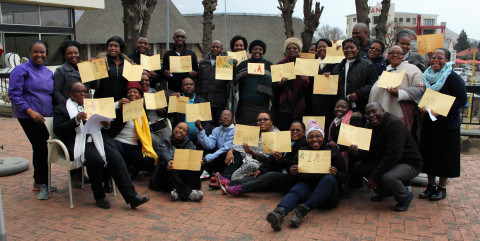 평화의 문화를 위한 세계시민교육 교사워크숍, 아프리카 레소토에서 개최 2018-12-26 Co-organized by Asia-Pacific Centre of Education for International Understanding (APCEIU) and Lesotho Distance Teaching Centre (LDTC), Workshop in Lesotho on GCED took place between 12 and 14 of July 2017 at Maseru, the capital city of Lesotho.As a post-Fellowship Programme, Fellowship Good Practices & On-site Training (Fellows in Action 2017) was launched this year to identify exemplary initiatives led by alumni of the UNESCO/KOICA Joint Fellowship Programme. The Programme is designed to provide support to the alumni of the Fellowship Programmes to share their good educational practices in local contexts, applying the knowledge and skills gained from APCEIU’s two-month training in Korea. The case of Ms. Nomsa Mpalami (2015 Fellowship Participant from Lesotho), ‘teacher training on peace education for non-formal educators in Lesotho’, has been selected as one of the three good practices, and the Workshop was implemented to further encourage her efforts to enhance the capacity of teachers in non-formal sector on GCED (Global Citizenship Education) and peace education. The Workshop invited 30 non-formal educators from different regions of Lesotho to learn about GCED with a focus of peace education and PVE (Preventing Violent Extremism) with sessions and lectures on conceptual framework of peace education led by Dr. Yonas Adeto (Institute of Peace and Security Studies, Addis Ababa University), discussion and dialogue on ways of dealing with conflicts and methods of conflict transformation in their own contexts facilitated by Ms. M. Mohasi (Transformation Resource Centre, Lesotho), and workshops on creating learning materials on peace and conflict transformation reflecting the lessons learned, which will be used as teaching and learning resources for their learners. The learning materials created by the participants will further be polished and edited to be published as booklets on peace education by the publication department of LDTC, which will be disseminated throughout the country, including schools, community centers, libraries and other institutions where teachers can utilize them as teaching and learning materials.
 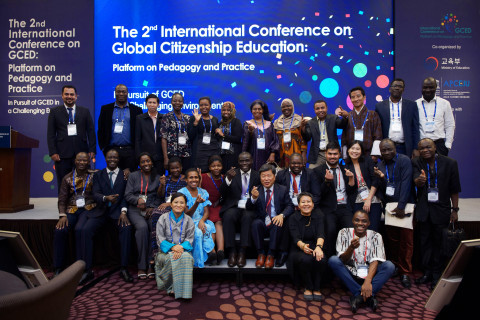 The 2nd International Conference on GCED: In Search of Solutions to Tackle Global Challenges 2018-12-26 With the rise of radicalism and nationalism, we have faced the increasing number of hate crimes against specific race, ethnicity, gender or cultural group and, consequently, an antagonistic atmosphere has been prevalent across the globe. Under these circumstances, there has been an ongoing demand for rethinking the role of Global Citizenship Education(GCED). In response, APCEIU held the 2nd International Conference on GCED from 13 to 14 September 2017 in Seoul to gather GCED practitioners and experts all over the world. Under the overarching theme of ‘in pursuit of GCED in a challenging environment’, this Conference was co-organized by the Ministry of Education of the Republic of Korea in partnership with UNESCO HQ. This Conference successfully provided a platform where participants discussed the challenges we have face globally, nationally and locally when it comes to implementing GCED and reflected upon the direction of GCED. During the two-day conference, more than 400 educators, policy makers, scholars and youth representatives from 60 different countries had attended. Kim Sang-kon (Deputy Prime Minister and Minister of Education of the Republic of Korea), Norbu Wangchuk (Minister of Education of the Kingdom of Bhutan) took part in the Conference. This Conference attempted to provide interactive sessions which encourage participants to actively participate in, consisting of various plenary sessions and concurrent sessions. The plenary sessions intended to give an integrated overview on the theme of the Conference, while the concurrent sessions consisted of diverse programmes as panel discussions, case presentations, participatory workshops, theater and debate chamber. Beyond its emphasis on the importance of global citizenship, this Conference enabled discussions on how to make the world more peaceful, inclusive and sustainable and how GCED can address current imperatives. The first day of the Conference was initiated by a panel discussion which brought together a panel of experts and practitioners from respective fields of GCED. Entitled ‘how can we pursue GCED in a challenging environment’, the panel discussion touched upon the challenges that they have faced and the achievements made by tackling these challenges in each field, region and practice. The plenary session 2 took the format of a town hall meeting in which every participant exchanged their perspectives and actively debated with each other. More than 400 participants shared their views and ideas through Mentimeter, the real-time online voting tool. In the concurrent session 1 titled ‘exploring practices of GCED and their impact,’ participants discovered how GCED has been practiced and what kind of difficulties it has been facing specifically throughout primary and secondary education, higher education and civil society organizations. This session encompassed practices on GCED in all types of education-formal, informal and non-formal.The second day kicked off with the plenary session 3, which was led by a brief performance that embodied an ethos of global citizenship. The topic was ‘GCED in Action’ and the performance was given by the Philippine Educational Theater Association (PETA). The session was designed to provide hands-on experience wherein the audience can feel the importance and message of GCED through the medium of theater. Furthermore, as GCED is considered to be delivered through diverse mediums such as participatory activities, the concurrent session 2 attempted to focus on democratic dialogism, transformative pedagogy and how to teach controversial issues. In addition, comprised of distinctive three sessions, each session in the concurrent session 3 addressed supportive conditions to scale up GCED. Each session covered education policies, curricula and teacher education respectively, shedding light on the challenges that we have faced in implementing GCED and sharing the recommendations suggested by experts in their fields. The youth debate chamber, a special session, was organized during the concurrent session 3. Under the motion of ‘Can global identity and national identity coexist? ,’ the four debaters were divided into two groups which held different views-pros and cons. The audiences were required to cast their votes in favor of the side they support two times-in advance of the debate as well as after the debate, and the side that obtained the biggest number of votes in the end won the debate. Interestingly, the result of the initial vote was reversed at the moment of the final vote. Subsequently, Cho Heeyeon, the Superintendent of Seoul Metropolitan Office of Education gave a special lecture on ‘Global Citizenship Education for Empathy & Coexistence’, which introduced the process and accomplishments of GCED in the context of education in Seoul. The 2nd International Conference on GCED provided opportunities to exchange and deduce various ideas to effectively resolve issues by which GCED is currently confronted. The Conference (except concurrent sessions) was live-streamed online for those who were interested in GCED. URL:The 2nd International Conference on GCED: In Search of Solutions to Tackle Global Challenges > APCEIU News - APCEIU (unescoapceiu.org)
 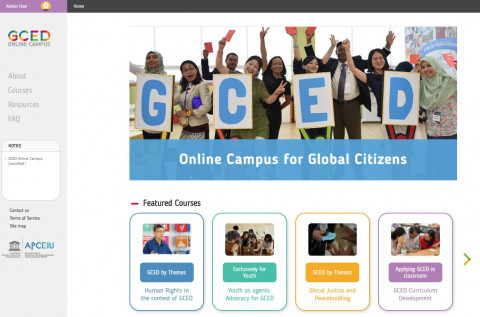 GCED Online Campus: Online Courses for Global Citizens has Launched! 2018-12-26 APCEIU has launched its e-learning platform on Global Citizenship Education ‘GCED Online Campus’ which offers various online courses on GCED to educators worldwide. (http://www.gcedonlinecampus.org/) As an e-learning platform on GCED, the online courses are expected to serve as a channel to introduce GCED to educators with its transformative approaches, as well as to deepen their understanding on thematic issues and practical knowledge. Two online courses titled ‘Glocal Justice and Peacebuilding’ and ‘Cultural Diversity and Intercultural Understanding’ are offered from 12 November 2017 till 10 December 2017, targeting educators who are interested in GCED and wish to deepen their understanding on the thematic issues of GCED, justice & peacebuilding and intercultural understanding. ‘Glocal Justice and Peacebuilding’Led by Dr. Toh Swee-Hin, the course invites educators, professionals and peacebuilders working in formal as well as non-formal educational contexts to learn about the relationship between conflicts and social justice at local and global levels. The course introduces peacebuilding initiatives to transform conflicts in both South and North contexts, identifies the root causes of conflicts and finally explores strategies that will allow nations and citizens to breed a Culture of Peace.(For more information, click here) ‘Cultural Diversity and Intercultural Understanding’The course ‘Cultural Diversity and Intercultural Understanding’ is offered by APCEIU’s partner institution, The Network University (TNU). The course is led by a team of three instructors, Ditta Dolejsiova Trindade, Gerd Junne, and Vic Klabbers. Targeting education and development practitioners, social and youth workers as well as policy-makers and civil servants, the course will enrich the participants with critical understanding on the importance of cultural diversity and intercultural understanding in a globalized world. In addition to getting acquainted to various theories, the participants will also work on their development strategy which can be utilized in their own context even after the course. Starting with the opening of the two courses, more courses will be launched soon after. Courses from GCED 101, an introductory course to GCED, to advanced courses on thematic issues and pedagogical approaches will continue to interest potential participants. Moreover, various types of resources on GCED are also available on the website, including lesson plans, and teaching materials on GCED to be used by teachers around the world. GCED Online Campus is open to all educators who are interested in and ready to learn about GCED. Please visit the website for more information on GCED Online Campus and the courses currently being offered (http://www.gcedonlinecampus.org/). URL:GCED Online Campus: Online Courses for Global Citizens has Launched! > APCEIU News - APCEIU (unescoapceiu.org)
 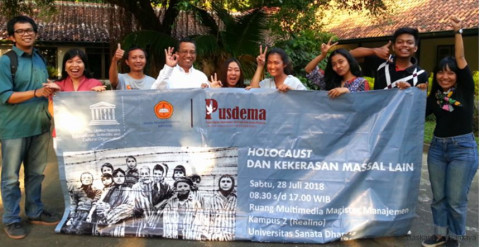 “Esperamos ayudar a los docentes indonesios a informar mejor a sus alumnos sobre las cuestiones relativas al Holocausto y otros genocidios” 2018-11-09 Interview with Baskara T. Wardaya on education about the Holocaust and genocide in Indonesia Baskara T. Wardaya is the director of the Centre for Democracy and Human Rights Studies (PUSDEMA) at Sanata Dharma University in Yogyakarta, Indonesia. In December 2017, he participated with Juharyanto from the State University of Malang, East Java, and Kartika Pratiwi from Kotakhitam Forum, Yogyakarta, Indonesia the International Conference on Education and the Holocaust (ICEH). With support of UNESCO and the U.S. Holocaust Memorial Museum (USHMM), the team has consequently developed a series of workshops on education about the Holocaust and genocide for Indonesian teachers. The first workshop was held on 28 July 2018 at Sanata Dharma University. Why is it important to teach and learn about the Holocaust and genocide in Indonesia? In Indonesia, the Holocaust is a topic that is rarely discussed in public, in the media, as well as among academics. Indonesians have very little access to resources on this topic and there are very few Indonesian academics, who are experts in this field. In general, people’s knowledge about and their interest in the history of the Second World War and the genocide of the Jewish people is rather limited. As educators, we cannot afford to let an unspeakable atrocity like that slip from human collective memory. The Holocaust was one of the darkest chapters in human history, and we should study it and draw as much lessons as we can from it. These lessons, in turn, are very important and useful for teaching and learning about other cases of genocide and human rights violations, including those that took place in Indonesia. In 1965, between 500.000 to 1.000.000 Indonesian civilians became victims of mass killings, because they were allegedly supporting communist ideas. Until today, there is a strong general resistance toward any discourse about these past human rights abuses. Attempts of dealing with the past are usually met by a strong opposition. This affects particularly survivors and victims, whose perspectives are often neglected. In addition to that, strong anti-Israeli and anti-Jewish sentiments are unfortunately quite present in Indonesia. This is why it is very important for us Indonesians to learn about the Holocaust. We need to teach and learn not only what happened, but also why and how it happened, who was involved, and what was its long-term impact. Learning about this devastating event can help us to draw lessons that are important to face our own violent past and problems in the Indonesian society today. How does your project contribute to the advancement of education about the Holocaust and genocide in Indonesia? With our project we aim to help Indonesians, especially teachers, to be more familiar with topics related to the Holocaust and other cases of human rights abuses. To achieve this, we are holding two workshops for teachers at Sanata Dharma University, Yogyakarta. The first workshop took place on 28 July 2018. During this workshop, we introduced participants to the history of the Holocaust and provided detailed background information on its context and its social, political, religious and personal dimensions. We also provided teaching materials tailored to teaching and learning about the Holocaust and addressing the challenging human rights situation in Indonesia. We have encouraged the participants of the first workshop to integrate these materials and new insights into their lessons. The second workshop that we will organize in September 2018 will give teachers the opportunity to share and reflect upon their experiences. There will be time to discuss classroom practices to teach about the Holocaust and other human rights issues. We hope that our workshops will allow teachers to better inform their students about these important topics and to generate interest to learn more about them and their relevance today. How did you help workshop participants to approach the topic? We used different approaches to involve teachers in our workshop sessions. One was by way of personal stories: when we were in Washington to attend the International Conference on Education and the Holocaust (ICEH), we were introduced to Alfred Munzer, who survived the Holocaust as a child, because he was hidden by an Indonesian family that was living in the Netherlands. During the workshop we used his story to illustrate how the history of the Holocaust can be connected to Indonesia in unexpected ways. We screened a documentary about Alfred Munzer that shows how he harbors a strong emotional connection to Indonesia until today. To further link lessons from the history of the Holocaust to Indonesia, we also discussed the human rights violations that took place in Indonesia in the 1960s. Many of the lessons from the Holocaust, like the dangers of propaganda and scapegoating certain demographic groups, can also be applied to our national violent past. Through discussing previous knowledge of these two historical events and by building on this foundation to create a deeper understanding, we hope to motivate teachers to share this knowledge with their students. For this reason, we also provided the participating teachers with teaching materials and methodologies to help them build their own lesson plans. The feedback we have received from workshop participants reveals that there is a great motivation to put this new knowledge into practice. After the workshop, one teacher said: “As an educator I have a moral obligation to teach my students about the Holocaust and other cases of human rights violations that took place in the past.” Another workshop participant pointed out that “a tragic event like the Holocaust can happen anywhere. Because of that we need to learn about the Holocaust [and from its lessons]. We need to teach our students, as part of the younger generation, to prepare for a better life together.” What do you hope to achieve with your project? We think that it is relevant for learners in Indonesia and across the world to learn about the Holocaust, even if their country has not been directly affected by these historical events. Such education can help learners to understand that the genocide of the Jewish people was a tragedy that reached far beyond its victims and perpetrators and from which we have to draw lessons for all of humanity. We hope that our projects contributes to that. We aim to help high school teachers and students ”to become proactive contributors to a more peaceful, tolerant, inclusive and secure world." This is one of the objectives of Global Citizenship Education and part of the Education 2030 Agenda. We also hope to raise awareness for the violence that shook Indonesia in the 1960s and the ways it has marked Indonesian society. We hope that a better understanding of this past will sensitized learners to recognize similar patterns in the future and to prevent such events from happening again. How has the support of UNESCO and the USHMM been beneficial for the success of your project? UNESCO and the USHMM are two internationally-known and highly-respected institutions. Both institutions have been a great support from the beginning of our project: from first initiating the idea of holding a workshop on Holocaust education in Indonesia during the 2017 ICEH to supporting the implementation of our project today. The ICEH helped us to realize that education about the Holocaust and genocide can be implemented on a global level and that there are many education leaders around the world engaged in the same topics as us. That was a highly motivating experience. We are also very grateful for the financial support we have received from UNESCO and the USHMM and the international leverage both institutions provide to us. Thanks to all of this, we can show that what we are doing at our center at Sanata Dharma University in Indonesia is part of a global initiative that prepares young people to work for a better collective future as members of a common humanity. More on Education about the Holocaust and genocide URL:https://en.unesco.org/news/we-hope-help-indonesian-teachers-better-inform-their-students-about-holocaust-and-genocide?language=es
 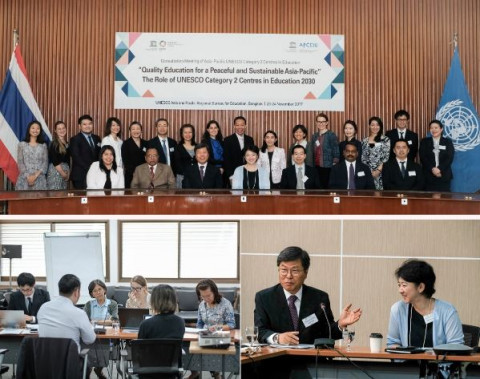 Regional Collaboration for SDG 4.7 explored at the Consultation Meeting of the Asia-Pacific UNESCO Category 2 Centres in Education 2018-10-30 The Consultation Meeting of the UNESCO Category 2 Centres in Education, entitled “Quality Education for a Peaceful and Sustainable Asia-Pacific: The Role of UNESCO Category 2 Centres in Education 2030” was held from 23 to 24 November 2017 in Bangkok, Thailand. Co-organized by the UNESCO Asia and Pacific Regional Bureau for Education (UNESCO Bangkok) and APCEIU, the meeting aimed to share the achievements and challenges of the participating organizations in the implementation of SDG 4 and to identify ways within their work plans on how to promote SDG Target 4.7 as a cross-cutting theme. This meeting is a first of its kind, which serves as an important opportunity to reflect on the year that was and open the discussion on how to promote synergies and increase the impact of planned activities together. The meeting gathered 25 participants from UNESCO Category 2 Centres in the Asia-Pacific, as well as Category 1 Institutes, relevant UNESCO field offices and UNESCO regional bureaus. The participating UNESCO Category 2 Centres include existing centres (APCEIU, INRULED, SACTD, SEA CLLSD), and the newly established centres (ICHEI, IMLI), making up to a total of six centres in education located in the region. The said centres are as follows: Asia-Pacific Centre of Education for International Understanding (APCEIU), Seoul, Republic of Korea International Research and Training Centre for Rural Education (INRULED), Beijing, People’s Republic of China South Asian Centre for Teacher Development (SACTD), Meepe, Sri Lanka South East Asia Centre of Lifelong Learning for Sustainable Development (SEA CLLSD), Manila, Philippines International Centre for Higher Education Innovation (ICHEI), Shenzhen, China International Mother Language Institute (IMLI), Dhaka, Bangladesh In her welcoming remarks, Ms Maki Hayashikawa, Director ai of UNESCO Bangkok extended her gratitude to APCEIU for contributing to the organization of the meeting. She also stated that “The meeting is timely as we have just finished with the General Conference, and UNESCO is in the process of finalizing its work plans for 2018-2021”. Reflecting the message from UNESCO Bangkok, Mr Utak Chung, Director of APCEIU, has mentioned that within the challenging environment that UNESCO is facing, cooperation among UNESCO entities, including regional bureaus, field offices, Category 1 Institutes and Category 2 Centres, is crucial in realizing the goal of the Organization, including SDG 4. The Meeting explored and identified the role of UNESCO Category 2 Centres in Education 2030 by reinforcing cooperation and community-building and sharing achievements and strategies for realization of SDG 4 in the Asia-Pacific. It also explored possible areas of cooperation between UNESCO Category 2 Centres, Category 1 Institutes and Field Offices, with particular focus on SDG Target 4.7. The sessions on the first day included presentations from participating institutions on implementation and actions of SDG 4, with a special focus on SDG 4.7. Followed by the presentations, a mapping activity was held to identify SDG 4.7 activities and actions of each participating organization to explore the status of the SDG 4.7 implementation in the region. It was identified that many of the participating organizations have activities that focus on capacity-building of educators and research and development. Following this mapping activity, group discussions focusing on collaboration, particularly on mainstreaming SDG 4.7 in SDG 4 implementation activities of the organizations took place. The meeting ended with a presentation of UNESCO Bangkok on its plans for the new UNESCO biennium (2018-2019), sharing the status of the region on SDG 4, and areas of possible collaboration. A communications strategy between UNESCO bureaus, field offices, Category 1 Institutes and Category 2 Centres was proposed to sustainably promote cooperation. Joint programming, including the co-organization of activities that tackle the diverse topics of SDG 4.7 and the topics that different UNESCO Category 2 Centres are covering, has been proposed for further discussion in 2018. URL:Regional Collaboration for SDG 4.7 explored at the Consultation Meeting of the Asia-Pacific UNESCO Category 2 Centres in Education > APCEIU News - APCEIU (unescoapceiu.org)
  Social justice and equity: key principles for guiding action on the right to education 2018-10-25 “There is a widespread concern today over the growing inequalities around the world, not only among nations but also within countries,” says Mr Kishore Singh, former UN Special Rapporteur on the Right to Education. He spoke to UNESCO about the state of the right to education to mark the 70th anniversary of the Universal Declaration of Human Rights. “The gap between rich and poor all over the world caused by unbridled neo-liberal economy has become dramatic and its impact on education systems and the right to education is quite serious, resulting in increasing disparities and inequities in education,” he says. According to the former UN Special Rapporteur, “the empowering role that education can play in reversing this growing inequality is of paramount importance, but the first step would be to expand opportunities for good quality public education so that all children have access to education as a right.” International legal framework of the right to education Mr Singh emphasizes that the right to education without discrimination or exclusion is an internationally recognized universal right. In 1945, before the Universal Declaration of Human Rights was proclaimed, UNESCO’s Constitution clearly formulated the mission of the Organization and the responsibility of Member States for ensuring “full and equal opportunities for education for all”. The UNESCO Convention against Discrimination in Education, adopted in 1960, laid down two fundamental principles of the right to education: equality of opportunity in education and non-discrimination. This Convention influenced other UN human rights conventions adopted subsequently as regards the provisions on the right to education, Mr Singh observed. Education as a public good The former Special Rapporteur says that States have an obligation and responsibility to comply with international norms and principles, and to take normative actions to ensure that the right to education is fully realized and to preserve education as a public good. “The right to education is an overarching right, essential for the exercise of all other human rights,” he says. “Its ‘empowering role’ can lift people out of poverty and equip them with skills, competencies and values that are beneficial not only to themselves, but to society as a whole.” Safeguarding education from forces of privatization Mr. Singh stated that the mushrooming of privatization of education over the past few decades is a matter of deep concern, threatening the concept of education as a public good. “Education is being commercialized, leading to greater inequities in society and gross violation of the principles and norms of the right to education. Because of this phenomenon and false propaganda in favour of privatization, the public education system is shrinking while privatization creates a social segregation and inequities.” “The privatization in education is a big threat to the Education 2030 Agenda and runs counter to the commitments by governments from all over the world to ensure good quality education free of costs, at least till secondary stage,” states Mr Singh. “In private educational institutions run by individual proprietors and enterprises, peoples’ economic status determines access to education, based often on exorbitant and unregulated fee.” He emphasizes that any discrimination based on economic status or social situation is outlawed by UNESCO’s Convention against Discrimination in Education and other international human rights conventions. And the Convention on the Rights of the Child adds “property” among the prohibited ground of discrimination in access to education. The former Special Rapporteur stresses the urgent need of stringent regulatory measures, with sanctions for fraudulent practices. Concern about use of digital devices in education On the use of ICTs in education and digital devices, Mr Singh recognizes the benefits these entail for providing access to information but he is also concerned about the ‘digital divide’ and inequality that these create. Pointing out that these are mere tools and should not be allowed to substitute face-to-face learning pedagogies and human contact in imparting education, Mr Singh warns against multiple risks that use of ICTs and digital devices carry, especially as regards human faculty for concentration and reflections. “Digital devices in education are yet another commercial entry points, and unfortunately, they can also be used in a negative way by fostering access to pornographic sites with risk of sexual abuse or exploitation, cyberbullying , as well as to content that is aggressive and violent etc. while undermining the quality of learning. ” For Mr Singh, social justice and equity are two core principles of the United Nations system for peace and development. “Social justice and equity should remain at the forefront of measures taken by States in order for the right to education to be protected, promoted and fully and equally enjoyed by all citizens.“ Join UNESCO’s #RightToEducation campaign and help spread the word about this key human right that has the power and potential to transform lives around the world. URL:https://en.unesco.org/news/social-justice-and-equity-key-principles-guiding-action-right-education
  L’INJEP rallie les acteurs de l’éducation populaire 2018-10-08 Sous l’égide du ministère français de l’Éducation nationale, l’Institut national de la jeunesse et de l’éducation populaire (INJEP) a pour objectif de faire le pont entre les acteurs du domaine et d’informer le public en lui fournissant les connaissances sur ces secteurs etsur les politiques locales et européennes qui les concernent. (Pour en savoir plus sur l’INJEP, consultez :http://www.injep.fr/rubriques/qui-sommes-nous-0) Pour y parvenir, l’INJEP dirige un programme de recherche, dispose d’un Fonds d’expérimentation pour la jeunesse qui accompagne des initiatives en faveur de la réussite et de la mobilisation des jeunes, coordonne lesjournaux scientifiques Agora débats/jeunesses et les Cahiers de l’action, puis produit des analyseset des données statistiques. Ces dernières sont accessibles via son centre de ressources à Paris et sa base de données en ligne, Télémaque. (Pour de plus amples informations sur les ressources de l’INJEP, consultez : http://www.injep.fr/rubriques/ressources-et-veille-documentaireset sur ses travaux de recherche : http://www.injep.fr/rubriques/etudes-et-recherche) Pour diffuser le savoir, l’INJEP organise des activitéset des congrès à grand déploiement. Le 14 décembre 2017, le Conseil économique, social et environnemental était l’hôte des Rencontres de l’INJEP intitulées « Les nouvelles jeunesses de la démocratie : une revitalisation de la participation citoyenne ? » où les thèmes de l’engagement militant, de la participation numérique et du rapport à la démocratie ont été abordés. (Pour consulter un résumé de l’événement, voir :http://www.injep.fr/article/retour-sur-les-rencontres-2017-12046.html) À partir du 18 octobre 2018, une série de trois séminaires sur l’éducation populaire sera présentée en banlieue parisienne. Ils seront dédiés respectivement aux dynamiques territoriales, aux postures des acteurs et à la gouvernance associative. (Pour plus de détails sur les séminaires et d’autres évènements de l’INJEP, voir :http://www.injep.fr/article/education-populaire-nouveau-cycle-de-seminaires-porte-par-linjep-et-le-cnajep-12457.html) L’image vient du site web suivant : http://www.injep.fr/article/education-populaire-nouveau-cycle-de-seminaires-porte-par-linjep-et-le-cnajep-12457.html
  Les disciplines enseignées : des modes de penser le monde, un premier colloque international pour l’Unité de Recherche DIDACTIfen 2018-10-08 Selon son site web, l’Unité de Recherche en Didactique et Formation des Enseignants (DIDACTIfen) de l’Université de Liège «se construit, principalement, sur les bases du Centre Interfacultaire de Formation des Enseignants (CIFEN) qui, créé en 1995, a reçu pour mission fondamentale de promouvoir […] la qualité de la formation initiale et continuée des enseignants, en lien avec les recherches de pointe dans ce domaine. […] La création de l’UR DIDACTIfen a pour but d’amplifier cette dynamique dans une optique interfacultaire et de s’ouvrir à d’autres instances également actives dans le domaine de la formation et de l’apprentissage. » (Pour en connaître davantage sur l’Unité de Recherche en Didactique et Formation des Enseignants (DIDACTIFen), consultez:https://www.didactifen.uliege.be/cms/c_3451179/en/didactifen-portail) Le travail du DIDACTIfen porte sur les études interdidactiques, c’est-à-dire de l’enseignement et de l’apprentissage dans des disciplines scolaires variées, la formation des enseignants, les recherches collaboratives en didactique et formation des enseignants et la réduction des inégalités d’apprentissage. Les 5 et 6 juillet derniers, le DIDACTIfen a organisé pour la première fois un colloque international « Les disciplines enseignées : des modes de penser le monde » à l’intention des chercheurs en didactique des disciplines et des enseignants. (Pour plus de détails sur le colloque «Les disciplines enseignées : des modes de penser le monde», consultezhttps://didactifen2018.sciencesconf.org) L’événement avait pour but d’explorer l’épistémologie des disciplines scolaires et différentes méthodes pédagogiques. Les conférenciersont examiné les philosophies inhérentes aux disciplines, remis en question la pertinence de la disciplinarisation actuelle au profit d’une plus grande interaction entre les domaines et proposé des approches favorisant, notamment, le développement de la pensée critique et l’autonomisation des élèves. (Pour lire les résumés des conférences données au colloque, consultez :https://didactifen2018.sciencesconf.org/data/pages/DIDACTIfen_Resumes_courts_1.pdf ) L’image vient du site web suivant : https://didactifen2018.sciencesconf.org/
  O.P.E.I.R.A et Bridge 47 : des projets de grande envergure pour Educasol 2018-10-08 Établie à Montreuil, Educasol est une plate-forme française de consultation pour les acteurs de l’éducation à la citoyenneté et à la solidarité internationale (ECSI). Elle a pour objectif de faire connaître et d’améliorer les pratiques de ses 25 associations membres et de les promouvoir au sein des institutions françaises et européennes, par l’entremise du Conseil national pour le développement et la solidarité internationale (CNDSI) et de la Confédération européenne des ONG d'urgence et de développement (CONCORD).(Pour en apprendre davantage sur Educasol, consultez :http://www.educasol.org/-Qui-sommes-nous-) De 2017 à 2020, le projet O.P.E.I.R.A (Observer, Promouvoir, Expérimenter, Impulser en Rassemblant les Acteurs) d’Educasol aura trois volets : « Un Observatoire, pour dresser l’état des lieux des acteurs, des pratiques et des textes fondamentaux en ECSI ; un Laboratoire, pour favoriser l’innovation et l’expérimentation ; un Think Tank pour verser auprès du plus grand nombre les idées, valeurs et enjeux de l’ECSI. » (Pour connaître les activités d’Educasol et de ses membres, consultez :http://www.educasol.org/-Rencontres-et-debats-) Parallèlement, Educasol participe au projet paneuropéen Bridge 47 : Building Global Citizenship dont le travail s’inscrit dans le cadre de l’Agenda 2030 et plus spécifiquement de la cible 4.7. Le projet milite en faveur de l’implantation et l’innovation de l’éducation à la citoyenneté mondiale en Europe et encourage la collaboration des acteurs dans la lutte pour la justice globale et l’éradication de la pauvreté.(Pour en apprendre davantage sur le projet Bridge 47 : Building Global Citizenship, consultez : http://kehys.fi/bridge47) L’image vient du site web suivant : http://www.educasol.org/-Rencontres-et-debats