
News
Catch up on what’s happening in the world of global citizenship education.
311 results found
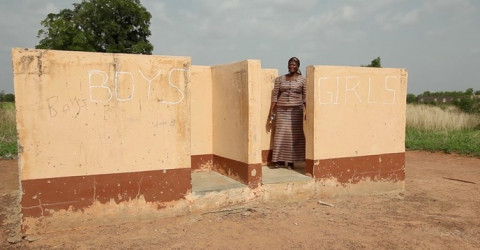 ¿Qué hace que un aula sea buena? Nuevos datos del IEU sobre las condiciones escolares 2019-03-20 New data from the UNESCO Institute for Statistics (UIS) reveal serious disparities in the schooling conditions facing children and teachers – from access to electricity, clean drinking water and single sex-toilets to Internet access and computers. Classroom conditions are key in providing a quality education for all. For children who struggle to enrol in school, for example due to poverty or discrimination on the grounds of gender or disability, poor school conditions can further undermine their chances of a quality education. What are the new data looking at? The UIS data reveal serious disparities in primary school conditions that, in turn, shed light on the global learning crisis that affects 617 million – or six out of ten – children and adolescents. The data cited below are for primary schools in 2017 (unless otherwise stated). The areas covered are: Electricity Internet Computers Adapted infrastructure and materials for students with disabilities Clean drinking water Single-sex toilets Basic handwashing facilities How many primary schools have electricity? Electricity is one of the most basic essentials for any school. Worldwide, an average of 69% of primary schools have power, falling to an average of around 34% for least developed countries. At the regional level, sub-Saharan Africa has the most limited access, at around 35%. Within the region, the lowest levels of access are found in Niger and Sierra Leone, where about 5% and 4% respectively of schools have electricity. What is the status of internet access in primary schools? Internet access in primary schools stands at just over 46% (2016) worldwide, falling to about 16% for LDCs, in stark contrast to the average for Northern America of more than 99%. The lowest percentages are found in Myanmar (0.2%) and Sierra Leone (0.3%). The data also reveal disparities between neighbouring countries, with access in Kyrgyzstan at around 42%, compared to more than 90% in Uzbekistan. How many students have access to computers at school? The global average is around 48% but hide an ever-widening and global digital divide, with entire populations of children missing out on tools that are not only vital but also seen as commonplace elsewhere. In the least developed countries, it falls to just over 23% while the averages for Northern America and Europe is well over 98%. Again, schools in Myanmar have little or no access to computers (about 1%) and Niger also faces serious challenges (just over 2%). How many primary schools have adaptations for children with disabilities? In general, such adaptations are limited. The rates vary considerably among some 40 countries with available data. Less than 5% of schools are equipped with adapted facilities for children with disabilities in some countries, including Burkina Faso, Cook Islands, Dominica, Liberia, Sierra Leone and Zambia. The rates range from about 17% to 30% in El Salvador, Latvia, Marshall Islands, Morocco, Peru and Rwanda, while countries with strong policies in place, such as Finland, have rates of 100%. How many students have access to clean drinking water? While many of the countries that provide data report rates of 100%, the global average stands at 79%, constrained by the far lower averages for least developed countries (59%) and countries in sub-Saharan Africa (44% in 2016). What is the situation of single-sex basic sanitation facilities?Single-sex basic sanitation facilities can play a vital role in the creation of a safe and supportive school environment, particularly for girls. The global average of primary schools with single-sex toilets stands at around 82%, falling to 57% for least developed countries. A closer look at the national figures reveals a number of champions in developing regions, such as Azerbaijan, Cabo Verde, Djibouti, Gambia, Ghana, India, Jamaica, Malaysia, Mauritius, Morocco, Mozambique, Rwanda, Samoa and Sri Lanka – all with 80% or more of schools equipped with single-sex toilets. But there are concerns elsewhere, such as in Eritrea (27%) and Senegal (just 9%). How many students can wash their hands at school? Handwashing facilities are essential for the health of students and teachers alike. The data reveal significant disparities: globally, 66% of primary schools have handwashing facilities, but the average in LDCs is 43% and rates are very low in some countries, such as Afghanistan (4%) and Eritrea (3%). About the UIS global education databaseThe UIS global education database provides the most comprehensive data set on education in the world. And it continues to expand. Most recently, country-level information has been added to provide a more complete and timely picture of the education situation facing children, youth and adults the world over. The data update spans all of our indicators – from pre-primary to tertiary education – and of course, the global and thematic indicators used to monitor progress towards Sustainable Development Goal 4 (SDG 4 (link is external))With the new data release, the UIS aims to ensure that all of UNESCO’s partners – including countries, donors, UN agencies, civil society groups and engaged citizens – have the latest available data to better direct policies and resources to reach every child. This is particularly timely in a year when progress towards SDG 4 will be under close scrutiny at the next High-Level Political Forum (link is external) on Sustainable Development in July 2019 URL: https://en.unesco.org/news/what-makes-good-classroom-new-uis-data-school-conditions
 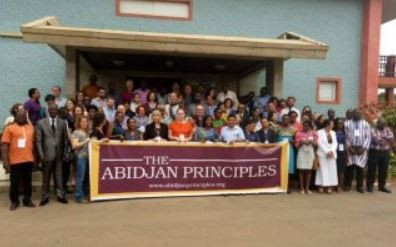 اعتماد الخبراء لمبادئ أبيدجان الجديدة بشأن الحق في التعليم والجهات الفاعلة الخاصة 2019-03-18 A group of human rights experts from around the world adopted the Abidjan Principles on the right to education today, following three years of consultations, reflection, and drafting. The Abidjan Principles seek to strengthen existing efforts to ensure that everyone’s right to education is protected in the context of growing, and often unregulated private actor involvement in education. Professor Ann Skelton, chair of the Drafting Committee, and who holds the UNESCO Chair of Education Law in Africa, said: ‘Until today, those responsible for ensuring the right to education lacked clarity on what international human rights law says about private actor involvement in education, often leading to inadvertent and preventable adverse impacts.’ ‘The Abidjan Principles compile and reassert the legal obligations of states in one document. They have been developed to respond to the well-evidenced, detrimental impacts that are often the result of the commercialisation of education.’ Echoing this, Dr Kombou Boly Barry, the UN Special Rapporteur on the right to education, and one of the experts who was consulted, said: ‘The Abidjan Principles are legally rigorous and tackle the very real challenges in providing inclusive free, quality public education, making them indispensable to any state that takes the right to education seriously.’ The Abidjan Principles unpack states’ obligation to provide public education, to respect liberties and dignity in education, and to regulate private actors in education. Samuel Dembele, the chair of ANCEFA, commented, ‘The Abidjan Principles arm us with the necessary tools to tackle the issue locally, while also connecting to the larger, systemic challenges presented by the privatisation of education.’ As well as their utility for states, the Abidjan Principles will be invaluable to those striving to hold states accountable when they fail to ensure that private actors respect the right to education. The deputy mayor of Grand-Bassam, where the meeting took place, Siaka Traoré, declared: ‘Grand-Bassam is proud to have hosted this validation conference for the guiding principles for the implementation of the right to education, which will allow us to move faster towards the free quality education for all. It was a true pleasure for me to take part in the opening and closing ceremonies.’ The drafting of the Abidjan Principles was led by a drafting committee made up of nine internationally-renowned experts. A further 20 experts were present in Abidjan to review and adopt the text. Additional experts who were not able to be in Abidjan are expected to sign the text soon, which will also be open to endorsements from civil society organisations and other actors. The final text of the Abidjan Principles will be available after copy-editing around mid-March. Launch events will be organised throughout 2019. Details will be shared at www.abidjanprinciples.org Media contacts: For press releases in other languages, images, and videos www.abidjanprinciples.org/media Sylvain Aubry (FR/EN), Legal and Policy Adviser, Global Initiative for Economic, Social and Cultural Rights: +254 7 88 28 96 34 / +33 7 81 70 81 96 / sylvain@globalinitiative-escr.org Delphine Dorsi (FR/EN/ES), Director, Right to Education Initiative: delphine.dorsi@right-to-education.org Salima Namusobya (EN), Executive Director, Initiative for Social and Economic Rights: dir@iser-uganda.org Rubeena Parker (EN), Head of Research, Equal Education Law Centre: rubeena@eelawcentre.org.za Solomon Sacco (EN), Deputy Director, Law and Policy Programme, Amnesty International: solomon.sacco@amnesty.org URL: https://www.right-to-education.org/news/new-landmark-abidjan-principles-right-education-and-private-actors-adopted-experts
  Workshop on education’s key role in the prevention of violence in Sub-Saharan Africa 2018-12-28 The emergence and spread of violent extremist groups have created climates of fear and insecurity and are adversely affecting peace efforts and human rights in Africa. Education was recognized as one of the most effective measures to create peaceful and conducive environments and to resist violent extremist ideologies. This follows the adoption of UNESCO’s Executive Board Decision on “UNESCO’s role in preventing violent extremism through education” and the “Plan of action to prevent violent extremism” announced by the UN Secretary-General in 2016. This week, UNESCO – IICBA (International Institute for Capacity Building in Africa), together with UNESCO HQ and the UNESCO Asia-Pacific Center for International Understanding(APCEIU) are organizing a capacity-building workshop on the prevention of violent extremism through education (PVE-E). Hosted by the African Union in Addis Ababa, the gathering will bring together 30 policy-makers, teacher trainers and teachers from eight African countries (Ethiopia, Kenya, Nigeria, Somalia, South Sudan, Uganda, Tanzania and Djibouti) in order to support national efforts to integrate Global Citizenship Education (GCED) in African education systems. During a three-day workshop, the participants will acquire a basic understanding of key concepts and educational measures that contribute to the prevention of violent extremism in Sub-Saharan Africa. They will also identify priority areas of intervention and pedagogical approaches that can help build learners’ resilience to violent extremism and nurture a culture of peace. This will include special training sessions on how to create safe spaces for discussing contentious issues and the basics of socio-emotional learning, as well as the importance of media and information literacy. In addition, participants will have an opportunity to discuss and explore the local challenges of teacher support in preventing the spread of violent extremism at schools and ways to best overcome them. This is the first capacity-building workshop on the prevention of violent extremism through education organized in Sub-Saharan Africa that will help contextualize the two UNESO Guides on PVE-E for teachers and policy-makers and identify which specific drivers of violent extremism to address in Sub-Saharan African context.
  UNESCO publishes new guidance tool for policy-makers on the prevention of violent extremism through education 2018-12-28 UNESCO just released its new guidance tool Preventing violent extremism through education: A guide for policy-makers. The new publication will help policy-makers within ministries of education prioritize, plan and implement effective actions for the prevention of violent extremism through education, and contribute to national prevention efforts. Member States acknowledged the importance of preventing violent extremism through education and requested UNESCO’s assistance in this endeavour. It also marks UNESCO’s effort to contribute to the implementation of the UN Secretary-General’s Plan of Action to Prevent Violent Extremism. ‘’Inclusive, equitable and quality education is one of the most powerful tools against the spread of violent extremist ideologies,” said Irina Bokova, UNESCO Director-General. “We need a specific type of education to create the conditions that can build learners resilience to hateful narratives and strengthen their commitment to non-violence and peace. This new UNESCO document offers guidance to help Member States deliver education programmes that build young people’s resilience to violent extremist messaging and foster a positive sense of identity and belonging.” Together with the Teacher’s Guide on the Prevention of Violent Extremism, this Guide for policy-makers outlines measures that can be taken within education systems to address challenges posed by violent extremism. For example, the development of inclusive education policies and non-discriminatory educational contents; the promotion of safe learning environments; the development of confident and well-trained teachers and, finally, the establishment of empowering partnerships. The document also presents modalities of implementation and includes frequently asked questions. The Guide will be shortly issued in French and then in other UN languages. Both guidance tools, A Teachers Guide on the Prevention of Violent Extremism and Preventing violent extremism through education: A guide for policy –makers, serve as a basis for UNESCO capacity building workshops on the prevention of violent extremism through education. URL:http://www.unesco.org/new/en/media-services/single-view/news/unesco_publishes_new_guidance_tool_for_policy_makers_on_the
 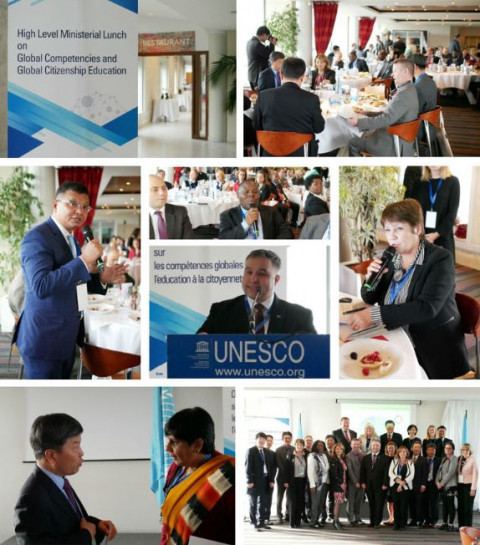 Leadership on GCED shown at High-Level Side Event during the 39th Session of the UNESCO General Conference 2018-12-28 On the occasion of the 39th Session of the UNESCO General Conference, a High-Level Ministerial Side Event took place with the title of ‘Dialogue on Global Competencies and Global Citizenship Education’ on 2 November at the UNESCO Headquarters. This side event was hosted by the Ministry of Education of the Republic of Korea and the Council of Ministers of Education of Canada, with the partenership of APCEIU and Global Affairs Canada. The dialogue attracted about 110 high-level participants, including 36 education ministers of Member States, as well as ambassadors from permanent delegations and senior officials from around the world. They gathered to discuss transformative and innovative education strategies to promote global competencies and global citizenship education. Ambassador Elaine Ayotte, Permanent Delegate of Canada to UNESCO welcomed the ministers and high-level officials to the dialogue by emphasizing the commitment of Canada and Korea to education and the realization of Education 2030 by saying “Canada and Korea, although different, have many common positions in the field of education. I believe that the reason why our two countries are here today is because Education 2030 agenda is a cornerstone for both our countries, which reaffirms the importance of providing opportunities to achieve education for the better.” Also, Ambassador Lee Byeong Hyun, Permanent Delegate of the Republic of Korea to UNESCO highlighted the role and need of GCED in a rapidly changing world and urged the efforts of stakeholders by saying “We need to mobilize resources and make the best use of those resources to transform learning environments. This requires collective endeavors of all stakeholders involved in the process, including teachers, communities and policy makers to promote global citizenship education beyond classrooms.” Followed by opening remarks, Mr Qian Tang, Assistant Director-General for Education of UNESCO highlighted the important role of the Republic of Korea and Canada in promoting GCED and contributing to the realization of SDG 4.7. As well, he thanked APCEIU for its invaluable contribution to GCED. Showcasing the two countries’ work on global competencies and global citizenship education, education ministers from Canada opened the floor to share best practices. Honorable Dale Kirby, Minister of Education and Early Childhood Development of Newfoundland and Labrador, and the Honorable Sebastien Proulx, Minister of Education, Recreation, and Sports of Quebec introduced 6 components of Canada’s Global Competencies (►Critical thinking and problem solving, ►Innovation, creativity and entrepreneurship ►Learning to learn/self-awareness and self-direction ►Collaboration ►Communication ►Global citizenship and sustainability) and shared education reforms in Canada that aim to put global competencies and foster global citizenship at the forefront of education. On behalf of the Honorable Deputy Prime Minister and Minister of Education of the Republic of Korea, Kim Sang-Kon, Mr Yeonghan Choi, Director General of International Cooperation Bureau of the Ministry of Education of the Republic of Korea, talked about lessons learned and challenges in implementing Sustainable Development Goal 4 and Global Citizenship Education. He shared that despite rapid economic development of the country, there are still limitations in the implementation of GCED in the Republic of Korea, but strongly pointed out that this is the future of education for the country. “At this point where the country has flourished, the only way towards further development is to enhance the capacities of the future generations to be sensitive with global challenges and to creatively find solutions.”, mentioned Mr Choi. He also shared the partnership effort with APCEIU in promoting GCED in transforming education in the Republic of Korea towards fostering global citizenship. He introduced initiatives such as the GCED Lead Teachers and International Teacher Exchange Programme, and other programmes that promote international cooperation for education in the Asia-Pacific and beyond. After the presentations from Canada and Korea, the participants were invited to a dialogue moderated by John McLaughlin, Deputy Minister, Department of Education and Early Childhood Development of New Brunswick. The discussion questions focused on challenges and successful initiatives or strategies in developing GCED in schools. Honorable Joof Batlara, Minister of Higher Education of Gambia asserted the political and religious challenges Gambia faces should be tackled with education, especially through GCED to sustain peace. Honorable Benghabrit Remaoun Nouria, Minister of National Education of Algeria shared the serious social issues in Algeria such as social and political turmoil and extreme violence, and highlighted that GCED represents the need to transform education in Algeria. Also, she applauded the work of UNESCO to provide tools and materials on GCED, such as the 『GCED Topics and Learning Objectives』, supported by APCEIU in 2014. The high-level participants had an opportunity to share their experiences and expertise on policy frameworks and implementation of GCED through this dialogue. Honorable Mr Hang Chuon Naron, Minister of Education, Youth and Sport of Cambodia shared a current initiative in Cambodia, called “New Generation Schools” which provided resources, equipped teachers and updated methodology that allow students to work in a team and promote collaborative learning. He further mentioned that Cambodia is cooperating with APCEIU to integrate GCED in their national curriculum, which will help students to face and tackle global challenges. Also, Honorable Mr John Chrysestom Muyingo, Minister of State for Higher Education of Uganda mentioned Uganda took the initiative of integrating GCED in the national curriculum in Uganda, a collaborative initiative with APCEIU. Even though the curriculum was not yet wholly changed, it gave an opportunity for schools to complement with new materials for learners and teachers, and to educate trainers. The High-Level Ministerial Side Event contributed to the continued discussion on global competencies and global citizenship education, an integral part of the discussions and debate during the 39th Session of the UNESCO General Conference. Being part of the strategic objectives of UNESCO in the next biennium (2018-2019), the high-level side event was an important opportunity to enhance partnership amongst different stakeholders, particularly with ministries of education, towards realizing SDG 4.7. URL:Leadership on GCED shown at High-Level Side Event during the 39th Session of the UNESCO General Conference > APCEIU News - APCEIU (unescoapceiu.org)
 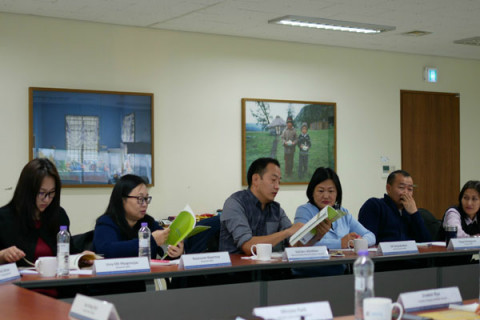 Enhancement Workshop on GCED Curriculum Development and Integration for Mongolian Project Coordinators: A Synergy between Mongolia’s Passion and Korea’s Expertise 2018-12-28 An enhancement workshop for the Mongolian GCED curriculum developers was held by APCEIU on 15 to 18 November. Seven participants, including researchers at the Mongolian Institute for Educational Research (MIER), a professor at the Mongolian National University of Education, and a teacher at a GCED model school, attended the workshop as representatives of the GCED curriculum development project team in Mongolia. For the workshop, Seoul Ancheon Elementary School and the Korea Institute for Curriculum and Evaluation (KICE) provided special cooperation. Mongolia has been developing and disseminating GCED curriculum in collaboration with APCEIU since last year, and its major outcome, a teacher’s guide on GCED will be published next year. In support of the project, the purpose of the workshop was to provide an opportunity for the Mongolian project team to collect resources and feedback from GCED experts and schools in Korea for the development of the Mongolian teacher’s guide on GCED. In his welcoming remarks, Utak Chung, Director of APCEIU, expressed thanks to the Mongolian government’s wholehearted support and the project team’s devotion in the GCED curriculum development. He wished for the workshop to provide upmost valuable supplementation to the development of the Mongolian teacher’s guide on GCED, and to serve as an opportunity to deepen the solidarity between the two countries under GCED. Throughout the 4-day workshop, the participants deepened their understanding on GCED through hearing the experience on the development of the GCED curriculum guide in Korea, receiving lectures on transformative pedagogies for GCED, visiting a GCED research school, and engaging in consultation with Korean GCED Lead teachers and curriculum developers from KICE. With the invitation by the Seoul Ancheon Elementary School to the report meeting on the GCED research school activities, workshop participants gained on-site experience by closely observing GCED classes in play and exchanging dialogue with teachers and students at the school. Sid Sanjaabadam, Research Director of MIER, proclaimed as the spokesperson to use the acquired experiences and resources to enhance the Mongolian teacher’s guide on GCED. Also, she hoped for the outcomes of the Mongolian team’s endeavor to reciprocate as valuable resources to Korea, creating a cycle of mutual support and cooperation between the two countries. URL:Enhancement Workshop on GCED Curriculum Development and Integration for Mongolian Project Coordinators: A Synergy between Mongolia’s Passion and Korea’s Expertise > APCEIU News - APCEIU (unescoapceiu.org)
 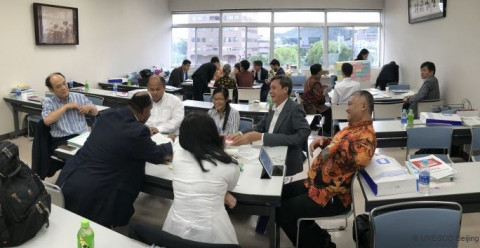 加强社区参与,促进可持续发展教育 2018-12-27 On 10-14 September 2018, the Regional Workshop on Enhancing Community Engagement for Education for Sustainable Development (ESD) towards achieving Sustainable Development Goals (SDGs) was held in Okayama, Japan. More than 40 participants from 16 Asian countries shared their experience in promoting ESD and SDGs, reviewed the Community Learning Centres (CLCs) guide and teacher education resources, and shared on the follow up country action plans. The 5-day workshop was organized by UNESCO Beijing Cluster Office, New Delhi Office and UNESCO Regional Bureau for Education, in partnership with Okayama University, Okayama City, Okayama ESD Promotion Conference and Asia-Pacific Culture Center for UNESCO (ACCU), with support from Japanese National Commission for UNESCO and ESD Resource Center of Japan. Senior officials from the Ministries of Education and national institutions from 16 countries have gained firsthand exposure to Okayama City’s experiences built on strong political commitment, solid partnerships, and effectively localized and engaged education institutions and local communities that promoted SDGs under existing mechanism and platforms in Education for Sustainable Development. Okayama City has had successfully developed a unique model to promote CLCs and localized and institutionalized SDGs through ESD platform. In 2016, the Okayama City’s ESD project was awarded the UNESCO-Japan Prize on ESD, in recognition of successfully institutionalizing ESD at local level. The project was recognized for its ‘whole city’ approach to ESD involving schools, the government, corporations, NGOs and other civil society associations. In Okayama City, ESD begins in elementary schools and extended to all levels of education, where pupils have many chances to visit local farms, meet with elders who have specialized knowledge of the local area, take part in rice planting, work with non-profit organizations and more. Okayama University, as a leader of the Okayama ESD Project, takes a UNESCO Chair in the promotion of ESD. It makes great effort in the experience dialogue and knowledge sharing at national and international levels. This regional workshop organized jointly by UNESCO and Okayama University, is a showcase of the commitment of UNESCO and its Member States to the enhancement of quality education for sustainable development within the framework of the UNESCO Global Action Programme (GAP) on ESD and SDG4-Education 2030 Agenda. UNESCO promotes the access to ESD at all levels and in all social contexts, as a key contribution to the realization of SDGs at national levels. Target 4.7 of SDG 4 on education specially addresses ESD and related approaches. The participants in the workshop will bring back what they have observed and learnt in Okayama to their respective countries and communities, to support their people developing knowledge, skills, values and behaviors needed for sustainable development. Read more:UNESCO ESD Thematic pageGlobal Action Plan on Education for Sustainable DevelopmentOkayama ESD Promotion Commission URL:https://en.unesco.org/news/enhancing-community-engagement-education-sustainable-development
 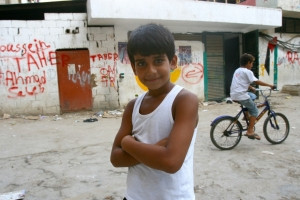 Spotlight on GCED: APCEIU and IBE show why it is more important now than ever 2018-12-27 The Asia-Pacific Centre of Education for International Understanding (UNESCO-APCEIU) and IBE-UNESCO held a Global Citizenship Education (GCED) workshop with eight education experts from Mongolia, Uganda, Colombia, and Cambodia on 8-10 November. Jointly led by Mr. Kim, head of Office of Research and Development, UNESCO-APCEIU and Mr. Opertti, coordinator of the Innovation and Leadership in Curriculum Learning and Assessment program, IBE-UNESCO, it took place at IBE-UNESCO’s headquarters in Geneva. Two international experts from Chile and the United States (US) also provided global input and expertise. Watch our global experts.Global citizenship is a hot topic. Indeed, recent research shows many countries see themselves as global citizens more than citizens of their own countries*. “Given the constant challenges all citizens face in today’s world, it is more important now than ever that we address key issues including human rights, peace, gender equality and sustainable development through education. We are delighted that APCEIU is leading the way and has partnered with us to ensure that global citizenship becomes embedded in curricula globally,” says Mr. Opertti, who leads the GCED work at IBE-UNESCO. The four countries in attendance, covering three continents, have laid the foundations for global citizenship education in their respective regions. At the workshop, the in-country experts presented the results of the analysis of the implemented curriculum, the challenges, issues, and opportunities to strengthen global citizenship education. The objective is to develop roadmaps to guide implementation in the four countries, as well as global guidance. The two international experts Sergio Riquelme Munoz, a specialist in comparative education from Pontificia Universidad Católica de Chile and Felisa Tibbits, founder of Human Rights Education Associates (HREA), and lecturer in comparative education at Columbia University, US, provided broader global insights.This GCED work underlines IBE-UNESCO’s mandate to strengthen the capacities of member states to design, develop, and implement curricula that ensure the equity, quality, development-relevance, and resource-efficiency of education and learning systems. GlobeScan conducted a poll between December 2015 and April 2016 for the BBC World Service among more than 20,000 people worldwide. 18 countries where this question was asked in 2016, the poll suggests more than half (51%) see themselves more as global citizens than citizens of their country, against 43 percent who identify nationally. Related links:http://www.unescoapceiu.org/en/index.phphttp://www.globaleducationmagazine.com/global-citizenship-education/http://blogs.edweek.org/edweek/global_learning/2016/10/building_empathy_in_children_lessons_from_early_childhood_education.htmlhttps://www.washingtonpost.com/news/worldviews/wp/2016/10/05/theresa-may-criticized-the-term-citizen-of-the-world-but-half-the-world-identifies-that-way/
 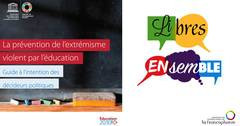 Education to prevent violent extremism in West Africa and the Sahel 2018-12-27 UNESCO (Dakar, Headquarters and IICBA), the UNESCO Asia-Pacific Centre for International Understanding (APCEIU) and the Organisation Internationale de la Francophonie (OIF), represented by its Institut de la Francophonie pour l’éducation et la formation (IFEF), organized a capacity-building workshop on prevention of violent extremism through education (PVE-E) in West Africa and the Sahel. This event took place in Dakar, Senegal, from 9 to 11 May 2017. In today’s globalized and interconnected world, the growing threats and acts of violent extremism in West Africa and the Sahel create climates of fear and insecurity, which are adversely affecting peace and development efforts. Providing young people with knowledge, skills and values for them to nurture respect for all, building a sense of belonging to a common humanity and helping them to become responsible and active citizens is critical for a more just and sustainable world. UNESCO, APCEIU and IFEF jointly organized in Dakar, from 9 to 11 May 2017, a workshop aiming at strengthening capacities of education policy makers (Parliamentarians, Permanent Secretaries and Chiefs of Cabinet of Ministries of Education, senior officials in charge of teacher education or curricula) and senior teacher trainers to design and implement relevant and effective policies and practices that contribute to prevention of violent extremism (PVE) and eventually to sustainable peace in West Africa and the Sahel. About forty participants from Burkina Faso, Côte d’Ivoire, the Gambia, Guinea-Bissau, Liberia, Mali, Mauritania, Niger, Senegal and Sierra Leone attended this workshop as well as education, PVE-E experts. First, presentations on international and regional normative instruments as well as on security and peace situation in the West African region and the Sahel provided an overview of the context. Then, in addition to the Clearinghouse on Global Citizenship Education (GCED) hosted by APCEIU, two tools on PVE-E developed by UNESCO were introduced: (1) a Guide on PVE for education policy makers, to support national efforts to integrate GCED into their education systems, and (2) a Teachers’ Guide on managing classroom discussions in relation to the PVE. OIF also presented the #LibresEnsemble (FreeTogether) Initiative launched to give a voice to young people to express their views on citizenship, freedom, diversity, living together, etc. through social media and education, as well as cultural, economic and artistic activities. Building on these tools and examples of PEV-E approaches and practices in formal, non-formal and informal education settings, country delegations drafted a roadmap for integration of PVE into education policies and practices, considering the context, the needs and capacities of respective countries. At the end of the workshop, participants expressed their commitment to reinforce advocacy amongst high-level authorities in their country, to suggest law and legal frameworks on PVE-E, to integrate PVE into education sector plans, curricula, education personnel training (formal, non-formal and informal) and to further involve communities. The organizers will ensure follow up on recommendations by developing a platform for exchange and experience sharing, establishing an exchange network, supporting countries in ownership and adaptation of the tools developed by UNESCO and OIF (pedagogical guide and #LibresEnsemble). "The most remarkable result is that everyone has had a prospective look. We hope that this way, national visions and strategies will gain ground and will really transform this reality. " said Mamadou Ndoye, former Minister of Education of Senegal and moderator of the workshop.
 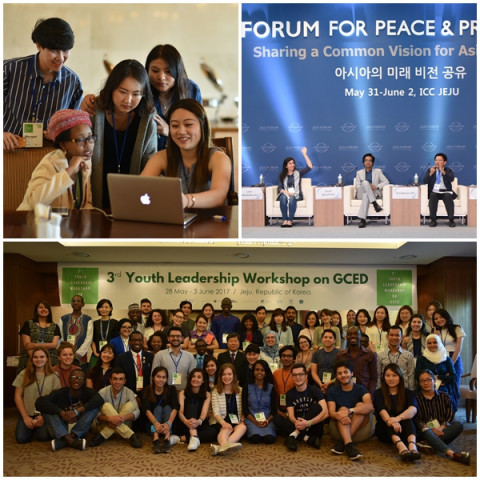 A Global Forum for Youth Leaders to Share Initiatives on GCED 2018-12-26 The 3rd Youth Leadership Workshop on GCED was held from 28 May to 3 June 2017 in Jeju, Republic of Korea. During this workshop, 50 youth leaders/activists from 42 countries participated in various forms of programmes, including plenary sessions on GCED, workshops for Youth Advocacy and study visits to understand GCED local initiative. Facilitated by APCEIU and core members of GCED Youth Network, this workshop was a forum for participants to actively share and engage with each other based on their local youth activities. Starting with the sessions on ‘Introduction of GCED’ by Director CHUNG Utak and Office of Education and Training, various workshops under the main theme of “Deepening the Understanding of GCED Advocacy” were held. For the session of “Youth Inspirational Speakers on GCED” by GCED Youth Network, youth leaders took part in various interactive exercises to understand GCED through sharing their own GCED activities and ultimately respect the difference of each other through GCED. Following this, participants had a session to ponder over the advocacy in GCED and its implementation strategies during the group activities. As a part of the session, “GCED Advocacy”, which was led by the GCED Youth Network introduced Youth Advocacy Toolkit and internalised advocacy strategies to efficiently implement GCED as a youth leader. In order to explore the local initiatives and develop a strategic planning for GCED, the youth activists participated in study visits to two different places in Jeju. Participants chose one of the options to experience and deepen their understandings of local initiatives on GCED based on the following themes: 1) “Understanding GCED Local Initiatives” - Global Inner Peace, A Civil Society Organization on Global Issues; 2) “Creative Ways for the Sustainable Future” - Jaejudo Joa, A Cultural Group for Sustainable Marine Ecosystem through Beachcombing. By exploring GCED in local settings, the youth leaders had a priceless opportunity to relate their own experience with the different areas of Jeju to find methods to implement GCED in their home countries and share their activities on social media. After the study visit, participants gathered at Ttarabi Oreum and participated in the Peace Campaign by writing peace messages and flying kites. On June 1, the participants in six groups presented their outcomes to promote GCED by different thematic issues followed by action plans on specific topics: 1) Human Rights - Sexual Human Trafficking, 2) Leadership Development - Social Entrepreneurship, 3) Peace & Conflict - Act for Tolerance, 4) Cross-Cultural Understanding - Dialogue for Peace 5) Environmental Sustainability - Design a Sustainable Future with Comunidade da Mare 6) Gender Equality - Sanitary Pad, Right for Every Girl. Each group gave a speech on the above topics, composed of the background, target group, plans/timeline, method, evaluation/monitoring and organisational approach. To find the solutions to each issue, youth leaders had discussions to share their ideas and come up with group outcomes which are to be implemented and reproduced after the workshop as follow-up activities. On the last day, the youth activists participated in a session on “The Role of Youth and Culture in Shaping a Peaceful and Sustainable Future” in Jeju Forum for Peace and Prosperity. In this session organised by APCEIU and Jeju Special Self-Governing Province, two of the Workshop participants shared their youth and culture activities representing youth leaders across the globe as panelists. Her Excellency Puan Maharani, Coordinating Minister for Human Development and Culture of Indonesia, His Excellency Hamat Bah, Minister for Tourism and Culture of The Gambia, Mr. Eduardo Mendez, Executive Director of Simon Bolivar Music Foundation in Venezuela and Mr. Daniel Lindemann, TV personality in Korea from Germany Culture also joined the session as panelists. At the closing ceremony, Director Gwangjo KIM from UNESCO Bangkok commented that “It is important to take actions as global leaders and bring the issues forward to implement GCED in your own community.” Director CHUNG concluded this workshop by saying that “It is surely expected that the outcome of workshop will be implemented in your programmes of diverse regions and APCEIU will continuously support youth activities through GCED Youth Network.” URL:A Global Forum for Youth Leaders to Share Initiatives on GCED > APCEIU News - APCEIU (unescoapceiu.org)