
News
Catch up on what’s happening in the world of global citizenship education.
311 results found
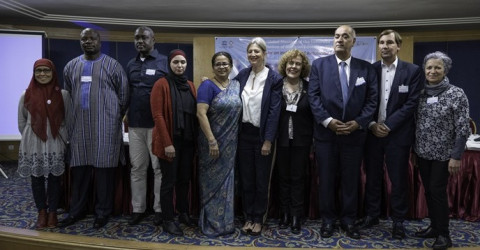 Civil society: Social and political action to prioritize education on political agendas 2019-12-17 Civil society advocates from all regions called upon governments to give systematic priority to ensuring that the most vulnerable and marginalized groups have access to quality education and to respect financing benchmarks, during the 9th global meeting of the Collective Consultation of NGOs (CCNGO) for Education 2030 that gathered in Hammamet, Tunisia, on 3 and 4 December 2019. “Clearly, we have an education crisis, fueled by lack of political will, low prioritization of education and inadequate financing as well as a rising trend in education commercialization, contributing to increasing inequality,” said the 100 plus participating organizations in their outcome statement. “To different degrees, education systems worldwide are not responding to the 2030 Agenda’s commitment to ‘leave no one behind.’” Wrapping up eight panel sessions on all aspects of inclusion and equity, members recommended specific political attention to the following areas: Strengthen evidence-based policy dialogue to raise awareness and influence government policy through dedicated mechanisms; Ensure that legal, policy and planning frameworks adopt an inclusive rights-based approach; Guarantee education and psycho-social support for refugee, displaced and migrant children and ensure that teachers are trained to be sensitive to their cultural identities; Support teachers with training to promote a culture of inclusion and to help students open their minds through critical pedagogies. Adequate salaries, decent working conditions and more autonomy are essential to support and value the profession; Allocate dedicated budgets to adult learning, the least supported part of the lifelong learning; Invest in disaggregated data to capture the full reality of exclusion and to hold governments accountable; Encourage citizen monitoring of public budgets on education to ensure resources are directed to support equity and inclusion. Supporting capacity building Members committed to build the capacity of civil society organizations to engage with other stakeholders and lead collective action to defend the right to education as a human right, public good and State responsibility. They expressed deep concern about the growth in education privatization and commercialization and affirmed that all private provision must be well regulated and aligned with human rights principles. They stressed the need to strengthen partnerships with other social sectors, parliamentarians and the media to promote inclusion and equity. They also highlighted the importance of building the capacity of civil society actors to collect and analyze evidence-based data on the most marginalized groups. Members acknowledged UNESCO’s leadership in coordinating the SDG4 agenda and the Education 2030 architecture and reaffirmed that the CCNGO is a key mechanism for increased information-sharing, capacity building and collaboration amongst CSOs in the pursuit of SDG4. The meeting was opened by UNESCO’s Assistant Director-General for Education Stefania Giannini, Tunisia’s Minister of Education Hatem Ben Salem and the President of the Global Campaign for Education, Refat Sabbah. During the Global Meeting, members elected their representatives to the Coordinating Group in the international and at large categories, while the regional focal points were agreed by consensus. Members of the Coordinating Group appointed for two years are: World Organisation for Early Childhood Education and Care (Organisation Mondiale pour l’Education Préscolaire - OMEP), represented by its President Mercedes Mayol Lassalle; Global Campaign for Education (GCE), represented by its President Refat Sabbah; Campaign for Popular Education (CAMPE), represented by its Executive Director Rasheda K. Choudhury; Ivorian Network for the Promotion of Education for All, represented by its Executive Secretariat Coordinator Kouame Paulin Junior; Africa Network Campaign on Education For All (ANCEFA), represented by its Chair Samuel Ndembele; Teacher creativity center (TCC) represented by its Inclusion Coordinator Rawan shwaikeh; European Association for the Education of Adults (DVV International), represented by its Director Christoph Jost; Asia South Pacific Association for Basic and Adult Education (ASPBAE), represented by its Secretary General Maria Lourdes Almazan Khan; Campaña Latinoamericana por el Derecho a la Educación (CLADE), represented by its Colombian Coalition member Blanca Cecília Gomez; Ex officio UNESCO NGO liaison Committee represented, by its President Marie-Claude Machon Honore. URL:https://en.unesco.org/news/civil-society-social-and-political-action-prioritize-education-political-agendas
 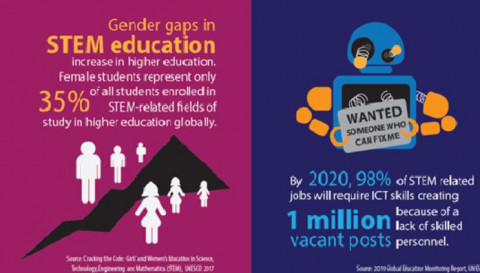 Promover la igualdad de género en las vías CTIM de la EFTP 2019-12-13 Technical and vocational education and training (TVET) has the potential to promote the productive participation of women in the labour market, equipping them with the necessary skills to undertake the jobs of the future. However, this potential remains largely unfulfilled in certain occupational sectors, particularly those requiring training in science, technology, engineering and mathematics (STEM). In the majority of developing countries, women are much less likely than men to enrol in TVET, with even lower enrolment numbers in STEM fields. Female participation in some of the key occupational TVET groups, remains lower than male.The UNESCO-UNEVOC International Centre is giving particular attention to this issue as it aligns with UNESCO’s Strategy for TVET (2016-2021) and its Priority Gender Equality Action Plan, as well as UNESCO-UNEVOC’s Medium-Term Strategy II. Consequently, on March 21st–22nd, UNESCO-UNEVOC hosted an experts’ workshop in Bonn, Germany on Gender equality in STEM-related fields in TVET. The workshop sought to better understand the root causes of gender disparities in STEM-related TVET through discussions with experts from ten UNEVOC Centres across the globe, namely Ghana, Chile, the Netherlands, Australia, Germany, Costa Rica, Philippines, Jamaica, Lebanon, and South Africa. Gender inequalities in access to STEM related fields in TVET can affect the access to and participation of women in specific occupational areas, while the low female representation in those STEM-related occupations in turn affects the choice of fields in TVET by girls and parents, as well as the learning environment. The workshop experts addressed the key factors that are contributing to inequality in STEM-related TVET, such as inadequate policy frameworks, societal attitudes, the nature of STEM in the classroom and workplace, and how they affect the mindset of girls and women to pursue education and training in STEM subjects. Through the sharing of insights and interactive sessions on the underlying causes of gender inequality in STEM, the experts were able to better understand what research is needed and how to address the current challenges related to gaps in indicators and data collection.The workshop served as the basis of an upcoming study to improve the understanding of issues related to gender equality in STEM in TVET and present global perspectives of the measures that have been taken to promote gender equality in the respective fields. UNESCO has previously conducted a study on STEM education and gender equality, but there exists a knowledge gap in this field in the TVET sector. The UNESCO-UNEVOC study is expected to contribute to strengthening an evidence-based approach to promotion of gender equality in STEM-related TVET. URL:https://unevoc.unesco.org/go.php?q=Gender_STEM_Workshop
  New UNESCO study highlights achievements and gaps in the area of climate change education 2019-12-10 As United Nations leaders and delegates from around the world meet in Madrid for COP25 – the UN two-week conference on climate change, UNESCO is releasing a new analysis of country submissions on climate change education, training and public awareness. Climate change is the defining challenge of our time and education plays a critical role in designing appropriate responses to it. Since its entry into force, the 1992 United Nations Framework Convention on Climate Change (UNFCCC) in Article 6 has recognized the importance of ‘education, training and public awareness’ in mitigating ‘dangerous human interference with the climate system’. The Paris Agreement, in its article 12, reaffirmed this recognition in 2015. Countries are expected to submit national reports to the UNFCCC on a regular basis on the actions they have already taken to address climate change and the commitments they plan for the future. Analyzing these submissions, UNESCO provides a timely status report on the implementation of climate change education around the world, highlighting achievements and remaining gaps. The research recalls that almost all countries included some reference to climate change education in their country submissions under the UNFCCC reporting processes. This demonstrates a certain level of commitment to climate change education, providing a good basis to further scale up educational responses to the world’s greatest challenge. According to the submissions analyzed, countries mostly reference climate change education in relation to public awareness, suggesting that it will be necessary for them to expand their activities and address more systematically the other elements of climate change education, especially formal education and training. Submissions also indicate that, at all levels of formal education, countries have heavily emphasized cognitive learning over social-emotional and behavioral learning, which are crucial tools to empower learners and make change happen. The data also show that countries are slow to address climate change education when preparing their Nationally Determined Contributions under the Paris Agreement. This indicates a need for more technical support for countries on climate change education in preparing these reports which play an important role in setting targets and committing to take action against climate change. Ultimately, UNESCO’s study stresses the need for further research, in order to get a more comprehensive picture of country implementation of climate change education under the UNFCCC process. Among other things, future research should examine the process countries go through in formulating and implementing their national adaptation plans, adaptation communications and long-term climate strategies. Download the study: Country progress on Climate Change Education, Training and Public Awareness Learn more about the study and Climate Change Education at COP25: Attend one of UNESCO’s events URL:https://en.unesco.org/news/new-unesco-study-highlights-achievements-and-gaps-area-climate-change-education
 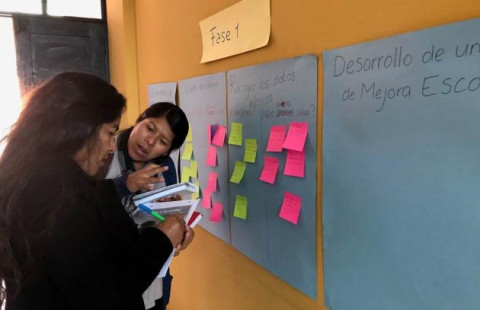 New book puts the spotlight on open school data in Latin America 2019-12-06 The latest IIEP book in our global exploration of open school data to combat corruption in education is now out, with an in-depth look at initiatives from across Latin America. Readers are presented with a regional snapshot of how ministries of education and other school actors are embracing information as a means for greater transparency and accountability. A survey of 15 countries in the region identified over 80 school report cards, of which some 70 percent are available online. The book by Alejandra Brito (available in Spanish), Información y transparencia: cuadros de indicadores de las escuelas en América Latina, then delves into seven of these initiatives in greater depth: Mejora tu Escuela (Mexico), Ficha Escolar (Guatemala), Sistema de Análisis de Indicadores Educativos y Alerta Temprana (Dominican Republic), Índice Sintético de Calidad Educativa (Colombia), Semáforo Escuela (Peru), EDU-Q Card (Peru), Reportes de escuela in Jujuy (Argentina). The book concludes with recommendations on how to maximize the power of open school data in Latin America. These include: Prioritise the data that are of greater interest to parents, i.e.: financial resources, school infrastructure and equipment, and academic standards; Involve communities in the data collection process; Present data in a format that is accessible, simple, and easy-to-understand; Share data at an appropriate time and when users can take action; Set clear consequences for complying or not complying with expected performance, and for corrupt behaviours; Make communities aware of education performance standards, their right to participate and give their opinion, as well as channels to raise complaints against corruption. IIEP’s research on open school data will soon culminate with a synthesis publication on key findings from Asia and the Pacific, sub-Saharan Africa, and Latin America. If you would like to receive further information, please fill out this form. URL:http://www.iiep.unesco.org/en/new-book-puts-spotlight-open-school-data-latin-america-9166
 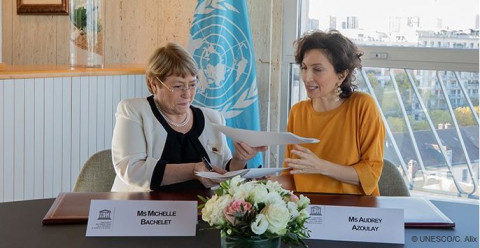 UNESCO and OHCHR strengthen cooperation to advance human rights 2019-12-04 A fast changing world requires quick, but meaningful responses to challenges that can tear at the fabric of our communities. In order to ensure that human rights are respected and protected, UNESCO Director General Audrey Azoulay and Michelle Bachelet, UN High Commissioner for Human Rights, today signed a new memorandum of understanding to promote joint action for advancing human rights. “At a time when human dignity, equality and justice are under attack, UNESCO and OHCHR reaffirm their resolve to work closer together towards a stronger implementation of human rights in response to new challenges worldwide,” said Ms. Azoulay following the signing. The agreement focuses on emerging trends and new fields of human rights today, especially human rights-based responses to new scientific and technological developments, notably on artificial intelligence. This comes at a time when UNESCO Member states are expected to launch the elaboration of a normative instrument on the ethics of artificial intelligence upon its conclusion of its General Conference on 27 November. UNESCO and OHCHR will also strengthen their work tackling racist propaganda and hate speech online and offline, linked to the UN Strategy and Plan of Action on Hate Speech (2019). Looking ahead to the anticipated development of new standard setting frameworks for AI at UNESCO, Ms. Bachelet sees opportunities emerging from this new agreement. “Taking these steps will guide technology for all the good it can produce,” she says, “but we can avoid the misuse in terms of hate speech, and also in terms of harassing journalists, human rights defenders or critics.” This new cooperation also identifies areas of convergence across the mandate of UNESCO. These include the advancement of the right to education, the right to take part in cultural life; the right to enjoy the benefits of scientific progress and its applications and the right to water and sanitation. It also includes the right to freedom of expression and access to information, in line with the UN Plan of Action on the Safety of Journalists and the Issue of Impunity spearheaded by UNESCO. URL:https://en.unesco.org/news/unesco-and-ohchr-strengthen-cooperation-advance-human-rights
  Lancement du Rapport 2019 sur les données de l’ODD 4 2019-11-20 New report aims to help countries produce and use the global and thematic indicators The need for accurate, current and comparable data on education has never been more urgent, with the prospects of reaching Sustainable Development Goal 4 – a quality education for all by 2030 – far from certain. According to the UNESCO Institute for Statistics (UIS), about 258 million children, adolescents and youth are out of school. The data confirm recent projections showing that, without a shift from ‟business as usual”, one in every six children aged 6 to 17 will still be out of school in 2030 and only six out of ten youth will complete secondary education. The data also highlight the urgent need to improve the quality of education on offer. According to UIS estimates, 55% of children and adolescents of primary and lower secondary school age are not achieving minimum proficiency levels in reading and 60% are not reaching these levels in mathematics. The 2019 edition of the SDG 4 Data Digest reinforces the need for the robust data that are crucial to reach the global education goal. It provides a panoramic view of the current development of the SDG 4 monitoring framework, including proven methodologies for data collection and reporting at the international, regional and national levels. The new report, entitled How to Produce and Use the Global and Thematic Education Indicators, was launched today in Paris during the UNESCO General Conference. The report is currently available in English with French and Spanish versions forthcoming. Support for countries Countries are under intense pressure to produce education data for a wide range of indicators: the 11 indicators used to monitor global progress towards SDG 4, plus the set of 32 thematic indicators to better support policymaking. In response, the Digest presents practical methodologies and strategies that draw on existing information to produce accurate statistics, while highlighting the steady progress on their development and use, thanks to the concerted efforts of governments and other partners worldwide. These efforts are supported by the UIS, which works to build consensus on data across countries through the Technical Cooperation Group (TGC) on the Indicators for SDG 4. The first section of the Digest explains how countries can produce and report the national data needed for the 11 global monitoring indicators. This sets the stage to present the methodologies used to produce the 32 thematic indicators. The Digest also presents a series of regional initiatives to monitor progress towards SDG 4. The section provides insight on how countries in different region are striving to make the greatest possible use of existing data while developing new indicators and frameworks to support critical areas for policymaking. Get the education data you need in the format you want! As the custodian agency for SDG 4 indicators, the UIS offers a range of data products to meet the needs of users. Key products include: UIS Global Education Database covers all levels of education for more than 200 countries and territories. SDG 4 Data Tables can be easily downloaded in different formats. SDG 4 Data Explorer displays data by country, region or year; by data source; and by sex, location and wealth. Users can explore measures of equity that are crucial for the achievement of SDG 4. SDG 4 Country Profiles present the latest results for countries in easy-to-understand charts and graphs. eAtlas for Education 2030 features interactive maps and charts of the global and thematic indicators. URL:http://uis.unesco.org/en/news/launch-2019-sdg-4-data-digest
 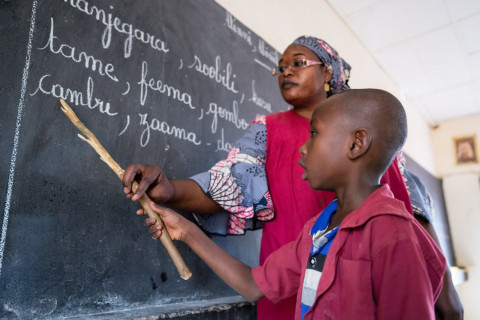 With the right data, we can still reach the world’s education goal 2019-11-18 The SDG 4 Data Digest 2019 explores the data methodologies needed to track progress and better direct policies and resources.It is not too late to reach the world’s education goal. At least, not yet. In 2015, United Nations Member States promised to reach Sustainable Development Goal 4 – a quality education for all – by 2030. We are now one-third of the way through the timeframe for its achievement, and it is still possible – just about – to meet the deadline. But without accurate, current and comparable data on education, and without a shift from ‘business as usual’ approaches to the provision and quality of education, the goal could soon be beyond our grasp. Counting children out of school and children not learning Today, around 258 million children are out of school, according to data from the UNESCO Institute for Statistics (UIS). If we continue on our current trajectory, one in every six children aged 6 to 17 will still be out of school in 2030 and only six out of ten youth will complete secondary education.Our data also show that being in school is not enough to guarantee a quality education. According to our estimates, 55% of children and adolescents of primary and lower secondary school age are not achieving minimum proficiency levels in reading and 60% are not reaching these levels in mathematics.These global facts and figures are compelling enough to trigger urgent action. But there is so much more that we do not know, because we are still missing data that could prove crucial for the achievement of SDG 4. As the custodian of SDG 4 data, UIS continues to push for the disaggregated, deep-dive data that show us precisely what is happening and when as children make their way through their schooling, what works and – importantly – where education systems need to change track, target their resources and accelerate their efforts to deliver a quality education for all. SDG 4 Data Digest: Tools help countries produce and use the indicators The 2019 edition of the SDG 4 Data Digest reinforces the need for the robust data that are crucial to reach the global targets for education. It provides a panoramic view of the current development of SDG 4 global monitoring alongside proven methodologies for data collection and reporting at the international, regional and national levels. The new report, entitled How to Produce and Use the Global and Thematic Education Indicators, was launched today in Paris at an event during the UNESCO General Conference.At the UIS, we are concerned that the collection, analysis and use of data are too often seen as ‘nice to have’, if and when resources allow. In reality, they help countries ensure that the money they spend on education has the best possible impact on individual and national well-being. A reluctance to prioritize data because of perceived resource constraints is a false economy that wastes both education investments and opportunities. To put it simply, education systems can only function effectively if their strategies, approaches and funding are built on a solid foundation of data. Data show progress and gaps The Digest aims to support countries as they strengthen this vital foundation, enabling them to produce the data required for international reporting, as well as for their own education priorities. We know that countries are under intense pressure to produce education data for a wide range of indicators: the 11 indicators used to monitor global progress towards SDG 4, plus the set of 32 thematic indicators to better support policy making. Together, these indicators should deliver a full picture of progress and potential setbacks. Yet many countries struggle to produce – let alone make good use of – the data that are required. That is why the Digest offers proven solutions, showcasing practical methodologies that draw on existing information to produce accurate statistics, with no need to ‘reinvent the wheel’. It outlines steady progress on their development and use, thanks to the concerted efforts of governments, donors and technical partners worldwide. It also highlights UIS support for these efforts, and its work to build consensus on the indicators across countries through the Technical Cooperation Group on the Indicators for SDG 4 (TCG). The first section of the Digest explains how countries can produce the national data needed to produce the 11 global monitoring indicators. This sets the stage to present the methodologies used to produce the 32 thematic indicators. The Digest goes on to outline the most effective regional initiatives to monitor progress towards SDG 4. It provides insight on how different regions are striving to make the best possible use of existing data while developing frameworks to support policymaking in areas they see as critical. Bringing together countries and donors One major barrier to the full implementation of SDG 4 monitoring has been the lack of financial support to build strong statistical capacity in low-income countries (read more about our campaign to #FundData). This is why the UIS is working to bring together countries and donors through the Global Coalition for Education Data, which will align financial and technical resources available at the country and international levels while coordinating public-private partnerships at reasonable costs. The aim is to reduce the duplication of efforts, strengthen statistical capacity building, ensure efficient investment of existing resources and improve the functioning and use of country-owned education information systems. The investment case for education has been made repeatedly: its impact on poverty, on equity, on health and nutrition is well known. The challenge now is to ensure that no child is being left behind – and that means ensuring that every child counts and is counted. Get the education data you need in the format you want! As the custodian agency for SDG 4 indicators, the UIS offers a range of data products to meet the needs of users. Key products include: UIS Global Education Database covers all levels of education for more than 200 countries and territories. SDG 4 Data Tables can be easily downloaded in different formats. SDG 4 Country Profiles present the latest results for countries in easy-to-understand charts and graphs. eAtlas for Education 2030 features interactive maps and charts of the global and thematic indicators. URL:https://www.globalpartnership.org/blog/right-data-we-can-still-reach-worlds-education-goal
  Global meeting of education ministers and university leaders paves way for greater inclusion and mobility in higher education 2019-11-14 For the first time in UNESCO’s history, ministers of education and university leaders came together to envisage international measures to improve inclusion and mobility in higher education. “In the field of higher education, multilateralism and UNESCO in particular, have a key role to play,” said UNESCO Director-General Audrey Azoulay as she opened the meeting. Over 100 ministers and 100 university representatives that are part of the UNESCO Chairs programme convened at UNESCO on 13 November during the Organization’s General Conference in Paris. They examined ways governments and higher education institutions can work together to meet the pressing challenge of creating a more inclusive global campus that can handle rapidly growing enrolment in higher education and increasing student mobility. They also envisaged ways for the world’s higher education sector to counter increasing inequalities and include marginalized groups. “We need to take actions to enhance international cooperation in higher education, reinforce knowledge sharing, academic exchanges and mobility, and create a fair, transparent and inclusive global campus that offers quality, inclusive and lifelong learning opportunities for all,” argued Stefania Giannini, UNESCO Assistant Director-General for Education. “One of the challenges we have in education is the democratization of the credentialing process,” said Tina Beaudry-Mellor, Minister of Advanced Education Saskatchewan, Council of Ministers of Education, Canada. A rapidly changing landscape The global higher education landscape is rapidly changing with increasing internationalization, diversification of providers, and new modes of learning. Some 220 million students are currently enrolled in higher education worldwide, twice as many as ten years ago and further growth is expected, especially in Africa. However, increased enrolment is not a reliable indicator of progress in achieving the internationally agreed 2030 Agenda’s goal of ensuring that educational systems “leave no one behind” and providing equitable, affordable quality higher education. Institutions face the challenge of providing quality education to an increasingly diverse student population, including non-traditional learners and disadvantaged groups such as migrants, refugees and indigenous peoples.“The Qualifications Passport was a door opener for me. I fled the war in Syria to Greece, and I then received my qualification recognition and was able to pursue my studies in Norway,” said Anwar Horani, a Syrian refugee in Norway. Increased mobility among students The past decades’ unprecedented increase of enrolment in higher education is matched by growing student mobility leading to the gradual emergence a global campus of learners, faculty and researchers. In the decade leading up to 2011, the number of learners choosing to study abroad more than doubled to 4.3 million students – a figure that is conservatively estimated to double again by 2025. “Student mobility should become the norm, and not an exception. It is our duty to make it easier for qualifications to be recognized across borders,” said Iselin Nybø, Minister for Research and Higher Education of Norway. Yet many students still face obstacles in having their qualifications recognized when returning to their home country or moving to a new country. Lack of recognition of qualifications constitutes a major obstacle in students’ pursuit of further studies or employment. Today more than half of the world’s foreign students are not merely studying away from their home country, but in a different continent or region. “In too many institutions of higher education, structural barriers make a university education available only to those born into the most privileged groups of society,” said Fernando Reimers, Professor of International Education at Harvard University (USA), and Member of UNESCO’s Futures of Education Report Commission. “Addressing the challenge of inclusion will require in many places expanding access to higher education.” To meet these new challenges, UNESCO is preparing the adoption of a Global Convention on the Recognition of Qualifications concerning Higher Education at the General Conference underway until 27 November. The new Convention aims to facilitate student mobility and improve access to higher education across regions and continents. “The Global Convention on the Recognition of Higher Education Qualifications will be clear evidence that multilateralism, despite its critics, is the most appropriate system for the interconnected world in which we live,” said Ms Azoulay. UNESCO has also launched a Qualifications Passport to facilitate mobility for refugees with qualifications. The qualifications passport is currently being piloted in Zambia. “This passport can play a key role in supporting the integration of refugees by recognizing the studies they completed in their countries of origin,” said Ms Azoulay. Zambia’s Minister of Higher Education for his part said, “we are proud to pilot the Qualifications Passport for Refugees. We are working with UNESCO to make sure that refugee learners are given a chance to pursue their education and careers.” By convening policy-makers and universities to this unprecedented meeting, UNESCO aims to foster political will, international cooperation and capacities in higher education to achieve the 2030 Sustainable Development Agenda and gain understanding for the Global Convention’s added value in facilitating this process. Ministerial meeting on inclusion and mobility in higher education UNESCO and Higher Education Global Convention on the Recognition of Qualifications concerning Higher Education Qualifications Passport URL:https://en.unesco.org/news/global-meeting-education-ministers-and-university-leaders-paves-way-greater-inclusion-and
 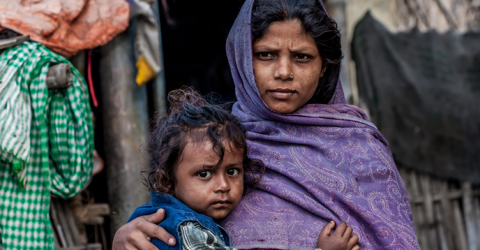 What you need to know about the Convention against Discrimination in Education 2019-11-02 Since its adoption by UNESCO’s General Conference in 1960, the Convention against Discrimination in Education has been at the forefront of the Organization’s standard-setting instruments in the field of education. It has so far been ratified by 104 Member States and UNESCO is now urging the remaining countries to do so with its #RightToEducation campaign. What is the Convention against Discrimination in Education? The Convention reaffirms that education is not a luxury, but a fundamental human right. It highlights States' obligations to ensure free and compulsory education, bans any form of discrimination and promotes equality of educational opportunity. The treaty comprehensively covers the right to education and is the only one entirely dedicated to it. The Convention is recognized as a cornerstone of the Education 2030 Agenda and a powerful tool to advance inclusive and equitable quality education for all. What does the Convention guarantee? States that have ratified the Convention are under the obligation to implement the right to education as it is elaborated in the text including, among other provisions, the obligation of the state to provide free and compulsory education.The main provisions of the treaty include: Primary education free and compulsory Secondary education in its different forms, generally available and accessible to all Higher education equally accessible to all on the basis of individual capacity Equivalent standards of education in all public educational institutions of the same level and conditions relation to quality Opportunities for continuing education Training opportunities for the teaching profession without discrimination. The Convention also ensures: Education shall be directed to the full development of the human personality and to the strengthening of respect for human rights and fundamental freedoms The liberty of parents to choose for their children’s education in conformity with their moral and religious beliefs The right of members of national minorities to carry on their own educational activities. Why ratify the Convention now?As a standard-setting Organization, UNESCO encourages Members States to ratify normative instruments in order to achieve universal adherence to its norms and standards. This Convention is the first and only legally binding international treaty exclusively dedicated to the right to education and is considered to be a foundation of the Education 2030 Agenda. Ratifying the Convention: Shows the adherence of the country to rights set forth by the Convention, including the fundamental principles of non-discrimination, equality of treatment and of educational opportunities Ensures the respect of all rights laid down in the Convention Joins the community of States that are already party to the Convention and adopt the same normative framework Participates in the strengthening of international norms and standards in education Gives higher visibility to the Convention, and raises awareness The Convention does not admit any reservation, meaning that ratifying States cannot decide to exclude certain aspects or provisions from the legal effect of the Convention; therefore, the Convention is fully applicable to all its State Parties. Read the full text of the Convention. Join UNESCO’s #RightToEducation campaign. URL:https://en.unesco.org/news/what-you-need-know-about-convention-against-discrimination-education
 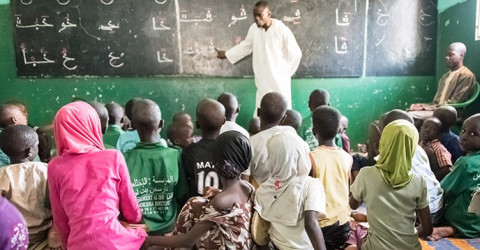 L’UNESCO donne l’alerte : si des mesures urgentes ne sont pas prises, 12 millions d’enfants n’iront jamais à l’école 2019-10-25 New data published today by the UNESCO Institute for Statistics (UIS) on the world’s out-of-school children reveals little or no progress over more than a decade. Roughly 258 million children, adolescents and youth were out of school in 2018; around one sixth of the global population of school-age children (6 to 17 years old). Even more worrying is the fact that unless urgent measures are taken, 12 million primary school age children will never set foot in a school. In view of such figures, it will be difficult to ensure inclusive quality education for all, one of the Sustainable Development Goals (SDGs) set by the international community for 2030. The new data on out-of-school children confirms recent UNESCO projections showing that, at the present rate, one in every six children will still be out of primary and secondary school in 2030, and that only six out of ten young people will complete secondary education. The data also highlights the gap between the world’s richest and poorest countries. According to UIS data, 19% of primary-age children (roughly 6 to 11 years old) are not in school in low-income countries, compared to just 2% in high-income countries. The gap grows wider still for older children and youth. About 61% of all youth between the ages of 15 and 17 are out of school in low-income countries, compared to 8% in high-income countries. “Girls continue to face the greatest barriers,” says Audrey Azoulay, Director-General of UNESCO. “According to our projections, 9 million girls of primary school age will never start school or set foot in a classroom, compared to about 3 million boys. Four of those 9 million girls, live in sub-Saharan Africa, where the situation gives cause for even grater concern. We must therefore continue to centre our actions on girls’ and women’s education as an utmost priority.” “We have just 11 years to make good on the promise that every child will be in school and learning. Yet the new data shows us an unchanging and persistent picture of poor access and quality year after year,” says UIS Director Silvia Montoya. “These challenges are not inevitable. They can be overcome by a combination of intensive action and greater funding. We need real commitment from every single government, backed by resources, to get the job done.” While the number of out-of-school children appears to have dropped from 262 million in 2017, the fall is largely due to a methodological change in the way the indicators are calculated. As shown in a new paper, whereas primary school age children enrolled in pre-school, were previously included in the total, they are no longer counted as being out of school*. However, this does not change the overall rates of children out of school. The new data is released by the UIS – the custodian of SDG 4 data – a week before the United Nations General Assembly meets to examine progress towards the Sustainable Development Goals and to discuss the funding needed to achieve them. The data demonstrates the pressing need for more action to achieve quality education for all. This goal can still be reached, provided we renew our efforts while collecting more complete and reliable data to monitor progress on education access, completion and quality. * Until recently, all children of primary age (roughly 6 to 11 years) who were not enrolled in primary or secondary school were counted as being out of school. This included primary-age children who were still enrolled in pre-primary education. By removing this relatively small group of children (most of them in high-income countries), the total number of out-of-school children of primary age has been reduced by about 4.6 million. URL:https://en.unesco.org/news/unesco-warns-without-urgent-action-12-million-children-will-never-spend-day-school-0