
News
Catch up on what’s happening in the world of global citizenship education.
311 results found
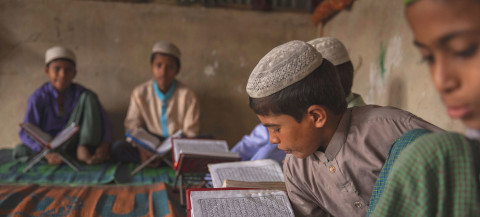 Two years after exodus, Myanmar’s ‘desperate’ Rohingya youth need education, skills: UNICEF 2019-10-22 The daily struggle to survive for Myanmar’s Rohingya people in one of the world’s largest refugee settlements, has caused “overwhelming” despair and jeopardized the hopes of an entire generation, the head of the UN Children’s Fund (UNICEF), Henrietta Fore, said on Friday. In a report marking two years since the arrival of around 745,000 Rohingya civilians in Bangladesh - after fleeing State-led persecution and violence in Myanmar - Executive Director Fore appealed for urgent investment in education and skills training. ‘Mere survival is not enough’ “For the Rohingya children and youth now in Bangladesh, mere survival is not enough,” she said. “It is absolutely critical that they are provided with the quality learning and skills development that they need to guarantee their long-term future.” Without adequate learning opportunities, youngsters can fall prey to drug dealers and traffickers who offer to smuggle “desperate” ethnic Rohingya out of Bangladesh, the UN report warned. Education ‘can help avoid risks’ Women and girls face harassment and abuse especially at night, UNICEF noted, while adding that one of the agency’s objectives through education is to give teenagers the skills they need to deal avoid “many risks”, including early marriage for girls. In addition to Bangladesh’s Kutupalong camp, which is home to some 630,000 people, hundreds of thousands more, have found shelter in another dozen or so camps in the Cox’s Bazar region close to the Myanmar border. Living conditions are often described as perilous by UN humanitarians, including UNICEF, which have issued frequent alerts about the devastating effects of monsoon rains on flimsy bamboo and tarpaulin shelters. Between 21 April and 18 July this year, refugee camp authorities recorded 42 injuries and 10 fatalities, including six children, because of monsoon weather, according to UNICEF. Amid huge needs - and with conditions still unsuitable for the return of ethnic Rohingya to Myanmar, according to the UN Refugee Agency (UNHCR) - basic public services have been provided in Cox’s Bazar, including health care, nutrition, water, sanitation and hygiene, under the leadership of Bangladesh. “But as the refugee crisis drags on, children and young people are clamouring for more than survival; they want quality education that can provide a path to a more hopeful future,” the UNICEF report insists. According to the agency, around 280,000 children aged four to 14, now receive educational support. Of this number, 192,000 of them are in 2,167 learning centres, but more than 25,000 children “are not attending any learning programmes”, the agency noted. Most 15 to 18-year-olds miss out on school More worrying still, nearly all 15 to 18-year-olds are “not attending any type of educational facility”, UNICEF said, before highlighting the case of one Kutupalong resident, Abdullah, 18. “I studied six subjects back in Myanmar,” Abdullah says. “But when I arrived here, there was no way I could continue. If we do not get education in the camps, I think our situation is going to be dire.” In an appeal to the Governments of Bangladesh and Myanmar, UNICEF and other agencies are calling for the use of national educational resources – curricula, training manuals and assessment methods – to help provide more structured learning for Rohingya children. “Providing learning and training materials is a huge task and can only be realized with the full backing of a range of partners,” UNICEF chief Ms. Fore said. “But the hopes of a generation of children and adolescents are at stake. We cannot afford to fail them.” URL:https://news.un.org/en/story/2019/08/1044321
 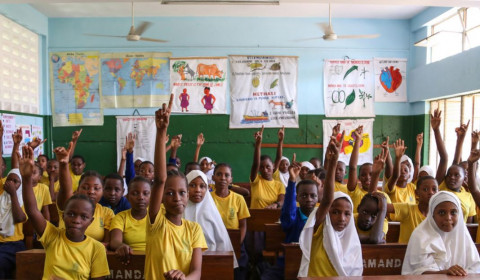 ‘We are facing a learning crisis’, UN chief warns on International Youth Day 2019-10-22 Transforming Education is the theme for this year, which comes at a time when the world is facing a “learning crisis”, says Mr Guterres, and students need not only to learn, “but to learn how to learn”. The UN’s Department of Economic and Social Affairs (DESA), which is co-organising the Day alongside the UN Education, Science and Culture Organization (UNESCO), says that statistics demonstrate that significant transformations are still required to make education systems more inclusive and accessible: only 10% of people have completed upper secondary education in low income countries; 40 % of the global population is not taught in a language they speak or fully understand; and over 75 % of secondary school age refugees are out of school. Ensuring access to inclusive and equitable education, and promoting lifelong learning, is one of the goals of the UN’s 2030 Agenda for Sustainable Development, and International Youth Day 2019, will present examples that show how education is changing to meet modern challenges. The role of young people as champions of inclusive and accessible education is also being highlighted, as youth-led organizations are helping to transform education, through lobbying, advocacy, and partnerships with educational institutions. “Education today should combine knowledge, life skills and critical thinking”, said Mr. Guterres. It should include information on sustainability and climate change. And it should advance gender equality, human rights and a culture of peace”. All these elements are included in Youth 2030, the UN’s strategy to scale up global, regional and national actions to meet young people’s needs, realize their rights and tap their possibilities as agents of change. URL:https://news.un.org/en/story/2019/08/1044091
  Abuse of junior students an incubator of hatred 2019-10-22 This picture posted on the Anti-Sotus Facebook page shows an initiation activity held early this month at the Mechanical and Aerospace Engineering Department at King Mongkut’s University of Technology North Bangkok. The photos are shocking. The first shows young men in their underwear lying on the beach; in the second, one man is apparently licking ketchup from another’s chest. A third shows men lining up in two rows seemingly simulating sex. The images were posted on the Anti-Sotus Facebook page, which stands against the creed of Seniority, Order, Tradition, Unity and Spirit that is supposedly meant to encourage student bonding in universities. According to the page, the leaked photos came from an initiation activity held earlier this month for first-year students from the Mechanical and Aerospace Engineering Department at King Mongkut’s University of Technology North Bangkok. The issue has gone viral on social media, been reported on by news agencies and sparked public outrage. The Anti-Sotus page itself issued a statement with a set of demands, including an investigation into the matter. The department was quick to respond with its own statement, saying it was not aware of the “privately held” activity and an investigation was under way. This is not the first time such initiation activities, called rub nong in Thai, roughly translating to “welcome the youngsters”, have caused widespread public anger. The problem has long been present in Thai society, with social media allowing anecdotes and photographic evidence to be easily shared and amplifying the public’s awareness. The online world also serves as a forum for public discussion and outrage. Just a few internet searches generate a long list of initiation rituals involving unhygienic activities, humiliation, harassment and physical abuse in many forms of dehumanising bullying. Some include students being forced to pass sweets mouth-to-mouth, kiss the ground and eat a mixture of food intended to look like faeces. Other reports detail verbal abuse, physical violence and sexual harassment. Male students are at risk of more violent activities and, alarmingly, some of the rituals can also be found in high schools. Younger students have no choice. Failure or refusal to participate can lead to negative consequences such as being ignored or ostracised by peers and upper-level students. While education institutions generally have policies against violent and degrading rituals, such practices continue in disguise or in secret. When a whistle-blower leaks evidence of abuse to the public, a witch-hunt often ensues. Ironically, but unsurprisingly, the cycle is perpetuated as some first-year students are willing or pressured to continue the legacy of power relations established by terror when they become sophomores. Initiation activities supposedly help students bond with each other, but that unity is achieved at a price. Initiations involving violence and bullying in higher education are not unique to Thailand and affect victims in many ways, including lifelong psychological trauma or, in extreme cases, fatalities. In one high-profile case in 2014, a 16-year-student died during a hazing incident at a beach in Prachuap Kiri Khan; another 19-year-old ended up in critical care after nearly drowning in Chon Buri in 2016.UNESCO’s 2017 Global Status Report on School Violence and Bullying is extremely relevant to this social ill, detailing the impacts of violence and bullying. For educational outcomes, the consequences include missing classes, poor academic performance and dropping out. Regarding mental and emotional health, victims are more likely to experience interpersonal difficulties, be depressed, have low self-esteem and attempt suicide. Unsafe learning environments create a climate of fear and insecurity with the perception that the well-being of students is not important. The quality of education is drastically compromised. What are the solutions? The report suggests several responses to handle this kind of problem. Develop and enforce laws and policies that protect learners from violence and bullying. Create safe and inclusive learning environments. Train teaching staff members to use curricula approaches that prevent violence and to respond appropriately to incidents. Raise awareness of the negative impact of violence and bullying. Provide confidential reporting mechanisms and counselling. Implement data collection and monitoring. The list goes on. In Thailand, however, these degrading rub nong rituals have been caught in a vicious cycle. When there is news of this kind of abuse, people fly into a rage. Education institutions respond by implementing regulatory measures. However, when the fire dies down, everyone forgets. Regulations are relaxed, and as nasty or even nastier behaviour reappears. The cycle has been running in circles for decades. How can we put an end to it? The latest scandal is once again an opportunity for society to join hands and pledge that this abusive initiation culture must end. Education institutes and faculty members are obliged to set a precedent showing that violent rituals cannot be accepted, not just blithely dismiss such incidents as benighted students fooling around. These students will eventually graduate from the education system and contribute to society — are these the values and behaviours that we want to be empowered in our society? Parents and the public also must not tolerate abusive activities and can take action by pressuring schools and universities to take action and create safe learning spaces for all. Social media can be a platform to advocate for a culture of more supportive initiations and to campaign against violence and bullying. Students play an important role. First-year students should assertively stand up for themselves to protect their welfare and dignity, but they must have better support. Importantly, upper-level students have to take responsibility for their actions. There is no reason that rub nong rituals have to focus on degradation and sadism. This problem is not new. Constructive solutions are not unimaginable. Let’s put in more effort to ensure that education institutes truly serve as incubators of integrity and peace. URL:https://bangkok.unesco.org/content/abuse-junior-students-incubator-hatred
 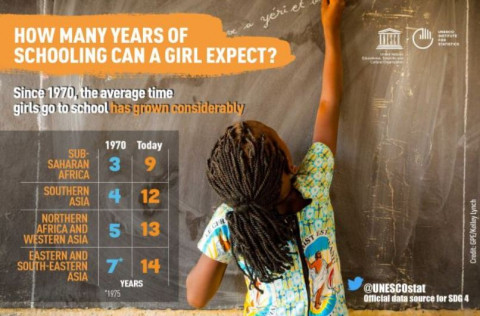 Données à fournir pour les femmes 2019-10-22 Gender equality is a key priority for tracking progress towards the achievement of all the Sustainable Development Goals (SDGs), including SDG 4 on quality education for all. If an education indicator can be broken down by sex, the UNESCO Institute for Statistics (UIS) disaggregates it – from pre-school enrolment to PhD students, and from the percentage of women teachers to whether women researchers are equally represented in science, technology, engineering and mathematics (STEM) courses. If there are different trends for girls and boys at different ages as they make their way through the education system, we want to know why. We carefully sift through the world’s data to see if girls are being taught in schools that are safe and supportive, with all the facilities they need. And if girls are out of school, we want to know where they are, how many of them there are, and why they are not in the classroom. The UIS has updated its eAtlas of Gender Inequality in Education to coincide with the Women Deliver conference. The interactive maps provide a one-stop, at-a-glance resource packed with data on all of these issues. 1. Individual power Education is critical for individual power. Until we have gender equality in education, it is hard – if not impossible – to picture a world where power is shared equally between women and men, and where the SDGs have been achieved. Consider the benefits, which span every SDG, from poverty reduction to the creation of peaceful societies. Just one additional year of schooling can increase a woman's earnings by up to 20%. Education is also a safeguard against child, early and forced marriage, with the risks of early childbirth, violence and limited prospects: each year of secondary education reduces the likelihood of marrying as a child by five percentage points or more. And it helps to reduce child mortality: a child whose mother can read is 50% more likely to live past the age of five. Overall, the world is moving in the right direction: the gender gap in education is closing and has been closing for decades. The majority of girls worldwide now complete primary school and we are close to gender parity at the primary level of education. Girls are also in school for longer than ever before. As 50 years of data produced by the UIS show, girls’ school life expectancy – the number of years they spend in school – is on the rise. 50 years ago a girl starting school in the world’s Least Developed Countries would receive less than three years of education. Today, she can expect almost nine years. 2. Structural power We must address some major structural problems on the quality of education, as well as access. Worldwide, we have an estimated 617 million children and adolescents who are not reaching even the minimum proficiency levels in reading and mathematics. And we have 262 million children – one in every five – who are out of school.Girls are less likely than boys to make the transition to secondary school in the poorest regions of the world, with barriers to their education that begin at the primary level becoming ever more difficult to overcome. If you are a girl from a poor family, living in a remote village or an urban slum, with a disability, or from a marginalised community, the barriers can become unbearable. As a result, just 2% of the poorest girls in low-income countries currently complete upper secondary school, and there are gender disparities in secondary education across the global south, according to the World Inequality on Education Database (WIDE), a joint product of the UIS and the Global Education Monitoring Report. Worldwide, there are more young women than men enrolled in higher education – particularly in the wealthiest nations. But their numbers fall at the very highest levels of education, with far fewer women gaining a PhD and women accounting for less than 30% of researchers globally. Part of the solutions lie in giving schools, teachers and entire education systems the power to deliver an education of high quality to each and every child. That demands equity in access to schooling and equity within the classroom, with girls given the same opportunities as boys to participate and to excel in all subjects. Education equity needs to be measured, of course – an area where the UIS has been working closely with national statistical agencies for many years. One of the structural challenges that needs our diligent attention is to build the capacity of statistical gathering mechanisms and models – whether they are within the ministry of education or national statistical agencies – to ensure that developing countries are better able to gather, analyse, and report on girls’ progress in education and learning. This is particularly important in conflict and crisis affected situations where war, instability, fragility and protracted conflict can limit a government’s ability to accurately gather and analyse evidence. Given that in conflict and crisis situations, girls are less likely to access or to complete their education, it remains of particular concern that we find ways to accurately gather disaggregated data and report on results. 3. The power of movements SDG 4 emerged from a global recognition that education and learning are crucial for progress on everything else. The UIS continues to work with countries, technical partners and donors to produce the data needed to strengthen the education sector and ensure that every child is going to school and learning. A leading partner of the UIS, the Government of Canada is one of the world’s champions for sex disaggregated data and gender statistics . In addition to supporting and hosting the UIS since it’s inception, the Government of Canada championed the endorsement in 2018 of the G7 Charlevoix Declaration on Quality Education for Girls, Adolescent Girls and Women in Developing Countries, which recognises that data and evidence help to empower women and girls to fulfil their potential and, therefore, helps the world deliver on its commitments to the SDGs. So we’re delighted that delegates from around the world are in Vancouver and hope that the Women Deliver conference will draw attention to the need for more and better disaggregated data and evidence to drive progress on education and, by extension, progress for women and girls. URL:http://uis.unesco.org/en/blog/data-deliver-women
 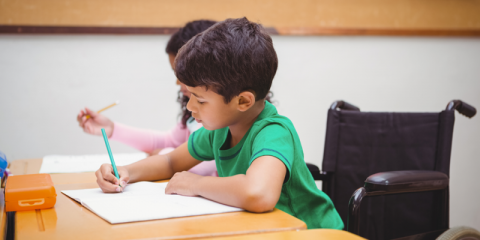 Respecter l'engagement de l'ODD4.a: Donner plus de pouvoir aux apprenants handicapés 2019-10-22 Persons with disabilities are said to be the world’s largest minority, with generally poor health conditions, low education achievements, few economic opportunities and high rates of poverty. This is largely due to the lack of services available to them. With the pledge to leave no one behind in the Agenda 2030 for Sustainable Development, this year’s theme on International Day of Persons with Disabilities on 3 December focuses on empowering persons with disabilities as both beneficiaries and change agents for inclusive, equitable and sustainable development. The term ‘disability’ refers to physical, sensory, cognitive and/or intellectual impairment, and also to mental illnesses and various types of chronic disease. The current reality is that children with disabilities tend not to attend school. As the UNESCO Institute for Statistics showed back in March 2018, in Cambodia 57% of children with disabilities were out school. Conversely, the population aged 15-29 with disabilities who had attended school at all showed the lowest attendance rates of 44% in Viet Nam 2009 and 53% in Indonesia. We know that learners with disabilities require specialized education. But are we considering whether school facilities are adequate enough to accommodate these learners? The Education 2030 Agenda and Sustainable Development Goal 4 have formulated Target 4.a on building and upgrading education facilities that are, among other criteria, disability-sensitive to provide inclusive and effective learning environments – for all. To track this target with regards to disability, the proportion of schools with adapted infrastructure and materials for students with disabilities must be monitored. However, currently available data allows for little interpretation as Member States have yet to collect and submit relevant metrics on adapted infrastructure, in this case for disability. Despite the limited data for the few countries shown in the below figure, they are indicative of the missing infrastructure that would allow children, adolescents and youth with disabilities to attend school. When everyday necessities, even simply going to the washroom, are an impossibility because doorways are impassible, or the road to school cannot be navigated, in addition to the lack of disability-friendly learning materials, let alone assistive technologies, is it surprising that even those who have attended school at some point often do not continue to attend? Target 4.a addresses creating and maintaining welcoming and safe learning spaces for learners with disabilities. It does not pretend to be the entire solution for ensuring disability-inclusive education; we know that children with special needs require specialized education, which in turn requires specialized teacher training, as well as holistically designed policies and plans that ensure a legal and regulatory environment to access education. What is more, we should not forget that ensuring learners are able to access such spaces is another precondition for them to participate. That could mean encouraging parents to have their children attend school, abolishing discriminatory practices in teaching and admissions, and ensuring public transport infrastructure is available to help access schools in the first place. URL:https://bangkok.unesco.org/content/honouring-sdg4a-pledge-empowering-learners-disabilities