
News
Catch up on what’s happening in the world of global citizenship education.
311 results found
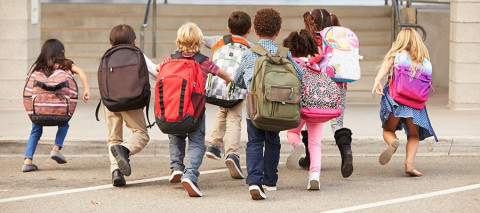 新指南为学校安全复课提供路线图 2020-05-02 UNESCO, UNICEF, WFP and World Bank today issued new guidelines on the safe reopening of schools amidst ongoing closures affecting nearly 1.3 billion students worldwide. The guidelines caution that the widespread closures of educational facilities in response to the COVID-19 pandemic present an unprecedented risk to children’s education and wellbeing, particularly for the most marginalized children who rely on school for their education, health, safety and nutrition. The guidelines offer practical advice for national and local authorities on how to keep children safe when they return to school. “While many students are falling behind in their learning journey because of prolonged school closures, the far from straightforward decision of when and how to reopen schools, should be a priority,” said UNESCO Director-General Audrey Azoulay. “Once there is a green light on the health front, a whole set of measures will need to be in place to ensure that no student is left behind. These guidelines provide all-round guidance for governments and partners to facilitate the reopening of schools for students, teachers and families. We share one goal, to protect and advance the right to education for every learner,” “Rising inequality, poor health outcomes, violence, child labour and child marriage are just some of the long-term threats for children who miss out on school,” said Henrietta Fore, UNICEF Executive Director. “We know the longer children stay out of school, the less likely they are to ever return. Unless we prioritize the reopening of schools – when it is safe to do so – we will likely see a devastating reversal in education gains.” The guidelines note that while there is not yet enough evidence to measure the impact of school closures on disease transmission rates, the adverse effects of school closures on children’s safety and learning are well documented. Gains made in increasing access to children’s education in recent decades risk being lost and, in the worse cases, reversed completely. “In the poorest countries, children often rely on schools for their only meal of the day. But with many schools now closed because of COVID, 370 million children are missing out on these nutritious meals which are a lifeline for poor families. They are also being denied the health support they normally get through school. This could do lasting damage, so when schools reopen it is critical that these meal programmes and health services are restored, which can also help to draw the most vulnerable children back to school,” said David Beasley, WFP Executive Director. The best interests of children and overall public health considerations – based on an assessment of the associated benefits and risks to education, public health and socio-economic factors – must be central to national and local authorities’ decisions to reopen schools, the guidelines say. Schools must look at how they can reopen better – with improved learning and more comprehensive support for children at the school including health, nutrition, psychosocial support and water, sanitation and hygiene facilities. As countries grapple with when to reopen schools, UNESCO, UNICEF and WFP – as part of the Global Education Coalition – urge governments to assess the benefits of classroom-based instruction compared to remote learning, and the risk factors related to reopening of schools, noting the inconclusive evidence around the infection risks related to school attendance. Jointly presented for the first time during a meeting of education ministers convened by UNESCO yesterday on planning for the reopening of schools, the guidance includes: Policy reform: Policy implications address all dimensions of the guidelines, including clear policies for school opening and closure during public health emergencies, reforms needed to expand equitable access for marginalised and out of school children as well as strengthen and standardize remote learning practices. Financing requirements: Address the impact of COVID-19 on education and invest in strengthening education systems for recovery and resilience. Safe operations: Ensure conditions that reduce disease transmission, safeguard essential services and supplies and promote healthy behaviour. This includes access to soap and clean water for safe handwashing, procedures on when staff or students feel unwell, protocols on social distancing and good hygiene practices. Compensating learning: Focus on practices that compensate for lost instructional time, strengthen pedagogy and build on hybrid learning models such as integrating approaches in remote and distance education. This must include knowledge on disease transmission and prevention. Wellness and protection: Expand the focus on students’ well-being and reinforce the protection of children through enhanced referral mechanisms and the provision of essential school-based services including healthcare and school feeding. Reaching the most marginalised: Adapt school opening policies and practices to expand access to marginalised groups such as previously out-of-school children, displaced and migrant children and minorities. Diversify critical communications and outreach by making them available in relevant languages and in accessible formats. "Once schools begin to reopen, the priority becomes reintegrating students into school settings safely and in ways that allow learning to pick up again, especially for those who suffered the biggest learning losses. This is a critical moment as it is the launching pad for a new normal that should be more effective and equitable. To manage reopenings, schools will need to be logistically prepared with the teaching workforce ready. And they will need to have plans specifically for supporting learning recovery of the most disadvantaged students. The guidelines offer a framework for moving forward that the major UN agencies are aligned around," said Jaime Saavedra, World Bank Global Director for Education. ***** Notes to editors About UNESCO: UNESCO is the United Nations Educational, Scientific and Cultural Organization. It seeks to build peace through international cooperation in Education, the Sciences and Culture. UNESCO's programmes contribute to the achievement of the Sustainable Development Goals defined in Agenda 2030, adopted by the UN General Assembly in 2015. About UNICEF: UNICEF works in some of the world’s toughest places, to reach the world’s most disadvantaged children. Across more than 190 countries and territories, we work for every child, everywhere, to build a better world for everyone. About World Food Programme: The United Nations World Food Programme is the world’s largest humanitarian organization, saving lives in emergencies, building prosperity and supporting a sustainable future for people recovering from conflict, disasters and the impact of climate change. For further information, please contact: Georgina Thompson, UNICEF, +1 917 238 1559, gthompson@unicef.org David Orr, WFP, +39 340 246 6831, David.orr@wfp.org George Papagiannis, UNESCO: Tel: +33 1 45 68 17 06, g.papagiannis@unesco.org URL:https://en.unesco.org/news/new-guidelines-provide-roadmap-safe-reopening-schools
 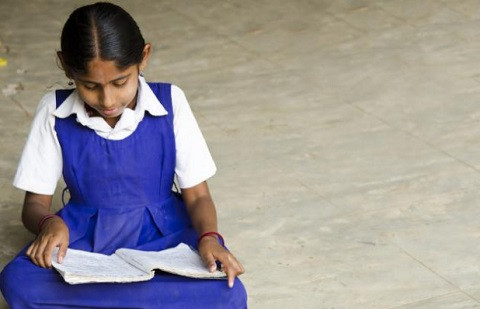 COVID-19 school closures: Why girls are more at risk 2020-05-01 Countries worldwide have closed schools at an unprecedented rate in an attempt to slow the spread of the COVID-19 pandemic. It is therefore easy to assume that learners will be safer or better off staying at home than mixing with others in the classroom. The reality, however, is that for millions of girls and young women, particularly those in the world’s least developed countries, school shutdowns bring other risks. Speaking at a recent UNESCO webinar, Suzanne Grant Lewis, IIEP Director, emphasized that ‘evidence shows that both education and gender are neglected in responses to disease outbreaks. We need to pay more attention to the gender dimensions of the coronavirus school closures.’ What are the gender dimensions of the closures? Domestic burdensIn many societies, women and girls take on the majority of unpaid domestic and childcare tasks, which will increase when schools and workplaces close and people are confined to their homes. This affects women, who make up the majority of the teaching force in many contexts, as well as girls, who are unable to continue their learning at a distance. Healthcare demandsWomen and girls form the majority of the healthcare workforce, whether paid or unpaid. They are therefore more exposed to the coronavirus, whether caring for others at home or in healthcare facilities. For instance, data show that in Spain and Italy respectively, 72% and 66% of infected healthcare workers are female. Domestic violenceThe health risks for girls who can no longer attend school are not limited to the virus itself. Without school – a place of safety as well as education – as a lifeline, home confinement means there is a heightened risk of domestic violence and sexual abuse. Data available so far indicate that domestic violence rates have increased in countries as varied as Argentina, France, and Singapore. Sexual and reproductive healthFollowing the Ebola crisis, Sierra Leone saw a huge rise in adolescent pregnancy, which, according to the children themselves, was directly linked to school closures. In some communities, pregnancy will be a permanent barrier to a girl returning to education even once the COVID-19 crisis ends. Moreover, during the crisis, maternity and reproductive resources and facilities are likely to be redirected to counter the pandemic, posing additional threats to the health and safety of adolescent girls and young women. What can be done to overcome these problems? With these issues in mind, and the knowledge that girls are less likely to return to school after a prolonged absence, education authorities must take steps to avoid a disastrous reversal of the recent progress made in girls’ and women’s learning. In her opening remarks, Ms Grant Lewis warned that COVID-19 will exacerbate gender inequalities. She urged communities to act quickly, suggesting a number of measures including: ensuring equitable representation of women and men in crisis-related decision-making and tapping into women’s’ expertise; producing gender-sensitive data relating to the crisis; using women’s networks at the community level to organize responses to the crisis; encouraging girls to continue learning during and after the crisis and to support their peers; encouraging men and women to share childcare and domestic work in the household and community; denouncing domestic violence as well as putting in place safe environments for female victims of abuse. Education planners should be aware of the particular threat that the coronavirus school closures pose to girls and women, and ensure that plans for learning continuity take this into account. The digital gender divide needs to be overcome if girls are to benefit from online distance learning solutions; studying schedules must be flexible where possible so that learning can take place around the domestic demands that are disproportionately made on girls and women; and targeted measures should be taken to ensure that as many female learners as possible return to schools when they reopen. ‘A universal issue’ No country can afford to ignore the gender dimensions of COVID-19 school closures. As Ms Grant Lewis said, ‘this is a universal issue. All countries must consider how this crisis might widen inequalities, and all countries need to take action to address them.’ The full impact of this crisis will not be known for some time, but it is crucial to make sure that girls do not miss out on their education and on their futures. URL:http://www.iiep.unesco.org/en/covid-19-school-closures-why-girls-are-more-risk-13406
 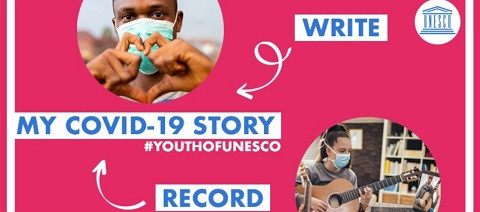 MY COVID-19 STORY: launch of a youth storytelling campaign 2020-04-30 Sharing is caring… and there is no better time to share inspiration, ideas, and stories than now! The MY COVID-19 STORY #YouthOfUNESCO campaign is a UNESCO initiative that gives the floor to young people to inspire the world during this challenging COVID-19 context. Many young people are day-in-day-out proving to be key actors when it comes to finding solutions to global problems – from the fight against discrimination and climate change, to gender equality and many other issues. Today, during this unprecedented health crisis, youth are once again on the front line, particularly when it comes to inventing new forms of solidarity. This storytelling initiative is part of UNESCO’s response to the COVID-19 pandemic. It is meant to put the spotlight on young people – how they feel, how they act, how they thrive during these challenging times. Over the past weeks, maybe months, young women and men have been taking action and developing many creative ideas to face these challenging times, whether by helping their community, finding innovative learning ways, keeping a positive spirit, taking care of their relatives and loved ones, and much more. My COVID-19 Story is an open invitation to all young people to share their stories by means of written testimonials or the recording of their own video. To amplify their voices further, UNESCO invites young people to share their stories through its social media channels, its website, its Field Offices and its networks all over the world. The written and video testimonies collected will also contribute to the "Youth as Researchers - COVID-19" project, which will collect and consolidate knowledge and data on, by and with young people around a series of key issues related to the COVID-19 crisis (e.g. inequality and discrimination). The project will examine the impact of the crisis on young people (especially young women - out of school or unemployed because of the crisis), and how they affect or trigger resilience. The project - developed in collaboration with UNESCO Chairs (National University of Galway (Ireland) and Penn State University (United States of America)) - will provide a basis for skills development and virtual mobilization of young people for the collection and analysis of data. Read more about the campaign URL:https://en.unesco.org/news/my-covid-19-story-launch-youth-storytelling-campaign
 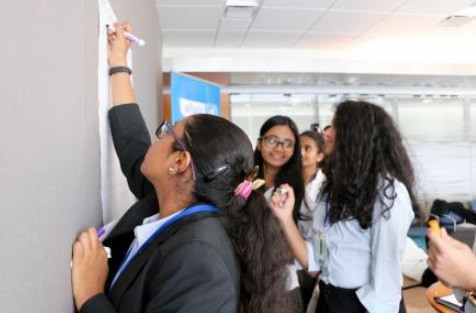 WFUNA Launches Online Programs 2020-04-29 With schools and borders closed amidst the COVID-19 pandemic, WFUNA has been working hard the past few months to implement and launch several online programs for a range of age groups. The safety and wellbeing of our participants is extremely important, however we want to give the chance to remain engaged in WFUNA programs while remaining socially responsible. Mission Possible is offering two online programs that challenge high school students across the globe to connect virtually, collaborate across cultures and engage in meaningful action! More info here. WIMUN is offering online Model UN simulations and training sessions. WIMUN Online is for all high school and university students aged 14-30, with high school and university students being split into different sessions. Each session will go ahead once a minimum amount of students has registered in order to ensure proper and productive debate and negotiations. Teachers will be able to participate as observers for a reduced fee. More info here. Expanding its reach beyond physical trainings, WFUNA now offers a unique new online Training Program allowing students a fully immersive virtual learning experience about the UN. UN Spotlight brings the world of multilateral diplomacy directly to students. Through an efficient and customizable system of online events, classes, and interactive sessions, WFUNA focuses on relevant international issues with the help of experienced professionals from all over the world. The online format combined with WFUNA’s expertise and broad network offer a wide range of exclusive opportunities that students cannot access anywhere else. UN Spotlight provides students with hands-on training, practical knowledge and guidance on constructively and effectively participating with the UN. More info here. URL:https://wfuna.org/posts/wfuna-launches-online-programs
  Launch of e-Learning course on Gender Equality at UNESCO 2020-04-28 The Division for Gender Equality is glad to announce the launch of the new e-learning course on Gender Equality at UNESCO. This training builds on content developed by the Division for Gender Equality to enhance the capacity of UNESCO staff in gender mainstreaming both in face-to-face training sessions as well as in the first version of the e-Learning tool launched in 2008. This training has been developed in close consultation with different sectors at UNESCO. Through this training, participants will get familiar with the key terms and concepts used in the area of Gender Equality and will learn how to use the main tools available to ensure successful Gender Mainstreaming in their daily work. The training includes concrete examples to help understand what we should all do to uphold the Organization's Global Priority Gender Equality. We have accelerated the launch of this course due to the coronavirus situation and the training is currently in its Beta version, only available to UNESCO staff members. As soon as the training becomes available to the general public we will announce it on this webpage. For questions on the content of the course, or other questions on Gender Equality at UNESCO, please contact ge.elearning@unesco.org(link sends e-mail) For questions on accessing the course, or other questions on MyLearning, please contact learning@unesco.org(link sends e-mail) URL:https://en.unesco.org/news/launch-e-learning-course-gender-equality-unesco
  Adverse consequences of school closures 2020-04-24 More on UNESCO's COVID-19 Education Response School closures carry high social and economic costs for people across communities. Their impact however is particularly severe for the most vulnerable and marginalized boys and girls and their families. The resulting disruptions exacerbate already existing disparities within the education system but also in other aspects of their lives. These include: Interrupted learning: Schooling provides essential learning and when schools close, children and youth are deprived opportunities for growth and development. The disadvantages are disproportionate for under-privileged learners who tend to have fewer educational opportunities beyond school. Poor nutrition: Many children and youth rely on free or discounted meals provided at schools for food and healthy nutrition. When schools close, nutrition is compromised. Confusion and stress for teachers: When schools close, especially unexpectedly and for unknown durations, teachers are often unsure of their obligations and how to maintain connections with students to support learning. Transitions to distance learnign platforms tend to be messy and frustrating, even in the best circumstances. In many contexts, school closures lead to furloughs or seperations for teachers. Parents unprepared for distance and home schooling: When schools close, parents are often asked to facilitate the learning of children at home and can struggle to perform this task. This is especially true for parents with limited education and resources. Challenges creating, maintaining, and improving distance learning: Demand for distance learning skyrockets when schools close and often overwhelms existing portals to remote education. Moving learning from classrooms to homes at scale and in a hurry presents enormous challenges, both human and technical. Gaps in childcare: In the absence of alternative options, working parents often leave children alone when schools close and this can lead to risky behaviours, including increased influence of peer pressure and substance abuse. High economic costs: Working parents are more likely to miss work when schools close in order to take care of their children. This results in wage loss and tend to negatively impact productivity. Unintended strain on health-care systems: Health-care workers with children cannot easily attend work because of childcare obligations that result from school closures. This means that many medical professionals are not at the facilities where they are most needed during a health crisis. Increased pressure on schools and school systems that remain open: Localized school closures place burdens on schools as governments and parents alike redirect children to schools that remain open. Rise in dropout rates: It is a challenge to ensure children and youth return and stay in school when schools reopen after closures. This is especially true of protracted closures and when economic shocks place pressure on children to work and generate income for financially distressed families. Increased exposure to violence and exploitation: When schools shut down, early marriages increase, more children are recruited into militias, sexual exploitation of girls and young women rises, teenage pregnancies become more common, and child labour grows. Social isolation: Schools are hubs of social activity and human interaction. When schools close, many children and youth miss out of on social contact that is essential to learning and development. Challenges measuring and validating learning: Calendared assessments, notably high-stakes examinations that determine admission or advancement to new education levels and institutions, are thrown into disarry when schools close. Strategies to postpone, skip or adminsiter examinations at a distance raise serious concerns about fairness, especialy when access to learning becomes variable. Disruptions to assessments results in stress for students and their families and can trigger disengagement. URL:https://en.unesco.org/covid19/educationresponse/consequences
 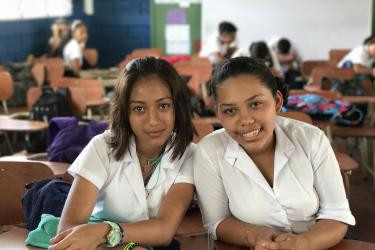 Step it up G7: An extraordinary time requires extraordinary solidarity 2020-04-20 Editorial published in French in Libération on April 4 and signed by members of the G7 Gender Advisory Councils, including Alice Albright, GPE CEO. Desperate times require bold and determined leadership. The COVID-19 virus represents a common challenge to the whole world and, like never before, reminds us of our interdependence. We are experiencing an unprecedented health crisis that can now affect anyone and exposes the most vulnerable to additional risks. Because of deep-rooted gender inequality, girls and women worldwide will also experience the COVID-19 pandemic differently. We, members of the 2018 and 2019 G7 Gender Equality Advisory Councils, urgently call on G7 member states for joint emergency action to respond to the particular challenges facing women and to prevent the deterioration of gender equality and women's rights worldwide. We call on all governments to take into account the gendered dimensions of this crisis. While men are so far slightly more affected, women make up seventy percent of healthcare and social service workers worldwide, putting them at the forefront of the crisis and at greater risk of exposure. They also hold the majority of low-paid and shut-down retail and service jobs, and are therefore even more economically vulnerable during - and after - this crisis. The COVID-19 pandemic and the imposed confinement measures have already resulted in a significant rise of domestic abuse, especially against women and children worldwide. Women's fundamental sexual and reproductive rights and services have been dramatically reduced. Progress in ensuring education for all girls has been set back. Women in conflict zones and living in camps for refugees and displaced people are facing the virus in the worst conditions. They need protection. All of us need more solidarity. Supporting healthcare and social workers Firstly, the G7 Gender Equality Advisory Council insists on the responsibility of G7 leaders to take special measures to support healthcare and social workers and to provide proper working conditions during the crisis, including all the necessary equipment and social housing near hospitals. Secondly, it is urgent and vital to adopt special measures to protect those experiencing domestic violence. Governments should ensure efficient training of all first responders, create additional emergency shelter spaces, ensure immediate removal of abusers from homes and provide support for helplines. Thirdly, governments should ensure that gender equality is front and centre of their education response. School closures will exacerbate existing gender inequalities, particularly for the poorest girls. Governments must keep all girls engaged in learning, factor in gender considerations when planning for school resumption and make good on aid commitments. Men should take on 50% of housework Fourthly, we demand that governments guarantee access to sexual and reproductive health services, including abortion, maternal health, and pre- and post-natal care. At this time of crisis, high unemployment and economic despair for millions, we also call for free menstrual and modern contraception products for girls and women. Fifth, government public service messaging is needed to encourage men to do fifty percent of care and housework traditionally carried out by women. Finally, governments should also provide disaggregated gender data on the crisis to give healthcare professionals and policy makers the information needed to develop effective health and socio-economic responses. As the crisis intensifies around the world, it is clear that if we truly want to save lives and deliver health, wellbeing, and dignity for all, girls and women must be front and center of, and included in the decision making of local, national and global emergency responses, in social and economic recovery efforts, and in how we strengthen our health systems post-pandemic – just as women are on the frontlines of the fight right now. Without international coordination and solidarity, especially with the most vulnerable in our societies, this deadly pandemic will take a tremendous toll - not least in places where health systems are weak, unevenly distributed and where poverty paralyzes. This challenging moment is not only a call to protect people's lives and preserve their rights, it is also an opportunity to face our common failures, learn from them and build a better, more gender equal world that is healthier, more prosperous and more peaceful. This extraordinary time requires extraordinary humanistic leadership, free from xenophobia, sexism and economic mercantilism. It requires everybody's action - women and men, young and old, public, private, and civil society sector. Our humanity must light up these darkest times. Signed by the following members of the 2018 and 2019 G7 Gender Equality Advisory Councils: Alice P. Albright, CEO, Global Partnership for EducationLisa Azuelos, FilmmakerBochra Bel Haj Hmida, Lawyer, Nobel Peace Prize Laureate 2015Emma Bonino, Italian senatorDillon Black, they/themOuided Bouchamaoui, Nobel Peace Prize Laureate 2015Winnie Byanyima, Executive director of UNAIDS and former executive director of Oxfam InternationalMarie Cervetti, Director, Une femme et un toitDiane Elson Professor, University of EssexMercedes Erra, Founder and President of BETCCaroline Fourest, Writer and FilmmakerRosemary Ganley, JournalisteLeymah Gbowee, Nobel Peace Prize Laureate 2011Gargee Ghosh, Bill et Melinda Gates FoundationBrigitte Gresy , President of the Haut conseil à l'égalité FranceDayle Haddon, Founder of WomenOneYoko Hayashi , Lawyer et former president of CEDAWIsabelle Hudon , Ambassador of Canada in FranceMuriel Ighmouracène WriterKatja Iversen, President of Women DeliverRoberta Jamieson, President of IndspireAranya Johar, poet and activistFarrah Khan, she/herMichael Kaufman, author and activistAīssata Lam, President Youth Chamber of Commerce of MauritaniaPhumzile Mlambo-Ngcuka, Executive director of UN WomenVirginie Morgon, CEO of EurazeoVanessa Moungar, Director for Gender, Women and Civil Society at the African Development BankDenis Mukwege, Nobel Peace Prize Laureate 2018Nadia Murad, Nobel Peace Prize Laureate 2018Irene Natividad President of Global Summit of WomenAlexandra Palt, General Manager of L'Oreal FoundationNatalia Ponce de León, activistInna Shevchenko, Journalist and activist FEMENKareen Rispal, Ambassador of France in CanadaMaya Roy, CEO of YWCA Canada)Grégoire Théry, Co-Founder of CAP internationalEmma Watson, actress and activistMalala Yousafzai, Nobel Peace Prize Laureate 2014 URL:https://www.globalpartnership.org/news/step-it-g7-extraordinary-time-requires-extraordinary-solidarity
 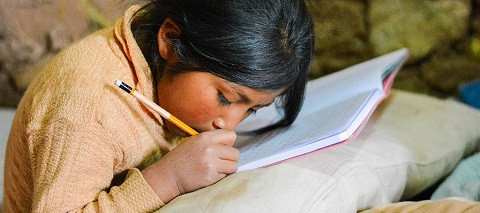 UNESCO Futures of Education Commission urges planning ahead against increased inequalities in the aftermath of the Covid-19 2020-04-18 The COVID-19 health crisis has resulted in school and university closures affecting over 90% of the world’s students. Even more drastic disruptions loom on the horizon, according to an independent International Commission on the Futures of Education appointed by UNESCO Director-General Audrey Azoulay in September 2019. Even when schools reopen, the emerging economic recession threatens to exacerbate inequalities and could rollback progress made in expanding educational access and improving the quality of learning globally, the commission warned during an online meeting on 9 April. Chaired by the President of Ethiopia Sahle-Work Zewde, the International Commission for the Futures of education brings together thought leaders from the worlds of politics, academia, civil society, education, and business. The COVID-19 crisis has underscored the importance of the Commission’s mandate to reflect on how knowledge and learning need to be rethought in an increasingly uncertain and fragile world. During its special meeting dedicated to the COVID-19 crisis, the Commission issued a Joint Statement on how education needs to be protected and transformed for our shared future and common humanity. In her remarks to the Commission, UNESCO Director-General Audrey Azoulay noted that “We now see that online distance learning cannot be the sole solution, as it tends to exacerbate already existing inequalities that are partly levelled in school settings. This will be of interest for this Commission whose task is rethinking the future of education, including appropriate articulation between distance and classroom learning”. President Sahle-Work said, “At my age, I have seen a multitude of effects caused by various crises. But with the current global pandemic, I am not sure we have drawn the pivotal lessons from the past required to mitigate the ill-effects of the disruptions caused to our lives. COVID-19 does not discriminate and is redefining our reality. We should respond with humility, solidarity and empathy.” According to the Commission, as humanity looks for ways to transform the world for the better after the worst health crisis in a century, we must rethink social policies, including education, and address long-standing issues of structural inequality, poverty and exclusion. An impending global recession is likely to have drastic consequences for the funding of education and other public services as well as for individuals’ lives and livelihoods. During this time, global commitments to education must be maintained and resources directed to those who have been hardest hit socially, economically and educationally. The Commission urges that crises—in global health and education—be addressed through solidarity, empathy and appreciation for our common humanity. See Statement by the Futures of Education URL:https://en.unesco.org/news/unesco-futures-education-commission-urges-planning-ahead-against-increased-inequalities
  "My Hero is You": Children's book to cope with COVID-19 2020-04-17 A new story book that aims to help children understand and come to terms with COVID-19 has been produced by a collaboration of more than 50 organizations working in the humanitarian sector, including the World Health Organization, the United Nations Children’s Fund, the United Nations High Commissioner for Refugees, the International Federation of Red Cross and Red Crescent Societies and Save the Children. News release of the Inter-Agency Standing Committee With the help of a fantasy creature, Ario, “My Hero is You, How kids can fight COVID-19!” explains how children can protect themselves, their families and friends from coronavirus and how to manage difficult emotions when confronted with a new and rapidly changing reality. The book – aimed primarily at children aged 6-11 years old – is a project of the Inter-Agency Standing Committee Reference Group on Mental Health and Psychosocial Support in Emergency Settings, a unique collaboration of United Nations agencies, national and international nongovernmental organizations and international agencies providing mental health and psychosocial support in emergency settings. During the early stages of the project, more than 1700 children, parents, caregivers and teachers from around the world shared how they were coping with the COVID-19 pandemic. The input was invaluable to script writer and illustrator Helen Patuck and the project team in making sure that the story and its messages resonated with children from different backgrounds and continents. In order to reach as many children as possible, the book will be widely translated, with six language versions released today and more than 30 others in the pipeline. It is being released as both an online product and audio book. My Hero is You - How kids can fight COVID-19Download the book (English version): Click hereMy Hero is You: all language versions Quotes from collaborating partners World Health OrganizationDr Tedros Adhanom Ghebreyesus, Director-General“Previous humanitarian emergencies have shown us how vital it is to address the fears and anxiety of young people when life as they know it gets turned upside down. We hope that this beautifully-illustrated book, which takes children on a journey across time zones and continents, will help them to understand what they can do to stay positive and keep safe during the coronavirus outbreak.” UNICEFHenrietta Fore, Executive Director“All over the world, children’s lives have been completely upended – the majority of them living in countries with some form of restricted movement or lockdown. This wonderful book helps children understand and navigate this new landscape and learn how they can take small actions to become the heroes in their own stories.” UNHCRFilippo Grandi, United Nations High Commissioner for Refugees.“This is an important resource for children around the world with a strong message of inclusion at its heart – that this pandemic can only be beaten if everyone is included in its prevention and response. Children, including those who are refugees, displaced and stateless, can help too. No-one is protected unless we are all protected”. UNESCOAudrey Azoulay, Director General“Sharing facts and reliable information is vital to respond to COVID-19, and I wish to commend the creativity and passion of all artists, writers and publishers who find compelling ways to translate and craft stories and artwork so they can reach children and families to comfort and guide them through a distressing situation. UNESCO is proud to support this initiative and we see this as an example of the contribution of the artistic community to the well-being and resilience of all." Media Contacts:Alison Brunier, Communications Officer World Health Organization+41 22 791 4468, +41 79 701 9480bruniera@who.int URL:https://en.unesco.org/news/my-hero-you-childrens-book-cope-covid-19
 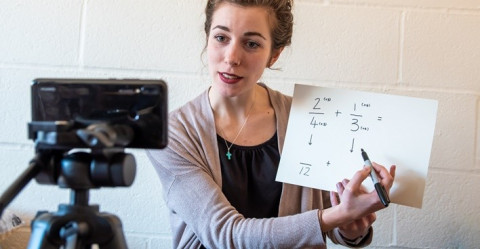 Teacher Task Force calls to support 63 million teachers touched by the COVID-19 crisis 2020-04-15 Around 63 million primary and secondary teachers around the world are affected by school closures in 165 countries due to the Covid-19 pandemic. They are on the frontlines of the response to ensure that learning continues for nearly 1.5 billion students, a number that is predicted to rise. Everywhere, together with school leaders, they have been rapidly mobilising and innovating to facilitate quality distance learning for students in confinement, with or without the use of digital technologies. They are playing a key role also in communicating measures that prevent the spread of the virus, ensuring that children are safe and supported. This unprecedented situation is putting teachers, students and families under stress. In some cases, teachers who may already be exposed to the virus themselves are trying to manage the anxiety of being told to work in situations where the COVID-19 risk is spreading. Others are dealing with the stress of of delivering quality learning with tools for which they have received little or no training or support. In many countries, contract teachers, substitute teachers and education support personnel risk seeing their contracts broken and their livelihoods disappear. The Teacher Task Force, an international alliance working for teachers and teaching, has issued a Call for Action on Teachers to ensure that teachers are protected, supported and recognised during the crisis. Leadership and financial and material resources for teachers are necessary to make sure that quality teaching and learning can continue at a distance during the crisis, and that recovery is rapid. The Task Force is calling on governments, education providers and funders – public and private – and all relevant partners to: Preserve employment and wages: This crisis cannot be a pretext to lower standards and norms, or push aside labour rights. The salaries and benefits of the entire teaching and education support staff must be preserved. Prioritise teachers’ and learners’ health, safety and well-being: Teachers need socio-emotional support to face the extra pressure being put on them to deliver learning in a time of crisis as well as provide support to their students in these anxious circumstances. Include teachers in developing COVID-19 education responses: Teachers will have a crucial role in the recovery phase when schools reopen. They must be included at all steps of education policy-making and planning. Provide adequate professional support and training: Little attention has been given to providing teachers with adequate training on how to ensure that learning continues. We must move swiftly to ensure that teachers receive the necessary professional support. Put equity at the heart of education responses: Greater support and flexibility will be needed for teachers who work in remote areas or with low-income or minority communities, to ensure that disadvantaged children are not left behind. Include teachers in aid responses: The Teacher Task Force urges financing institutions to help governments support education systems, particularly the teaching workforce’s professional development. Such support is particularly urgent in some of the world’s poorest countries, which are already struggling to meet education needs because of critical shortages of trained teachers. For more information, download the call in English, French, Spanish and Arabic. *** The International Task Force on Teachers for Education 2030 is a global network of over 90 governments and some 50 international and regional organisations (including UN organisations, civil society organisations, the teaching profession and foundations) working to promote teachers and teaching issues. Its Secretariat is hosted by UNESCO at its headquarters in Paris. URL:https://en.unesco.org/news/teacher-task-force-calls-support-63-million-teachers-touched-covid-19-crisis