
News
Catch up on what’s happening in the world of global citizenship education.
311 results found
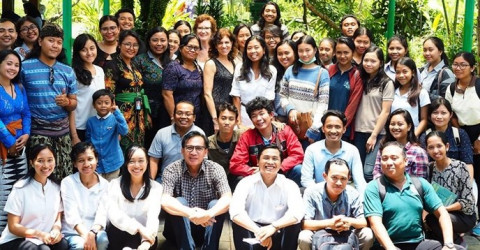 Un programa indonesio en favor de la diversidad lingüística gana un premio de alfabetización de la UNESCO 2019-09-06 BASAbali from Indonesia is awarded the 2019 UNESCO Confucius Prize for Literacy for its programme ‘BASAbali Wiki’. Based on a collaboration of scholars, governments, artists, and community members from within and outside of Bali, BASAbali was created as a digital tool to both preserve local languages and strengthen them by transforming people’s attitudes towards promoting and valuing linguistic diversity. The tool, BASAbali Wiki, is a multimedia, multilingual (Balinese-Indonesian-English) wiki dictionary, encyclopedia and virtual library which intends to revitalize endangered local languages by creating the sense of ownership. Both local Balinese and international communities are invited to contribute to creating the content in whatever way they can in local, national, and international languages. A team of experts contributes to monitoring the relevance and quality of the content. “We realized that to foster literacy, particularly with local languages, we need to do more than just create a body of resources: we needed to engage civil society in developing a norm of literacy and multilingualism”, says Gde Nala Antara, the Chair of the BASAbali Wiki Board. Read to a child in a local language Since the launch in 2011 with interfaces in Balinese, Indonesian and English, BASAbali Wiki has been used by over half a million people. The main target group of the programme is younger generations, especially young women and girls. “Outreach teams particularly target out-of-school youth, women and girls, and those who may be outside the grid but can nonetheless add and use content through an offline function”, says Gde Nala Antara. “Our goal is to have the grandchildren of this generation’s children value literacy and multilingualism. We target children directly, teens and young adults as role models for their younger peers, and young parents who can create an environment of reading, writing , and using local, national and international languages”, says the director of BASAbili Wiki. When material is submitted in one language, users are encouraged to offer translated text in the other two languages. In this way, BASAbali Wiki serves as both a Balinese reference and a translation tool for Indonesian and English languages. The team of experts also provides translation and editing assistance when needed. Over the last five years, BASAbali has succeeded in getting a significant number of young parents, millennials and children involved in the initiative. BASAbali now wants to share the initiative with other language communities, while expanding their dictionary and virtual library, with special focus on youth, girls and underserved communities. Other project plans include creating multilingual books featuring a teen environmental superhero imagined by the children of Bali. To celebrate International Literacy Day, Gde Nala Antara wants to share a simple message: “Give a lasting gift: read to a child in a local language.” This year’s UNESCO International Literacy Prizes will be awarded to laureates from Algeria, Colombia, Indonesia, Italy and Senegal on the occasion of International Literacy Day. The Prize Award Ceremony will take place during the global event for International Literacy Day on 9 September at UNESCO Headquarters. This year’s International Literacy Prizes and global event are organized around the theme of ‘literacy and multilingualism’. Read more: UNESCO International Literacy Prizes International Literacy Day 2019 What UNESCO does for literacy URL:https://en.unesco.org/news/programme-indonesia-promoting-linguistic-diversity-wins-unesco-literacy-prize
 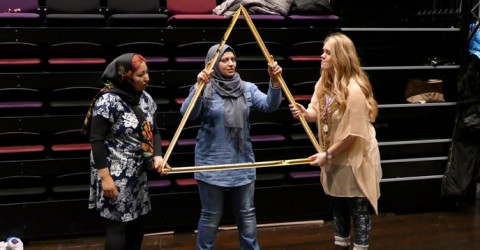 Italian programme wins UNESCO Prize for teaching literacy to migrants through theatre 2019-09-06 Nuovo Comitato il Nobel per i Disabili in Italy has won the 2019 UNESCO Confucius Prize for Literacy for its programme ‘Tell Me’. Nuovo Comitato il Nobel per i Disabili (New Nobel Committee for People with Disabilities) is an italian non-profit organization created by Nobel laureate, Mr Dario Fo, in 1997 to support disadvantaged groups through education, with particular regard to disabled people. In 2016, the committee decided to focus its efforts on the migrant population and launched the programme ‘Tell Me’, an acronym for ‘Theatre for Education and Literacy Learning of Migrants in Europe’. Italy is one of the first countries impacted by migration. The programme aims to contribute to social inclusion of youth and adult migrants, with the priority to learn the language of the host country. “In the wake of a period of raised awareness about the issue of migration, but not solely for that reason, the potential that theatre has to contribute to social inclusion of those whom we like to refer to as new European citizens, seemed evident and indisputable on many levels”, says Nazzareno Vasapollo, the project manager of the Tell Me project. “The difficulty of mastering a language is among the most important causes of material, social and psychological insecurities that a “foreigner” experiences in the integration process in any country”, says Nazzareno Vasapollo. Today the programme is operating in Italy, Portugal, Spain, and Turkey, where it has benefited over a hundred migrants since 2018, many of whom are out-of-school youth. A message about solidarity and a mutual encounter The project moves in three stages, between art, language learning and social inclusion. The theatre is a tool to exchange knowledge and bridge the gap between cultures to facilitate the integration of migrants. The methodology, aligned with the national and European educational frameworks and developed with partners across the field of education and theatre, revolves around storytelling, as a way to gradually transition from the learner’s mother language to the host country’s language. 72 teachers have been trained through workshops so far. Teachers also benefit from an e-learning platform and an online material repository where curriculum documents, methodological guidelines and other materials are available in English, Italian, Portuguese, Swedish and Turkish. For International Literacy Day, Nazzareno Vasapollo wants to address a message to migrants who were forced to go outside of their countries. “The founding fathers thought of a Europe based on the values of solidarity and that no one would be able to defeat them if they are carried out by its citizens, its organizations and its institutions of good will.” The organization intends to carry out the project across Europe, which the recognition of the prize will help with. This year’s UNESCO International Literacy Prizes will be awarded to laureates from Algeria, Colombia, Indonesia, Italy and Senegal on the occasion of International Literacy Day. The Prize Award Ceremony will take place during the global event for International Literacy Day on 9 September at UNESCO Headquarters. This year’s International Literacy Prizes and global event are organized around the theme of ‘literacy and multilingualism’. Read more: UNESCO International Literacy Prizes International Literacy Day 2019 What UNESCO does for literacy URL:https://en.unesco.org/news/italian-programme-wins-unesco-prize-teaching-literacy-migrants-through-theatre
 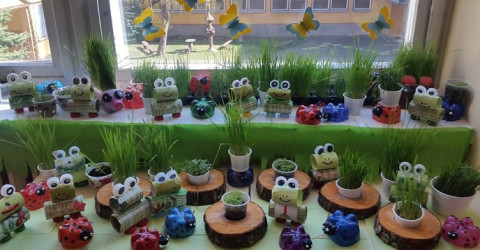 Imagination and energy help schools in Lithuania turn sustainability ideas into action 2019-09-02 A simple but powerful kindergarten experiment in biodegradability is just one of the innovative ways schools in Lithuania are embracing sustainability. The Lithuanian Children and Youth Centre's Sustainable Schools' programme began in 2013 to promote and create awareness about sustainable development through developing school communities that are better able to manage and develop their own resources. The programme was among nominees for the 2018 UNESCO-Japan Prize on Education for Sustainable Development (ESD), part of UNESCO's wider work on ESD. The Lithuanian programme, based in Vilnius, works through the formation of Green Teams of ten people in educational establishments which can include everyone from teachers, students and parents to administrative staff. So far, 139 educational institutions ranging from kindergarten to non-formal settings have signed up to the programme to learn how to improve the quality of life for future generations. Project Manager Lina Blazeviciute said: 'Five years ago the programme started at a very simple level with a website where schools could sign on to evaluate their eco footprint’. 'The first schools started with sustainability ideas like stickers reminding everyone to switch off lights and turn off taps. Now those same schools have moved on to more complex projects such as food gardens and sustainable mobility. For example, last year a school wanted to encourage children to cycle to school. Instead of holding a one-off event they took the children and conducted a careful study of the areas surrounding the school identifying traffic hazards and where bike lanes were needed. They submitted the results to the municipality who made improvements leading to more bike use.' Each school starts the programme with a themed conference with sustainability experts invited and in addition there are two or three training sessions a year for teachers and liaison with universities to keep abreast of research. Participating schools draw up a plan at the start of the academic year, which is submitted, to the programme, which advises, on its content and structure. At the end of the year a report is written showing what has been achieved and the number of participants engaged. Schools are awarded points culminating in an award ceremony where Green, Silver and Gold medals are handed out for achievement. Innovation fills the funding gap 'There are many really innovative ideas,' said Lina. In one experiment with very young children at a kindergarten, they buried an apple core and a sweet wrapper and left them for several weeks returning to find the core had completely disappeared, but the sweet wrapper was still intact giving a simple but valuable lesson in biodegradability. Other schools have started their own food and herb gardens after workshops on building greenhouses and growing vegetables and produce their own juices and healthy breakfasts. 'We are always looking for ways to engage children and make the topics fun and interesting. and here is where we really rely on teachers to do a great job,' said Lina. 'For that reason, we are very interested in new methodologies on to talk about sustainability to children’. Making sustainability the norm Introducing children to the biodiversity, which exists outside their classrooms or houses, is also part of the programme. 'We urge teachers even in urban schools to take children out and get them to discover the richness of their own environment, how many different trees, or insects or animals there might be,' said Lina. The programme also organizes structured biodiversity hikes in natural parts which can attract several thousand participants. The ultimate aim of the programme is simple. 'The next step for us is to ensure that sustainable schools receive proper political attention. We would like that sustainability became the norm rather than the exception. Our government already uses the concept of a 'good school'. Now we want one of the criteria for becoming a good school to be sustainability. We also want to strengthen our international partnerships so that we can share our experiences,' said Lina. URL:https://en.unesco.org/news/imagination-and-energy-help-schools-lithuania-turn-sustainability-ideas-action
 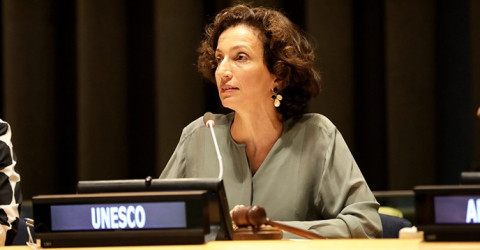 High Level Political Forum: Education is everyone’s responsibility 2019-09-02 The voices of governments, donors, international organizations, youth and teachers struck a common chord in calling for stepped up action to achieve relevant, equitable and inclusive quality education, at an event organized by UNESCO, the Group of Friends for Education and Lifelong Learning and the SDG-Education 2030 Steering Committee on 15 July 2019 during the High Level Political Forum at UN Headquarters in New York. “Education is a fundamental right and the supporting structure for the entire 2030 Agenda,” said UNESCO Director-General Audrey Azoulay, opening the event. “It is urgent that we act together and step up efforts to invest more in education. Governments hold the primary responsibility but civil society, multilateral and international actors must join their efforts to achieve this common goal,” she said, asserting that UNESCO will continue to make education a top priority and to fulfill its global coordination and monitoring role. Government representatives gave examples of how Sustainable Development Goal 4 on education is influencing national policy, demonstrating its relevance to all contexts. The Minister of Research and Higher Education of Norway, Ms Iselin Nybo, highlighted measures to reduce drop out in upper secondary, make lifelong learning more accessible, and integrate sustainable development across all school subjects and in university programmes. To achieve the SDGs and build better societies, she called for the “democratization of knowledge” to ensure that the fruits of research are widely shared. Likewise, Argentina has placed priority on ‘leaving no one behind” through affirmative actions at all levels, from investment in early childhood education and schools with lower results to innovations in teaching and more flexible pathways to the world of work, explained Oscar Ghillione, the country’s deputy Minister of Education. Having hosted the first G20 conference of education ministers in 2018, Argentina is also striving to “place education at the heart of the global debate,” he said. This holds urgency in light of the “simmering education crisis.” To address it, Jaime Saavedra, head of Education Global Practice at the World Bank, called for a “completely different level of political commitment,” warning that “many kids are in learning poverty” as proven by assessments showing that over half cannot understand a simple story. “This is morally unacceptable,” he said. To accelerate progress, Stefano Manservisi, the European Commission’s Director-General for International Cooperation and Development stressed the need to “articulate the global and local level in more effective ways and to avoid harmful competition.” Global action can help to mobilize and sustain national commitment, while impact has to be measured at local level, making support to public policy and plans a starting point for progress. Professor Kaz Yoshida, co-chair of the SDG-Education 2030 Steering Committee, urged countries to pay more attention to the nature of interlinkages with other goals in order to accelerate progress. “We need to go beyond the education sector to reinforce dialogue with other sectors and stakeholders,” he said. This is all the more true in highly disadvantaged contexts. Maggie MacDonnell, laureate of the Varkey Foundation’s Global Teacher Prize for her work in indigenous villages of the Canadian Arctic, gave a sense of what it means to teach in communities that have been structurally oppressed for generations, struggling with poverty, insecurity and high levels of suicide. “How do you build self confidence? You have to teach to their heads, to their bodies and to their hands to pass on skills, but most importantly to teach to their hearts, to inspire hope, to help them to dream again and become a generation of change makers.” Training teachers is a top priority to achieve SDG4, stated Robert Napier, President of the European Students’ Union. If leaving no one behind requires inclusive policies, he warned that “the biggest threat to education is privatization and commercialization. Market needs are driving education rather than education being based on the skills needed to promote sustainable development.” He stressed the social dimension of higher education, urging for more political focus on equity, inclusion and lifelong learning. Moderating the event, UNESCO Assistant Director-General for Education Stefania Giannini wrapped up the event by stressing urgency, accountability, solidarity and political engagement to accelerate global action for education. URL: https://en.unesco.org/news/high-level-political-forum-education-everyones-responsibility
 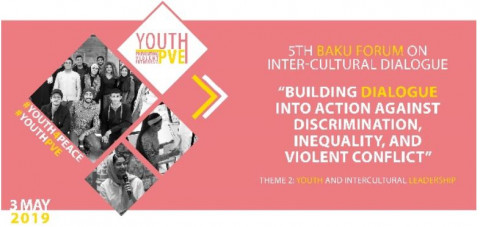 Youth Countering Hate Speech and Discrimination at 5th Baku Forum 2019-05-13 02 May 2019The 5th Baku Forum on Intercultural Dialogue (May 2-3, Azerbaijan) brought together youth from across the world to discuss inclusive approaches to promote peace and embrace diversity. In accordance with the Forum’s mission of putting “dialogue into action against discrimination, inequality, and violent conflict,” six young peacebuilders shared their initiatives on building bridges and understanding amongst cultures during an interactive panel organized by UNESCO. “Intercultural dialogue entails the respectful exchange of views between individuals with different ethnic, cultural, religious and linguistic backgrounds and heritage on the basis of mutual understanding and respect. Though we are young people coming from different countries and backgrounds, we face similar issues linked to violence, discrimination, and stereotypes. It is therefore important to have honest and courageous conversations to connect with others, and be more empathetic. This process of intercultural dialogue and learning is key towards a culture of peace” – Deepak Ramola, young panelist & #YouthOfUNESCO. The session was opened by Mr Farhad Hajiyev, Deputy Minister of Youth and Sport of Azerbaijan, who shared with the panelists that youth are the key for preventing violent extremism . Representing youth from every corner of the globe, the panel showcased the stories of Deepak Ramola (India), Marva Langevine (Guyana), Monday Collins (Uganda), Hezha Mohammedkhan (Kurdistan region of Iraq), Haneen Thabet (Jordan), and Bushra Ebadi (Canada). The panelists plunged into an insightful dialogue on youth civic engagement, intercultural dialogue, and how digital spaces and social media can address discrimination and hate speech while preventing violent extremism. “Our organization works on an initiative called Tour in Maan, where we invite influencers from Jordan who visit the city and publish their experience on their accounts on social media platforms with some photos and quotes. This shows how social media can also be used to share positive messages and counter negative narratives.– Haneen Thabet, beneficiary of the UNESCO-UNOCT Project on Youth Peacebuilding All panelists agreed on the importance of integrating cultural understanding and intercultural dialogue into their local work, as stereotypes continue to affect young people in all parts of the globe. “I am a first generation Afghan-Canadian, and I have never been “Canadian” or “Afghan” enough, so part of my work is to address these forms of discrimination”, said Bushra. Deepak mentioned his initiative Under the Hijab, created to stop discrimination against women who wear the hijab, while Hezha, a 10th UNESCO Youth Forum participant, spoke about methods to prevent cyberviolence and to encourage peacebuilding in the Arab region. Monday told us how he has been able to overcome his background as a former child soldier, “I decided that I would move beyond this stereotype, and that is why I was motivated to work with young people in peacebuilding and conflict resolution, and I use my life experience to be a positive example. “After discussing the role that young people can play in countering hateful rhetoric online, the panelists encouraged everyone to not only stand up to harmful stereotypes, but to also actively work to ensure they do not use them to define an individual.The six peacebuilders then met with other young participants in order to discuss follow-up actions and potential joint initiatives on intercultural dialogue and peacebuilding. They proposed to work together towards better social media regulation in order to prevent hate speech and online violence. They will also advocate for safe youth spaces and the role of education, including media and information literacy for youth.-- In parallel of UNESCO’s youth panel, UNESCO’s partner UNOCT had a session on preventing violent extremism through youth vocational training. Speaking on behalf of UNESCO’s Social and Human Sciences Sector, the Assistant Director General Nada Al-Nashif, participated in the discussion and emphasized on the work being accomplished through the collaborative efforts of UNESCO and UNOCT in their joint project “Preventing Youth Extremism through youth empowerment in Jordan, Libya, Morocco and Tunisia”. She finally encouraged the participants not to lose sight of the importance of the youth, peace, and security agenda.--Learn more about UNESCO’s panels during the 5th Baku Forum: https://en.unesco.org/news/building-dialogue-action-5th-world-forum-intercultural-dialogue URL :https://en.unesco.org/news/youth-countering-hate-speech-and-discrimination-5th-baku-forum
 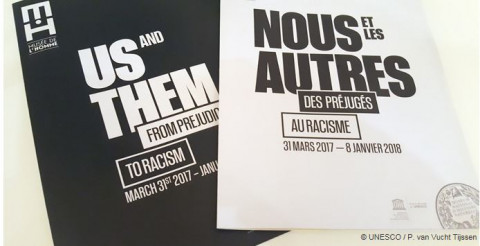 « Nous et les autres. Des préjugés au racisme » : Une nouvelle exposition s’ouvre au Musée de la mémoire et des droits de l’homme de Santiago (Chili) 2019-05-10 After the opening of the first major temporary exhibition “Us and Them – From Prejudice to Racism" at the Musée de l’Homme in Paris in March 2017, the travelling exhibition has now been launched at the Museum of Memory and Human Rights in Santiago, Chile. This new exhibition, open to the public from 25 April to 29 September 2019, was inaugurated by the Ambassador of France in Chile, Roland Dubertrand; the Director of the Museum of Memory, María Luisa Sepúlveda and representatives of various institutions and organizations. On the topic of migration, a key issue in our contemporary societies, the exhibition aims to draw the visitor’s attention in the fight against racial practices and to make them reflect on their own racial prejudices. It also promotes the recognition the equality of rights. For Francisco Javier Estévez Valencia, the Executive Director of the Museum of Memory, Chairholder of the UNESCO/Madanjeet Chair on promoting tolerance and non-violence in Chile and Latin America through education and co-winner of the UNESCO-Madanjeet Singh Prize for the Promotion of Tolerance and Non-Violence in 2014, it is crucial to consider migration as a human right that has to be protected. Using audiovisual and interactive technologies, the exhibition highlights the construction of racial prejudices through the “categorization” process, which has historically led to the institutionalization of racism in our society. Examples such as colonial expansion, nationalism, underlying mechanisms of discrimination and racial domination can be perceived. The exhibition also questions the construction of an “anti-racist” society and all the mechanisms put in place to prevent and change practices of individual or collective exclusion. With the support of UNESCO and the French Institute of Chile, this innovative exhibition is an opportunity to remind us that racism is a social construction that has led to many crimes which that continue to this day. Therefore, through the International Coalition of Inclusive and Sustainable Cities – ICCAR, launched in 2004, of which the city of Santiago is a member, UNESCO engages in concrete action in the fight against discrimination and racism at the local level. URL:https://en.unesco.org/news/us-and-them-prejudice-racism-opening-new-exhibition-museum-memory-and-human-rights-santiago
 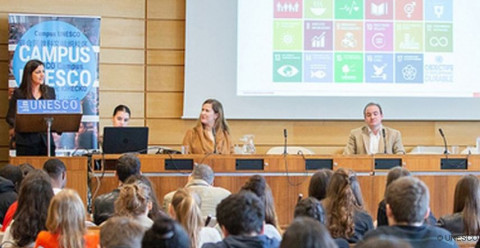 300 middle school and high school students participate in UNESCO CAMPUS on artificial intelligence 2019-03-30 The 22nd of March 2019, UNESCO hosted 300 young people between the ages of 14 to 17 at its headquarters for a debate about artificial intelligence. Each month, CAMPUS UNESCO is an opportunity for young people to discuss major global issues with civil society experts and UNESCO teams. The objectives of this month’s animated discussion were: demystifying the challenges of artificial intelligence (AI), clarifying the issues surrounding AI, and listening to young people’s questions about governance, ethics, the future of employment and the sustainable solutions offered by AI. "Will man ever be overtaken by machines?", "Can artificial intelligence be trusted?", “Can artificial intelligence have a negative impact on our privacy?”, between fear and hope, students called on Nicolas Miailhe, co-founder of The Future Society and The AI Initiative – a think-tank specializing in the impact and consequences of artificial intelligence on our daily lives – to answer questions about their hopes and fears. Far from being idealistic, N. Miailhe openly discussed the challenges of making the concept of artificial intelligence accessible and gave his vision for the future of this technology. Beyond the complex robotic aspect and its feats of algorithmic prowess such as facial recognition, AI can also act as a force for social good. For example, echoing UNESCO’s mandate, the Women's WorldWide Web (W4) Foundation – Europe’s first crowd-funding platform – proves that AI can be a sustainable solution to societal, economic and environmental challenges. Knowing that about 90% of future jobs will require computer skills, W4 President Lindsey Nefesh-Clarke, presented her organization’s actions to promote women’s and girls’ equal access to information and communication technologies (ICT). This interesting debate ended with the intervention of Sasha Rubel, focal point for research on artificial intelligence within the Knowledge Society Division at UNESCO. She highlighted the potential of this technology to help achieve the Sustainable Development Goals in a way that respects legal and ethical frameworks. Since 2014, 72 CAMPUSES raised awareness to over 22,500 young people on major issues such as sports and citizenship, peace, sustainable development, human rights, girls’ education, genocide, freedom of expression, and cultural heritage. More than 110 civil society experts, journalists, researchers, sportsmen, artists, navigators and entrepreneurs have joined the UNESCO teams helping youth achieve a better understanding of major contemporary issues. The UNESCO CAMPUS initiative is supported by the ENGIE Corporate Foundation UNESCO CAMPUS photo album on AI URL:https://en.unesco.org/news/300-middle-school-and-high-school-students-participate-unesco-campus-artificial-intelligence
  教育如何推动法治? 2019-03-24 Public trust in institutions is in decline, and institutions need to grow out of their traditional roles and forge a new engagement model that puts people at the centre, according to the Edelman Trust Barometer. The new joint publication by UNESCO and UNODC Strengthening the Rule of Law through Education: A Guide for Policymakers explores the role that education institutions can play in promoting the rule of law and building new forms of engagement based on global citizenship, human rights and inclusion -- all of which are vital to take forward the Sustainable Development Goal 4 on education, at the heart of the 2030 Agenda for Sustainable Development. Why is it important to promote the rule of law through global citizenship education? Education institutions have an important role to play in forging this new engagement model with young people and in cultivating a sense of shared responsibility for our common future. This is why a key pillar of global citizenship education is learning about the rule of law. The rule of law is essential to develop trustworthy institutions and relationship of mutual trust in institutions, by ensuring they are held accountable, transparent and accessible to all. Promoting the rule of law requires systems, such as governance and justice that safeguard human rights and also citizens that are empowered to participate and engage constructively in society. Education systems that uphold and promote respect for the rule of law, in adherence with international human rights and fundamental freedoms, nurture mutual trust between learners and public institutions. Moreover, education that adheres to the principles of the rule of law can help develop learners’ ability to critically understand essential elements of accountability, equality and fairness. For instance, schools can model a culture of transparency by having a policy of sharing school data with the public (open school data). Promoting the rule of law through education also helps learners acquire the knowledge, skills, values and attitudes they need to contribute constructively to society. It allows them to positively shape public institutions and their policies, thereby encouraging non-violent and peaceful avenues of civic engagement. How can the UNESCO/UNODC guide help policymakers and educators? Strengthening the Rule of Law through Education: A Guide for Policymakers is intended for education policymakers and other professionals working in the formal education sector, within and outside Ministries of Education, and who are seeking to promote the rule of law and a culture of lawfulness. The guide may also be of interest to professionals working in non-formal education settings or other sectors – namely the justice, social and health sectors - in the area of crime and violence prevention, who are seeking to work more closely with the education sector. In particular, the guide offers: An explanation of key concepts, such as the rule of law and a culture of lawfulness, as well as outlining the role of education in upholding and promoting the rule of law; Guidance on how the education sector is able to strengthen and promote the rule of law, for instance, by speaking to the real learning needs of children and youth, and by ensuring that places of learning “practice what they preach”; A map of the necessary support systems needed to strengthen the rule of law at the school and classroom levels and outside formal education settings, including curricular support, classroom pedagogies, teacher training and development and school-family-community partnerships. To address the needs of this diverse mix of education stakeholders and professionals, the guide blends both theory and practice, and draws on examples from around the world. A unique partnership that adds value By combining their resources and expertise, UNESCO and UNODC are seeking to build the capacities of educators, teachers and policymakers to plan and undertake educational activities that empower learners to take constructive and ethically responsible decisions and actions in their daily lives that support justice, human rights and strong institutions to defend them. The policy guide will be released as part of the WISE@Paris Forum on “Education Futures: Fostering Learning Societies. The WISE@Paris Forum brings together teachers, policymakers, and influential experts from all sectors to build the future of education through empowerment and partnership. In the framework of the WISE@Paris events, UNESCO, UNODC and WISE have joined forces in organizing a panel session at UNESCO on Global Citizenship Education for Peaceful and Inclusive Societies, held on 20 February 2019 (4pm-5.30pm) at UNESCO headquarters. The session brings together a range of perspectives, to explore how education can foster ethically responsible citizens that actively contribute to building peaceful and inclusive societies. Speakers include H.E. Mrs Erlinda Hándal Vega, Deputy Minister of Science and Technology, Ministry of Education, Science and Technology from the Republic of El Salvador, Professor Fethi Mansouri, Founding Director of the Alfred Deakin Institute for Citizenship and Globalisation at Deakin University, Australia and UNESCO Chair on Cultural Diversity and Social Justice as well as Ms. Onyinye Ough, Executive Director, Step Up for Social Development & Empowerment in Nigeria. The event is organised in the context of the UNESCO/UNODC partnership, which aims to contribute to advancing the implementation of the 2030 Agenda for Sustainable Development, in particular Sustainable Development Goals 4 and 16, which call for quality education and the building of peace, justice and strong institutions. URL:https://en.unesco.org/news/how-education-can-strengthen-rule-law
  Interview: Education about the Holocaust and genocide in Argentina 2019-03-22 “Reflecting on difficult pasts allows learners to raise questions about life in Argentina today,” says Samanta Casareto, member of the Philosophy and Letters Faculty at the University of Buenos Aires. Together with Damian Szvalb and Maria Celeste Adamoli, from the Education and Memory Program of the National Ministry of Education, Maria Jose Kahn, from the ESMA Memorial Site Museum and Jonathan Karszenbaum from the Buenos Aires Holocaust Museum, she has developed a project to advance the institutionalization of education about the Holocaust and genocide in Argentina. In support of this goal, the team has organized teacher workshops and is developing educational materials on how memory sites in Argentina can contribute to teaching and learning about these important topics. The project is the outcome of the Argentinian participation in the 2017 International Conference on Education and the Holocaust (ICEH), organized by UNESCO and the U.S. Holocaust Memorial Museum (USHMM). Why is it important to teach and learn about the Holocaust and genocide in Argentina? Argentina is traditionally an immigration country. In the early 20th century, most people who lived in Argentina were not born there. Many immigrants came from European countries. Many of them had fled war and mass atrocities, including genocide. The heritage of these groups is still very present in our society today. We have shops owned by immigrants from Armenia with inscriptions that commemorate the mass atrocities committed by the Ottoman Empire during the First World War. Argentina has the largest number of Holocaust survivors in Latin America. Mass violence is also a part of Argentina’s national history. From 1976-1983, Argentina was under the control of a civic-military dictatorship under the leadership of General Videla. During this period, society was exposed to state-sponsored terrorism and forced disappearances. Many opponents of the military regime were detained and killed in one of the 340 clandestine prisons. Even though this happened 40 years ago, it remains a very contemporary issue. The fates of many victims of the military regime remain unknown. There are also about 500 children who were born in clandestine prisons and who were separated from their families. Many of these children are still unaware of their true identities. In addition to this more recent history, scholars are now beginning to question more critically the time of Spanish imperial rule and mass violence committed by the Argentinian State against native populations. All of these examples show that the experience of genocide and mass violence is very much intertwined with our national history. This is why it is very important to teach about it and to understand the drivers behind mass violence and why genocides happen. The reflection on social practices in the past also allows us to raise questions about life today and to examine topics related to societal diversity, respect and coexistence. How are education about the Holocaust and genocide currently addressed through the national education system? Given the importance of the topic in our national context, teaching and learning about the Holocaust and genocide is already quite well institutionalized in Argentina. Since 2006, Argentinian provinces are encouraged to incorporate lessons on the recent past, human rights, and the defense of the rule of law and democratic values into their school curricula as per article 91 of the National Education Law 26206. The history of the Holocaust and genocide is also included in the list of Priority Learning Subjects (NAP) taught in all provinces as well as in Resolution 80/09 and Resolution 269/15 of the Federal Council, in which all Ministers of all Argentinian provinces are represented. These lessons are included in history and social science classes, but also citizenship education classes on the secondary education level. Many universities also offer courses on memory and history that cover the Holocaust and other genocides. For example, the La Plata National University offers a Master’s program in Memory and the Tres de Febrero University built a Center of Research in Genocide Studies. Twelve years ago, 24 March was declared a federal holiday in Argentina. This day marks the beginning of the Argentinian civic-military dictatorship and commemorates its victims. Many teachers use this occasion to explain to their students why this day is important. On that day, some schools also participate in marches in commemoration of the victims. These extracurricular activities significantly contribute to learners’ understanding of their national past and the consequences of mass violence. The federal government of Argentina has been involved in this subject for many years. The Federal Ministry of Education has established an Education and Memory Program, dedicated to supporting and advancing education about violent pasts, including the Argentinian civic-military dictatorship and mass atrocities committed in other countries. The Argentinian Minister of Education is the Argentinian focal point of the UNESCO Latin American Network on Education about the Holocaust and Other Genocides and Argentina is also a member of the International Holocaust Remembrance Alliance. Through these memberships, the Argentinian government is committed to support policies, research and education in support of upholding the memory of the victims of the Holocaust and other genocides. How does your project contribute to further advance education about the Holocaust and genocide in Argentina? In October and November 2018, we implemented three intensive workshops with secondary school teachers in three Argentinian provinces: Cordoba, Tucuman and Ciudad de Buenos Aires. The workshops focused on how memory sites, such as museums and memorials, can contribute to education about the Holocaust and genocide in Argentina. We particularly focused on education about the Holocaust as a tool to introduce lessons about state-sponsored mass violence in Argentina. Each workshop was attended by 60 social science teachers who had been selected in cooperation with the respective provincial Ministries of Education. During each workshop, we worked with a local memory site of a former clandestine detention center: ESMA in Buenos Aires, La Perla in Córdoba, and Escuelita de Famaillá in Tucuman. Through our project, we try to connect these memorial sites with teachers and schools and show them how they can profit from one another. Traces of memory can be found in many places in Argentina. They do not always refer to the same history. Many clandestine centers from the time of the State-sponsored terrorism period have been turned into memorials and there are also Holocaust museums. All of these can provide valuable learning environments. Which tools and methods have you introduce to the educators that have attended your workshops? What has been their general feedback? All workshops were structured similarly. In the first session, we provided participants with a detailed overview of the history of the Holocaust and looked at several other historical examples of genocide and mass violence. We wanted to ensure that teachers were familiar with the processes that can lead to mass violence and understood how this knowledge can help to prevent future genocides. We also used images and testimonies in these sessions. In the second session, we asked the teachers to share their personal experiences with teaching about these topics. Many teachers supported the idea that teaching about the past is of high relevance to help students understand and respond to contemporary challenges in Argentina, such as police violence, discrimination against the economically disadvantaged or immigrants, the rise of far-right political parties in Latin America and violence against women. Students are exposed to these problems every day. Participating teachers reported that their students frequently reproduce violent language and practices that they witness, while others are themselves victims of discrimination. Teachers also mentioned denial as a common theme, including Holocaust denial and distortion and the denial of the crimes committed during the Argentinian military dictatorship. In response to this, we hope to provide teachers with tools to support their efforts in countering these worrisome tendencies. An essential part of the workshop was the visit to a former local clandestine prison. For each workshop, we organized a session with the people working in local memorials and museums who explained how these spaces could be used to teach and learn about the history of the military dictatorship and civic responsibility today. How will you build on the success of your workshops? Now that the workshops are over, we are starting to look toward the future. We would like to reach more teachers. That is why we are developing a teachers’ guide focused on the ways in which to incorporate lessons about the Holocaust and genocide into school and extracurricular activities. In cooperation with the Federal Ministry of Education, we are planning to share this guide with all provincial Ministries of Education and to publish it online. This guide will include a section that clearly outlines how education about the Holocaust and genocide can contribute to the prevention of future genocides. We are convinced that the phrase “Never Again” has to be supported by a concrete agenda and we are hoping that our guide can help frame this agenda. We also plan to further expand our project. One step will be to incorporate approaches linked to new technologies, such as social media and digital maps. We would like to create an interactive online map that provides an overview of various memorial sites in Argentina, including Holocaust memorials and museums as well as Jewish cemeteries and synagogues. In addition, we are planning to organize workshops in more provinces and to continue our cooperation with civil society. The Federal Ministry of Education has expressed their continued support of this project, including these additional workshops. How has the support of UNESCO and the USHMM been beneficial for the success of your project? The support from UNESCO and the USHMM has been very valuable from the start. During the International Conference on Education and the Holocaust (ICEH) in December 2017, we were able to meet with the social media team of the USHMM, who taught us about using online tools in support of education about the Holocaust and genocide. This triggered our idea of incorporating a social media aspect into our project. Now that we have created a foundation through our first workshops thanks to the support from UNESCO and the USHMM, we can start to make this happen. URL:https://en.unesco.org/news/interview-education-about-holocaust-and-genocide-argentina