
News
Catch up on what’s happening in the world of global citizenship education.
311 results found
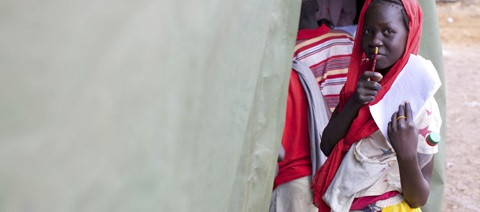 UNESCO and UNHCR call for the inclusion of refugees in the post-Covid-19 education effort 2020-07-15 We must not leave young refugees by the wayside, urged UNESCO and the Office of the United Nations High Commissioner for Refugees (UNHCR) as they pleaded in favour of young refugees’ education during an online debate on how best to provide them with improved learning during and after the pandemic. “Mobilizing for refugees is extremely urgent at a time when they are particularly vulnerable to the Covid-19 crisis and its aftermath,” said UNESCO Director-General Audrey Azoulay, as she opened the meeting. “The Covid-19 crisis is jeopardizing everything we have done for the education of refugees and migrants, their integration and chances of self-realization. We must strengthen our action in favour of the most vulnerable in order to guarantee them this fundamental right.” Canada's minister of international development, Karina Gould, who told the story of her Czech grandparents who became refugees after they fled former Czechoslovakia during World War II, put forward the necessity of “low tech solutions,” considering the digital and technological divide, and lack of communication infrastructures in many countries. Cameroon’s minister of Secondary Education, Pauline Nalova Lyonga Egbe, gave the example of mobile phones which are used by most of the population and which can be used as a cheap medium for remote education. The roundtable was also attended by two young refugee students from Rwanda and Mali now living in Kenya and Burkina Faso, a high ranking official in Kenya primary education and a member of the Pakistan National Assembly in charge of education and professional training, and representatives of the Global Coalition for Education established under the auspices of UNESCO. The UNHCR Special Envoy, actress Angelina Jolie, a long-time advocate for displaced persons, introduced the discussion and summarized its highlights. United Kingdom's Under-Secretary for Foreign Affairs, Baroness Sugg stressed that “education must be prioritized in the global recovery from coronavirus. This epidemic is not just a health crisis, it is an education crisis, especially for refugee children. Without school and an education, they will be unable to rebuild their lives and achieve their full potential.” She announced an extra 5.3 million pounds sterling to be given to UNHCR by the British Government. Concluding the discussion, The High Commissioner for Refugees, Filippo Grandi, warned “the bigger picture remained very grim because of the upcoming impact of the economic crisis on long term international assistance for education.” He stressed that 12% of education activity is supported by international aid. As between 40 and 60 million children might fall into poverty, he added, “we must include those who are among the most excluded, the people on the move.” UNESCO has warned the pandemic risked jeopardizing the progress made in education in recent years, especially for young girls. UNHCR estimates at least 20% of whom are at risk of not resuming their studies interrupted during school closures. However, a number of governments are planning to include refugees in post-pandemic response measures, such as distance education, in line with their commitments under the Global Compact on Refugees. The event was co-sponsored by Canada, the United Kingdom and the global Education Cannot Wait fund, which channelled its second COVID emergency allocation to refugees. URL:https://en.unesco.org/news/unesco-and-unhcr-call-inclusion-refugees-post-covid-19-education-effort
 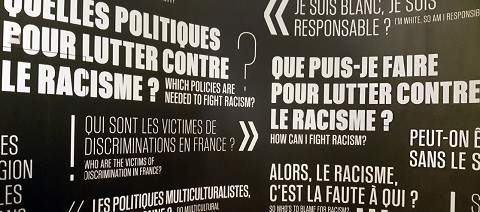 New resources – “Us and Them - From Prejudice to Racism”: Podcasts and musical voyages 2020-07-15 Now more than ever, understanding racism and discrimination in all its forms is crucial in order to foster inclusive societies. How are prejudices constructed? What is the reality of “race” from a genetic point of view? What are the arguments against the supporters of a division of humanity into “races”? Why have States come to institutionalize racism against specific categories of individuals? These are all questions that are addressed in the traveling exhibition “Us and Them – From Prejudice to Racism”, launched in March 2017 which was produced and conceived by the French Natural Museum of Natural History-Musée de l’Homme, with the collaboration of UNESCO. The exhibition continues to travel in various cities, including those from UNESCO’s International Coalition of Inclusive and Sustainable Cities – ICCAR, and made its way to the United Nations Headquarters in New York in March 2020. From the very beginning of the COVID-19 pandemic, the international community has witnessed the stigmatization and discrimination of populations of Asian origin and/or appearance. #IAmNotAVirus movement has risen up to combat such hate speech, but the xenophobic rhetoric used by leaders and populist groups has sparked a new wave of extreme right-wing movements that have galvanized racist messages advocating violence. Today, the global outrage that has heard the voices of citizens marching #BlackLivesMatter in different cities around the world, while appealing for racial justice for people of African descent, has substantiated that the legacy of slavery is still haunting us. The racial wounds that persist are once again uncovering the centuries-old legacies of bias and prejudice and has taken a toll in the construction of the moral fibre of our societies. In light of the current events, Musée de l'Homme has published several resources including a podcast series, reading materials, a MOOC, and videos revolving around the topic of racism. Under the name of “Us and Them”, the podcast series focuses on the scientific lies in which discrimination and racism were built on. RESOURCES Podcast series: « Nous et les autres : des préjugés au racisme » (in French) Using testimonies to dissect racism, this series of podcasts deconstructs the scientific lie on which this discrimination was built. Video: « La génétique permet-elle de classer les humains ? » (in French) Classifying humans according to morphological, geographical or cultural criteria does not work to describe their genetic diversity. Their variation is the result of movements, encounters and migrations, which retrace the complex and extremely rich history of our species. Reading materials: « Discriminations, préjugé, racisme, des définitions pour mieux comprendre ces phénomènes… » (in French) MOOC : « Les origines de l’Homme » (in French) Discover the history of our species, its origins and evolution with online courses. “15 stories: 15 musical voyages” From the stories of Nina Simone to that of Gaël Faye, discover 15 stories, 15 musical trajectories echoing the past exhibition "Nous et les autres, des préjugés au racisme", in partnership with the Médiathèque musicale de Paris. Other links Us and Them – From Prejudice to Racism Exhibition "Us and Them – From Prejudice to Racism" | UNESCO International Coalition of Inclusive and Sustainable Cities – ICCAR United Nations hosts “Us and Them – From Prejudice to Racism” exhibition Master Class Series against Racism and Discriminations URL:https://en.unesco.org/news/new-resources-us-and-them-prejudice-racism-podcasts-and-musical-voyages
  Education in times of crisis: Inspiring a new generation of gender equality advocates 2020-07-10 This new pandemic has impacted the lives of over 60% of the world’s student population. With the temporarily lockdown of schools and universities as an attempt to contain the spread of the COVID-19, classes at all educational levels have transitioned to online learning. This critical but necessary measure to ensure learning throughout the crisis makes it easier for students to participate in online events featuring the participation of global leaders. That is the case of the University San Francisco of Quito, which has been organizing classes to students from different fields, such as law, social sciences and architecture, to raise awareness on important challenges of society, such as poverty, education, health, human rights and gender equality. In this spirit, on 2 July, Professor Mateo Sáenz Hinojosa invited Ms Saniye Gülser Corat, UNESCO’s Director for Gender Equality, to speak to 60 students about UNESCO’s actions to foster gender equality and women’s empowerment, particularly through education, political participation and leadership. Brief History and Definition Gender equality has been a global priority for UNESCO since January 2008, but the work on this area has started much before, and it broke new ground when it started to also analyse the role of men in Gender Equality through the 1997 Expert Group Meeting on "Male Roles and Masculinities in the Perspective of a Culture of Peace" in Oslo, Norway, which led to the publication in 2000 of the book entitled Male roles, masculinities and violence: a culture of peace perspective. Since then, UNESCO has made an original and holistic contribution to the creation of an enabling environment for gender equality through coordinated actions in all its major programmes. Following the dual approach of gender mainstreaming and gender-specific programming, as outlined in its Priority Gender Equality Action Plan (2014-2021), UNESCO promotes gender equality and women’s empowerment from different and complementary angles, such as education, culture, information, and the sciences. Gender is not synonymous to women, it is not about the biological differences between people, but rather the socially-constructed roles and responsibilities of women and men, it includes expectations about characteristics, aptitudes and expected behaviors of both women and men. At UNESCO, we believe that gender equality means equal rights and opportunities, but also and very importantly, equal valuing of all genders.-- Saniye Gülser Corat Education & Gender Equality With a vision firmly rooted in inclusion, quality and learning throughout life, UNESCO is the UN’s specialized agency on Education and has a recognized leadership in the area of Education and Gender Equality. Although the common belief is that promoting gender equality means focusing on women and girls only, in some countries in particular in Latin America and the Caribbean, boys and young men can be at particular risk of early drop-out from school, for reasons ranging from a perception that young men should be earning money to support themselves and their families, to participation in gangs. However, it is important to remember that gender gaps in education, despite progress in recent years, are most often at the expense of girls. Around 132 million girls – about 1 in 5 across the world – are out of school today, and 16 million girls will never set foot in a classroom. At the current pace of change, it will take over a century to close the gap. Another alarming figure is that, among the 750 million illiterate adults in the world, two-thirds are women – a proportion that has not changed in the last two decades. 132 milliongirls are out of school today 16 milliongirls will never set foot in a classroom 500+ millionadult women without basic literacy skills Girls’ and women’s unequal access to, and performance in, education is both a cause and a result of multiple factors, including chronic and systemic gender-based discrimination reproduced in the education system. Therefore, UNESCO works to improve the quality of learning processes and environment for girls and boys by addressing gender disparities and promoting equality throughout the education system. UNESCO also plays a key role in overcoming gender disparities in access to, influence over, and use of science, technology, engineering and mathematics (STEM). Today women account for only 30% of the world’s researchers, and even lower percentages at higher decision-making levels. In 2019, the report entitled I’d Blush if I Could, which looked at the lack of women in frontier technologies such as artificial intelligence, shared strategies on how gender-responsive education can help resetting gendered views of technology and ensuring equality for women and girls. At a moment when every sector is becoming a technology sector, narrowing digital gaps is becoming an absolute priority for policy-makers, educators and everyday citizens. According to Ms Corat, “Gender equality in the education sector is more than just about parity in access; it is necessary to ensure that learners are acquiring the attitudes and competencies necessary for promoting gender equality in their everyday lives”. Equipping girls and boys, women and men with the knowledge, values, attitudes and skills to tackle gender disparities is a precondition to building a sustainable future for all. Politics & Leadership With 51% of women at Director and above levels in December 2019,UNESCO is among the highest-ranking UN agencies in terms of gender balance. Gender inequality persists in leadership positions. According to the Women’s Power Index, 19 out of 193 countries have a woman head of state or government, and 4 out of 193 countries have at least 50% women in the national legislature. However, women are not only globally underrepresented in politics in local governments, they have also been traditionally underrepresented at senior levels within the international organizations, including the United Nations. In 2016, António Guterres, UN Secretary-General, pledged to reach gender parity in senior positions at the United Nations stressing that by the end of his mandate, “we should reach full gender parity at the Under-Secretary-General and Assistant Secretary-General levels, including special representatives and special envoys”. UNESCO has been showing great results in this regard. In 2009, UNESCO had already achieved overall parity in the professional category. The number of women at Director and above positions rise from 23% in 2009 to 51% in December 2019. Positioning UNESCO among the highest-ranking agencies in this respect, as the average representation of women in the Professional category and above in the United Nations system is 45% (source: CEB/2019/HLCM/HR/17). For Ms Corat, “women in leadership positions bring diversity of opinions, ambitions and thinking. if we don’t have representation of half of humanity, it is impossible to ensure gender equality” In addition, women in leadership positions tend to favour the equitable redistribution of resources, and legislatures with a higher share of women on average tend to support health, education and social welfare spending at the expense of defence spending. Preliminary evidence also suggests that women leaders have been dealing with the COVID-19 pandemic much more efficiently. This is why UNESCO works to promote an enabling environment for women to become political leaders, in particular through gender transformative policies, and to call upon women leaders to be role models for future generations. To know more about UNESCO’s work on Gender Equality, please click here. URL:https://en.unesco.org/news/education-times-crisis-inspiring-new-generation-gender-equality-advocates
 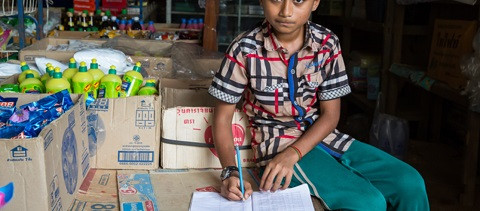 COVID-19: What you need to know about refugees’ education 2020-07-10 Despite a relative easing of COVID-19 school closures and an increasing trend towards reopening, over one billion learners globally remain affected by school closures. Disruption to education on this scale is unprecedented. COVID-19 leaves few lives and places untouched, however its impact, including in education, is harshest for groups that are already in vulnerable situations such as refugees. How are COVID -19 school closures affecting refugees’ education? Even before COVID-19 refugee children were twice as likely to be out of school than other children and despite improvements in refugee enrolment rates, only 63% of refugees are in enrolled in primary school and 24% in secondary education. The pandemic risks creating a backslide in the small gains made and creating a disaster for groups such as adolescent girls. In recent years significant efforts have been made on the inclusion of refugee learners in national education systems, however barriers to education persist and could potentially worsen due to the pandemic. There is also the worrying possibility that discrimination and xenophobia directed at refugee populations increases, negatively affecting school enrolment and retention. What can we do a ensure quality education for refugee learners? The first step is upholding and guaranteeing the right to education for refugees through ensuring all are able to learn at home and safely return to school. There are some promising signs that governments are fast-tracking the inclusion of refugees in their COVID-19 responses, demonstrating an opportunity to work on the delivery of commitments contained in the Global Compact on Refugees. As the focus shifts from distance learning and school closure to reopening and returning to school, close attention must be paid to existing and exacerbated inequities facing refugees, especially secondary school age refugee girls who were already only half as likely to enroll as their male peers. These conditions are anticipated to worsen. UNHCR estimates that 20% of the refugee girls who are in secondary school are at significant risk of never returning to school following the COVID-19 school closures. We must act now to address the inequality and dire situation facing refugee learners. Why is this so urgent and what is at stake? There is a lot at stake during and after COVID-19 for refugee learners. It is anticipated that there will be major increases in drop out, which means losing this generation if they are left out of education. In many countries the education status of refugees was already fragile prior to the pandemic, with many having missed years of schooling and having to work hard to catch up. They must now cope with further disruptions to their learning. Those who were already not enrolled in education programmes are at even greater risk of never returning to learning. Lack of access to infrastructure, hardware and connectivity, living conditions and the remoteness of many refugee-hosting areas means that refugee children are also at risk of not being able to access national distance learning programmes put in place by governments as part of the COVID-19 response. What is UNESCO doing to advance the right to education for refugees? Through the Global Education Coalition, UNESCO is facilitating partnerships between multiple stakeholders to provide learning opportunities for children youth and adults, including refugees, who have been impacted by the disruption of education due to the pandemic. UNESCO has pledged and is working to strengthen national education systems by providing Member States with expertise and technical guidance for policy design, implementation and planning support for the inclusion of refugees into all levels of national education systems. UNESCO’s qualifications passport for refugees and vulnerable migrants launched in 2019 aims to facilitate learners’ integration in the education system and labour market through assessment procedures. The process helps recognize key elements such as the highest achieved qualifications, skills, relevant job experiences and language proficiency. On 13 July from 4pm to 5:30pm CET, a high-level virtual roundtable led by UNHCR and UNESCO will bring together voices of refugees to hear about the needs and responses on the ground. The event is convened and chaired by Special Envoy Angelina Jolie and co-hosted by Canada and the United Kingdom. Watch it live here Photo: Refugee learner doing his homework, Thailand, 2015. What UNESCO does in education in emergencies UNESCO’s education response to COVID-19 The Global Education Coalition UNESCO qualifications passport for refugees and vulnerable migrants UNESCO’s Pledge to the Global Refugee Forum URL:https://en.unesco.org/news/covid-19-what-you-need-know-about-refugees-education
 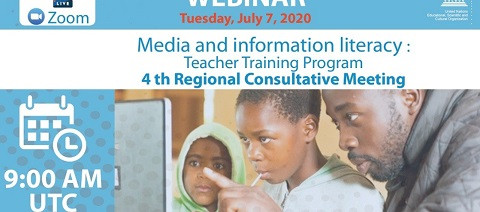 Media and Information Literacy: Teacher training program: Fourth regional consultative meeting, July 7th, 2020 2020-07-10 Dakar, July 2nd 2020 - The Communication & Information, and Education sectors of UNESCO’s Multisectoral Regional Office for West Africa-Sahel jointly are organizing the Fourth Regional Consultative Meeting on “Media and Information Literacy (MIL): Teacher Training Program”, and on the ‘Draft Global Standards for MIL Guidelines’. In 2011, UNESCO spearheaded a process that led to the development of a Model for a teacher training Program on Media and Information Literacy; it included content related to information, media and technology skills. The model has since been used to support training of trainers programs and the integration of its content into teacher training curricula in several African countries including South Africa, Nigeria, Gabon, etc. MIL provides communities with key skills for lifelong learning and in all aspects of life. It is therefore essential that people know how, by improving their knowledge of the media, information and technologies, and their skills, they can more significantly engage in sustainable development, dialogue, human rights, peace and improved governance. Much progress has been made in this direction. However, in view of new developments in the digital sector, in particular for artificial intelligence, the emergence of new concepts such as global citizenship and education for digital citizenship, and the exponential increase in disinformation, a second cycle of international dialogues around this crucial resource has proven to be necessary. It is indeed becoming urgent to foster the critical thinking and the digital well-being of people through MIL. As a reminder, the first international consultative meeting on the MIL program for teachers took place in September 2019, in Belgrade, Serbia. The results of this first meeting are available in the Belgrade Recommendations on the ‘Draft Global Standard for MIL Guidelines’. It is therefore with the aim of pursuing this prospective with stakeholders in Africa that UNESCO is organizing a consultation in French-speaking Africa, which will build on the results of previous consultations. The fourth regional consultative meeting is scheduled for July 07th, 2020 and will have as main objectives: Collecting contributions to update the Media and Information Literacy Program for teachers and to improve the ‘Draft Global Standards for MIL Guidelines’; Making recommendations for the promotion of MIL in Africa. The participants will mainly come from the academic world, teacher training institutions, youth organizations and the media sector from the following countries: Benin, Burkina Faso, Cameroon, Congo, Ivory Coast, Gabon, Guinea, Mali, Niger, DRC, Senegal, Chad and Togo. Contacts: Michel Kenmoe (me.kenmoe@unesco.org(link sends e-mail)) – Head of the Communication and Information Section, UNESCO’s Multisectoral Regional Office for West Africa (Sahel), Dakar, Senegal Yoshie Kaga (y.kaga@unesco.org(link sends e-mail)) – Program Specialist, UNESCO’s Multisectoral Regional Office for West Africa(Sahel), Dakar, Senegal Najib Mokni (n.mokni@unesco.org(link sends e-mail)) - Head of the Communication and Information Section, UNESCO’s Multisectoral Regional Office for Central Africa, Yaoundé, Cameroun Théodore Somda (tz.somda@unesco.org(link sends e-mail)) – Communications Officer, UNESCO’s Multisectoral Regional Office for West Africa (Sahel), Dakar, Sénégal URL:https://en.unesco.org/news/media-and-information-literacy-teacher-training-program-fourth-regional-consultative-meeting
  Towards resilient education systems for the future – A new joint study launched by UNESCO and IEA 2020-07-03 The International Association for the Evaluation of Educational Achievement (IEA) and UNESCO are launching a study, in partnership with the European Commission, to draw a more comprehensive picture of COVID-19’s impact on global education, entitled “Responses to Educational Disruption Survey (REDS)”. REDS is part of the collective effort under the Global Education Coalition launched by UNESCO that seeks to facilitate inclusive learning opportunities for children and youth in the context of educational disruption and to establish approaches to develop more open and resilient education systems for the future. The pandemic has affected students’ learning efficacy on a global scale never encountered before. Education systems have varied in their responses in this context. Some have introduced home schooling programs and remote learning, offering free online resources, while others are delivering paper-based assignments to students’ homes or using public TV and radio broadcasting channels. What is missing is the first-hand information from schools, collected in a systematic, efficient and scientific manner, that is needed for evaluating the extent to which teaching and learning have been challenged, continued, and adjusted as a result of the current crisis. REDS intends to bridge this information gap by collecting internationally comparable data from governments, school principals, teachers and students, on how they are prepared for distance learning in times of school closures, as well as during a subsequent re-opening phase, and what measures were implemented to provide all students with the opportunity to continue learning. The study seeks to answer the following overarching question: How were teaching and learning affected by the disruptions and how was this mitigated by the implemented measures, across and within countries? Aside from providing insights on the impact of the teaching and learning disruption, the study aims to investigate the contextual factors, issues and implemented measures that may influence the success of distance learning for students across countries. The study will target all different educational levels and will focus on topics around the preparedness for distance learning, available IT and educational resources, perceptions on the success of strategies, student engagement, as well as around inequalities in educational learning opportunities during the disruptions. Additionally, issues concerned with students’ and teachers’ wellbeing will be explored. REDS is designed to serve as a valuable source of information that will inform the policy and practice for more resilient education systems for the future, also in their pursuit of the Sustainable Development Goal 4 on ensuring inclusive and equitable quality education for all, in particular targets 4.1 and 4.4. The insights may also offer an opportunity to rethink the overall purpose, role, content and delivery of education in the future. For this reason, the study also aims to identify sustainable, transformational concepts that emerged from the crisis and may serve as good practice when schools re-open. How to get involved? All interested countries are invited to participate in REDS. We understand the immense pressure currently facing countries, and to encourage wider country participation, we are seeking funds from donor organizations to support countries with participation costs associated to REDS, especially for low-income countries. For the full study proposal or further information please reach out to Huong Le Thu(link sends e-mail) or Dr Andrea Netten(link sends e-mail). Download leaflet and brochure URL:https://en.unesco.org/news/towards-resilient-education-systems-future-new-joint-study-launched-unesco-and-iea
  Countries failing to prevent violence against children, agencies warn 2020-06-30 Global status report on preventing violence against children calls for more government action and warns of ‘dramatic impact’ of COVID-19 Half of the world’s children, or approximately 1 billion children each year are affected by physical, sexual or psychological violence, suffering injuries, disabilities and death, because countries have failed to follow established strategies to protect them. This is according to a new report published today by the World Health Organization (WHO), UNICEF, UNESCO, the Special Representative of the United Nations Secretary-General on Violence against Children and the End Violence Partnership. “There is never any excuse for violence against children," said Dr Tedros Adhanom Ghebreyesus, WHO Director-General. “We have evidence-based tools to prevent it, which we urge all countries to implement. Protecting the health and well-being of children is central to protecting our collective health and well-being, now and for the future.” The report – Global Status Report on Preventing Violence Against Children 2020 – is the first of its kind, charting progress in 155 countries against the “INSPIRE” framework, a set of seven strategies for preventing and responding to violence against children. The report signals a clear need in all countries to scale up efforts to implement them. While nearly all countries (88%) have key laws in place to protect children against violence, less than half of countries (47%) said these were being strongly enforced. The report includes the first ever global homicide estimates specifically for children under 18 years of age – previous estimates were based on data that included 18 to 19-year olds. It finds that, in 2017, around 40,000 children were victims of homicide. “Violence against children has always been pervasive, and now things could be getting much worse,” said UNICEF Executive Director Henrietta Fore. “Lockdowns, school closures and movement restrictions have left far too many children stuck with their abusers, without the safe space that school would normally offer. It is urgent to scale up efforts to protect children during these times and beyond, including by designating social service workers as essential and strengthening child helplines.” Progress is generally uneven Of the INSPIRE strategies, only access to schools through enrollment showed the most progress with 54% of countries reporting that a sufficient number of children in need were being reached in this way. Between 32% to 37% of countries considered that victims of violence could access support services, while 26% of countries provided programmes on parent and caregiver support; 21% of countries had programmes to change harmful norms; and 15% of countries had modifications to provide safe physical environments for children. Although a majority of countries (83%) have national data on violence against children, only 21% used these to set baselines and national targets to prevent and respond to violence against children. About 80% of countries have national plans of action and policies but only one-fifth have plans that are fully funded or have measurable targets. A lack of funding combined with inadequate professional capacity are likely contributing factors and a reason why implementation has been slow. The COVID-19 response and its impact on children “During the COVID-19 pandemic, and the related school closures, we have seen a rise in violence and hate online – and this includes bullying. Now, as schools begin to re-open, children are expressing their fears about going back to school,” said Audrey Azoulay, UNESCO Director-General. “It is our collective responsibility to ensure that schools are safe environments for all children. We need to think and act collectively to stop violence at school and in our societies at large.” Stay-at-home measures including school closures have limited the usual sources of support for families and individuals such as friends, extended family or professionals. This further erodes victims’ ability to successfully cope with crises and the new routines of daily life. Spikes in calls to helplines for child abuse and intimate partner violence have been observed. And while online communities have become central to maintain many children’s learning, support and play, an increase in harmful online behaviours including cyberbullying, risky online behavior and sexual exploitation have been identified. “Whilst this report was being finalized, confinement measures and the disrupted provision of already limited child protection services exacerbated the vulnerability of children to various forms of violence,” said Najat Maalla M’jid, Special Representative of the United Nations Secretary-General on Violence against Children. “To respond to this crisis a unified, child rights and multisectoral framework for action for children is critical requiring a strong mobilization of governments, bilateral/multilateral donors, civil society, private sector and children, whose views must be heard and truly taken into account to ensure duly protection and the possibility for all to thrive and reach their full potential.” Accelerating action to protect children WHO and its partners will continue to work with countries to fully implement the INSPIRE strategies by enhancing coordination, developing and implementing national action plans, prioritizing data collection, and strengthening legislative frameworks. Global action is needed to ensure that the necessary financial and technical support is available to all countries. Monitoring and evaluation are crucial to determine the extent to which these prevention efforts are effectively delivered to all who need them. “Ending violence against children is the right thing to do, a smart investment to make, and it’s possible. It is time to fully fund comprehensive national action plans that will keep children safe at home, at school, online and in their communities,” said Dr Howard Taylor, End Violence Partnership. “We can and must create a world where every child can thrive free from violence and become a new generation of adults to experience healthy and prosperous lives.” Editor’s note: The data for the report was compiled through a survey administered between 2018 and 2019 with responses from over 1000 decision-makers from 155 countries. The INSPIRE strategies launched in 2016 call for the implementation and enforcement of laws; changing norms and values to make violence unacceptable; creating safe physical environments for children; providing support to parent and caregivers; strengthening income and economic security and stability; improving response and support services for victims; and providing children with education and life skills. Related links: To download the report (in English only) and executive summary (in English, French, Russian and Spanish), go to: https://who.canto.global/b/SSHOR and use password: 490759. To watch the launch event taking place on Thursday, 18 June from 15:00 to 16:30 CEST, please register at https://bit.ly/2ApZXKa. After registering, you will receive a confirmation email with details on how to access the event. Interpretation will be provided in the 6 UN languages. URL:https://www.who.int/news-room/detail/18-06-2020-countries-failing-to-prevent-violence-against-children-agencies-warn
  L'UNESCO souligne que 40% des pays les plus pauvres n'ont pas réussi à soutenir les apprenants à risque pendant la crise de COVID-19 et plaide pour l'inclusion dans l'éducation 2020-06-24 Paris, 23 juin — Moins d’un pays sur dix dispose de lois qui contribuent à assurer la pleine inclusion dans l'éducation, selon le Rapport mondial de suivi sur l'éducation 2020 de l'UNESCO intitulé Inclusion et éducation – Tous, sans exception.Celui-ci fournit une analyse approfondie des principaux facteurs d'exclusion des apprenants dans les systèmes éducatifs du monde entier, en examinant notamment les questions d'origine, d'identité et de capacité - sexe, âge, lieu, pauvreté, handicap, ethnicité, indigénéité, langue, religion, statut de migrant ou de déplacé, orientation sexuelle ou expression de l'identité de genre, incarcération, croyances et attitudes. Il constate une intensification de l'exclusion pendant la pandémie de Covid-19. Il estime qu'environ 40% des pays à faible et moyen revenu n'ont pas soutenu les apprenants défavorisés pendant la fermeture temporaire des écoles.Le Rapport mondial de suivi sur l'éducation 2020 (GEM) exhorte les pays à se concentrer sur les personnes laissées pour compte lors de la réouverture des écoles afin de rendre les sociétés plus résilientes et plus égalitaires. « Afin de relever les défis de notre temps, il est impératif d'évoluer vers une éducation plus inclusive », a déclaré la Directrice générale de l'UNESCO, Audrey Azoulay. « Repenser l'avenir de l'éducation est d'autant plus important après la pandémie de Covid-19, qui a encore aggravé et mis en lumière les inégalités. L'absence d'action entravera le progrès des sociétés ». La persistance de l'exclusion. Le Rapport mondial de suivi sur l’éducation de cette année est le quatrième de cette série à suivre les progrès réalisés dans 209 pays pour atteindre les objectifs en matière d'éducation adoptés par les États membres des Nations unies dans le programme de développement durable à l’horizon 2030.Le Rapport révèle que 258 millions d'enfants et de jeunes sont totalement privés d’instruction, la pauvreté étant le principal obstacle à leur accès à l'éducation. Dans les pays à faible et moyen revenu, les adolescents issus des 20% de ménages les plus riches ont trois fois plus de chances de terminer le premier cycle de l'enseignement secondaire que ceux des ménages les plus pauvres. Parmi ceux qui ont achevé le premier cycle de l'enseignement secondaire, les élèves des ménages les plus riches ont deux fois plus de chances de posséder des compétences de base en lecture et en mathématiques que ceux des ménages les plus pauvres. Malgré l'objectif proclamé d’assurer l'achèvement universel du deuxième cycle du secondaire d'ici 2030, pratiquement aucune jeune femme pauvre vivant en milieu rural ne termine ses études secondaires dans une vingtaine de pays, la plupart en Afrique subsaharienne.Toujours selon le Rapport, les élèves de 10 ans des pays à revenu moyen et élevé qui ont reçu un enseignement dans une langue autre que leur langue maternelle obtiennent généralement des résultats inférieurs de 34% à ceux des locuteurs natifs dans les tests de lecture. Dans dix pays à faible et moyen revenu, les enfants handicapés ont 19% de chances en moins d'atteindre un niveau minimum en lecture que ceux qui ne sont pas handicapés. Aux États-Unis, par exemple, les élèves LGBTI étaient près de trois fois plus susceptibles de dire qu'ils avaient pu préférer rester à la maison parce qu'ils ne se sentaient pas en sécurité à l'école.Des fondations inéquitables. Parallèlement à la publication 2020, l'équipe du Rapport GEM a lancé un nouveau site web, PEER, contenant des informations sur les lois et les politiques concernant l'inclusion dans l'éducation pour tous les pays du monde. Cet outil montre que de nombreux pays pratiquent encore la ségrégation dans l'éducation, ce qui renforce les stéréotypes, la discrimination et l'aliénation. Dans un quart des pays, les lois exigent que les enfants handicapés soient instruits dans des établissements séparés, ce chiffre dépassant les 40% en Asie, en Amérique latine et dans les Caraïbes.Exclusion flagrante. Deux pays d'Afrique interdisent toujours l'accès des filles enceintes à l'école, 117 autorisent les mariages de mineurs, tandis que vingt pays n'ont pas ratifié la Convention 138 de l'Organisation internationale du travail (OIT) interdisant le travail des enfants. Dans plusieurs pays d'Europe centrale et orientale, les enfants roms sont victimes de ségrégation dans les écoles ordinaires. En Asie, les personnes déplacées, comme les Rohingyas, sont scolarisées dans des systèmes d'enseignement parallèles. Dans les pays de l'OCDE, plus des deux tiers des élèves issus de l'immigration fréquentent des écoles où ils représentent au moins 50% de la population scolaire, ce qui réduit leurs chances de réussite. « La pandémie de Covid-19 nous a offert une réelle opportunité de repenser nos systèmes éducatifs », estime Manos Antoninis, directeur du Rapport mondial de suivi sur l'éducation. « Mais le passage vers un monde qui valorise et accueille la diversité ne se fera pas du jour au lendemain. Il existe une tension évidente entre l'enseignement dispensé à tous les enfants sous un même toit et la création d'un environnement où les élèves apprennent le mieux. Mais le Covid-19 nous a montré qu'il était possible de faire les choses différemment si nous faisions l’effort nécessaire ». Les croyances discriminatoires des parents constituent un obstacle à l'inclusion : environ 15% des parents en Allemagne et 59% à Hong Kong, en Chine, craignent que les enfants handicapés perturbent l'apprentissage des autres. Les parents d'enfants vulnérables souhaitent également envoyer ces derniers dans des écoles qui assurent leur bien-être et répondent à leurs besoins. Dans le Queensland, en Australie, 37% des élèves des écoles spéciales ont quitté les établissements ordinaires.Le Rapport montre également que les systèmes éducatifs ne prennent souvent pas en compte les besoins spécifiques des apprenants. Seuls 41 pays dans le monde ont officiellement reconnu la langue des signes et, généralement, les écoles sont plus désireuses d'obtenir un accès à l'internet que de s'occuper des élèves handicapés. Quelque 335 millions de filles ont fréquenté des écoles qui ne leur fournissaient pas les services d'eau, d'assainissement et d'hygiène dont elles avaient besoin pour continuer à assister aux cours pendant leurs menstruations.Aliéner les apprenants. Lorsque les apprenants sont insuffisamment représentés dans les programmes et les manuels scolaires, ils peuvent se sentir exclus. Les filles et les femmes représentent 44% des références dans les manuels scolaires de langue anglaise du secondaire en Malaisie et en Indonésie, 37% au Bangladesh et 24% dans la province du Pendjab au Pakistan. Les programmes scolaires de 23 pays européens sur 49 n'abordent pas les questions d'orientation sexuelle, d'identité ou d'expression sexuelles.Les enseignants ont besoin et veulent une formation sur l'inclusion, que moins d'un enseignant sur dix du primaire dans dix pays francophones d'Afrique subsaharienne a déclaré avoir reçue. Un quart des enseignants de 48 pays ont déclaré qu'ils souhaitaient davantage de formation pour enseigner aux élèves ayant des besoins particuliers.Manque chronique de données de qualité sur les personnes laissées pour compte. Près de la moitié des pays à faible et moyen revenu ne recueillent pas suffisamment de données sur l'éducation des enfants handicapés. Les enquêtes auprès des ménages sont essentielles pour ventiler les données sur l'éducation en fonction des caractéristiques individuelles. Mais 41% des pays – où vit 13% de la population mondiale – n'ont pas mené d'enquêtes ou, quand ils l’ont fait, n'ont pas rendu publiques les données recueillies. Les chiffres sur l'apprentissage sont principalement tirés des écoles et ne tiennent pas compte des personnes qui ne les fréquentent pas. « Les données sont insuffisantes, ce qui nous empêche d’avoir un portrait complet de la situation », explique M. Antoninis. « Il n'est donc pas étonnant que les inégalités soudainement mises en lumière lors de la pandémie nous aient pris par surprise ». Des signes de progrès en matière d'inclusion. Le Rapport et son site internet PEER constatent que de nombreux pays utilisent des approches positives et innovantes pour assurer une transition vers l'inclusion. Beaucoup mettent en place des centres de ressources pour un certain nombre d’écoles et permettent aux établissements ordinaires d'accueillir les enfants d'écoles spéciales, comme c'est le cas au Malawi, à Cuba et en Ukraine. La Gambie, la Nouvelle-Zélande et Samoa ont recours à des enseignants itinérants pour rejoindre les populations mal desservies.De nombreux pays ont également fait des efforts pour répondre aux besoins des différents apprenants ; par exemple, l'État d'Odisha en Inde utilise 21 langues tribales dans ses salles de classe, le Kenya adapte son programme au calendrier nomade et, en Australie, les programmes de 19% des élèves sont adaptés par les enseignants afin que les résultats attendus puissent correspondre aux besoins des élèves.Le Rapport propose du matériel pour une campagne numérique, « Tous, sans exception », qui promeut un ensemble de recommandations clés pour les dix prochaines années. URL:https://en.unesco.org/news/lunesco-souligne-que-40-pays-plus-pauvres-nont-pas-reussi-soutenir-apprenants-risque-crise
 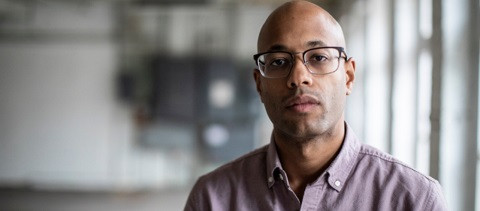 Take action against racism and discrimination! Interview with Webster 2020-06-20 Aly Ndiaye, alias Webster, is a veteran of the Quebec hip-hop scene. Active since 1995, he now travels the world through his concerts, writing workshops and conferences. Passionate about history, the rapper from Limoilou has been particularly interested in slavery and the black presence in Quebec and Canada since the time of New France. Why has the COVID-19 pandemic fuelled many acts and messages of hatred? The overlap between a disaster, its place of outbreak and the perception of different cultural habits was sufficient to give free rein to racism. If we add to this the fear for many people of the emergence of certain countries such as the next world superpowers, it did not take more for people, in the media, and on the web, to slip into rhetoric racists of the “Yellow Peril” of past centuries. While countries faced racism, citizens gave in to the fear of the foreigner as the accelerator of this pandemic. We have witnessed the differential and anti-black treatment given to African and Afro-descendant people in restaurants, hotels and properties in certain cities. In the UNESCO webinar on “Confronting the heritage of slavery together: racism” on May 28, you said “It is not the races that created racism, but racism that created the races” (tdlr). In light of these words, how would you analyze the manifestations of hatred against "the other" in our current context? This hatred is rooted in a relatively recent historical concept; it was not until the 18th century, the Age of Enlightenment, that the notion of race was theorized. Thus, through a categorization, essentialization, and hierarchization of human beings according to their pigmentation, European thinkers, philosophers and theorists have constructed a perception of the "Other" that still prevails today. This purely ideological construction gave an appearance of intellectual legitimacy to slavery and the colonial enterprises of the last centuries. As the modern world is a result of these past colonial dynamics, the racial biases inseparable from these endeavors have continued to color minds throughout the 20th century. Of course, we have begun, as humans, to shed some of these habits and mentalities, but the social and political impacts of the racist thinking that prevailed for centuries remain very real. In your opinion, as a hip-hop artist, writer, historian and lecturer, how can essential history lessons on slavery and racism be conveyed to today's youth? I feel that in order to transmit notions of history and combat racism, we need to go beyond the usual academic framework. The latter is, of course, important (we need only think of the fact that slavery and the Afro-descendant presence in Quebec and Canada are subjects that are little discussed or have even been completely expunged from the learning of history in this country), but I do not believe that it is sufficient to facilitate the understanding of certain concepts or their perpetuation in the collective consciousness and unconsciousness. The arts, however, play a vital role in the transmission of knowledge and its retention in all segments of society. Thus, music, books, visual arts, or cinema are essential vectors for a better understanding of these issues, be they social, political, or historical. © Ludvig Germain Auclair What message can you give to young people around the world who want to take action against racism and discrimination? What means are at their disposal? Everyone can make a difference from where they are in society, regardless of their age. As individuals, we are all part of this great whole and we all have a role to play; each brick has its importance in the building. For example, a person may decide to get involved in a local organization or just organize with a few friends to help bring about change. You can decide to make informative clips, humorous videos, theme songs, or simply go out and vote. The important thing is to understand that these are not dynamics that are beyond us, they concern all of us as individuals. For example, a person can contribute by taking a stand when they witness racist words or actions and make a difference in their classroom, school or neighborhood. Taking the time to educate oneself and take an interest in these dynamics is already a gesture towards change. This presupposes above all a serious reflection on oneself and on one's attitudes towards the "Other" whom one presents as different. See also The Slave Route General History of Africa Fostering Rights, Inclusion and Non-Discrimination Inclusion in the Time of COVID-19: Confronting slavery’s legacy of racism together UN info: Racism is a scourge that exists in all societies (in French) Podcast: Inclusion in the Time of COVID-19: Confronting slavery’s legacy of racism together (in French) Racism, the legacy of slavery that we must confront together (in French) Watch a full video / a video clip of the interview ***Aly Ndiaye, alias Webster, is the author of a hip-hop writing textbook, À l'Ombre des Feuilles (Quebec America, 2019), of a children's book about Olivier Le Jeune, the first African slave in Canada, Le Grain de Sable (Septentrion, 2019), and a booklet “Slavery in Canada” (Canadian Commission for UNESCO, June 2020) URL:https://en.unesco.org/news/take-action-against-racism-and-discrimination-interview-webster
  New UN report shows countries failing to protect children against violence 2020-06-20 While global attention is focused on containing the COVID-19 pandemic, one out of two of two children across the world continue to be affected by physical, sexual or psychological violence, according to a new report released by WHO, together with UNESCO, UNICEF, the Special Representative of the United Nations Secretary-General on Violence against Children and the End Violence Partnership. The report – Global Status Report on Preventing Violence Against Children 2020 – brings to light the increasing number of children who are suffering injuries, disabilities and death because countries are not following established strategies to protect them from harm. The first of its kind, it charts countries’ progress against the “INSPIRE” framework, a set of seven strategies for preventing and responding to violence against children. The report includes the first ever global homicide estimates for children under 18 years of age. In 2017, an estimated 40150 children were victims of homicide. It also draws on data from UNESCO’s 2019 report, Behind the Numbers: Ending school violence and bullying, highlighting that bullying is a major problem worldwide, with 32% of students aged 11- 15 bullied by their peers at school at least once in the last month. “During the COVID-19 pandemic, and the related school closures, we have seen a rise in violence and hate online – and this includes bullying. Now, as schools begin to re-open, children are expressing their fears about going back to school,” said UNESCO Director-General Audrey Azoulay. “It is our collective responsibility to ensure that schools are safe environments for all children. We need to think and act collectively to stop violence at school and in our societies at large.” Uneven progress in implementing violence prevention strategies Laws that ban corporal punishment of children in all settings, including schools, have the potential to reduce the violence perpetrated by adults on children, and also between children, the report finds. Yet, while 79% of countries which responded for the report ban corporal punishment, only 30% of respondents believe that those who are violent towards children for whatever reason, including teachers, will be sanctioned. “This report is a strong reminder that having good policies is not enough, and that we need to work constantly to make sure that these policies are enforced, said UNESCO Assistant Director-General for Education Stefania Giannini. “It will be impossible to achieve inclusive and equitable quality education for all if children cannot learn in schools that are safe and free of violence, including violence perpetrated by students, teachers and other school personnel, and corporal punishment.” COVID-19 response and its impact on children Stay-at-home measures, including school closures, have limited the usual sources of support for families and individuals such as friends, extended family or professionals. This erodes victims’ ability to successfully cope with crises and the new routines of daily life. Spikes in calls to helplines for child abuse and intimate partner violence have been observed. And while online communities have become central to maintain learning, support and play for many children, an increase in harmful online behavior including cyberbullying, risky online behavior and sexual exploitation have also been identified. URL:https://en.unesco.org/news/new-report-shows-countries-failing-protect-children-against-violence