
News
Catch up on what’s happening in the world of global citizenship education.
311 results found
 WHO and Global Citizen announce: 'One World: Together at home' Global Special to support healthcare workers in the fight against the COVID-19 pandemic 2020-04-09 ‘One World: Together At Home’ global special to air on Saturday, 18 April 2020 in celebration and support of healthcare workers, broadcast to feature real experiences from doctors, nurses and families around the world. Powered by commitments from supporters and corporate partners in benefit of the COVID-19 Solidarity Response Fund, Broadcast special to also benefit local and regional charities that provide food, shelter and healthcare to those that need help most. Historic broadcast to be hosted by Jimmy Fallon of ‘The Tonight Show,’ Jimmy Kimmel of ‘Jimmy Kimmel Live’ and Stephen Colbert of ‘The Late Show with Stephen Colbert,’ Friends from Sesame Street Also on hand to help unify and inspire people around the world to take meaningful actions that increase support for the global COVID-19 response. Curated in collaboration with Lady Gaga, broadcast to include Alanis Morissette, Andrea Bocelli, Billie Eilish, Billie Joe Armstrong of Green Day, Burna Boy, Chris Martin, David Beckham, Eddie Vedder, Elton John, FINNEAS, Idris and Sabrina Elba, J Balvin, John Legend, Kacey Musgraves, Keith Urban, Kerry Washington, Lang Lang, Lizzo, Maluma, Paul McCartney, Priyanka Chopra Jonas, Shah Rukh Khan and Stevie Wonder.------------------------------------------ Geneva/New York - International advocacy organization Global Citizen and the World Health Organization today announced the One World: Together At Home -- a globally televised and streamed special in support of the fight against the COVID-19 pandemic. One World: Together At Home will be broadcast live on Saturday, 18 April 2020 at 5:00 p.m. PDT/8:00 p.m. EDT/12:00 a.m. GMT airing on ABC, NBC, ViacomCBS Networks, iHeartMedia and Bell Media networks and platforms in Canada. Internationally, BBC One will run the program on Sunday 19 April 2020. Additional international broadcasters include beIN Media Group, MultiChoice Group and RTE. The virtual broadcast will show unity among all people who are affected by COVID-19 and will also celebrate and support brave healthcare workers doing life-saving work on the front lines. Hugh Evans, Co-Founder and CEO of Global Citizen, said “As we honor and support the heroic efforts of community health workers, ‘One World: Together At Home’ aims to serve as a source of unity and encouragement in the global fight to end COVID-19. Through music, entertainment and impact, the global live-cast will celebrate those who risk their own health to safeguard everyone else’s.” One World: Together At Home will also be a multi-hour digital broadcast streaming online on multiple global platforms, including: Alibaba, Amazon Prime Video, Apple, Facebook, Instagram, LiveXLive, Tencent, Tencent Music Entertainment Group, TIDAL, TuneIn, Twitch, Twitter, Yahoo and YouTube. This digital special will include additional artists and performances from all over the globe as well as unique stories from the world's healthcare heroes. For information about how to tune in and take action, visit www.globalcitizen.org/togetherathome. “The World Health Organization is committed to defeating the coronavirus pandemic with science and public health measures, and supporting the health workers who are on the frontlines of the response,” said Dr Tedros Adhanom Ghebreyesus, Director-General of WHO. “We may have to be apart physically for a while, but we can still come together virtually to enjoy great music. The ‘One World: Together At Home’ concert represents a powerful show of solidarity against a common threat.” “The United Nations system is fully mobilized: supporting country responses, placing our supply chains at the world’s disposal and advocating for a global cease-fire. We are proud to join forces with ‘One World: Together At Home’ to help suppress the transmission of the virus, minimize social-economic impacts on the global community and work together now to advance Global Goals for the future,” said António Guterres, Secretary-General of the United Nations. “There is no greater case for collective action than our joint response to COVID-19 – we are in this together and we will get through this together." Last month in response to the global pandemic, Global Citizen launched an urgent campaign in support of the COVID-19 Solidarity Response Fund for WHO, powered by the UN Foundation. Calling on individuals to take action, and asking world leaders and corporations to support the response with sufficient resources, Global Citizens from over 130 countries around the world have taken tens of thousands of actions in support of the response fund. At this critical moment in history, Global Citizen is also calling on philanthropists to join and support immediate COVID-19 response efforts as part of the organization’s Give While You Live effort. Investors, changemakers and foundation leaders are being urged to actualize their giving and invest quickly in related efforts like stronger health systems and vaccine development. Over the past three weeks, the Together At Home series has featured performances from artists including, Chris Martin, John Legend, Charlie Puth, Common, Shawn Mendes, Camila Cabello, Ryan Tedder of OneRepublic, Niall Horan, Steve Aoki, Jennifer Hudson, Miguel, H.E.R., Anthony Hamilton, Rufus Wainwright, Hozier and Julianne Hough, among others in support of WHO and Global Citizen’s campaign. Commitments from supporters and corporate partners will go to the COVID-19 Solidarity Response Fund for WHO to support and equip frontline healthcare workers around the world, with masks, gowns and other vital equipment, and to local charities that provide food, shelter, and healthcare to those that need it most. These local groups have been verified to ensure that they are helping communities impacted by COVID-19. For more information about Global Citizen and the campaign to support the WHO’s Solidarity Response Fund, please visit globalcitizen.org and follow @GlblCtzn Twitter, Facebook and Instagram using #GlobalCitizen. To learn more about WHO’s response to the pandemic and the COVID-19 Solidarity Response Fund, please go to www.who.int/COVID-19 and follow @WHO on Twitter, Facebook, Instagram, LinkedIn and TikTok. ### About Global Citizen:Global Citizen is the world's largest movement of action takers and impact makers dedicated to ending extreme poverty by 2030. With over 10 million monthly advocates, our voices have the power to drive lasting change around sustainability, equality, and humanity. We post, tweet, message, vote, sign, and call to inspire those who can make things happen to act — government leaders, businesses, philanthropists, artists, and citizens — together improving lives. By downloading our app, Global Citizens learn about the systemic causes of extreme poverty, take action on those issues, and earn rewards, which can be redeemed for tickets to concerts, events, and experiences all over the world. To date, the actions of our community, along with high-level advocacy efforts and work with partners, has resulted in commitments and policy announcements from leaders valued at over $48 billion, affecting the lives of more than 2.25 billion people by 2030. For more information, visit www.GlobalCitizen.org. About the World Health Organization:The World Health Organization (WHO) is the United Nations’ specialized agency for health. It is an inter-governmental organization and works in collaboration with its Member States usually through the Ministries of Health. The World Health Organization is responsible for providing leadership on global health matters, shaping the health research agenda, setting norms and standards, articulating evidence-based policy options, providing technical support to countries and monitoring and assessing health trends. Learn more at www.who.int. About the United Nations Foundation:The UN Foundation brings together the ideas, people, and resources the United Nations needs to drive global progress and tackle urgent problems. To support the work of the World Health Organization (WHO) in its global work on COVID-19, UN Foundation helped launch the COVID-19 Solidarity Response Fund that has raised more than $100 million in less than two weeks for lifesaving work around the world. Learn more about the COVID-19 Solidarity Response Fund at www.covid19responsefund.org. Learn more about the UN Foundation at www.unfoundation.org. Follow @unfoundation on Twitter and Instagram, and @United Nations Foundation on Facebook. URL:https://www.who.int/news-room/detail/06-04-2020-who-and-global-citizen-announce-one-world-together-at-home-global-special-to-support-healthcare-workers-in-the-fight-against-the-covid-19-pandemic
  UNESCO launches CodeTheCurve Hackathon to develop digital solutions in response to COVID-19 2020-04-07 UNESCO, in partnership with IBM and SAP, has launched the CodeTheCurve Hackathon to support young innovators, data scientists and designers across the world to develop digital solutions to counter the COVID-19 pandemic. Aside from its terrible impact on the health of thousands so far, the COVID-19 crisis is having profound effects on societies, from reliable information sharing to education, with school closures currently affecting more than 1.5 billion students across the planet.“Solving this unprecedented global crisis will require the collective expertise and imagination of all of us,” said Audrey Azoulay, Director-General of UNESCO. “We know that there are young women and men around the world with new and innovative ideas on how technology can help us handle the pandemic, but they need support to bring them to fruition. Through this Hackathon, in association with our partners, we hope to help make these ideas a reality.” CodeTheCurve is organized in two phases, beginning with a video competition for ideas, it will be followed by a Hackathon among 40 selected teams. The Hackathon will run until 30 April 2020. Participating teams will work on one of three main themes: 1) Ensuring continued learning 2) Data management and information, and 3) The present and the future: societal and health issues. “With so many young people currently at home due to COVID-19 school closures, 183 countries impacted, and a need for practical, fun, and virtual education, the IBM Z team is excited to launch CodeTheCurve with UNESCO, SAP, and our collaborators. Empowering youth with tech skills, entrepreneurial zest, professional development, and mentorship is really the secret sauce for inspiring the world to transition from consumers of technology into creators, makers, and doers empowered by technology,”says Melissa Sassi, Global Head – IBM Z Global Student Hub & IBM Hyper Protect Accelerator. Participating ‘Hackers’ will receive experience pitching their innovative solutions from relevant and supportive organizations that have been brought together under the umbrella of CodeTheCurve. The selected teams will be able to benefit from a series of webinars and activity kits offered by partner organizations, such as IBM, SAP, FOSSASIA, and iHackOnline. “During these unprecedented times, we need to empower young innovators as they engage in finding solutions to this crisis,” says Claire Gillissen-Duval, Director of EMEA Corporate Social Responsibility and Africa Code Week co-founder at SAP. “True to SAP’s vision of helping the world run better and improving people’s lives, our colleagues will resolutely support the CodeTheCurve hackathon by mentoring participants.” The CodetheCurve initiative is supported by UNESCO, IBM and SAP, and the generous contribution of TruChallenge.co.uk, AngelHack, iHackOnLine and with the collaboration of Pamplemousse Communication. The initiative builds upon UNESCO’s long-standing efforts to foster digital skills and professional development competencies for youth, with a particular focus on young women software developers and designers. YOUR IDEAS CAN CHANGE OUR FUTURE!PARTICIPATE IN THE CodeTheCurve HACKATHON!REGISTER ON CODETHECURVE.ORG: http://codethecurve.org Media contactBernard Giansetto b.giansetto@unesco.org(link sends e-mail) +33 (0)1 45 68 17 64More information on UNESCO information programme URL:https://en.unesco.org/news/unesco-launches-codethecurve-hackathon-develop-digital-solutions-response-covid-19
  Covid-19 school closures around the world will hit girls hardest 2020-04-02 By Stefania Giannini, UNESCO Assistant Director-General for Education, and Anne-Birgitte Albrectsen, Chief Executive Officer, Plan International. As COVID-19 forces school closures in 185 countries, Plan International and UNESCO warn of the potential for increased drop-out rates which will disproportionately affect adolescent girls, further entrench gender gaps in education and lead to increased risk of sexual exploitation, early pregnancy and early and forced marriage. Out of the total population of students enrolled in education globally, UNESCO estimates that over 89% are currently out of school because of COVID-19 closures. This represents 1.54 billion children and youth enrolled in school or university, including nearly 743 million girls. Over 111 million of these girls are living in the world’s least developed countries where getting an education is already a struggle. These are contexts of extreme poverty, economic vulnerability and crisis where gender disparities in education are highest. In Mali, Niger and South Sudan — 3 countries with some of the lowest enrolment and completion rates for girls — closures have forced over 4 million girls out of school. For girls living in refugee camps or who are internally displaced, school closures will be most devastating as they are already at a disadvantage. Refugee girls at secondary level are only half as likely to enrol as their male peers. We are only beginning to understand the economic impacts of COVID-19, but they are expected to be widespread and devastating, particularly for women and girls. In the Global South, where limited social protection measures are in place, economic hardships caused by the crisis will have spill-over effects as families consider the financial and opportunity costs of educating their daughters. While many girls will continue with their education once the school gates reopen, others will never return to school. Education responses must prioritize the needs of adolescent girls' at the risk of reversing 20 years of gains made for girls’ education. Lessons from the Ebola crisis “Schools are left empty as an abandoned nest. I am so sad. Being at school can help to protect girls from pregnancy and marriage. Many of my friends are getting pregnant and I realised some have been forced into early marriage.”Christiana, 17, Sierra Leone (during the Ebola Crisis of 2014) While the magnitude of the COVID-19 crisis is unprecedented, we can look to the lessons learnt from the Ebola epidemic in Africa. At the height of the epidemic, 5 million children were affected by school closures across Guinea, Liberia and Sierra Leone, countries hardest hit by the outbreak. And poverty levels rose significantly as education was interrupted. In many cases, school drop-outs were caused by an increase in domestic and caring responsibilities and a shift towards income generation. This means that girls’ learning at home was limited, as shown by Plan International’s analysis. In villages with established “girls’ clubs” and existing sensitization efforts to promote girls’ education, fewer girls experienced adverse effects and were more likely to continue their learning. Several studies found that the closure of schools increased girls vulnerability to physical and sexual abuse both by their peers and by older men, as girls were often are at home alone and unsupervised. Transactional sex was also widely reported as vulnerable girls and their families struggled to cover basic needs. As family breadwinners perished from Ebola and livelihoods were destroyed, many families chose to marry their daughters off, falsely hoping this would offer them protection. In Sierra Leone, adolescent pregnancy increased by up to 65% in some communities during the Ebola crisis. In one study, most girls reported this increase was a direct result of being outside the protective environment provided by schools. Many of these girls never returned to the classroom, largely due to a recently revoked policy preventing pregnant girls from attending school. Applying lessons learnt from Ebola to COVID-19 For girls like Christiana, who have lived or are living through a crisis, education is a lifeline, offering protection from violence and exploitation and providing them with skills and hope for a brighter future. As governments prepare for indefinite school closures, policy makers and practitioners can look to lessons from past crises to address the specific challenges faced by girls. We therefore call on governments to protect progress made in favour of girls’ education through these six gender-responsive, evidence-based and context-specific actions: Leverage teachers and communities: Work closely with teachers, school staff and communities to ensure inclusive methods of distance learning are adopted and communicated to call for continued investments in girls’ learning. Community sensitization on the importance of girls’ education should continue as part of any distance learning programme. Adopt appropriate distance learning practices: In contexts where digital solutions are less accessible, consider low-tech and gender-responsive approaches. Send reading and writing materials home and use radio and television broadcasts to reach the most marginalised. Ensure programme scheduling and learning structures are flexible and allow self-paced learning so as not to deter girls who often disproportionately shoulder the burden of care. Consider the gender digital divide: In contexts where digital solutions to distance learning and internet is accessible, ensure that girls are trained with the necessary digital skills, including the knowledge and skills they need to stay safe online. Safeguard vital services: Girls and the most vulnerable children and youth miss out on vital services when schools are closed, specifically school meals and social protection. Make schools access points for psychosocial support and food distribution, work across sectors to ensure alternative social services and deliver support over the phone, text or other forms of media. Engage young people: Give space to youth, particularly girls, to shape the decisions made about their education. Include them in the development of strategies and policies around school closures and distance learning based on their experiences and needs. Ensure return to school: Provide flexible learning approaches so that girls are not deterred from returning to school when they re-open. This includes pregnant girls and young mothers who often face stigma and discriminatory school re-entry laws that prevent them from accessing education. Allow automatic promotion and appropriate opportunities in admissions processes that recognise the particular challenges faced by girls. Catch-up courses and accelerated learning may be necessary for girls who return to school. More information on UNESCO’s response to the COVID-19 crisis.More information on Plan International’s response to the COVID-19 crisis For UNESCO media enquiries please contact:Cynthia GuttmanEmail: C.Guttman@unesco.org(link sends e-mail)Phone: +33 1 45 68 08 56 For Plan International media enquiries please contact:Miranda Atty, Global Press OfficerEmail: miranda.atty@plan-international.org(link sends e-mail)Phone: +44 (0) 7989065738 URL:https://en.unesco.org/news/covid-19-school-closures-around-world-will-hit-girls-hardest
  UNESCO rallies international organizations, civil society and private sector partners in a broad Coalition to ensure #LearningNeverStops 2020-04-01 At a time of when 87% of the world’s student population is affected by COVID-19 school closures, UNESCO is launching a global education coalition to support countries in scaling up their best distance learning practices and reaching children and youth who are most at risk. Over 1.5 billion learners in 165 countries are affected by COVID-19 school closures. “Never before have we witnessed educational disruption on such a scale,” said UNESCO Director-General Audrey Azoulay. “Partnership is the only way forward. This Coalition is a call for coordinated and innovative action to unlock solutions that will not only support learners and teachers now, but through the recovery process, with a principle focus on inclusion and equity.” Since closing schools to contain the COVID-19 pandemic, governments have been deploying distance learning solutions and grappling with the complexity of provisioning education remotely, from delivering content and supporting teachers to providing guidance to families and addressing connectivity challenges. Equity is the paramount concern because closures disproportionately hurt vulnerable and disadvantaged students who rely on schools for a range of social services, including health and nutrition. “We must speed up the ways we share experience, and help the most vulnerable, whether or not they have internet access”, said Angelina Jolie, UN High Commission for Refugees Special Envoy, who partnered with UNESCO in the establishment of the Coalition. UN Deputy Secretary General Amina Mohamed expressed the UN’s full commitment to the Coalition, warning that “for millions of children and youth from disadvantaged backgrounds, school closures could mean the loss of a vital safety net – of nutrition, protection and emotional support.” She added, “This is not a time to deepen inequalities. It is a time to invest in education’s power to transform. As we embark on the decade of action of the 2030 Sustainable Development Agenda, our responsibility as a global community is to leave absolutely no one behind.” Multilateral partners, including the International Labor Organization, the UN High Commission for Refugees, The United Nations Children’s Fund (UNICEF), the World Health Organization, the World Bank, the World Food Programme and the International Telecommunication Union, as well as the Global Partnership for Education, Education Cannot Wait, the OIF (Organisation Internationale de la Francophonie) the Organization for Economic Cooperation and Development, and the Asian Development Bank have joined the Coalition, stressing the need for swift and coordinated support to countries in order to mitigate the adverse impacts of school closures, in particular for the most disadvantaged. The private sector, including, Microsoft, GSMA, Weidong, Google, Facebook, Zoom, KPMG and Coursera have also joined the Coalition, contributing resources and their expertise around technology, notably connectivity, and capacity strengthening. Companies using learner and educational data have committed to uphold ethical standards. Philanthropic and non-profit organizations, including Khan Academy, Dubai Cares, Profuturo and Sesame Street are also part of the Coalition, mobilizing their resources and services to support schools, teachers, parents and learners during this time of unparalleled educational disruption. Media outlets are also invited to join the Coalition, as has done the BBC World Service as part of its commitment to supporting young people in lockdown across the globe. The BBC will be producing advice, stories, and media education materials to help isolated young people understand how the Coronavirus may affect them. With its emphasis on equity and gender equality, the Global Education Coalition will respond to countries’ specific needs, as envisaged during the meetings of Education Ministers convened by UNESCO. It will endeavor to match needs with free and secure solutions, bringing partners together to address connectivity and content challenges among others. It will provide digital tools and learning management solutions to upload national digitized educational resources, and curate resources for distance learning and strengthen technical expertise using a with a mix of technology and community approaches, depending on local contexts. In all interventions, special attention will be placed on ensuring data security and protecting the privacy of learners and teachers. Specifically, the Coalition aims to: Help countries in mobilizing resources and implementing innovative and context-appropriate solutions to provide education remotely, leveraging hi-tech, low-tech and no-tech approaches Seek equitable solutions and universal access Ensure coordinated responses and avoid overlapping efforts Facilitate the return of students to school when they reopen to avoid an upsurge in dropout rates “We are working together to find a way to make sure that children everywhere can continue their education, with special care to the most vulnerable and disadvantaged communities,” said Tedros Adhanom Ghebreyesus, Director-General of the World Health Organization, in a video message marking the Coalition’s launch, together with UNESCO Director-General and other personalities. **** Media contact: Clare O’Hagan, UNESCO Press Service, c.o-hagan@unesco.org+33 01456 81729 URL:https://en.unesco.org/news/unesco-rallies-international-organizations-civil-society-and-private-sector-partners-broad
  Distance learning solutions 2020-03-27 The list of educational applications, platforms and resources below aim to help parents, teachers, schools and school administrators facilitate student learning and provide social care and interaction during periods of school closure. Most of the solutions curated are free and many cater to multiple languages. While these solutions do not carry UNESCO’s explicit endorsement, they tend to have a wide reach, a strong user-base and evidence of impact. They are categorized based on distance learning needs, but most of them offer functionalities across multiple categories. Digital learning management systems Blackboard – Resources and tools to transition and deliver quality teaching and learning online. CenturyTech – Personal learning pathways with micro-lessons to address gaps in knowledge, challenge students and promote long-term memory retention. ClassDojo – Connects teachers with students and parents to build classroom communities. Edmodo – Tools and resources to manage classrooms and engage students remotely. Edraak (link is external) – Arabic language online education with resources for school learners and teachers. EkStep (link is external) – Open learning platform with a collection of learning resources to support literacy and numeracy. Google Classroom (link is external) – Helps classes connect remotely, communicate and stay-organized. Moodle (link is external) – Community-driven and globally-supported open learning platform. Nafham (link is external) – Arabic language online learning platform hosting educational video lessons that correspond with Egyptian and Syrian curricula. Schoology (link is external) – Tools to support instruction, learning, grading, collaboration and assessment. Seesaw (link is external) – Enables the creation of collaborative and sharable digital learning portfolios and learning resources. Skooler (link is external) – Tools to turn Microsoft Office software into an education platform. Study Sapuri (link is external) – Japanese language online learning platform for middle school students. Systems purpose-built for mobile phones Cell-Ed (link is external) – Learner-centered, skills-based learning platform with offline options. Eneza Education (link is external) - Revision and learning materials for basic feature phones. Funzi (link is external) – Mobile learning service that supports teaching and training for large groups. KaiOS (link is external) – Software that gives smartphone capabilities to inexpensive mobile phones and helps open portals to learning opportunities. Ubongo (link is external) – Uses entertainment, mass media, and the connectivity of mobile devices to deliver localized learning to African families at low cost and scale. Ustad Mobile (link is external) – Access and share educational content offline. Systems with strong offline functionality Can’t wait to Learn (link is external) – Gaming technology to deliver quality education to children, including those in conflict contexts. Kolibri (link is external) – Learning application to support universal education. Rumie (link is external) – Education tools and content to enable lifelong learning for underserved communities. Ustad Mobile (link is external) – Access and share educational content offline. Massive Open Online Course (MOOC) Platforms Alison (link is external) – Online courses from experts. Canvas (link is external)– Lifelong learning and professional development for educators. Coursera (link is external) – Online courses taught by instructors from well-recognized universities and companies. EdX (link is external) – Online courses from leading educational institutions. University of the People (link is external) - Online university with open access to higher education. Icourses (link is external) – Chinese language courses for university students. Future Learn (link is external) – Online courses to help learners study, build professional skills and connect with experts. Self-directed learning content Byju’s (link is external) – Learning application with large repositories of educational content tailored for different grades and learning levels. Discovery Education (link is external) – Free educational resources and lessons about viruses and outbreaks for different grade levels. Geekie (link is external) – Portuguese language web-based platform that provides personalized educational content using adaptive learning technology. Khan Academy (link is external) – Free online lessons and practice in math, sciences and humanities, as well as free tools for parents and teachers to track student progress. Available in 40+ languages, and aligned to national curriculum for over 10 countries. KitKit School (link is external) - Tablet-based learning suite with a comprehensive curriculum spanning early childhood through early primary levels. LabXchange (link is external) – Curated and user-created digital learning content delivered on an online platform that enables educational and research experiences. Mindspark (link is external) – Adaptive online tutoring system that helps students practice and learn mathematics. Mosoteach (link is external) – Chinese language application hosting cloud classes. OneCourse (link is external) – Child-focused application to deliver reading, writing and numeracy education. Quizlet (link is external) – Learning flashcards and games to support learning in multiple subjects. Siyavula (link is external) – Mathematics and physical sciences education aligned with South African curriculum. YouTube (link is external) – Huge repository of educational videos and learning channels. Mobile reading applications African Storybook (link is external) - Open access to picture storybooks in African languages. Global Digital Library (link is external) – Digital storybooks and other reading materials easily accessible from mobile phones or computers. Lezioni sul sofà – A collection of Italian language books for children, complemented with read-aloud features as well as videos discussing books and art. StoryWeaver (link is external) – Digital repository of multilingual stories for children. Worldreader (link is external) – Digital books and stories accessible from mobile devices and functionality to support reading instruction. Collaboration platforms that support live-video communication Dingtalk (link is external) – Communication platform that supports video conferencing, task and calendar management, attendance tracking and instant messaging. Lark (link is external) – Collaboration suite of interconnected tools, including chat, calendar, creation and cloud storage. Hangouts Meet (link is external) – Video calls integrated with other Google’s G-Suite tools. Teams (link is external) – Chat, meet, call and collaboration features integrated with Microsoft Office software. Skype (link is external) – Video and audio calls with talk, chat and collaboration features. Zoom (link is external) – Cloud platform for video and audio conferencing, collaboration, chat and webinars. Tools to create of digital learning content Thinglink (link is external) – Tools to create interactive images, videos and other multimedia resources. Buncee (link is external) – Supports the creation and sharing visual representations of learning content, including media-rich lessons, reports, newsletters and presentations. EdPuzzle (link is external) – Video lesson creation software. Kaltura (link is external) – Video management and creation tools with integration options for various learning management systems. Nearpod (link is external) – Software to create lessons with informative and interactive assessment activities. Pear Deck (link is external) – Facilitates the design of engaging instructional content with various integration features. Squigl (link is external) – Content creation platform that transforms speech or text into animated videos. URL:https://en.unesco.org/themes/education-emergencies/coronavirus-school-closures/solutions
  COVID-19 : UNESCO convenes Education Webinar on equity in schooling 2020-03-27 It takes a village to educate a child, and even more so in times of distance learning, when schooling goes virtual. A whole community approach and stronger partnerships are needed to make distance learning inclusive: this was one of the key takeaways from UNESCO’s first webinar on the educational response to Covid-19, which drew government officials, practitioners and experts from over 50 countries on 20 March 2020. “Scientific knowledge and global collaboration are evolving more rapidly than we have ever seen,” said Ms Catherine Kane from the World Health Organization (WHO) who set the stage for the webinar. “We cannot emphasize enough the importance of partnerships, especially between education, labour and health to keep our population healthy, educated and active.” To address equity challenges, she recommended learning from approaches used in emergency situations, including measures to ensure that students who rely on school meals do not go hungry when schools close. Restore a sense of communityIn light of the gravity of the situation, Italy’s advisor to the Minister of Education, Professor Alberto Melloni, highlighted the importance of a whole community approach. “We are working with a real tragedy. Teachers are the ones who can connect online and offline to restore a sense of community”. With over 8 million students out of school, the country is using a mix of approaches to leave no one behind and support families. To ensure that learning continues for all, the Ministry of Education announced an 85 million euro investment to deliver e-learning devices to the most disadvantaged students. In Rwanda, where schools have been closed for a week, the Government is grappling with the surge in demand for e-learning platforms and connectivity problems. “We are dealing with issues of equity and have introduced zero-rate bandwidth fees so parents don’t have to pay,” said Ms. Christine Niyizamwiyitira, Head of Department of ICT in Education at the Rwanda Education Board. “We are also using different tools, from on-line platforms to radio and television broadcasting, including on STEM subjects.” The Board is developing learning guides to support students, parents, and teachers. No substitute for a good teacherThe teacher’s central role in guaranteeing education continuity was stressed by the Director-General of France’s National Center for Distance Education (CNED), Mr Michel Reverchon-Billot. CNED’s national digital learning platform, My Class at Home is being used across the country, while the government is also providing devices and support to the 5% of students without internet access. The role of the Ministry of Education in promoting collaboration between government, enterprises, universities, and schools was highlighted also by China’s Director-General of Department of Science and Technology, Ministry of Education, Mr Chaozi Lei, and Co-Dean of the Smart Learning Institute of Beijing Normal University, Mr Ronghuai Huang. In this regard, the Ministry of Education has worked with education companies to provide free services and online curriculum resources for K12 students, universities, and the public. Training is also provided to help teachers adapt to the new learning environment and to master online teaching skills. Through a recent study, the Ministry of Education found that 80% of teachers are ready to use more ICT s in their work going forward. Integrating different digital solutions to ensure a seamless learning experience was emphasized by Mr Hwansun Yoon from the Republic of Korea’s Education & Research Information Service (KERIS). KERIS runs a thematic e-portal that provides open educational content, an e-classroom space (E-Hakseupteo) where students receive personalized assistance, a platform for teachers to exchange on lesson plans and activities (School-On), as well as a Digital Textbook platform. Content is aligned with the national curriculum across all platforms from on-line to TV and radio. Furthermore, students are learning how to recognize fake news on the pandemic as part of their school activities via both digital and radio platforms. The role of multilateralismThe webinar series is part of UNESCO’s COVID-19 Education Response to enable peer learning and sharing of experiences among all countries. “Against a global pandemic, we all realize the value of international cooperation, and the need to come together to share best practices and lessons learnt – across the globe, in Belgium, in Finland, in the Seychelles, countries are putting in place solutions to ensure learning continuity for all. Ministers have to address very specific situation and there is no “one size fits all” approach. We all need to learn from each other, and we can build a stronger education system out of this crisis” said Ms Stefania Giannini, UNESCO Assistant Director General for Education. URL:https://en.unesco.org/news/covid-19-unesco-convenes-education-webinar-equity-schooling
 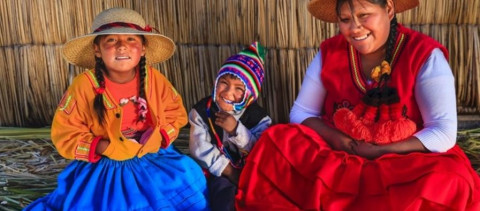 Mother language day 2020: Celebrating cross-border languages for peaceful dialogue 2020-03-25 UNESCO is celebrating ‘Languages without borders’ for International Mother Language Day 2020 on 21 February. Local, cross-border languages can promote peaceful dialogue and help to preserve indigenous heritage. Cultural and linguistic diversity are key for sustainable societies and help preserve the differences in cultures and languages that foster tolerance and respect for others. Around the world, some local languages, rather than vanishing, are in fact flourishing. Many of these fast-evolving languages are cross-border languages. For example, both regional variants of Maori – spoken in New Zealand, in the Cook Islands, and Sami, spoken across Northern Europe, have benefitted from efforts on the part of governments to revitalize these languages, which started in the 1980s. Borders in many parts of the world have been artificially imposed. From sub-Saharan Africa, to the Middle East to Latin America, many borders were negotiated and drawn arbitrarily splitting communities, which had existed for centuries. This process has contributed to conflict all over the world. Linguists specializing in cross border languages have pointed out that for such communities very often official borders do not ‘exist’. They continue to trade, share cultural practices and communicate in a common local language. Cross-border languages are naturally dynamic because they are cross-fertilized by people from two or more countries. Among many other cross-border languages, Kiswahili is one such example. This sub-Saharan African language is spoken by 120 to 150 million people. It is a hybrid tongue composed of linguistic elements from Southern Africa, Arabia, Europe and India. Its evolution tells a rich story of migration, trade, slavery, colonialism. Today, it is both sub-Saharan Africa’s most important lingua franca, and an enabling force promoting African unity and diplomacy. It is a national and official language in the United Republic of Tanzania, a national language in Kenya and in the Democratic Republic of Congo. It is a cross-border lingua franca in Uganda, Rwanda, Burundi, northern Mozambique and southern Somalia, and to a lesser extent, Malawi, Zambia and southern Sudan. Quechua is another example. The language of the ancient Incan Empire has now evolved to become a family of related indigenous languages, spoken by some 8 to 10 million people in Peru, Bolivia, Ecuador, Chile, Colombia and Argentina. The dynamism of cross-border languages means that they can provide space for indigenous culture and traditions to thrive. In the right circumstances, they can also be powerful tools for the promotion of peace between neighbouring countries. Bonds of empathy and shared heritage on either side of a border and among several countries in a region increase solidarity among neighbouring peoples and allow people to celebrate the complexity of their multi-layered identities. The development of Multilingual Education based on Mother Tongue Instruction, not only improves learning outcomes, but also helps to maintain linguistic diversity and multilingualism, a key element of inclusion. Cross-border languages have the potential to foster powerful emotional and cultural ties between neighbouring communities often living on either side of international borders. International Mother Language Day Learn more about UNESCO’s work in languages URL:https://en.unesco.org/news/mother-language-day-2020-celebrating-cross-border-languages-peaceful-dialogue
 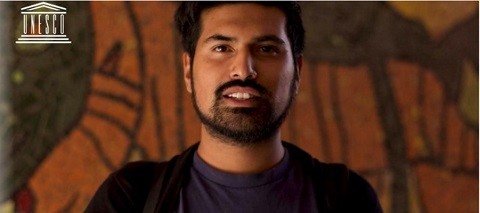 Sexuality education is about respect and equality 2020-03-20 Comprehensive sexuality education (CSE) goes beyond education about reproduction, risks and disease, also teaching about love and relationships based on mutual respect and equality. This was the message from the Zentano family from Santiago, Chile, who spoke to UNESCO about their experiences of sexuality education for the Foundation of Life and Love campaign. Sebastian Zentano told UNESCO that responsible CSE should include messages about respect, and equality. His mother, Maria Valeska Gatica, said she had tried to impart this to her sons from an early age. “I believe comprehensive sexuality education is a very important component of human development,” she said. “It promotes a world that is more peaceful, happier, more integrated, and more of a human community.” The Foundation of Life and Love campaign highlights intergenerational stories from families across the world to show why it is so important for young people to learn about health, relationships, gender, sex and sexuality. It also includes interviews from Ghana, Thailand, China, and the UK. CSE is based on universal human rights, including the rights of all people to health, education, information equality and non-discrimination. Through CSE, young people are able to recognise their own rights, to respect the rights of others, and help those whose rights are violated. It also respects a young person’s right to a high standard of health, including safe, responsible and respectful sexual choices. Débora Solis Martinez, Director of the Chilean Association for the Protection of the Family, who was also interviewed for the Foundation of Life and Love campaign, said all young people should have access to quality CSE. “We do not want young girls getting pregnant, we do not want young people affected by sexually transmitted infections or with HIV, but in order to achieve that, young people need to be able to obtain the information needed to make the right choice,” she said. “Beyond that, one of the greatest strengths of comprehensive sexuality education is that girls learn from the beginning that the condition of being a woman does not imply a relationship of subordination with man,” she said. Join the conversation at #CSEandMe. More on Education for health and well-being URL:https://en.unesco.org/news/sexuality-education-about-respect-and-equality
 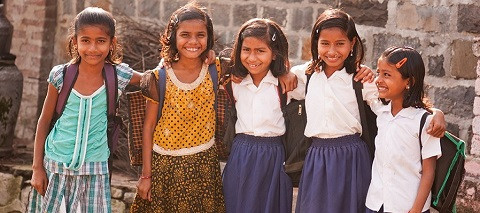 过去25年间小学入学性别差距减半 2020-03-20 UNESCO unveils a new fact sheet on girls’ education today ahead of International Women’s Day. The data is published as part of the #HerEducationOurFuture initiative which focuses on the progress achieved over the past 25 years. It shows that girls’ enrolment rates in primary and secondary education have almost doubled in low-income countries, and that the gender gap in primary enrolment has been halved. But it also shows that the pace of change is not fast enough. At the present rate, getting every girl into primary school will only happen in 2050. The fact sheet is published on the occasion of the 25th anniversary of the Fourth World Conference on Women (Beijing in 1995), which culminated with the Beijing Declaration and Platform for Action, a key global policy document on gender equality and the most ambitious roadmap for the empowerment of girls and women. “Ignoring girls’ education is akin to ignoring one of the most effective solutions for development,” said the Director-General for UNESCO, Audrey Azoulay. “When girls access quality education, it emboldens them to break the social stereotypes that hold back gender equality. It also gives them the tools to better navigate future life-altering choices on pregnancy, childbirth, and health challenges claiming millions of children’s lives around the world. We cannot achieve the world we want without the education and empowerment of all girls and women.” The Global Education Monitoring (GEM) Report at UNESCO shows that if all women completed primary education, maternal deaths would be reduced by two-thirds. If they had a secondary education, child deaths would be cut by half, saving 3 million lives, and there would be two-thirds fewer child marriages. If all girls in sub-Saharan Africa, and in South and West Asia had a secondary education, the number of pregnancies among girls younger than 17 would fall by close to 60%. But slow progress is preventing girls from reaping these benefits. As the new interactive website, https://www.education-progress.org/en/ illustrates, the primary enrolment rate of girls over the past 25 years has only increased by ten percentage points from 78% to 88%, less than half a point per year. The new fact sheet shows progress since 1995 in global commitment to girls’ right to an education through international Conventions as drawn from UNESCO’s HerAtlas, and areas where improvements are still needed. In 1995, the Beijing Platform for Action urged countries to eliminate gender discrimination in education, which is now prohibited by the constitutions of 90 countries. Since the Beijing Platform for Action, the number of States that have ratified the UNESCO Convention against Discrimination in Education (CADE) has increased from 82 to 105. However, this still means almost half have not signed it. By 1995, 150 States had ratified the UN Convention on the Elimination of All Forms of Discrimination against Women, which provides for equal rights for men and women. It has now been ratified by 189 States Parties, but 27 countries signed it with objections to particular articles on child marriage and discrimination policy. A new social media campaign, under #HerEducationOurFuture, is being launched in partnership with multiple education organizations to help advance the commitments made on education in the Beijing Declaration. The campaign calls on girls and teachers to add their voices to call for change by saying what they would want to improve for the next generation. It is launched on International Women’s Day and the Commission for the Status of Women, which will feed inputs into The Generation Equality Forum. This is a global gathering for gender equality, convened by UN Women and co-chaired by France and Mexico, with civil society as a leader and partner. The Forum will kick-off in Mexico City, Mexico, (7-8 May 2020) and be concluded over three days in Paris, France (from 7 to 10 July 2020). ****For more information and interviews, contact Kate Redman k.redman@unesco.org +33(0)671786234 URL: https://en.unesco.org/news/gender-gap-primary-school-enrolment-halved-over-past-25-years
 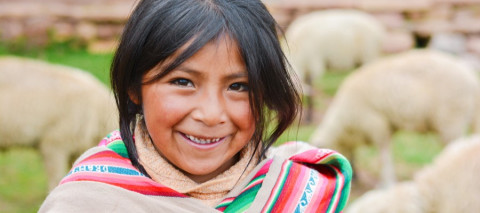 Предстоящее Десятилетие языков коренных народов (2022–2032 гг.) будет сосредоточено на правах носителей языков коренных народов 2020-03-09 Participants at the High-level event, “Making a decade of action for indigenous languages,” on 28 February issued a strategic roadmap for the Decade of Indigenous Languages (2022-2032) prioritizing the empowerment indigenous language users. More than 500 participants from 50 countries, including government ministers, indigenous leaders, researchers, public and private partners, and other stakeholders and experts, adopted the Los Pinos Declaration, at the end of the two-day event in Mexico City, which was organized by UNESCO and Mexico. The Declaration places indigenous peoples at the centre of its recommendations under the slogan “Nothing for us without us.” The Declaration, designed to inspire a global plan of action for the Decade, calls for the implementation of the internationally recognized rights of indigenous peoples, expressed notably in the UN Declaration on the Rights of Indigenous Peoples of 2007, the UN System-wide Action Plan (SWAP) on the Rights of Indigenous Peoples of 2017, and other standard-setting instruments such as UNESCO’s Convention against Discrimination in Education (1960),the UN’s International Convention on the Elimination of All Forms of Racial Discrimination (1965), International Covenant on Civil and Political Rights, and International Covenant on Economic, Social and Cultural Rights (1966). In its strategic recommendations for the Decade, the Los Pinos Declaration emphasizes indigenous peoples’ rights to freedom of expression, to an education in their mother tongue and to participation in public life using their languages, as prerequisites for the survival of indigenous languages many of which are currently on the verge of extinction. With regard to participation in public life, the Declaration highlights the importance of enabling the use of indigenous languages in justice systems, the media, labour and health programmes. It also points to the potential of digital technologies in supporting the use and preservation of those languages. Building on the lessons learnt during the International Year of Indigenous Languages (2019), the Declaration recognizes the importance of indigenous languages to social cohesion and inclusion, cultural rights, health and justice and highlights their relevance to sustainable development and the preservation of biodiversity as they maintain ancient and traditional knowledge that binds humanity with nature. Current data indicates that at least 40% of the 7,000 languages used worldwide are at some level of endangerment. While reliable figures are hard to come by, experts agree that indigenous languages are particularly vulnerable because many of them are not taught at school or used in the public sphere. More statistical data will become available once UNESCO’s Atlas of Languages, a database about practically all human languages, becomes available later this year. **** More about the International Year of Indigenous Languages and its outcomes URL:https://en.unesco.org/news/upcoming-decade-indigenous-languages-2022-2032-focus-indigenous-language-users-human-rights