
News
Catch up on what’s happening in the world of global citizenship education.
311 results found
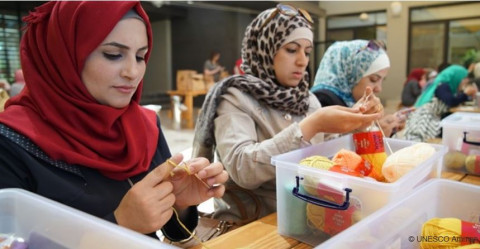 UNESCO project in Jordan provides women with entrepreneurial skills 2018-02-08 “Before, I was alone at home,” says Rasha, who was already married at 15 and missed the chance to pursue her education. “Now I have new friends and I feel supported by the other girls and we treat each other like sisters.” Rasha met her new friends at an innovative UNESCO project that is providing practical entrepreneurship and innovation tools to young Syrian and Jordanian women, through technical, income-generating handicraft training. With her two children in school, Rasha leapt at the chance to join the project and learn new skills. She says that as a participant, she learned a host of skills including embroidery, crochet, sewing and weaving. Her favorite handicraft skill? Embroidery. The 500 participants of the project are also being supported with life-skills and work readiness training in an effort to improve their chances of strong participation in the labour market. The UNESCO Amman office supports programmes that encourage and enable girls and women to participate in and contribute to their families, communities and economies more broadly. In the context of the Syria crisis, UNESCO is focused on critical areas such as technical and vocational education and training, life-skills, secondary education and higher education. Projects such as these touch on key aspects of the 2030 Agenda for Sustainable development, focusing particularly on SDG 4 and 5 with an understanding that education — in all its various forms — is a basic human right. This ambitious project was designed with the goal of helping young women develop business and vocational skills and began in November 2016. It has been implemented with JRF’s support through eight community-based organizations and across seven communities including Ajloun, Jerash, Madaba, Mafraq, Irbid, Ramtha and Amman. The inclusive nature of the project encourages an open dialogue between Syrian and Jordanian women in Jordan, based on their shared experiences and engagement. Rasha enjoyed the life-skills component of the project and the team spirit fostered by the resulting sense of empowerment the girls experienced. “Now I know how to prepare for a job interview,” she said. Using her new skills, Rasha would really like to work outside of the home and is hoping that more courses like this one will be offered so she can take her talents to the next level. Another young participant, Wesal, partook in the handicraft programme while also pursuing a bachelor’s of arts at a Jordanian University. “When I am not studying, I have nothing to do. I need to focus my mind on something constructive like handicraft creation and this in turn gives me positive energy,” she said. Wesal is already generating some income, selling her creations to members of her local community and using the money to support her studies. "The trainers have taught me that strength of character is what matters and that we must work to depend on ourselves.”Strong words from a strong young woman. The project is funded by Proctor and Gamble and is being implemented by the Jordan River Foundation (JRF), a non-profit, non-governmental organization established in 1995 and chaired by Her Majesty Queen Rania. This article was originally published by the UNESCO Amman office. Skills for work and life URL:https://en.unesco.org/news/unesco-project-jordan-provides-women-entrepreneurial-skills
 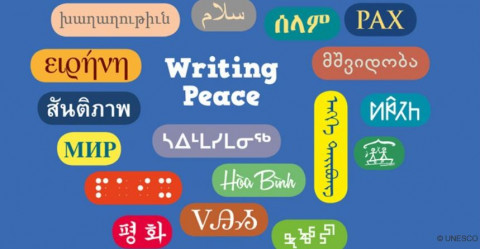 Where does respect for others begin? Launch of the manual « Writing Peace » 2018-02-07 "Writing Peace" is a manual that invites young audiences to discover contemporary writings by introducing them to a sample of them. Its goal is to make the world appear a little closer and a little more familiar. "Writing Peace" encourages children (aged 8 to 14) to become aware of the interdependence of cultures through familiarization with contemporary writing systems, their history, and their borrowings. The manual contains 24 activity sheets. Each section presents the characters of a writing system, an introductory text and historical background, the word “peace” and the word “hello,” the language(s) attached to the system(s), and an activity whose answers appear at the end of manual. 6,000 years after the advent of writing, what do we know about others, their systems of thought, and the transcriptions of their writing systems? How can different writing systems contribute to a better understanding of the world and our place within it? By beginning to learn about these writings and their fascinating beauty, the manual connects children to diversity, thus opening their eyes to the concept of peace and our awareness of it. © UNESCOFollowing the release of the manual, the book is proposed to schools for experimentation for a fixed period, with the help of teachers and pilot facilitators. The objective of these pilot tests will be to demonstrate the impact on children's perception of cultural diversity and of the nature of cultures intrinsically linked to each other. A training series is planned with the network of UNESCO Offices and their local partners. The first training session will be held from 21 to 22 February 2018 in Rabat, Morocco, with support of the National Council for Human Rights, as intercultural dialogue cannot take place without respect for human rights and dignity. Several human rights clubs in Moroccan schools will be involved in an experimentation protocol conducted over several weeks. "Writing Peace" is currently available in French, Arabic and English . *** About the author: Eric Cattelain provided scientific coordination of both the book and the catalog of the exhibition. He has a PhD in Linguistics, Language and Culture expert - Semio.logics and is an Associate Professor in Bordeaux’s Department of Multimedia and Internet (MMI). He is also behind the pantopie project. He edited the French manual, along with Michel Lafon, which then served as the basis for English and Arabic adaptations. *** Contact: Amina Hamshari, UNESCO, a.hamshari@unesco.org URL:https://en.unesco.org/news/where-does-respect-others-begin-launch-manual-writing-peace
 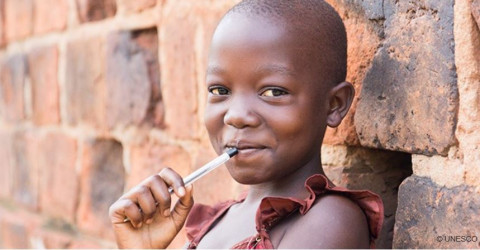 Education and Africa : Twin Priorities of UNESCO Director-General at Education Funding Conference in Dakar 2018-02-07 The Director-General of UNESCO, Audrey Azoulay is in Senegal from 1 to 3 February on the occasion of the Financing Conference of the Global Partnership for Education (GPE) taking place in Dakar. It is the first visit to Africa of the Director-General illustrating the priority of the education sector and the cross cutting priority given to the African continent. UNESCO is the United Nations agency in charge of coordinating efforts worldwide to provide universal quality education by 2030 of which the Global Partnership for Education is an integral part. The President of Senegal, Macky Sall, and his French counterpart, Emmanuel Macron, are co-chairing the Dakar conference whose objective is to raise funds to support education. It is bringing together Heads of State, ministers, leaders of UN agencies and civil society organizations, as well as representatives of the private sector and over 1,000 education stakeholders. “Education must become the priority in development aid. We are here to mobilize more aid, support national efforts, and make education a shared responsibility,” said Ms Azoulay. According to UNESCO’s Global Education Monitoring Report, aid to education worldwide has declined by 4% since 2010. Education aid to sub-Saharan Africa, home to half of the world’s out-of-school children, has declined by 50% from 2002 to 2015. It is estimated that $39 billion will be required annually to achieve universal education from early childhood to the secondary level in low and middle-income countries. The Director-General is advocating for education as un unequalled force for change to build more equitable and inclusive societies. She will highlight the need for partnerships to provide States with the tools and know-how needed to develop quality educational systems. UNESCO alone disposes of the statistic, standard-setting and strategic instruments required to meet the specific needs of each country. Ms Azoulay will address the conference on the morning of 2 February (9.30 am) and again during the afternoon session (2 to 4 pm) in the presence of Heads of State. She will also hold bilateral talks with Heads of State, government ministers and UN agency leaders in the course of the two-day event. The Director-General is also visiting Pikine, the second largest city in Senegal, where UNESCO is contributing to the empowerment of vulnerable groups, notably girls and women, through several programmes concerning, for example, literacy and sustainable urban development. On 3 February, the Director-General will visit the Island of Saint-Louis, inscribed on UNESCO’s World Heritage List in 2000, along with the Presidents of Senegal and France. The visit will take place in the framework of a joint project involving UNESCO, the World Bank and France to contain coastal erosion, which is threatening cultural and natural heritage. **** Media contacts: In Dakar, Marion Piccio, UNESCO Office, Multisectoral Regional Office for West Africa (Sahel),+221 772208494, m.piccio@unesco.org In Paris, Laetitia Kaci, UNESCO Media Services, +33 1 45 68 17 72, l.kaci@unesco.org URL:https://en.unesco.org/news/education-and-africa-twin-priorities-unesco-director-general-education-funding-conference-dakar
 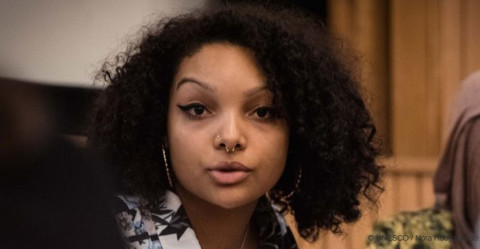 Young peacebuilders – Addressing the root causes of youth violence 2018-02-07 Temi Mwale is the Founder and Director of the London-based 4Front Project, an initiative that focuses on addressing the root causes of youth violence. During the 10th UNESCO Youth Forum in October 2017, she joined other youth working in the field of peacebuilding to discuss ways that UNESCO can better support young peacebuilders, particularly within the context of its work on Preventing Violent Extremism (PVE). Today, she explains the 4Front Project to us. “Young people have huge unmet needs when it comes to addressing the results of having witnessed violence at home and in the community. We know that long-term exposure to violence can lead to psychological problems, with 20% of people who experience trauma developing PTSD, yet austerity measures have resulted in enormous financial cuts and a substantial reduction in key services. As a result, young people are suffering with unaddressed mental health problems, unemployment, homelessness and substance abuse. I set up the 4Front Project, which is a youth-led social enterprise on a mission to empower young people and communities to live free from violence, when I was 16 years old, after my friend was shot and killed on the streets of London. We believe that we must respond to violence with compassion not aggression, understand violence in context not in a vacuum, empower people to respond to violence, co-produce solutions to violence and most importantly that young people and communities must be at the forefront of solutions. We address violence by creating bespoke, holistic, youth-led interventions that are delivered in community, educational and criminal justice settings. © All Rights Reserved Through our programmes, workshops and one-to-one mentoring, we empower young people to challenge the systemic conditions that generate violence and provide opportunities for them to positively impact society by amplifying their authentic voices and building resilience. We engage the young people who have been involved in or affected by violence, excluded from school and who are at risk of incarceration, in community healing initiatives. We reduce alienation by allowing young people to analyse the social issues that affect them through a legal lens and utilizing peer legal education as a mechanism for catalyzing change. Young people are marginalized, disenfranchised and alientated, rarely being provided opportunities to influence change in the community and in society more generally. But this is not because youth are apathetic and don’t care about politics. Young people are commenting on politics and creating change in non-traditional forms which are not being recognized by mainstream society. We need to empower young people to use their own platforms to engage with politics and we must provide them with the resources and guidance to have their voices heard.” The 10th UNESCO Youth Forum https://en.unesco.org/10th-unesco-youth-forum – “Rethinking youth engagement with UNESCO” – held at UNESCO Headquarters in Paris on 24 and 25 October 2017, brought together 60 young women and men from all over the world, all of whom are leading or co-shaping innovative social initiatives relating to a UNESCO field of competence. Now, more than ever, we are seeing young people leading change in their countries and communities all over the world and we want to bring these change-makers to the global discussion table. See also 4Front Project UNESCO’s response to youth and prevention of violent extremism More information on the 10th UNESCO Youth Forum To find out more about UNESCO’s youth community URL:https://en.unesco.org/news/young-peacebuilders-addressing-root-causes-youth-violence?language=en
  UNESCO seeks nominations for the UNESCO-Madanjeet Singh Prize for the Promotion of Tolerance and Non-Violence 2018 2018-02-07 "Tolerance is an act of humanity, which we must nurture and enact each in our own lives every day, to rejoice in the diversity that makes us strong and the values that bring us together." - Audrey Azoulay, 16 November 2017 UNESCO invites governmental and non-governmental entities, civil society actors and individuals active in strengthening foundations for peace and tolerance to propose candidates for the 2018 UNESCO-Madanjeet Singh Prize for the Promotion of Tolerance and Non-Violence. Deadline: the closing date for submissions is 30 April 2018 at midnight CET. Its purpose is to reward individuals, institutions and other entities or non-governmental organizations that have made exceptional contributions and demonstrated leadership in the promotion of tolerance and non-violence. The Prize was established in 1995 on the occasion of the United Nations Year for Tolerance and the 125th anniversary of the birth of Mahatma Gandhi. It was also the year when UNESCO Member States adopted the Declaration of Principles on Tolerance. The creation of the Prize has been inspired by the ideals of UNESCO’s Constitution that proclaims that “peace, if it is not to fail, must be founded on the intellectual and moral solidarity of mankind”. Tolerance recognizes the universal human rights and fundamental freedoms of others. People are naturally diverse; only tolerance can ensure the survival of mixed communities in every region of the globe. In recognition of a lifelong devotion to communal harmony and peace, the Prize bears the name of its benefactor Madanjeet Singh, who was a UNESCO Goodwill Ambassador, Indian artist, writer and diplomat. Awarded every two years, on the occasion of the International Day for Tolerance (16 November), the Prize is marked by a ceremony and the winner is presented with the sum of US$ 100,000. How to submit your nomination Nominations for the Prize should be submitted by filling out the nomination form in either English or French, no later than 30 April 2018, by post or by e-mail.Additional materials (publications, video, audio and other teaching materials, etc.) may be attached to the nomination form. Download the Nomination Form in English | in French [PDF format]in English | in French [Word format] Send it, duly signed and stamped, to Ms Golda El-KhourySecretary of the PrizeSocial and Human Sciences Sector - UNESCO7 Place de Fontenoy, 75007 Paris Cedex 15 FRANCETel.: +33 1 45 68 17 70E-mail: tolerance.prize(at)unesco.org URL:http://www.unesco.org/new/en/media-services/single-view/news/unesco_seeks_nominations_for_the_unesco_madanjeet_singh_priz-3/
 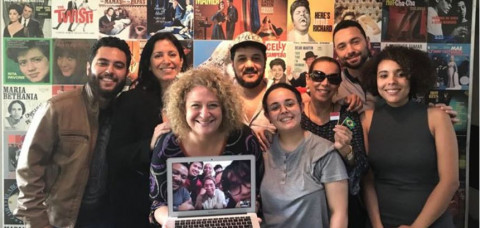 UNESCO Creative Cities Establish the Santos-Bandung Film Festival and Highlight Sustainable Development 2018-02-06 Two Members of the UNESCO Creative Cities Network (UCCN), Santos, Brazil, a Creative City of Film, and Bandung, Indonesia, a Creative City of Design, collaborated to promote their independent film industries and draw their citizens together around tolerance, peace and sustainable development. The first Santos-Bandung Film Festival – SBFF - took place in both cities from 20 to 29 October 2017, screening 34 Brazilian and Indonesian films, and engaging over 2000 participants in each city. The second film festival is now being planned for October 2018. The idea for the festival originated during the UNESCO Creative Cities Network 2017 11th Annual Meeting, in Enghien-les-Bains, France, when Niedja dos Santos, Director, Economic Innovation Office, Santos City Hall, met Tita Dwinita Larasati, Chair, Bandung Creative Economy Committee & Bandung Creative City Forum. “We discovered the socio-economic similarities between our cities and decided to develop a joint project involving cinema and design that would create an opportunity for cultural and professional exchange, amplify the perspectives of film-makers from Santos and Bandung, as well as promote the UN 2030 Agenda. The films selected touch on the strategic sustainable development goals such as gender equality, zero hunger, and life on land” explained Larasati. Sofyana Ali Bindiar, an Indonesian film director on the Bandung Film Council, coordinated the festival in Bandung and Niedja Santos coordinated the festival in Santos. The challenge of organizing a joint film festival between Brazil and Indonesia meant that all the planning, and transfer of the films, subtitles, and other materials, was done online. Most important was the goal of bringing the communities from the two cities together, virtually. Thus the festival included online debates and interviews between the film directors from one city with the public and media from the other city. Filmmakers from both cities had a unique opportunity of professional exchange, sharing their knowledge about cinematography techniques and equipment, and receiving reviews on their films. The novelty of the Santos Bandung Film Festival is that film directors can exchange with audiences on the other side of the globe on the impact of their works and their inspiration to create them, and generate discussion about the UN 2030 Agenda. “The films and debates prompted audiences in both cities to discuss universal questions such as the environment, peace, violence against women, education, and hunger. SBFF encouraged massive collaboration in both cities. In Bandung, it has become a momentum for a collaborative movement among film communities - production, exhibition, critics, academia, industry sector, and municipality,” said Bindiar. The success of this first Santos-Bandung Film Festival included dissemination of films and raising public awareness on sustainable development; but above all, it fostered important exchange as the public in Santos got to know about Indonesian culture and those in Bandung got to know about Brazilian culture. “Through this festival, our citizens both in Santos and Bandung, with so many cultural differences, realized that, in fact, they are the same. Regardless of belief or social status, we all take care of our children, work, have dreams, and we need to take care of the planet in a sustainable way for the next generations. ” dos Santos said. Both cities are very committed to the UNESCO Creative Cities Network mission. Since 2004, the UCCN highlights its members’ creativity within seven fields: Crafts and Folk Art, Design, Film, Gastronomy, Literature, Media Arts and Music. It now counts a total of 180 cities in 72 countries. While differing geographically, demographically or economically, all Creative Cities commit to develop and exchange innovative best practices to promote creative industries, strengthen participation in cultural life, and integrate culture into sustainable urban development policies. The Network also supports artistic exchange, partnerships between its members as well as between public and private sectors, and research. SBFF proves that collaboration among UCCN cities is open to all sub-networks; the fact that Santos is a City of Film and Bandung City of Design does not limit the shared expressions and productivities. “The benefits the Santos-Bandung Film Festival brought to our citizens and to our film producers were tremendous. Were it not for the UCCN, the festival would never have been established” said dos Santos. Plans for the 2018 festival include increasing the number of films screened and audience outreach, as well as generating partnerships with the private sector so film production and distribution can get support and expand. Krakow and Katowice, respectively Creative Cities of Literature and Music from Poland, will host the XII UCCN Annual Meeting in June 2018. This will be the occasion for representatives of Santos and Bandung Creative Cities to meet again and work on the 2018 festival. It will also be the opportunity for them to share their experience with the other Creative Cities, as a concrete impact of the UCCN. URL:https://en.unesco.org/news/unesco-creative-cities-establish-santos-bandung-film-festival-and-highlight-sustainable
 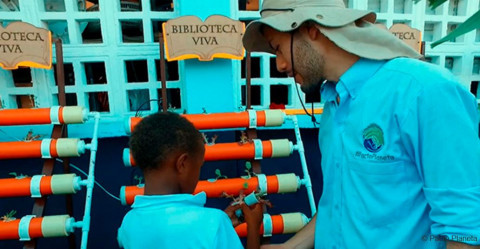 Life made simpler and sustainable among vulnerable communities in Colombia 2018-02-06 Fishermen who make their living from the Cauca River in the south of Colombia have had their daily task made easier by adapting their traditional rafts to solar power. That is just one of the concrete sustainable actions enabled by Pacto Planeta, a civil society organization designing, implementing and tracking high impact social and environmental projects in 12 provinces in Colombia. Its main goal is to help organizations with environmental projects to maximise their impact. The project works closely with School Laboratories for Sustainable Development (LEDS) and has three main action areas: environment and climate change, designing pedagogical notebooks to learn maths and English with exercises based around the Sustainable Development Goals (SDG) and, training of teachers. The LEDS scheme helps schools in socially vulnerable populations by teaching students about the six SDGs relating to climate change, food security, gender equality and health. This is done through one-year voluntary programmes that include building educational spaces within schools which act as laboratories for learning about the SDGs, building community gardens, classrooms with low cost ecology construction techniques, solar plants, compost systems and improving communal spaces with murals which are also directed to inspire girls particularly to study science, technology, engineering, and mathematics. Catering for a variety of needs Project Manager Christhian Verdugo said: ‘We work with a huge variety of different communities, urban and rural, including different ethnic groups, indigenous people, and populations who have suffered violence and displacement.’ ‘Everyone’s needs are different. In Bogota, we have many people who have fled guerrilla conflict to restart their lives and need employment. In urban areas, the need might be for sustainable agriculture or we might teach people how to turn garbage into ecobricks for fuel. In particularly arid regions like Cartagena where there is little soil, hydroponic growing can make an enormous difference. Indigenous communities may suffer social issues like food insecurity.’ Since its inception, Pacto Planeta has taken part in more than 350 corporate volunteer activities in 12 provinces of Colombia working with communities, teachers, students from early childhood and their parents. It also participated in two UN Youth Assemblies in New York. The LEDS project is currently financed by private business and the plan for 2018 is to secure funding from large business foundations. By 2020, Pacto Planeta will be present in 20 % of public schools in Colombia and is already looking to expand. ‘Last year I was in the UN Assembly and shared our work with many Guatemalan friends and colleagues who have the same vision. Many of the problems and social issues they are facing are the same as in Colombia. We plan to spread the work we are doing here to Guatemala where there are already similar projects.’ For Christhian, the greatest challenge remains convincing people whose lives have been scarred by conflict to believe in sustainable development values. ‘The easiest to convince are children and young people who are open and responsive to the work that is needed to be done to reach the targets of the SDGs,” he said. Children who have taken part in growing their own gardens or managing water wisely easily take up leadership roles in their local environments and become adults who promote sustainable solutions. ‘The remaining challenge is to convince the 30 to 40-year-olds who are poor and living in areas which have suffered from guerrilla conflict. They are suspicious about everything,’ Christhian said. And there is a need to prepare for the future. ‘The end of the conflict in several regions of Colombia will lead to the creation of new population centres and the development of small economic centres, which is why new generations living in these regions should be made aware of sustainable alternatives for developing their communities in post-conflict scenarios,’ he said. Education for sustainable development URL:https://en.unesco.org/news/life-made-simpler-and-sustainable-among-vulnerable-communities-colombia
 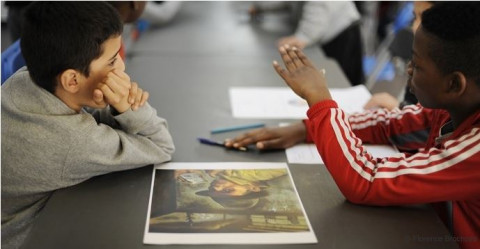 The importance of teaching and learning about the Holocaust 2018-02-02 On the occasion of International Holocaust Remembrance Day, commemorated each year on 27 January, UNESCO pays tribute to the memory of the victims of the Holocaust and reaffirms its commitment to counter antisemitism, racism, and other forms of intolerance. In 2017, UNESCO released a policy guide on Education about the Holocaust and preventing genocide, to provide effective responses and a wealth of recommendations for education stakeholders. What is education about the Holocaust? Education about the Holocaust is primarily the historical study of the systematic, bureaucratic, state-sponsored persecution and murder of six million Jews by Nazi Germany and its collaborators. It also provides a starting point to examine warning signs that can indicate the potential for mass atrocity. This study raises questions about human behaviour and our capacity to succumb to scapegoating or simple answers to complex problems in the face of vexing societal challenges. The Holocaust illustrates the dangers of prejudice, discrimination, antisemitism and dehumanization. It also reveals the full range of human responses - raising important considerations about societal and individual motivations and pressures that lead people to act as they do - or to not act at all. Why teach about the Holocaust? Education stakeholders can build on a series of rationales when engaging with this subject, in ways that can relate to a variety of contexts and histories throughout the world. The guide lists some of the main reasons why it is universally relevant to engage with such education. Teaching and learning about the Holocaust: Demonstrates the fragility of all societies and of the institutions that are supposed to protect the security and rights of all. It shows how these institutions can be turned against a segment of society. This emphasizes the need for all, especially those in leadership positions, to reinforce humanistic values that protect and preserve free and just societies Highlights aspects of human behaviour that affect all societies, such as the susceptibility to scapegoating and the desire for simple answers to complex problems; the potential for extreme violence and the abuse of power; and the roles that fear, peer pressure, indifference, greed and resentment can play in social and political relations. Demonstrates the dangers of prejudice, discrimination and dehumanization, be it the antisemitism that fueled the Holocaust or other forms of racism and intolerance. Deepens reflection about contemporary issues that affect societies around the world, such as the power of extremist ideologies, propaganda, the abuse of official power, and group-targeted hate and violence. Teaches about human possibilities in extreme and desperate situations, by considering the actions of perpetrators and victims as well as other people who, due to various motivations, may tolerate, ignore or act against hatred and violence. This can develop an awareness not only of how hate and violence take hold but also of the power of resistance, resilience and solidarity in local, national, and global contexts. Draws attention to the international institutions and norms developed in reaction to the Second World War and the Holocaust. This includes the United Nations and its international agreements for promoting and encouraging respect for human rights; promoting individual rights and equal treatment under the law; protecting civilians in any form of armed conflict; and protecting individuals who have fled countries because of a fear of persecution. This can help build a culture of respect for these institutions and norms, as well as national constitutional norms that are drawn from them. Highlights the efforts of the international community to respond to modern genocide. The Military Tribunal at Nuremberg was the first tribunal to prosecute “crimes against humanity”, and it laid the foundations of modern international criminal justice. The Convention on the Prevention and Punishment of the Crime of Genocide, under which countries agree to prevent and punish the crime of genocide, is another example of direct response to crimes perpetrated by Nazi Germany. Educating about the Holocaust can lead to a reflection on the recurrence of such crimes and the role of the international community. What are the teaching and learning goals? Understanding how and why the Holocaust occurred can inform broader understandings of mass violence globally, as well as highlight the value of promoting human rights, ethics, and civic engagement that bolsters human solidarity. Studying this history can prompt discussion of the societal contexts that enable exclusionary policies to divide communities and promote environments that make genocide possible. It is a powerful tool to engage learners on discussions pertaining to the emergence and the promotion of human rights; on the nature and dynamics of atrocity crimes and how they can be prevented; as well as on how to deal with traumatic pasts through education. Such education creates multiple opportunities for learners to reflect on their role as global citizens. The guide explores for example how education about the Holocaust can advance the learning objectives sought by Global Citizenship Education (GCED), a pillar of the Education 2030 Agenda. It proposes topics and activities that can help develop students to be informed and critically literate; socially connected, respectful of diversity; and ethically responsible and engaged. What are the main areas of implementation? Every country has a distinct context and different capacities. The guide covers all the areas policy-makers should take into consideration when engaging with education about the Holocaust and, possibly, education about genocide and mass atrocities. It also provides precise guidelines for each of these areas. This comprises for example curricula and textbooks, including how the Holocaust can be integrated across different subjects, for what ages, and how to make sure textbooks and curricula are historically accurate. The guide also covers teacher training, classroom practices and appropriate pedagogies, higher learning institutions. It also provides important recommendations on how to improve interactions with the non-formal sector of education, through adult education, partnerships with museums and memorials, study-trips, and the implementation of international remembrance days. Learn more about UNESCO’s on Education about the Holocaust. URL:https://en.unesco.org/news/importance-teaching-and-learning-about-holocaust
  Antisémitisme : tirer les enseignements de l'histoire 2018-01-26 Over the course of history, anti-Semitism has continued to raise its ugly head. It first emerged under religious pretexts in the Middle Ages, then appeared as nationalism from the nineteenth century onwards, before assuming a scientific claim in Nazi ideology. Since the end of the Second World War, it has reappeared, in the guise of anti-Zionism. History urges us to be vigilant. Robert Badinter draws lessons from it that are rich with meaning − and warnings. By Robert Badinter Anti-Semitism is not a contemporary phenomenon. It is a centuries-old evil. Since the capture of Jerusalem by Titus in 70 AD, since the dispersal of the Jews, mainly throughout the Mediterranean basin, when they were sold as slaves in such large numbers that market prices (to use a modern economic term) plummeted in the Roman Empire − the condition of the Jews for two millennia, especially in Europe, has never ceased to involve exclusion, suffering, and persecution.Since that distant Roman period, I would say we know of three forms of anti-Semitism, which sometimes merge. From religious to nationalist and racial anti-Semitism The first form of anti-Semitism is religious. Since Constantine’s Edict of Milan recognizing Christianity as an official religion in 313, anti-Semitism has always nourished itself on the hatred of the “Jewish deicide”, those who killed Jesus Christ. Throughout the periods of persecution and massacres, the possibility was sometimes – though not always – offered to Jews to escape death or exile by forced conversion, even if they became Jews again when times were less cruel. The long, culturally rich history of the Marranos, particularly in the Iberian states, is an illustration of this. With the birth of modern nations, anti-Semitism became essentially nationalist. The Jews, even when they were natives of the countries in which they lived, were always foreigners who were suspect. The fact that the Jews had quite naturally assumed responsibilities, despite the ostracism inflicted on them, and that they held eminent positions in political, economic and financial spheres, made them, at the slightest national crisis, potential traitors − always in the service of a mythical “international Jewish conspiracy” imagined by the anti-Semites. This was particularly the case in France. I do not need to recall the significance of the Dreyfus affair (link is external) (a political scandal and notable example of a miscarriage of justice, 1894 to 1906) in this respect. Because if we had been looking at things with lucidity for a moment, there was no reason why Alfred Dreyfus − a wealthy Alsatian Jew who hated Germany and wanted, first of all, to serve France – should be a traitor. By the end of the nineteenth century, minds had evolved. Anti-Semitism strove to be scientific in the image of the modern disciplines. It became racial: the Jews being defined as a “race” of mysterious eastern origin that could not be assimilated by the peoples among whom they settled – especially those who claimed to belong to a superior Aryan race, who felt threatened with degeneration by the presence of Jews, with their numerous flaws, in their midst. Recognition of Jewish citizenship Thus, in the form of prohibitions, consignment to ghettos, markings on clothing – as if they were dangerous animals – Jews appear, in the long history of humanity, as an accursed species. Hence, the extreme importance we must attach to the French Revolution, which for the first time in history, in 1791, proclaimed that Jews living in France would be considered full French citizens.A little anecdote: on the day the citizenship of the Jews was voted on, at the end of the Constituent Assembly, the Dauphine, sister of Louis XVI, wrote these words to a cousin of the royal Austrian Habsburg family in Vienna: “The Assembly has reached the height of its folly, it has made the Jews citizens.” If I stress this point, it is because the desire to make Jews full citizens, attained with difficulty in the parliamentary proceedings, is exactly what the Nazis hated the most – namely, human rights and the philosophy of the Age of Enlightenment. As stated in Adolf Hitler’s Mein Kampf, the Jews must be excluded absolutely from the community of the German people. This rabid anti-Semitism is at the origin of the racial laws of the Third Reich adopted in Nuremberg in 1935, the purpose of which, I would remind you, was for “the protection of German blood and German honour” − supposedly defiled by the presence of the Jews. I leave aside the impossibility that the racial theory has encountered, of finding scientific criteria. The scholars of the Third Reich sought hard and, of course, found nothing. And so they fell back on religious practice. The criteria adopted by the Nuremberg laws forbade any possibility for Jews to leave, through any kind of conversion, the herd of these evil beings to which they belonged by birth. A wealth of significant lessons and warnings I will not repeat here the long list of increasing persecutions suffered by the Jews − first in the Third Reich and then in the territories occupied by the German army. Today, countless studies have unveiled the scope and the horror of the Jewish genocide by the Nazis. Nor will I return to the remarkable historical and philosophical works which have dealt with this phenomenon. What I would like to emphasize is this, which seems to me the most significant and cautionary lesson: what is quite remarkable and difficult to understand is that a great Christian people – cultivated among all the peoples of Europe, from which emerged numerous geniuses of art, thought and scientific research – was the bearer, organizer and perpetrator of the most terrible persecutions against the Jews that have ever blighted the history of Europe. It is essential to remember this, for in Europe there were no countries where the love of culture, the passion for art, especially music, and scientific research, were held higher than in Germany, at the end of the Weimar Republic. This is precisely UNESCO’s opportunity for reflection. Because if there was one country that shone by its philosophy, it was Germany − Germany before Hitler. And it is this country – yielding to every fury of anti-Semitism and racism – that orchestrated the cruellest episodes the Jews have ever known. The lesson – and that is why I am insisting – is that culture, knowledge, and a love of the arts are not enough to constitute insurmountable ramparts against anti-Semitism, since it was here that it established itself with the most terrible horror.Let me be understood clearly: in no way do I mean that we – disciples of the Enlightenment, who believe, throughout every ordeal, in the progress of humanity through the benefits of enlightened education and just institutions based on the philosophy of human rights – must renounce the struggle for ever-needed progress. But we must take into account the fact that neither education nor art, per se, nor culture in the broadest sense of the word, are by their very nature sufficient defences against the fury of racism and anti-Semitism. We must learn from this. Anti-Zionism The Third Reich collapsed, its founder committed suicide, his main henchmen were hanged, or they vanished. The immensity of the Jewish genocide in Europe was discovered, which gave rise to a powerful movement − at the newly-created United Nations − in favour of the creation of a Jewish state. The Allies had, moreover, already made such a commitment between 1914 and 1918. The creation of a Jewish state in Palestine − which we must remember ensued from a United Nations decision, UN Resolution 181(II) of 29 November 1947 − was not accepted by all. The result was a war, launched by the armed forces of the neighbouring Arab states. They invaded Palestine, the conflict turned to the advantage of the Jews and the rest is history, The Israeli-Palestinian conflict has, in fact, never ceased since the creation of the State of Israel. I am not going to discuss the legitimacy of the rights of the various parties here, nor the best solution to end this conflict – these issues need to be discussed in other forums. But that is the reality. What is certain is that in the context of the Israeli-Palestinian conflict, anti-Semitism has once again spread widely under the name of anti-Zionism. We must have the lucidity to recognize that under this label that refers to Zionism, it is indeed the Jews, and the Jews everywhere, who are targeted. And I would say that anti-Zionism under the surface is nothing but the contemporary expression of anti-Semitism, namely, hatred of the Jews. The new battleground Today's anti-Semitism, of course, does not present itself in the same form as the one dating back to Constantine. It widely and successfully uses social media; speeches and videos, posted on certain websites, are based on a particularly perverse rhetoric. I have pondered at length what might have happened in pre-1939 Europe if Dr. Goebbels (Reich Minister of Propaganda of Nazi Germany, 1933 to 1945) had had access to the same technical means that we have today in the digital age. This is the new battleground, as far as the fight against anti-Semitism is concerned.I would simply state my conviction, as a man who has lived a long time, and who has never seen anti-Semitism lose its hold − that as long as the Israeli-Palestinian conflict continues, it is clear to me that hatred of the Jews, far beyond the Middle East, will continue to inflame some Muslims, especially the younger ones, inspired by the internet and the shrill propaganda of the violent images familiar to us. Hence the atrocious attacks that occur throughout the West, notably in France and in the Middle East, where the conflation of “Jewish equals Zionist” feeds anti-Semitic hatred. It is enough to look at a list of the victims of the crimes committed in the last few years.A recent image haunts my mind: a man, pursuing Jewish children in a Jewish school, and a little girl running away. And because she is running, this man grabs her by the hair and shoots her point-blank. What is this crime, if not a replica of the acts of the SS (The Schutzstaffel, the paramilitary organization of the Nazi party)? A horrifying expression of anti-Semitism, this image traverses time, reminding us of the Einsatzgruppen (SS death squads, 1939 to 1945) let loose in the ghettos of Eastern Europe. Action for civil peace Finally, I would like to point out, and to stress emphatically, one thing concerning action for civil peace. It is the importance of the role – and I would say for some, the fraternal role – of representatives of the Muslim community who denounce these crimes. Conflation here is another trap set by terrorism, and we certainly must not yield to it. I always stress the results of studies on terrorism by think-tanks, which have found that eighty per cent of the victims of terrorism in the world today are Muslims. I want to emphasize this fact, because conflation here would be reprehensible. My message is not overly optimistic, I know, but I believe that complacency nourishes prejudice, and that prejudice nourishes death, because it breeds hatred. If we can make the principles of the Enlightenment and human rights triumph in the minds of the younger generations, we will have served the right cause − that of peace among peoples. To mark International Holocaust Remembrance Day on 27 January, the UNESCO Courier brings you Robert Badinter's speech from the inauguration of the Round Table on Preventing Anti-Semitism, organized by UNESCO on 6 December 2016. Robert Badinter A French lawyer and Professor of Law, Robert Badinter was France’s Minister of Justice from 1981 to 1986. He is best-known for obtaining a vote in French parliament to abolish the death penalty in 1981. Badinter was appointed President of the Constitutional Council from 1986 to 1995, and elected Senator (Socialist Party) for the Hauts-de-Seine department from 1995 to 2011. URL:https://en.unesco.org/courier/correo-digital/anti-semitism-learning-lessons-history