
News
Catch up on what’s happening in the world of global citizenship education.
311 results found
 Youth in Spain find their sustainable development voice 2018-08-03 An international conference bringing youth from Spain in contact with their global peers has its roots firmly in local community and school action. The International Youth Conference (CONFINT) is a global participation process which connects up youth from countries all over the world to talk, share and decide on how best to take action to improve the planet. The event, the first of which was held in Brazil in 2010, aims not only to promote the international exchange of experiences but to allow the greatest number possible of youth, teachers and communities to become locally involved in a real commitment to the planet. Joint Coordinator Paula Perez said: “For the first-ever conference Spain had participants from Galicia, the Basque Country and Canaries among other autonomous regions and it was a huge success. Everyone knew that it was something that had to be repeated.” CONFINT is built on four pillars: the concept of responsibility for young change-makers in society, youth electing youth as delegates, youth educating youth on the issues, with the help of young facilitators, and one generation learning from another to close any information gaps. It aims not only to bring about cross-cultural dialogue but also to give young people an understanding of how public institutions work and can be used to bring about change. The event is the culmination of several levels of engagement and action and is part of the work of the Sustainable Schools Network (“Escuelas Sostenible en Red”, ESenRED). The network, under the motto ‘Let’s care for the planet’ aims to bring together environmental and educational departments of public administrations which manage, encourage and coordinate environmental programmes in order to integrate Education for Sustainable Development (ESD) in primary and secondary schools. It is now present in 13 of the 17 Spanish autonomous regions, which is in 2,600 schools, reaching 55,000 teachers and almost one million students and its activities include organizing Youth Meetings, National Youth Conferences, European Youth Conferences, a Symposium for Teachers and a European project and community for teachers on eTwinning. The process leading to CONFINT begins at secondary school level where children are helped to undertake an assessment of local sustainability problems in their village or town. “They then decide what they will focus on, which can be as varied as a way to improve mobility access for disabled people or the best way to improve a piece of wasteland,” said Paula. “From there they set about how to change that by dealing with the local administration. All along the way we encourage as much communication with their families and local officials so everyone feels truly involved.” Once a year a conference is held at autonomous community level. In 2017, the event was held in Catalonia. “Even in Catalonia this has led to many interesting exchanges,” said Paula. “The South, for example, may not have been aware that in the North there was problems with a particular invasive plant and in the other direction, they learned about a particular type of snail destroying fruit. Together they worked to come up with shared solutions. The level of motivation was very high because the youth were truly protagonists.” This was followed by a state level conference where children were chosen to represent their community. “For 3 days youth from all over Spain and their teachers met to display their work. The role of the teacher here is crucial not only for original motivation but then to step back and let the children lead,” she said. “They came up with new vibrant ways of communicating about sustainability including flash mobs and a rap video.” Looking ahead Paula says the main goal is to further consolidate and incrementally increase the number of centres in Spain and the number of countries in Europe taking part in the conference. “This presents its own challenges as some countries have very few centres and levels of funding vary dramatically. We are supported by the state in Spain but for others funding is precarious,” she said. Now participants are gearing up for the next international conference which will be held in May in Lisbon but ultimately Paula would like to see a global conference. “We are not there yet but that would be a natural progression and long-term aid,” she said. “We want the best of both worlds; ideally to achieve worldwide participation without ever losing sight of the local implications of such work. One of the most satisfying aspects is that once youth are hooked they really stay with the ideas into adulthood and beyond. This is very inspiring for younger people just becoming aware of these ideas.” The International Youth Conference (CONFINT) was nominated for the UNESCO-Japan Prize on ESD in 2017. URL:https://en.unesco.org/news/youth-spain-find-their-sustainable-development-voice?language=es
 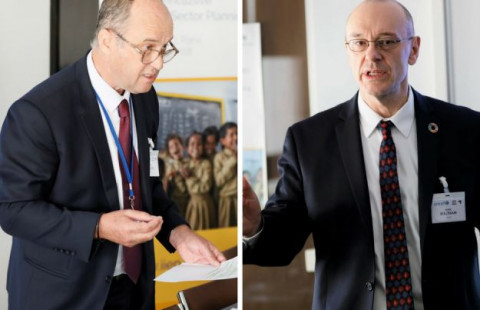 All children in school together: the quest for disability-inclusive education 2018-07-26 Children with disabilities face many barriers to quality education. In low- and lower middle-income countries, around 40 percent of primary school age children with disabilities are out of school and 55 percent at lower secondary school, according to the World Report on Disability. For those who are in school, it is typically a special school outside of the mainstream system. During a technical Round Table, co-organized by IIEP-UNESCO and UNICEF, from 18-20 July 2018, we spoke with two education specialists. Jim Ackers is the Head of Training at IIEP and Mark Waltham is a senior education advisor for UNICEF. IIEP: Jim, could you tell us how this Round Table came about with its focus on disability-inclusive educational planning? Jim Ackers: Inclusive education is a global priority today, as reflected in Sustainable Development Goal 4 for education. In its simplest terms, it means that all children - no matter who they are - can learn together in the same school. Many people agree with this principle, but for many countries implementing this principle at scale, especially in under-resourced systems is a significant challenge. We want to support countries respond to this challenge by helping ensure that they include children with disability in education sector planning and that all children ultimately have the opportunity to learn together. This is necessary from both a human rights and human capital perspective. This Round Table, which also included a two-week long online forum, convenes eight countries with representatives from government, disability person’s organizations, and development partners. The participants have the opportunity to discuss challenges and reflect on how they might enhance planning for inclusive education in future. The idea of the Round Table came during regional workshops on Inclusive Education in 2017 where Mark Waltham, Natasha Graham and I started to discuss the possibility of UNICEF and IIEP joining forces around inclusive education with a focus on disabilities. I saw IIEP’s training capacity as a key complement to what UNICEF and other partners are doing at the advocacy level and on the ground at the country level. Agreeing to work together on both the Technical Roundtable and on the future development of training materials on inclusive education was timely as other partners, including DFID have enhanced their commitment to addressing the needs of those with disabilities. IIEP: At the global level, we are seeing more consensus on the benefits of inclusive education. Mark, can you tell us how inclusive education first got on your radar? Mark Waltham: Like too many education advisers, I rarely used to think about children with disabilities. A large part of this omission was probably because I so rarely came across these children. Very occasionally, on a school visit, I would see a single kid on crutches at the back of a classroom but, for most of the time, children with disabilities were out of sight and out of mind. It simply never occurred to me that this was an indication of a deeper problem, that children with disabilities were being kept out of school, often hidden away in their houses out of shame or stigma. Over the years, I had missed many signals that I was guilty of a serious oversight. IIEP: What were some of these signals? Mark: The first came in 2006. I was working for AusAID, and we had drafted a policy paper pointing out that, in order to meet the MDGs, every single kid would need to start school that year. But we knew this wasn’t going to happen as so many children were effectively excluded from education – because there wasn’t a school nearby, because they didn’t speak the language of instruction, or because they had a disability. A second signal came in 2010, while I was working for DFID. The official figures had just been released for the enrolment rates during the years of the global economic crisis in 2007-2008. These clearly showed that the remarkable progress that had been made since 2000 had stalled, leaving around 60 million children out of school. Once again, we knew that many of these were children with disabilities, although there wasn’t enough data to develop any evidence-based policy proposals for how we should respond to this issue. My final conversion to inclusive education came in 2012 while working as the UNICEF focal point for the Out of School Children Initiative (OOSCI). The early country studies had started to come in, with facts and figures on which children were out of school and why they were excluded. Many studies found that children with disabilities were being systematically excluded from education and, crucially, they had the data to back it up. IIEP: Jim, How have you seen the concept of inclusive education evolve during your career? Jim: Prior to joining IIEP, I was the UNICEF Regional Education Adviser in Eastern and Southern Africa (2009-2014) and East Asia and the Pacific (2014-2017). In this role, I was responsible for co-ordinating cross-sectoral collaboration on children with disabilities. Back in the early 2000s, there was a focus on equity but there was little in the way of concrete commitment around the rights of children with disabilities. It was a huge challenge in terms of data and analysis and also in terms of actually addressing needs. A key question is how we respond to the needs of children with disabilities. While there is now global agreement on the need to have inclusive education systems there is still a lack of consensus on exactly what this means in terms of operationalisation. Part of the challenge is the scope - inclusive education must go far beyond addressing the rights of children with disabilities and extend to other groups such as ethnic and linguistic minorities, those affected by conflict and gender stereotyping, for example. However the need to be comprehensive can represent a serious challenge for education planning and finance, not least in resource poor countries as comprehensive inclusive policies can be difficult to implement. But this challenge should not be cited as a rationale for inaction: we must plan for progressive realisation and look for appropriate entry points. There is a strong momentum around disabilities at present so this is an opportunity that we are keen to respond to. IIEP: The Round Table is not the only event focusing on inclusive education. What does this signal? Mark: It is encouraging that the Technical Round Table is only one of the major events on inclusive education this year. In the following week, inclusive education is one of the four themes of the Global Disability Summit in London hosted by DFID, the Government of Kenya and the International Disability Alliance. And later in the year, the World Bank, USAID and UNICEF will be running a Clinic for Africa on Inclusive Education. With all of this attention on inclusive education, I’m increasingly hopeful that the millions of children with disabilities around the world who have been ignored and hidden away for so long will finally be able to realise their right to go to school and receive a good quality education. Jim: I agree, these are exciting times in terms of enhanced commitments to the rights of people with disabilities. If we all put the same energy and commitment into this work that we frequently see demonstrated by colleagues with severe and multiple disabilities, I am sure that we will make up for lost time and make rapid progress even in the most difficult of country contexts. URL:http://www.iiep.unesco.org/en/all-children-school-together-quest-disability-inclusive-education-4570
 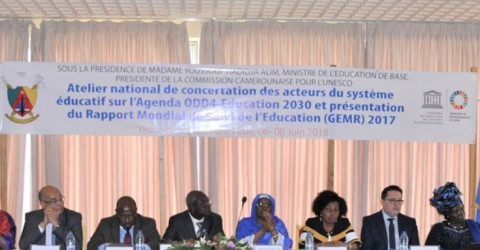 Advancing the right to education in Cameroon 2018-07-26 In order to align the new Sector Strategy for Education and Training (SSET) of Cameroon with the SDG 4- Education 2030 Agenda, the UNESCO Office in Yaoundé, in cooperation with the National Commission of Cameroon for UNESCO, organized from 6-8 June 2018 in Yaoundé, a National Consultation Workshop of stakeholders in education. The 3-day National Consultation Workshop brought together approximately 200 participants and commenced with an opening ceremony in the presence of Minister of Basic Education, Mrs. Youssouf Hadidja Alim. Participants included representatives of the various technical ministries involved, the parliament, technical and financial partners, representatives of civil society, NGOs, opinion leaders and teachers. A thematic Working Group was specifically devoted to the right to education, to discuss the legal gaps of the current national legislations and regulations inhibiting the full realization of the right to education and the achievement of SDG 4. The Working Group, chaired by Hon. Marlyse Douala Bell, member of the National Assembly and the Education and Youth Commission, provided the unique opportunity for participants to raise key issues that Cameroon faces with regard to achieving an inclusive, equitable and quality education for all. Recommendations were formulated in order to reinforce the institutional and legal framework by identifying the most urgent legal reforms that need to be undertaken. The Working Group agreed upon key steps of a Roadmap in order to follow-up on the discussions and recommendations made, with the aim to produce a country Report on the right to education to serve as a basis for future legislative reforms. This initiative in Cameroon falls within a larger scope of reviewing the legal frameworks of the countries of the Central African Region. The Nairobi Declaration and Call for Action on Education created a new momentum within Africa, with countries seeking to align their legal framework with SDG 4 Education 2030 commitments. UNESCO stands ready to provide technical assistance and strengthening of national capacities. Right to education URL:https://en.unesco.org/news/advancing-right-education-cameroon
 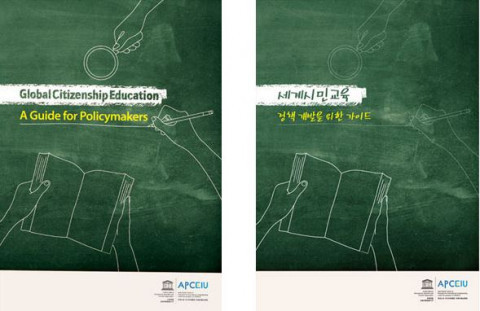 A Guide for Policymakers published to navigate integration of Global Citizenship Education to national education policies 2018-07-20 The Asia-Pacific Centre of Education for International Understanding (APCEIU) has published Global Citizenship Education: A Guide for Policymakers in order to assist UNESCO Member States to integrate and strengthen Global Citizenship Education (GCED) in their national education policies and further achieve Target 4.7 of Sustainable Development Goals. The Guide, which was developed in consultation with GCED experts, specialists from international education organizations and government officials from the countries’ ministries of education, suggests strategies in five priority action areas including policy review and development; curriculum review and development; capacity building; knowledge creation, sharing and dissemination; and monitoring and assessment. The strategies are designed to allow integration of GCED values and concepts into the countries’ current education system aligned with their priorities and contexts. While the Guide focuses on the formal education system, GCED principles and approaches it describes are equally relevant to non-formal education settings as well as projects and activities implemented by civil society organizations (CSOs) and non-governmental organizations (NGOs). The Guide was first released in English and Korean, and it will further be available in other languages including French and Arabic to be accessible for larger audience worldwide. APCEIU plans to introduce and disseminate the Guide through the GCED Global Network while at the same time organize related seminars at various venues on international education. Download link for PDF file: [English version] [Korean version]
  How does education about the Holocaust advance global citizenship education? 2018-07-20 UNESCO has commissioned a paper entitled “How Does Education about the Holocaust Advance Global Citizenship Education?” to demonstrate how teaching and learning about the Holocaust and genocide can meet key learning objectives and provide added value to GCED, highlighting the potential to mainstream education about the Holocaust in this framework. This paper supports UNESCO’s Policy Guide on Education about the Holocaust and preventing genocide, informed by the Organization’s longstanding work in education about the Holocaust and genocide and Global Citizenship Education (GCED). Through GCED, UNESCO aims to empower learners to assume active roles to face and resolve global challenges and to become proactive contributors to a more peaceful, tolerant, inclusive and secure world. "Working towards this goal requires both institutional and individual commitments”, expresses Doyle Stevick, the author of the paper and Associate Professor at the University of South Carolina. “Effective education can empower students with the knowledge, skills, and dispositions to advance and sustain this effort." For UNESCO, this implies providing learners of all ages with the cognitive, behavioural and social-emotional skills that strengthen their resilience against violent extremism and forms of group-targeted violence and empower them as responsible citizens. Education about the Holocaust and genocide can align with this understanding of GCED. GCED and education about the Holocaust are historically linked and deeply interconnected, though they may vary in overall orientation, scale and scope explains Doyle Stevick in the paper. “Education about the Holocaust and genocide and GCED both teach us that we all have a responsibility to act against injustice, whether in our own communities or in the global community.” The paper shows that the Holocaust’s historical significance and universal implications can provide an entry point to inform a longer process of dealing with the past. “People who study the Holocaust in places that are grappling with their own historical traumas often recognize commonalities that help them begin to engage their own experiences in new ways”, explains Doyle Stevick, underlining the global relevance of education about the Holocaust. The paper provides a critical examination of research regarding the contribution of education about the Holocaust to GCED’s three domains of learning, including examples of good practices, a terminology overview and an extensive bibliography. The paper is available via APCEIU’s GCED Clearinghouse. URL: https://en.unesco.org/news/how-does-education-about-holocaust-advance-global-citizenship-education-0
 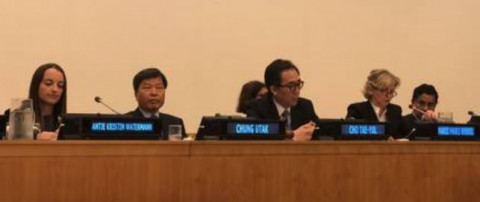 Why do education policymakers need to mainstream Global Citizenship Education: An Appeal of the 2030 Agenda 2018-07-20 New York, United Nations Headquarters: On 26 April 2018, the 2018 United Nations Global Citizenship Education Seminar was convened by the Permanent Mission of the Republic of Korea to the United Nations, United Nations Academic Impact, and the Asia-Pacific Centre of Education for International Understanding (APCEIU) under the auspices of UNESCO. With the theme of “The role of global citizenship education in the 2030 Agenda and beyond”, this year’s Global Citizenship Education Seminar aimed to shed new light on Global Citizenship Education (GCED) by exploring relevant concepts and methodologies already applied in other areas, and to seek opportunities for GCED to enhance and advance progress toward realizing sustainable development. Addressing the opening session, Ms. Marie Paule Roudil, Director of UNESCO Liaison Office New York and UNESCO Representative to the United Nations, recalled that GCED promotes the principles and values that help ensure the human rights of every individual across all regions of the world. As she pointed out, mainstreaming GCED in the education systems would support the development of values such as learning to live together, solidarity, empathy and respect of the other, as well as resolving conflict through peaceful means. Committed to support governments and educational stakeholders through the promotion of GCED, UNESCO has been: Leading the global advocacy and policy dialogue on GCED; Providing normative guidance, technical support, and capacity building on GCED; and: Focusing on Preventing Violent Extremism through Education. Building on the unique national experience of the Republic of Korea, Prof. CHO Hyo-Je, Professor of Sociology at Sungkonghoe University, delivered the keynote speech and shared insights on the synergy between GCED and the Universal Declaration of Human Rights. In the panel discussion and Q&A session followed, representatives from the academia, UN agencies, and NGOs exchanged views on the importance of the right to education, human rights education, GCED mainstreaming and branding, and the role of universities in experimental learning and research. In particular, Mr. Aaron Benavot, Professor of Global Education Policy at the State University of New York-Albany and former Director of UNESCO’s Global Education Monitoring (GEM) Report, cited GEM Report’s examination of national educational frameworks and textbooks. He called for more teachers’ training on GCED, and highlighted a whole-school approach, more decentralized education systems, and a strong policy commitment as favorable conditions for GCED mainstreaming. Increasingly complex and protracted crises, especially the rise of violent extremism, has led to ever-greater need for the benefits of GCED. Situated within the SDG Goal 4–Target 4.7, GCED has a crucial role in fostering peaceful, just and inclusive societies. GCED aims to empower learners to engage and assume active roles locally, nationally and globally, to face and resolve global challenges and ultimately to become proactive contributors to a more just, peaceful, tolerant, inclusive, secure and sustainable world. It builds on peace and human rights education and emphasizes the need to foster the knowledge, skills, values, attitudes and behaviors that allow individuals to experience a sense of belonging to the global community and to take informed decisions. URL:http://www.unesco.org/new/en/unesco-liaison-office-in-new-york/about-this-office/single-view/news/why_do_policy_makers_need_to_mainstream_global_citizenship_e/
 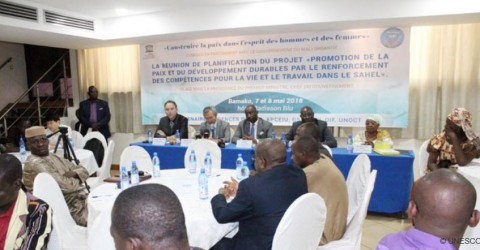 Promotion of Peace and Sustainable Development in the Sahel: A meeting held to develop the program's results framework and implementation schedule 2018-07-20 From 7 to 8 May 2018, Bamako hosted a planning meeting on the program "Reinforcement of Skills for Life and Work for Peace and Sustainable Development in the Sahel ". This two-day meeting enabled participants to develop a results framework, as well as an implementation schedule, through experience sharing with Sahelian countries, and with other countries such as Cabo Verde, the Gambia and Guinea Bissau. The opening ceremony was chaired by Mr. Tiéman Hubert Coulibaly, Minister of Foreign Affairs of Mali, representing the Prime Minister, in the presence of Mr. Chang Gwang-Chol, Director of the UNESCO Regional Office for West Africa (Sahel), Mr. Hervé Huot-Marchand, UNESCO's Representative in Mali, Mr. Kouldjim Guidio, representative of the Permanent Secretary of G5-Sahel, Mrs Diallo Kadia Maiga, Secretary General of the Malian National Commission for UNESCO and ISESCO, and participants from Sahelian countries, such as Burkina Faso, Mauritania, Mali, and Niger. Also in attendance were countries like Senegal, the Gambia, Cabo Verde and Guinea Bissau, as well as Mrs. Mbaranga Gasarabwe, Resident Coordinator of the United Nations System in Mali, who honored the ceremony with their presence. Mr. Chang thanked the Government of Mali for the warm welcome and accompaniment. “As we all know, youth is the lifeblood of a nation. It is the responsibility of all of us, governments, local authorities, traditional and religious leaders, social actors, international partners, etc., to accompany them in becoming responsible and resilient actors of change, citizens and leaders capable of taking control of their future and that of their country”. He welcomed the quality of the work and urged participating countries to have the various proposed activities validated by their competent authorities by the end of May 2018. Mr. Guidio reiterated the support and the principles of his institution, which are in line with the said meeting. “For the G5 Sahel, we cannot contain violent extremism and its consequences only through security measures alone. It will be vital to integrate governance and development aspects in the search for a lasting solution by member states," he said. For her part, Mrs. Mbaranga recalled that this meeting also supports the United Nations Secretary-General's Action Plan for the Prevention of Violent Extremism, adopted in 2016 and the UNESCO Executive Board's decision on the prevention of violent extremism. "If we do not envision where we are going, we will not be able to have either a steady culture or a lasting peace," she said. In his opening speech, Mr. Coulibaly recalled that Mali attaches great importance to this program, which concerns youth and sustainable development, adding that the first defense against barbarism, obscurantism is the strength of the spirit. “Beyond what must be cultivated in the hearts of men, it is obvious that we must arm all the Sahel countries, morally and intellectually, so that the development models chosen, especially the economic models can be solid”. Finally, he thanked UNESCO and the experts from other countries. The work took place in a participatory and interactive atmosphere. Participants unanimously recognized that problems were the the same in all Sahelian countries, hence the importance of joining efforts for an effective action. To do so, it is essential to rethink education systems, for all sections of the population and for all learners: students as trainers. During the meeting, the importance of considering the most vulnerable individuals was stressed, especially illiterate populations, so that they too could benefit from training and certifications, giving them a better chance to find a job. Participants also recalled that culture is an essential aspect that should not be neglected, thus it must be fully integrated into the implementation of the program through reconnecting young people to their heritage. Through this program, which will run for an initial period of three years, UNESCO will support countries in the Sahel, in particular Burkina Faso, Chad, the Gambia, Mauritania, Mali, Niger and Senegal, but also Guinea Bissau and Cabo Verde, under the overall coordination of the UNESCO Regional Office for West Africa (Sahel) and in collaboration with the UNESCO Regional Offices in Rabat and Yaoundé. The meeting was organized in collaboration with the Asia-Pacific Center of Education for International Understanding under the auspices of UNESCO (APCEIU) and the United Nations. You can listen to the radio debate on Mikado FM (Radio UN) at the following link:https://soundcloud.com/mikado-fm/parole-citoyenne-promotion-paix-et-developpement-durable-dans-la-region-du-sahelLink to report Studio Tamani (EU Radio):http://www.studiotamani.org/index.php/journaux/15528-les-titres-du-07-mai-2018-soirLink to ORTM News (3mn45):https://www.youtube.com/watch?v=OVPS4FGtufcLink to Flickr Photos:https://www.flickr.com/photos/155712355@N08/albums/72157695905250034 URL:https://en.unesco.org/news/promotion-peace-and-sustainable-development-sahel-meeting-held-develop-program-s-results
  #YouthOfUNESCO: Revolutionizing Education! 2018-07-11 Philippine Dolbeau is a 19-year-old entrepreneur who established her innovative start-up when she was only 15 years old. She is transforming education technology by integrating simple digital solutions to the education system, which facilitates the lives of teachers and improves security in schools for students. “It was a regular school day in 2014. I went home, switched on the TV and I saw a news item about a little boy named Charles, who had fallen asleep in the bus during a school trip. The bus driver didn’t notice him and he was left alone in the bus for 8 hours, without food and without water. All this happened, because the teacher didn’t have a registration system. I wanted to change that and make sure this wouldn’t happen again. That’s what inspired me to create my start-up NewSchool – to increase security in school environments and to make education a positive experience for students,” she says on how it all started. “NewSchool is an application designed essentially for teachers to digitally register their students with a Bluetooth system. The mobile application comes with a connected key holder, which allows students to be detected when carrying it. It also ensures that every student is rewarded for his efforts, thanks to a gamification system in the app where students earn points. When reaching a certain amount of points, he can exchange them with creative education contents such as videos or even templates for class presentations. It will soon have other functions, such as, facilitating borrowing books from libraries. In 2015, NewSchool started off as a small project for school – I entered an innovation competition with it, won and the next thing I find is developers from Apple calling me to help me out with the application.” She thinks that more resources should be provided to schools to continue the digital transformation. The world of education must adapt to the specificities of the new generations. “My mother is a teacher and I have always had a positive experience at school during my educational path. However, the French education system needs to change and the mindsets need to move towards digitalizing elements in education. Digital devices and technology are not here to make our lives more difficult, but to transform and facilitate education to provide a great learning experience for children and youth.” *** The UNESCO Youth Programme works to ensure that talented young people’s ideas and skills enact real change in areas related to UNESCO’s fields of competence. Youth are no longer just beneficiaries in the organization’s work, but essential actors in finding the solutions to some of the world’s biggest challenges. Download NewSchool (French)More on UNESCO’s work with youthJoin the UNESCO Youth Online CommunityContact: youth@unesco.org URL:https://en.unesco.org/news/youthofunesco-revolutionizing-education
 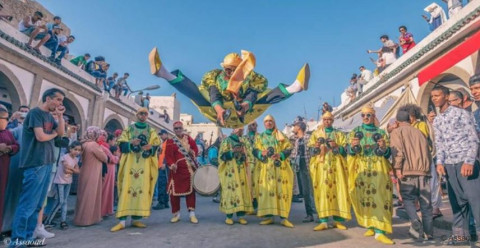 UNESCO and the City of Essaouira strengthen their cooperation to fight against racism and discrimination 2018-07-04 The UNESCO Office in Maghreb and the City of Essaouira organized a round table on the theme "Culture and Social Inclusion: what can the Coalition of Arab Cities against Racism, Discrimination, Xenophobia and Intolerance contribute?” on 22 June 2018, in Essaouira (Morocco), as part of the Gnaoua World Music Festival. The Festival, which is a major cultural event of the City of Essaouira, constitutes the ideal platform to spark a common reflection on the role of culture to foster social inclusion. The Mayor of the City, Hicham Jebbari, underscored the importance of creative activities, based on cultural heritage and in cooperation with local experts, to implement strategies for local public policies laying the ground for an environment of inclusion and equality of opportunities. In this regard, the City cooperates with the Essaouira Provincial Directorate of the Ministry of Culture and with civil society actors, including the Association Essaouira-Mogador. Linda Tinio-Le Douarin, Coordinator of UNESCO’s International Coalition of Inclusive and Sustainable Cities – ICCAR, presented several initiatives juxtaposing the cultural and social dimensions which are undertaken by member cities from each region – grants to associations to combat discriminations, establishment of centers for intercultural dialogue, equal opportunity programmes or cultural and sports festivals – which all aim to contribute to living together in urban spaces. From Montevideo to Bologna, from Vancouver to Essaouira and Indonesian cities, there are many examples of city projects attesting to the engagement to endorse human rights, gender equality, cultural diversity and social inclusion as drivers of peace and sustainable development. Representatives of the Essaouira Provincial Directorate of the Ministry of Culture and the Association Essaouira-Mogador, which are long-standing partners of the City, emphasized the pivotal role of civil society for cultural initiatives with social goals highlighting humanistic values in the fight against racism and xenophobia. In order to implement the Tunis Declaration, adopted by the Coalition of Arab Cities in April 2017, enhanced cooperation between UNESCO, the City of Essaouira and its partners will be ensured. The Coalition of Arab Cities, composed of 22 member cities, aims to establish a network of cities to share good practices at regional and international levels to improve policies to combat all forms of exclusion and discrimination. Since the end of 2017, Essaouira has become co-lead city with Nouakchott (Mauritania) of the Coalition of Arab Cities, which is part of the International Coalition of Inclusive and Sustainable Cities – ICCAR. URL:https://en.unesco.org/news/unesco-and-city-essaouira-strengthen-their-cooperation-fight-against-racism-and-discrimination
 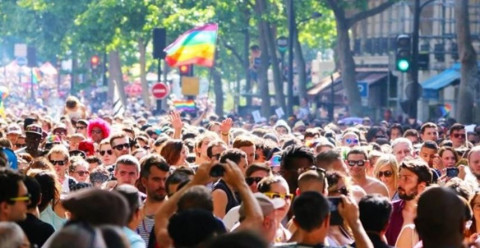 ¿Los sistemas educativos son inclusivos con respecto a las personas LGBTI? La UNESCO se asocia a una organización de jóvenes LGTB para responder a esta pregunta 2018-06-27 A global consultation on the LGBTI vision for how to make the 2030 Sustainable Development Agenda for education and health more inclusive, is being jointly launched by UNESCO and youth organization MAG Jeunes LGBT. The inputs of lesbian, gay, bisexual, transgender, intersex (LGBTI) youth will be collected through a web-based consultation conducted by MAG Jeanes LGBT and supported by a UNESCO-led social media campaign. The results of the consultation will be presented at the 2nd biannual Equal Rights Coalition (ERC) conference in August 2018 in Vancouver, Canada. The ERC is an intergovernmental coalition of 39 countries that advances the human rights of LGBTI people and promotes inclusive development in both member and non-member countries. In advance of the social media campaign, UNESCO Permanent Delegations of Canada and Chile, also co-chairs of ERC, are hosting a briefing meeting on 22 June 2018 at UNESCO Headquarters in Paris, sharing information about the ERC conference and UNESCO’s contribution to it, as well as the associated international consultation. “We know that a significant proportion of LGBT students experience homophobic and transphobic violence in school, a far higher prevalence than their non-LGBT peers. They are more likely to feel unsafe in school, miss classes, or even drop out; which negatively impacts their education, employment prospects and well-being,” said Christophe Cornu, Senior Programme Specialist and Team Leader in the Section of Health and Education at UNESCO. “Through this global consultation, we hope to learn more about these experiences, and in turn support Member States to provide safe and inclusive learning environments for all students. This is critical to effective learning, to meet human rights commitments, including the right to education and the other rights of the child, and to achieve the Sustainable Development Goals (SDGs), in particular SDG4.” The web-based consultation hosted by MAG Jeanes LGBT will run until 11 July 2018, and the associated social media campaign from 25 to 29 June 2018. Resources Out in the Open Report Web-based consultation: Arabic - Chinese- English - French - Russian - Spanish UNESCO social media: @UNESCO MAG Jeanes social media: Facebook @MAG.LGBT, Twitter @mag_jeunes_lgbt School violence and bullying Homophobic and transphobic violence in education URL:https://en.unesco.org/news/are-education-systems-lgbti-inclusive-unesco-teams-lgbt-youth-organization-find-out