
News
Catch up on what’s happening in the world of global citizenship education.
1,668 results found
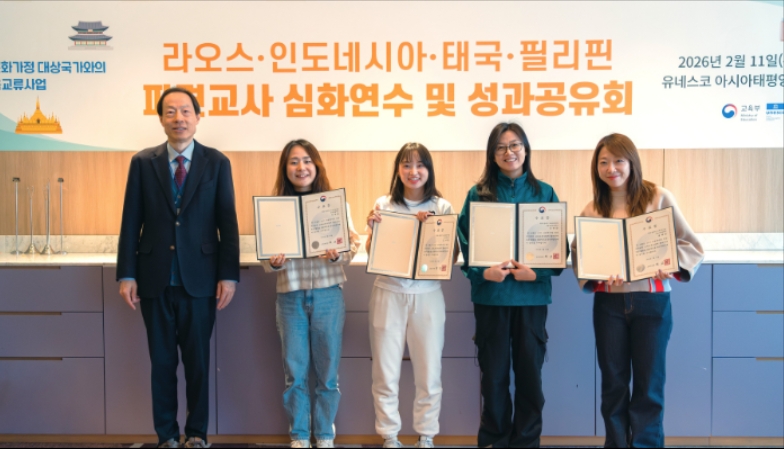 APCEIU Holds Post-programme Workshop for 2025 APTE Outbound Teachers 2026-03-17 The Asia-Pacific Centre of Education for International Understanding (hereinafter ‘APCEIU’) successfully held the Post-programme Workshop and Final Presentation for the Second-Half Outbound Teachers of the 2025 Asia-Pacific Teacher Exchange Programme for Global Education (hereinafter ‘APTE’) from 11 to 13 February 2026.The event brought together 19 teachers who had been dispatched to Lao PDR, Indonesia, Thailand, and the Philippines in the second half of 2025. The workshop provided an opportunity for participants to share their overseas teaching experiences and reflect on how their Global Citizenship Education (GCED) practices could be further integrated into their schools upon returning to Korea.The three-day programme took place at APCEIU and The Link Seoul, followed by a home-based learning period during which participants continued their assignments. The workshop featured sessions designed to strengthen teachers’ understanding of GCED and multicultural education and explore practical approaches for classroom implementation.Guest lectures by educators working with multicultural student populations in Korean schools drew particular interest from participants. These sessions introduced practical teaching approaches—from the use of AI and EdTech to arts-based learning—that support inclusive classrooms and engagement among students from diverse cultural and linguistic backgrounds.Participants also explored exemplary post-programme initiatives presented by an APTE alumnus, demonstrating how overseas teaching experiences can lead to sustained educational activities in schools and local communities. Small-group reflection sessions further provided space for participants to discuss changes in their perspectives before and after their assignments and exchange insights from their teaching experiences across different countries.During the workshop, participants also developed country-specific local culture manuals for future programme participants. Based on their firsthand experiences in partner schools and communities, the teachers compiled practical information on educational environments and cultural contexts in each country to support future APTE participants.The Final Presentation, held on 12 February, showcased the teachers’ activities and GCED practices carried out in partner schools. Approximately 50 participants attended the event, including officials from provincial and metropolitan offices of education and representatives from the Ministry of Education of the Republic of Korea.The event opened with congratulatory remarks from Director Choi Ha-young of the Ministry of Education and Director Lim Hyun Mook of APCEIU. Teachers presented their educational activities, shared key outcomes from their assignments, and introduced follow-up initiatives they plan to implement in their schools.The APTE programme, organized by the Ministry of Education of the Republic of Korea and implemented by APCEIU, dispatches Korean teachers to partner countries while inviting teachers from those countries to Korean schools. Through these exchanges, the programme promotes mutual understanding among participating countries and advances the values of Global Citizenship Education.
 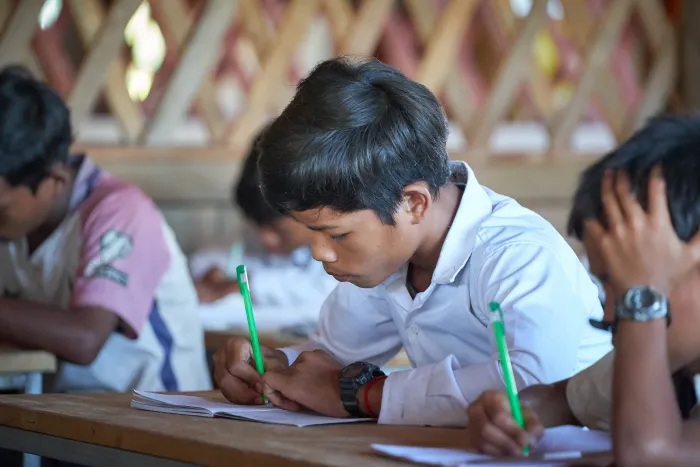 UNESCO Launches New Online Course to Help Educators Teach About Histories of Violence 2026-02-28 Understanding violent pasts is essential to understanding the world we live in today. The histories of genocide, war, colonialism, enslavement and other forms of mass violence shape contemporary societies. Their legacies are visible in present day inequalities, social divisions, political tensions and cultural attitudes. When these histories are simplified or ignored in educational settings, learners lose the opportunity to process them, to recognize how the past continues to influence the present, to think critically about injustice, and to actively contribute to building peace.Launched on the International Day of Commemoration in Memory of the Victims of the Holocaust, the online course on Teaching and Learning about Histories of Violence has been developed to support educators in addressing these complex topics thoughtfully and responsibly. This global, and free-to-access course offers a foundation in key concepts, including the idea that violence is not only physical but can also be structural and cultural. This wider understanding helps learners recognise how discrimination, prejudice and exclusion can lay the groundwork for physical harm, and how such systems may persist long after the direct violence has ceased. The online course is launched alongside UNESCO’s policy guide to support ministries of education on how to address local histories of violence in education systems.Educators must be aware not only of what to teach, but how to teach about histories of violence. The course introduces methods such as working with primary sources, analyzing historical narratives and using testimonies to foreground lived experience. It pays particular attention to the facilitation of challenging discussions, offering guidance on how to create brave and respectful classroom environments where students can express ideas, question assumptions and encounter difficult emotions safely. By weaving together knowledge, pedagogy and reflection, history education can be a space where difficult pasts are examined with care and purpose, to promote learning that builds empathy, strengthens critical understanding and contributes to a culture of human rights, social cohesion and peace. What UNESCO does to promote education about violent pastsEducation about the Holocaust and violent pasts is part of UNESCO’s work in promoting Global citizenship education (GCED), which aims to support learners of all ages to become ethical, empathetic and respectful human beings who can adapt to the world rapidly moving forward, even amidst its most complex challenges and threats. The overall framework for GCED is the UNESCO Recommendation on Education for Peace and Human Rights, International Understanding, Cooperation, Fundamental Freedoms, Global Citizenship and Sustainable Development, that seeks to build more peaceful, just, and sustainable societies through education. UNESCO works with countries and partners to develop programmes that foster understanding of the causes and consequences of the Holocaust, violent pasts and how genocides happen, to encourage a constructive engagement in today’s societies. It provides guidance and tools to support textbook and curriculum revision, develop and revise policies, promote appropriate and relevant pedagogies, and enhance cooperation between formal and non-formal sectors of education, including with museums and memorials. UNESCO also creates Chairs in universities to sustain research and education about the history and the prevention of extreme forms of violence. The Organization’s work on the legacies of violence spans across its areas of expertise. Several memorial sites have been inscribed on the UNESCO World Heritage list, starting with the former Nazi German concentration and extermination camp Auschwitz-Birkenau in 1979, and continued more recently with the inscription of three memorial sites of the 1994 genocide against the Tutsi in Rwanda, as well as three historical sites of the crimes committed by the Khmer rouge regime in Cambodia. This work is complimented by UNESCO’s Memory of the World Programme that recognizes significant documentary heritage and includes collections of historical records that bear witness to past crimes. Access the online course "Teaching and learning about histories of violence"Teaching about the Holocaust and genocide
  Advancing Holocaust Education and Remembrance through Regional Cooperation 2026-02-28 Within UNESCO’s EU-funded project, in a renewed show of unity, representatives of the successor states of former Yugoslavia are reaffirming a shared commitment to preserving historical memory. Since 2011, UNESCO has played a leading role in supporting efforts to restore Block 17, the Yugoslav Pavilion at the Auschwitz-Birkenau Memorial. In 2024, the participating successor states of former Yugoslavia reached a landmark agreement to renovate the space and create a new permanent exhibition honouring victims from the region. Building on this momentum, the UNESCO Office in Venice launched the regional project ‘Strengthening Remembrance and Education on the Holocaust in former Yugoslavia’. Funded by the EU, the initiative extends the impact of the Block 17 beyond the memorial itself, through a travelling exhibition and a comprehensive educational programme, designed to deepen Holocaust awareness and strengthen regional dialogue. On 4-6 February 2026, representatives of the Ministries of Culture and Education of Bosnia and Herzegovina, Croatia, Montenegro, North Macedonia, Serbia, and Slovenia met in Sarajevo to move this vision forward. Their meeting concluded with the finalisation of the Concept for the Permanent Joint Exhibition in Block 17, an important step presenting a coordinated regional narrative grounded in shared history and responsibility. "This is one of the most emblematic regional initiatives, bringing together 6 successor states of the former Yugoslavia in a shared commitment to Holocaust remembrance and education. It stands out as the only current intersectoral programme in the region that unites culture and education authorities around a common vision of remembrance, responsibility and learning."Siniša Šešum, Head, UNESCO Antenna in SarajevoRooted in a common and often contested history, the exhibition does not shy away from complexity. It addresses the sensitive and difficult past, bringing together diverse experiences into a single, inclusive story. By presenting these experiences collectively, the project seeks to foster understanding, support reconciliation, and reinforce a common commitment to human rights across the region.Education stands at the heart of the initiative. In collaboration with EuroClio (European Association of History Educators) and experts from across the region, participants reviewed curriculum aligned tools such as a Guide for Policymakers and a Guide for Educators. These tools will support the travelling exhibition and ensure materials are locally relevant and pedagogically strong.The educational programme goes beyond the history of the Holocaust, exploring human rights, democratic citizenship, and long-term consequences of genocide. By strengthening institutional capacities, embedding Holocaust education within curricula and teacher training systems, the project will empower teachers, trainers, educators, and education policymakers to effectively tackle this sensitive historical content. Together, the travelling exhibition and educational programme turn remembrance into action. By confronting divisive narratives and filling gaps in Holocaust education, they lay the groundwork for a more inclusive understanding of history. As catalysts for tolerance and respect for human rights, they equip younger generations with a deeper awareness of the Holocaust, helping prevent future atrocities and build a lasting culture of peace in the region.
 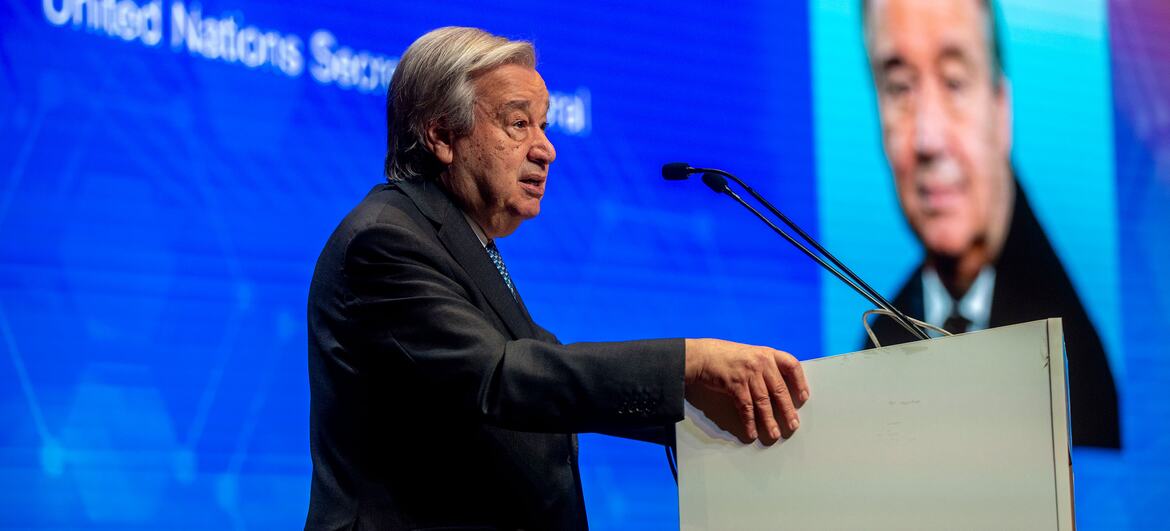 Science-led Governance of AI can Help Power Sustainable Development: Guterres 2026-02-24 UN Secretary-General António Guterres highlighted the key role science has in international governance of artificial intelligence during an event on Friday held on the margins of the AI Impact Summit in New Delhi, India. “Guided by science, we can transform AI from a source of uncertainty into a reliable engine for the Sustainable Development Goals (SDGs),” he said. He urged the international community to build a future “where policy is as smart as the technology it seeks to guide.” New expert panel The Secretary-General noted that “AI innovation is moving at the speed of light, outpacing our collective ability to fully understand it, let alone govern it.” He stressed that “if we want AI to serve humanity, policy cannot be built on guesswork,” underscoring the need for “facts we can trust – and share – across countries and across sectors.” For this reason, the UN is developing mechanisms that put science at the centre of international cooperation on AI, starting with a recently appointed body that brings together 40 leading experts in the field. The Independent International Scientific Panel on Artificial Intelligence aims to help close “the AI knowledge gap” and assess the real impacts these new technologies have across economies and societies so that countries can act with the same clarity regardless of their level of AI capacity. Accelerating progress, anticipating risks “The Panel will provide a shared baseline of analysis – helping Member States move from philosophical debates to technical coordination; and anchor choices in evidence,” he said. The UN chief was adamant that science-led governance of AI “is not a brake on progress” but rather “an accelerator for solutions.” It will help countries to identify where AI “can do the most good, the fastest,” he said, and provide “a way to make progress safer, fairer, and more widely shared.” Furthermore, the international community will be able to anticipate AI impacts early – such as risks for children or labour markets. That way “countries can prepare, protect and invest in people.” Dangers of fragmentation He noted that international cooperation is difficult today amid strained trust and growing technological rivalry. “Without a common baseline, fragmentation wins – with different regions operating under incompatible policies and technical standards,” he said, which will only “raise costs, weaken safety, and widen divides.” The Secretary-General said countries can align their “technical baselines”, guided by the Independent Panel and another UN initiative, the Global Dialogue on AI Governance to be held in Geneva in May. Meaningful human oversight Before concluding, he upheld that while “science informs,” human control of AI must be “a technical reality – not a slogan.” This requires “meaningful human oversight in every high-stakes decision – in justice, healthcare, credit” as well as “clear accountability – so responsibility is never outsourced to an algorithm” he said. “People must understand how decisions are made, challenge them – and get answers.”
  New Digital Skills Course for Literacy Educators in Arabic, French and Spanish 2026-02-19 On 18 February, the UNESCO Institute for Lifelong Learning (UIL), with support from Global Alliance for Literacy Associate Member Huawei, launched the self-paced course Improving the Digital Competencies of Literacy Educators in Arabic, French and Spanish.18 February 2026This new course highlights the growing importance of equipping educators with the skills needed to navigate and shape the digital transformation of education and society. By making the course available in multiple languages, UIL ensures that adult educators from diverse world regions can participate and benefit from this learning opportunity. ‘In today’s rapidly evolving world, digital competencies are essential for full participation in a text‑ and technology‑mediated society. Literacy educators are at the forefront of helping youth and adult learners adapt to these changes and harness the opportunities digital technologies offer for lifelong learning. This course is therefore a vital resource in strengthening their capacity and supporting inclusive digital transitions,’ emphasized Isabell Kempf, UIL Director, during the launch. Course objectives: This course is designed for youth and adult literacy educators seeking to enhance their knowledge, skills, and ability to apply digital competencies in literacy instruction. Participants will: Discover innovative and creative ways to integrate technologies into literacy education, transforming both teaching and learning.Build capacity to create engaging learning materials and environments using digital tools, fostering curiosity and inspiration among learners.Advance their professional development by exploring the latest in educational technology, including AI, and its application for continuous learning. The course features eleven sessions, allowing educators to progressively enhance their digital knowledge and skills in a flexible, self-paced format. Join a global community of educators UIL encourages literacy educators worldwide to enrol, connect, and share experiences with one another to enrich their learning journey and, by doing so, empower their learners and strengthen the foundation for lifelong learning for all. All adult education stakeholders are also invited to share this resource within their networks. For more information and to register, please visit: English SpanishFrenchArabicFurther information Project ‘Literacy educator training in the Kingdom of Morocco’
 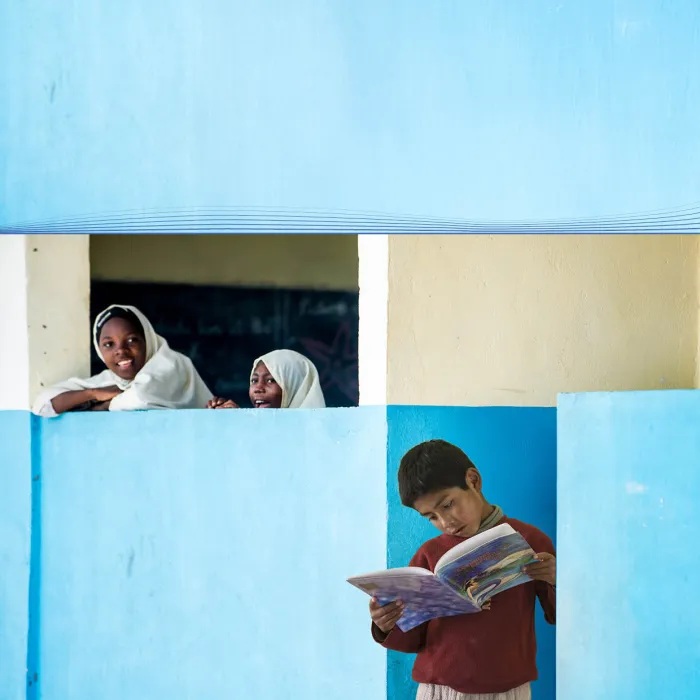 Turning Education Plans into Action 2026-02-19 A new Strategy for planning more equitable, inclusive, and quality education systems globally.17 February 2026 - Last update: 18 February 2026 Education systems are evolving, and so must planning. From technological advancements, shifting demographics, to constrained public budgets and diverse crises, there are arising and persistent challenges, as well as opportunities to shape a better future. The 2026-2029 Medium-Term Strategy of the UNESCO International Institute for Educational Planning provides a vision for transforming educational planning into tangible results for education systems across the globe. Building on more than 60 years of experience, the Strategy puts the focus not only on policy and plan design, but on collective and agile implementation."Educational planning is about improving learning and well-being for all learners, especially those furthest behind. This requires policies that are not only well designed but also feasible to implement, monitor, and sustain."Martín Benavides Director of IIEP-UNESCOEducational planning must lead to actionThe Strategy focuses on supporting the implementation and sustainability of education policies that expand access, promote equity, and improve learning outcomes. Capacity development is a system-wide process, operating across three interconnected levels: individual, organizational, and institutional. This involves skills development and tools to support planners, policy-makers, school leaders, and technical staff move plans and policies from paper to practice. At the organizational and system level, it involves strengthening ministries, planning units, and decentralized structures to improve coordination, data use, and service delivery, while fostering governance frameworks that promote accountability and cross-sector coherence. Collaboration to ensure sustainable reformsThe Strategy emphasizes collaboration and co-construction across the whole education policy and planning cycle. From foresight and sector analysis to implementation, monitoring, and learning, IIEP supports countries in developing adaptive capacity to ensure reforms are sustainable. IIEP’s approach also emphasizes strengthening education data systems and monitoring, evaluation, and learning, allowing evidence-based decision-making and opportunities for continuous improvement. IIEP supports countries on thematic issues:Education leadershipGender equalityInclusive educationEducation financingGovernance and digital transformationSafe, climate resilient, and crisis-responsive education systemsLifelong skills development
  Rectors from 10 Universities in LAC Presented Institutional Assessments and SDG Priorities 2026-02-19 At the close of Phase II of the International Programme for Rectors of UNESCO IESALC participants connected realities of each university with the 2030 Agenda12 February 2026 - Last update:13 February 2026On February 2, the second phase of the International Program "Leadership and Sustainable University Governance. Path to the 2030 Agenda" program, corresponding to the third cohort, promoted by UNESCO IESALC. The session brought together rectors from ten universities in Latin America and the Caribbean, who presented their institutional diagnoses on sustainability, identifying priorities, strategic SDGs, and lines of action to strengthen sustainability through university governance.During the meeting, the presentations highlighted significant progress in institutional capacity to move from commitment to informed and actionable strategic decisions, connecting the realities of each university with the global challenges of the 2030 Agenda. Beyond plans and roadmaps, solid institutional visions were shared, anchored in local contexts and aimed at generating real impact.The rectors of the following institutions presented their diagnoses: National University of Loja (Ecuador)American University Corporation (Colombia)University of Pamplona (Colombia)National Open and Distance University (UNAD), (Colombia)Caribbean University Corporation (CECAR) (Colombia)National University of Río Cuarto (Argentina)National Autonomous University of Honduras (Honduras)Christian University of Honduras (Honduras)Panamerican University (Mexico)Technological University of Uruguay (Uruguay).With the conclusion of this phase, a six-month mentoring process will begin, aimed at consolidating this roadmap through its strategies, strengthening institutional capacities, and translating them into impact in university communities and territories.At UNESCO IESALC, we celebrate this milestone and reaffirm our commitment to continue working alongside the participating universities, strengthening leadership, collaboration, and collective learning to accelerate sustainability in higher education. "At UNESCO IESALC, we celebrate this milestone and reaffirm our commitment to continue working alongside the participating universities, strengthening leadership, collaboration, and collective learning to accelerate sustainability in higher education." Yuma Inzolia Head of Capacity Development
  UNESCO Global Skills Academy Supports the Launch of the Meaningful Open Opportunities for Discovery 2026-02-13 Meaningful Open Opportunities for Discovery (MOOD) is a United Nations certified learning experience combining climate action, purpose discovery and collective action.Launched with support of the UNESCO Global Skills Academy (GSA), a MOOD online workshop brought together a diverse group of over 100 participants for two hours of reflection, dialogue, and collective exploration as part of the Learning Planet Festival on 27 January 2026.4 February 2026 - Last update:5 February 2026 The event positioned climate education as a powerful entry point for developing future-oriented competencies, including critical thinking, leadership, collaboration, creativity, digital and civic engagement. These transversal skills lie at the core of the Global Skills Academy’s mission to support learners, educators, and institutions in navigating complex global challenges.Climate education today faces a clear challenge: while awareness is growing, translating concern into meaningful, everyday action remains difficult. The Meaningful Open Opportunities for Discovery (MOOD) workshop addressed this gap by reframing the conversation around simple but powerful questions that encourage agency and creativity:How might we reduce our everyday carbon footprint without sacrificing quality of life?How might we make climate-friendly choices easier and more accessible for everyone?How might we help people feel empowered to take climate action in their local communities?These questions reflect the MOOD’s pedagogy and its strong convergence with the Global Skills Academy’s learner-centred and action-oriented approach. Rather than focusing on fear or abstract targets, participants were invited to explore realistic solutions grounded in daily life, local contexts, and personal motivation. By combining climate science, social and emotional learning, and purpose discovery, MOOD creates space for participants to move from awareness toward action in a way that feels achievable and inclusive.This approach resonates with the Global Skills Academy’s emphasis on co-designing education and training solutions alongside youth, ensuring that skills development remains relevant, inclusive, and grounded in real-world contexts.
  UN’s ‘Responsibility to Deliver’ Will Not Waver, after US Announces Wthdrawal from Dozens of International Organizations 2026-01-13 By Vibhu Mishra8 January 2026 ❙ UN AffairsSecretary-General António Guterres has expressed regret over the decision by the United States to withdraw from a number of UN entities, while underscoring that the system will continue to deliver on all its mandates.“As we have consistently underscored, assessed contributions to the United Nations regular budget and peacekeeping budget, as approved by the General Assembly, are a legal obligation under the UN Charter for all Member States, including the United States,” a statement issued by the UN Spokesperson said on Thursday.Wednesday night’s presidential memorandum directs US executive departments and agencies to take immediate steps to withdraw from dozens of international organizations, conventions and treaties deemed by Washington to be contrary to US interests.According to the US memorandum, the decision affects 31 UN agencies and entities. These include:the UN Population Fund (UNFPA), which supports maternal and child health, and combatting sexual and gender-based violence;the UN Framework Convention on Climate Change (UNFCCC), which fosters global cooperation against climate change;the UN Democracy Fund, which funds and mentors civil society projects for democracy;other offices of the UN Secretariat based in New York and elsewhere, such as those dealing with children in armed conflict and ending sexual violence as a weapon of war.The list also includes four of the five UN regional commissions (Asia-Pacific, Western Asia, Africa, and Latin America and the Caribbean), which are key platforms for multilateral cooperation.For UN entities, “withdrawal means ceasing participation in or funding to those entities to the extent permitted by law,” the memorandum states.The work will continue: GuterresDespite the announcement, the Secretary-General stressed that the work of the Organization would continue.“All United Nations entities will go on with the implementation of their mandates as given by Member States,” the statement said.“The United Nations has a responsibility to deliver for those who depend on us. We will continue to carry out our mandates with determination.”Under the UN Charter, assessed contributions to the Organization’s regular and peacekeeping budgets are approved by the General Assembly and are considered binding obligations for all Member States.For 2026, the General Assembly approved $3.45 billion regular budget – a sharp reduction from previous years – including a 15 per cent reduction in financial resources and a nearly 19 per cent cut in staffing.A blow to climate cooperationResponding specifically to the US decision to withdraw from UNFCCC, its Executive Secretary Simon Stiell said the move marked a step back from global climate cooperation.“The United States was instrumental in creating the UN Framework Convention on Climate Change and the Paris Agreement, because they are both entirely in its national interests,” Mr. Stiell said in a separate statement on Thursday.“While all other nations are stepping forward together, this latest step back from global leadership, climate cooperation and science can only harm the US economy, jobs and living standards, as wildfires, floods, mega-storms and droughts get rapidly worse. It is a colossal own goal which will leave the US less secure and less prosperous.”Mr. Stiell noted that UNFCCC would keep working tirelessly, adding, “the doors remain open for the US to reenter in the future, as it has in the past with the Paris Agreement.”
 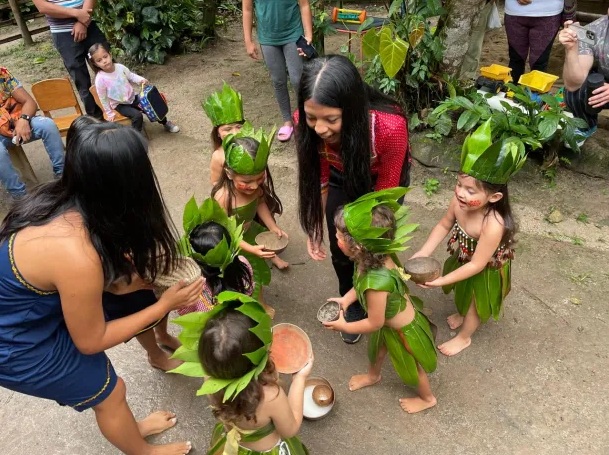 Projects from Ecuador and the United Republic of Tanzania Win First Edition of UNESCO Global Citizenship Education Prize 2025-12-15 Two exceptional projects from Ecuador and the United Republic of Tanzania were recognized in the inaugural edition of the new UNESCO Prize for Global Citizenship Education (GCED), funded by the Republic of Korea.9 December 2025 - Last update:10 December 2025The 2025 edition honoured a school project in the Amazon rainforest in Ecuador that guides children to become empathetic community leaders and forest guardians, and a youth-led non-governmental organization in the United Republic of Tanzania that mobilizes youth nationwide to counter hate speech and promote peace and security.The two laureates were selected out of 150 nominations from 76 countries, submitted by UNESCO Member States or by non-governmental organizations in official partnership with UNESCO. An independent international jury of five experts reviewed the nominated applications. The two initiatives were recognized for their excellence in promoting the values of global citizenship education and addressing some of the interconnected and complex challenges of the twenty-first century by helping learners or community members to collaborate, overcome differences, promote values of understanding and empathy and make a meaningful impact at local, national or regional levels.Awarded every two years, the UNESCO Prize for Global Citizenship Education (GCED), recognizes outstanding efforts in promoting and advancing GCED principles and values by two categories of applicants: 1) youth-led organizations and 2) a general category of applicants, which includes individuals, institutions, non-governmental organizations and other entities.Each laureate received an award of USD 50,000 during a ceremony held at UNESCO Headquarters in Paris on 9 December 2025, also coinciding with the International Day of Commemoration of the Victims of Genocide, Affirmation of their Dignity and Prevention of this Crime. African Leadership Initiatives for Impact (ALII), United Republic of TanzaniaThe African Leadership Initiatives for Impact (ALII), a youth-led NGO in the United Republic of Tanzania, received the UNESCO GCED Prize in the youth category for its Youth4Peace Agenda project. The project places young people at the center to promote social cohesion, peace and security. They are trained, connected and empowered across different groups to become changemakers, and to create unity, social cohesion and promote sustainable development at community level while countering misinformation, hate speech and discrimination.Grounded in local needs and youth priorities, the project promotes key universal values of global citizenship, such as dialogue and understanding, conflict resolution, and cross-cultural collaboration. The organization has reached over 50,000 young people through targeted and mass educational online campaigns, educational outreach through secondary schools, youth peace festivals, and the annual national Forum on Youth, Peace and Security. Through its Youth for Peace Coalition and Agenda, young change- and policy-makers have a platform to co-create and inform the country’s National Action Plan on Youth, Peace and Security. Bosque Escuela Tena, EcuadorBosque Escuela Tena, a school in the Kichwa Tamia Yura community of Tena, in the Amazon forest region of Ecuador, received the 2025 Prize for its Guardians of the forest, builders of the future programme. Founded in 2023, the school guides children from preschool to high school to protect nature and to become guardians of a more just and sustainable future. Amazonian and ancestral wisdom are interwoven with innovation in the school’s multicultural and multilingual spaces, fostering respect for diversity and heritage through creative, hands-on educational activities that nurture global citizenship and empathetic action in learners.Transforming the surrounding forest into a living classroom, the programme addresses today’s challenges, including climate change and community marginalization, by valuing cultural diversity and connecting youth to their heritage, and by developing ecological awareness and personal responsibility. By engaging with elders, artists, and scientists, students are exposed to multiple approaches to learning skills for intercultural dialogue, conflict resolution, leadership and ecological stewardship. Since 2023, the programme has enrolled over 110 children and youth with a vision to reach many more. Other shortlisted candidatesThe international Jury also recognized outstanding efforts in the field by 6 runners-up, three in each category, further highlighting the diversity in GCED approaches and initiatives, and their relevance and impact in all the regions of the world.The runners-up for the category of youth-led organizations were:Cordilleran Youth Center (CYC), Philippines, for their project Youth in Action (Ilocano language: Tignay Agtutubo)Asociación Latinoamericana Ímpetu, Ecuador, for their project Ímpetu Liderando la Educación Sin Fronteras (ILESF)Associação Internacional de Estudantes em Ciências Económicas e Empresariais, Portugal, for their project: Global Volunteer.The runners-up for the general category of individuals, institutions, nongovernmental organizations and other entities are:Mouza Ali Ahmed Alsaadi, Citizenship Education specialist, Ministry of Education, Oman, for the project Digital Citizenship for Empowered LearnersDominique Paola Dakouri, Founder and Director of Centre Esther and Coeur d’Esther, Côte d’Ivoire, for the project To the table... Green futureCool.org, Australia, for their project Equipping Educators –Empowering young people About global citizenship educationThere is an urgent need to address global challenges, such as the resurgence of armed conflicts and community tensions, worsening climate change, rising forms of hatred, polarization, discrimination and racism, and persistent and growing inequities at both local and global levels.The UNESCO Recommendation on Education for Peace, Human Rights and Sustainable Development (2023) provides a framework to address these issues through education.Global Citizenship Education (GCED) is an approach which responds to such challenges by promoting a sense of belonging to a global community and encouraging the active participation of every person to collaborate, bridge inter-group divides and find solutions in solidarity. UNESCO Prize for Global Citizenship EducationLearn more →