
News
Catch up on what’s happening in the world of global citizenship education.
1,668 results found
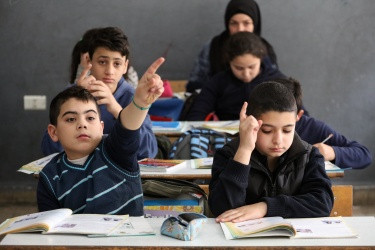 Lebanon joins the Global Partnership for Education 2024-08-11 WASHINGTON D.C./Beirut, April 25, 2024 – The Global Partnership for Education (GPE) has welcomed Lebanon as its latest partner country today.“GPE is delighted to welcome Lebanon as a new partner committed to quality and inclusive education,” said Laura Frigenti, GPE Chief Executive Officer. “Education is an essential pillar of growth, peace and security. This is why GPE has long stood by countries impacted by conflict and crises. Our partnership will reinforce Lebanon’s capacity to provide education to all children on its territory, including refugees, so they can contribute to a better tomorrow.”“Lebanon has been facing multiple crises that have taken a toll on children’s access to education - the cornerstone of recovery and prosperity,” said Dr. Abbas el Halabi, Lebanon’s Minister of Education and Higher Education. “Joining GPE is a significant milestone on our journey to advance education opportunities for children in Lebanon and to address our country’s challenges.”Over the past decade, Lebanon has faced many challenges, significantly affecting the education sector. The refugee crisis, Covid-19 pandemic, Beirut Port blast and economic decline have greatly impacted children’s access to learning, with dire long-term consequences for their future and that of the country.With support from GPE, and following inclusive consultations with relevant stakeholders, including civil society, the Ministry of Education will implement a four-year education sector plan focusing on improving early childhood education and enrolment, keeping children in schools and providing learning opportunities for those who are out of school. Ultimately, the education reforms aim at creating a future workforce that can contribute to economic recovery and growth and fairer society.Lebanon is eligible for a GPE Multiplier grant and a system capacity grant. ******About the Global Partnership for EducationGPE is a shared commitment to ending the world’s learning crisis. We mobilize partners and funds to support nearly 90 lower-income countries to transform their education systems so that every girl and boy can get the quality education they need to unlock their full potential and contribute to building a better world.www.globalpartnership.orgMedia contactTamara Kummer, GPE Head of Communicationstkummer@globalpartnership.org Tel: +1 202 948 5395 Focus areas: GovernanceRegions and countries: Middle East and North Africa; Lebanon URL: https://www.globalpartnership.org/news/lebanon-joins-global-partnership-education
  2025 European Year of Digital Citizenship Education 2024-08-09 On September 29, at the 26th session of the Council of Europe Standing Conference of Ministers of Education, the Ministers of Education declared 2025 as the European Year of Digital Citizenship Education The European Year of Digital Citizenship Education (DCE) will provide a platform for member states to set common goals, exchange sense-making practices, measure achievements and define together a road map for the future. It will concert the efforts of stakeholders to create initiatives to make learners more aware of the changes that digital technology is bringing to the world, to see more clearly the positives of the online environments they choose to move in, and improve their knowledge and skills to avoid the downsides. Moreover, it will highlight ways and advantages of participating in a culture of democracy and the importance of living peacefully together with others in culturally diverse democratic societies.The objectives of the European Year shall be: Awareness Raising: Enhance understanding of digital citizenship and its importance in a democratic society Mainstreaming DCE in education and training: Promote the integration of digital citizenship in formal and non-formal education Stakeholder Engagement: Involve diverse stakeholders in promoting DCE (grant scheme and private sector International collaboration: Facilitate exchange and collaboration, for example via sharing sense-making practices. The European Year will encourage member states to analyse their needs to create targeted campaigns on a national scale, with support and guidance from the Council of Europe and other major institutions.Key stakeholders in public, private and civil sectors will work collaboratively towards common goals. URL: https://www.coe.int/en/web/digital-citizenship-education/2025-european-year-of-dce
 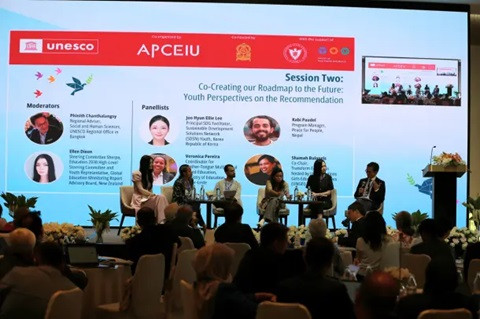 Youth Voices Shaping the Future: Highlights from the Regional Policy Dialogue in Bangkok 2024-08-09 The SDG 4 Youth & Student Network highlighted youth's key role in shaping peace, human rights, and sustainable development. 8 August 2024 Youth and students from across the Asia-Pacific gathered in Bangkok as part of the ‘Regional Policy Dialogue and Launch of the “Recommendation on Education for Peace, Human Rights and Sustainable Development” in Asia-Pacific’, from 5 to 7 June 2024, in Bangkok. The Regional Policy Dialogue was supported organized in collaboration with the Centres of Asia-Pacific Excellence (CAPEs), the New Zealand Centre for Global Studies, and Sophia University, Japan. The event was co-hosted by Thailand’s Ministry of Education. Nearly 150 participants from over 20 countries across the Asia-Pacific region gathered in Bangkok for this pivotal, multi-sectoral event. This youth event, ‘Co-Creating Our Roadmap to the Future: Youth Perspectives on the Recommendation’ provided a platform for young people to share their perspectives on sustainable development, peace education, gender equality, and digital literacy. Moderated by Phinith Chanthalangsy, Chief of the Social and Human Sciences Unit of the UNESCO Regional Office in Bangkok, and Ellen Dixon, of the SDG 4 Youth & Student Network, the event featured a panel comprising Joo Hyun Ellie Lee, of the Sustainable Devleopment Solutions Network (SDSN) Youth Korea; Kabi Paudel, of Peace for People, Nepal; Veronica Pereira, from the Ministry of Education of Timor-Leste; and Shamah Bulangis, of Transform Education, The Philippines. Phinith Chanthalangsy (left) and Ellen Dixon (right)UNESCO/J. Barallas Ellen Dixon opened the session with a powerful statement on the importance of youth engagement in policy-making. She emphasized that youth involvement is important for realizing young peoples’ full potential and fundamental freedoms. ‘This is actually about freedom, young people’s freedom...Freedom is active, it is action’, Dixon remarked, setting a dynamic tone for the discussions that followed. Sustainable Development Joo Hyun Ellie Lee, of SDSN, underscored the need to broaden the focus of education for sustainable development (ESD) beyond environmental issues by incorporating the cognitive, social, and emotional growth of young people. ‘We need to enhance the collaboration among diverse stakeholders with youth organizations’, Lee stated, thus underscoring the importance of inclusive and comprehensive policies to support youth initiatives. Joo Hyun Ellie Lee (left) and Kabi Paudel (right)UNESCO/J. Barallas Peace Education Kabi Paudel, of Peace for People, shared the power of storytelling in early childhood education, and peace-building activities for youth in Nepal. He emphasized the importance of nonviolent dispute resolution coupled with community collaboration, thus fostering empathy and inclusivity among young people and encouraging them to become peace ambassadors. ‘By integrating peace education into our programme, we provide young people with the tools to understand and manage conflict, foster empathy, and promote inclusivity’, Paudel remarked. Gender Equality Shama Bulangis, of Transform Education, highlighted the pervasive issue of school-related gender-based violence, emphasizing its widespread impact on young women, girls, and LGBTQI learners. She revealed concerning statistics attesting to the severity of the problem, while stressing the importance of comprehensive sexuality education (CSE) as a vital tool to address and mitigate gender-based violence in schools. Advocating CSE’s implementation to foster healthier relationships and ensure safer educational environments for all students, Bulangis remarked, ‘If there are no reports in your school, it means your grievance mechanisms are not working.’ Shama Bulangis (left) and Veronica Pereira (right)UNESCO/J. Barallas Digital Literacy Veronica Pereira emphasized the importance of respecting language, culture, and tradition in education. She highlighted the role of digital tools in enhancing educational access and pointed out significant challenges, such as the persistent need for greater digital literacy among teachers, coupled with poor internet connectivity in rural areas. Pereira stressed the need for comprehensive technology training for teachers and the provision of necessary digital resources to improve education quality. ‘A majority of teachers in Timor-Leste from grades K through 12 still lack knowledge in basic digital literacy’, Pereira noted, as she called for increased support and resources to bridge this gap. She also noted that using the mother tongue at school can preserve cultural identity and respect the origin of children. Pereira concluded by emphasizing the essential roles of digital tools and technology in modern education. The session concluded with a Q&A segment, during which panelists and attendees discussed the practical steps needed to implement the Recommendation. Key takeaways included the importance of intergenerational dialogue, the role of non-traditional actors such as K-pop artists and social media influencers, and the centrality of youth voices and actions in policy-making. The ‘Co-Creating’ youth session at the Regional Policy Dialogue highlighted the critical role of today’s youth and students in shaping the future of education in Asia-Pacific. Their insights and recommendations are proving essential for developing inclusive, sustainable, and effective educational policies. Related Links Sustainable Development Solutions Network (SDSN) Youth Korea Peace for People Transform Education Ministry of Education Timor-Leste Youth Declaration on Transforming Education About SDG 4 Youth & Student NetworkYouth and students are key to achieving Sustainable Development Goal 4 (SDG 4) for an inclusive and equitable quality education. The Asia-Pacific region, with the largest percentage of young people globally, has a pivotal role in this endeavor. The SDG 4 Youth & Student Network amplifies the voices of young people in global and regional advocacy and policy engagement. The platform brings together young activists, advocates, and leaders who champion the Youth Declaration on Transforming Education, first put forth at the UN Secretary General’s Transforming Education Summit (TES), of 2022. URL: https://www.unesco.org/en/articles/youth-voices-shaping-future-highlights-regional-policy-dialogue-bangkok?hub=87862
 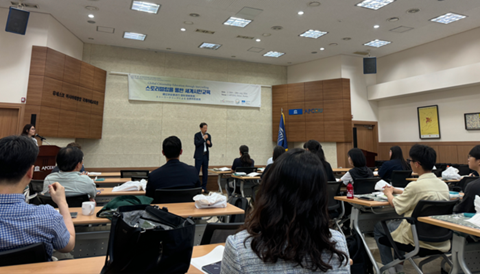 2024 Korea-Japan-China EIU Storytelling Project Workshop in collaboration with the Japanese Association for International Education (JAIE) and Beijing Normal University 2024-08-07 The Asia Pacific Centre of Education for International Understanding (APCEIU) and the Korea Society of Education for International understanding (KOSEIU) co-organised a workshop for 2024 Korea-Japan-China EIU Storytelling Project on July 26-27, 2024, at APCEU in Seoul, Republic of Korea, in collaboration with the Japanese Association for International Education (JAIE) and Beijing Normal University. The Storytelling Project, a collaborative initiative among APCEIU, KOSEIU and Beijing Normal University since 2021, aims to promote EIU/GCED in Northeast Asia by encouraging (pre-service) teachers from China, Japan and Republic of Korea to develop and share GCED lesson plans using storytelling. Last year, the outcome sharing meeting/roundtable was held as part of the special session of the research conference of JAIE. This year, the participants were given the opportunity to share their outcomes and experiences through the Storytelling Project workshop. The workshop began with KOSEIU’s presentation on the background, purpose, and outcomes of the Storytelling Project, which was followed by the presentations of the pre-service teachers from China, Japan and Republic of Korea on their experiences of implementing storytelling-based lessons on the topic of peace, cultural diversity and sustainable development (ESD). They utilized stories written by authors from each country, such as Syria’s tears, Maira’s Eagle, Walking with Sea Cucumbers: Biodiversity and Cultural Diversity Considered from the Field, with some participants building on these activities through Metaverse (ZEP) games. Followed by a Q&A session, the participants shared positive feedback they received from their students and discussed the perceived impact of storytelling on promoting GCED in the classroom and school context. In so doing, mutual understanding and cooperation were facilitated among the pre-service teachers from the three countries in Northeast Asia. The participants indicated that they gained valuable learning experiences beyond curriculum offered by universities and shared how the participation in this project helped them to grow as an educator. They also showed their willingness to further engage in and promote GCED lessons using storytelling within the school setting. The workshop provided the opportunity for the participants to share project outcomes and discussed effective ways to improve the project, including strengthening the networks of those participating in the Storytelling Project. Through this project workshop, APCEIU obtained valuable takeaways for the EIU Storytelling Project and other programmes offered by the centre. URL: https://www.unescoapceiu.org/post/5140
  제23차 아태지역 교원연수: 세계시민교육을 통한 평화의 비전 확장 2024-08-05 The 23rd Asia-Pacific Training Workshop on EIU/GCED was held online from 19 to 28 June 2024. This year’s theme, “Expanding the Vision of Peace through GCED,” emphasized the need for comprehensive understanding of peace and transformative potential of Global Citizenship Education (GCED) in promoting a culture of peace and sustainable development. This was designed in line with UNESCO's "Recommendation on Education for Peace and Human Rights, International Understanding, Cooperation, Fundamental Freedoms, Global Citizenship and Sustainable Development (2023)," which updates the 1974 Recommendation. Under this theme, 42 educators from 16 UNESCO member states in the Asia-Pacific region successfully completed the workshop and empowered to become catalysts for positive change in their communities and beyond. Throughout the workshop, participants engaged in dynamic group discussions and interactive activities, and attended a series of lectures by renowned experts on pivotal topics related to GCED and global issues of the 21st century. Moreover, the APTW introduced transformative pedagogies and practical methods for incorporating GCED into teaching practices and curricula, equipping educators with the tools needed to implement contextualized educational programs that promote a holistic culture of peace. In specific, the workshop addressed key thematic issues on GCED and fostered critical thinking about global issues. Guest speakers and alumni delivered lectures on essential topics, including glocal justice, respect for cultural diversity, human rights, critical medial information literacy and climate crises. Additionally, as a vital component of the workshop, a lecture on the 2023 UNESCO Recommendation provided a comprehensive overview and highlighted core principles and approaches to peacebuilding and the role of GCED. Then, the workshop touched upon ‘how’ to implement GCED by introducing innovative approaches and methodologies of GCED. This was designed to support participants’ follow-up activities in their own contexts. Participants gained insights from live sessions on transformative pedagogies for GCED, the evolving role of teachers, community-based learning for responsible citizenship, and socio-emotional learning. They also benefited from dialogues with APTW alumni, who shared their experiences in implementing GCED projects in their own educational settings. Breakout group discussions held during each session facilitated intensive brainstorming and knowledge exchange. These discussions allowed participants to reflect on their learnings, collaborate, and share diverse perspectives. The interactive activities and dialogues encouraged active engagement, fostered creativity, and enhanced problem-solving skills by leveraging the collective expertise of each group. Moreover, these sessions served as a platform to build a strong network within the Asia-Pacific region. At the end of the workshop, participants presented GCED projects they plan to implement at their respective institutions and communities. As a culmination, they received constructive feedback aimed at enhancing quality and building support, ensuring their initiatives are well-prepared for successful implementation. Through the workshop, participants were empowered to creatively address the multifaceted challenges of today's world as global citizens. APCEIU will continue to support their endeavors by providing additional learning opportunities, including a mentorship and grant program, enabling participants to implement GCED projects in their educational settings later this year. URL: https://www.unescoapceiu.org/post/5133
 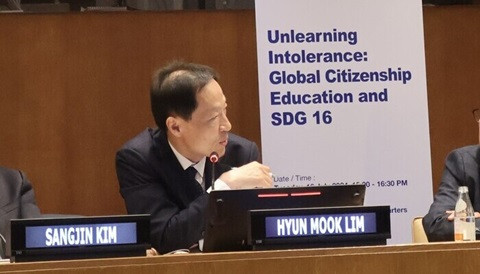 "Unlearning Intolerance: GCED and SDG 16" event at UN Headquarters 2024-08-05 On 16 July 2024 – The Asia-Pacific Centre of Education for International Understanding (APCEIU) and its partners co-organized a distinguished event titled "Unlearning Intolerance: Global Citizenship Education and SDG 16" at the United Nations Headquarters. This event was organized in collaboration with the Permanent Missions of Costa Rica and the Republic of Korea to the United Nations, the University for Peace, and co-sponsored by the Ban Ki-moon Foundation. The proceedings opened with a welcoming address by Hyun Mook Lim, Director of APCEIU. Director Lim detailed APCEIU’s initiatives and emphasized the pivotal role of Global Citizenship Education (GCED) in achieving Sustainable Development Goal 16 (SDG 16), which focuses on promoting peaceful and inclusive societies. Following Director Lim's remarks, Ambassador Sang Jin Kim, Deputy Permanent Representative of the Republic of Korea to the United Nations, expressed his gratitude to the event organizers and participants. Ambassador Kim addressed pressing global challenges, including the refugee crisis and climate change, stressing the essential role of GCED in fostering compassion, empathy, and understanding to create a safer and better world. He reaffirmed the Republic of Korea's commitment to advancing GCED as a tool for building peaceful and sustainable societies. Further acknowledgments were offered by Kate Landon, Executive Director of the Ban Ki-moon Foundation, and Ramu Damodaran, Permanent Observer of the University for Peace to the United Nations. In celebration of the 20th anniversary of the 'Unlearning Intolerance' series, Mr. Damodaran underscored the critical role of education in promoting global citizenship and tolerance, highlighting historical milestones and advocating for intergenerational learning to combat intolerance and advance peace. Notably, Mr. Damodaran remarked that replacing apathy with empathy is significant because apathy itself constitutes a form of intolerance. The interactive panel discussion centered on three key questions:1. What is the current global situation regarding intolerance and violence?2. How does GCED relate to SDG 16, particularly its specific targets in the present context?3. What priority actions should various stakeholders—including governments, schools, academia, civil society, communities, and the media—undertake to strengthen the role of GCED in achieving SDG 16? Moderated by Mr. Liberato C. Bautista, President of the Conference of Non-Governmental Organizations (CoNGO), the panel featured distinguished speakers: Ms. Annemarie Hou, Executive Director of the UN Office for Partnerships; Ms. Felisa Tibbitts, Chair in Human Rights Education at Utrecht University and UNESCO Chair in Human Rights and Higher Education; and Ms. Laura Engel, Professor of International Education and International Affairs and UNESCO Co-Chair in International Education for Development at George Washington University. The event underscored the importance of collaborative efforts in promoting GCED and highlighted the need for educational initiatives to foster tolerance, empathy, and global understanding as integral components of sustainable development.The full video of the event is available here. URL: https://www.unescoapceiu.org/post/5131
 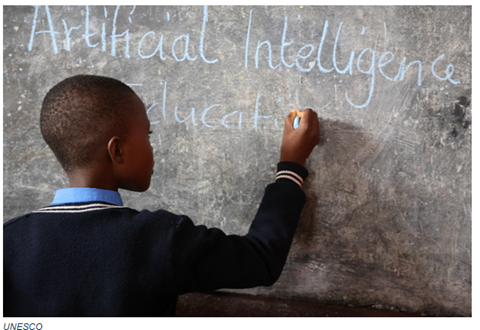 Data to Tell the Stories of Our Lives, Starting from Education 2024-07-16 Data fills our lives. Having accurate, timely, inclusive and open data enables us to properly evaluate the current state of the world and to determine how best to move forward, improving people’s lives. The SDGs journey is half-way through and only six years remaining until touchdown. Where are we to achieve UNESCO-related SDGs, and especially in terms of realizing the hope of a world where education systems that foster quality inclusive education and promote lifelong learning opportunities for all are in place all over the globe? As the United Nations High-level Political Forum, is happening as we speak, from 8 to 17 July 2024 themed “Reinforcing the 2030 Agenda and eradicating poverty in times of multiple crises: the effective delivery of sustainable, resilient and innovative solutions”, UIS is best placed to track the progress on the actions, daily undertaken by the Institute, to provide substantive, reliable, transparent, accessible and relevant data to fulfill the commitment to achieve the sustainable development goals, our roadmap to 2030. As custodian of SDG4, UNESCO Institute for Statisticsensures that official and trusted source of internationally comparable data on education, sciences, culture and communication are produced, thus fueling the policies and investments needed to transform lives and propel the world towards its development goals. While highlighting that nearly half the 17 targets are showing minimal or moderate progress, there is some hopeful news in terms of progress towards Goal 4, shared in the newly released Sustainable Development Goals Report 2024. Here’sthe good news: Primary school completion rate between 2015 and 2023 increased from 85 to 88 percent, the lower secondary completion rate, from 74 to 78 percent, and the upper secondary completion rate, from 53 to 59 percent. However, only two in three children in Sub-Saharan Africa complete primary school on time; In upper secondary schoolcompletion rate, the Eastern and South-Eastern Asia has been the fastest growing region, with the completion rate climbing from 63 percent in 2015 to 74 percent in 2023; In the upper secondary level, girls hold a notable advantage, with a 14 percentage-point gap in Eastern and South-Eastern Asia, 8 points in Latin America and the Caribbean, and 4 to 5 points in most other regions. The regional disparities underscore the need for targeted efforts to achieve equal educational opportunities for all children. However, much concerted efforts and collective action need to be taken: To counter the global decline of both mathematics (by 15 points) and reading performances (by 10 points), mostly due to the profound impact of the COIVD-19 pandemic on global education; Data shortfalls have been identified, especially in tracking learning outcomes in early education; Pre-primary education has stagnated since the SDGs were agreed. Seven out of 10 children globally attended organized learning one year before the official entry age in 2022, a rate unchanged since 2015. Relevant weight has been given to greening education and having trained and qualified teachers, able to enlighten and guide the generations of tomorrow. School subjects, such as climate change and sustainability education have been found relevant, but missing, in ninth grade science and social science curricula. Teachers need additional training, particularly in Sub-Saharan Africa, where enrolment growth outpaces teacher hiring. Inconsistency in national teacher qualification standards further obstructs progress. The Sustainable Development Agenda is a moment of great opportunity despite the multiple interlinked crises in the world. SDG4 is of critical importance to allow countries to be on track to deliver on the promise of a quality education for all. Acceleration on the implementation of the 2030 agenda is our responsibility, holding governments accountable for the provision of good quality data. Many countries are advancing, but we need to do more to make sure everyone is on board and committed. As UN Secretary General Antonio Guterres pointed out at the opening of the high-level political forum on 8 July 2024 “this is a once-in-a-generation opportunity to mend eroded trust and demonstrate that international cooperation -human solidarity in the face of opportunity but also threats – can carry us forward”. Let’s do more, Together. URL: https://uis.unesco.org/en/news/data-tell-the-stories-our-lives-starting-from-education
  Putting Peace at the Heart of Education in Asia-Pacific 2024-07-09 UNESCO reaffirms the centrality of education in advancing peace and sustainable development. 2 July 2024 Half a century onward, UNESCO’s 1974 Recommendation remains the landmark legal instrument consecrating education’s primary role in promoting peace, international understanding, human rights and fundamental freedoms. Recognizing the need for a framework on how education should evolve in the twenty-first century, the Recommendation on Education for Peace, Human Rights and Sustainable Development was unanimously adopted by all 194 UNESCO Member States in November 2023 as a significant update to the original 1974 Recommendation. The revised Recommendation responds to twenty-first-century complexities by underscoring the interconnections among various issues from gender equality, digital transformation and climate change, to human rights, health, well-being and cultural diversity – all critically important issues for the Asia-Pacific region. In this light, UNESCO and the Asia-Pacific Centre of Education for International Understanding (APCEIU) co-organized the Regional Policy Dialogue and Launch of the ‘Recommendation on Education for Peace, Human Rights and Sustainable Development’ in Asia-Pacific, from 5 to 7 June 2024, in Bangkok, with support from the Centres of Asia-Pacific Excellence (CAPEs), the New Zealand Centre for Global Studies, and Sophia University, Japan. The conference was co-hosted by Thailand’s Ministry of Education. Nearly 150 participants from over 20 countries across Asia-Pacific gathered in Bangkok for this inter-disciplinary event. In welcoming remarks, Soohyun Kim, Regional Director of the UNESCO Regional Office in Bangkok, underscored the transformative power of education for fostering tolerance among diverse peoples, as well as between humanity and the planet. "Education must be a transformative force in the lives of all learners. By instilling in learners greater empathy, tolerance, and respect for human diversity, education can lay the foundation for the peaceful coexistence among all nations, peoples, and between humanity and nature." Soohyun KimRegional Director, UNESCO Regional Office in Bangkok Reflecting the whole-of-society approach of the Recommendation towards advancing peace, human rights, and sustainable development through education, participants in the three-day conference came from a wide range of sectors, some extending well beyond the education field. In his keynote speech, Thailand Minister of Education Permpoon Chidchob spoke of the importance of collaboration to work towards sustainable development both within and beyond all national borders. "We have leveraged the existing UNESCO Associated Schools Network to promote education aimed at fostering both sustainable development and global citizenship." Police General Permpoon ChidchobMinister of Education, Thailand The interconnectedness of the world’s problems among diverse peoples, a theme taken up by the conference’s multisectoral programme, was stressed by Hyun Mook Lim, Director of the Asia-Pacific Centre of Education for International Understanding (APCEIU), which co-organized the event with UNESCO. "Climate change and the rapid development of AI are posing great challenges for us. But they do not exist in an empty space. They are tied to already existing problems which we have not yet solved." Hyun Mook LimDirector of the Asia-Pacific Centre of Education for International Understanding (APCEIU) During the launch session of the Recommendation for the Asia-Pacific, Christopher Castle, Director of the Division for Peace and Sustainable Development at UNESCO, introduced the key highlights of the revised Recommendation. He emphasized that the vision of the Recommendation is guided by a broadened understanding of peace, which is anchored in human rights. This vision views peace as a positive and participatory process, nurtured daily through the upholding of the dignity, rights, and capacities of every individual. "One of the important things about this recommendation was realizing and agreeing that peace is more than just the absence of conflict and violence. It's more than that, and it requires us to make positive efforts, to work towards the conditions, the foundation, the mindset, the culture, and that is one of the things that I think is truly inspirational in the new Recommendation." Christopher CastleDirector of the Division for Peace and Sustainable Development, UNESCO Headquarters, Paris The meeting stimulated dialogue through a series of informative and lively plenary sessions, panel discussions, and collaborative workshops among diverse stakeholders, all addressing the challenges and opportunities for translating the Recommendation’s broad vision and key guidelines into holistic, interdisciplinary action across Asia and the Pacific. For example, the exemplary plenary session, ‘Co-Creating our Roadmap to the Future: Youth Perspectives on the Recommendation’, co-led by Asia-Pacific members of the SDG 4 Youth and Student Network and UNESCO, facilitated intergenerational dialogue, allowing youth panelists and participants to exchange insights on how the Recommendation might best address young people's needs in the region. Over the course of three days, the meeting convened four expert-led panels of speakers from diverse backgrounds related to the Recommendation's key action areas of Policy; Capacity Development and Monitoring; Curriculum, Pedagogy and Assessment; Teacher Development; and Lifelong Learning (LLL). Key discussion points included the urgency of enhancing critical thinking, adopting media literacy, strengthening SDG 4.7 Sustainable Development and Global Citizenship monitoring, and follow-up evaluation. Throughout the panel discussions, participants emphasised reshaping education to focus on social cohesion, equity, and equality, while ensuring everyone's human rights. This requires a safe, respectful ecosystem, and shifting from current academic stresses towards a more holistic educational agenda. Discussants highlighted the need for transformative pedagogies, strengthening teacher training and autonomy, and redefining assessment for holistic student development. It was widely agreed that education for peace, human rights, and sustainable development should extend well beyond schools and classrooms, integrating these values into societies and communities for lifelong and life-wide learning. One of the Conference’s key activities was to engage participants and gather their feedback for the co-creation of a regional ‘Roadmap’ for diverse stakeholders, expressly to integrate the updated Recommendation into Asia-Pacific national education policies and practices. URL: https://www.unesco.org/en/articles/putting-peace-heart-education-asia-pacific?hub=66924
 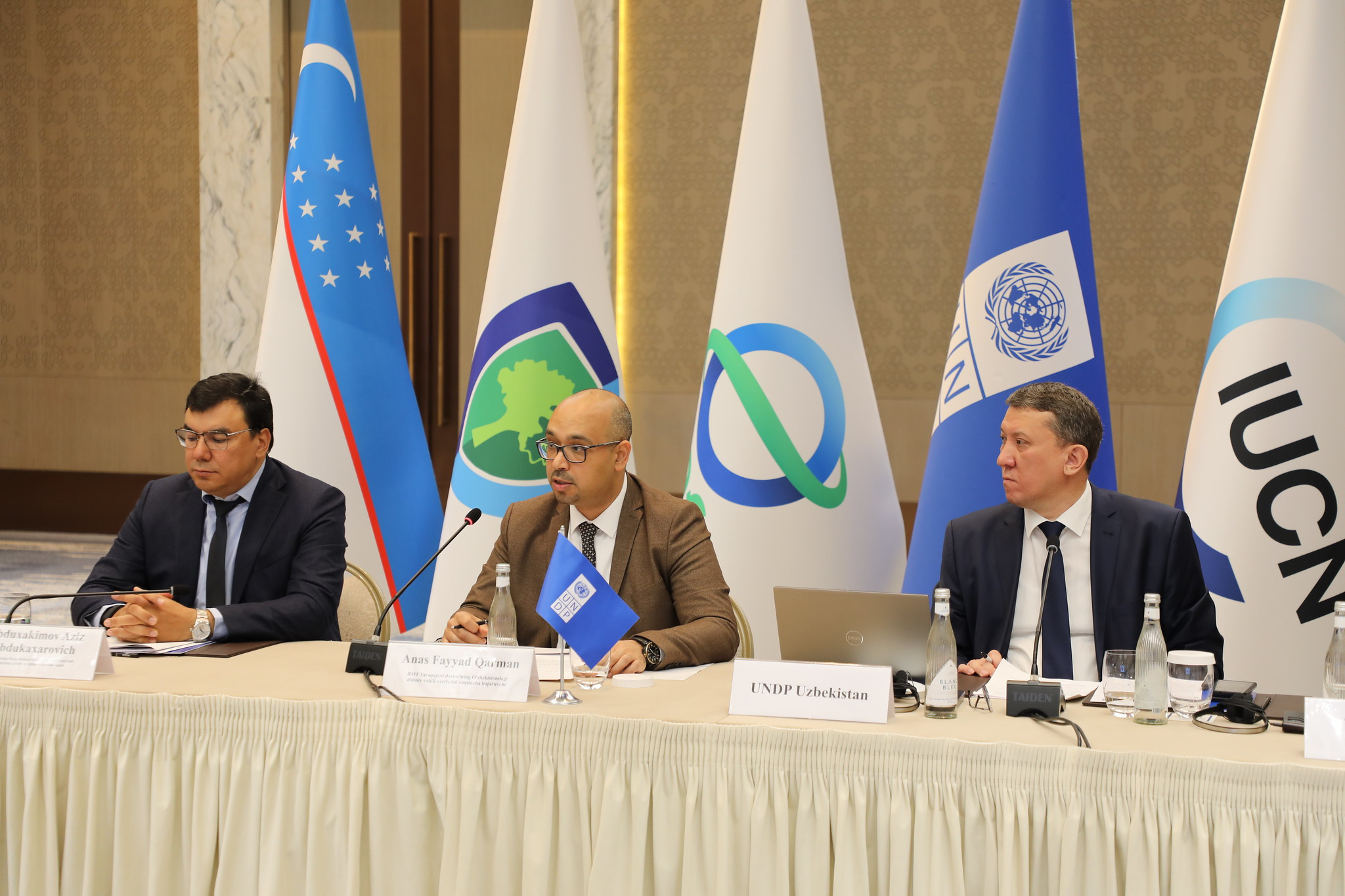 ПРООН и Министерство экологии представили новый проект по восстановлению и сохранению экосистем для устойчивого развития Узбекистана на публичное обсуждение 2024-07-05 Tashkent, Uzbekistan, 6 June 2024 - The Ministry of Ecology, Environmental Protection and Climate Change of the Republic of Uzbekistan and the United Nations Development Programme (UNDP) in partnership with the International Union for Conservation of Nature (IUCN), are conducting a validation workshop as part of a new joint project being developed, to be supported by the Global Environment Facility (GEF), aimed at the restoration and sustainable management of natural ecosystems in Uzbekistan. The project, named “Integrated Management of Landscape Protection and Restoration,” is designed to respond to the growing challenges associated with ecosystem degradation, interdepartmental coordination, and financing activities for the restoration and conservation of biodiversity and ecosystems. The project strategy is built on ensuring coherence of action, cross-sector collaboration and innovative approaches to financing and technology aimed at restoration and sustainable management of ecosystems at the landscape level. As part of the project development process, on 6 June 2024, a workshop is being held in Tashkent to validate the project strategy and its key elements, timed to coincide with World Environment Day, celebrated annually on 5 June. The main purpose of the event was to discuss the main components of the project with key partners and other stakeholders. The workshop was attended by both national and international stakeholders, which made it possible to summarize the results of the consultations and discuss the opportunities this project opens for the development of the environmental sector in Uzbekistan. The project is expected to be approved by the GEF at the end of this year. By promoting unified efforts to preserve Uzbekistan's ecosystems, the project integrates a gender-sensitive approach to natural resource management and ensuring sustainable development for future generations. URL:https://www.undp.org/uzbekistan/press-releases/undp-and-ministry-ecology-present-new-project-restoration-and-conservation-ecosystems-sustainable-development-uzbekistan
  Improving the Digital Skills of Young People and Women Entrepreneurs in the Kyzylorda Region 2024-07-05 The United Nations Development Programme (UNDP) in Kazakhstan today launched a new initiative to ensure equitable access to digital solutions and equip micro, small and medium enterprises (MSMEs) with the skills they need to adapt to new technologies. The project is part of the UNDP Seoul Policy Centre's (USPC) flagship initiative - the SDG Partnership Programme - which aims to share innovative and best practises and policy tools from the Republic of Korea with other countries, including Kazakhstan. Launched in 2023, the USPC’s SDG Partnership on "Supporting Micro, Small and Medium Enterprises through Inclusive Digital Transformation" supports partner countries in achieving inclusive digital transformation of MSMEs by sharing relevant Korean experiences and tools that support the digitalization of vulnerable economic actors such as MSMEs and youth- and women-led enterprises, and by facilitating their local adaptation in a way that complements existing initiatives and contributes to the achievement of relevant development objectives of the partner country. The initiative draws on the experience and practices of the Small Enterprise and Market Services (SEMAS) in the Republic of Korea as a reference. In Kazakhstan, the SDG Partnership programme aims to i) develop curricula for online courses on digital skills, ii) implement a programme to train trainers for vulnerable groups and iii) organise a "Future Forward Forum" to support MSMEs in the Kyzylorda region by improving their digital skills and solutions, especially in the areas of data analysis and decision-making. MSMEs make up a large part of the entire private sector in both industrialised and developing countries. In Kazakhstan, 2,026,527 MSMEs were registered in January 2023, providing employment to more than 4.1 million people or 20 percent of the population. However, it is evident that MSMEs are lagging in adopting digital technologies that can improve their participation in e-commerce and their access to digital finance. Inclusive digital transformation requires ensuring equal access to digital solutions and equipping MSMEs with the appropriate skills to adapt to new technologies. Kazakhstan was selected as a partner country for this year to jointly promote the digital skills of women and youth-led businesses. A kick-off meeting was organised to introduce key partners and stakeholders from the Republic of Korea and Kazakhstan to discuss the objectives and implementation plans of the SDG Partnership Programme and to identify the appropriate Korean expertise, solutions and tools that can be best used to adapt to the Kazakh context. URL: https://www.undp.org/kazakhstan/press-releases/improving-digital-skills-young-people-and-women-entrepreneurs-kyzylorda-region