
News
Catch up on what’s happening in the world of global citizenship education.
1,668 results found
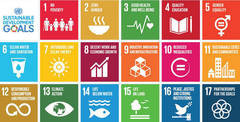 GCED endorsed as a target of the education SDG at the United Nations Summit 2015-10-20 The General Assembly endorsed global citizenship education (GCED) as target 4.7 of the education goal in the outcome document “Transforming our world: the 2030 Agenda for Sustainable Development” adopted by consensus at the United Nations Summit held at UN Headquarters in New York from 25 to 27 September 2015. In this regard, UNESCO has been actively engaged in policy dialogue in relation to post-2015 to assist Member States and education stakeholders in defining the targets and indicators for the education goal. Both the Incheon Declaration adopted at the World Education Forum in May 2015 and the Muscat Agreement adopted in May 2014 identified GCED and Education for Sustainable Development (ESD) as one of the targets of the education goal in the post-2015 development agenda. This proposal was eventually adopted in the Open Working Group Proposal on Sustainable Development Goals in target 4.7. The proposal to include GCED and ESD in the post-2015 development agenda generated the need for clearly defined indicators to enable monitoring progress at the global, regional and national levels. UNESCO established the Experts Advisory Group (EAG) and its sub-group (the Measurement Ad-Hoc Team (MAT), members of which met in Paris in June 2014 and agreed on the core conceptual dimensions of GCED and key learning outcomes that can also serve as priorities for measurement. In parallel to these efforts, UNESCO commissioned an expert institution, the International Association for the Evaluation of Educational Achievement (IEA) to carry out research and propose a list of indicators. Based on the IEA recommendations and in further consultation with key stakeholders, UNESCO developed a list of potential indicators, with the expectation that these will inform the global efforts to identify indicators for Target4.7 of the education SDG. UNESCO will continue to provide assistance to Member States and education stakeholders in their effort to reach the Target on GCED. Target 4.7 as adopted in the outcome document of the United Nations Summit: Target 4.7: By 2030, ensure that all learners acquire the knowledge and skills needed to promote sustainable development; including, among others, through education for sustainable development and sustainable lifestyles, human rights, gender equality, promotion of a culture of peace and nonviolence, global citizenship and appreciation of cultural diversity and of culture’s contribution to sustainable development.
  What Is 'Global Citizenship Education'? 2015-09-30 Alongside the United Nations General Assembly this week, every nation will agree to a new agenda that will drive their development and policies for the next 15 years called the Sustainable Development Goals (SDGs). In addition to covering a wide range of subjects, the SDGs set forth a broad and ambitious agenda for global education that goes well beyond getting all students in school. Simply put, achieving universal access to education is no longer sufficient — it’s also necessary to provide all students with a quality education, one that successfully prepares them for life in the 21st century.But first — what is global education and what are its implications? In order to introduce this important topic, we’ve prepared a brief explainer: What is global citizenship education? The UN’s Global Education First Initiative notes “It is not enough for education to produce individuals who can read, write and count. Education must fully assume its central role in helping people to forge more just, peaceful, tolerant and inclusive societies.” According to the UN, global citizenship education provides the understanding, skills, and values students need to cooperate in resolving the interconnected challenges of the 21st century, including climate change, conflict, poverty, hunger, and issues of equity and sustainability. These same educational outcomes prepare students to be successful in the workplace of the 21st century as well. How is it related to terms already in use, such as educating for global competence or 21st century skills? Global citizenship education was included in the SDGs because it already has a broad base of support. Over the past decade, Asia Society has built a national movement in the U.S. around a similar concept called global competence – the knowledge, skills, and dispositions to understand and act on issues of global significance. Global competence includes skills in communication, collaboration, critical thinking, and creativity, which collectively are known as 21st century skills. Globally, efforts to advance peace education, human rights education, and education for sustainable development have grown substantially over the years and also contribute to global citizenship education. Why are we talking about global citizenship education now? Global citizenship education is an idea whose time has come. As the world faces ever more complex and critical challenges, it has become a core part of what a quality education looks like in the 21st century. With the adoption of the SDGs, there is recognition that access to this type of education is an equity issue. All young people, regardless of their background, deserve to be prepared for meaningful work in the global economy and to take part in solving the global challenges that impact their lives and communities. Who is working on global citizenship education? Global citizenship education is at the forefront of efforts to transform education to provide students with a holistic and well-rounded education that gives them the knowledge, skills, and dispositions they need to succeed in a global 21st century. The UN’s Global Education First Initiative has signed on 16 Champion Countries to catalyze political and financial support for education, including global citizenship education. This group includes China, South Korea, Australia, Bangladesh, and the U.S. International organizations such as UNESCO, OECD, Brookings Institution, and Asia Society, among others, are providing research and resources to support education policymakers and teachers around the world. What needs to happen next to advance global citizenship education? The UN has identified several barriers to global citizenship education, including outmoded learning materials and lack of teacher capacity in this area. However, the biggest challenge may be the legacy of the current education system, which was designed for the agricultural era rather than for an interconnected world. With the adoption of the Sustainable Development Goals and the inclusion of global citizenship education as a target for global education, now is the time to connect and leverage the expertise and best practices of practitioners and programs to advance global citizenship education for all students around the world.For more information, please see the Asia Society Education home page.
 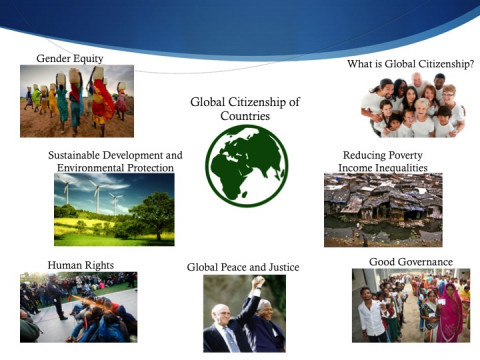 The Global Citizen Leadership Certificate Course 2015-09-23 Registration Announcement The 2nd Annual Global Citizen Leadership Training Course: An online course for young and mid-level development professionals (October 19- December 11, 2015)The Global Citizens’ Initiative (TGCI)** welcomes applications for its annual global citizen online leadership training course. This professional development course is intended to build the global citizen leadership skills of young and mid-level development professionals.Over an eight-week period participants will strengthen their abilities to address urgent development issues in human rights, gender equity, the environment, poverty reduction, good governance, and global peace and justice. All participants will receive access to online expert seminars and discussion groups, a content-rich Instructional Guide, and an eBook –Global Citizenship: A Path to Building Identity and Community in a Globalized World. In addition Premier Plan participants will have access to weekly online tutorials from expert mentors and be paired on course assignments with a partner from another country.Course faculty include: Ron Israel, Executive Director of the Global Citizens' Initiative; Ash Hartwell, Associate Professor of International Education, University of Massachusetts, Richard Lockwood, Adjunct Professor, Heller School, Brandeis University, and Liz Long, global business entrepreneur.To learn more about the TGCI Global Citizen Leadership Training Course, click here. To register for the course click on the course link on the TGCI website: www.theglobalcitizensinitiative.org.Many of the participants in our course come from countries in conflict, and cannot afford to pay even the low tuition rates that we charge. Therefore we have set up a scholarship fund to help these participants with tuition. If you wish to contribute to this fund please click on the scholarship link under information about our course on the TGCI home page: http://www.theglobalcitizensinitiative.org.**TGCI is an international non-profit organization that builds the skills of people and organizations together to address global issues.
  GEFI's Youth Advocacy Group to help young people take action on global citizenship education 2015-08-26 The Youth Advocacy Group (YAG) for the Global Education First Initiative (GEFI) is holding a youth-led capacity building session on advocacy in Global Citizenship Education (GCED), as part of the UNESCO Youth Forum, 26 – 28 October 2015.As one of GEFI’s three priority areas, GCED helps children and youth to forge more just, peaceful, tolerant and inclusive societies. It gives learners the understanding, skills and values they need to cooperate in resolving the interconnected challenges of the 21st century.Held on Wednesday, 28 October, the training session ‘Youth Advocacy Toolkit for Action on Global Citizenship Education’, will guide and encourage young people to use the ‘Education We Want, Youth Advocacy Toolkit’ to take action in GCED, both locally and nationally. The Toolkit, produced in partnership with Plan International, A World at School and the GEFI YAG, with the support from UNESCO and UNICEF, was developed for young people, by young people, and helps children and youth to effectively advocate for their right to an education.Participants in the session will learn all about GCED, and will have the opportunity to start work on advocacy strategies focused on GCED, using the tools in the Toolkit. The session is open to young people taking part in this year’s 9th UNESCO Youth Forum, at UNESCO Headquarters, Paris, France. For more information on Global Citizenship Education, go to: http://www.globaleducationfirst.org/220.htmhttp://www.unesco.org/new/en/global-citizenship-educationhttp://unesdoc.unesco.org/images/0022/002277/227729E.pdfhttp://unesdoc.unesco.org/images/0023/002329/232993e.pdf
  Global Citizenship Education: Topics and learning objectives 2015-08-10 UNESCO has just launched its new publication on Global Citizenship Education (GCED) titled Global Citizenship Education: Topics and Learning Objectives. This is the first pedagogical guidance on GCED produced by UNESCO in an effort to help Member States integrate GCED in their education systems, formal and non-formal.The guidance, presented during the World Education Forum 2015, suggests ways of translating GCED concepts into age-specific topics and learning objectives based on the three domains of learning – cognitive, socio-emotional and behavioural. It also presents examples of existing practices and implementation approaches in various countries. This pedagogical guidance can be adapted and implemented in an easy and flexible manner in any given context. It will be particularly useful for educators, curriculum developers, trainers as well as policy-makers but also other education stakeholders working in non-formal and informal settings.The guidance was developed in consultation with experts on GCED from different parts of the world and it was field tested in selected Member States and various stakeholders including teachers, learners and ministry officials in all regions to ensure that the content is relevant and appropriate in various geographical and cultural contexts. This publication was produced with technical and financial support from the Asia-Pacific Centre of Education for International Understanding (APCEIU), a UNESCO Category 2 Centre. The publication in English is available here. The French version will soon be available / La version française sera bientôt disponible.
  Preparing Teachers for Global Citizenship Education 2015-08-07 Background The Global Education First Initiative (GEFI) launched in September 2012 by United Nations Secretary-General Mr. Ban Ki-moon prioritised the importance of putting every child in school, improving the quality of education and fostering global citizenship. UNESCO has taken up the challenge to promote global citizenship through education in view of current trends, events and turmoil in an increasingly globalized and interconnected world. An education that can inculcate respect for human rights, gender equality, social justice and diversity is critical for developing citizens who possess desirable values, knowledge and skills to ensure inclusive, peaceful and sustainable societies. Several events were held to examine major issues and to formulate strategies and action plans for global citizenship education (GCED), e.g., the Consultation on Global Citizenship Education meeting in Seoul in September 2013; the International UNESCO Forum on Global Citizenship Education in Bangkok in December 2013; the Asia-Pacific High-level Meeting on Global Citizenship Education in the Republic of Korea in July 2014 and the 2nd UNESCO Forum on Global Citizenship Education in Paris in January 2015. In collaboration with UNESCO, the Asia-Pacific Centre for Education for International Understanding (APCEIU) also conducted a Sub-regional Workshop on Teacher Preparation for Global Citizenship Education in Bangkok in December 2013 and in Myanmar in June 2014. The recent World Education Forum in Incheon, Republic of Korea, in May 2015 reaffirmed that education is essential for peace, tolerance, human fulfilment and sustainable development. GCED has emerged as a significant agenda for the construction of post-2015 development goals because of its potential as a transformative education that (i) encourages learners to analyse real-life issues critically and to identify possible solutions creatively and innovatively; (ii) supports learners to revisit assumptions, world views and power relations in mainstream discourses and consider people/groups systematically underrepresented/marginalised; (iii) respects differences and diversity; (iv) focuses on engagement to bring about desired changes; and (v) involves multiple stakeholders, including those outside the learning environment in the community and in the larger circle of the society. The GEFI has identified five barriers to global citizenship: (i) legacy of the current education system; (ii) outmoded curricula and learning materials; (iii) lack of teacher capacity; (iv) inadequate focus on values; and (v) lack of leadership on global citizenship. With support from the Korean Funds-in-Trust, UNESCO Bangkok is implementing a project on Preparing Teachers for Global Citizenship Education to address some of these barriers, particularly in enhancing the capacity of teachers to transmit appropriate and relevant knowledge and skills about global citizenship, updating outmoded curricula and learning materials, and increasing school leadership to support GCED. The overall goal of the project is to empower learners to assume active roles in addressing and resolving local and global challenges through GCED. More specifically, the objectives are to: Increase knowledge of GCED among teacher educators, teachers and school leaders. Enhance capacity of teacher educators and teachers to deliver GCED contents. Strengthen school leaders’ capacity in supporting and implementing GCED in their institutions. Nine pilot countries have been selected as shown below: South Asia (Bhutan, India, Sri Lanka) Southeast Asia (Malaysia, Philippines, Thailand) East Asia (China, Japan, Republic of Korea) These countries represent the rich and diverse social, economic, political and cultural landscapes of the region, but at the same time share several similarities and values. Within each sub-region, there are cooperation mechanisms such as the South Asian Association for Regional Cooperation (SAARC), Association of Southeast Asian Nations (ASEAN) Plus Three (China, Japan and South Korea), which can provide a general framework and entry points for implementing the project within and among the three sub-regions. As a first step, UNESCO Bangkok is organizing a meeting to launch the project, as well as to discuss and plan project activities in consultation with key stakeholders and partners.
  Upcoming E-learning Courses Offered by HREA in 2015 2015-06-25 E-LEARNING September-October 2015 (Third term) – Data Collection and Analysis for Project Monitoring and Evaluation – Effective Leadership for Humanitarian Action and Social Change NEW! – Gender-based Violence – The Right to Education – Child Rights-Based Approaches (Advanced Course) – Gender Mainstreaming (Gender Equality-Advanced Course) – Engaging Men and Boys in Gender Equality Programming NEW!– Human Trafficking and Smuggling– Citizens and Advocacy (Advanced Course)– Environment and Human Rights– Women, Peace and Security November-December 2015 (Fourth term) – Deadline for early registration discount: 1 September 2015– Child Participation– Children’s Rights (Foundation Course)– EU Migration and Asylum Law and Policies– Forced Migration– Business and Human Rights– Child Rights Situation Analysis– International Human Rights Law (Foundation Course)– Monitoring & Evaluation in the NGO Sector– Resilience, Humanitarian Action and Human Development NEW! Rapid (self-directed) e-courses – Introduction to International Humanitarian Law– Rights of the Child– Rights of Refugees and Internally Displaced Persons– Droits de l’enfant– Droits des réfugiés et des personnes déplacées internes
 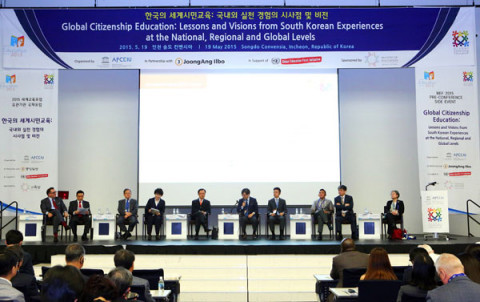 WEF 2015 Pre-conference Side Event of APCEIU Reaffirms the Importance of GCED in Various Fields 2015-06-22 Prior to the opening of the 2015 World Education Forum, APCEIU organized a pre-conference side event on 19 May 2015 with the title, “Global Citizenship Education (GCED): Lessons and Visions from South Korean Experiences at the National, Regional and Global Levels." In partnership with JoongAng Ilbo, this event was held in support of the UN Secretary-General’s Global Education First Initiative (GEFI) and sponsored by the Ministry of Education of the Republic of Korea.With the attendance of 350 interested stakeholders from various countries, including 150 WEF participants, the forum attracted the biggest audience among all ten pre-conference side events and successfully promoted the general public's better understanding of GCED, particularly in reference to Korean cases. Along with the parallel group session, entitled “Educating and learning for peaceful and sustainable societies” co-convened by APCEIU, UNESCO HQs and the UNESCO Mahatma Gandhi Institute of Education for Peace and Sustainable Development (MGIEP) on 20 May 2015, the event is considered to have contributed to the main discussion on GCED, one of the key global agendas at WEF 2015.The first half of the event entitled, “Envisioning Global Citizenship Education in the Post-2015 Era”, started off with opening remarks and a keynote presentation. Mr. Utak Chung, Director of APCEIU, and Ms. Min Jeong Kim, Head of the UN Secretary-General’s GEFI Secretariat, stressed the significance of discussing GCED in depth at this turning point, for 2015 is the year in which the new development and education goals will be set for the next 15 years. H. E. Hang Chuon Naron, Minister of Education, Youth and Sport of Cambodia stated, “We must promote some adequate changes in education, especially to allow our young generation to live together in peace and harmony.” The keynote presentation on “Global Citizenship Education: Background and Issues” was given by Ms. Soo Hyang Choi, Director of the Division for Teaching, Learning and Content of UNESCO HQs, prior to the panel discussion and Q&A session moderated by Mr. Daehoon Jho, Professor of Sungshin Women’s University, with the following 8 panelists: Mr. Se Yeon Kim (Member of the National Assembly of the Republic of Korea), Mr. Gwang-Jo Kim (Director, UNESCO Bangkok Office), Mr. Youngsuk Chi (Chairman, Elsevier), Ms. Sun-hye Hwang (President, Sookmyung Women’s University), Mr. Yoonil Auh (Vice President, Kyung Hee Cyber University), Mr. Kyung-Koo Han (Professor, Seoul National University), Mr. Rolando Villamero Jr. (Representative, GEFI Youth Advocacy Group), and Mr. Bonian Golmohammadi (Secretary-General, World Federation of United Nations Associations (WFUNA)).The panelists acknowledged that current and future transnational phenomena must be addressed internationally, since their root causes and effects influence the global society as a whole. In this respect, they emphasized the importance of fostering GCED and continued the in-depth discussions. “What we need for a peaceful and prosperous world is not just competitiveness or productivity, but also we need collaboration and cooperation. To my view, this is what GCED is all about,” said Mr. Kim of UNESCO Bangkok Office. Mr. Chi of Elsevier and Mr. Golmohammadi of WFUNA stressed the need of a sense of agency among young people. Mr. Se Yeon Kim, highlighting the role of legislative institutions to promote GCED, stated that his constituency, Geumjeong District of Busan, is planning GCED-related activities as an effort to provide more opportunities for local citizens. The only youth, Mr. Villamero, said, “GCED for young people can be best learned through immersion. Getting the chance to interact with people, understanding their culture, understanding their religion, whatever faith they have whatever background they have.” Ms. Hwang proposed the teaching training programmes among countries with common or similar interest, while Mr. Auh stressed the idea of balanced approaches to implementing GCED in both socio-emotional, behavioral dimensions and cognitive aspects. Mr. Han expressed his opinion on the importance of GCED and its relevance to the social and economic development in the future. He linked the importance of GCED to the role of civic virtue, an aspect that was overlooked but played a significant role in Korea’s economic development. In the second half of the event entitled, “Global Citizenship Education in Action”, six cases of GCED implementation in schools, education policies, media, and international cooperation & development were presented. Mr. Sukman Yun, a reporter from JoongAng Ilbo, gave the first presentation entitled, “Media Initiative in Promoting GCED: The Case of JoongAng Ilbo”, stating that they are planning to be in close partnership with APCEIU to sustain the outcome of the 2015 WEF. “GCED in View of International Development Cooperation” was presented by Mr. Kyung-sang Lee, Director-General of ODA Education Center, Korea International Cooperation Agency (KOICA). Based on the perspective of educators on the field, Mr. Young-gi Ham, Senior Educational Advisor of Seoul Education Training Institute, highlighted the importance of continuing collaboration among teachers, schools, and metropolitan and provincial offices (MPOEs). Right after this, three school teachers (Mr. Seong ho Bae of Seoul Samyang Elementary School; Ms. Sang Hee Han of Jeju Seogwi Girls’ Middle School; and Mr. Sung jun Cho of Daejeon Boksu High School) introduced detailed GCED practices involving their students. From her teaching experience Ms. Sang Hee Han said: “After all, students can identify their own roles as global citizens and link themselves to their daily lives when learning starts with the historical and cultural experiences relevant to their local contexts.”References: News articles: http://article.joins.com/news/article/article.asp?total_id=17839967&cloc=olink|article|defaulthttp://www.koreatimes.co.kr/www/news/nation/2015/05/658_179235.htmlIncheon Declaration: https://en.unesco.org/world-education-forum-2015/incheon-declaration
 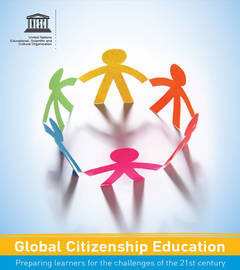 Global Citizenship Education: Preparing learners for the challenges of the twenty-first century 2015-06-22 What is Global Citizenship Education? Do we learn it in school? What difference can it make if it is a common feature of all education systems? How can it be implemented and scaled up? The answers to these questions and others can be found in a new publication just released by UNESCO. For UNESCO, Global Citizenship Education (GCE) develops the knowledge, skills, values and attitudes learners need to build a more just, peaceful, tolerant, inclusive, secure and sustainable world.In a globalized and fast-changing world, these are critical skills that current and future generations need to act today and find solutions to tomorrow's global challenges. The starting point of GCE is to recognize the relevance of education in understanding and resolving global issues in their social, political, cultural, economic and environmental dimensions. It also implies acknowledging the role of education in moving beyond the development of knowledge and so-called cognitive skills - e.g. reading and mathematics - to build values, social and emotional skills and attitudes among learners that can facilitate international cooperation and promote social transformation. Building on the conclusions of two international conferences dedicated to GCE, this publication aims to: - Improve understanding of GCE as an educational approach and its implications for education content, pedagogies and approaches; - Identify innovative approaches and good practice in GCE globally; and - Share lessons learned and pathways to scaling up GCE It has been prepared for education policy makers, practitioners, civil society organizations and young people from all regions of the world with an interest in equipping learners with the knowledge, skills and values they need to thrive as global citizens in the twenty-first century.
  Q&A: Better Students, Better Citizens, Better World: Education Is the Key to Peace 2015-06-16 UNITED NATIONS, Jun 14 (IPS) - In a world where high levels of social and religious intolerance, conflicts, violent extremism and environmental degradation are threatening justice and peace, the United Nations is trying to find ways to maintain world order and promote sustainable development.This year, the drafting of the post-2015 U.N. agenda, which has set up the targets for the next 15 years of Sustainable Development Goals (SDGs), represents a turning point for achieving development worldwide.Finding a solution to 21st century challenges requires the creation of a fresh, universally-based, inclusive and transformative paradigm. The key to this paradigm is Global Citizenship Education (GCED).Great emphasis has been placed on the role of education since U.N. Secretary-General Ban Ki-moon launched the "Global Education First Initiative", in 2012, which put GCED as one of its main principles.Following the 2015 resolution adopted by the U.N. Educational, Scientific and Cultural Organisation (UNESCO) on the necessity to conceptualise and implement policies concerning global citizenship education, and the adoption of the Incheon Declaration on the Future of Education adopted at the World Education Forum (May 19-22), hosted in Seoul, major steps forward have been made in relation to GCED.Advocates say the next step is to include GCED within the education targets in the SDGs that will be ratified in September in New York.A seminar to raise awareness and spread the concept of GCED will be held on Jun. 15, organised by the Permanent Mission of the Republic of Korea to the U.N., along with the collaboration of the Permanent Missions of the United States, Nigeria, Qatar, France, the UNESCO, international organisations and NGOs.In an interview with IPS, the Permanent Deputy Representative of Korea, Choong-Hee Hahn, spoke about GCED and its relevance for building a more peaceful world.Q: What is Global Citizenship Education?A: Generally, education is defined in functional terms, such as access to schools and quality of education in preparation of a professional career. But the new framework of GCED should focus on orientation.There are three main aspects that GCED should promote. Firstly, the "sense of being", teaching students, since their early age, about what kind of citizens they should become. They should be sensitised about future challenges, such as climate change, intolerance and violent extremisms.Secondly, the "sense of responsibility and privilege of being a global citizen." GCED should include multicultural diversity and mutual respect, by understanding the real meaning of fundamental and human rights values, dignity and democracy.Thirdly, "compassion and empathy". The revolutionary aspect of GCED is its holistic approach to education, rather than advancing to next the level of education or job searching. This is the best approach to cope with our Century complexities.Another important concept of GCED is inclusiveness.Hatred and violence come from a sense of isolation, and a lack interconnectedness. Teaching inclusiveness, embracing different social, political and economic aspects. In this way, people will feel respected and will play an active role tin the society.Q: Why is Korea leading GCED?A: It is because of the rapid development Korea went through in the past decades. Thinking about the history of Korea, we experienced immense poverty. However, by investing in education, and through the promotion of democratic values we reached development.Today, Korea is very multicultural, multiethnic and multi-religious, based on the respect of human rights. Christians, Muslims Confucians and Buddhists live cohesively together. We are a positive example of education, tolerance and peace. As a role model, we would like to contribute and raise awareness on GCED without bias nor prefixed prejudices.Q: Why bringing GCED within the U.N. agenda post-2015 development agenda?A: This is the right time to think about how and why the U.N. is pursuing the new SDGs. The U.N. first priorities are now dignity of people and the planet, along with justice and prosperity. These are value oriented goals and objectives. The U.N. agenda is based on three main pillars: peace and security, sustainable development, and human rights. I think all those issues are intertwined with education, and GCED is the solution to peace and security - by promoting tolerance and responsibility - sustainable development - through inclusiveness and equity - human rights - understanding the privilege of being a human being and democratic values.Q:What is GCED methodology?A: Global education should be based on the participation of multiple stakeholders. Not only teachers and students, but also worldwide social, economic, cultural experts, NGOs and youth groups.GCED should be built on a methodological paradigm, not based on textbooks, but on discussions and participation of all students in the class. New audio-visual methods, and participatory discourses, through fieldwork and exchange programmes. We need a new system that revitalises the classrooms and contributes substantially to peace and security.GCED is not about replicating the paradigm of "Enlightenment and Western" values. On the contrary, by focusing on inclusiveness, it aspires to find a world denominator common to developed and developing countries.However, given that many children still have no access to education, GCED should mobilise funding and concrete means of implementations. GCED should also be participatory and content-sharing.To do so, it is important to develop Information and Communication Technology (ICT) through the use of internet, computers, and mobile phones, even in the remotest areas of the planet, along with the support of the private sector. For instance, in Korea, we are leading several educational projects with private companies such as Samsung .Q: What are the main challenges to GCED?A: Unfortunately there are still huge financial gaps and inequalities among countries.Recently, a proposal for a global fund for education was put forward, but it is not easy, as there are already many other funds, such as funds to finance development or the Green Climate Fund.There is the Global Partnership for Education, the existing global fund which helps developing countries to get access to education for all.However, we need more financial resources, improved capacity building, and more ICT equipment to deploy in developing countries.An additional challenge is the fact that education is not yet perceived as a top priority in many government agendas. This is the real problem. As long as there are not enough investments by local authorities in national education, Global Education will be impossible to achieve. Therefore, it is fundamental the collaboration of the private sector in developing an ethical Corporate Social Responsibility (CSR).Edited by Kitty Stapp© Inter Press Service (2015) — All Rights Reserved