
News
Catch up on what’s happening in the world of global citizenship education.
1,668 results found
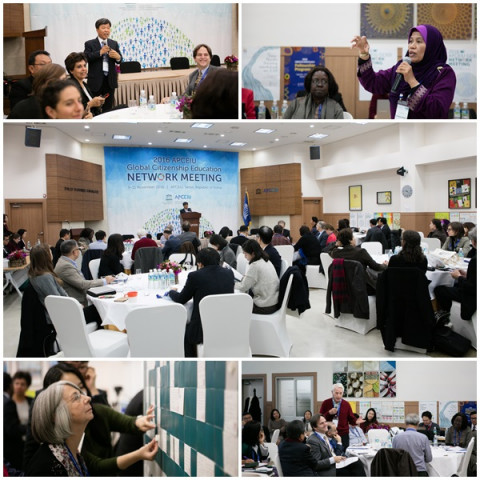 2016 APCEIU GCED Network Meeting: Catalyzing Global Action and Solidarity for GCED towards 2030 2016-12-16 In order to achieve Global Citizenship Education (GCED) until 2030, catalyzing global action is a priority for APCEIU. Cognizant of the strong support of institutions globally to put GCED into action, APCEIU has convened the 2016 APCEIU GCED Network Meeting in Seoul, Republic of Korea from 9-11 November 2016. Representatives from 36 organizations and institutions implementing and contributing to GCED gathered during the GCED Network Meeting to share their activities and explore potential ways of collaboration on promoting GCED. Mr Utak Chung, Director of APCEIU, in his opening remarks highlighted that, “This gathering comes at a most opportune time, to take a step further in the realization of GCED by exploring potential collaboration through forming human and institutional-network.” Mr Gwang Jo Kim, representing UNESCO Bangkok, the Regional Bureau of Education in the Asia-Pacific, underlined in his congratulatory remarks that it is, “Through partnerships and joint actions that we can maximize our support to countries and scale up our efforts to promote GCED.” On the outset, the GCED Network Meeting showcased the diverse efforts of institutions globally in promoting GCED. Participating organizations and institutions highlighted the interconnectedness of GCED with related concepts including human rights, peace, cultural diversity and sustainable development, and how can the complementarities be explored. Furthermore, institutional presentation panels were divided based on the participating organization’s backgrounds; Intergovernmental Organizations, Research and Training Organizations, Civil Society Organizations, Higher Education Institutions, and Network Organizations. Each panel provided an opportunity to identify common work areas, synergies and possible areas of collaboration. Participants have commonly noted as well about the importance of aligning GCED activities to the Sustainable Development Goals, in which GCED is part of as Target 4.7, particularly through the development of monitoring mechanisms and indicators. Based on the results of the institutional presentation panels, participants discussed further to develop strategies for the GCED Network in various dimensions: Research and Policy Development; Capacity-Building of Educators; Information Dissemination and Material Development; Advocacy, and Partnerships and Networking. The discussion served as an opportunity to brainstorm on how the participating organizations can increase the impact of the GCED programmes, and how can the GCED Network support the overall promotion of GCED as well as dissemination of global education agenda. Ms Ann Therese Ndong Jatta, Director of UNESCO Nairobi, emphasized that GCED’s inclusion in the global agenda is a strong call for governments and stakeholders to be engaged in the promotion of GCED. She further praised the effort of APCEIU to put Education 2030 into action. Through a drafting committee from the participants, a final outcome statement with the subtitle “Partnerships for Global Citizenship Education towards 2030” was finalized by the representatives of institutions and organizations shortly after the end of the 2016 APCEIU GCED Network Meeting. The final outcome statement details the foundation of the establishment of an international network of institutions and organizations for the promotion of GCED and recommendations for the inclusive, holistic, systematic and sustainable promotion of GCED until 2030. At the closing of the meeting, Mr Utak Chung expressed his gratitude to the participants and promised continuous support of APCEIU for strong collaboration with partners through the network. “We will continue to promote GCED in the future, and we look forward in working more actively with you, our partners, together through the GCED Network,” said Mr Chung. APCEIU will continue to promote GCED through the GCED Network, and plans to address the needs of various regions and stakeholder groups in 2017. URL: 2016 APCEIU GCED Network Meeting: Catalyzing Global Action and Solidarity for GCED towards 2030 > APCEIU News - APCEIU (unescoapceiu.org)
 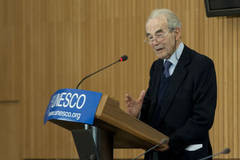 Tackling Antisemitism at the Roots Gathers Global Experts 2016-12-12 The fight against antisemitism cuts to the heart of UNESCO’s role and mission to build global peace through education and the promotion of respect for others, said Director-General Irina Bokova, opening a high-level round table at UNESCO Headquarters on 6 December 2016.Organized with the International Holocaust Remembrance Alliance, the round-table analysed the roots of antisemitic hatred, how it can be defined, its evolution and contemporary expression, as well as the best use of education, communication and culture to combat it.In his keynote address, Mr Robert Badinter, former French Minister of Justice and former President of the Constitutional Council in France, brushed a historical overview of antisemitism, from its religious origins to the national and racial dimensions it took on in the 19th and 20thcenturies, culminating in the Holocaust. “In and of themselves, culture, the love of art, education do not suffice to counter the fury of racism and antisemitism. We must draw lessons from this,” he stated, warning that “complacency nurtures prejudice that feeds on hatred," culminating in the Holocaust and other pernicious forms today. Ms Bokova recalled that “hatred of Jews is an ancient hatred that has never stopped evolving over the centuries under many different guises,” ultimately leading to the destruction of nearly all European jews. She reminded the audience that UNESCO was the sole UN agency to have a programme dedicated to teaching the history of the Holocaust as a means of promoting global tolerance and respect and preventing future genocides.Noting that antisemitism is resurging in Europe with murderous attacks against Jews, she stressed that antisemitism was best combated with education, with the teaching and understanding of not only the Holocaust but Jewish culture and patrimony as an antidote to prejudice.“Education has a fundamental role to play here but not just any kind of education. We need an education that really transmits the knowledge of historical facts, heritage and culture, to protect and respect the dignity of all people, their beliefs and traditions, on the basis of respect for human rights,” she said.She commended the IHRA for its adoption of a concrete definition of antisemitism, which represents “a considerable step forward to help put precise words on a subject that demands constancy and firmness.”Ambassador Mihnea Constantinescu, Chair of the IHRA, a network of 31 member countries, stated that “we must all identify the roots of hate, discrimination and exclusion that led to the tragedy of the Holocaust and eradicate them for good, both on the European continent and globally. This means access to education, openness to diversity, commitment to teaching young generations to respect human values and the undistorted history. Teaching young generations to denounce and reject every form of extremism, intolerance, racism or antisemitism is a necessary achievement for shaping the future”.This set the stage for a panel discussion of experts who all concurred on the complexity of contemporary antisemitism and the role of education in countering it. Ms Katharina von Schnurbein, the European Union’s Coordinator on combating antisemitism, stressed the importance of a holistic approach, solid legislation and understanding the positive contribution of Jews to history. Ms Cristina Finch, from Organisation for Security and Cooperation in Europe (OSCE), outlined initiatives in place to train police and prosecutors on hate crimes, build coalitions with different communities, and to develop policy guidelines for educators, in cooperation with UNESCO. Mr Dervis Hizarci of the Kreuzberg Initiative against Antisemitism (Germany) described pedagogical work with Arab, Turkish and Muslim youth in Germany. Professor Steven Katz, Slater Professor of Jewish and Holocaust Studies at Boston University and Professor Dina Porat, Head of the Kantor Center for the Study of European Jewry at Tel Aviv University both described the complexity of contemporary antisemitism, historical distortions, the importance of recognizing the wealth of Jewish culture and its contribution to world history, and the need to work on a broader understanding of the phenomenon.The event, supported by the UST Shoah Foundation, included a video presentation of the project “Countering Antisemitism Through Testimony”, by Ms Marianne Lère of the USC Shoah Foundation, UNESCO Chair for Genocide Education.
 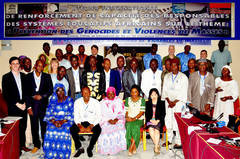 Teaching about genocide and mass atrocities: An entry point to peace education 2016-12-12 In the framework of its activities relating to education about the Holocaust and other genocides, UNESCO partnered with the National Commission of Senegal to UNESCO to organize a training seminar for high-level civil servants of the Burkina Faso, Côte d'Ivoire, the Gambia, Mali, Niger and Senegal ministries of education in Dakar on 24 and 25 November 2016. The seminar was preceded by a conference on the same topic at Université Cheikh Anta Diop de Dakar (UCAD) on 23 November 2016 to raise awareness among the Senegalese academic community.“For seven decades following the Holocaust, many individuals and organizations have been constantly campaigning for ‘NEVER AGAIN.’ But these efforts remain insufficient, since other genocides have taken place since the Holocaust – even as recently as 1994 – and large-scale violations of human rights still occur today,” said Mr. Gwang-Chol Chang, Director a.i. of UNESCO Dakar. “It is clear that preventive actions must be strengthened, and in particular by promoting the defence of peace in the minds of men and women, as proclaimed by UNESCO’s Constitution.”Thus, education has a vital role to play to build resilience to violence and to contribute to a culture of peace based on mutual respect and human rights. It is for this reason that UNESCO supports education on the history of past genocides as a means to raise awareness of the causes, dynamics and consequences of such atrocities.The seminar therefore was an opportunity for the participants to familiarize themselves with the concept and history of genocide, in particular the genocide of the Jewish people during the Second World War and that of the Tutsi in Rwanda in 1994. The seminar also included round table discussions such as “Why teach about the Holocaust?” which examined the experiences of Cote d’Ivoire, Senegal, and South Africa; “racism, anti-Semitism, and denial”, led by three experts from different perspectives; and “the prevention of violent extremism through education”, which presented UNESCO’s new guidelines for policymakers and teachers as well as experiences from the West African region, considering critical contextual issues such as the role of the security system, the family and the media. These discussions were developed around in-depth analyses on pedagogies and policies relating to this history, and helped participants to explore possible ways to introduce or reinforce the position of the subject in education in a way which is relevant to their national contexts.As a concrete follow-up action, participants were requested to share their roadmap to integrate this subject in their education policies, programmes, and curriculum and to propose an effective monitoring system appropriate for their respective countries’ context. This aims in the short-term at 2017, in the medium-term in alignment with the national education sector plan, and in the long-term at contributing to the achievement of Sustainable Development Goal (SDG) 4 Education 2030 and specifically Target 4.7: to promote a culture of peace and non-violence.Experts contributing to the seminar included historians and educators from Belgium, Côte d'Ivoire, France, Germany, Senegal and South Africa.The event was organized in partnership with the Shoah Memorial, the Johannesburg Holocaust and Genocide Centre and the Rosa Luxemburg Foundation, with the support of the Foundation for the Memory of the Shoah.
 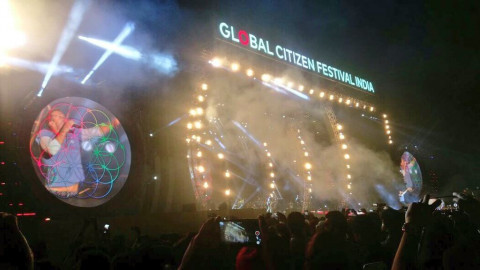 Close to 28,000 Global Citizens support MGIEP's campaign for inclusive education 2016-12-05 Mumbai, India—-The much-awaited first edition of the Global Citizen India Festival held in Mumbai on November 19 saw 80,000 young people from across India join forces with political representatives and leaders to bring about real change to India and the world.Leaders from the local, state, and federal government came together on stage at the festival as well as in video appearances and messages to the Global Citizens watching around the world to commit to help realise Quality Education (SDG 4), Gender Equality (SDG 5) and Clean Water and Sanitation (SDG 6)Those physically present at the festival represented the voice of a much larger mass—In just two months, more than 500,000 youth in India took more than 200,000 lakh actions calling on political, faith and business leaders along with celebrities to be more accountable on education, gender equality, water and sanitation.UNESCO MGIEP partnered with Global Citizen India to create a unique SDG 4 Inclusive Education Journey to advocate for difference learners – the one in six people worldwide who require their educational materials, teacher delivery, and learning assessment to be different from standard education models and practices. Difference learning includes the following diagnoses (or 4Ds): Dyslexia, Dyspraxia, Dyscalculia and Dysgraphia. Learning difficulties, unlike physical disabilities, cannot be easily seen and detected hence, we call this The Seen Unseen!A total of 27,800 young global citizens participated in the two-step, 10-day long inclusive education journey.It required them to sign a petition to the ministers of education asking them to include the needs of different learners in the New Education Policy as well as tweet to them the following:#EducationMinistersofIndia.Please recognize the need for universal screening tests and trained teachers for different learnersThe Global Citizen India concert was headlined by music giants Coldplay and had international artists such as Jay-Z and Demi Lovato also performing alongside Bollywood bigwigs such as Shah Rukh Khan and Amitabh Bachchan.Related articles:—http://mgiep.unesco.org/the-un-learn-workshop-on-difference-learning-for-instructors-09-10-april-2016-iit-delhi-2/Contact Information:–Ms Radhika BHATNAGAR r.bhatnagar@unesco.org, Communications Officer
 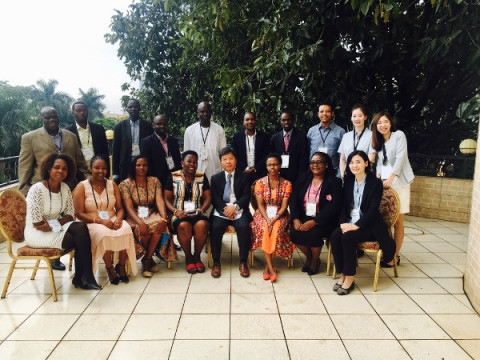 IICBA participated in the Follow-up Workshop on GCED (Global Citizenship Education) in East Africa 2016-11-23 Asia-Pacific Center of Education for International Understanding (APCEIU) together with the national commission for UNESCO in Uganda have organized a two-day capacity building workshop in Kampala, Uganda from 3-4 November 2016. Concurrently, a 'Curriculum Development Workshop' that attempts to mainstream GCED in curricula in Uganda has been held. IICBA has been mainly invited to the capacity building workshop and Dr. Binyam Sisay attended the two-day workshop representing IICBA. On the first day, Dr. Binyam gave presentation to introduce IICBA's activities, its interest on GCED, its ongoing collaboration with APCEIU and suggested areas of future collaboration. On the second day, he was assigned to moderate an afternoon session that deliberates on developing GCED strategies in East Africa.The participants of the follow-up workshop were 14 teachers, teacher educators and policy makers who are alumni of capacity building workshop/fellowships at APCEIU in Seoul. The participants came from Uganda, Zimbabwe, Zambia, Lesotho, Mozambique, South Sudan, Rwanda, Burundi and Senegal. APCEIU has also been represented in the workshop through the Director, Dr. Utak Chung, the head of the office of education and training, Ms. Yangsook Lee and four additional colleagues. The main purpose of the workshop is to provide forum for the alumni in Africa to share their experiences, practices and strategies for effective implementation of GCED and to exchange views on how to scale-up the conduct of similar workshop in the future in Africa. Accordingly, participants presented the works that they have done in their own countries and suggested different ways of expanding the initiative to many countries in Africa. The participants requested IICBA to play a key role in expanding similar capacity building workshops in Africa. During the workshop, APCEIU has revealed its intention to launch an online campus on GCED and a demonstration of its sample e-learning contents and its modalities has been presented. The online campus is expected to be operational before the beginning of 2017.
 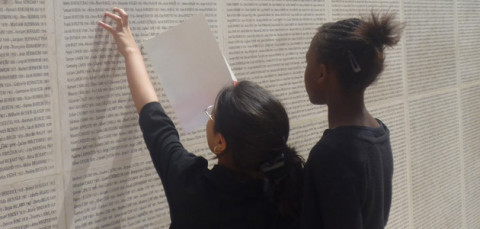 Holocaust Education on the GCED Clearinghouse 2016-10-31 UNESCO encourages Member States to develop programmes that strengthen a culture of prevention and foster understanding of the causes and consequences of the Holocaust and how genocide can happen so that young people become more aware of the processes that can lead societies to descend into violence. Education about the Holocaust and other cases of genocide in history can be a means to foster the knowledge, skills and behaviours that will help learners become critical thinkers, and active global citizens who value human dignity, reject antisemitism, racism and other forms of prejudice that can lead to group-targeted violence and genocide. The UNESCO GCED Clearinghouse contains the largest database to date of education materials and research pertaining to education about the Holocaust or other genocides.
  An Innovative Platform for Global Citizenship Education 2016-10-31 The first APCEIU International Conference on Global Citizenship Education (GCED): Platform for Pedagogy and Practice provided a forum for over 300 GCED practitioners to share their experiences and pedagogical approaches one year after the adoption of the Education 2030 Agenda, which includes GCED within one of its targets.The Conference took place on 24-25 October 2016 in Seoul, Republic of Korea and was co-organized by the Asia-Pacific Centre of Education for International Understanding (APCEIU), the Ministry of Education of the Republic of Korea and JoongAng Ilbo, in partnership with UNESCO.Participants from the private sector, academia, government, civil society organizations, GCED specialized institutes, youth and general public engaged in active discussions and exchanges on vitalizing GCED, sharing practices, pedagogies, ideas, and insights. The international conference contributed to reinforcing partnerships among key stakeholders, while formulating strong advocacy and awareness raising on GCED and advancing GCED at the local, national, regional and global levels.What does it mean to be a global citizen?In her opening remarks, Ms Soo Hyang Choi, Director of UNESCO’s Division for Inclusion, Peace and Sustainable Development, emphasized the important role of Global Citizenship Education to foster in learners “a mindset to care for humanity and the planet to undertake responsible actions when and where necessary”.The conference allowed participants to engage in policy dialogue, sharing their visions of GCED in favourable policy environments, and discussing what kind of competencies, skills, or attitudes are required for global citizens to contribute to building sustainable and peaceful societies.“Educators around the world must take on the challenge of empowering youth to become responsible citizens of a peaceful and sustainable global community,” said Mr Utak Chung, APCEIU’s Director.Vibrant exchanges to gain practical knowledge on how to teach and assess GCED were driven by interactive discussions, innovative sessions, participatory dialogues, innovative teaching-learning activities, and a demonstration of mini-lessons.The GCED Talks: Learning to Live Together allowed GCED advocates to share personal stories about how education had transformed their lives making them active and responsible global citizens.Thematic approaches were discussed as methods of delivery to nurture global citizenship, such as Building a Culture of Peace, Respect for Cultural Diversity, the Prevention of Violent Extremism through education and Human Rights Education.This conference aims to become a yearly platform for GCED actors to share actions and practices and discuss ways in which GCED can help resolve many critical global issues.
 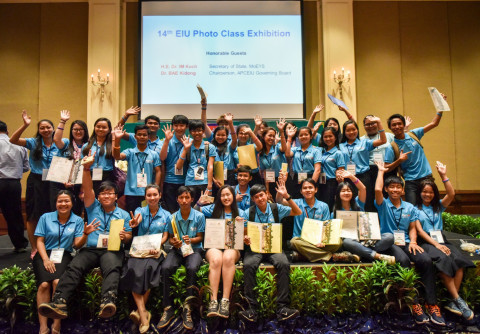 “Envisioning Eternal Wonders behind Lens”, the 14th EIU Photo Class in Siem Reap, Cambodia 2016-10-28 On 16 October 2016, the 14th EIU Photo Class held in Siem Reap, Cambodia ended successfully. Under the theme of “Envisioning Eternal Wonders Behind Lens”, the 14th EIU Photo Class was co-organized by APCEIU and Cambodian Ministry of Education, Youth and Sport(MoEYS) for 7days from 10 October to 16 October. Twenty-one Cambodian and eight Korean students, together with three professional photographers explored various places in Siem Reap such as Angkor Wat, the most representative historical site, as well as the UNESCO World Heritage Site, Tonle Sap Lake and a traditional local market. They not only took photos but also participated in various programmes such as Global Citizenship Education (GCED) Workshop, Cross-Cultural Awareness Programme, EIU Photo Workshop. On the last day of the Photo Class, there was an exhibition of 66 photos selected by the participating students and photographers at Phokeetra Ballroom, Sofitel Hotel, Siem Reap. As a grand finale of the programme, the photo exhibition attracted about 500 people including Dr. Bae Ki-Dong, Chairperson of APCEIU’s Governing Board; H.E. Im Koch, Secretary of State of Cambodian MoEYS; H.E. Park Seung Gyoo, Consul General of the Embassy of the Republic of Korea in Cambodia; parents and teachers of Cambodian participants; staff of the Cambodian MoEYS as well as Siem Reap provincial department of MoEYS; and Korean Association in Siem Reap. The guests appreciated diversity and elegance of Siem Reap in the photos taken by the Korean and Cambodian students. Representing all the Korean students, Ms. Shin Haenaran said, “Through this Photo Class, we were able to draw lights into each other’s heart” and added, “I believe that when we look back on these pictures, we will find our image as global citizens, bounds together as one”. A Cambodian student Mr. Yorn Sovanna commented, “I’m very pleased that I got to know about Global Citizenship Education and also had a chance to interact with Korean friends”. He also said “I really appreciate the opportunity to participate in this programme”. The photos taken in Cambodia will be exhibited online for a world-wide audience through EIU Photos Class Archive (photoclass.unescoapceiu.org). The EIU Photo Class provides opportunities for students from all around the world to learn EIU and GCED through the art of photography. Participants get to learn how to express their thoughts, shed new light on their daily lives and surroundings by taking photos under the instruction of professional photographers. Since its inception in the Philippines in 2006, APCEIU has captured various forms of life from many different places around the world such as Bhutan, Republic of Palau, Laos, Bangladesh, Iran, Kazakhstan, Malaysia, Sri Lanka, Tonga, Indonesia, Turkey and Russia. URL:“Envisioning Eternal Wonders behind Lens”, the 14th EIU Photo Class in Siem Reap, Cambodia > APCEIU News - APCEIU (unescoapceiu.org)
 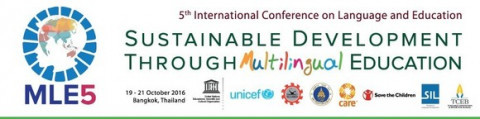 Seizing on Momentum for Mother Tongue in Asia-Pacific: 5th International Conference on Language and Education Conference Opens in Bangkok 2016-10-20 BANGKOK – 19 OCTOBER 2016: Asia-Pacific is quickly becoming a global leader in mother-tongue based multilingual education (MTB-MLE) – momentum an international conference that opened here today looks to seize and build upon for the benefit of millions of ethnolinguistic minority learners in the region.The 5th International Conference on Language and Education: Sustainable Development Through Educationbrings together more than 300 participants from 34 countries to discuss challenges and showcase solutions related to MTB-MLE.In his welcoming remarks, Gwang-Jo Kim, Director of UNESCO Bangkok, the Asia-Pacific Regional Bureau for Education, noted how central the approach is to global efforts to achieve the Sustainable Development Goals (SDGs).“Our ambitious universal education agenda is rooted in SDG 4, which calls on all countries to ‘ensure inclusive and equitable quality education and promote lifelong learning opportunities for all,’” he said. “MTB-MLE is vital in this regard, as it makes education systems more relevant and responsive to cultural and linguistic diversity. This approach is undeniably at the heart of inclusive and equitable quality education and lifelong learning for all.”Dr Kim also took a moment to remember and pay tribute to His Majesty King Bhumibol Adulyadej of Thailand, who passed away on 13 October at the age of 88. He highlighted, in particular, His Majesty’s efforts in improving the lives of those living in some of the most remote reaches of Thailand, many of whom are ethnolinguistic minority speakers. “In addition to his tireless development work, His Majesty was also a passionate advocate for education and his ceaseless pursuit of knowledge exemplified the spirit of lifelong learning,” Dr Kim said. “His legacy is an inspiration – let us carry it forward.”Opening the conference, Thai Deputy Minister of Education Dr Teerakiat Jareonsettasin spoke of the need to develop language policy in Thailand, calling language, "tool to access culture, probably the greatest tool that human beings have to make good progress in education." "The Ministry of Education is committed to including all Thai citizens in national development, and to be proud of our cultural and linguistic diversity,” he said. “The Ministry of Education is also committed to maintaining cultural diversity, strengthening education, and upholding the human rights and educational rights of ethnic minority children as enshrined in the United Nations declarations Thailand has signed, as well as in the Royal Society of Thailand’s proposed national language policy.”Both Dr Kim and Dr Teerakiat highlighted a Thailand-based programme that was recently celebrated at UNESCO headquarters. The Research Institute for Languages and Cultures of Asia of Mahidol University in Thailand was awarded the UNESCO King Sejong Literacy Prize for its “Patani Malay-Thai Bi/Multilingual Education Project”.The programme, which is supported by UNICEF and the Thailand Research Fund, aims to boost the academic performance of students in the deep South, where most learners speak Patani-Malay. The successful approach was lauded by jury members for its "success in sustaining the performance of Malay-speaking students in the primary schools of southern Thailand”.In her keynote address, Dr Susan Malone, Senior Consultant for Literacy and Education at SIL International, noted some of the lessons learned in more than three decades of the MTB-MLE movement, providing a detailed reflection on essential components of successful programmes."MTB-MLE is the only way to ensure that SDG4 will be achieved in non-dominant language communities," she says. "At this moment in time we can say we're getting there... We’ve learned a lot. Let’s work together on getting what we have learned out to the world." Asia-Pacific is home to some of the most comprehensive MTB-MLE policies in the world, including in the Philippines, a regional leader in institutionalizing the approach, and Cambodia, where the Multilingual Education National Action Plan (MENAP), launched in March, provides a detailed roadmap to reaching ethnic minority children. The three-day conference will aim to learn from and build on the region’s notable recent successes in MTB-MLE policy, practice and research by covering four key themes: 1) Towards Sound Policies on Multilingual Education: Language and Language-in-Education Policy and Planning in Asia and the Pacific; 2) MLE Teachers and Teacher Training for MLE; 3) MLE Practice/Praxis in Early Childhood and Primary Education; 4) Language and Cross-Cutting Issues of Sustainable Development Goals (SDG).The 5th International Conference on Language and Education is an initiative of the Asia Pacific Multilingual Education Working Group, a consortium of UN agencies, intergovernmental organizations and academics advocating on behalf of ethnolinguistic communities through multilingual education initiatives and related policy advocacy throughout Asia-Pacific.UNESCO Media Contact: Noel Boivin, UNESCO Bangkok Media and Communications Officer, n.boivin@unesco.orgConference website: www.lc.mahidol.ac.th/mleconf/2016/background.htmMore on UNESCO’s work in MTB-MLE: www.unescobkk.org/education/multilingual-education/
  The International Conference on GCED Will Take a Role of a Platform on GCED Pedagogy and Practice 2016-10-14 Co-organized by APCEIU, Ministry of Education of the Republic of Korea and JoongAng Ilbo, and in partnership with UNESCO HQ, the International Conference on GCED: Platform on Pedagogy and Practice will be held on 24-25 October 2016 at Sheraton Seoul D Cube City Hotel in Seoul, Republic of Korea. This Conference aims at providing a prime opportunity to kick off conversations on GCED, share current issues and good practices, as well as explore future steps in the area of GCED along with diverse participants from around the world under the overarching theme of GCED for SDGs: From Commitment to Action. By gathering various key stakeholders and the general public together, the Conference will provide a platform for sharing practices, pedagogy, ideas, and insights on GCED and reinforcing partnerships and network among key stakeholders, while formulating strong advocacy and awareness raising on GCED and advancing GCED at the local, national, regional and global levels in the context of SDGs. The Conference will be comprised of plenary and concurrent sessions in which about three hundred participants including GCED experts, practitioners, and educators from various sectors as well as general public who are interested in GCED can share diverse practices and pedagogical approaches. On the first day of the Conference, the Keynote Session will run as a policy dialogue among policy makers. The dialogue will lead to sharing of their visions of education and expectations from adopting or highlighting GCED in their policy or agenda and discussing plans and strategies to cooperate to provide GCED with favorable policy environments, which will contribute to building sustainable and peaceful societies. In the Panel Discussion, speakers representing different age groups, cultures, and expertise will exchange their understandings and conceptions of “global citizen” viable in their groups, trying to define their own meaning of being a global citizen in their groups and fields by listing up kind of capacity, skills, or attitudes required for global citizens. Braulio Guemez, a participant of 2nd Youth Leadership Workshop on GCED will voice out his experiences on being a global citizen as a youth. Sujan Shakya, a former member of the Non-Summit (TV Talk Show) will represent foreigners living in Korea, sharing his broad perspectives on various social and cultural issues. As a representative of corporate sector, Jay R. Lee, Corporate and Government Affairs Manager of Intel Asia & Pacific will share the insights and perspective gained from her extensive experiences in her career. The concurrent sessions which are to be organized, designed and conducted by various educators and practitioners across the globe will feature participatory dialogues, innovative teaching-learning activities, demonstration of mini lessons and interactive discussions. The Concurrent Session 1: Actors of GCED featuring three parallel sessions will consist of best practices of GCED through presentations and mini-demonstrations by three key actors that are implementing GCEDㅡeducators, schools, and youth. Participants are expected to gain practical insights and advice from these case presentations. The second day of the Conference starts off with GCED Talks: Learning to Live Together where socially influential people will share their ideas and views on learning to live harmony in TED-style talks. Young-suk YS Chi, a Chairman of Elsevier, Rediet Kefale from Ethiopia, 2nd Youth Leadership Workshop on GCED participant, and Seth Leighton, the CEO and Co-founder of Envoys will be invited to the stage one by one to share their genuine stories about the power of education transforming their lives as active and responsible global citizens. Following the GCED Talks, the GCED Youth Network Launching Ceremony and EIU Best Practices Awards Ceremony will be held as side events. The second concurrent session (Thematic Approaches to GCED) will address the four pivotal thematic pillars in GCED: Building a Culture of Peace, Respect for Cultural Diversity, Prevention of Violent Extremism (PVE) and Sustainable Development and Human Rights. This interactive and participatory session will explore the values to be formed through GCED and the methods of delivery to nurture global citizenship. The Last concurrent session (Learning Process and Assessment of GCED) features the actual process of GCED on the ground, specifically delving into designing, planning, teaching, and assessing GCED. Under this theme, participants will be able to gain practical knowledge and advice on how to actually teach and assess GCED. This annual Conference aims to become a solid platform where GCED actors all over the world come together to share their various actions and practices in GCED and discuss ways GCED can advance further to resolve many critical global issues. At the Conference, advocacy, solidarity and partnerships will strengthen, which will surely leave remarkable changes in the world through the years. If you wish to participate in this Conference, please register online at http://gced.unescoapceiu.org/conference/. URL: The International Conference on GCED Will Take a Role of a Platform on GCED Pedagogy and Practice > APCEIU News - APCEIU (unescoapceiu.org)