
News
Catch up on what’s happening in the world of global citizenship education.
1,668 results found
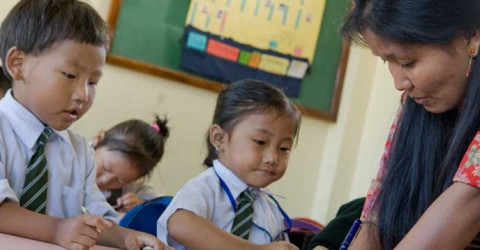 UNESCO Week for Peace and Sustainable Development highlights teachers’ role in achieving Global Development Agenda 2017-03-06 02 March 2017More than 400 experts, practitioners and policymakers from the public, non-governmental and private sector from all regions will attend UNESCO Week for Peace and Sustainable Development: The Role of Education, in Ottawa, Canada from 6 to 10 March.Organized by UNESCO and the Canadian Commission for UNESCO, the event will focus on Education for Sustainable Development (ESD) and Global Citizenship Education (GCED) and their contribution to achieving the Sustainable Development Goals (SDGs), notably Target 4.7 of SDG 4 on Education. During the Week, experts will examine pedagogical approaches and teaching practices in promoting ESD and GCED.“Learning to live together and protecting our planet are basic conditions for securing a more peaceful and sustainable future,” says UNESCO Director-General, Irina Bokova. “This is about daily actions, attitudes and behaviours that are guided by awareness of our interdependence, respect for shared values and openness to other cultures. These must be integrated into education systems everywhere, so that every student grows up to become a caring and responsible global citizen.”UNESCO will launch a new publication on this occasion, “Education for Sustainable Development Goals: Learning Objectives,” to support policy-makers, curriculum developers and educators to promote learning for the SDGs. The publication contains suggestions and classroom activities to address each goal.Teachers of UNESCO’s Associated Schools (ASPnet) will also be attending the event, along with 50 young delegates.From 6 to 8 March, the Global Review Forum for the Global Action Programme (GAP) will take stock of progress since 2014, when the programme was launched, and examine the way forward.From 8 to 10 March, the Third GCED Forum will highlight good policies and practices for teachers and teacher trainers.Ms Bokova, Catherine McKenna, Canada’s Minister of Environment and Climate Change, Mitzie Hunter, Minister of Education (Ontario Provincial Parliament), Ambassador Dessima Williams, Special Adviser to the President of the 71st Session of the United Nations General Assembly, and Fred van Leeuwen, Secretary-General of Education International, will take the floor on 8 March, when the two fora come together.This session will be followed by an intergenerational dialogue between youth and senior officials, organized by the UNESCO Mahatma Gandhi Institute of Education for Peace and Sustainable Development (MGIEP). This “Talking Across Generations” (TAGe) session will be broadcast on webstream with live discussions on Twitter under the hashtag #UNESCOWeekED.In support of the Week, the UNESCO Global Education Monitoring (GEM) Report will also launch a youth photo contest on ESD and GCED on 6 March.Finally, UNESCO’s MGIEP will launch an SDG-inspired video game in which players help solve global problems such as displacement, disease, deforestation, drought and pollution at the community level.*The UNESCO Week is organized with financial support from UNESCO, the Canadian Commission for UNESCO, the Canada Council for the Arts and the Ministry of Education, Culture, Sports, Science and Technology of Japan through the UNESCO Japanese Funds-in-Trust for ESD. Additional support for the Week is provided by the Council of Ministers of Education, Canada, the Global Centre for Pluralism and the Canadian Museum of History.
 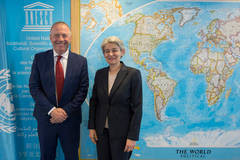 Director-General Irina Bokova and Member of British Parliament John Mann shared commitment to pursue Holocaust Education and fight against Anti-Semitism 2017-02-27 On 20 February 2017, the Director-General held a meeting with the Rt Hon. John Mann, Member of British Parliament (MP), Chair of the Parliamentary Committee against Anti-Semitism and Chair of the International Coalition against Anti-Semitism.Mr Mann’s visit took place in the context of the pursuit of long-term synergies with UNESCO on key topics of joint interest, in particular the promotion of Holocaust Education, the prevention of Anti-Semitism, the fight against discrimination in sport, more specifically in football, as well as the cooperation with cities and mayors as key actors to foster social inclusion and cohesion.Mr. Mann was informed about UNESCO activities in the field of Holocaust Education, in the context of the Organization’s unique mandate within the United Nations System in this area -- notably with regard to assisting Member States in devising educational policies to integrate Holocaust Education, as well as genocide prevention, as well as the elaboration of guidelines and indicators in this field, and the review of programmes thereon related.John Mann MP appreciated the work led by UNESCO in this context and expressed the wish to build cooperation in these efforts. In this context, he referred to his personal efforts to lead the Early Day Motion 1324, that was presented at the British Parliament at his initiative. He also commended UNESCO for the work in the fight against racism and discrimination, and more specifically to combat anti-Semitism.The Director-General highlighted the critical importance of promoting education to fight all forms of racism and discrimination, including anti-Semitism. She further emphasized that these efforts are integral part of UNESCO’s efforts to promote education for global citizenship and action to bolster media and information literacy, to prevent violent extremism and to help young women and men counter radicalisation through the Internet.“We need to lead this struggle with young people, including in and through sports to advance tolerance and to fight hate speech, racism and discrimination”, said Irina Bokova.Relevant cooperation between UNESCO and several football clubs such as Barcelona and Malaga FC (Spain), Ruby Shenzhen (China), Al Hilal (Saudi Arabia), and Juventus FC (Italy), was emphasized in this regard, as a means to integrate anti-discrimination and anti-racism clauses in players’ contracts, so as through the information and awareness campaign “No respect, no game”, launched by UNESCO and the PRISA communication group to combat racism and discrimination in football. UNESCO has placed a strong emphasis on the clubs’ role in disseminating this message and promoting inclusion across the world of sports. “In Europe, football and cities are the same”, stressed John Mann MP, calling for a wider possible involvement of cities across the United Kingdom with UNESCO in the future, such as Manchester and Liverpool. The Coalition of Cities against Racism, of which the Greater London Authority is already a member, was also referred to as an appropriate partner to reach out to the local entities.“UNESCO’s strength lies in its authentically universal dimension and it brings a true international perspective. We are very keen to deepen our collaboration and build strong synergies in areas of joint importance”, emphasized MP Mann.Director-General Bokova expressed her gratitude to John Mann MP and assured him of the full commitment of UNESCO to establish a mutually beneficial cooperation between UNESCO and the United Kingdom, including through its Parliament.
  UNESCO tracks global progress on education for sustainable development and global citizenship 2017-02-14 UNESCO is sharing information and data on global, regional and national trends in education for sustainable development (ESD) and global citizenship education (GCE) through a new dedicated webpage titled “Learning to live together sustainably (SDG4.7): Trends and Progress”.The page provides policy-makers, concerned education stakeholders and the general public with information that can help monitor global progress on the Education 2030 Agenda Target 4.7 which relates to the knowledge and skills required for sustainable development and global citizenship.It will feature information drawn from regional, multi-country or national data sets and other established instruments and will also include key findings of UNESCO studies and data analyses. What is Target 4.7 of the Education 2030 Agenda?Target 4.7 states that countries aim to ensure by 2030 that all learners acquire the knowledge and skills needed to promote sustainable development, including, among others, through education for sustainable development and sustainable lifestyles, human rights, gender equality, promotion of peace and non-violence, global citizenship education and appreciation of the diversity of culture and its contribution to sustainable development. What is the global indicator established to measure progress on Target 4.7?The indicator seeks to measure the extent to which GCED and ESD, including gender equality and human rights, are mainstreamed in national education policies, curricula, teacher education and student assessments.We invite you to share and follow the Learning to live together sustainably (SDG4.7): Trends and Progress web page.If your organization is producing data that can help monitor Target 4.7, please let us know by writing to the email gced(at)unesco.org. We will be posting information from partner institutions.
 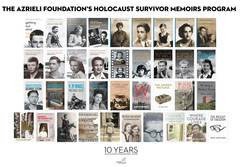 UNESCO and Azrieli Foundation distribute Holocaust survivors’ memoirs 2017-02-07 UNESCO and the Azrieli Foundation are working together to distribute Holocaust survivors’ memoirs.As part of activities to promote education about the Holocaust, UNESCO is partnering with the Azrieli Foundation to provide access to testimonies of Holocaust survivors through the UNESCO Associated Schools Network (ASPnet).ASPnet links educational institutions across the world around a common goal: to build peace in the minds of children and young people. The 10,000 ASPnet member schools, present in over 180 countries, work to support international understanding, peace, intercultural dialogue, sustainable development and quality education in practice.The Azrieli Foundation launched the Holocaust Survivors Memoirs Program in 2005 with a view to collect and publish memoirs and diaries of Holocaust survivors in Canada. Personal accounts of survivors of genocide have proven to be very important educational tools to help students empathise, connect better with the past and understand how violence begins and how it can be prevented. Agents for positive change“UNESCO considers its ASPnet students as agents for positive change. The memoirs provided to UNESCO by the Azrieli Foundation are an important and innovative learning tool for our students to truly understand, through personal accounts, the consequences of antisemitism, racism and all forms of intolerance. These books support the wider ASPnet goals of international understanding and instilling peace in the minds of young people,” said Sabine Detzel, International ASPnet Coordinator.The memoirs will be used mostly in sub-Saharan Africa to help interested schools promote education about the history of genocides in support of UNESCO’s programmes in the region. The memoirs will support awareness-raising among students and teachers about the importance of teaching about violent events of the past as a means to build a culture of prevention.“We are proud to partner with UNESCO in sharing these memoirs and are excited by the connection and lessons these books will provide between generations and cultures across the globe,” says Naomi Azrieli, Chair and CEO, The Azrieli Foundation.
 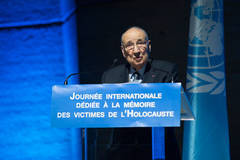 UNESCO commemorates the International Day in Memory of the Victims of the Holocaust 2017-02-06 UNESCO Director-General, Irina Bokova, commemorated the International Day in Memory of the Victims of the Holocaust through a series of events devoted to the work of education, the transmission of history and the fight against all forms of anti-Semitism today in the world. The Director-General first visited the Shoah Memorial to lay a wreath as a tribute to the victims and visited the two exhibitions devoted to the “First Genocide of the 20th Century - Herero and Nama” and the treatment of the history of “The Shoah in the Comic Strip”, from 1944 to the present day. She also inaugurated the historical exhibition Archeologia, held at UNESCO Headquarters until 10 February in partnership with the Auschwitz-Birkenau State Museum, which for the first time presents to the public nearly 200 objects among 67,000 personal belongings of Camp victims, discovered in 1967 near Crematoria III. "The Nazis wanted to erase all traces of the Jewish people, and even the traces of their crime, as if nothing had ever existed - these objects are tangible traces and acts of resistance against extermination, against Negationism and against forgetfulness," declared the Director-General in front of nearly 300 visitors. UNESCO also screened the premiere of the film "The Maestro: In Search of the Last Music" by Alexandre Valenti, which recounts a man's quest to find, archive and play all pieces of music written and composed in the camps the Second World War. The screening was followed by a concert by maestro Francesco Lotoro of one of the pieces of music composed 73 years ago and performed publicly for the first time in the world.A full day of debates was devoted to ways of deconstructing hate speech and the role of historic sites and museums in Holocaust education, bringing together several experts, including Serge Klarsfeld, UNESCO Honorary Ambassador and Special Envoy for Education about the Holocaust and the Prevention of Genocide, Jacques Fredj, Director of the Shoah Memorial, Dorit Novak, General Director of Yad Vashem, Agnès Sajaloli, Director of the Rivesaltes Camp Memorial, the historian Marcel Kabanda, President of IBUKA France, Mr Iannis Roder, history teacher at the Pierre de Geyter College in Saint-Denis and Mr Hubert Strouk, teacher at the Lycée des Arènes in Toulouse.During the evening ceremony held at UNESCO to close the International Day of Commemoration in Memory of the Victims of the Holocaust, the Director-General wished to highlight the current fight against anti-Semitism and importance of the memory of the Shoah in education for peace. "Teaching the history of the Holocaust is at the basis of UNESCO's full commitment to anti-Semitism - as a way to make everyone understand how prejudices are turned to insults, insults and discrimination, from discrimination to murder. This effort is inseparable from all the work of transmitting Jewish history and culture, respecting its heritage, on an equal footing with other cultures, as an antidote to prejudice and ignorance," she declared.In a stirring account, Raphaël Esrail, a great witness of the evening and President of the Union of Deportees to Auschwitz, stated that "these receding times remain close. Future generations will be able to turn to survivors’ testimonies that carry priceless value and serve as vectors for a culture of peace. This Day is the occasion to plead for Birkenau to become a unique educational site entirely built around the recorded testimonies of survivors. No museum can substitute for the encounter with a living memory of this site.” Mr Carmel Shama Hacochen, Ambassador and Permanent Delegation of Israel to UNESCO, commended the Day’s theme dedicated to education around sites of memory, stating that "the Shoah is not only a Jewish legacy but a universal lesson," with the camps providing “understanding to people everywhere of the saddest chapter of human history.” Eric de Rothshild, President of the Shoah Memorial, thanked Irina Bokova for her commitment: "This ceremony is an opportunity to thank you from the bottom of our hearts for these positions and for your fidelity to the memory of the Shoah, your struggle against Holocaust denial, anti-Semitism and anti-Zionism." At the end of the evening, world-renowned pianist, Martha Argerich gave an exceptional concert with Ivry Gitlis, violinist and UNESCO Goodwill Ambassador, combined with excerpts from Elie Wiesel and Primo Levi, read by Anne-Catherine Dutoit.
  Towards a promising collaboration on citizenship and innovation in West Africa 2017-01-25 Established in 2015, the École Citoyenne de l’Afrique de l’Ouest (ECAO) aims to contribute to the consolidation of the rule of law in West Africa, in particular. This association is dedicated to inculcate the culture of dialogue, to promote the rule of law and human rights and to bring young people to further engage in socio-political life.UNESCO-Dakar is implementing a programme on global citizenship education and supports innovation in education to enhance youth employment and entrepreneurship.Within the framework of their respective programmes, UNESCO Office in Dakar and ECAO discussed, on January 19, on concrete regional and national actions to be implemented in 2017, around two main thematic areas: peace and citizenship on one side, innovation and entrepreneurship, on the other side. Collaboration between the two organizations will enable to mutualize their advantages towards achievement of their respective objectives.
 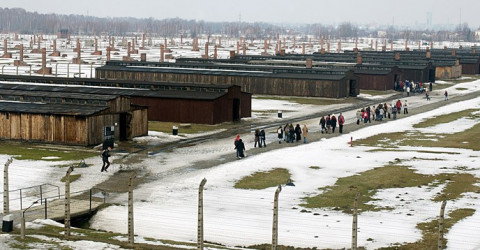 International Day of Commemoration of the Victims of the Holocaust to focus on education, sites and museums 2017-01-20 UNESCO will focus on the role of historic sites and museums in Holocaust education during this year’s International Day of Commemoration in Memory of the Victims of the Holocaust. Events marking the commemoration will take place at the Organization’s Headquarters from 24 to 26 January, ahead of the official Day, 27 January, which is the anniversary of the liberation of the concentration and extermination camps of Auschwitz-Birkenau. Every year around this date, UNESCO commemorates the genocide perpetrated against the Jewish people and other Nazi crimes, reaffirming its commitment to promote education about the history of the Holocaust, and fight racism and antisemitism. The theme of this year’s commemoration, Educating for a Better Future: The Role of Historic Sites and Museums in Holocaust Education, will be the subject of a keynote address (26 January, 3 pm) by Serge Klarsfeld, UNESCO Honorary Ambassador and Special Envoy for Education about the History of the Holocaust and the Prevention of Genocide. It will be followed by a round table discussion with Piotr Cywiński, Director of the Auschwitz-Birkenau State Museum (Poland), Jacques Fredj, Director of the Shoah Memorial (France), Dorit Novak, General Director of Yad Vashem, the World Holocaust Remembrance Center (Israel), and Agnès Sajaloli, Director of the Memorial of the internment camp of Rivesaltes (France). It will be moderated by historian Jean-Yves Potel. The debate will focus on the challenges facing historic sites of massacre and persecution, memorials and museums, and examine their testimonial and educational functions, which are growing in importance in view of the declining number of survivors of the Nazi’s crimes. Relics bearing testimony to Nazi violence will be featured in an exhibition of objects excavated near the crematoria of Auschwitz-Birkenau, which were lost during half a century and only recently rediscovered by the Auschwitz museum. The display of the last personal effects people had managed to keep up to the time of their execution will be inaugurated by the Director of the Auschwitz-Birkenau State Museum and Irina Bokova, Director-General of UNESCO (26 January, 2.30 pm, open to the public until 17 February). An Official Ceremony will close the Day of Commemoration (26 January, 7 pm), with a concert by world-renowned musicians Martha Argerich (piano) and UNESCO Goodwill Ambassador Ivry Gitlis (violin). The ceremony will also feature a personal testimony by Raphael Esrail, President of the Union of Auschwitz Deportees, and a reading by actress Anne-Catherine Dutoit of texts written by Holocaust survivor and Nobel Peace Prize laureate Elie Wiesel. Also ahead of the Day, on 24 January young students and history teachers will examine the challenging question of How to Deconstruct Hate Speech? This youth event is held as part of the UNESCO Campus conferences organized in partnership with the Engie Foundation. Also on 24 of January, there will be a preview of the documentary film In Search of the Last Music by director Alexandre Valenti, which celebrates women and men who went on composing music in camps and ghettos and the man who tracked and preserved their work, Francesco Lotoro. The screening is organized in partnership with Les Bons Clients production company. **** UNESCO’s events for the International Day of Commemoration in Memory of the Victims of the Holocaust are organized in partnership with the Shoah Memorial (France) and the Auschwitz-Birkenau State Museum (Poland), with support from the Permanent Delegation of France to UNESCO, the Permanent Delegation of the Principality of Monaco to UNESCO and Metin Arditi, UNESCO Special Envoy for Intercultural Dialogue. **** About UNESCO’s support for education on the history of the Holocaust and other genocides: http://www.unesco.org/new/holocaust-remembranceMedia contact: Agnès Bardon, UNESCO Press Service, a.bardon@unesco.org +33 (0)1 45 68 17 64Media accreditation: Djibril Kebe, UNESCO Press Service,d.kebe@unesco.org +33(0)1 45 68 17 41
  Call to youth leaders to join Ottawa peace and sustainable development week 2017-01-20 Young people committed to creating a better future through education have a unique opportunity to participate in The UNESCO Week for Peace and Sustainable Development: The Role of Education (6-10 March 2017, Ottawa, Canada).Some 500 youth from across the globe have already submitted their applications for the conference and many more have participated in the on-going online discussion launched as part of the application process on the Facebook and Twitter channels of UNESCO's Mahatma Gandhi Institute of Education for Peace and Sustainable Development.The four-week discussion, launched in the first week of January and moderated by young people around the world, has already received close to 2000 original comments on Facebook and created more than 50k impressions in the Twittersphere. About the UNESCO WeekThe UNESCO Week for Peace and Sustainable Development presents a unique platform for discussion on two key programmes of UNESCO’s Education Sector: Education for Sustainable Development (ESD) and Global Citizenship Education (GCED), and their practical contribution in achieving Target 4.7 of the Sustainable Development Goal 4 on Education.Target 4.7 aims to ‘by 2030, ensure that all learners acquire the knowledge and skills needed to promote sustainable development, including, among others, through education for sustainable development and sustainable lifestyles, human rights, gender equality, promotion of a culture of peace and non-violence, global citizenship and appreciation of cultural diversity and of culture’s contribution to sustainable development’.Applications and discussions close on 27 January 23:59 GMT.Links Apply to join More information on the application process For information on the UNESCO WEEK
 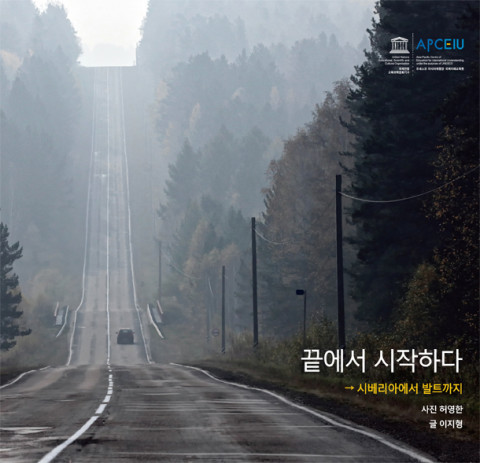 APCEIU publishes GCED Photobook “Begin from the end -> From Siberia to Baltic Sea” 2016-12-26 As a part of GCED content development utilizing photography, APCEIU published a GCED Photobook “Begin from the end -> From Siberia to Baltic Sea”. This photobook contains around 130 photos that were taken during the journey on Trans-Siberian Railway crossing the Eurasia continent. The book also carries interesting stories which describes cities and people from each train stops with perspective of Global Citizenship Education. The background for this photobook, Russian Federation not only has diversity of peoples and cultures from the largest territory in the world but also is a country with unique identity which encompasses both Europe and Asia. APCEIU hopes to share with readers the vast nature of Siberia, stories of peoples, and the unforgettable experiences of sharing and communicating through the journey on train. APCEIU also aims at delivering the core values of GCED such as Cultural Diversity, Peace and Learning to Live Together through images and stories in this book.
 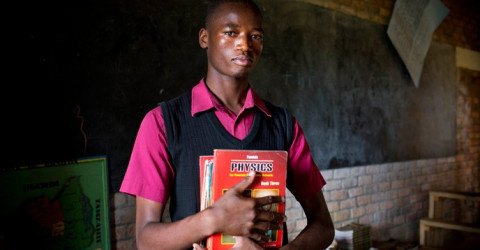 Out of date textbooks put sustainable development at risk 2016-12-21 A new study by the UNESCO Global Education Monitoring (GEM) Report shows how secondary school textbooks from the 1950s until 2011 missed or misrepresented key priorities now shown as crucial to achieve sustainable development. With textbooks only revised every 5-10 years, the analysis reveals the need for governments to urgently reassess their textbooks to ensure that they reflect core values for sustainable development, including human rights, gender equality, environmental concern, global citizenship and peace and conflict resolution.Released around International Day of Human Rights, the analysis looked at secondary school textbooks in history, civics, social studies and geography. The materials were drawn from the Georg Eckert Institute in Germany, which holds the most extensive collection of textbooks from around the world in these subjects.The paper had the following key findings:Human rights: The percentage of textbooks mentioning human rights increased from 28% to 50% between 1970-1979 and 2000-2011, with the greatest increase in sub-Saharan Africa. But, from 2000-2011, only 9% of textbooks discussed rights of people with disabilities and 3% cover the rights of LGBTI people. Only 14% of textbooks from 2000-2011 mention immigrant and refugee rights.Gender: The percentage of textbooks mentioning women’s rights increased from 15% in the 1946-1969 period to 37% in the 2000-2011 period. Only a sixth of textbooks in Northern Africa and Western Asia mention women’s rights at all. Despite the explicit messages advocating against gender inequality, gender bias remains a significant problem. Many textbooks, including in Algeria, France, Italy, Spain, Uganda, Pakistan, Iran, Turkey, Kenya and Zimbabwe show women in submissive or traditional roles like cleaning and serving men. Some countries like Vietnam, have revised their textbooks to better illustrate gender equality.Environmental issues: During 2000-2011, environmental protection or damage was discussed in half of all textbooks; more than double the percentage between 1970-1979. From 2000-2011, only 30% of textbooks discussed environmental issues as a global problem.Peace: Only 10% of textbooks from 2000-2011 explicitly mention conflict prevention or resolution. Sri Lanka is one country that has introduced reconciliation mechanisms into textbooks recently in order to promote peace and social cohesion. Over half of 72 secondary school textbooks analysed in 15 countries related Islam and Arab societies to conflict, nationalism, extremism or terrorism.Global citizenship: From 2000-2008, 25% of textbooks mention global citizenship, compared with 13% in the 1980s. But, 60% of countries’ textbooks in the late 2000s have no mention of activities outside of their borders.Aaron Benavot, Director of the GEM Report UNESCO, said “Textbooks convey the core values and priorities of each society and are used extensively in classrooms around the world to shape what students learn. Our new analysis shows the extent to which most former students now in their 20s were taught from textbooks that had little if anything to say about the core values of sustainable development. Textbook revision is infrequent, and often involves slight revisions, rather than overhauls of content. In addition, governments simply don’t realize just how out of touch their textbooks are. Our research shows that they must take a much closer look at what children and adolescents are being taught.” The GEM Report calls on governments to urgently review the content of their textbooks to ensure values are in line with the principles in the new UN Sustainable Development Agenda (SDGs). It calls for the values of the SDGs to be built into national guidelines used during textbook review, and taught in workshops for textbook writers and illustrators.A checklist of highly relevant textbook content that governments should look out for when reviewing currently approved textbooks is included in the paper. A separate version of that list is available for teachers and students to use in classrooms, enabling them assess their own textbooks, and hold their governments to account. **** For more information or interviews, please contact Kate Redman on k.redman@unesco.org 0033671786234 Download the paper See images of textbooks: Gender Equality, Peace, Environmental concern, Human Rights, Global Citizenship Notes to editor: Global Education Monitoring Report