
News
Catch up on what’s happening in the world of global citizenship education.
1,668 results found
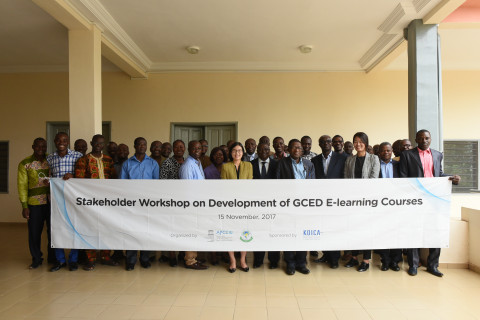 APCEIU gearing up for the promotion of GCED in West Africa through E-learning! 2017-12-06 Co-organized by Asia-Pacific Centre of Education for International Understanding (APCEIU) and INSE (Institut National des Sciences de l’Education; National Institute of Educational Sciences and Training) at University of Lomé, Workshop in Togo on GCED (Global Citizenship Education) was held on 15 of November 2017 at Lomé, Togo. As this year’s third post-Fellowship Programme, Fellowship Good Practices & On-site Training, Workshop in Togo on GCED was implemented to support the initiative of Mr. Namiyate Yabouri (2015 Fellowship participant from Togo) on development of GCED E-learning courses and integration of GCED into curriculum for pre-service teachers in Togo. The workshop invited relevant stakeholders in the area of GCED and curriculum development, including lecturers from educational sciences and psychology department at INSE, researchers from relevant institutes of the university and representative from Togo National Commission for UNESCO . After the opening remarks given by Professor Komlan Batawila, the Vice-President of University of Lomé, the first session introduced GCED to participants in order to enhance their understanding towards the concept. Led by APCEIU, the background on emergence of GCED and conceptual framework of GCED was presented to the participants followed by an intense debate session where the participants asked various crucial questions relevant to the Togolese context. The afternoon session was first facilitated by Mr. Yabouri, during which he analyzed the opportunities as well as challenges in integration of GCED concepts into e-learning curriculum for pre-service teachers in context of Togo. He asserted that as a pre-service teacher training institute in Togo, INSE already possesses necessary resources and experiences to develop teacher training curriculum. However, he also pointed out that lack of facilities and equipment may hinder the process, but hoped that the problem be solved within coming years with the enhanced support system of the university. Mr. Yabouri further elaborated on the details of the project as well as expected results, on which the participants divided into 3 groups and discussed the feasibility and ways of improvement for the proposed project. Based on collected feedback from the participants, INSE will continue to work on development of GCED E-learning curriculum which is expected to be validated and ready for early next year. APCEIU expects that the newly developed E-learning curriculum on GCED will benefit a wide range of educators, particularly those of Francophone countries in West Africa. URL:APCEIU gearing up for the promotion of GCED in West Africa through E-learning! > APCEIU News - APCEIU (unescoapceiu.org)
  UNESCO Governing Bodies approve new report on the Right to education in the context of SDG4 implementation 2017-12-05 UNESCO Governing Bodies approved a new report on the Right to education produced by the Education Sector, drawing on the national reports submitted by UNESCO’s Member States. This comprehensive report presents the results of the Ninth Consultation of UNESCO’s Member States on the implementation of UNESCO’s Convention and Recommendation against Discrimination in Education. Launched in 2016, this consultation involved 67 UNESCO Member States. The information contained in the national reports generally provides an extremely valuable resource for research and analysis, experience- and knowledge-sharing, and ultimately advocacy. An interesting finding of the report is that countries seized on this periodic reporting exercise as a valuable opportunity to outline the challenges they face and to take stock of progress and reflect on how to overcome difficulties. The report highlights that the challenges are often crosscutting and intersectoral, making them more difficult to address. In particular, the report points out serious challenges with regard to equity and inclusion. Socio-economic factors, poverty, ethnicity, location and gender account for significant patterns of discrimination and exclusion in education. Persistent harmful practices and attitudes stand in the way of many children and adults and deprive them of meaningful educational opportunities. Difficulties relating to the quality of education were equally widely shared by countries, along with budgetary constraints and sometimes lack of governance, coordination and monitoring capacities. The report also exemplifies the various measures adopted at the national level to ensure that education is provided to all in a discrimination-free environment.The report notably shares the positive measures reported by countries to guarantee inclusion in education, notably for girls and women, refugees, persons with disabilities and indigenous peoples, which is critical to advance SDG4. Fostering synergies and building on good examples is key to ensuring the right to education translates into a concrete reality for all. It also provides an opportunity to establish constructive dialogue with all stakeholders – including civil society organisations. Moreover, following UNESCO Governing Bodies’ decision approving the online publication of national reports submitted by countries, all reports will be made available through UNESCO’s Global Database on the Right to Education. The Global Database, which gives access to country-specific information under constitutional, legislative and policy frameworks, is an important way to assist countries in implementing the right to education and the 1960 Convention and Recommendation. More information on the Right to education Other publications related to the right to education
 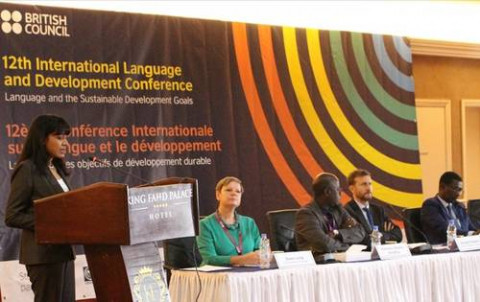 How can you learn, if you don't understand? 2017-12-05 During the British Council's 12th International Language and Development Conference, held in Dakar, from 27 to 29 November 2017, UNESCO presented newly published findings from the UNESCO Global Education Monitoring Report. This presentation drew on key findings and recommendations from the new 2017/8 Global Education Monitoring (GEM) Report and a GEM Policy Paper on language, released for International Mother Language Day 2016. The conference's central theme was Language and the Sustainable Development Goals (SDGs), sought to explore the role of language in development by focusing on: SDG 4 - Ensure inclusive and quality education for all and promote lifelong learning; SDG 8 - Promote inclusive and sustainable economic growth, employment and decent work for all; SDG 16 - Promote just, peaceful and inclusive societies. With a new global education agenda that prioritizes quality, equity and lifelong learning for all, it is essential to encourage full respect for the use of mother language in teaching and learning, and to promote linguistic diversity. Yet in many countries, a large number of children are taught and take tests in languages that they do not speak at home, hindering the early acquisition of critically important reading and writing skills. As much as 40% of the global population does not have access to education in a language they speak or understand. Moreover, education policies seldom reflect linguistic diversity. The GEM Report review of 40 countries’ education plans finds that only less than half of them recognize the importance of teaching children in their home language, particularly in early grades. Language of instruction policy can hold the key to making education more inclusive for disadvantaged groups. Sustained use of the first or home language as a medium of instruction for at least six years of schooling has been highlighted as a way to improve student performance in language skills and other subjects. The challenges are most prevalent in regions where linguistic diversity is greatest such as in Asia and the Pacific and sub-Saharan Africa. Indeed, about 6,000-7,000 languages are spoken in the world today, 5,700 are endangered, and 61% of those minority languages are found in the Asia-Pacific region. Thus, expansion of access to Mother Tongue-Based Multilingual Education (MTB-MLE) has been increasingly promoted and recognized as part of the Education for All (EFA) process in this area. To support countries in strengthening their education systems in planning, financing and implementing MTB MLE, UNESCO Bangkok strengthens capacity in developing and implementing language in education policies and deepening understanding of language of instruction issues in the education sector by addressing the broad spectrum of issues involved in the field of MTB MLE. As for western Africa, in many school systems, French continues to be the main language of instruction, so the vast majority of children are taught from the early grades in a language with which they have limited familiarity. This seriously hampers their chances of learning. To provide culturally appropriate Education programs UNESCO Dakar promotes mother tongue-based bilingual or multilingual approaches in education - an important factor for inclusion and quality in education. Teacher education programmes also need to support teachers to be able to teach early reading skills in more than one language and to use local language materials effectively. Teachers should have a good understanding of the linguistic and cultural backgrounds of children, language development, and the interdependence of mother tongue and second-language development, and the use of appropriate teaching practices. In Senegal, only 8%, and in Mali, only 2% of trained teachers expressed confidence about teaching in local languages. UNESCO Dakar works together with The International Institute for Capacity Building in Africa (IICBA) to address the educational, technical and professional needs of the region in teacher development. The office also provides normative frameworks for language policy and education and shares good practices in bilingual and multilingual education and mother tongue instruction. To download the Global Education Monitoring (GEM) click here GEM policy paper 24: If you don’t understand, how can you learn? UNESCO Bangkok Multilingual Literacy programme IICBA Teacher Policy Development (TPD) and Capacity Building Role of UNESCO Dakar in Literacy and non-formal education
  Ocean Literacy for All, a manual for change in a changing blue planet 2017-12-05 At the invitation of UNESCO and its Intergovernmental Oceanographic Commission, high-level world experts will gather on 4-5 December 2017 in Venice, Italy, to define a roadmap to advance ocean literacy at a global scale. At this occasion, UNESCO will release “Ocean Literacy for All. A toolkit”, a publication highlighting ocean literacy activities around the world and bringing together experiences from a variety of stakeholders who promote ocean literacy as a major tool for sustainable development in classrooms, boardrooms and governmental institutions. Most of us live our lives unaware of how our day-to-day actions affect the health of the ocean, its sustainability and its many resources on which we depend. The ocean is Earth’s life support. “Far and away, the greatest threat to the ocean, and thus to ourselves, is ignorance”, as declared by Sylvia Earle, President of Mission Blue. The ‘ocean blindness’ can be countered by improving access to accurate and compelling ocean education that strengthens the learner’s connection with the ocean. This is the essence of ocean literacy: an understanding of the ocean’s influence on us and our influence on the ocean. “Ocean Literacy for All. A toolkit”, the two-volume manual produced by UNESCO’s Regional Bureau for Science and Culture in Europe (Venice, Italy) and Intergovernmental Oceanographic Commission (IOC) is the result of joint work and contributions by members of the global partnership led by IOC. It builds on the “Ocean Literacy for All” initiative, an IOC voluntary commitment to the UN Ocean Conference (New York, June 2017), as well as the Call for Action issued at the end of the Conference, which calls on all stakeholders to “support plans to foster ocean-related education […] to promote ocean literacy”. The publication provides educators and learners worldwide innovative tools, methods and resources to understand the complex ocean processes and functions and, as well, to alert them on the most urgent ocean issues. It presents the essential scientific principles and information needed to understand the cause-effect relationship between individual and collective behaviour, and the impacts that threaten the ocean health. Trust is that it will inspire citizens, scientists, educators and learners to take greater personal responsibility for the ocean, as well as work through partnerships and networks, sharing ideas and experiences and developing new approaches and initiatives in support of ocean literacy. As the marine environment takes centre-stage in the pursuit of sustainable development, today more than ever, it is crucial to ensure that citizens and policy-makers are well equipped in their knowledge of how human and ocean well-being are tightly connected. As there can be no sustainable future without a healthy ocean, Ocean Literacy is key to achieving the 2030 Agenda for Sustainable Development, which is at the top of UNESCO and IOC’s agenda. In this context, IOC is organizing an International Ocean Literacy Conference, a two-day event hosted in Venice by the UNESCO Regional Bureau for Science and Culture in Europe with the financial support of the Swedish Government. This event is the first step in a collaborative process to put together initiatives worldwide toward shaping a global framework for ocean literacy, and to invite all relevant stakeholders to converge around a coherent approach to Ocean Literacy. The conference will address topics covered by the Ocean Literacy for All voluntary commitment and, with a participatory approach, design a roadmap on Ocean Literacy for the next 3 years, in preparation for the next UN Ocean Conference. Ways by which the initiative will best support Sustainable Development Goal 14 on the conservation and sustainable use of the ocean, seas and marine resources will be debated, as well as means to develop in tune with the International Decade of Ocean Science for Sustainable Development (2021-2030): The Ocean We Need for the Future We Want. The conference will have an international focus and gather for the first time over 100 participants from 30 countries covering all regions (Europe, Africa, North and South America and Asia). A wide variety of speakers – educators, scientists, activists, journalists, contemporary art curators and foundations – will join in. Research, art and communication working together for the ocean will be essential in the Ocean Literacy process. Good practices in formal and non-formal education as well as examples of successful public-private partnerships will be presented to create the basis for an exchange amongst the participants. The event, which counts on a strong high level commitment, will be honoured by the presence of Gesine Meissner, Member of the European Parliament; Peter Thomson,UN Special Envoy for the Ocean; Vladimir Ryabinin, IOC Executive Secretary; Barbara Degani, Vice-Minister of the Environment and Protection of Land and Sea of Italy; and Francesca von Habsburg, founder of Thyssen-Bornemisza Art Contemporary. Building on existing national, regional and international ocean education initiatives, the “Ocean Literacy for All” initiative aims at developing a plan to foster ocean awareness and ocean literacy education in all segments of society. Ocean Literacy stands as a global strategy that can bring about change through an improved public knowledge base across the world’s population regarding our global ocean and the close links between ocean and our well-being.
  Having a disability shouldn’t affect your access to education 2017-12-04 Everyone has the right to education but for some people accessing this education is far harder than it should be. Marking December 3, which is the International Day of Persons with Disabilities, we are focusing on some of the barriers preventing people with disabilities attending school and receiving an education of good quality. Outcomes don’t match commitments The Convention on the Rights of Persons with Disabilities had a rapid ratification rate, with 87% of countries ratifying within 10 years of adoption. Only the Convention on the Rights of the Child had a faster ratification rate. Article 24 of the Convention calls for the development of inclusive education at all levels: countries must ensure their laws both promote the right of persons with disabilities to education at all levels and allow them to learn alongside other students in inclusive schools, for example through individual education plans: the 2017/8 GEM Report found that constitutions, laws or policies in 42 of 86 countries explicitly referenced inclusive education. However, the interpretation of ‘inclusive education’ varies significantly, and there is a large divide between mandated policies and actual outcomes. In several countries, various factors, including resource shortages or resistance to the idea of inclusive education, mean that what is promised does not materialize. In countries such as Serbia and Turkey, over 35% of schools were affected by material shortages that significantly impeded provision of instruction to students with special needs. In Jordan, transport challenges, inadequate physical environments and lack of harmonization of curricula commensurate with the needs of persons with disabilities mean that inclusive programmes are not properly implemented. In South Africa, despite the constitution and the 1996 School Act requiring special needs education to be available to all children with disabilities, a government monitoring report found that 26% of 5- to 15-year-olds with a disability were not attending school, there was a critical shortage of health and social services professionals, new special schools were being built, and no specific provisions were being made for children with severe intellectual disabilities. Evidently, we still have a long way to go to ensure access to quality education for children with disabilities. European youth with disabilities are more likely to be early school leavers. In the Maldives, the primary attendance rate was 85% for those with disabilities and 94% for those without, while in Cambodia, the respective figures were 43% and 93%. More data and better definitions are needed It is still difficult to collect education data on people with disabilities. This is not only because of the inherent complexity of documenting the characteristics of such a diverse population group. In some parts of the world, disability is unfortunately still seen as stigmatizing. National monitoring systems for disability are still developing. The lack of a clear, internationally established definition of disability or special education can be a significant obstacle in collecting meaningful data in that respect. There is also not a clear definition of inclusive education, which makes it even harder to set universal standards. Another challenge is that most country reports narrowly focus on enrolment and do not provide a more detailed account of education outcomes as well as inclusive practices in schools and classrooms. The report of the government of Rwanda, for example, to the UN Committee on the Rights of Persons with Disabilities mentioned that ‘much [remained] to be done, not only to improve enrolment … but in providing meaningful learning, and progression to a similar standard as other students’. The 2016 GEM Report showed that only 9% of textbooks mentioned the existence of people living with disabilities. There is likely to be an increase in data on people with disabilities over the next few years, which will make clearer the magnitude of the challenge of ensuring access to education for this group. We hope that the 2020 GEM Report on inclusion will also help drive the debates and solutions forward a pace. If we are going to meet our SDG4 commitments, we cannot allow people with disabilities to fall between the cracks. URL:https://gemreportunesco.wordpress.com/2017/12/01/having-a-disability-shouldnt-affect-your-access-to-education/
 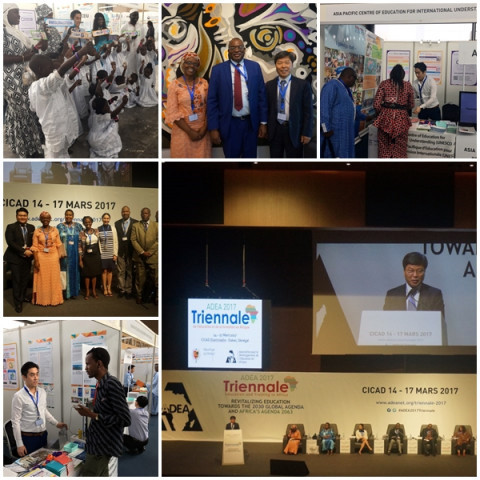 APCEIU’s Presentation and Exhibition on GCED at the ADEA 2017 2017-12-04 APCEIU participated in the ADEA 2017 Triennale held from 14 - 17 March in Dakar, Senegal. Association for the Development Education in Africa (ADEA) consists of 54 ministries of education in Africa. Under the theme of ‘Revitalizing education towards the 2030 Global Agenda and Africa’s Agenda 2063’, the event took place at Abdou Diouf International Conference Center located in Dakar. On 16 March Utak CHUNG, director of APCEIU presented in the parallel session of sub-theme 4 “Building Peace Education and Global Citizenship Education” under the title: “Implementing Global Citizenship Education in the SDG Era: Lessons and Challenges.” Director CHUNG explained about the implication, concept and the background of initiating GCED as a global education agenda included in Sustainable Development Goals (SDGs) and Global Education First Initiative (GEFI). Particularly, he discussed challenges to practice GCED in Africa and Asia-Pacific region, suggesting the direction of the policy implementation and improvement for GCED based on the experiences and practices APCEIU has accumulated during the past 16 years. Furthermore, director CHUNG shared the experience of APCEIU to implement, practice, evaluate and follow-up GCED projects and presented the cases of the national policy on GCED (Uganda and Republic of Korea). He also advised to the stakeholders of African region on the importance of implementing and fortifying GCED as part of SDGs until 2030. During the ADEA Triennale, APCEIU exhibited the core contents of the Global Citizen Campus with ICT-based GCED materials to promote GCED. APCEIU’s Global Citizen Campus consists of the programme including Model UNESCO Conference and Global Citizen Experiential Programme where students are provided with enough opportunity to experience GCED. On the occasion of ADEA 2017 Triennale, APCEIU promoted GCED through presentation and exhibition among educators and stakeholders from African region. It is expected that GCED will solidify its position as key educational agenda in Africa. URL:APCEIU’s Presentation and Exhibition on GCED at the ADEA 2017 > APCEIU News - APCEIU (unescoapceiu.org)
  UN General Assembly mandates a high-level event of the President of the General Assembly on culture and sustainable development in 2019 2017-12-04 New York: On 30 October 2017, the United General Assembly adopted its resolution ‘Culture and sustainable development’. General Assembly resolution ‘Culture and sustainable development’, introduced by the Group 77 and China, reaffirms that culture is an enabler and a potential driver of sustainable development. It also emphasizes that culture is an essential component for human development, and a source of identity, innovation and creativity. With adoption of the resolution, the General Assembly mandates the President of the General Assembly to host a high-level event on culture of sustainable development, with support of UNESCO, in 2019. It also invites UNESCO to continue to provide support, facilitate financing and assist Member States in developing their national capacities to optimize the contribution of culture to sustainable development, and to continue to assess the contribution of culture to the achievement of sustainable development. Taking note of the various framework documents, including the Hangzhou outcomes, Bali Declaration, the declaration adopted in Florence, as well as UNESCO’s report Culture: Urban Future and the New Urban Agenda, Member states underline the contribution of culture to the three dimensions of sustainable development and the implementation of the Agenda 2030. Recalling the 2005 Convention on the Protection and Promotion of the Diversity of Cultural Expressions, as well as other international conventions of the UNESCO, the international community calls upon all countries and the UN system to raise awareness about the importance of cultural diversity, and promote capacity-building at all levels for the development of a dynamic cultural and creative sector. Through the negotiations process, the international community considered the findings and recommendations of the UNESCO Director-General’s report on the implementation of culture on sustainable development, while it further emphasized the importance to support the emergence of local markets for cultural goods and services and to facilitate the effective and licit access of such goods and services to international markets. UN Secretary-General is requested to submit a report on the implementation of the present resolution to the General Assembly at it’s seventy-forth session.
  International Educators to participate in conference to strengthen global Holocaust education 2017-12-04 Thirty senior educators – from Argentina, Columbia, India, Indonesia, Kenya, Mexico, Namibia, South Africa, Tunisia, and Ukraine – will gather on 4-8 December 2017 in Washington D.C for the second bi-annual International Conference on Education and the Holocaust. The initiative is jointly organized by the United States Holocaust Memorial Museum (USHMM) and the United Nations Educational Scientific and Cultural Organization (UNESCO). The main goal of the conference is to advance learning about why and how the Holocaust happened, as well as how genocide can happen. Participants will be organized into country teams of educators, civil society leaders, academics and education ministry officials. During the Conference, participants will design projects that help institutionalize or strengthen Holocaust education in ways relevant to their national contexts and subsequently implement them. Participants will work together with international experts, in workshops and roundtables to devise strategies for Holocaust education. Project activities will consider curriculum development and revision, creation of educational materials, capacity-building initiatives, cultural projects, academic initiatives, and pedagogical research. USHMM and UNESCO will continue to support these country teams after the conference as they bring their projects to fruition. Developing Holocaust education curricula The inaugural 2015 conference included educators from Chile, Hungary, India, Lithuania, Mexico, Morocco, Namibia, Rwanda, Republic of Korea, and Turkey. Teams from these countries successfully developed Holocaust education curricula, hosted international conferences for educators, arranged for exhibitions on the Holocaust and genocide to be hosted in their countries, and more. “The Holocaust was a watershed event with global implications, and its lessons are important for a global audience,” said Tad Stahnke, Director of the Initiative on Holocaust Denial and anti- Semitism at USHMM. “The Museum is working to support educators throughout the world who are trying to reach young people and key segments of society with critical lessons from the Holocaust in order to build a better future.” “Through this conference, UNESCO wishes to advance Holocaust and genocide education and support in a broad sense the objectives of Education for Global Citizenship, a priority in regard to Sustainable Development Goal on Education,” said Karel Fracapane, UNESCO coordinator for the initiative. “Our objective is to make sure that education systems encourage critical thinking, and help learners become proactive citizens who reject racism, antisemitism and other forms of prejudice that can lead to group-targeted violence,” he added. Education about the Holocaust A living memorial to the Holocaust, USHMM inspires citizens and leaders to confront hate, prevent genocide, and promote human dignity. The Museum’s far-reaching educational programs and global impact are made possible by generous donors. For more information, visit ushmm.org. UNESCO’s programme on education about the Holocaust and genocide is part of the Organization’s efforts to empower learners to become responsible and active global citizens who value human dignity and respect for all. For more information: https://en.unesco.org/themes/holocaust-genocide-education The ICEH is supported by the Governments of Canada and Germany and by the SNCF.For more information about the 2017 ICEH, please visit https://en.unesco.org/themes/holocaust-genocide-education/iceh-2017 Contact: Karel Fracapane k.fracapane@unesco.org Raymund Flandez rflandez@ushmm.org
 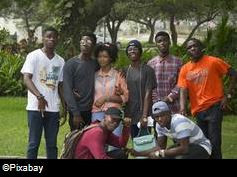 Promoting human rights education in West Africa 2017-12-04 In the framework of the activities related to its Learning to Live Together (LTLT) programme, UNESCO Dakar partnered with the Cheikh Anta Diop University of Dakar (UCAD) in Senegal and Teachers College, Columbia University in the USA to promote human rights education (HRE) and Learning to Live Together (LTLT) in West Africa through a student-led Curriculum Development project. In the midst of rising disparities, instability, environmental degradation, and all forms of inequality and injustice, education has been called up to put more emphasis on the importance of Learning to Live Together (LTLT), beyond teaching just cognitive knowledge and skills. Learning should encompass values such as peace, non-discrimination, equality, justice, non-violence, tolerance and respect for human dignity. Quality education based on a human rights approach means that rights are embedded throughout the whole education system and in all learning environments. UNESCO’s work on LTLT is being driven and strengthened by the Education 2030 Framework for Action, notably in the pursuit of Target 4.7 of the Sustainable Development Goals (SDGs). There is growing interest for collaboration in the area of HRE and LTLT within and across regions to address the common challenges that the world is facing. In this context, UNESCO Dakar has supported the partnership between Cheikh Anta Diop University of Dakar (UCAD) in Senegal and Teachers College, Columbia University in the USA to promote context-relevant peace and human rights education. The curriculum was prepared by Masters and Doctoral students of the Human Rights in Africa class at Teachers College (TC) with the inputs and feedback provided by academic and civil society networks of UCAD and UNESCO Dakar. The curricula aim to equip learners with knowledge about human rights and critical thinking, to nurture a sense of solidarity and respect for differences and diversity, and to enable them to act responsibly for a more peaceful and sustainable world: An activism-oriented curriculum on how to utilize the Universal Declaration of Human Rights on the daily life with reference to African-specific tools, such as the African Charter on Human and Peoples’ Rights; A conflict prevention and management curriculum using sports as a tool to learn about teamwork and cooperation; Preventing violent extremism (PVE) curriculum to equip students with the skills to identify extremist behaviours and protect themselves from joining such groups; A gender, peace and development curriculum to empower young women to stand up to gender-based oppression; and A sexual minority and human rights curriculum to help learners understand the importance of tolerance and respect. The curricula also include useful resources, such as database on human rights organizations in the region, images, stories and videos, quizzes and self-assessment tools, which help learners understand and apply the principles of human rights in different contexts. The curricula also include useful resources, such as database on human rights organizations in the region, images, stories and videos, quizzes and assessment tools, which help learners understand and apply the principles of human rights in different contexts. The overall goal of this project is to contribute to mainstreaming peace and human rights in education practices in West African countries. Based on the identification of gaps and issues with regard to integration of peace and human rights education in their education policies, programmes and practices in West Africa, the project provides user-friendly materials for schools and out-of-school children and youths and other targeted groups. The curricula are available at the TC Center for African Education Website as open educational resources. The ideas and opinions expressed in the curricula are those of the authors; they are not necessarily those of UNESCO and do not commit the Organization. Related pages: http://www.unesco.org/new/en/dakar/education/http://www.unesco.org/new/en/dakar/education/learning-to-live-together/
  United Nations General Assembly highlights UNESCO’s leading role in coordination of the Education 2030 Agenda 2017-12-01 New York: On 28 November 2017, the United Nations General Assembly adopted with consensus the resolution ‘Education for Sustainable Development in the framework of the 2030 Agenda for Sustainable Development’. General Assembly resolution, introduced by the Group 77 and China in an effort to continue the legacy of the United Nations Decade for Education for Sustainable Development, calls to scale up education for sustainable development action through the implementation of the Global Action Programme on Education for Sustainable Development. It covers various aspects of education for sustainable development and more broadly the implementation of SDG 4 and other education related targets. With the adoption of the resolution, the international community stresses UNESCO’s mandated role in leading and coordinating the Education 2030 agenda, through the SDG Education 2030 Steering Committee, the global multi-stakeholder consultation and coordination mechanism for education in the 2030 Agenda for Sustainable Development. It also emphasizes UNESCO’s lead on Education for Sustainable Development, and calls on the Organization to continue to provide coordination for the implementation of the Global Action Programme on Education for Sustainable Development (GAP ESD) . Aichi-Nagoya Declaration and the Incheon Declaration are referred to as important framework documents for the advancement of the education agenda. For the first time, the resolution explicitly recognizes education for sustainable development as ‘an integral element of the Sustainable Development Goal on quality education’ and ‘key enabler of all the other Sustainable Development Goals’. It reaffirms ESD’s role in promoting and enhancing public awareness of the eradication of poverty, sustainable consumption and production, combating climate change, building disaster-resilient communities and promoting a culture of peace and non-violence. Through the resolution, the UN General assembly reiterates its call to the member states to provide inclusive and equitable education at all levels and ensure that people may have access to lifelong learning opportunities that help them to acquire knowledge and skills needed to exploit opportunities to participate fully in society and contribute to sustainable development. In the negotiations process, the international community considered the findings and recommendations of the UNESCO Director-General’s report on the implementation of education for sustainable development while it further emphasized the importance to support early childhood education, and to promote tertiary education, skills training and vocational education in conflict and crisis situations. UN Secretary-General is requested to submit a report on the implementation of the present resolution to the General Assembly at it’s seventy-forth session.