
News
Catch up on what’s happening in the world of global citizenship education.
1,668 results found
 International survey on quality management in higher education 2017-12-11 The UNESCO Institute for Educational Planning (IIEP-UNESCO), in collaboration with the International Association of Universities (IAU), has just published Quality Management in higher education: Developments and drivers. This book fills a knowledge gap on the state of quality management in higher education institutions today. Author Michaela Martin, with Shreya Parikh, draw from the responses of over 300 institutions worldwide to map recent developments, external and internal drivers, and obstacles around the implementation of quality management policies. As the first truly global survey of its kind, it provides primary data and analysis on this salient issue in higher education reform. Why quality management? Decision-makers in higher education are increasingly seeking models for state-of-the art quality management systems, which can help pave the way to improved academic quality and graduate employability. This book helps explain the dynamics of quality management (QM), including its various actors, structures and tools from a global and regional level perspective. Its wealth of insight can help in the implementation of policies that can enable higher education to act as a driver for socioeconomic progress and overall sustainable development. This is especially important in the era of the Sustainable Development Goals (SDG) as higher education is part of the education related goal and more broadly, can help in the achievement of all goals. The survey found that quality management is overall an institutional priority, with its main focus or orientation most often being linked to teaching and learning. Graduate employability, while it features prominently in political discourse, was found to be less of a focus area in quality management. The analysis of the data shows that QM is also widely formalized through a quality policy, but less so through clear procedures and responsibilities for QM, as outlined in a quality manual. Leadership, such as the head of the institution or the vice rector play an important role in leading quality management, but support structures such as quality management offices or units at both central and even more so at decentralized levels are often lacking. How is data from QM used? Furthermore, the survey found that data generated from quality monitoring is often not used for decision-making in the quality improvement of teaching and learning. The survey confirms that feedback to students is often overlooked, and that there is a poor use of information in decision-making about quality improvement in the area of teaching and learning. When looking at the drivers for the development of quality management, both internal motivations and external push factors are important. The concern with the enhancement of the image of the higher education institution is a dominating internal motivation while the development of QM remains also strongly driven by the national quality assurance system. Among the internal factors that are seen as supportive of the development of QM, leadership support emerges clearly as a main element, together with participation of staff in the development of QM procedures. Infographic on quality management in higher education: URL:http://www.iiep.unesco.org/en/international-survey-quality-management-higher-education-4223
 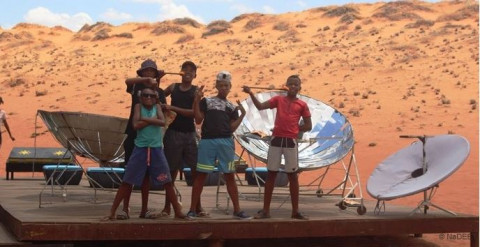 Environmental change strikes young people deep in the Namib desert 2017-12-11 ‘We park the bus where the road stops. When they get off and see only the sand dunes for miles, they start to think “Where on earth are we?”’, says Viktoria Keding, Director of the Namib Desert Environmental Education Trust (NaDEET). The NaDEET Centre, which runs live-in programmes offering hands-on immersion in Education for Sustainable Development (ESD), is situated in the NamibRand Nature Reserve, at 200,000 hectares the largest of its kind in South Africa. Its location alone changes the behaviour and attitudes of those coming to learn from the moment they arrive. Everyone from schoolchildren, to community groups and educators can sign up to spend almost a week living with bucket showers, solar cooking, total waste recycling and learning how to make firebricks for fuel. The emphasis is on rolling up your sleeves, joining in and putting into practice what might have been learned from a textbook elsewhere. For schoolchildren, there are practical applications of English, maths and science as well. The NaDEET Centre, a key partner of the UNESCO Global Action Programme on ESD (GAP), was created in 2003 and since then has welcomed more than 10,000 beneficiaries and is consistently booked to capacity. Viktoria Keding, who came to Namibia 20 years ago to teach environmental education, said: ‘When I started out at another centre we taught environmental education in a traditional style looking at wildlife and sitting round the campfire. I once had some grade 11 students and one of them said while he was happy to have learned so much why was the centre not concerned about deforestation. I realised then that we had missed something.’ When she started, sustainability was not a household word and Viktoria realised it could not be taught effectively and honestly if the learning environment was not itself setting an example. ‘Then I had this amazing opportunity to start a brand new centre in the desert from scratch and make it as sustainable as the Namibian context will allow,’ she said. ‘Here we are aware that we must constantly evolve and adapt in big and small ways. For example, when we opened the centre, LED lights were not readily available. Also, our facilities were a little basic so we upgraded so that teacher groups, for example, can be more comfortable while they learn.’ NaDEET’s work fits under three broad categories, environmental education, environmental literacy and outreach community development. What is learned there feeds directly into school curricula and teachers have remarked on its positive influence on pupils’ knowledge. It is also a powerful hub for knowledge exchange. For example, language teachers who came to undertake the programme also translated the centre’s It’s Time to Grow booklet into three local languages. As part of its GAP Key Partner commitment, working on accelerating sustainable solutions at the local level, NaDEET staff are developing a sustainable house model in the town where their head office is based, Swakopmund. ‘It will be somewhere people can see that it is not only the materials that a house is made out of that counts for sustainable living but behaviour, how we source food and how we manage the use of water, energy and waste.’ There are also plans to develop an academy for youth and education professionals on the original NaDEET Centre to reach as many Namibians as possible. Viktoria has seen the transformational effect of the centre up close many times and how it differs depending on the participant. “Everyone who arrives wonders where the centre is because it is behind the dunes. They walk for ten minutes and it appears and it is really a moment of wonder. They have imagined a concrete structure not wood and canvas. Children from rural and often disadvantaged backgrounds think it is paradise. The more privileged children who have never had access to this part of the country before see it is as a huge adventure.” And the effect does not finish at the end of the visit. “Some leave with very specific projects to start a clean-up where they live or make the recycled firebricks themselves. For others, it is a long-term change in how they define their relationship with the environment. One of the most satisfying things is to see teachers who were here as pupils return with their students,” said Viktoria. More on Education for sustainable development URL:https://en.unesco.org/news/environmental-change-strikes-young-people-deep-namib-desert
 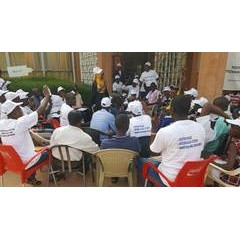 Gambian Youth Engage in the Promotion of Peace, Sustainable Development and Global Citizenship 2017-12-11 From 3 to 8 July 2017, within the framework of the UNESCO Participation Programme, the Gambian National Commission for UNESCO, in partnership with UNESCO and UNFPA, gathered more than 200 young people from all regions of the country and their teachers, for a weeklong training at the Independence Stadium, Bakau, The Gambia. Students and their teachers learned how to promote fundamental values of peaceful co-existence, and better understand the concepts of Global Citizenship, Sustainable Development and Peacebuilding. At the end of the event, the participants adopted a Declaration calling youth organizations and national authorities for actions in favour of the integration of Global Citizenship Education and Education for Sustainable Education into the education system, the development of education and entrepreneurship programmes and the participation of community-based youth organization to decision-making processes.After 22 years of autocratic rule and with 58% of the population under 25 years of age in the Gambia, young women and men are major agents of political change. “Young people are engine of growth, as they constitute the labour force of the Gambia. The peace and development of this country is in the hands of young people” emphasized Mr. Kunle Adeniji, head of the UNFPA Gambia Office. They have a very important role to play to ensure sustainable and peaceful development in the country. “Today, more than ever, it is important to raise awareness on the role that Gambian youth can play to support the implementation of Sustainable Development Goals (SDG). Their active participation is fundamental to the achievement of a peaceful and sustainable development and a proper management of issues related to education and skills, illegal migration, rise in crime rates, and climate change”, explained Hadjan Doucouré, Coordination officer of the Banjul Liaison Desk of the UNESCO Dakar Office.This 6-days workshop aimed at empowering the Gambian youth from ASPNet, UNESCO Clubs Networks and Youth Organizations by providing them with the necessary life skills, and introducing them to the concepts of Global Citizenship and Sustainable development.During the first 3 days, participants were introduced to SDG 16 which promotes peaceful and inclusive societies for sustainable development, and SDG 4 which calls on countries to ensure that all learners are provided with the knowledge and skills to promote sustainable development. SDG Target 4.7 particularly stipulates: “By 2030, ensure that all learners acquire the knowledge and skills needed to promote sustainable development, including, among others, through education for sustainable development and sustainable lifestyles, human rights, gender equality, promotion of a culture of peace and non-violence, global citizenship and appreciation of cultural diversity and of culture’s contribution to sustainable development.To encourage the participants to engage their communities, families and friends through innovative way and contribute to socio-economic transformation of their communities, the organizers devoted 2 days of training to the development of entrepreneurial skills and creative thinking.The 6-day event concluded with one-day sports competition supported by the Youth Empowerment though Education and Sports Foundation
 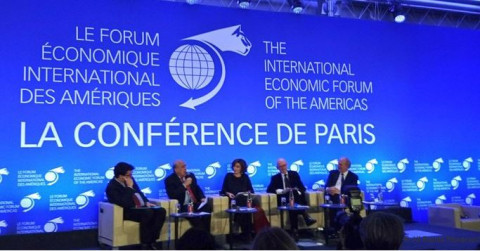 Conference of Paris: Director-General Places Education at Centre of Globalization Challenges 2017-12-08 UNESCO Director-General Audrey Azoulay made the case for investment in education as the key response to the challenges of globalization, during the first edition of the International Economic Forum of the Americas - The Conference of Paris, held at the Organization for Economic Co-operation and Development (OECD) on 7 December 2017. “Education offers the most sustainable response to tackle the root causes of challenges from digital transformation and climate change to rising populism and violent extremism,” she said during a plenary session, entitled “Is Globalizaton Losing Ground?”, organized in collaboration with L’Oréal. “Today, education inequalities are creating dangerous fault lines within and across our societies, at all income levels, weakening economic growth and social development.” Opening the debate, Mr Jean-Paul Agon, CEO of L’Oréal, called for a redefinition of globalization around “reconnecting with people, culture and our planet,” affirming that “we share the conviction that a more equitable, balanced and sustainable form of globalization is possible.” He stressed the key role of the corporate sector in advancing education, skills development, social integration and human rights for all. OECD’s Secretary-General Angel Gurría stated that inequalities in access to opportunities was a key factor in the globalization backlash, stressing the need for national skills strategies for addressing youth unemployment and the mismatch between labour market needs and available skills. In spite of all the powerful evidence about the impact of education on poverty reduction and a wide range of development indicators, however, Director-General Audrey Azoulay warned that education’s share of total aid, excluding debt relief, fell six years in a row, from 10% in 2009 to 6.9% in 2015. Sub-Saharan Africa received 26% of basic education aid in 2015, less than half the 2002 level. She stressed the utmost priority of stepping up investment in girls’ education as a “huge factor of transformation,” also underlined by Mr Agon. While asserting that governments are on the frontlines of this fight because education is a human right and a public good, she called for reinforced engagement of the private sector to anticipate skills, bridge the digital divide, reinforce work-based learning and improve technical and vocational training. This is critical, she said, for driving research and innovation, and stands in the interest of companies that need “resilient, inclusive and stable societies to grow and prosper.” She drew attention to UNESCO’s partnerships with L’Oréal for women in science as well as with companies such as Ericsson, Procter and Gamble and Microsoft for literacy, education and mobile learning. Beyond skills for employment, the Director-General stressed that education is about transmitting values for citizenship, sustainable development, respect for the other and mutual understanding in our fragmented but deeply interconnected world. “In this environment, we more than ever need education, culture and institutionalized international cooperation for a more stable and peaceful world”, she said. Pascal Lamy, the President of Emeritus, Jacques Delors Institute, concurred with this comprehensive vision, stressing that “cultural insecurity is as much a problem as social and economic insecurity.” More about the International Economic Forum of the Americas – The Conference of Paris URL:https://en.unesco.org/news/conference-paris-director-general-places-education-centre-globalization-challenges
 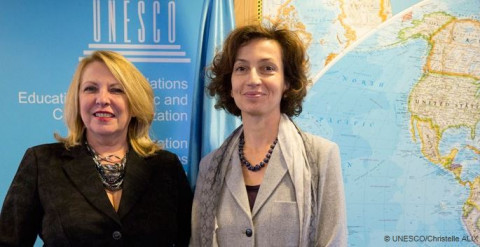 Meeting on shared priorities with the Quebec Minister of International Relations and Francophonie 2017-12-08 On 6 December 2017, UNESCO Director-General, Audrey Azoulay, met with the Minister of International Relations and Francophonie of Quebec (Canada), Christine St-Pierre, while she was on mission in Paris. On this occasion, the Director-General, underlined the importance of Quebec’s pioneering commitment to the implementation and promotion of the 2005 Convention on the Diversity of Cultural Expressions, as well as Quebec’s role in the recent adoption of the “Operational Guidelines on the Implementation of the Convention in the Digital Environment” and its recognized cultural strategy in this field. The Minister affirmed the relevance of UNESCO’s action for Quebec, particularly in the fields of culture, education and the prevention of violent extremism. She recalled the impact of the UNESCO Conference on the Internet and the Radicalization of Young People (30 October - November 2016), co-organized with the Government of Quebec and financially supported by the Government of Canada, for which the final document, the Quebec Appeal, was adopted by the 39th session of the General Conference last November. In the same context, the Minister referred to the work of the Center for the Prevention of Radicalization located in Montreal and co-funded by the city and Government of Quebec. The Director-General encouraged the sharing of good practices on this issue, which is of central concern for Member States, and to which UNESCO can strongly contribute. She also welcomed the creation of a UNESCO Chair for the Prevention of Radicalization and Violent Extremism at the University of Sherbrooke in Quebec. The Minister also shared Quebec's action to defend the rights of lesbian, gay, bisexual and transgender people.The meeting took place in the presence of the Ambassador, Permanent Delegate of Canada to UNESCO, Mrs. Elaine Ayotte. URL:https://en.unesco.org/news/meeting-shared-priorities-quebec-minister-international-relations-and-francophonie
 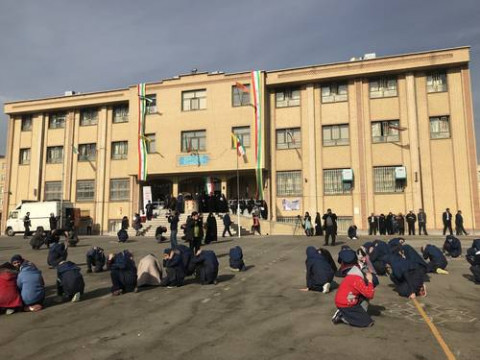 UNESCO supports IIEES in conducting community-based simultaneous earthquake and safety drill in Iran 2017-12-08 On 29 November 2017, UNESCO Tehran Cluster Office supported the International Institute of Earthquake Engineering and Seismology (IIEES) in conducting the 19th national earthquake and safety drill which simultaneously took place in all schools across Iran. By simulating earthquake situations in schools and their communities, the initiative aims to strengthen disaster risk reduction awareness and preparedness in the country. The theme of the 19th national earthquake and safety drill was ‘Safe Schools, Resilient Society’. Since 2015, IIEES has been selecting pilot schools to perform the drill at the community level, mobilizing citizens living in the vicinity of schools to join in the drill. In this new process, initiated by the Strategic Committee of IIEES, schools transform into the local crisis management center when an earthquake strikes. This year, community-led and community-driven drills were held in one selected school in every province of Iran. By 2025, IIEES envisions that all safe schools in Iran will function as a disaster management hub at their local community. An independent institute under the Ministry of Science, Research, and Technology, IIEES was established in 1989 following the recommendation of the 24th UNESCO General Conference. The Institute has played an effective role in strengthening formal and informal education on disaster risk reduction at the school and community levels, enabling students and locals living in the vicinity of schools to become more familiar with the basics of earthquake preparedness. By simulating earthquake situations in schools and their communities, IIEES –with the support of UNESCO- aims to increase disaster risk reduction awareness and preparedness, not just in the Islamic Republic of Iran, but in its neighboring countries as well. Given the earthquake-prone characteristic of the region, the initiative aims to boost students' readiness in the face of earthquakes and help make countries of the region less seismically vulnerable. At 10:18 AM, an earthquake alarm was broadcasted on Iran’s national radio station. At Esmat Girls’ School, the selected school for the community-based drill in Tehran, the students evacuated the building, forming organized lines. Students playing in the yard covered their head and dropped to the ground and those inside classrooms dropped under a desk or table. Teachers and other individuals within the school premises also participated in the earthquake and safety drill. Meanwhile, a first aid demonstration was conducted by some trained students in the school yard, with assistance from the Iranian Red Crescent Society and firefighters. Different methods of evacuating casualties, emergency sheltering, fire extinguishing, and evacuation guiding, were also demonstrated. The 2017 national earthquake and safety drill was organized by IIEES in collaboration with the UNESCO Tehran Cluster Office; the Ministry of Education; the Ministry of Science, Research and Technology; the Ministry of Interior; the National Disaster Management Organization; the Iranian Red Crescent Society; and the Islamic Republic of Iran Broadcasting. Representatives and observers from the Economic Cooperation Organization, the Embassy of Denmark, and the Embassy of Sweden were also present during the drill. URL:http://www.unesco.org/new/en/tehran/about-this-office/single-view/news/unesco_supports_iiees_in_conducting_community_based_simulta/
  A roadmap for quality education data: SDG 4 Data Digest sets out data challenges and potential solutions 2017-12-08 A new report from the UNESCO Institute for Statistics (UIS) sets out a roadmap of strategies and tools to help countries produce vital data on education. The SDG 4 Data Digest sets out the measurement challenges around the pursuit of internationally agreed Sustainable Development Goal of providing quality education for every child by 2030, known as SDG4. With a firm focus on national data, this year’s Digest emphasises data quality as the foundation for effective monitoring. “Good quality data are vital if the world is to deliver on its promise of a good quality education for each and every child,” says Silvia Montoya, Director of the UIS. “The Sustainable Development Goals, with their emphasis on inclusion and equity, compel us to look far beyond national and regional averages to ensure that no child is being left behind. As a result, countries are now under unprecedented pressure to deliver and use more and better quality data.” According to the Digest, less than half (47%) of the data needed to monitor progress towards SDG4 is currently available. Available data paints a grim picture of the quality of education, showing that an estimated 617 million children and adolescents worldwide are unable to achieve minimum proficiency levels in reading and mathematics, a clear signal of an ongoing learning crisis. While the Digest argues that the statistical capacity of most countries is stretched to breaking point, “the Digest also shows how we can support countries and leverage the power of data to ensure a quality education so that no one is left behind,” says Montoya. The UIS has developed tools and strategies that enable countries to produce their own high-quality data, and help donors channel resources to strategic approaches that work. These resources build on the Institute’s track record of working directly with countries and its mandate as the official source of data, standards and methodologies to monitor progress towards SDG 4. The Institute’s capacity development tools cover three main areas: Mapping tools to help countries identify potential data sources across ministries and national statistical offices, identify information gaps, and locate potential opportunities to monitor SDG 4 by integrating different databases, enhancing existing instruments to collect additional data, and producing disaggregated data. Data quality assessment tools to evaluate and strengthen the processes by which countries use different types of data, including administrative records, household surveys, learning assessments and expenditure information. Manuals, guidelines and codes of practice to support the production of education data and provide national policymakers with the evidence they need to plan and monitor the performance of their education systems and progress towards the SDG 4 targets. Related resources:Download the 2017 edition of the SDG 4 Data Digest, entitled The Quality Factor: Strengthening National Data to Monitor Sustainable Development Goal 4 (French and Spanish versions forthcoming)See our web page with infographics, short video and executive summaryGo to the source of SDG 4 data, with a set of data tables, country profiles and related resources. URL:https://en.unesco.org/news/roadmap-quality-education-data-sdg-4-data-digest-sets-out-data-challenges-and-potential
 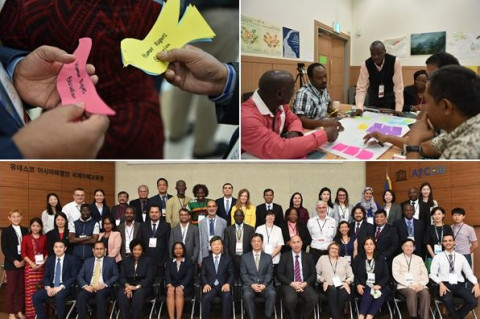 Follow-up Activity of the 2nd Global Capacity-Building Workshop on GCED: Workshop for UNESCO ASPnet School Teachers in Indonesia 2017-12-06 APCEIU organized the 2nd Global Capacity-Building Workshop on GCED from 4 to 15 September, 2017. This workshop covered diverse thematic areas including peace, human rights, sustainable development, cultural diversity and prevention of violent extremism and this year, participants had an opportunity to participate in the 2nd International Conference on GCED from 13 to 14 September as session moderators or presenters, and expand their networks on GCED. There were 32 professionals in the field of teacher education, teacher training, curriculum development and education policy of 29 UNESCO member states from the Asia-Pacific, Africa, Arab States, Latin America and Europe for this workshop and they participated in the lectures, hands-on activities, field and school visits and action plan development on GCED. As a follow-up activity of this workshop, APCEIU co-organized a Training Workshop on GCED in Indonesia with the Indonesian National Commission for UNESCO from 22 to 24 November 2017 in Jakarta, Indonesia. This three-day workshop was especially for the UNESCO Associated Schools Project Network (ASPnet) school teachers and national trainers from the Indonesian Ministry of Education and Culture to raise their understanding of GCED focusing on school practices reflecting national education system. Aimed to ensure that all students in UNESCO ASPnet schools are provided with the knowledge, attitudes and skills to promote global citizenship, this workshop also shared best practices in Indonesia and Korea by Mr. Samto, a participant of the 2nd Global Capacity-Building Workshop on GCED, who is in charge of teacher training at Indonesian Ministry of Education and Culture, and the 3rd Batch of GCED National Lead Teachers, Ms. Sangjeong Kim and Ms. Hyehee Kim. This workshop was facilitated in the participatory format through presentations, group works and activities to help participants deepening their understanding on GCED as well as internalize its concepts to develop action plans respective to their own educational contexts. As parts of the workshop, Dr. Ir Hendarman, Head of Analysis & Policy Synchronization, Ministry of Education and Culture, introduced Indonesian education policies and promised to support programmes on GCED, and Dr. Arief Rachman, Executive Chairman of Indonesian National Commission for UNESCO provided a special lecture on introduction to GCED and GCED practices in school. During the workshop, participants worked in groups to share their best practices and at the end, established detailed action plans to be implemented in the primary and secondary schools. As the final programme, they were invited to the Indonesia Teachers’ Day ceremony organized by the Indonesian Ministry of Education and Culture. Ms. Hasnah Gasim, Indonesian UNESCO ASPnet School coordinator expressed her gratitude to APCEIU and the workshop participants, and requested continuous support for future cooperation as follow-ups on this opportunity. She mentioned that “As a partner of GCED, we look forward to working together with educators in Indonesia to enhance GCED through diverse opportunities and will actively support their participation in APCEIU programmes.” URL:Follow-up Activity of the 2nd Global Capacity-Building Workshop on GCED: Workshop for UNESCO ASPnet School Teachers in Indonesia > APCEIU News - APCEIU (unescoapceiu.org)
  Mediterranean countries discuss progress on Education for Sustainable Development 2017-12-06 60 representatives of Ministries of Education and Environment as well as of NGOs from 18 Mediterranean countries and of five International Organizations, including UNESCO, met in Nicosia, Cyprus, from 22 to 24 November 2017 to share experiences and discuss advances in Education for Sustainable Development (ESD) at policy-level. This was the first meeting of the Mediterranean ESD Steering Committee, of which UNESCO is a member and which was established at a Ministerial Conference in December 2016 in order to help implement the Mediterranean ESD Strategy (link is external) and Action Plan. The meeting was opened by the Minister of Education of Cyprus, Costas Kadis, who said that ESD is a “strong instrument” to tackle the many problems – such as climate change, loss of biodiversity, armed conflict and displacement – that the Mediterranean region is currently facing: “Our efforts to maintain peace and human rights have not been sufficient, they must be further enhanced. We must take action individually and collectively, through ESD. … The aim of the Mediterranean ESD Strategy is to create citizens whose actions and values will be inspired by ESD.” The Mediterranean ESD Strategy is closely aligned with the Sustainable Development Goals (SDGs) and the UNESCO Global Action Programme on ESD. At the meeting, all member countries presented their recent progress on establishing and implementing a national ESD strategy and action plan. Many had made great advances, mainstreaming ESD into both formal and non-formal education systems and undertaking capacity building for educators and trainers. Representing Tunisia, Mr Mohamed Ftouhi said: “For our region, ESD is imperative, not a choice.” Among the remaining challenges identified were mobilization of resources, inter-ministerial collaboration and involvement of the private sector, as well as establishing monitoring and evaluation mechanisms. Professor Michael Scoullos, UNESCO Chair on Management and ESD in the Mediterranean, who was part of the organizing team, said that the way forward was close collaboration among countries, and with UNESCO and other International Organizations. UNESCO promotes ESD in the Mediterranean region through its Global Action Programme (GAP) and its GAP Partner Networks. One of UNESCO’s key partners in the region is the Mediterranean Education Initiative for Environment and Sustainability (MEdIES) whose Secretariat provided technical support to the meeting. Other GAP key partners are based in Greece, Jordan, Lebanon, Morocco and Spain. For example, the Lebanese NGO Organisation de Développement Durable (ODDD) works with youth and communities to promote sustainable living at both the local and international level, while securing economic development, social equity and environmental protection. ODDD recently established a sustainable public transportation strategy for the world’s oldest inhabited city, Byblos, and trained a group of university students in order to implement it. The Regional UNESCO Bureau for Europe in Venice is implementing ESD (SDG Target 4.7) in an interdisciplinary manner and taking into account the regional context and specific demands of the Member States. Several recent activities can be highlighted: the Arc of Inquiry project focused on improving science education via female teachers and students (the last workshop took place in Albania in October 2017); the MAB Youth Forum in Delta Po River, Italy (September 2017), and the 2nd Open Balkan UNESCO Chairs Meeting, focused on ESD (Bucharest, Romania, October 2017). A project from Jordan recently won the UNESCO-Japan Prize on ESD 2017: Zikra for Popular Learning empowers community members to revalue their identity and culture, through the cultivation and sharing of their local knowledge in relation to sustainable solutions. Zikra has created several programmes to communicate its vision, one of which is Exchange Tourism, which bridges the gap between urban and rural communities. “The progress on ESD in the Mediterranean has been exemplary”, said Miriam Tereick, representing UNESCO Headquarters at the meeting. “It serves as an inspiring model for other regions in the world.” More information on the meeting and on the Mediterranean ESD Strategy and Action Plan
 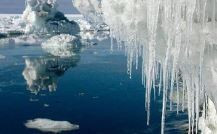 Civil society and experts to mark 2nd anniversary of Paris global climate change deal 2017-12-06 Five days before the day the historic Paris Climate Change Accord marks its 2nd anniversary, UNESCO will host a Forum bringing together international civil society partners to strengthen competencies related to education, natural and social sciences, cultural and communication which contribute to tackling climate change on 7-8 December. The Forum will precede the One Planet Summit, organized by the United Nations and the World Bank, at the initiative of the French government, which will take place on the 12th and be attended by several world leaders. Taking stock of the “COP 21 Paris Agreement”, the NGOs will discuss UNESCO competencies, particularly the ocean, as well as cultural heritage, biosphere reserves and indigenous peoples’ knowledge, and the role of civil society organizations. They will build on UNESCO’s updated Strategy for Action on Climate Change, adopted by the 195 Member States in November at the General Conference. It focuses on several UNESCO programmes which promote interdisciplinary climate knowledge and scientific cooperation for climate change mitigation and adaptation, including those related to hydrology, geosciences, and biospheres, as well as the work of the Intergovernmental Oceanographic Commission. Discussions will also devise concrete actions related to UNESCO’s Declaration of Ethical Principles in Relation to Climate Change which outlines globally-agreed ethical principles that should guide decision-making and policy-making at all levels and help mobilize people to address climate change. == Journalists wishing to attend the event are invited to request accreditationLaetitia Kaci l.kaci@unesco.org For more information:Concept noteProgramme and list of speakers Follow the conversation via our social media channels:Twitter / Facebook Using the hashtags#ChangingMindsNotTheClimate / #OnePlanetSummit #unescongoforum