
News
Catch up on what’s happening in the world of global citizenship education.
1,668 results found
 Launch of the publication “Long Walk of Peace: Towards a Culture of Prevention” 2018-05-21 The publication ‘Long walk of peace: Towards a Culture of Prevention’ will be launched at the Library of the United Nations in Geneva on 24 May 2018 at 12:30 pm. Under the leadership of UNESCO, 32 UN entities have worked together on a research project, studying progress and challenges for the UN Peace Agenda, 70 years after the creation of the United Nations and UNESCO. It is also the result of UNESCO collaborating with the Abat Oliba CEU University in Barcelona, Spain. “Building peace is a continuous process. This work requires constant attention and effort, taking into account specific contexts and adapting swiftly to changing realities on the ground,” says UNESCO Director-General, Audrey Azoulay in the foreword. “It is my profound hope and conviction that “Long Walk of Peace: Towards a Culture of Prevention” can inspire all of those who know that the walk may be long, but walking it together is vital for building stable, thriving societies.” Divided in three parts, the book shows the evolution of a peace approach in the UN system, how UN entities carry out peace work within and across their respective areas of competency, and the experiential insights, lessons learned and recommendations to enrich on-going efforts to revitalize the UN peace agenda. Through an in-depth theoretical analysis, combined with a presentation of innovative practices across 32 UN bodies, it explores the long, steady haul towards peace and provides inspiration for the way forward. Peacekeeping, post-conflict reconstruction and peacebuilding remain as important as ever andstrengthened focus must be oriented towards conflict prevention. This involves operating in a more integrated manner across the continuum of different peace and security tools, and with the development and human rights pillars, as well as the humanitarian system. The emerging consensus equates peace not only with the absence of conflict, but also with the synergetic presence of diverse vectors that prevent and transform conflict in a peaceful and constructive manner. Nurturing peace in today’s interconnected world thus requires a broader canvas that along with the imperatives of human rights and development also entails a vibrant focus on education for peace, global citizenship, cultural diversity and intercultural dialogue. The launch event, moderated by Nada Al-Nashif, UNESCO Assistant Director-General for Social and Human Sciences, will open with a short presentation by Michael Møller, Director-General of the United Nations Office in Geneva. This will be followed by a high-level panel discussion animated by Professor Priyankar Upadhyaya, Chairholder of the UNESCO Chair for Peace and Intercultural Understanding; Ramzy Ezzeldin Ramzy, United Nations Deputy Special Envoy for Syria; and Christian Guillermet-Fernández, former Chairperson-Rapporteur of the UN Open-Ended Working Group on the Right to Peace. The research study is a major contribution to the implementation of the International Decade for the Rapprochement of Cultures (2013-2022) for which UNESCO is the coordinating lead agency. *** We invite journalists who would like to have access to the publication before the launch event to contact us at the e-mail indicated below.Contact: Bobir Tukhtabayev, b.tukhtabayev@unesco.org Twiiter: #CultureofPrevention *** List of 32 UN bodies: Department of Peacekeeping Operations (DPKO) and Department of Field Support (DFS) Department of Political Affairs (DPA) Food and Agriculture Organization of the United Nations (FAO) International Labour Organization (ILO) International Organization for Migration (IOM) International Telecommunication Union (ITU) Office of the United Nations High Commissioner for Human Rights (OHCHR) Peacebuilding Support Office (PBSO) The Joint United Nations Programme on HIV/AIDS (UNAID) The United Nations Human Settlements Programme (UN Habitat) United Nations Alliance of Civilizations (UNAOC) United Nations Children’s Fund (UNICEF) United Nations Department of Economic and Social Affairs (UN DESA) United Nations Department of Public Information (DPI) United Nations Development Programme (UNDP) United Nations Educational, Scientific and Cultural Organization (UNESCO) United Nations Entity for Gender Equality and the Empowerment of Women (UN Women) United Nations Environment Programme (UN Environment) United Nations High Commissioner for Refugees (UNHCR) United Nations Institute for Disarmament Research (UNIDIR) United Nations Institute for Training and Research (UNITAR) United Nations Office for Disarmament Affairs (ODA) United Nations Office for Disaster Risk Reduction (UNISDR) United Nations Office of Counter Terrorism (UNOCT) United Nations Office on Drugs and Crime (UNODC) United Nations Office on Sport for Development and Peace (UNOSDP) United Nations Population Fund (UNFPA) United Nations Research Institute for Social Development (UNRISD) World Food Programme (WFP) World Health Organization (WHO) World Meteorological Organization (WMO) World Tourism Organization (UNWTO) URL:https://en.unesco.org/news/launch-publication-long-walk-peace-towards-culture-prevention?language=en
  Towards Access to Culture for All: Advancing Universal Access to Culture in its Diversity 2018-05-18 UNESCO will celebrate World Day for Cultural Diversity for Dialogue and Development, 21 May, and this year’s 70th anniversary of the Declaration of Human Rights, with a panel debate on ways to ensure everyone’s right to access culture. Taking place at UNESCO Headquarters on the afternoon of 22 May (Room IV, 3pm to 5.30 pm,), the event will bring together UN representatives, museum directors, artists, tech leaders, and experts including the Director-General of UNESCO, Audrey Azoulay, who will open the debate and the Organization’s newly appointed Assistant Director-General for Culture, Ernesto Ottone, who will moderate the panel discussions. Considering the potential of culture and intercultural dialogue as means of achieving peace and sustainable development, participants will seek ways to reconcile the paradox inherent to cultural globalization, which has led to tremendous growth in access while contributing to growing cultural uniformity, posing a threat to the diversity and wealth of the world’s cultural landscape. The debate will focus on the enforcement of Article 27 of the Universal Declaration of Human Rights, which states that, “everyone has the right freely to participate in the cultural life of the community, to enjoy the arts and to share in scientific advancement and its benefits.” Key participants will include: Karima Bennoune, Special Rapporteur in the Field of Cultural Rights (Office of the UN High Commissioner for Human Rights), Youma Fall, Director of French Language, Culture and Diversity (Organisation internationale de la Francophonie), Ghita Khaldi, Vice-President of Arterial Network (the Pan-African, network of artists, cultural activists, entrepreneurs, enterprises, NGOs, institutions, and donors), Amit Sood, Director of Google Arts and Culture, Vincenza Lomonaco, Ambassador and Permanent Delegate of Italy to UNESCO, Léontine Meijer van Mensch, Member of the Executive Board of the International Council of Museums (ICOM), Octavio Kulesz, UNESCO expert in digital publishing and media. **** Media Contact: Roni Amelan, UNESCO Media Section, r.amelan@unesco.org, +33(0)145681650For journalist’s accreditation please contact :Djibril Kébé, UNESCO Media relations, Tel : +33 (0) 1 45 68 17 47, d.kebe@unesco.org URL:https://en.unesco.org/news/towards-access-culture-all-advancing-universal-access-culture-its-diversity
 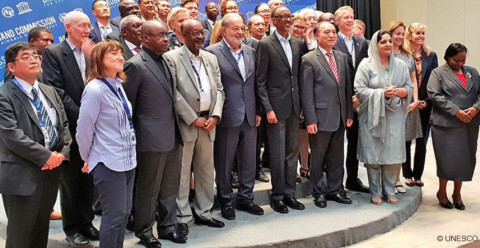 UNESCO highlights digital skills and empowerment at ITU/UNESCO Broadband Commission on Sustainable Development in Rwanda 2018-05-15 President Paul Kagame of Rwanda and the Mexican philanthropist and entrepreneur Carlos Slim opened the ITU/UNESCO Broadband Commission for Sustainable Development, hosted in Kigali, Rwanda, concurrently with the Transform Africa Summit 2018, attended by an estimated 4,000 delegates. The Broadband Commission, co-chaired by President Kagame and Mr Slim since its founding in 2010, seeks to harness broadband and ICT in the service of achieving the Sustainable Development Goals. The Commission comprises a select group of chief executives/chairpersons from the private sector; senior policy-makers representing governments; heads of international agencies including UNDP, UNCTAD, UN Women and UN-OHRLLS; and thought leaders in academia and other organizations working for sustainable development. Cisco, Ericsson, Facebook, Huawei, Intelsat, Microsoft, Nokia and other private-sector partners are represented on the Commission. In the session moderated by UNESCO on “Digital Skills & Empowerment”, the Broadband Commissioners exchanged views and endorsed a proposal – which will be led by UNESCO and the Baroness Beeban Kidron (United Kingdom) – to form a Commission working group to develop common indicators and definitions for Digital Skills and practical guidelines on digital citizenship, skills and competencies that may help to optimize implementation of digital skills frameworks. President Kagame highlighted the importance of bringing digital skills to young people. He noted that when the “One Laptop per Child’ initiative was first introduced in schools in the Republic of Rwanda, the speed with which young people developed computer literacy often outpaced the rate of teacher ICT training in this subject. The President recalled that “every weekend we would see hundreds of kids at the airport” in order to access the Internet, which motivated him to expand Wifi connectivity to other parts of Kigali and beyond. Introducing the concept, Indrajit Banerjee, director of UNESCO’s Knowledge Societies Division, noted that UNESCO is working with partners including ITU, Baroness Kidron and the Broadband Commissioners “to articulate a sufficiently broad definition of the skills that underlie digital literacy as well as a measurement approach that will generate internationally-comparable data needed to monitor progress towards the Sustainable Development Goal 4.” (SDG-4 “quality lifelong education”). He noted that UNESCO’s work to develop common indicators will allow for the collection of internationally comparable education data while also supporting efforts to develop indicators for Sustainable Development Goal (SDG) targets beyond education, while emphasizing the need for Member States to adapt and develop their own national framework for digital skills, taking into account specific development and educational contexts. Baroness Beeban Kidron will play a leading role in the initiative with UNESCO in the new Working Group that will include a number of fellow Broadband Commissioners as well as high-level experts. The Baroness highlighted that her preliminary fact-finding had included interviews to date with around 200 experts drawn from governments, private sector companies, intergovernmental organizations, civil society groups and academia: “whilst there is agreement on the urgent need for digital skills, there is no common understanding on what these skills are,” she noted. The Broadband Commission initiative will seek to address practical goals to build a consensus around the definition of digital skills; define clearer and more useful indicators and guidelines, which can be applicable to operationalizing digital skills frameworks in diverse socio-economic contexts; and to the encourage practical and scalable implementation of good practices, she said. “It is more and more clear that digital skills are key to our success,” said Houlin Zhao, Secretary-General of ITU. “For all the infrastructure developed, we must also address digital skills.” Fekitamoeloa Katoa ‘Utoikamanu, High Representative for the Least Developed Countries, Landlocked Developing Countries and Small Island Developing States (UN-OHRLLS), said that digital literacy has been a barrier to Internet use according to the Report, launched on 7 May in Kigali, of the Broadband Commission Working Group on Vulnerable Countries, which she chaired. The report draws on evidence from country case studies and an UN-OHRLLS/ ITU report on achieving universal and affordable Internet in the least developed countries. She stressed the importance of scaling up initiatives that work well. Mats Granryd, Director-General of GSMA, co-host of the Kigali Broadband Commission session and a member of the new Working Group, noted that almost half of all people who live in areas within 3G or 4G coverage – an estimated 3.4 billion people – do not access mobile and internet. One part of the reason for this gap is a lack of digital skills, he said. Commissioner Nicholas Negroponte said that the most important digital skill to emphasize is computer programming, a type of learning that teaches to “think about thinking” through the iterative process of writing and debugging code. “I shudder to hear that the reason for coding is to get a (technology) job,” he said. “The reason (for coding) is you want to build a society that thinks about thinking. Creative societies will come from that.” The new Working Group initiative will be entitled SKILLED (Skills for Life, Learning and Employment in a Digital world). This “roadmap towards global digital citizenship, digital skills and competencies” will seek to deliver: strategic and operational guidelines to countries on how to implement digital skills competency frameworks and promote digital skills education; identify and share good practices; refine the definition of digital skills and competencies at national and international level and contribute to the further elaboration of a global framework. The SKILLED roadmap aims to support education stakeholders—whether Ministries of Education, individual schools or NGOS—to develop the digital skills and competencies of children, young people and adults, as well as to support countries to operationalize their digital skills frameworks and legislation. URL:https://en.unesco.org/news/unesco-highlights-digital-skills-and-empowerment-ituunesco-broadband-commission-sustainable?language=en
 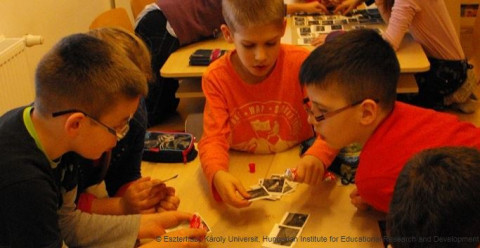 Students take the lead to spread an eco-schools initiative in Hungary 2018-05-11 An eco-schools programme in Hungary is so successful it has taken on its own momentum with students leading its growth. The flexible programme, developed by the Hungarian Institute for Educational Research and Development (HIERD), was established in 2000 with 40 pilot schools. It uses a whole-school approach to introduce the principles of sustainability in a practical way as well as through study subject matter. Team Leader and Senior Researcher of the Eco-Schools Programme, Attila Varga said: “The best surprise is to find that what we thought of as a top down initiative is more often than not led by children actively wanting to join. Since the adoption of the Sustainable Development Goals, society in Hungary is getting greener which helps enormously as more and more schools want to feel active in this field. We even have an environmental sustainability directorate in the President’s office!” Hungary has particular environmental challenges. Currently poor air quality is the focus, with the problem often worse in villages than in the cities because people burn wood and rubbish for heating. The Eco-Schools programme makes educational establishments more sustainable and embeds environmental issues in the school work plan. It is already installed in a quarter of Hungary’s school, or more precisely, by the end of 2017, 1134 Hungarian schools held an Eco-School title with 350,012 pupils and 34,890 teachers reached. Schools volunteer to join the network and work towards the Eco-School title beginning with a complete and detailed assessment of the school environment and pedagogy. “We provide a flexible framework and points system for schools which differ obviously depending on context. A village school may get points for creating a school garden while an urban school may get its points for water-saving techniques,” said Mr Varga. What they all have to provide is an annual action plan and then continuous evaluation of the success of their schemes. Children are involved from the beginning through deciding where their studies will focus up to the development of a student council to undertake parts of the self-evaluation and assessment. At the staff level each employee of the school is involved in the development of the vision of the school. In teacher education, the teaching aids and in-service trainings of the programme support student engagement in creating experience-based learning environments. Activities range from excursions to environmental projects and exhibitions made for the local community to school patrols where students check and collect data on energy consumption and local Green Parliaments where students are involved in real decision-making with local town halls. The programme also extends beyond the school gates. Since 2015 criteria for the title includes community service which empowers teenagers to transform themselves and the community they live in. “Above all, schools have to continue developing. We say that no school is ever ‘finished’ in its sustainable development work,” Mr Varga said. So successful has the programme been that it has been extended to the Green Kindergarten Programme and also reaches up to higher education and teacher training. “Yes, we have a little brother or sister of the Eco-school network which involves 1,000 kindergartens,” said Mr Varga. “It helps that kindergarten is compulsory for 3 to 6-year olds in Hungary and already has an emphasis on outdoor activities. In a sense it is even easier to include ESD in working with younger children as study is more flexible and freeform.” Activities for younger children include forest kindergartens where children spend several days outdoors learning about plants and animals. Approaching local traditions at festivals like Christmas in an environmentally-friendly way through making presents is also an important way to introduce sustainability related issues for children. “The programme is successful but there is still a lot of work to be done. The long-term goal is to reach all Hungarian schools. Most importantly, we are working to change young people’s mindsets from pessimistic to optimistic. We tell them the future is not decided, it is up to you,” said Mr Varga. Learn more on Education for sustainable development. URL:https://en.unesco.org/news/students-take-lead-spread-eco-schools-initiative-hungary
  New project to tackle youth unemployment in the south Mediterranean region 2018-05-11 Countries in the south Mediterranean region have been subject to political and socio-economic challenges and instability, which has resulted in high unemployment, especially among youth, and in economies that are not creating a sufficient number of skilled job opportunities for those who need and want them. UNESCO will be launching a new regional project, Youth Employment in the Mediterranean (YEM) in collaboration with nine countries (Algeria, Egypt, Israel, Jordan, Lebanon, Libya, Morocco, Palestine and Tunisia) to respond to these challenges. The project will support national and regional efforts over a three-year period (2018-2020), towards job creation and youth employment through the improvement of skills anticipation systems and the promotion of technical and vocational education and training (TVET) including digital skills, especially among women. Skills forecasting and quality TVET can support youth employment and professional aspirations The YEM project will include national authorities, the private sector, TVET providers and youth organisations in the process. Borhene Chakroun, Chief of Section of Youth, Literacy and Skills Development at UNESCO’s Education Sector, explains how collaboration, skills forecasting and quality TVET will contribute to youth employment in the South Mediterranean region: “The issue of youth unemployment is major policy concern in each of the beneficiary countries. By supporting the nine Member States in assessing and strengthening their national skills anticipation systems, their TVET policies, curricula and programmes will become better informed and able to promote quality TVET, as well as closing the gap between education and the world of work for young people.” The YEM project recently had a national consultation workshop in Tunisia where Hajer Ben Abid Slim, Senior Adviser in curricula development at the National Institute for Curricula Development (CENAFFIF) participated. Reflecting on the potential of improved skills forecasting she says: “The YEM project will give young jobseekers better information and orientation for their career decision. Within this framework and through regional cooperation, this will incite vocations and help young people to acquire the vocational skills necessary for their career development.” “Young people will be involved through the organizations that are assisting them in their career projects and start-ups,” she says. Other participants at the national consultation workshop in Tunisia, Mohamed Yahyaoui, Director, and Rym Ben Slimene, Assistant Director at the National Observatory of Employment and Qualifications (ONEQ) say: “Given that Tunisia is characterized by a young population and the unemployment rate in this category exceeds 30%, it will be useful to establish a system for evaluating TVET policies, programmes and strategies and adopt adequate tools for the forecasting of skills. To succeed, it will be important to rely on a national body such as the ONEQ, which will be responsible for coordinating these activities with various national partners.” The project is funded by the European Union and part of their Neighbourhood Policy, and is building on the achievements of the Employment Component of the Networks of the Mediterranean Youth Project (NET-MED Youth, 2014-2018). Visit the YEM project website. Find out more about UNESCO’s work on skills for work and life. URL:https://en.unesco.org/news/new-project-tackle-youth-unemployment-south-mediterranean-region
 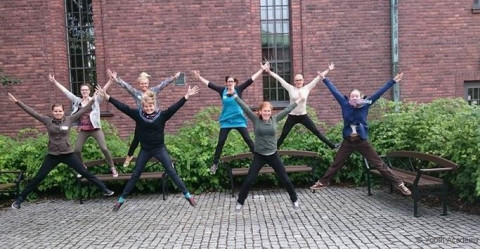 Finland innovates with digital ‘climate game’ to focus youth on the planet 2018-05-10 An exciting digital game which sends a young person into the year 2044 via a time machine to solve climate change challenges is one of the ways Finland is engaging youth in Education for Sustainable Development (ESD). The game “Possible World” is the newest element in the Ilmari Project, a cooperation founded in 2003 by Youth Academy, a non-profit organization building links between young people and society, and three environmental organizations, Dodo, Friends of the Earth Finland and Finnish Nature League. The Ilmari Project supports young people’s own projects on a range of topics by providing tools and training for adults who work with them. Its main aims are to encourage youth to make sustainable choices in their daily lives and to collectively take climate action. Their climate change programme is implemented through themed school visits for upper elementary schools all over Finland. The project trains young climate change ambassadors, typically university students, to go into classrooms to conduct visits and 90-minute workshops to engage schoolchildren on climate education and sustainability. It also develops tools for teachers´ use such as the interactive climate game, runs a climate internship programme and organizes an annual Youth Climate Summit. Maija Vuorjoki, Project Manager at Youth Academy, who has been instrumental in developing the climate change game, said: “In Finland young people understand about environmental challenges. But we want to show them it can go way beyond switching off lights to organizing collective action around worldwide projects. “We really feel that our work is like sowing seeds and we are hoping that many will flower. As the biggest climate education organization in the country, the main arm of our work has been classroom workshops, but we are getting very good feedback from the game which combines science and storytelling. We chose students to actually build the game and it was also developed to offer a way for schools outside the big cities to engage youth.” Since its inception, the project has reached over 60 000 pupils and 2000 teachers and the Youth Academy has trained 450 young ambassadors to visit schools and conduct climate change lessons along with creating a wide range of climate education teaching materials. Youth Climate Summits have been held annually since 2013 and each event has drawn 100 participating pupils and 30 teachers to create and plan a climate project for their schools. The Climate Internship project runs in 6 cities and 17 working places (organizations, enterprises, community offices) placing youth aged 13-16 years as interns. The interns have a digital platform with climate-orientated tasks and their training involves working with ‘climate glasses’ on. They first research how the enterprise is already reducing its ecological footprint and find out what could be done better. In the process they may interview people about how different types of work affect climate change and how that could be mitigated or simply observe different aspects of the workplace. Another side project of Ilmari is a website, the Teachers’ Climate Guide, specially designed to offer climate change information tailormade for each subject on the Finnish curriculum. Long-term Ilmari volunteer Pinja Sipari has been instrumental in developing the site. “This is the result of input from over 100 environmental and education professionals and although it was created for the Finnish curriculum it can be easily adapted to other countries’ needs,” she said. “Some schools still see climate change as a natural science phenomenon and we have to tell young people that it is also a ‘people problem’ and explain the global causes and consequences.” Finland is further innovating in Education for Sustainable Development in its exploration of feelings and emotions surrounding climate and environmental change. “The current debate in this country is how we should express and process the grief, anxiety and guilt we may feel about what is happening to the planet before moving on to act positively,” said Pinja who is teaching teachers how to talk about such feelings themselves and with their students. “Young people, and indeed their teachers, are not usually given the space or possibility to describe how they feel about global challenges. We are exploring how to provide that,” she said. For the future, Project Coordinator Maija hopes not only to scale-up the school programme but to conduct further and more extensive feedback from teachers and students which will allow further refining of what they offer. All that depends on further funding. In the immediate future there are plans to continue developing the digital game and training teachers to use it as a part of their work. There are also plans to create new participative climate project workshops for schools (from primary to high schools/ vocational schools) and share good practices internationally. URL:https://en.unesco.org/news/finland-innovates-digital-climate-game-focus-youth-planet
 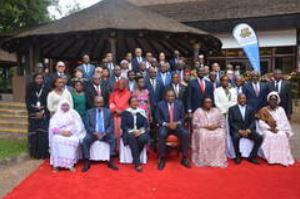 Setting the Pace for Pan African Education 2018-05-10 Ministers of Education of Africa, high level government officials, representatives of the African Union and of the United Nations Organizations gathered in Nairobi, from 25 to 27 April 2018 to agree on a Declaration and Call for Action to strengthen education across Africa. Setting the pace of Pan African Education starts with African People, and African Ministers of Education gathered in Nairobi, Kenya to take the ownership and work in collaboration and synergy to fulfil the Africa 2063 Agenda of the African Union for a prosperous, inclusive and peaceful Africa. The gathering kicked off with two-days of technical meetings on inclusion and gender equality, leveraging 21st century technologies for the advancement of educational systems, fostering a peaceful Africa with focus on research, and Science, Technology, Engineering and Mathematics (STEM), technical and vocational trainings, skills for life and access to quality education and training for all. The conference was attended by AU representatives, NGOs, UN Organizations and education representatives from African countries. More than 600 delegates participated in the historical meeting, aimed at aligning the United Nations global sustainable development goals, in particular SDG 4 and Education 2030 Agenda, with the Continental Education Strategy for Africa (CESA 16-25). “We must give importance to technology and innovation, and in youth driving the change of the African economies for the Africa We want,” stated AU Commissioner Professor Sarah Mbi Enow Anyang Agbor. “Education is going to make the difference between progress on our continent and disaster,” said Amina Mohammed, Minister of Education of Kenya "It is upon every one of us to ensure that our youth have access to education, and not just education, but quality and inclusive education". Strong emphasis was given to gender equality, equal access to education for all, using digital technology and implementing diversified and appropriate learning policies and programmes to reach the unreached, promoting a multilingual education, sign language and Braille, as well as promoting teaching and learning in the mother tongue, to safeguard and raise the status, esteem and value of indigenous African languages. “The new challenge is how to teach and learn in the technological digital arena. We must rethink education together, involving communities, students, teachers, parents, as well as political leaders, UN organizations to listen to the needs of the Youth in the 21st century" highlighted Edouard Firmin Matoko, Assistant Director-General of UNESCO, Africa Department, "Everybody needs to be on board. We need to open eyes and ears and listen to the Youth, making sure there is no exclusion". An extraordinary and moving testimony was provided from the Kenyan youth “Education is the answer, is the solution, it can move mountains, and disability is not inability” stressing the need to have increased budgets to cater for ICT-based learning, building and equipping more schools in rural areas and investing in specialized schools for students living with disabilities. Deliberations during the final day of the Ministerial meeting focused on financing education, monitoring and reporting, policies and strategies to strengthen mechanisms for effective partnerships and coordination at national and continental levels. In the Nairobi Declaration and Call for Action, adopted by Ministers of Education on 27 April 2018, governments committed to progressively allocate at least 4 to 6 % of national gross domestic product, or at least 15 to 20 % of total public expenditure for education, in line with the principles of size, share, sensitivity, and scrutiny. All ministers also called to strengthen partnerships, collaboration and commitment of international development partners in supporting African education development around national priorities, including in low-income, fragile and conflict-affected contexts, and in promoting innovative approaches to education and training. Furthermore, it was agreed to convene the Pan-African High Level conference on Education biennially to take of the progress made by Africa and support the implementation of CESA 16-25 and SDG4- Education 2030 and the African Union Agenda 2063 – The Africa We Want. Ministers also committed to working with the AU/IPED and UNESCO/UIS/GEMR to produce a biennial report monitoring progress on achievement of CESA 16-25 and SDG4-Education 2030 implementation at continental level. Highlights of the conference were the launch of the Gender Review of the Global Monitoring Report, on 26 April 2018, where the Director of the GEM Report, Manos Antoninis, said: “Countries across the African continent must level the playing field using new and policy and legislative incentives to ensure that both boys and girls have access to learning opportunities." The report noted that many African countries are yet to achieve gender parity in basic and tertiary education thanks to rampant poverty, cultural barriers and policy gaps. Mr Antoninis said a radical policy shift coupled with robust financing and public education is an imperative to boost school enrolment among girls in Sub-Saharan Africa. Finally, as special guest of the conference, President of the Republic of Kenya, Uhuru Kenyatta joined PACE2018, pledging to rally his counterparts in Africa to support transformation of the education sector in the continent, in the light of evolving socio-economic and cultural dynamics. “Governments should rally behind a system of learning that addresses contemporary challenges facing the world's second largest continent.” Morocco presented its candidature to host PACE2020, the second edition of the Pan African High Level conference on Education, to share experiences, lessons learned, success stories and to monitor the progress of the SDG4 and CESA16-25. The Director of UNESCO Regional Office for Eastern Africa, Mrs. Ann Therese Ndong Jatta said: “We need Solutions, We need Partnerships, we need more Africa, not repeating the same concepts, but listening to Youth and Investing in them, who are the Future and the embodiment of Education, Science and Technology for the Transformation of Africa. We need cross-border collaboration to share experiences and knowledge for the advancement of the continent in science, technology and innovation. Together, with passion and motivation, we can.” For further reading & viewing:Nairobi Declaration and Call for Action on Education- Bridging continental and global education frameworks for the Africa We Want- Nairobi April 2018, in EN & FR.Video: Youth conference PACE2018Flickr Album: Pan African High Level Conference on Education 25 – 27 April 2018 URL:http://www.unesco.org/new/en/nairobi/about-this-office/single-view/news/setting_the_pace_for_pan_african_education/
 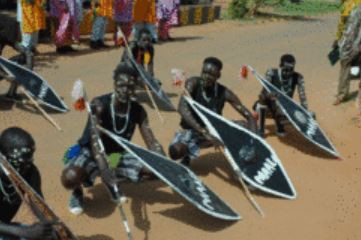 Building peace and social cohesion through documenting the living cultural heritage of South Sudan’s diverse ethnic communities 2018-05-10 Ten South Sudanese participants in a two-week UNESCO workshop in Juba are being trained to lead community-based inventories and produce digital archives of the expressions and practices, knowledge and skills of the diverse ethnic groups in South Sudan as part of an effort to safeguard the country’s Intangible Cultural Heritage.Following South Sudan’s ratification of the UNESCO 2003 Convention for the Safeguarding of Intangible Cultural Heritage in 2016, UNESCO is supporting the country with efforts to train national experts in safeguarding their intangible cultural heritage through carrying-out community-based inventories. Mr. Lovemore Mazibuko, a UNESCO trained expert in the 2003 Convention, is leading the workshop, which is being held from 3 to 12 May 2018 in Juba, South Sudan. Participants in the workshop range from national authorities responsible for Culture in South Sudan to NGOs, foundations and community activists. The workshop is funded and organized by UNESCO Office in Juba in close collaboration with the Ministry of Culture, Youth and Sports in South Sudan. Intangible Cultural Heritage (ICH) is defined as expressions, representations, practices, knowledge and skills as well as their associated instruments, objects, artefacts and cultural spaces that communities, groups and, in some cases, individuals, recognize as part of their cultural heritage. ICH is living, transmitted from generation to generation and constantly recreated. It is crucial for the sense of identity and continuity of communities and groups, and is in conformity with human rights and sustainable development. During the workshop, participants are learning procedures and techniques for inventorying elements of intangible cultural heritage ranging from oral traditions, performing arts, social practices, rituals and events, traditional craftsmanship to knowledge about nature and the universe. “This workshop is a first step towards mobilizing communities across South Sudan in coming together to identify the diverse characteristics that make up our cultural identities and together form our nation’s cultural heritage,” said Mr. Edward Jubara, Director of Archives and Antiquities at the Ministry of Culture, Youth and Sports, and national focal point for the UNESCO 2003 Convention for the Safeguarding of Intangible Cultural Heritage. “UNESCO is confident that the participatory process of inventorying South Sudan’s intangible cultural heritage can provide a platform for intercultural dialogue and peace building,” said Sardar Umar Alam, Head of the UNESCO Office in Juba. The participants in the workshop are being exposed to both theoretical and practical exercises in implementing the ICH Convention in South Sudan. Sessions range from understanding the various domains of ICH to the role of ICH in society, threats to ICH and safeguarding measures. During the workshop, the UNESCO inventory format will be aligned with the registration format of the South Sudan National Archives in order to ensure the inclusion of the inventory of ICH in the national archives. “Through participating in this workshop, I am preparing myself to be an ambassador for intangible cultural heritage in South Sudan”, said Frazer Kenyi, Director of Culture. For more information on the UNESCO 2003 Convention for Safeguarding Intangible Cultural Heritage: https://ich.unesco.org URL:http://www.unesco.org/new/en/nairobi/about-this-office/single-view/news/building_peace_and_social_cohesion_through_documenting_the_l/
 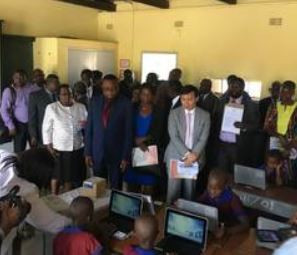 Republic of Korea donates ICT equipment to 20 pilot schools in Zimbabwe 2018-05-03 As part of a regional cooperation project between the Republic of Korea, UNESCO, Mozambique, Rwanda and Zimbabwe, the Ambassador of the Republic of Korea to Zimbabwe, His Excellency Cho Jaichel and the UNESCO Regional Director for Southern Africa, Professor Hubert Gijzen handed over Information Communication Technology (ICT) equipment worth US$300,000 to Zimbabwe’s Minister of Primary and Secondary Education, Professor Paul Mavima to benefit 20 schools in the country. The handing-over ceremony was hosted by King George VI Memorial School in Bulawayo. The equipment will be used to pilot an e-school model in 20 Zimbabwean schools including two special needs schools. The conceptualized e-school model is based on four pillars: infrastructure (availability of ICT tools), electronic resources (emphasis on Open Education Resources), capacity building (developing capacities of teachers), and sustainability (monitoring, evaluation accountability and learning for successful implementation of educational technology projects). 440 teachers have since been trained on the pedagogical use of ICT. The equipment was handed over as infrastructure to support teaching and learning at the selected 20 pilot schools. High-level representatives from the Ministry of Primary and Secondary Education, Ministry of Higher and Tertiary Education, Science and Technology Development, Ministry of ICT and Cyber Security, the Embassy of Republic of Korea in Zimbabwe, UNESCO, and the Zimbabwe National Commission for UNESCO attended the event. Teachers from the beneficiary schools, the community, education partners, the media and students of King George VI Memorial School also graced the occasion. In his keynote address, Professor Mavima thanked the Republic of Korea for the generous support and noted that the equipment fits seamlessly with the government’s ambitious e-schools programme where all learning institutions in the country will have 100 percent access to computers, internet connectivity and electricity in the next five years. “In line with the new curriculum, we are doing everything within our power to enhance the deployment of ICTs in our schools. We aim to achieve 100 percent deployment of ICTs to our schools within the next five years,” said Professor Mavima. The Ambassador of the Republic of Korea to Zimbabwe, His Excellency Cho Jaichel said Korea was committed to assisting Zimbabwe to come up with its own ICT embedded education policy. He added that the project will go a long way in creating a better educational environment in the schools. Addressing the same gathering, UNESCO Regional Office for Southern Africa, Director and Representative, Professor Hubert Gijzen said there is need to develop “a strategy to reach the hard to reach, such as schools in remote areas, especially those that are off-grid, and schools that cater for learners living with disabilities”. “In cooperation with the Ministry, we need to develop new pilots that will also include the introduction of renewable energy together with ICTs in education,” he added. UNESCO Regional Office for Southern Africa is supporting the integration of ICT-based innovative approaches for education in Zimbabwe through the UNESCO-Korean Funds-in-Trust project entitled, “ICT Transforming Education in Africa”. The project is being implemented in Zimbabwe under the theme: “Transforming Zimbabwe into a Knowledge Based Society: Strengthening Quality Education through Integrating ICTs into Teaching, Learning, Research and Innovation”. It seeks to strengthen e-education and ICTs in primary and secondary education; to capacitate higher and tertiary education utilizing diverse methodologies for lifelong learning; and to create an enabling policy environment for the effective use of ICTs in primary, secondary, higher, and tertiary education. This phase of the project in Mozambique, Rwanda and Zimbabwe started in 2016 and will conclude in 2019. For more information, please contact: aw.coulibaly@unesco.org or d.tererai@unesco.org. URL:http://www.unesco.org/new/en/harare/about-this-office/single-view/news/republic_of_korea_donates_ict_equipment_to_20_pilot_schools/
  Young leaders and UN join forces to prevent violent extremism 2018-05-01 A new two-year project on “Prevention of Violent Extremism through Youth Empowerment in Jordan, Libya, Morocco and Tunisia” was launched by young leaders, UNESCO and the United Nations Counter-Terrorism Centre (UNCCT), at UNESCO Headquarters in Paris, on 24 April 2018. The new project will support youth driven initiatives on the ground in education, sciences, culture, and the media to prevent violent extremism. Youth organizations, education stakeholders and media professionals will be mobilized around programmes that will include cross-cultural youth dialogues, training in conflict-sensitive reporting, and critical thinking labs. The launch event, moderated by Nada Al-Nashif, UNESCO Assistant Director-General for Social and Human Sciences, featured the participation of several young people from the region affected by violent extremism, and initiators of concrete and hopeful projects. It was the occasion to witness their stories: Loubna Bensalah (Morocco), best known for her project I Walk With Her, a 1000 km journey on foot in Morocco to encourage dialogue with women, also replicated in Tunisia; Nada Elfeituri (Libya), architect, activist and blogger engaged in Libya’s civil society for the past seven years; Hayfa Mansouri (Tunisia) who was indoctrinated by radical islamists at the age of 14 and now works to awaken the consciousness of young people; and Saddam Sayyaleh (Jordan), a social entrepreneur who employs a community-based approach to empower youth and children in disenfranchised communities. "It is through young people that we empower young people. We want to be like our peers rather than like our fathers," explained Loubna. According to Hayfa “any strategy to prevent violent extremism must put young people first, not because they are the main targets for radicalization, but because young people are the most capable of circulating a message among themselves and finding solutions to the problems they face. Youth are the most ambitious in society, which means that, to them, the process of change and progress has no limits.” UNESCO Director-General, Audrey Azoulay, and Under-Secretary-General of the United Nations Office of Counter-Terrorism, Vladimir Voronkov, also had a public conversation on the UN and UNESCO’s response to violent extremism with two young actors of change from the Arab region, Hajer Sharief (Libya) and Aslam Souli (Tunisia). “Today, 46 per cent of the world’s population is twenty-four-years-old or younger. Africa and the Middle East, in particular, have the highest proportions of young people. They are a positive asset and source of leadership – they themselves represent hope and promise, and they are leaders today,” said Vladimir Voronkov. Audrey Azoulay added “At UNESCO we work for but especially with youth. I believe that you, youth, are the vector and the message in itself”. Maha Bouzerda, young cultural project manager from Morocco, and Sami Hourani, young social entrepreneur from Jordan, concluded the event. “Innovation through this youth empowerment project resides in its opportunity-based approach that engages youth and integrate them through offering them comprehensive, multi-dimensional empowerment. From today on, youth in Jordan, Tunisia, Morocco and Libya and the world, get ready to break the vicious cycle of extremism, challenge yourself, get involved, be prepared to and equip yourself and architect a violence-free world, full of peace and hope, ” according to Sami. “Today young people are able to revolutionize the world in a negative or a positive way. It is the responsibility of international organizations to support young people so that this revolution takes a positive direction,” Maha concluded. The one-hour event gathered 150 participants, including permanent delegations of Canada, Jordan, Libya, Morocco, Tunisia and other delegations, the Project’s partners including civil society organizations, UNESCO Chairs, experts, and research institutes, and colleagues from UNESCO. During the event, participants were also invited to walk through the photo exhibition “A new Generation of young urban artists”, by Emeric Fohlen, and to listen to the pop/soul music band, Bénarès. Programme and speakers of the event Learn more about the Project Learn more about the United Nations Counter-terrorism Centre (UNCCT) Related link:https://www.facebook.com/unesco/videos/10156356687788390/URL:https://en.unesco.org/news/young-leaders-and-join-forces-prevent-violent-extremism