
News
Catch up on what’s happening in the world of global citizenship education.
1,668 results found
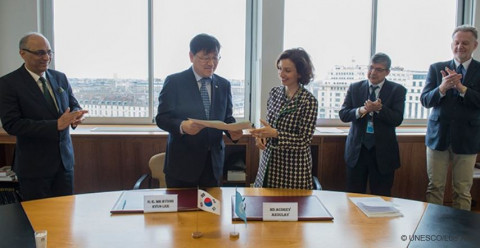 Republic of Korea Gives Support to UNESCO’s Programme for Girls’ Education in Pakistan 2018-03-26 The Republic of Korea has brought its support to UNESCO’s Girls’ Right to Education Programme in Pakistan with the signing of an agreement between UNESCO Director-General Audrey Azoulay and the country’s Ambassador and Permanent Delegate to UNESCO, Mr Lee Byong-hyun, on 23 March 2017. The USD 3.4 million project with the Korea International Cooperation Agency will support national capacity building to realize girls’ right to education in Pakistan’s Punjab province and Gilgit-Baltistan, through interventions targeting education officials, community leaders, teachers and parents. “The Republic of Korea’s growing support to UNESCO, especially to education, is extremely valuable and a proof of trust in our Organization, which we deeply appreciate,” said the Director-General of UNESCO, Audrey Azoulay. “Your country’s success story is not only about economic development, it also shows the links between education and building a culture of peace, which is coherent with the values of UNESCO.” Ambassador Lee recalled the role that foreign assistance and education had played in rebuilding his poverty-stricken country after the Korean war. The breadth of cooperation with UNESCO, reflected in some 30 projects underway in education, science and culture, exemplifies the country’s policy to return what it received from the foreign community in the past and to accompany human development. The Ambassador and Permanent Delegate of Pakistan to UNESCO, Mr. Moin ul Haque, expressed his appreciation for the generous support, signed on his country’s national day, affirming that “girls in these areas are passionate about education. Malala is an icon there and a symbol of the fight for girls’ education.” The Government of Pakistan contributed USD 10 million to the Malala Fund for Girls Right to Education established in 2012, of which USD 7 million are earmarked for the Girls’ Right to Education programme in Pakistan, launched in 2015 to increase and improve the quality of girls’ education at primary level in four provinces and four federal areas. URL:https://en.unesco.org/news/republic-korea-gives-support-unesco-s-programme-girls-education-pakistan
 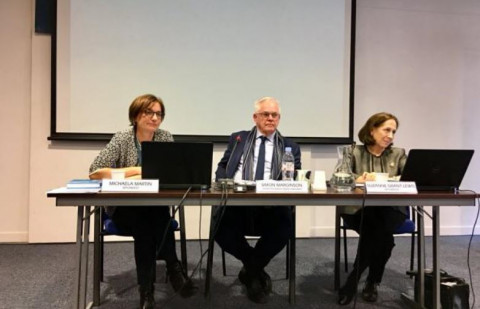 Higher education as a global common good 2018-03-26 Simon Marginson, Professor for International Higher Education and Director of the Centre for Global Higher Education, speaks at IIEP Strategic Debate on Higher Education as a Common Good. Higher education has expanded rapidly over the past 40 years. Enrolments have more than doubled in a decade – from 100 million in 2000, to 214 million in 2015 – far exceeding the rate of growth of worldwide population or GDP. Public funding for higher education has consequently come under pressure, with the burden of cost is increasingly shifted on to students and their families. Today, about one-third of all higher education students are enrolled in private institutions. This situation has led to a vigourous debate about who should pay for higher education. Key questions are who benefits from higher education, and whether it is predominantly a public or a private good. Professor Simon Marginson, Director of the Centre for Global Higher Education, came to IIEP to discuss this issue, as part of IIEP’s Strategic Debate series. The debate was well attended, and Marginson’s informative analysis led to lively discussion among IIEP’s guests. There is strong research evidence of the many benefits higher education brings to the individual. But the collective benefits – be they economic, social, or educational – are more difficult to demonstrate and measure. But Marginson made the case that higher education brings collective benefits, elaborating on the notions of higher education as both a public and a common good. Understanding higher education as a ‘common good’, he posited, is the most useful approach, as it better encompasses the multiple benefits of higher education for society and the international community. Much of the discussion is not about ‘common good’ but about ‘public good’. Marginson noted that a ‘public good’ is defined in economic theory as one that is non-rivalrous (i.e. it can be consumed without being depleted) and non-excludable (no one is excluded from consuming it). In cases where public goods, such as certain types of research, are under-produced in economic markets, public investment in them is justified to ensure they are produced for overall public well-being. Some other goods, explained Marginson, may be understood as either public or private goods – for example, teaching positions and student places, depending on whether access to higher education is within a competitive and/or stratified system offering differential benefits to students. Such goods can further be defined as either state- or non-state-produced, which is another and different meeting of ‘public’. To illustrate the different ways that educational goods are understood within different contexts, Marginson provided a graph with four quadrants representing four different situations with two extremes (higher education as a commercial market and higher education as a social democracy). Higher education systems in many countries have created opportunity hierarchies, with elite institutions at the top providing graduates with individual benefits in terms of careers and salaries, contributing to societal stratification. Marginson proposed an alternative to this model, whereby higher education is envisaged as a common good, providing equal opportunity for as many as possible in the interest of a more rights-based, egalitarian, and cohesive society. This does not necessarily mean that all higher education should be publicly provided, or publicly funded, but private institutions should be regulated to ensure they contribute to the public purpose of higher education. Countries around the globe organize their higher education within different traditions and conceptions of what is public and common. Marginson gave the example of the Republic of Korea, where higher education is largely privately funded, but closely regulated. Marginson concluded with the argument that higher education needs to be envisaged as a global common good. Within the context of increased globalization, higher education institutions are interacting beyond national boundaries and have become networked spaces for free enquiry and learning. Yet, there is no global state to maximize distributional equity, and to ensure that a truly global common good is produced. There is a strong case for international organizations to embrace this role, as much as their funding and position allows. Michaela Martin, IIEP programme specialist for higher education, commented that the boundaries between public and private higher education have become increasingly blurred, with a growing share of private investment in higher education. In order to rationalize the debate over who should pay for higher education, she said, it would be useful to more clearly determine and measure the benefits, which are economic, social, and educational, and both individual and collective. The educational benefits for students tend to be neglected; students value their higher education experience, not just because of improved employment prospects, but because it contributes to personal and intellectual advancement. Martin referred to the Education 2030 Agenda, whose target 4.3 encourages countries to ‘provide equal access for all women and men to affordable and quality TVET, including university’. This is clearly a conception of higher education as a global public good. IIEP has produced research on this topic, and Martin referred the audience to the GEM/IIEP Policy Paper ‘Six ways to ensure higher education leaves no one behind’, which offers guidance on how developing countries can provide both equitable admission policies and funding systems.#StrategicDebate: watch the livestream by clicking here And find the slides of the presentation here: Simon Marginson presentation URL:http://www.iiep.unesco.org/en/higher-education-global-common-good-4444
 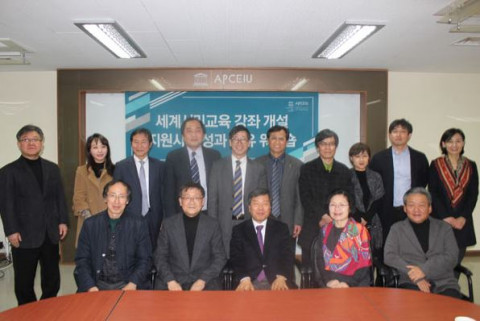 Workshop for sharing of outcomes of 2017 GCED Courses 2018-03-23 An academic workshop to share the outcomes of 2017 GCED Courses was held at APCEIU on 28 February this year. For the past 2 years APCEIU has been supporting the GCED Courses Development of universities in Korea to raise awareness of GCED amongst the college students and boost research on GCED in Higher Education Institutions(HEIs) in the context of Korea. For this year’s workshop, not only the professors who had designed and implemented GCED courses throughout 2017 Autumn semester (July to December) but the professors who are in charge of the GCED courses during the 2018 Spring semester (March to June) attended to share the outcomes and experiences of GCED Courses in 2017 and introduce operational plans for GCED course in 2018.Throughout the workshop, the participants shared essential strategies for development of similar courses in the future and pedagogical skills while discussing develop a student assessment tools and GCED resource materials to meet the current demands of the universities in line with the project. Participating universities requested APCEIU’s continuous support and extension of the programme based on the results of evaluations separately conducted by six selected HEIs targeting approximately 477 course-attendees who have shown high satisfaction and interest for the GCED courses. URL:Workshop for sharing of outcomes of 2017 GCED Courses > APCEIU News - APCEIU (unescoapceiu.org)
 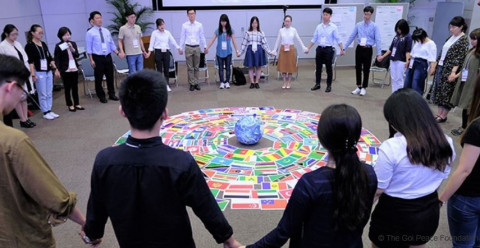 Young leaders from Japan, China and Korea come together to drive change through ESD 2018-03-22 The Goi Peace Foundation, a Key Partner of the Global Action Programme on ESD (GAP), has been organizing an annual ESD Japan Youth Conference in partnership with the Ministry of Education, Culture, Sports, Science and Technology Japan (MEXT) and the Japanese National Commission for UNESCO to offer students and young professionals (ages 18-35) from various fields, a platform to come together and engage in dialogue and peer learning to enhance their ESD practices. Since the first edition took place in 2014, this conference has been instrumental in promoting youth involvement in ESD and in building a national network of ESD youth, which now has over 200 members collaborating and innovating for sustainable development. As an expanded special edition, an ESD Youth Week was organized in Tokyo in September 2017, starting with the 4th ESD Japan Youth Conference, and followed by an exchange programme inviting university students from China and the Republic of Korea to join their Japanese peers in ESD learning and discussions. The programme offered an opportunity for the participants to co-create a vision of a peaceful and sustainable future for East Asia and the world, while deepening mutual understanding and lasting friendship. Please read the full report on the ESD Youth Week here. As in other years, a follow-up meeting was held in Tokyo and two other locations in February 2018, inviting alumni of all previous youth conferences as well as their associates and experts in the field who are passionate about supporting youth action. Empowered through intergenerational dialogue and cooperation, these young leaders are now regarded as a major driving force in accelerating ESD in Japan. URL:https://en.unesco.org/news/young-leaders-japan-china-and-korea-come-together-drive-change-through-esd
 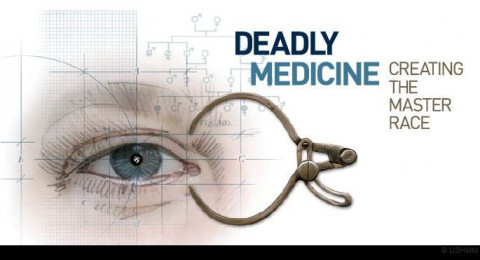 South African team launches follow-up project to UNESCO and USHMM Conference on Education and the Holocaust 2018-03-21 South African Holocaust and Genocide Centre has launched a one-year project on advancing Holocaust and genocide education in South Africa in conjunction with the presentation of the exhibition “Deadly Medicine: Creating the Master Race”. The exhibition – originally created by the USHMM -- is hosted by the Cape Town Holocaust and Genocide Centre from 22 February to 28 March 2018 and is accompanied by a series of educational workshops and academic events on the topic of the pseudo-science of race pursued by the Nazi regime. The educational activities accompanying the presentation of the exhibition in South Africa are the outcome of the participation of a team of South African education stakeholders in the International Conference on Education and the Holocaust organized by UNESCO and the USHMM from 4-8 December 2017 in Washington, DC. During the conference, participating national teams from ten countries were trained to confront key challenges of delivering Holocaust and Genocide Education in their respective countries and developed educational projects tailored to their national contexts. In South Africa, the national project is implemented by the South African Holocaust and Genocide Foundation through its three Holocaust and Genocide Centres in partnership with the Stellenbosch University Museum and other universities. The core of the project is the USHMM travelling exhibition “Deadly Medicine: Creating a Master Race”, which will be displayed in four South African cities. The exhibition traces the pseudoscientific legitimization of racism from the early 20th century eugenics movement to the Nazi regime’s measures of “racial hygiene”. Under Adolf Hitler, scientists aimed to modify the genetic makeup of the population to fit the National-Socialist ideology of a superior master race. The exhibition questions the role of scientists and medical staff who contributed to the legitimization of the “science of race” through their research and actions. In each city, the exhibition will be accompanied by guided visits and workshops for secondary education students, university students, teachers and nurses in training. These activities are anchored in South Africa’s Grade 11 National History Curriculum which focuses on Nazi racial ideology and its links to colonial anthropology in Namibia and eugenics in the United States of America. In Cape Town, the first round of workshops was well-received. The participating high school students and tertiary and post-graduate students from the University of Cape Town responded overwhelmingly positive to the exhibition. For many, the visit marked their first encounter with the Nazi regime’s scientific programme. The participants linked their impressions to South African history of Apartheid and present-day scientific ethics and responsibilities. Overall, the Centre valued the exhibition as an important means by which teachers, university and secondary students are able to think about and engage with the history of the Holocaust at their own levels. In April, the exhibition will move to Stellenbosch, where it will be displayed at the Stellenbosch University Museum from 4 April to 28 May 2018. As in Cape Town, a series of workshops for students and postgraduate teachers have been organized. Further stops of the traveling exhibition will include Durban and Johannesburg, before the exhibition will be send to Namibia in 2019. International Conference on Holocaust and Education UNESCO Education about the Holocaust United States Holocaust Memorial Museum South African Holocaust and Genocide Foundation URL:https://en.unesco.org/news/south-african-team-launches-follow-project-unesco-and-ushmm-conference-education-and-holocaust
  Comprehensive sexuality education to prevent gender-based violence 2018-03-16 UNESCO, UNFPA, and UN Women presented the revised UN Technical Guidance on Sexuality Education at ‘Education for a Healthy Future’ – at an event on 13 March on the sidelines of the 62nd session of the Commission on the Status of Women (CSW) at UN Headquarters. The event follows International Women’s Day on 8 March, and the strengthened call for all people to think, act and be gender inclusive. The prevalence of gender-based violence Every year, an estimated 246 million children are subject to some form of gender-based violence, including mistreatment, bullying, psychological abuse and sexual harassment in or on the way to school. 25% of children experience physical violence and 36 % experience emotional violence. Educating young people is the only true, long-term solution to gender-based violence. However, it must be high-quality, age-appropriate, and evidence-based comprehensive sexuality education. Contrary to what opponents of sexuality education often claim, CSE is not just about sex. When delivered well, it promotes health and well-being, respect for human rights and gender equality, and empowers children and young people to lead safe and productive lives. Notably, it teaches that all forms of gender-based violence are wrong, and a violation of human rights. Young people not only learn how to recognise and stay away from all forms of gender-based violence, but they also learn how to prevent it, to not perpetrate it, and know where to get help. They also learn essential life skills such as empathy, negotiation, decision-making and critical thinking, encouraging them to question social and cultural norms that support unequal gender and power structures, and which often lead to violence. The importance of comprehensive sexuality education Despite clear and compelling evidence for the benefits of curriculum-based CSE, too few children and young people receive it. To help change this, UNESCO has published a fully updated International Technical Guidance on Sexuality Education. Produced in collaboration with UNAIDS, United Nations Population Fund (UNFPA), United Nations Children’s Fund (UNICEF), UN Women, and the World Health Organization (WHO), the Technical Guidance helps education, health and other relevant authorities develop and implement sexuality education programmes and materials. It advocates CSE to help young people overcome the challenges posed by sexuality and reproductive health issues, which are particularly difficult during puberty. These challenges include access to contraception, early pregnancy, sexually transmitted infections (STIs), HIV, and AIDS. What are children learning? The Technical Guidance goes beyond that. It outlines the key concepts, topics and learning objectives which should guide the development of locally-adapted curricula for learners aged 5 – 18+. It includes concepts like violence and staying safe, breaking them down into lessons around consent, privacy and bodily integrity. For learners aged 5 – 8 years, this helps them to describe how they would talk to a parent, guardian or trusted adult if they were experiencing violence. For learners over the age of 15, it teaches more complex notions of consent. The Technical Guidance advises teaching about tolerance, inclusion and respect. It guides young learners to treat all people with dignity, and older learners to understand broader concepts of harassment and bullying, acknowledging that everyone has a right to speak out about it and demonstrating ways to counter it. A young learner begins to understand that our ideas about gender and gender stereotypes can affect how we treat other people, and will learn how to define gender-based violence. As this child becomes an adolescent, they learn to identify all forms of gender-based violence, such as sexual harassment, domestic violence, homophobic violence and rape. As that child becomes an early adult, they are able to recognise intimate partner violence and know how to leave an abusive relationship. Where to now? Schools can play a pivotal role in stamping out gender-based violence. As the Technical Guidance outlines, they must implement zero tolerance policies for sexual harassment and bullying, including stigma and discrimination on the grounds of sexual orientation and gender identity. It is also up to governments. The Technical Guidance supports governments to ensure all children and young people have access to evidence-based, curriculum-based CSE, knowing that it is critical to broader efforts to end sexual harassment and assault. Cultures take time to change. Thankfully, speaking out against incidences of gender-based violence such as sexual harassment and abuse is becoming, not only acceptable, but also commonplace. Through CSE, the next generation of children and young people stand in the best position to help create an inclusive and gender equal society. Download the International Technical Guidance on Sexuality Education. Learn more about UNESCO’s work in education for health and well-being. URL:https://en.unesco.org/news/comprehensive-sexuality-education-prevent-gender-based-violence
 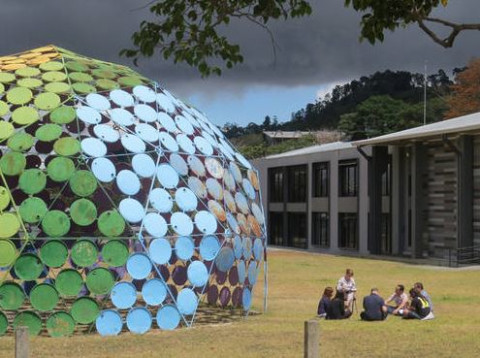 Building intercultural competences in Costa Rica 2018-03-14 In cooperation with the Ministry of Culture and Youth of Costa Rica, Parque La Libertad, the Costa Rican National Human Rights Institution and the Spanish Cultural Centre in Costa Rica, UNESCO conducted the third pilot of the UNESCO Manual on Intercultural Competences based on Human Rights in San José, Costa Rica, from 7 to 9 March 2018.Building on the previous pilot sessions in Bangkok, Thailand, and Harare, Zimbabwe, the Costa Rican pilot provided an additional opportunity to test the manual’s adaptability and effectiveness in different contexts, both from the perspective of facilitation, and with regard to its ability to build individual capacities for intercultural dialogue and understanding. Over the course of three days, UNESCO led a training of trainers session with national authorities, local NGO leaders, educators and other community leaders, as well as two pilot sessions – facilitated by the newly trained local personnel – with over 70 participants from a broad cross-section of Costa Rica’s population. The pilot sessions included a particular focus on indigenous groups, and community-level work for youth-focused violence prevention. Ms Viviana Boza, Vice-Minister of Youth from Costa Rica, opened the proceedings, highlighting “the importance of this collaboration which allows us to enhance our comprehension of the cultural differences and challenges facing Costa Rica to advance the resolution of intercultural and intergenerational conflicts”. Against the backdrop of growing cultural diversity and intercultural interaction within the sub-region, the methodology proposed in this manual provides an accessible activity based on story-telling to bring people together to reflect upon their differences and challenge their preconceptions. It provides a unique opportunity for participants to improve their capacity for empathy, tolerance, listening and understanding, and therefore reflect on sources of conflict and misunderstanding. Indeed, given the serious global challenges facing humanity in the 21st century, learning how to live together is an imperative for advancing sustainable and inclusive development. To this end, learning to be intercultural competent - in other words, having the skills needed to enhance connections and understanding across difference – is essential. The lessons learnt from this pilot session will inform final adaptions to the manual to maximize its relevance once publically released, including within the Latin American and Caribbean context. It also contributed to the building of a strong foundation of trained facilitators to help mobilize the manual’s wide dissemination and use following its expected publication before the end of 2018. Contacts: Euan Mackway-Jones, UNESCO Paris, e.mackway-jones@unesco.org Juan Pablo Ramirez-Miranda, UNESCO Office in San José, jp.ramirez-miranda@unesco.org URL:http://www.unesco.org/new/en/media-services/single-view/news/building_intercultural_competences_in_costa_rica/
 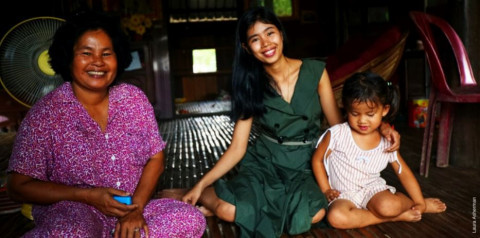 International Women’s Day 2018: Greater Expectations in Cambodia – Transforming a life through education 2018-03-12 Youth and women’s rights advocate, change-maker, mentor, inspiration – at only 25 years old, Phearong Sdeung is having an impact and living a life that she says is “beyond [her] dreams”. And at the centre of her story is an unwavering pursuit of education in the face of financial and gender barriers that all too often pose insurmountable for young women in her country. Phearong Sdeung grew up the youngest of five children in a remote area of Cambodia’s Kampong Cham province. School was several kilometres away and her parents were so poor that going to school soon meant making a difficult daily choice: the intangible benefits of education or doing something to put food on her family’s table. The pressure to leave school intensified with each passing year as they do for many in a country where at least 1 in 5 girls drop out in Grade 9, according to the Cambodian Ministry of Education, Youth and Sport. Phearong Sdeung persevered, willing to do whatever it took to complete her education, even if it meant putting herself in dangerous situations. She recalls selling SIM cards in remote areas to help pay for her secondary studies, a job that she kept from her parents so as to not hurt their feelings or cause them worry about her safety. While balancing school and her part-time work, the young woman somehow also found time to become civically engaged for the first time. She volunteered as a youth representative for the Khmer Youth Association, and it was there that she first learned valuable lessons about public engagement and how female voices were too often missing in decision-making. She now had a desire to fill that void and became driven to complete higher education to advance that goal. Poverty was not the only barrier she would have to overcome to achieve that goal. Gender biases were especially prevalent in rural areas like her village. “Society says that even if the woman studies as much as she wants, she’ll end up being a housewife anyway,” she said. “Most female students lose motivation, drop out before university, and have no encouragement or role models.” Phearong Sdeung was unsuccessful in applying for scholarships, leading her parents to offer to sell their farm to pay for the fees. The organization Women Education (Wedu) intervened in time to prevent that from happening, offering US$200 to help her in her first half year, as part of their efforts to promote Asian women’s leadership potential. Living far away from campus in what she describes as “maybe the cheapest [room] in the city”, Phearong Sdeung dealt with the challenges of moving from a rural area to the big city and the lack of immediate support. “I lived in a small room with lots of insects,” she recalls. “One day, I was so broke, but I didn’t call my family because my parents were sick at the time. I just bought a bottle of water to drink because I didn’t have enough money for food.” Phearong Sdeung became the first person in her family to complete higher education when she received a bachelor’s degree in international relations at the Royal University of Law and Economics. She is now pursuing her master’s degree in Human Rights Law at Pannasastra University of Cambodia, with her research focused on discrimination against women, supported by the Raul Wallenberg Institute Scholarship. She was also named one of Wedu’s “Rising Stars”, a group of female university students and young professionals who are committed to changing the status quo and driven to lead the change in their society. Phearong Sdeung credits Wedu’s support with helping open a door to learning for her. “I would say the only thing that can help people change their life is education,” she says. “However, a scholarship is important for me as I was born into poverty, and would not have a chance to go to school if I did not receive one.” Phearong Sdeung founded Joint Of Youth (JOY), which helps hundreds of young people from rural areas stay in school and participate in their communities, while also raising awareness on critical gender issues. Phearong Sdeung and her organization are now part of ministerial discussions on women’s issues, and she has been involved with UN Women and UNICEF Phnom Penh, including being named a “Champion for Ending Violence Against Women”. Her can-do spirit led to UN Women and UNICEF Phnom Penh inviting her to present on her organization’s activities, earning JOY a key place in a UN-supported 16-day campaign on Ending Violence Against Women. Phearong Sdeung was named a “Champion for Ending Violence Against Women” as part of the campaign. Today, JOY is a close collaborator with UNICEF and UN Women in Cambodia and is active in projects with national ministries, such as with the Ministry of Woman Affairs. Phearong Sdeung continues to receive media attention for her youth activities personal achievements and continues to engage in ministerial discussions on women’s leadership potential. Her platforms have expanded greatly, but she hasn’t forgotten her struggles, and the tough lessons she has had to learn along the way. Once a student struggling to feed herself and study, she is now a mentor to 10 young Cambodians, who seek to follow in her footsteps. She’s also appreciated at home, where she says biases may be shifting. “I believe my nieces are looking at me as role model now, and rural communities are encouraging their children to go to school instead of getting married at an early age,” she says. She remains an inspiration for young people – male and female alike – who also aspire to accelerate momentum towards gender equality and the empowerment of every girl and woman to complete education. “I would like to help as many youths as possible with their personal development, and motivate them to keep going to school,” she says. “I cannot change Cambodia as a whole, but at least I can help change the prospects of young people in their personal development. I want to see Cambodia no longer as a least developing country, no corruption, and, most importantly, more women participation in the parliament.” Written By Christian DohrmannEdited by Noel Boivin SDG4’s transformative vision brought to life Phearong Sdeung’s story speaks powerfully to what UNESCO and the global community are trying to achieve through realizing the SDG4-Education 2030 Agenda. Twelve years of education, with scholarship financing mechanisms and continuous parental and community support have literally transformed this young woman’s life, as well as those who she has and will continue to mentor and inspire. Ensuring that all children complete 12 years of free, equitable and quality primary and secondary education (SDG 4.1) and increasing the number of scholarships available to developing countries (SDG 4.b) form only part of the SDG4-Education 2030 Agenda, which encompasses 10 targets that together offer a comprehensive, holistic and universal vision of education that transforms the lives of individuals and society at large. As this story shows, fostering more inclusive quality education in a learner’s home country will be a key factor in achieving these targets. Phearong Sdeung initially dreamed of going abroad for her higher education because of financial and gender-based barriers in her country. Had she done so, the country would have lost her talents and an inspiration to young men and woman who seek to become just like her. International Women’s Day 2018 is an opportunity to raise awareness around women in all settings, rural and urban, and to celebrate the activists who are working relentlessly to claim women’s rights and realize their full potential. (Main photo: Laura Asherman, second photo: Christian Dohrmann) URL:http://bangkok.unesco.org/content/international-women%E2%80%99s-day-2018-greater-expectations-cambodia-%E2%80%93-transforming-life-through
 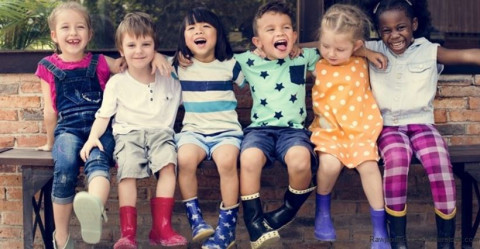 Early childhood care and education as a cradle for social cohesion 2018-03-09 Quality early childhood care and education (ECCE) has the power to transform children’s lives. It can contribute to greater efficiency in education and health systems and a better skilled workforce. Attention to early childhood can also help build more equal and inclusive societies by providing excluded and disadvantaged children with a strong foundation in lifelong learning, and throughout their lives. The right time is now Early childhood is the time when promoting gender equality and a culture of peace makes a true difference, as the pace of brain development is at its peak. When children are exposed to values and attitudes that support gender equality and peace at an early age, they are likely to hold them in later stages in life. “Many things we need can wait. The child cannot. Now is the time his bones are formed, his mind developed. To him we cannot say tomorrow, his name is today.” (Gabriela Mistral) Investing in ECCE is fundamental to the attainment of the Education 2030 Agenda, and the greater United Nations Sustainable Development Agenda. Slow progress The inclusion of ECCE in Sustainable Development Goal 4 (SDG 4) as Target 4.2 recognizes the untapped potential of quality ECCE for individuals and societies and urges countries to “ensure that all girls and boys have access to quality early childhood development, care and pre-primary education so that children are ready for primary education" by 2030. In 2007, UNESCO reminded the international community that half of the countries in the world did not have ECCE policies for children under three years old. Progress has been made on pre-school enrolment in many countries but more work is needed to make ECCE central to education systems and realize its tremendous societal benefits. Social cohesion UNESCO has partnered with the French National Commission for UNESCO to organise the International Symposium “Early Childhood Care and Education: Cradle for Social Cohesion” being held on 5 to 6 March 2018 at UNESCO Headquarters in Paris. The Symposium reflects UNESCO’s commitment to expand and improve ECCE globally. It builds on the momentum set by the international community for ECCE and increases countries’ awareness about the role of quality ECCE in fostering social cohesion. The Symposium strengthens the international knowledge and evidence base on good ECCE policies and practices. It also aims to stimulate countries in integrating ECCE, in particular in their implementation of SDG target 4.5 (Inequalities in education), SDG target 4.7 (education for sustainable development, peace and human rights education), and the 2017 UN Resolution on the Declaration and Programme for a Culture of Peace, which sets ECCE as an essential strategy for peace building. As the lead agency for the coordination of the Education 2030 Agenda, UNESCO promotes inclusion in education through holistic and quality ECCE for all children over the age of 3. UNESCO works on policy and the development of good practice, including in the area of teacher development with the Survey of Teachers in Pre-primary Education (STEPP) project. -- More information International Symposium on ECCE: UNESCO event page or webpage on French National Commission for UNESCO UNESCO’s work on ECCEURL:https://en.unesco.org/news/early-childhood-care-and-education-cradle-social-cohesion
  Progress towards LGBTI inclusion in education in Europe 2018-03-09 Less than half (21) of Council of Europe Member States have national or regional action plans to explicitly prevent and address school-based bullying based on sexual orientation and gender identity and expression (SOGIE), according to new research by IGLYO, the International Lesbian, Gay, Bisexual, Transgender, Queer and Intersex (LGBTQI) Youth and Student Organisation. A total of 31 Member States however, already have anti-discrimination laws applicable to education with explicit mention of sexual orientation, gender identity and expression or variations in sex characteristics as protected grounds. The research forms part of the first LGBTQI Inclusive Education Index and Report, created by IGLYO as a follow-up to the 2016 UNESCO International Ministerial Meeting on Education Sector Responses to Violence Based on SOGIE, to provide qualitative data on laws, policies, teacher training, and inclusive curricula for LGBTQI people. The preliminary data was launched at a January 2018 meeting at the European Parliament in Brussels, supported by UNESCO and convened by IGLYO, the European Parliament Intergroup on Children’s Rights, and the LGBTQI Intergroup. The meeting brought together representatives from European countries that have affirmed the Call for Action by Ministers. Together, they reviewed progress towards the implementation of inclusive and equitable education for all learners, identified good practice and planned future actions, including the forthcoming release of a joint publication by UNESCO and the Council of Europe on education sector responses to violence based on SOGIE in the region. According to the Out in the Open report released by UNESCO in 2016, violence in schools and other educational settings is a global problem, and students who are perceived not to conform to prevailing sexual and gender norms, including those who are lesbian, gay, bisexual, transgender or intersex (LGBTI), are more vulnerable. Christophe Cornu, Senior Programme Specialist and Team Leader in the Section of Health and Education at UNESCO, said, “UNESCO welcomes the LGBTQI Inclusive Education Index and Report by IGLYO, which highlights both good practices and areas for development to ensure that LGBTI learners feel included in educational institutions throughout Europe. While it should be acknowledged that many of these learners feel safe and supported, there is still a long way to go to ensure inclusive education for all.” “UNESCO reaffirms its commitment to supporting Member States’ responses to violence based on sexual orientation and gender identity or expression. We hope the Call for Action by Ministers and Out in the Open Report continue to serve as useful tools to engage and guide Member States.” More information on Homophobic and Transphobic Violence in Education URL:https://en.unesco.org/news/progress-towards-lgbti-inclusion-education-europe