
News
Catch up on what’s happening in the world of global citizenship education.
1,668 results found
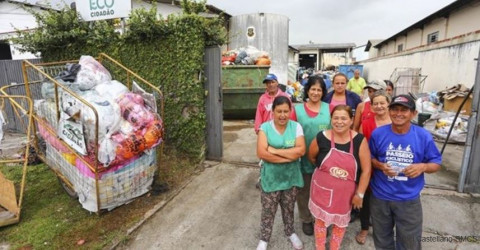 Symposium in Brazil on Education for Sustainable Development and consumer society 2018-04-30 What can education do in light of unsustainable consumption patterns in society? That was the key question guiding an expert symposium on the Future of Education for Sustainable Development (ESD) organized by UNESCO in Curitiba, Brazil from 6 to 8 March 2018. The meeting was part of a series of four Symposia on the Future of ESD, designed by UNESCO to generate new ideas and to ensure ESD’s relevance and continuity beyond the Global Action Programme on ESD (2015-2019). The previous three symposia took place in Japan, Germany and South Africa. The fourth symposium in Curitiba, with 19 participants from 12 countries from all world regions, was held in an informal setting to encourage free thinking, dialogue and the sharing of ideas, stories and perspectives. It drew experts from diverse backgrounds, including economics, education, ethics, philosophy, sustainable development and communication and from NGOs, educational and research institutions, the public or private sector. The symposium included several site visits. Curitiba was chosen as location for the meeting, because it is known as the “green capital” of Brazil, with a strong recycling culture and progressive sustainability policies, which also address education. Symposium participants were, for example, able to get an insight into Curitiba’s “Green exchange” programme that involves citizens collecting waste, which they can exchange for vegetables. 4kg of waste equal 1kg of vegetables. Used kitchen oil can also be returned in exchange for fresh food. The programme, initially set up to reduce river pollution, is a huge success involving 101 associations and more than 7,000 people and serving as an important economic aid for poor families. The collected waste is transferred to cooperatives who separate the garbage to allow for recycling. The international experts met dedicated, mainly female, waste-pickers who shared their individual stories and knowledge about waste. Additional site visits to a leading cosmetics company and an environmental centre further stimulated the discussions. The results of the symposium will feed into a position paper on the future of ESD, that will be presented to Member States at a technical consultation meeting in July 2018. URL:https://en.unesco.org/news/symposium-brazil-education-sustainable-development-and-consumer-society
 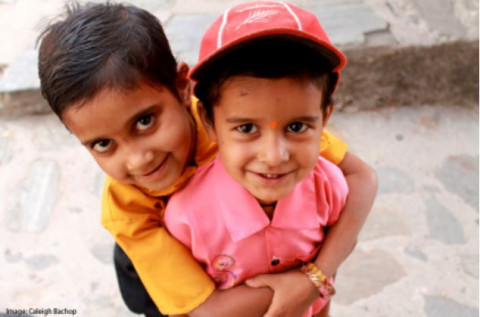 Gender norms also harm the education of boys 2018-04-25 Last month, the 2018 Gender Review of the GEM Report focused on the universally acknowledged fact that girls face many more barriers in education, especially in the poorest countries. Yet, this fact often overshadows another concern, which receives a lot less visibility, yet is important in equal measure: that gender norms affect the education opportunities of boys as well of girls. The GEM Report unveils its latest policy paper putting the spotlight on disaffected boys and young men, often from marginalized or poor backgrounds, whose educational development and life chances are compromised. Much of this stems from gender norms that continue to condition the identities and expectations imposed on boys and girls in classrooms and which have ramifications for their relationships with their families, teachers, peers and communities. Poverty is a key driver of boys’ disadvantage in education Meeting the 2030 Agenda for Sustainable Development depends on offering equal opportunities for all. Yet, in a large number of countries boys persistently lag behind. Reversing this is no easy feat. Boys in Latin America and the Caribbean have been less likely than girls to enroll in upper secondary education for at least 20 years. And the situation is worse for the poorest. In Honduras, while only 65 males completed upper secondary school for every 100 females in 2011, just 27 poor males did so for every 100 poor females. In some parts of the world, gender norms call on boys to enter the workforce earlier and to hold a paying job more frequently than girls. When a poor family’s income drops, a common response is to withdraw their boy from secondary school to earn money. In Brazil, a sudden fall in family income had a 46% larger effect on the probability of dropout for boys from poor households compared to those from wealthier households. In another example, in southern African countries including Botswana, Lesotho and Namibia, boys routinely leave school early to herd cattle. And if poor boys can readily access unskilled jobs, which are not very different to those they could access if they completed secondary school, they have less motivation to stay in school. School environments may also lead to boys’ disengagement The school environment itself can be a factor that loosens boys’ ties with the education system and ultimately pushes them out of it. In some cases, gender norms add pressure on boys to disengage from school and to place less value on academic achievement and sustained effort. Explicit or implicit condoning of violent behaviour places boys at greater risk of becoming both perpetrators and victims of physical violence and bullying, both inside and outside school. In India, corporal punishment is used to enforce gender norms and cultural expectations that boys should ‘toughen up’. In the states of Andhra Pradesh and Telangana, two-thirds of boys had experienced corporal punishment from teachers, compared with just over half of girls. Authoritarian schools, which tend to use punishment methods such as expulsion more frequently on boys, can have a negative impact on their motivation to attend and complete their schooling. In southern parts of the United States, where females have a 10% greater chance of graduating than males, expulsion is one of the factors associated with school dropout, alongside involvement with the juvenile justice system and poverty. Empowering young people Bringing about change invariably involves making sure the allure of the classroom outweighs the drive to make money, often out of necessity. Yet few countries have adjusted their social protection and cash transfer policies to the fact that it is boys who are most likely to drop out of secondary school. Likewise, a range of approaches can help raise boys’ engagement and achievement by promoting a school ethos of cooperation, respect for students and action against gender stereotypes. Approaches have included curricula, resources, teacher training and access to youth-friendly advice. If we are serious about tackling disaffection and exclusion in education for both girls and boys, it is time we started thinking of the relationship between the genders in a different way. This matters not just for meeting the Sustainable Development Goal 4 commitment to leave no one behind and ensure all boys and girls fulfil their right to complete 12 years of education of good quality. Actively addressing boys’ disadvantage in education could be transformative in promoting gender equality, reducing violence and protecting youth from risk factors that distort their futures. URL:https://gemreportunesco.wordpress.com/2018/04/19/gender-norms-also-harm-the-education-of-boys/
 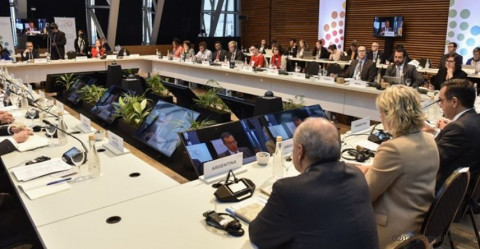 UNESCO at G20: promoting policies to shape the future of education, life and work 2018-04-24 As major transformations arise from globalization, digitalization and more complex and diverse societies, there is a growing need to develop education policies that equip children, young people and adults for an uncertain and changing future. The introduction comes from the agenda of the G20 meeting in Buenos Aires, Argentina, where UNESCO, as well as representatives from the world’s 19 major economies, met on the 12-13 April to discuss how to promote public policies that can unleash people’s potential and address the future of work. The Education Working Group was coordinated by the Argentine Ministry of Education and addressed two main issues: Skills for life and work and the Financing of education in their discussion about public policies. The questions raised were such as: how can we achieve a future where all citizens are fully involved and integrated; how can we ensure high-quality and inclusive education systems in a rapidly changing society; and what skills and education policies are needed to foster an active citizenship that is committed to sustainable development. Financing education and identifying skills for the future The Education Working Group agreed that there is a pressing need to identify the skills that will be required to achieve full integration of citizens in the labour market and society, and guarantee their full human development in a lifelong learning perspective. The Group addressed the need in promoting cognitive, non-cognitive and digital skills through inclusive education policies, with a special focus on the most vulnerable groups. Participating at the event’s opening were Marcos Peña, Chief of the Cabinet of Ministers of Argentina; Alejandro Finocchiaro, Minister of Education; Pedro Villagra Delgado, Argentine G20 sherpa; and Shiro Terashima, Director at the Japanese Ministry of Education, Culture, Sports, Science and Technology. “We are living in exciting times of technological transformation, with new challenges facing governments, civil societies, and the academic sector on how we educate our children,” said Marcos Peña. “This group can help our leaders, giving them ideas on how to advance and work together to adapt our education and training systems to this new reality,” he added. UNESCO was represented by Borhene Chakroun, Section Chief of Youth, Literacy and Skills Development, Manos Antoninis, Director of the Global Education Monitoring Report (the GEM Report) and Jordan Naidoo, Director of the Division for Education 2030 Support and Coordination at UNESCO. Borhene Chakroun emphasised that only a lifelong learning approach with a focus on learning pathways can support the workforce transitions and simultaneously equip the current and next generation of the workforce with the skills they will need for a not-yet-imagined future. The Group of Twenty (G20) is a leading forum made up of 19 countries and the world's major economies, that seeks to develop global policies to address today’s most pressing challenges. It started out in 1999 and is today a major forum for dialogue and decision-making attended by world leaders from vital economies. The new Education Working Group will hold meetings on 12-13 April, 11-12 June, and 3-4 September, and a joint session with the Employment Working Group on 4 September. More information about the Education Working Group on the G20 website. UNESCOs work in the field of skills for work and life Original press release from the G20 meeting. URL:https://en.unesco.org/news/unesco-g20-promoting-policies-shape-future-education-life-and-work
 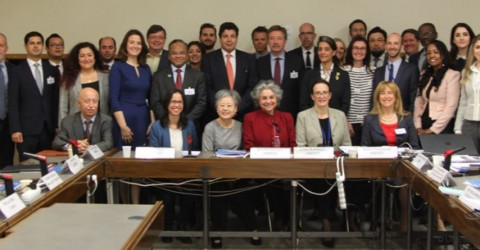 UNESCO global networking for education to prevent violent extremism 2018-04-24 UNESCO organised a Preliminary Consultation on inter-institutional cooperation on the Prevention of Violent Extremism through Education (PVE-E), on 18-19 April at UNESCO Headquarters in Paris. This was led by UNESCO’s Section for Global Citizenship and Peace Education, Division for Peace and Sustainable Development in the Education Sector. The Consultation brought together representatives from over 22 actors and institutions engaged in PVE-E – including UNDP, UNODC, the World Bank-CMI, ISESCO and OIF, as well as governmental and inter-governmental institutions, non-governmental organisations and foundations. Three goals led discussions – first, to explore the range of efforts, approaches and practices being undertaken in PVE-E; second, to share experience and lessons learned; and, lastly, to explore options for greater networking and cooperation in PVE-E in support to the needs of Member States in regions across the world. The starting point for the Consultation is a shared vision of the transformative power of education to create the conditions that make it difficult for violent extremist ideologies to proliferate and to develop the resilience of learners, especially young people, to violent extremist messaging. On this basis, the Consultation started with a mapping of the wide range of efforts being undertaken by actors and institutions with different mandates and approaches. This was followed by an exploration of definitions and regional perceptions of PVE-E, and a discussion on strengthening advocacy for and seeking investment in PVE in relation to CVE (countering), to identify the added value of preventive activities and sensitize IGOs and Member States on the importance of ‘prevention’. On the second day, the discussion focused on sharing experience in evaluating the effectiveness of education to prevent violent extremism, laying the foundation for an exploration of the possible options for further networking on PVE-E. The need for greater information sharing, and further discussions on more targeted thematic aspects of PVE-E were highlighted, along with the need to share best practices as well as evaluation and monitoring experience. This work supports the implementation of the Executive Board decision 197EX/46: ‘UNESCO’s role in promoting education as a tool to prevent violent extremism’ and the UN Secretary-General’s Plan of Action to Prevent Violent Extremism. It also contributes to reaching the Target 4.7 on Global Citizenship Education of the Sustainable Development Goals. The Consultation also took place in the framework of UNESCO’s leading role as Co-Chair of the PVE Working Group, part of the UN Office of Counter-Terrorism, Counter-Terrorism Implementation Task Force. UNESCO’s work on PVE-E is guided by the vision that education is one of the most effective ways to disarm the processes that can lead to violent extremism – by undermining ignorance, by fighting prejudice and discrimination, by building resilience to violent messages, by promoting active engagement for tolerance, dialogue. This falls within the framework of Global Citizenship Education. Over the past years, the Organization published guidance for education stakeholders and organised several capacity-building and advocacy activities all over the world. Publications include: Preventing violent extremism through education: a guide for policy-makers A Teacher's guide on the prevention of violent extremism Youth led guide on prevention of violent extremism through education Education about the Holocaust and preventing genocide: a policy guide URL:https://en.unesco.org/news/unesco-global-networking-education-prevent-violent-extremism
 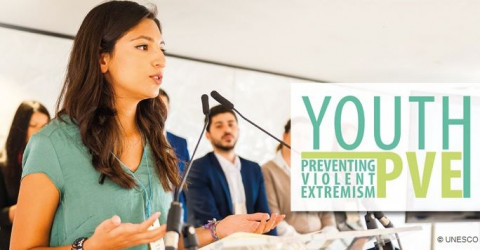 Launch of Project to Tackle Violent Extremism in Jordan, Libya, Morocco and Tunisia 2018-04-20 UNESCO and the United Nations Counter-Terrorism Centre (UNCCT) will launch a two-year project on “Prevention of Violent Extremism through Youth Empowerment in Jordan, Libya, Morocco and Tunisia” with an event at UNESCO Headquarters in Paris, on 24 April (Miro Space, 10.30 a.m. to 1 p.m). During the launch event UNESCO Director-General Audrey Azoulay and Under-Secretary-General of the United Nations Office of Counter-Terrorism, Vladimir Voronkov will have a public conversation on the UN and UNESCO’s response to violent extremism with two young actors of change from the Arab Region, Souli Aslam (Tunisia) and Hajer Sharief (Libya). The launch will also feature the participation of six young people from the region who have been affected by violent extremism and who will speak of their experience. The new project will support youth driven initiatives on the ground in education, sciences, culture, and the media to prevent violent extremism. Youth organizations, education stakeholders and media professionals will be mobilized around programmes that will include cross-cultural youth dialogues, training in conflict-sensitive reporting, and critical thinking labs. As of 2016, violence or armed conflict in some way affected at least one in four youth (15 to 29 year-olds). The world’s 1.2 billion young people regularly demonstrate the ability to capitalize on their resilience constructively against all odds. Yet, some prove vulnerable to the appeal of the all-embracing solutions proposed by violent extremist groups. The project, co-funded by Canada, is a collective move towards engaging youth in the prevention of violent extremism, an issue that disproportionately affects young people throughout the region. The launch event will be accessible on Facebook Live. **** The young leaders will be available for interviews after 1 p.m. #YouthPVE Media contact for accreditation: Djibril Kébé, UNESCO Media Section, d.kebe@unesco.org, +33(0)145681741 More on the Project About the United Nations Counter-terrorism Centre (UNCCT) URL:https://en.unesco.org/news/launch-project-tackle-violent-extremism-jordan-libya-morocco-and-tunisia
  Paving the way for women's education in indigenous communities of Guatemala 2018-04-19 Magdalena Cox Xum is a modern day hero and role model. She is the first educational coordinator for the UNESCO-Malala Center in Guatemala’s San Andres Xecul, Totonicapán, created as part of the new project supported by the UNESCO Malala Fund for Girls’ Right to Education. Her work for the Center began in March 2018, but her contribution to women´s education started many years ago in her village, Nimasac. Role models Magdalena is the youngest woman in her family of four sisters and five brothers. She is also the only one, along with her youngest brother, to have graduated school and chosen to teach. But as a young girl, Magdalena feared she would not be able to follow her dream of becoming a teacher. She thought she would only complete 6th grade like her eight siblings and like many young girls in her municipality. In San Andres Xecul, Totonicapán, according to the 2016 Ministry of Education Statistical Yearbook, the enrolment rate of school-age girls in primary school was 35%, with only 10% of women aged 12 to 21 enrolled in middle school and a mere 1% in high school. Despite her father´s initial resistance, Magdalena’s mother recognized her drive to study and supported her until graduation as a teacher of bilingual intercultural primary education. Her mother became the first example of what she wanted to be for her community, a woman who recognized in other women their potential and desire to excel and who helped them achieve it. Education is a priority Since she became a teacher, Magdalena has been committed to help women in her community even though education is not always seen as a priority there. Why should we let them study? This is one of the most common questions she receives. Magdalena has told her own story to inspire parents and community members about the importance of education and the advantages of non-formal education programs. Her work went beyond that of a teacher. She knocked on doors and met women who wished to study but did not have the possibility, due to the lack of flexibility of formal education programs or their cultural or economic context. She opened the doors of her own house to give lessons to her students, putting in her own resources to buy a whiteboard and benches. To a woman, Magdalena said:“in the morning you can shepherd the animals and in the afternoon you come with me to study.” This woman completed 6th grade. The UNESCO-Malala Centers, supported by the the UNESCO Malala Fund for Girls’ Right to Education, enable education to take its righteous place in communities. With the help of committed coordinators like Magdalena, young girls and women will select the appropriate non-formal education program, hand in the required educational materials, and establish the location and schedule for the study groups. Center coordinators, native to the region, who communicate in the relevant indigenous language and understand the cultural context, will also support communities to take ownership of the project, which is key to its sustainability. Through the Center and her work as a UNESCO-Malala Center educational coordinator, Magdalena will have the space and the opportunity to amplify her heroic efforts to provide education to the indigenous girls and young women of San Andres Xecul, Totonicapán, and hopefully of Guatemala more broadly. New project to improve the education of indigenous girls and women in Guatemala UNESCO Malala Fund for Girls’ Right to Education Saqilaj B’e (in Spanish) Indigenous girls on a clear path to become leaders in Guatemala URL:https://en.unesco.org/news/paving-way-women-s-education-indigenous-communities-guatemala
  UNODC and UNESCO join up to promote the rule of law through education 2018-04-18 UNESCO and UNODC have announced the launch of a new partnership to provide Global Citizenship Education in response to some of the world’s most pressing challenges to peace, justice and the rule of law. The ‘Initiative on Global Citizenship Education: Educating for a Culture of Lawfulness’ is developed jointly by UNESCO and UNODC to equip education policy-makers, primary and secondary level teachers and educators with tools to empower learners to engage in society as constructive and ethically responsible agents of change, supporting justice and strong institutions. Welcoming the initiative, Qian Tang, Assistant Director General for Education, said: “Global Citizenship Education offers a powerful approach to address contemporary challenges to the rule of law. By strengthening learners’ ability to think, act responsibly and share, we can build the defences of peace in the minds of men and women… Through this new partnership with UNODC we look forward to developing the tools that teachers and educators need to help learners act and engage in society as constructive and ethically responsible agents of change, supporting peace, justice and strong institutions.” The initiative will be rolled out over the next two years and pools existing expertise from the two organizations. It is being implemented in the framework of UNESCO’s activities relating to Global Citizenship Education and is designed to support UNODC’s Education for Justice (E4J) initiative. The Education for Justice initiative is part of the Global Programme for the Implementation of the Doha Declaration, adopted following the 13th United Nations Congress on Crime Prevention and Criminal Justice in 2015. Funded by the State of Qatar, the initiative seeks to prevent crime, corruption and promote a culture of lawfulness through education activities designed for primary, secondary and tertiary levels. UNESCO’s work in support of Global Citizenship Education and the prevention of violent extremism through education seeks to strengthen the capacities of national education systems to appropriately and effectively contribute to national prevention efforts. This work supports the implementation of UNESCO Executive Board Decision 197 EX/Decision 46: “UNESCO’s role in promoting education as a tool to prevent violent extremism” and the UN Secretary-General’s Plan of Action to Prevent Violent Extremism. The work is set in the broader context of the two agencies’ contribution towards achieving the 2030 Agenda for Sustainable Development, in particular, Sustainable Development Goals 4 and 16, which call for quality education and the building of peace, justice and strong institutions. These efforts are also expected to build young people’s resilience to violent extremist messaging and foster a positive sense of identity and belonging. URL:https://en.unesco.org/news/unodc-and-unesco-join-promote-rule-law-through-education
 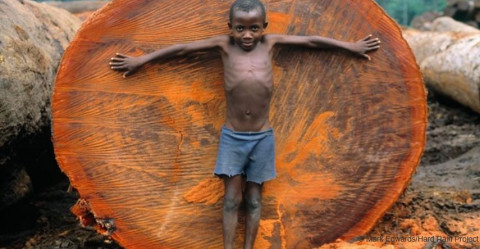 New exhibition at UNESCO shows how to achieve the Sustainable Development Goals 2018-04-13 A new exhibition launched today at UNESCO Headquarters in Paris aims to explain the 17 Sustainable Development Goals (SDGs) and engage people in action. “WHOLE EARTH? A citizen’s guide to the SDGs (and how to save the world)” is an exhibition by the UK-based non-profit organization Hard Rain Project, one of the winners of the 2017 UNESCO-Japan Prize on Education for Sustainable Development. Through stunning, award-winning photographs, “WHOLE EARTH?” depicts the immense challenges to sustainable development, while outlining the collective action everyone could take to achieve the ambitious Sustainable Development Agenda by 2030. The exhibition will be displayed on the railings of UNESCO Headquarters, Avenue de Suffren, Paris, throughout April 2018. On the occasion of the launch, exhibition author Mark Edwards, founder of the Hard Rain Project said: “Meeting the goals will require spectacular global cooperation by governments and the active support and encouragement of citizens, schools and universities around the world,” he said. “What’s called for right now is a surge of creativity – not just in the sciences, the arts and politics, but in every sphere of human life.” Representing UNESCO, Mr Firmin E. Matoko, Assistant Director-General for Education a.i., said: “The exhibition’s stunning photos and words shall inspire us to work together for a sustainable future.” Ambassador Matthew Lodge, Permanent Delegate of the United Kingdom of Great Britain and Northern Ireland to UNESCO, said: “I was deeply impressed by Mark when I first met him in 2017. His photographs combine a light-hearted sophistication with a deeper dive into the concerns related to climate change and poverty.” “WHOLE EARTH?” was initially designed in 2015 to propose new ways of thinking and incite visitors, particularly university students, to action. It has been touring universities around the world since. With the support of UNESCO, the UK Permanent Delegation to UNESCO and the UK National Commission for UNESCO, the Hard Rain Project has adapted “WHOLE EARTH?” to the SDGs, to raise awareness of sustainability challenges and solutions among an even larger public. The UNESCO-Japan Prize on ESD honours and showcases outstanding ESD projects and programmes in the framework of the Global Action Programme on ESD (GAP). With generous funding from the Government of Japan, UNESCO annually rewards three winners with USD 50,000 each. The 2018 call for nominations is open until 3 May. Exhibition website Education for Sustainable Development (ESD) UNESCO-Japan Prize on ESD Global Action Programme on ESD Hard Rain Project UK National Commission for UNESCO URL: https://en.unesco.org/news/new-exhibition-unesco-shows-how-achieve-sustainable-development-goals
  Application Open for the 4th Youth Leadership Workshop on GCED 2018-04-12 The Asia-Pacific Centre of Education for International Understanding (APCEIU) will organize the 4th Youth Leadership Workshop on GCED (Global Citizenship Education) from 20 to 26 May 2018 in Seoul, Republic of Korea. The one-week Workshop aims to build capacity of dynamic youth leaders around the world to identify strategies to achieve Sustainable Development Goals (SDGs), specifically Target 4.7, and to carry out innovative initiatives on fostering global citizenship through advocacy. While enabling participants to deepen their understanding of GCED, the Workshop allows the young leaders to play a major role and become part of a wider network of youth leaders for GCED. During the Workshop, participants will identify specific priority issues around global citizenship and establish plans for the future direction of GCED. Working both individually and in groups, the young leaders will devise the goals and strategies for use at local and national levels. Participants will learn about specific areas such as GCED and youth advocacy through information sessions and engage in dialogue and debates on the evolving issues. As part of the Workshop, participants will make a field visit to DMZ (Demilitarized Zone) area to discuss the role of youth for a more peaceful and sustainable future. Application for the 4th Youth Leadership Workshop on GCED must be submitted before 25 March 2018 (KST 23:59). Successful applicants will be notified by 6 April 2018. Travel expenses and Workshop fees will be covered by APCEIU for the selected participants (participants will be responsible for the domestic travel expenses and visa fees in their own countries). Contact information: Office of Education and Training Email: Training@unescoapceiu.org Telephone: +82-2-774-3956 (ext. 802) Online application URL:http://www.unesco.org/new/en/santiago/press-room/single-new/news/postula_al_taller_de_liderazgo_juvenil_sobre_educacion_para/
 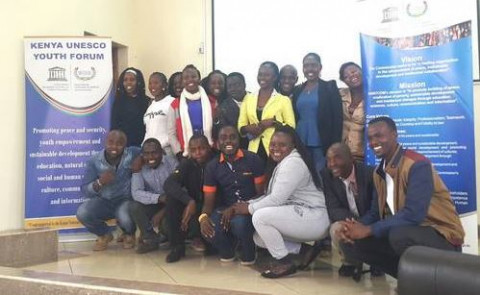 Around 100 youth from across Kenya participated in the First UNESCO National Youth Workshop on Culture and Heritage in Kenya 2018-04-11 The Kenyan National Commission for UNESCO organized a three-day workshop from 26 to 28 March 2018 in Nairobi, Kenya in order to increase youth engagement in the conservation and promotion of World Heritage and Intangible Cultural Heritage.As a State Party to three important UNESCO Conventions in the field of Culture, Kenya has made the Protection of the World Cultural and Natural Heritage, the Safeguarding of the Intangible Cultural Heritage, and the Protection and Promotion of the Diversity of Cultural Expressions a national priority. Now, Kenya is working to mobilize youth from all counties to join the national efforts. Kenya boasts six World Heritage sites ranging from the Lake Turkana National Park to Lamu Old Town, and has succeeded in inscribing two elements on the UNESCO List of intangible cultural heritage in need of urgent safeguarding: the Isukuti dance of Isukha and Idakho communities of Western Kenya and the Traditions and practices associated with the Kayas in the sacred forests of the Mijikenda. The inaugural Youth Forum provided an excellent platform to discuss issues of culture conservation and protection among more than 90 young participants with an interest in culture and heritage, representing all the counties in Kenya. The main focus of this workshop was to give the youth participants an opportunity to better understand the 2003 Intangible Cultural Heritage and 1972 World Heritage UNESCO Conventions, engage with experts, and create opportunities for deeper youth engagement in heritage protection and promotion. The workshop was officially opened by the Secretary General of the Kenya National Commission for UNESCO, represented by the Deputy, Ms. Christine Maingi. In her opening speech, Ms. Maingi emphasized the need for a partnership approach to conservation and preservation of our cultural heritage. “Over 75% of Kenya’s total population is under 35years,” she said. “It is therefore imperative that any development agenda engages the youth. There is no limit of the potential and abilities of youth in safeguarding and conserving our culture, for the betterment of society,” she added, while pledging the Commission’s commitment to supporting innovative initiatives in heritage preservation. The Director of Culture in the Ministry of Sports and Heritage Dr. Kiprop Lagat, who was an honored guest in this forum, underscored the potential of youth to propel sustainable development widely and urgently, as the carriers of our heritage to the next generations. Ms. Judith Ogana, National Professional Officer for Culture at the UNESCO Regional Office for Eastern Africa, also participated in the opening session. In her presentation, Ms. Ogana introduced UNESCO’s six international conventions in the field of culture and highlighted the urgency for Kenya to ratify the full portfolio of legal instruments, which are complementary in their scope. She shared UNESCO’s innovative programmes designed for enhanced youth engagement and participation, notably the World Heritage in Young Hands (WHYH), the World Heritage Volunteers Initiative, and the “Patrimonito World Heritage Adventures cartoon series. “UNESCO considers young people as partners and a key stakeholder,” she asserted, explaining UNESCO’s drive to encourage youth participation, partnerships and the integration of youth concerns and issues into the policy agenda of UNESCO Member States. “UNESCO recognizes that youth are driving social change and innovation, claiming respect for their fundamental human rights and freedoms, and seeking new opportunities to learn and work together for a better future,” said Ms. Ogana. “Through the UNESCO Youth Programme and various Culture programmes and resources, UNESCO is committed to empowering young women and men to work together to drive social innovation and change, participate fully in the development of their societies, eradicate poverty and inequality, and foster a culture of peace,” she added. The 3 day workshop included riveting discussions on national values, principle of governance, national cohesion and integration were led by representatives from the National Cohesion and Integration Commission of Kenya (NCIC). The participating youth were urged to embrace a culture of peace, cohesion while upholding and promoting our national values. The forum concluded with the launch of the new Kenya National Council for Youth on Culture and Heritage. For more information:World Heritage in KenyaIntangible Cultural Heritage in KenyaWorld Heritage in Young HandsPatrimonitoWorld Heritage Volunteers ProgrammeUNESCO Youth ProgrammeKenya National Commission for UNESCOURL:http://www.unesco.org/new/en/nairobi/about-this-office/single-view/news/around_100_youth_from_across_kenya_participated_in_the_first/