
News
Catch up on what’s happening in the world of global citizenship education.
1,668 results found
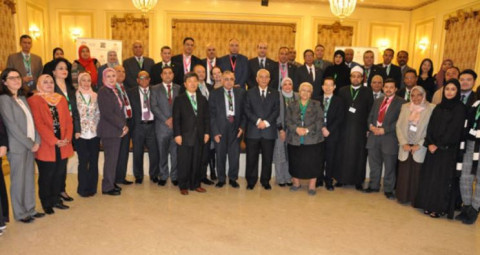 The 5th Meeting of UNESCO Category 2 Centres in Education held in Cairo 2018-03-08 The 5th Meeting of UNESCO Category 2 Centres in Education co-organized by the Arab States Fundamental Education Centre (ASFEC), Egyptian Ministry of Education and Technical Education, UNESCO Beirut Office and UNESCO Cairo Office was held from 20-22 February 2018 at Al Masah Hotel, Cairo, Egypt. Following the last meeting in Manila in 2015, this meeting served as an opportunity for the centres to share their programmes and plans, explore areas of possible collaboration, and increase the visibility of the centres’ active contribution to the realization of UNESCO’s objectives. Nine out of the eleven centres were represented during the meeting as follows: Asia-Pacific Centre of Education for International Understanding (APCEIU), Seoul, Republic of Korea International Centre for Higher Education Innovation (ICHEI), Shenzhen, China International Research and Training Centre for Rural Education (INRULED), Beijing, China Regional Centre for Adult Education (ASFEC), Sirs El-Layyan, Menoufia, Egypt Regional Centre for Early Childhood Care and Education in the Arab States (RCECCE), Damascus, Syrian Arab Republic Regional Centre for Educational Planning (RCEP), Sharjah, United Arab Emirates Regional Centre for Quality and Excellence in Education (RCQE), Riyadh, Saudi Arabia South Asian Centre for Teacher Development (SACTD), Meepe, Sri Lanka South East Asia Centre of Lifelong Learning for Sustainable Development (SEA CLLSD), Manila, Philippines From the last meeting in 2015, two new centres were included in the network of centres, including: the International Centre for Higher Education Innovation (ICHEI) based in Shenzhen, China and the International Mother Language Institute (IMLI) based in the Dhaka, Bangladesh. This growing number of centres provide more opportunities for partnership among the specialized centres in education under the auspices of UNESCO.Representatives from UNESCO Headquarters, UNESCO Beirut Office, UNESCO Cairo Office and the UNESCO Institute for Lifelong Learning, a UNESCO Category 1 Institute in Education participated in the said meeting, along with representatives from the Egyptian Ministry of Education and Technical Education and related organizations. As the first global meeting of the centres after the adoption of the Sustainable Development Goals (SDGs), the contribution of the centres to the SDGs, particularly for SDG4 (Quality Education) was the focal point of discussion.At the opening of the meeting, Mr Ghaith Faris, Director of UNESCO Cairo, highlighted the importance of the UNESCO Category 2 Centres in achieving the global goals, as an important extension arm of UNESCO in the field for the implementation its core programmes and objectives. Mr Utak Chung, Director of APCEIU, shared the continuous effort of APCEIU since 2015 to engage with, increase capacities of and provide tools and necessary resources to relevant stakeholders to contribute to SDG4, particularly to Target 4.7 focusing on Global Citizenship Education. URL:The 5th Meeting of UNESCO Category 2 Centres in Education held in Cairo > APCEIU News - APCEIU (unescoapceiu.org)
 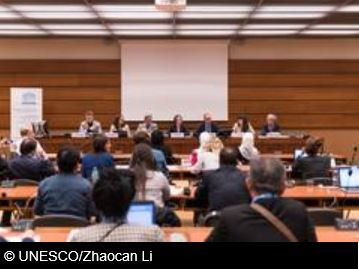 UNESCO advocates for Global Citizenship Education at the UN Human Rights Council 2018-03-08 At the side event on the margins of the 37th session of the UN Human Rights Council, UNESCO reiterated its full commitment to advance the World Programme for Human Rights Education and highlighted the importance of global citizenship education in this context. The event, which took place in the Palais des Nations on 6 March 2018, was organized by the UNESCO Liaison Office in Geneva at the initiative of the NGO Working Group on Human Rights Education. It was co-sponsored by States Platform on Human Rights Education and Training. Delivering welcoming remarks, Mr. Abdulaziz Almuzaini, Director of the UNESCO Geneva Liaison Office, stressed the timeliness of this discussion, especially in the context of the celebration of the 70th Anniversary of the adoption of the Universal Declaration of Human Rights. Commenting on the World Program for Human Rights Education, Mr. Almuzaini recalled that the Sustainable Development Goal 4 calls for the collective effort from different stakeholders to build more peaceful, inclusive and democratic societies. “In this global endeavor, UNESCO is playing its role, by helping to develop policies and strategies and by identifying good practices to advance the objectives of the Education 2030 in general and human rights education in particular,” said the UNESCO Representative. With reference to different phases in the implementation of the World Programme, Mr. Almuzaini emphasized the need to reinforce the past processes and achievements. “Sustainability in our action is vital for strengthening the respect for human rights and fundamental freedoms,” he added. Mr. Almuzaini further underlined the need for policy makers and educators to adjust the focus of action to the rapidly changing world, one that is marked by numerous turbulences. Education, notably human rights education, should serve the need of today’s world. Ms. Lydia Ruprecht from the Education Sector of UNESCO, presented the Global Citizenship Education (GCED) Programme. As a panelist, she focused her intervention on the core concept of the GCED, which incorporates human rights education priorities. She underlined the importance of monitoring and evaluation of national implementation to achieve effective results. Moderated by Nina Joyce, Graduate Women International Representative to International Organizations, the panel discussion generated a stimulating exchange among the participants who contributed new ideas to the focus of the 4th phase of the World Programme. The interventions were also made by Ambassador Maurizio Serra, Permanent Representative of Italy to the UN Office in Geneva; Mr. Johan Olhagen from the OHCHR; Ms. Charline Thiéry, Chargée de mission, Commission Nationale Consultative des Droits de l’Homme, Paris, and Mr. Patrice Meyer-Bisch, Président de l’Observatoire de la Diversité et des Droits Culturels, Fribourg. In accordance with Resolution 36/12, OHCHR is mandated to seek the views of all stakeholders on possible areas or thematic human rights issues to be included in the fourth phase of the World Programme (1 January 2020 - 31 December 2024). A report on it is to be presented to the Human Rights Council at its thirty-ninth session in September 2018. URL:http://www.unesco.org/new/en/geneva/about-this-office/single-view/news/unesco_advocates_for_global_citizenship_education_at_the_un/
  UNESCO launches a call for proposals on School-wide Mobile Learning 2018-03-02 Information and Communication Technologies (ICTs) have been recognized as both drivers and enablers of progress in taking forward the progress towards Sustainable Development Goal 4 (SDG 4), which aims to ‘ensure inclusive and equitable quality education and promote lifelong learning opportunities for all.’ The Education 2030: Incheon Declaration and Framework for Action calls on actions to harness ICTs to strengthen education systems, disseminate knowledge, provide access to information, promote quality and effective learning and deliver services more efficiently. The UNESCO-Fazheng Project on Best Practices in Mobile Learning aims to guide school-wide planning and integration of mobile learning to create inclusive and equitable learning environments in order to ensure the quality, effectiveness and the relevance of education for digital economies and societies. It seeks to do so by sharing examples of successful school-wide mobile learning initiatives; assessing their impacts on the learning and the organization of school systems; and developing a guiding framework that aims to promote future e-school models and practices towards the achievement of SDG4. The recently launched Call for proposals on School-wide Mobile Learning Models under the UNESCO-Fazheng project encourages schools, groups of schools and other school education providers and stakeholders to submit a proposal by 16 March 2018 (midnight, Paris time) on school-wide mobile learning models that have been implemented and proven effective. If selected, the schools’ models will be recognized by UNESCO as best practices in using mobile learning at the school level, and will be profiled as case studies in the upcoming UNESCO publication on Best Practices in Mobile Learning. The overall goal of the publication is to draw insights and evidences from successful initiatives to inform policy makers and school leaders about effective strategies in planning and implementing mobile learning programmes in varied contexts and in response to different needs and challenges. The selected cases will also benefit from high visibility on the UNESCO website and at international conferences organized by UNESCO. To submit your proposal, please complete the online submission form in English, French, or Spanish by 16 March 2018 (midnight, Paris time): https://en.unesco.org/themes/ict-education/mobile-learning/fazheng/call-proposals For more information, please contact fazhengproject@unesco.org URL:https://en.unesco.org/news/unesco-launches-call-proposals-school-wide-mobile-learning
 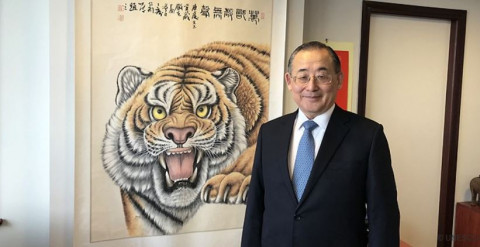 Four questions to UNESCO’s outgoing Assistant Director-General for Education 2018-03-02 The tiger on the wall. A sign of strong leadership and commitment to lead through achievements and challenges. In the Chinese calendar, the year of the tiger is also when Qian Tang, the outgoing UNESCO Assistant Director-General for Education, was born. “In China, the tiger is considered to be the head of all animals,” he says. “If you’re leading a Sector at UNESCO, you need to be strong, committed and you really have to make great efforts to meet multiple challenges. This is also the character of the tiger, and it is the character that I need to drive this Sector. I am the type of person that strives to do his best at a job and I am not easygoing when it comes to my responsibilities.” After leading the Education Sector for eight years and a career at UNESCO that goes back 25 years, Mr Tang is leaving the organization this week. We asked him a few questions to get some insights into his time with UNESCO. What are some of your best memories at UNESCO? One of them is the adoption of the Incheon Declaration in 2015 that paved the way to the Education 2030 Agenda and Goal 4 of the UN Sustainable Development Goals. At the time, we were fighting to make the Education for All movement into a global commitment. When I became ADG, we faced many challenges due to the financial problems of the organization. We decided to focus on key priority areas and themes that UNESCO can do best. The post MGD discussions gave a golden opportunity for UNESCO to demonstrate its capacity. We are the intellectual organization of the UN and we are supposed to indicate a strategic long-term plan for the global education development. Through Member States’ support and our directions, we were able to eventually have a separate goal for education and specific targets. I will always remember when the Incheon Declaration was adopted: it was one of the proudest moments of my career, to see how UNESCO can lead and make education a global priority in order to change people’s lives. What have been some of the most challenging aspects of your job? As a leader of a Sector, you need to set up the orientation of the Sector and make sure that you have the right people in the right positions in order to effectively mobilize your human resources. The big challenges at the start of my tenure was that we were spread too large with few people. We had to convince everybody that we needed to focus, especially in the midst of financial problems. There was also a need to create a favourable environment for people to work harmoniously. Today, we have a streamlined programme and we allocate adequate resources to obtain targeted results. Therefore, our Sector is now focused and our programme is solid. UNESCO as a whole should also be more focused in order to facilitate the programme implementation. What advice would you give to yourself if you could back (25 years) in time – or to new colleagues joining the organization? I would say first, you should always believe in the mandate of this organization. Whatever happens, you must be committed to the cause of UNESCO and the work that it does to make the world a better place. You will then be able to resist any situation and challenges – whether it is personal, working relationships or financial constraints of the Sector. The ultimate goal of UNESCO will always make you stronger and you will be able to withstand many challenges. You have to be able to learn through experience but also from your failures along the way. Smart people do not make the same mistake twice. Learning from your mistakes is very important and is key to improving your capacities and advancing in your career. The worst thing you can do is to think that you are perfect and that you have nothing to learn. UNESCO recruits intelligent and talented people, but everyone has shortcomings – and everyone must be open and willing to learn, improve and adapt. The interest of the organization should always come first. Your own interest should come second. But of course, as managers and leaders we also have to be able to take care of our staff and their career development. We are not living in a perfect world, but we must all learn to adapt and do our best with the interest of UNESCO at heart. Who or what is your source of inspiration for your work in education? I cannot think of a role model. I am not a philosopher, but rather a practitioner. I am a third generation from a family of educators and professors. However, it was at UNESCO that I realized the long-term impact and transformative power of education. Without education, we have nothing. We need people to be enlightened in order for them to implement the various aspects of the Sustainable Development Goals that we are trying to achieve. We want to create a generation of responsible citizens. It all starts with quality education and that is what is needed to change the world for the better. Throughout my travels in different parts of the world, I have met children who are eager to learn and continue their education even in the most challenging circumstances. That always serves as an important reminder to myself about the significance of UNESCO’s mandate. It stresses that we have more obligations and responsibilities to help people change their lives through the power of education. I am going to miss the great people that I have worked with over the years who are devoted to the noble cause of UNESCO. I am very happy and satisfied with my career especially because I have seen the impact of what we have been able to achieve together. Qian Tang started his UNESCO career in 1993 and was appointed Assistant Director-General for Education in 2010. URL:https://en.unesco.org/news/four-questions-unesco-s-outgoing-assistant-director-general-education-0
 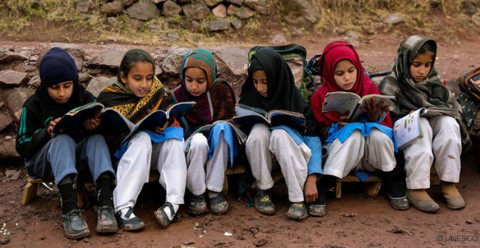 One in every five children, adolescents and youth is out of school worldwide 2018-03-02 New figures on the number of children out of school worldwide reveal that despite decades of efforts to get every child into the classroom, progress has come to a standstill. According to data from the UNESCO Institute for Statistics (UIS), about 263 million children, adolescents and youth worldwide - one in every five - are out school, a figure that has barely changed over the past five years. The new numbers are published as delegates gather in Paris for the fourth Sustainable Development Goal (SDG)-Education 2030 Steering Committee meeting. The Committee is a unique body providing strategic guidance on the advancement of the Education 2030 Agenda. SDG4 includes a concrete commitment to ensure that every girl and boy is completing a good quality primary and secondary education by 2030. The rate of progress, or the lack of it, varies by age group, according to a UIS paper released today. At primary level, the out-of-school rate has barely moved at all over the past decade, with 9% of children of primary age (about 6 to 11 years), or 63 million, out of school. In addition, 61 million adolescents of lower secondary age (about 12 to 14 years) and 139 million youth of upper secondary age –one in every three – are not enrolled in school. These youth, between the ages of about 15 to 17 years, are four times more likely to be out of school than children of primary age, and more than twice as likely to be out of school as those of lower secondary age. “These new figures show starkly the size of the gap that needs to be closed to ensure universal access to education,” says UNESCO Director-General Audrey Azoulay. “We need much more comprehensive and targeted approaches together with more resources to reach those children and youth who are denied the right to education, with a special emphasis on girls and on improving the quality of education for all. This is the greatest urgency for unlocking progress towards SDG4.” The UIS figures confirm that across sub-Saharan Africa one in every three children, adolescents and youth are out of school - with girls more likely to be excluded than boys. For every 100 boys of primary age out of school, there are 123 girls denied the right to education. The new data also highlight a gulf between out-of-school rates in the world’s poorest and richest countries, with an upper-secondary out-of-school rate of 59% across the world’s low-income countries, compared to just 6% in high-income countries. According to Silvia Montoya, Director of the UIS, “Access to education is only part of the picture. We also have a learning crisis, with one in six children and adolescents not reaching minimum proficiency levels in reading or mathematics; the majority of them are in school. Education has to deliver for every child, which requires effective monitoring to ensure that all children are in school, and that they are learning what they need to know. That is why the UIS, which is the official data source for SDG 4, is developing new indicators on equitable education and learning outcomes.” The new figures reinforce calls for far greater global investment in education at all levels to ensure progress towards SDG 4, including more resources for data gathering and analysis to monitor the pace and equity of that progress. These issues will be on the agenda of the fourth SDG-Education 2030 Steering Committee, the main global consultation and coordination mechanism for education in the 2030 Agenda for Sustainable Development. The Committee meets once or twice a year to provide strategic advice on policies, financing, monitoring and reporting and advocacy. It is composed of 38 members representing a majority from Member States, together with eight UN agencies, the Global Partnership for Education, the OECD, regional organizations, teacher organizations, civil society networks, in addition to representatives from the private sector, foundations, youth and student organizations. *** Resources:Link to new paper on out-of-school children: http://uis.unesco.org/sites/default/files/documents/fs48-one-five-children-adolescents-youth-out-school-2018-en.pdfLink to data on learning crisis: http://uis.unesco.org/sites/default/files/documents/fs46-more-than-half-children-not-learning-en-2017.pdf For more information contact:Amy Otchet, UNESCO Institute for Statistics (Montreal, Canada), a.otchet@unesco.org. tel: +1 514 343 7933 URL:https://en.unesco.org/news/one-every-five-children-adolescents-and-youth-out-school-worldwide
 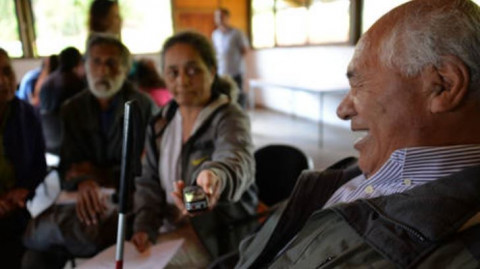 The Rapa Nui language is alive but endangered: new “Linguistic and Cultural Revitalization Plan” addresses the challenge of strengthening it 2018-03-01 Vicky Haoa has dedicated years to the strengthening of the Rapa Nui language: "Language is part of our way of being, our thoughts, our feelings, our joys and much more," he says. (Santiago, 21 February 2018.) This plan emerged in the context of Chile’s education reform after the first citizen dialogue was held in Rapa Nui (Easter Island, Chile) in October 2014. The focus was “What education do we dream of?” The design of this project included the application of a socio-linguistic survey that was completed by 542 people. The results suggest that the Rapa Nui language enjoys a high level of respect and prestige in the community, even among those who do not speak it. They also indicate that it is a defining element of speakers’ identity and that there are limited opportunities to learn it outside of the family milieu. This participatory process began in 2014 when Chile’s Ministry of Education (Mineduc) visited every province in the country to gather information from members of the public on what a dream education reform would look like. “The Rapa Nui community stated that they agree with structural changes to the education system as long as they consider and respect intercultural education, the indigenous world view and the history of the communities, as well as other elements that protect education that is relevant to the territories”, explained Andrés Soffia, the Coordinator of the Citizen Participation and Inclusion Unit (Mineduc). During subsequent encounters with the Rapa Nui people, particularly between members of educational communities, Mineduc and UNESCO, it became clear that there was a need to analyze the current situation of the Rapa Nui language and culture, and this became one of the project objectives. The cultural and linguistic revitalization project began with an assessment of the state of linguistic competency of the Rapa Nui language among the island’s population. Efforts also were made to ascertain the community’s perceptions of education and the place that Rapa Nui language and cultural heritage hold in it. Experts worked with the community to gather data on the measures that the Rapa Nui people believe are necessary in order to achieve linguistic and cultural strengthening. The work conducted during the first phase (2015) concluded with the development of a linguistic and cultural situation report on the Rapa Nui people. The document was completed with community participation and included the design and pilot application of a socio-linguistic survey in order to determine the state of vitality of the Rapa Nui language. The second phase of the process (2016) consisted of analyzing the results of the pilot application and construction of the final instrument, which was applied between October and November 2016. During 2017, progress was made on the analysis of the survey results and design of the plan of action based on the assessment conducted in collaboration with the Mineduc teams involved in the process. The proposal has three axes: 1) epistemic and intercultural participation and dialogue; 2) intercultural institutional policy design and practices; and 3) adjustment of internal and external regulations. A plan of action has been designed for 2018-2021 that covers various measures in the following lines of action: Ongoing communications efforts to raise awareness of and publicize actions and results; Participation in and strengthening of the use of the language from and in communities and families; Intercultural institutional management; Formal and informal curriculum development; Ongoing training of teachers, traditional educators, and Rapa Nui experts; Development of teaching materials in immersion, bilingualism and the Indigenous Language Learning Sector; Systematization, monitoring, support and advising on the process. During 2018, work will be conducted to include traditional educators in the education system; gather information on learning spaces; provide opportunities for reflection with the educational community; design evaluation instruments for linguistic and cultural competencies; design a training policy for teachers, traditional educators and experts; foster participatory design of teaching materials for linguistic immersion; and create local and institutional panels for the management and monitoring of the plan, among other actions. “It was necessary for this linguistic and cultural strengthening to go beyond the contents or topics included in national education programs and for it to address the entire experience of the Rapa Nui people. We believe that we are experiencing a hopeful event for efforts to increase recognition of the richness of cultural diversity in Rapa Nui and its unique contribution to a better society for all,” stated Atilio Pizarro, the Section Chief for Planning, Management, Monitoring and Evaluation at the Regional Bureau for Education in Latin America and the Caribbean (OREALC/UNESCO Santiago). The survey and its results “If there are no children who speak our language, and we as adults die, when these children are adults and become parents, they won’t speak the language and will not be able to teach it to their children,” laments Vicky Haoa, member of the Rapa Nui Language Academy. The socio-linguistic survey is meant to determine the level of vitality of the Rapa Nui language based on the guidelines set by UNESCO (UNESCO, 2003). The survey was built in Spanish and Rapa Nui, and the target population was composed of school-aged children, youth and adults from Rapa Nui families (Rapa nui or mixed families) who live on Easter Island. The survey was conducted by 28 individuals of Rapa Nui origin between October 26 and November 18, 2016. The total estimated population based on the sample was 3,000 people, 542 of whom participated in the survey. The survey results show that over 70% of members of the Rapa Nui ethnic group who are aged 65 or older have a high level of linguistic competency. As the age level decreases, the percentage of respondents who have a high level of competency also gradually decreases, reaching a low of just 16.7% in the youngest group (8-12 years). The data also indicate that the Rapa Nui language is dominant in private environments and in social, family and traditional activities, while Spanish is the dominant language in areas of new and public use. In addition, the Rapa Nui language enjoys respect and prestige in the community, even among those who do not speak it. Also, it is a defining element of speakers’ identities. However, there are limited opportunities to learn it outside of the family milieu, and more decisive action by the State and public institutions is required to protect and strengthen it. Assuming that speakers of the language are those who demonstrate a high level of competency, representing between 59% and 63% of the population with 95% confidence (in terms of the scale established by UNESCO, 2003), this proportion places Rapa Nui on the third level (“clearly in danger or threatened”), indicating that the majority of the community speaks the language. The scale ranges from 0 (no one speaks the language) to 5 (everyone speaks the language). Despite these hopeful statistics, the qualitative evaluation indicates that the language is endangered. As such, for Vicky Haoa, member of the Rapa Nui Language Academy, strengthening the Rapa Nui language also has to do with pursuing the dream “that my language will not disappear, because language is part of our way of being, of our thoughts, our feelings, our joys and much more. If our language disappears, one cannot speak of the existence of a culture called Rapa Nui. We show who we are through our language.” Paula Pilquinao, who represents the Indigenous Intercultural Education Office of the Undersecretary of Education of Chile, agrees with Vicky Haoa: “All knowledge is implicit in the language; the entire culture is implicit in the language. If the language is lost, the entire culture is lost, all of the knowledge that that language carries. That is where its importance lies. If the children no longer know the language, they won’t know their culture, and so they lose their identity,” she explained. **** According to UNESCO, a language is considered endangered when it ceases to be used, is used in a limited number of spaces, stops being taught to new generations or when there are few opportunities and resources available for teaching and learning it. UNESCO recognizes the importance of supporting the efforts of indigenous communities to strengthen their language and culture and provide the conditions necessary to allow them to transmit their knowledge, values and unique ways of life to future generations. International experiences and studies show that bilingual (or multilingual) education systems based on the mother tongue in which the mother tongue is taught to the child along with the introduction of a second language can improve performance in the second language and other topics. URL:http://www.unesco.org/new/en/santiago/press-room/our-stories/the-rapa-nui-language-is-alive-but-endangered/
 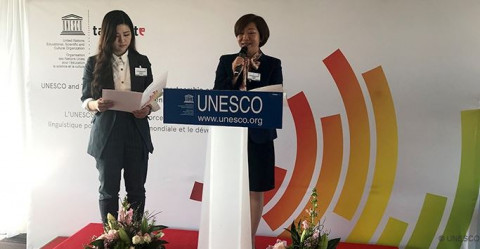 UNESCO and Talkmate strengthen their partnership on linguistic diversity for global citizenship and sustainable development 2018-02-27 UNESCO and Talkmate announce the strengthening of their partnership on the development of the UNESCO World Atlas of Languages by expanding joint efforts for the organization of the 2019 Year of Indigenous Languages and the promotion of global citizenship through linguistic diversity and multilingualism. Over 50% of some 6,700 languages spoken nowadays are estimated to be in danger of totally disappearing or are severally under-resourced with limited access to appropriate language tools and resources. In particular, languages spoken by indigenous peoples represent a huge percent of these endangered languages. This situation embodies a challenge not only to the preservation of their cultural identity and traditions sharing, but also demonstrates the impossibility to access the online community in their respective languages. This threat to access a multilingual cyberspace should be considered as a matter of imperative urgency since only 5% of the world´s languages are currently presented in cyberspace. The joint partnership between UNESCO and Talkmate on the World Atlas of Languages aims at developing an innovative and scalable ICT-supported platform to access data on linguistic diversity around the world. This partnership is not only contribute to the promotion of languages learning via the cyberspace, but also encouraging the collaboration of stakeholders to raise awareness on the importance of multilingualism by the effective application of ICTs, which are vital educational and communicational tools that help communities and organizations to access education, share information, provide services and goods, to which citizens are entitled in the context of open, pluralistic, participatory, sustainable and inclusive knowledge societies. In a long-term the partnership will contribute to fulfil the 2030 Agenda for Sustainable Development as a whole, to ensure a multilingual cyberspace by the effective application of ICTs, which are vital educational and communicational tools that help communities and organizations to access education, share information, provide services and goods, to which citizens are entitled in the context of open, pluralistic, participatory, sustainable and inclusive knowledge societies. UNESCO, together with Talkmate, is committed to safeguard the world´s diverse linguistic, cultural and documentary heritage. Therefore, the collaboration between the two partners will be extended also to support the International Indigenous Year 2019, which UNESCO, as the UN leading Agency, is organizing. An official announcement of the extended and renewed partnership agreement was made during the ceremony that took place on 23 February 2018 at the UNESCO Headquarters in Paris. URL:https://en.unesco.org/news/unesco-and-talkmate-strengthen-their-partnership-linguistic-diversity-global-citizenship-and
 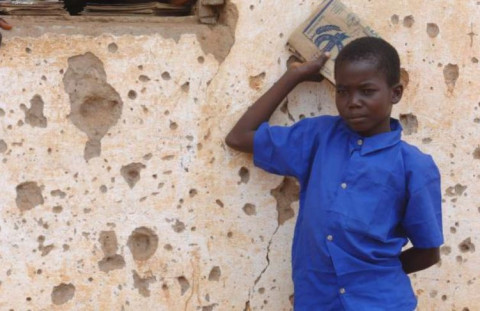 In South Sudan, ‘school is part of the peace-building process’ 2018-02-26 Esther Akumu is the Director of the Department of International Relations in the Ministry of General Education and Instruction in South Sudan. In the latest PoleMag, published by IIEP-Pole de Dakar, she answers several questions on the important role of school in building social cohesion. In South Sudan, the Ministry of General Education and Instruction (MoGEI) has developed a Strategic Education Plan 2017-2022, which addresses the issue of risk. Why has this dimension been integrated into sector planning? The recent crisis affecting our country has made us realise that we are not prepared to deal with all the situations. The conflict has forced approximately 1,000 schools to close down and it is estimated that more than 1.8 million children of primary school age have not attended school due to violence across the country. We now know that disasters can happen at any time. We want to be prepared for any eventuality, and know what to do in any scenario. That is why the government decided to integrate risk management into the recent education sector plan covering the period 2017-2022 and to ensure that this dimension is budgeted for. Furthermore, when we observed the work of our partners in education in emergencies, we found that the collaborative dimension was essential to achieving results. Integrating risk into planning has enabled a closer relationship between government and partners on this issue. The development of the Education Sector Plan, led by the MoGEI, brought together a large number of education sector actors at central and local level, civil society, the Education Cluster, UNESCO, UNICEF and UNHCR. This dialogue in itself is very constructive in anticipating crises that may arise. Integrating the issue of risk into planning helps to make school stakeholders more aware of the problems that may arise. The educational community must have the necessary knowledge to face a period of crisis. This awareness is a first step towards effective risk management. How exactly is the strategic plan sensitive to system risks and vulnerabilities? Can you give examples? Various issues directly linked to security and social cohesion have been integrated into the ESP: secure learning spaces, educational opportunities for demobilised child soldiers and out-of-school children, and improved cooperation between MoGEI and its partners in the humanitarian sector. The Ministry has also developed a new curriculum that includes elements of security, resilience, and social cohesion. Work between technical partners and national officials, through practical planning workshops, has helped to inform the technical aspects of the work and facilitate the ministry’s discussions on setting strategic priorities. The active involvement of state and non-state stakeholders has helped to ensure ownership of the planning process. The involvement of humanitarian and development partners is essential to ensure that crisis management is aligned with government priorities. Risk management policy is an integrated process that involves the broadest possible participation of government, partners, NGOs, parents, and students. It is a complex process, but it is the involvement of everyone in the process that makes it functional and effective. What results have been achieved through this approach? Together with partners, we have succeeded in getting many children back into school. Education is not waiting. For us it is a great achievement to have ensured that 400,000 children return to school and that close to 1,000 temporary learning spaces are established through the Back to Learning programme. In the case of internally displaced persons, children continue to have access to education either in refugee camps or in community public schools. It is a very positive process because every child in school learns to live with different people and tribes, who sometimes consider themselves enemies. The school is a sanctuary, a protected area, where children of all origins are brought together in a safe place. In this sense, school is part of the peace-building process: children learn to live together and bring this message of cohesion back to their families. As we implement this programme, public awareness and resilience capacities are strengthened. A fundamental aspect of our risk management policy is to raise awareness among children and that they in turn take the culture of peace with them outside the classroom. What a child learns goes beyond school. That is how the country will change. URL:http://www.iiep.unesco.org/en/south-sudan-school-part-peace-building-process-4400
 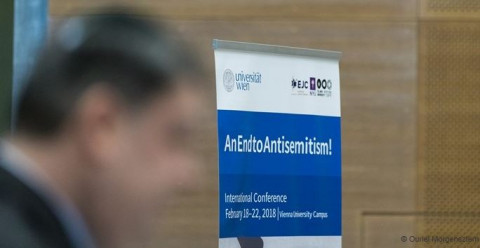 UNESCO reaffirms commitment to counter antisemitism at international academic conference 2018-02-23 The International Conference An end to antisemitism! gathered from 18 to 22 February in Vienna, Austria 140 experts on antisemitism and over 800 participants to explore measures and policies to prevent and combat antisemitism. The conference, organized by the Universities of Vienna, Tel Aviv, New York and the European Jewish Congress, reviewed current research on the roots of antisemitism in history - from antiquity and the middle ages to modern times and contemporary societies. It explored its changing nature and social and political functions in various environments, and the impact of policies in a wide range of fields in curbing the rise of antisemitism over the past two decades. The discussions brought together historians, political and social scientists, education specialists, religious and community leaders, human rights activists, and policy makers, as well as representatives of international bodies including UNESCO, the European Commission, the European Union Agency for Fundamental Rights and the Organization for Security and Cooperation in Europe. UNESCO was invited to provide insight in the context of "leadership talks" involving public figures and politicians including Heinz Fassmann, Austrian Federal Minister of Education, Science and Research; Christian Kern, former Federal Chancellor and leader of the Austrian Social Democratic Party; Natan Sharansky, Chairman of the Jewish Agency for Israel, and Andrew Baker, Personal Representative of the OSCE Chairperson-in-Office on Combating Anti-Semitism. Drawing on UNESCO's mandate to promote education for global citizenship and dialogue through cultural understanding, Ana Luiza Thompson Flores, Director of UNESCO Regional Office in Venice presented UNESCO's work to address antisemitism through education, notably in the context of its work on the prevention of violent extremism, and activities relating to education about the Holocaust and genocide. Noting the prevalence of antisemitism as a political phenomenon, including in societies where there are no Jews, Ana Luiza Thompson Flores reminded all of the importance of being able to identify, monitor and address contemporary antisemitism under all its guises, and when it expresses itself through distortion, relativization and denial of the Holocaust. "By cultivating ideologies anchored in hate, prejudice, and inequality of identities, anti-Semitism threatens the realization of all people’s human rights" said Ms Thompson Flores, highlighting avenues to address antisemitism through education, for example by encouraging self-reflection, critical thinking, media literacy skills, and learning to understand better the specific functions of different forms of this hatred in the past and today. She underlined the importance of equipping education establishments with the capacity to address manifestations of antisemitism in the classroom, and to provide educators with efficient teaching materials and pedagogies: "Against new forms of anti-Semitism, we must constantly reinvent our tools. This effort requires policy review, curriculum and textbook revision, new education materials, dedicated teacher training, review of effective pedagogies, stronger synergies with the non-formal sector of education" she said, announcing the launch in May 2018 of new Policy guidelines to address antisemitism through education, to be published jointly by UNESCO and the OSCE Office for Democratic Institutions and Human Rights. URL:https://en.unesco.org/news/unesco-reaffirms-commitment-counter-antisemitism-international-academic-conference
 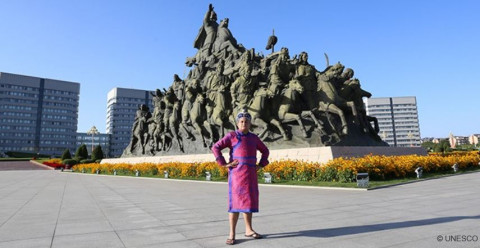 Mother Language – Bringing us together 2018-02-22 Today is International Mother Tongue Language Day and we caught up with 10th UNESCO Youth Forum participant, Fale Lesa, who works to promote the preservation of intangible cultural heritage. Fale is a passionate proponent of the importance of mother tongue learning. They say it takes a village to raise a child. But I grew up wrestling with more than one. Native in Samoan and immersed in her rich culture and heritage I was confident at home, and in our wider ethnic community, where I felt accepted. School was that weird place where the sky was always falling. It was there I quickly discovered I was a minority and that most people had a very negative view of my kind. They laughed at the way I spoke and excluded me because I was unusual. So, in my desire to fit in, I pursued an experiment I am not terribly proud of today, perhaps shared by other immigrants too. I needed to be less Samoan for others to like me. It started by speaking with a polished accent, insisting that my relatives use English, even avoiding Samoan friends and replacing them altogether. It would take at least a decade before I realized inner demons were robbing me of an authentic experience. Here I was trading thousands of years in tradition and identity for just a few years of schoolyard popularity. The all too powerful language of the mob rule was drowning out my own voice. You see language is like a double-edged sword. It has divided us in much the same way that it has brought us together. It was the language of the majority that made me feel primitive rather than equal. A language of privilege that compelled me to use less of my own. Thankfully, I was one of the lucky ones and I now lead a life of duality. I am neither Samoan nor New Zealander. I am both and it is truly glorious! Sometimes, society fools you into choosing one or the other. In just a couple of generations, half of all languages will vanish from the face of this earth. Each one with its own record of a people with mutual destiny. It seems in our haste to go forward, we too are selling ourselves short by abandoning those who came before us. When Polynesians left Asia to settle the Pacific, we brought our languages along for the voyage. In them, we spoke life to our unique customs and traits. Embracing their new surroundings, my ancestors also honoured ways of the old and would pass their wisdom down to this very day. I write for all of them and for the struggles like mine around the world that threaten our lavish tongues and ideas. Assimilation should never mean shame or disregard. It should symbolize coexistence and the preservation of lessons from the past as we charter a future together. I hope that my time at school dies with this generation and that we learn to value diversity as a strength. But most of all, that we may fight to save our endangered languages because each one is an anchor to our origin stories. Let the record show that there is no tomorrow without yesterday. That mother language day is as much a challenge as it is a celebration. Now is the time to champion technology and social change to help promote the survival of all languages. Congratulate someone who knows another language however small. Make them feel great because they are living anchors to our history. URL:https://en.unesco.org/news/mother-language-bringing-us-together