
News
Catch up on what’s happening in the world of global citizenship education.
1,668 results found
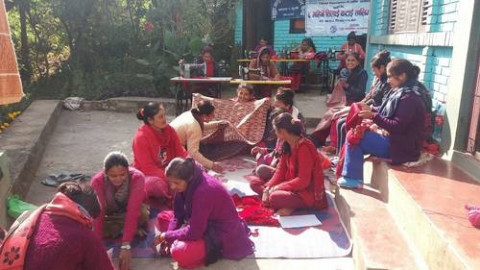 UNESCO Promotes Lifelong Learning through Six-month Vocational Training in Gulmi 2018-02-01 With the aim to empower women to explore employment opportunities, UNESCO provided a six-month long vocational training programme to the women of Gulmi in collaboration with Resunga Community Learning Centre (CLC) in the district. The participants have expressed that the training which included knitting, sewing, and weaving was helpful for them to find their source of incomes. “I was looking for this kind of training which can make me skilled enough to earn a living and become independent,” shared Binu Lama, a participant of the training held in January 21018 adding that she is now looking forward to open a tailoring shop by herself. Some 20 women involved in various non-formal education programmes at Resunga CLC were sensitised on the significance of lifelong learning through the hands-on practice of using sewing machines and manufacturing household clothing items such as cushion covers, and beddings amongst others. Balaram Timalsina, National Professional Officer at UNESCO Office in Kathmandu stated that the skill development-training programme is crucial in bringing impactful changes in the society. He added that such training motivates the learners to develop new skills engaging in relevant lifelong learning initiatives and builds their capacities to become economically independent. Radha Panthi, Chairperson at Resunga CLC, noted that the participants kept up their enthusiasm through the training and are now planning to either work in an existing enterprise or start tailoring enterprises of their own. UNESCO continues to work with the CLCs and other partners to support in Nepal’s achievement of the UN Sustainable Development Goals and, in particular, the SDG 4: ‘Ensure inclusive and equitable quality education and promote lifelong learning opportunities for all’ under the Capacity Development for Education (CapED) Programme. युनेस्कोद्वारा छ-महिने व्यवसायिक तालिमका माध्यमबाट गुल्मीमा जीवनपर्यन्त सिकाइको प्रबर्द्धन महिलाहरुलाई रोजगारीका अवसरहरुको खोजी गर्न सशक्त बनाउने उद्देश्यले युनेस्कोले रेसुङ्गा सामुदायिक सिकाइ केन्द्रसँग मिलेर गुल्मी जिल्लाका महिलाहरुलाई छ महिने व्यवसायिक तालिम प्रदान गरेको छ । तालिमका सहभागीहरुले सिलाई—कटाई जस्ता गतिविधिहरु समावेश गरिएको उक्त तालिमले आफूलाई आम्दानीका स्रोतहरु खोजी गर्न सहयोग पुर्याएको धारणा व्यक्त गरेका छन् । जनवरीमा २०१८ मा सञ्चालित उक्त तालिमका एक जना सहभागी विनु लामाले आफू लुगा सिलाउने पसल खोल्ने तरखरमा रहेको बताउँदै “म यस्तै खालको तालिमको खोजीमा थिए जसले मलाइ जीविकोपार्जन गर्न तथा आत्मनिर्भर बन्नमा दक्ष बनाउन सकोस्” भन्नु भयो । रेसुङ्गा सामुदायिक सिकाइ केन्द्रमा विभिन्न अनौपचारिक शिक्षा कार्यक्रमहरुमा संलग्न करिव बीस जना महिलाहरुलाई सिलाइ मेसिनको प्रयोग गरी चकटी (क्युसन)को खोल, विछ्यौना लगायत घरायसी लुगाका सामानहरु बनाउने व्यवहारिक अभ्यासका माध्यमबाट जीवनपर्यन्त सिकाइको महत्वका बारेमा जागरुक बनाइएको थियो । काठमाडौँस्थित युनेस्को कार्यालयका नेशनल प्रोफेशलन अफिसर बलराम तिमल्सिनाले समाजमा प्रभावकारी परिवर्तन ल्याउनका लागि सिप विकास तालिम कार्यक्रम महत्वपूर्ण हुने उल्लेख गर्नु भयो । उहाँले सिक्ने व्यक्तिहरुलाई यस्तो तालिमले उपयुक्त जीवनपर्यन्त सिकाइ कार्यक्रमहरुमा संलग्न भइ नयाँ सिपहरुको विकास गर्न तथा आर्थिक हिसावले स्वतन्त्र बन्न अभिप्रेरित गर्ने बताउनु भयो । रेसुङ्गा सामुदायिक सिकाइ केन्द्रका अध्यक्ष राधा पन्थीले सहभागीहरुले तालिममा देखाएको जागरुकतालाई कायम राखेको र उनीहरुले भई राखेकै व्यवसायमा काम गर्ने कि आफैँले नयाँ सिलाइ व्यवसाय शुरु गर्ने भनेर अहिले योजना बनाइरहेको उल्लेख गर्नु भयो । संयुक्त राष्ट्र दिगो विकास लक्ष्य, खास गरेर ‘समावेशी एवं समतामूलक गुणस्तरीय शिक्षाको सुनिश्चित गरी सबैका लागि जीवनपर्यन्त सिकाइका अवसरहरुको प्रबर्द्धन गर्ने’ लक्ष्य नं. ४ को प्राप्तीमा नेपाललाई सघाउन युनेस्कोले शिक्षाका लागि क्षमता विकास कार्यक्रम अन्तर्गत विभिन्न सामुदायिक सिकाइ केन्द्रहरु तथा अन्य साझेदारहरुसँग काम गर्दै आइरहेको छ । URL:http://www.unesco.org/new/en/kathmandu/about-this-office/single-view/news/unesco_promotes_lifelong_learning_through_six_month_vocation/
  Antisémitisme : tirer les enseignements de l'histoire 2018-01-26 Over the course of history, anti-Semitism has continued to raise its ugly head. It first emerged under religious pretexts in the Middle Ages, then appeared as nationalism from the nineteenth century onwards, before assuming a scientific claim in Nazi ideology. Since the end of the Second World War, it has reappeared, in the guise of anti-Zionism. History urges us to be vigilant. Robert Badinter draws lessons from it that are rich with meaning − and warnings. By Robert Badinter Anti-Semitism is not a contemporary phenomenon. It is a centuries-old evil. Since the capture of Jerusalem by Titus in 70 AD, since the dispersal of the Jews, mainly throughout the Mediterranean basin, when they were sold as slaves in such large numbers that market prices (to use a modern economic term) plummeted in the Roman Empire − the condition of the Jews for two millennia, especially in Europe, has never ceased to involve exclusion, suffering, and persecution.Since that distant Roman period, I would say we know of three forms of anti-Semitism, which sometimes merge. From religious to nationalist and racial anti-Semitism The first form of anti-Semitism is religious. Since Constantine’s Edict of Milan recognizing Christianity as an official religion in 313, anti-Semitism has always nourished itself on the hatred of the “Jewish deicide”, those who killed Jesus Christ. Throughout the periods of persecution and massacres, the possibility was sometimes – though not always – offered to Jews to escape death or exile by forced conversion, even if they became Jews again when times were less cruel. The long, culturally rich history of the Marranos, particularly in the Iberian states, is an illustration of this. With the birth of modern nations, anti-Semitism became essentially nationalist. The Jews, even when they were natives of the countries in which they lived, were always foreigners who were suspect. The fact that the Jews had quite naturally assumed responsibilities, despite the ostracism inflicted on them, and that they held eminent positions in political, economic and financial spheres, made them, at the slightest national crisis, potential traitors − always in the service of a mythical “international Jewish conspiracy” imagined by the anti-Semites. This was particularly the case in France. I do not need to recall the significance of the Dreyfus affair (link is external) (a political scandal and notable example of a miscarriage of justice, 1894 to 1906) in this respect. Because if we had been looking at things with lucidity for a moment, there was no reason why Alfred Dreyfus − a wealthy Alsatian Jew who hated Germany and wanted, first of all, to serve France – should be a traitor. By the end of the nineteenth century, minds had evolved. Anti-Semitism strove to be scientific in the image of the modern disciplines. It became racial: the Jews being defined as a “race” of mysterious eastern origin that could not be assimilated by the peoples among whom they settled – especially those who claimed to belong to a superior Aryan race, who felt threatened with degeneration by the presence of Jews, with their numerous flaws, in their midst. Recognition of Jewish citizenship Thus, in the form of prohibitions, consignment to ghettos, markings on clothing – as if they were dangerous animals – Jews appear, in the long history of humanity, as an accursed species. Hence, the extreme importance we must attach to the French Revolution, which for the first time in history, in 1791, proclaimed that Jews living in France would be considered full French citizens.A little anecdote: on the day the citizenship of the Jews was voted on, at the end of the Constituent Assembly, the Dauphine, sister of Louis XVI, wrote these words to a cousin of the royal Austrian Habsburg family in Vienna: “The Assembly has reached the height of its folly, it has made the Jews citizens.” If I stress this point, it is because the desire to make Jews full citizens, attained with difficulty in the parliamentary proceedings, is exactly what the Nazis hated the most – namely, human rights and the philosophy of the Age of Enlightenment. As stated in Adolf Hitler’s Mein Kampf, the Jews must be excluded absolutely from the community of the German people. This rabid anti-Semitism is at the origin of the racial laws of the Third Reich adopted in Nuremberg in 1935, the purpose of which, I would remind you, was for “the protection of German blood and German honour” − supposedly defiled by the presence of the Jews. I leave aside the impossibility that the racial theory has encountered, of finding scientific criteria. The scholars of the Third Reich sought hard and, of course, found nothing. And so they fell back on religious practice. The criteria adopted by the Nuremberg laws forbade any possibility for Jews to leave, through any kind of conversion, the herd of these evil beings to which they belonged by birth. A wealth of significant lessons and warnings I will not repeat here the long list of increasing persecutions suffered by the Jews − first in the Third Reich and then in the territories occupied by the German army. Today, countless studies have unveiled the scope and the horror of the Jewish genocide by the Nazis. Nor will I return to the remarkable historical and philosophical works which have dealt with this phenomenon. What I would like to emphasize is this, which seems to me the most significant and cautionary lesson: what is quite remarkable and difficult to understand is that a great Christian people – cultivated among all the peoples of Europe, from which emerged numerous geniuses of art, thought and scientific research – was the bearer, organizer and perpetrator of the most terrible persecutions against the Jews that have ever blighted the history of Europe. It is essential to remember this, for in Europe there were no countries where the love of culture, the passion for art, especially music, and scientific research, were held higher than in Germany, at the end of the Weimar Republic. This is precisely UNESCO’s opportunity for reflection. Because if there was one country that shone by its philosophy, it was Germany − Germany before Hitler. And it is this country – yielding to every fury of anti-Semitism and racism – that orchestrated the cruellest episodes the Jews have ever known. The lesson – and that is why I am insisting – is that culture, knowledge, and a love of the arts are not enough to constitute insurmountable ramparts against anti-Semitism, since it was here that it established itself with the most terrible horror.Let me be understood clearly: in no way do I mean that we – disciples of the Enlightenment, who believe, throughout every ordeal, in the progress of humanity through the benefits of enlightened education and just institutions based on the philosophy of human rights – must renounce the struggle for ever-needed progress. But we must take into account the fact that neither education nor art, per se, nor culture in the broadest sense of the word, are by their very nature sufficient defences against the fury of racism and anti-Semitism. We must learn from this. Anti-Zionism The Third Reich collapsed, its founder committed suicide, his main henchmen were hanged, or they vanished. The immensity of the Jewish genocide in Europe was discovered, which gave rise to a powerful movement − at the newly-created United Nations − in favour of the creation of a Jewish state. The Allies had, moreover, already made such a commitment between 1914 and 1918. The creation of a Jewish state in Palestine − which we must remember ensued from a United Nations decision, UN Resolution 181(II) of 29 November 1947 − was not accepted by all. The result was a war, launched by the armed forces of the neighbouring Arab states. They invaded Palestine, the conflict turned to the advantage of the Jews and the rest is history, The Israeli-Palestinian conflict has, in fact, never ceased since the creation of the State of Israel. I am not going to discuss the legitimacy of the rights of the various parties here, nor the best solution to end this conflict – these issues need to be discussed in other forums. But that is the reality. What is certain is that in the context of the Israeli-Palestinian conflict, anti-Semitism has once again spread widely under the name of anti-Zionism. We must have the lucidity to recognize that under this label that refers to Zionism, it is indeed the Jews, and the Jews everywhere, who are targeted. And I would say that anti-Zionism under the surface is nothing but the contemporary expression of anti-Semitism, namely, hatred of the Jews. The new battleground Today's anti-Semitism, of course, does not present itself in the same form as the one dating back to Constantine. It widely and successfully uses social media; speeches and videos, posted on certain websites, are based on a particularly perverse rhetoric. I have pondered at length what might have happened in pre-1939 Europe if Dr. Goebbels (Reich Minister of Propaganda of Nazi Germany, 1933 to 1945) had had access to the same technical means that we have today in the digital age. This is the new battleground, as far as the fight against anti-Semitism is concerned.I would simply state my conviction, as a man who has lived a long time, and who has never seen anti-Semitism lose its hold − that as long as the Israeli-Palestinian conflict continues, it is clear to me that hatred of the Jews, far beyond the Middle East, will continue to inflame some Muslims, especially the younger ones, inspired by the internet and the shrill propaganda of the violent images familiar to us. Hence the atrocious attacks that occur throughout the West, notably in France and in the Middle East, where the conflation of “Jewish equals Zionist” feeds anti-Semitic hatred. It is enough to look at a list of the victims of the crimes committed in the last few years.A recent image haunts my mind: a man, pursuing Jewish children in a Jewish school, and a little girl running away. And because she is running, this man grabs her by the hair and shoots her point-blank. What is this crime, if not a replica of the acts of the SS (The Schutzstaffel, the paramilitary organization of the Nazi party)? A horrifying expression of anti-Semitism, this image traverses time, reminding us of the Einsatzgruppen (SS death squads, 1939 to 1945) let loose in the ghettos of Eastern Europe. Action for civil peace Finally, I would like to point out, and to stress emphatically, one thing concerning action for civil peace. It is the importance of the role – and I would say for some, the fraternal role – of representatives of the Muslim community who denounce these crimes. Conflation here is another trap set by terrorism, and we certainly must not yield to it. I always stress the results of studies on terrorism by think-tanks, which have found that eighty per cent of the victims of terrorism in the world today are Muslims. I want to emphasize this fact, because conflation here would be reprehensible. My message is not overly optimistic, I know, but I believe that complacency nourishes prejudice, and that prejudice nourishes death, because it breeds hatred. If we can make the principles of the Enlightenment and human rights triumph in the minds of the younger generations, we will have served the right cause − that of peace among peoples. To mark International Holocaust Remembrance Day on 27 January, the UNESCO Courier brings you Robert Badinter's speech from the inauguration of the Round Table on Preventing Anti-Semitism, organized by UNESCO on 6 December 2016. Robert Badinter A French lawyer and Professor of Law, Robert Badinter was France’s Minister of Justice from 1981 to 1986. He is best-known for obtaining a vote in French parliament to abolish the death penalty in 1981. Badinter was appointed President of the Constitutional Council from 1986 to 1995, and elected Senator (Socialist Party) for the Hauts-de-Seine department from 1995 to 2011. URL:https://en.unesco.org/courier/correo-digital/anti-semitism-learning-lessons-history
 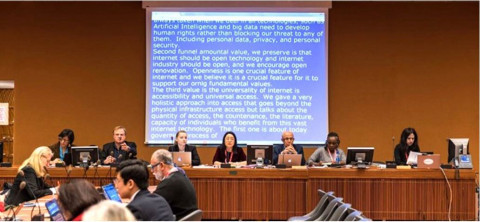 UNESCO advocates for a human rights-based approach on big data and artificial intelligence at the Internet Governance Forum 2017 2018-01-15 “As big data and artificial intelligence are in constant progression, we need privacy and data protection more than ever to ensure that these technologies benefit us all in building inclusive Knowledge Societies and achieving the Sustainable Development Goals”. UNESCO held a session on 21 December 2017 on the implications of big data and artificial intelligence in building inclusive Knowledge Societies and achieving the Sustainable Development Goals at the Internet Governance Forum in Geneva, Switzerland. UNESCO representative, Xianhong Hu, opened the debate stating that “new technologies involving artificial intelligence and big data are rapidly evolving, constantly reshaping our understandings of access to information." Reaffirming the importance of these technologies for human development, Xianhong Hu also insisted on "the crucial need to develop them along the values of UNESCO’s concept of Internet Universality which include human rights, openness, accessibility and multistakeholder participation". Big data and open data are indeed evolving and contested concepts, as is the significance of the phenomena they point to. Debates exist over issues such as ownership, accountability and transparency, as well as human rights, evolving techniques, novel applications, reuse and interoperability of data. Meanwhile, artificial intelligence (AI) is rapidly progressing. Intelligent machines are gaining the ability to communicate without human mediation via the Internet of things, learn, improve and make calculated decisions in ways that will enable them to perform tasks previously thought to rely solely on human skill and learning, raising issues for the future of learning and creativity. Mila Romanoff from United Nations Global Pulse, a special initiative of the Secretary General on big data and artificial intelligence, said that “big data and artificial intelligence can be very valuable in understanding people’s needs, especially in times of humanitarian crisis. At the same time, these new technologies can present some risks, particularly in terms of privacy and data protection”. In line with the previous speaker, Sophie Kwasny from the Council of Europe said that "the potential benefits of big data and artificial intelligence for humankind are huge. Great challenges also come with them, especially regarding human rights. At the Council of Europe, we are working on modernizing our 1981 Convention on the subject, including for example a right not to be subject to a decision solely based on the automatic processing of data". Nanjira Sambuli from the Web Foundation then cautioned about “all the hope we may want to place in what big data and artificial intelligence will do for those who have been left behind traditionally. These technologies can be very harmful too, they can represent tools of oppression and further divides”. Nanjira Sambuli then concluded her presentation saying that “no technology will make up for the lack of political or social will to actually ensure human rights." Tijani Ben Jemaa from ICANN/ FMAI addressed the data protection side of the debate and talked about how data can be collected, processed and analyzed to improve the quality of everyone’s life. In this sense, big data can be “a source of innovation and growth”. He then talked about how, at the same time, “collected data can be used for personal attacks, for business hijacking, for political interests, they can be sold, they may be used against us without our knowledge”. Hence the need to protect data with other technologies, with legal tools and digital literacy. Frits Bussemaker, Chair of the Institute for Accountability and Internet Democracy said that “we talk about consent, about ethics, about values. But the translations and definitions of those differ from countries and cultures. We therefore need a law for the Internet and we need to make those who are collecting and using data accountable”. Other participants talked about the misuse of data for oppression purposes, data leaks, as well as data and information literacy and the development of guidelines. Xianhong Hu concluded the session inviting all present stakeholders to consult UNESCO’s ongoing work to promote Internet Freedom and to define Internet Universality indicators. URL:https://en.unesco.org/news/unesco-advocates-human-rights-based-approach-big-data-and-artificial-intelligence-internet
  UN urges Comprehensive Approach to Sexuality Education 2018-01-12 Close to 10 years after its first edition, a fully updated International Technical Guidance on Sexuality Education published today by UNESCO advocates quality comprehensive sexuality education to promote health and well-being, respect for human rights and gender equality, and empowers children and young people to lead healthy, safe and productive lives. “Based on the latest scientific evidence, the International Technical Guidance on Sexuality Education reaffirms the position of sexuality education within a framework of human rights and gender equality,” says UNESCO Director-General Audrey Azoulay. “It promotes structured learning about sexuality and relationships in a manner that is positive and centred on the best interest of the young person. By outlining the essential components of effective sexuality education programmes, the Guidance enables national authorities to design comprehensive curricula that will have a positive impact on young people’s health and well-being.” The Technical Guidance is designed to assist education policy makers in all countries design accurate and age-appropriate curricula for children and young people aged 5 – 18+. Based on a review of the current status of sexuality education around the world and drawing on best practices in the various regions, the Guidance notably demonstrates that sexuality education: helps young people become more responsible in their attitude and behaviour regarding sexual and reproductive health is essential to combat the school dropout of girls due to early or forced marriage, teenage pregnancy and sexual and reproductive health issues is necessary because in some parts of the world, two out of three girls reported having no idea of what was happening to them when they began menstruating and pregnancy and childbirth complications are the second cause of death among 15 to 19-year olds does not increase sexual activity, sexual risk-taking behaviour, or STI/HIV infection rates. It also presents evidence showing that abstinence-only programmes fail to prevent early sexual initiation, or reduce the frequency of sex and number of partners among the young. The publication identifies an urgent need for quality comprehensive sexuality education to: provide information and guidance to young people about the transition from childhood to adulthood and the physical, social and emotional challenges they face. tackle the challenges posed by sexual and reproductive health issues, which are particularly difficult during puberty, including access to contraception, early pregnancy, gender-based violence, sexually transmitted infections (STIs) and HIV and AIDS raise awareness of HIV prevention and transmission, of which only 34 per cent of young people around the world can demonstrate accurate knowledge complement or counter the large body of material of variable quality that young people find on the internet, and help them face increasingly common instances of cyberbullying. The Guidance was produced in collaboration with UNAIDS, United Nations Population Fund (UNFPA), United Nations Children’s Fund (UNICEF), UN Women, and the World Health Organization (WHO). **** Media Contact: George Papagiannis, UNESCO Media Section, g.papagiannis@unesco.org +33(0)145681706URL:https://en.unesco.org/news/urges-comprehensive-approach-sexuality-education
 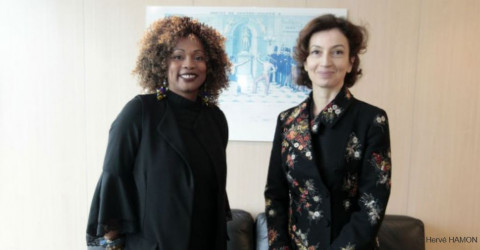 UNESCO Director-General and French Sport Minister issue joint declaration against racism in Sport 2018-01-10 Paris, 08 Janaury, The Director-General of UNESCO, Audrey Azoulay, and the Minister of Sport of France, Laura Flessel, condemned the racist slurs that clouded the world of football over the weekend. “Racism has no place on the playing fields of sport or outside them. We condemn without reserve the racist slurs directed at Blaise Matuidi, who plays for the Juventus Football Club of Turin and for France’s National Team. We denounce all the racist acts that regularly mar sporting events around the world. Sport must remain a vector of excellence, mutual understanding and tolerance. Nothing can justify the use of sport to fuel hatred, discrimination and rejection.” UNESCO and Juventus Football Club have been partners in the fight against racism since 2014. UNESCO’s 2015 report, Colour? What Colour? takes stock of the situation in both amateur and professional football with recommendations for future action. The Gioca con me initiative furthermore enables children from underprivileged backgrounds to take part in an annual training programme operated by the Juventus Academy. On this occasion, France and UNESCO reiterate their commitment to support the values of tolerance in and through sport. France is also actively engaged in the work of the International Conference of Ministers and Senior Officials Responsible for Physical Education and Sport (MINEPS), organized by UNESCO. The country intends to play a leading role in the implementation of the Action Plan adopted at the latest session, MINEPS VI, with a view to reinforcing sport education policies, the fight against doping and the transmission of the values of respect, ahead of its hosting of the 2024 Olympic Games. “People are not born racist, they become racist. Millions of passionate people follow sport and football whose purpose is to bring out what is best in us, and serve education for tolerance and respect. We call on all those responsible for sport policy at all levels to rally around this important cause,” the Minister and the Director-General declared. **** More about UNESCO and sport :http://www.unesco.org/new/en/social-and-human-sciences/themes/physical-education-and-sport/http://www.unesco.org/new/en/social-and-human-sciences/themes/physical-education-and-sport/about-physical-education-and-sport/Media Contact:Agnès Bardon, UNESCO Media Section +33 (0) 1 45 68 1764, a.bardon@unesco.orgURL:https://en.unesco.org/news/unesco-director-general-and-french-sport-minister-issue-joint-declaration-against-racism-sport
 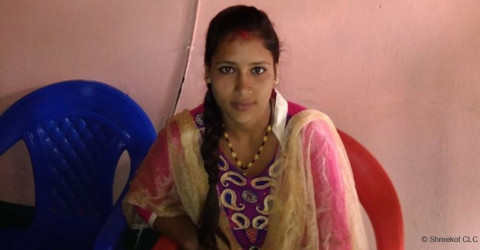 Marginalised girls and young women in Nepal realise their right to education 2018-01-08 Bhawana Bhatta became a mother at the tender age of 14 after her family married her off when she was in grade 8. Although the minimum age of marriage under Nepali law is 20 years of age, UNICEF estimates that one in 10 girls are married before the age of 15. When girls like Bhawana are forced to marry, they often drop out of school, and many will never again set foot in a classroom. Fortunately, this was not the case for Bhawana. Two years ago, Bhawana enrolled in training courses offered at the local Community Learning Center (CLC) in Baitadi. Encouraged by her facilitators, and realising the importance and the power of lifelong learning, Bhawana decided to go back to school. Today, she is proud to have overcome the constraints of her past and aspires to become a lawyer fighting for women’s rights and equality. UNESCO believes in the power of education to achieve gender equality and to empower adolescent girls and young women. Through targetted interventions supported by the UNESCO Malala Fund for Girls’ Right to Education, Nepalese girls and women like Bhawana have access to formal and non-formal education programmes that build knowledge and skills on sexual and reproductive health, income generation, and how to stand up for their rights in their communities and to elevate their status in society. UNESCO has implemented eight series of three-day trainings, empowering 236 young women with understanding and life-skills related to menstruation, family planning, safe motherhood, immunization, and nutrition. An independent evaluation of the project reveals how these initiatives are changing lives. “Initially, I was ignorant about my health; but through the training, I learned about various things impacting a healthy life. This knowledge not only improved my and my family’s behaviours, but also opened our minds to discuss sexual problems and not to hide them. I want to continue my education and I and my husband, together, have decided not to have another child”, says Bhawana. The UNESCO Office in Kathmandu will continue to engage in nationwide efforts to improve the relevancy and quality of education for adolescent girls and young women through both formal and non-formal education and in partnership with CLCs and other local stakeholders. URL:https://en.unesco.org/news/marginalised-girls-and-young-women-nepal-realise-their-right-education
 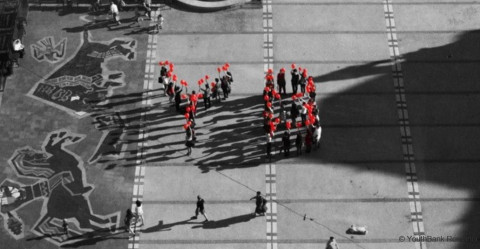 Romanian youth learn how to fundraise and shape a sustainable future 2018-01-05 At YouthBank Romania, young people take all the crucial decisions about how to raise funds and which sustainable development projects to back. The programme, an offshoot of the International YouthBank, a youth-led grant-making organization, has been running for twelve years in Romania and its success can be seen by the fact that students have now become leaders themselves within the programme. One such ex-student is Programme Manager Alexandra Soare who explains how the programme works within the particular context of Romania and describes how the organization is now poised to take a new step forward. YouthBank Romania is a non-formal education programme coordinated by the young for the young and is formed of groups of up to 20 students who meet to fund raise and choose sustainable development projects to receive the money. Once they are signed up, the young people have training sessions on fundraising, communications and grant-making. They gain hands-on experience with real money and responsibility. Projects chosen to receive funds are as diverse as group clean-ups of a neighbourhood to sponsoring a student with cancer through treatment. “We target a wide range of people, urban and rural, wealthy and not which means students get to interact with people they might not have come into contact with otherwise,” said Alexandra. Diversity is built into the programme so that, for example, often excluded communities like the Roma and the Hungarian minority are actively integrated. ‘Gamifying’ the experience “The biggest challenge we face is gaining people’s trust in a country where the NGO and Sustainable Development culture is still growing. Then we have to keep teenagers interested in the programme over the long-term. It is not that easy to convince a 16-year-old that they can raise, say, 400 euros and then at the end of the year they may see an impact. They have grown up with technology and instant results so we are trying to ‘gameify’ the process by giving small regular incentives and updates,” said Alexandra. Another bigger challenge is to keep youth and their experiences from leaving Romania, which faces many social problems, once they are adult.Despite all that, YouthBank has chalked up some major successes. “Some kids wanted to mount a festival in their school yard, something that had never been done before. The idea was to fund raise to buy equipment for children in rural areas. We are now on our 8th festival proving that it is a truly sustainable idea and has become a tradition. Each year they fund raise for a different cause. This year they came up with the idea to create fools for blind people who may be visiting so that they can ‘see’ different tourist sites in braille. So there is real innovation.” The next step is to expand. Currently the programme is running in 10 communities in Romania. The plan is to expand the network to new cities and by 2020 have 20 YouthBanks up and running around the country. Since its implementation at a national level there have been more than one thousand YouthBank members (main beneficiaries), around 3,000 grantees (secondary beneficiaries) and nearly 400,000 direct and indirect beneficiaries of implemented projects. “We would also like to shift the emphasis from purely events-based fundraising to social entrepreneurship which will be of benefit career-wise to participants, to raise the quality of the projects themselves and increase the capacity of the trainers,” said Alexandra. The last word goes to Diana Gherghelejiu, a member of YouthBank Sibiu: “After 3 years as a YouthBank member I can strongly say that this programme is an extraordinary experience for every teenager that wants to do more than homework during high school years. The phenomena through which a group of people becomes your family, a family with a common goal, feels incredible and I do not know what I’m going to miss the most: the brainstorming sessions, the interviews or the meetings. What is clear is that there’s nothing more complex, educational, interactive and fun than being a YouthBank member.” URL:https://en.unesco.org/news/romanian-youth-learn-how-fundraise-and-shape-sustainable-future
 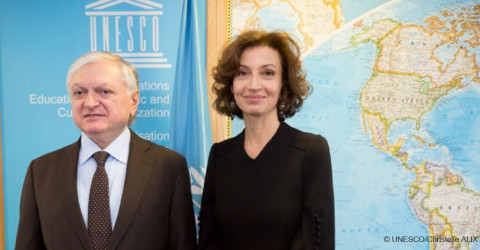 UNESCO and Armenia commit to strengthening cooperation 2017-12-28 UNESCO Director-General, Audrey Azoulay, met with the Minister of Foreign Affairs of the Republic of Armenia and President of the National Commission for UNESCO, Mr Edward Nalbandian, at UNESCO Headquarters on 21 December. On this occasion, the Minister reiterated his country's support for UNESCO's programmes and his Government’s readiness to further strengthen cooperation with UNESCO in all areas of its competence - in the field of culture, particularly the implementation of the Convention on the Protection and Promotion of the Diversity of Cultural Expressions (2005), as well as in the fields of youth empowerment, women's empowerment, and adaptation to climate change. The Minister also invited UNESCO to take an active part in the XVII Summit of La Francophonie, which Yerevan will host in October 2018, and which will be on the theme of "Living together in La Francophonie". The Director-General thanked the Minister for his country's commitment to UNESCO. She congratulated Armenia for having been chosen to host the next Francophonie Summit, whose theme is at the heart of UNESCO's mission, and she confirmed the Organization's willingness to contribute actively to this important event through joint activities. The Director-General and the Minister also underlined the key role of HE Mr Charles Aznavour, as Ambassador, Permanent Delegate of Armenia to UNESCO, in strengthening cooperation and their wish to develop new joint activities, which will benefit from his experience and international reputation. URL:https://en.unesco.org/news/unesco-and-armenia-commit-strengthening-cooperation
 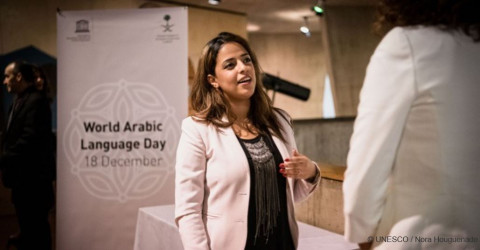 World Arabic Language Day 2017: focus on new technologies 2017-12-27 In collaboration with the Permanent Delegation of the Kingdom of Saudi Arabia and within the context of the partnership with the Sultan Bin Abdulaziz Al-Saud Foundation, UNESCO organized, on 18 December at its Headquarters in Paris, a two-day event to mark the celebration of World Arabic language Day. The events acknowledged the Arabic language’s immense contribution to science and culture, including philosophy and the arts. With more than 290 million native speakers, and millions of others gaining some level of fluency, it is one of the five most spoken languages in the world. In her opening statement, Ms Audrey Azoulay, Director-General of UNESCO, emphasized the linguistic role in intercultural dialogue and achieving peace. “Languages both reflect and shape the social identities and the values of communities, there can’t be lasting peace without cultural diversity, and there is no diversity without linguistic diversity,” said the Director-General. The theme for World Arabic Language Day 2017, 'The Arabic Language and New Technologies', was an open invitation to the participants and decision makers to reflect on best practices to promote the Arabic language in the digital world and the technology platforms. A two-day roundtable featured ministers, key linguistic experts and heads of academic institutions. Major challenges facing the Arabic language nowadays were discussed. In particular, the need to keep pace with technology both for dissemination of Arabic and adopting new teaching methods. Other challenges identified included involving the younger generations in efforts made to save the authenticity of classical Arabic and the need for coordination between the educational institutions across the Arabic World. The two-day event was concluded with an Oriental Jazz concert by Naseer Shamma, renowned Iraqi composer, oud virtuoso and UNESCO Artist for Peace, at UNESCO Headquarters, to promote interreligious dialogue and peace. He was accompanied by Amine Bouhafa (Piano), Jorge Bezeera (Percussion), and Ali Shaker (Zither). URL:https://en.unesco.org/news/world-arabic-language-day-2017-focus-new-technologies
  Finland reaffirms support to UNESCO programmes in Education and Freedom of Expression 2017-12-27 Finland renewed its support to UNESCO’s flagship Capacity Development for Education programme (CapED) as well as to the International Programme for the Development of Communication (IPDC) with the signing of funding agreements totalling 2.4 million Euros today. “I measure the importance of your gesture, and would like to express my sincere gratitude to the Finnish Government for its strong trust in the Organization,” said Director-General Audrey Azoulay during the signing ceremony with Finland’s Ambassador and Permanent Delegate, H.E. Mr Pekka Puustinen. “You can count on Finland as well as all the other Nordic countries’ support,” Ambassador Puustinen said. “Despite the cuts that occurred in 2015 in the budget for development cooperation (ODA), the Finnish Government maintained its voluntary contributions to UNESCO, and we will even do our best to increase them in the future,” he added. The Ambassador also noted that the prevention of violent extremism is “close to the heart” of the Ministry of Foreign Affairs and praised UNESCO’s expertise in this area, noting that Finland is using UNESCO’s materials on this theme. Finland is one of the founding donors of the CapED Programme, launched in 2003. Since then, its contribution has amounted to $10.4 million (USD), accounting for 11% of the $91 million (USD) received by the programme to date. The funding underpins UNESCO’s direct role in supporting the implementation of Sustainable Development Goal 4, Quality Education, at the national level by providing capacity development and education system strengthening in some 25 Least Developed Countries. The programme places special focus on Technical and Vocational Education and Training, as well as Gender. Finland is also playing a leading role in the International Programme for the Development of Communication (IPDC), thanks to its continued financial support, hands-on involvement as an IPDC Council member and cooperation to promote access to information through the IPDC Talks programme. Finland´s first access to information law, approved more than 250 years ago, is a model for countries seeking to ensure the highest standards for citizen access to information. URL:https://en.unesco.org/news/finland-reaffirms-support-unesco-programmes-education-and-freedom-expression