
News
Catch up on what’s happening in the world of global citizenship education.
1,668 results found
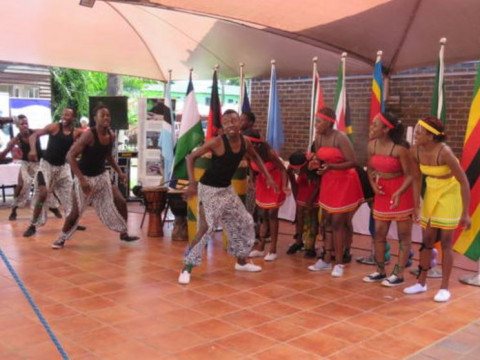 Southern Africa joins Zimbabwe to celebrate the awarding of the UNESCO/Japan Prize on Education for Sustainable Development to Sihlengeni Primary School 2018-02-22 Secretary Generals of National Commissions for UNESCO and representatives of the UNESCO Associated Schools Project Network (ASPNet) from Botswana, Lesotho, Malawi, Mozambique, Namibia, South Africa, Swaziland and Zambia joined Zimbabwe in celebrating the awarding of the UNESCO/Japan Prize on Education for Sustainable Development (ESD) to the country’s Sihlengeni Primary School. The celebrations took place in Harare, Zimbabwe on 14th February 2018. Sihlengeni Primary School from Umzingwane District in Matebeleland South Province of Zimbabwe was amongst the three 2017 UNESCO/Japan ESD prize winners and received US$50 000. The school was rewarded for its remarkable “Permaculture” programme involving not only its 17 teachers and 738 students – mainly children of low-income subsistence farmers – but also the adjacent community. Through an inspiring, participatory whole-institution approach, Permaculture uses the principles of ESD to provide quality education as well as increased access to a clean environment, food and water. Its permaculture programme, which has turned the arid Umzingwane Rural District of Matabeleland South Province of Zimbabwe into a rehabilitated forest of fruit trees, food garden and livestock, has become a good practice in the country for improving the local environment and income generation. The school headmaster, Mr Sibanga Ncube and the School Development Committee Chairperson, Mr Lusaba Moses, received the award on behalf of the school on 3rd November 2017 in Paris, France during the 39th Session of the UNESCO General Conference. In a speech read on his behalf at the regional celebrations, Zimbabwe’s Minister of Primary and Secondary Education, Prof. Paul Mavima, congratulated Sihlengeni Primary School for raising the Zimbabwean flag high and lauded UNESCO and the Government of Japan for availing such a prize and advancing ESD. He urged all schools to embrace ESD “because it is if for the benefit of us all and the future generations”.“The new trend in education is to foster holistic development of an individual in order to fully participate and survive in the modern world where there is stiff competition,” said the Minister.Speaking at the same occasion, UNESCO Regional Director for Southern Africa, Prof. Hubert Gijzen said he was proud that a school from his region had won the prestigious award. “As the UNESCO Regional Director I am particularly proud that one of the three winners of this prestigious prize for 2017 is Sihlengeni Primary School, here in Zimbabwe,” he said. “Pease join me in extending our sincerest congratulations to the school,” added Prof. Gijzen. He also took that opportunity to inform delegates that the call for nominations for the 2018 UNESCO/Japan Prize had been announced. The Japanese Ambassador to Zimbabwe, His Excellency Mr Toshiyuki Iwado, said Sihlengeni Primary School was the first ever school to win the UNESCO/Japan ESD Prize. The celebrations were attended by various ASPNet schools, members of the diplomatic community, education stakeholders, journalists and government officials, among others. Regional representatives visited the school to be part of the community celebrations that were set for 15th February 2018. For more information, please contact: p.awopegba@unesco.org. URL: http://www.unesco.org/new/en/harare/about-this-office/single-view/news/southern_africa_joins_zimbabwe_to_celebrate_the_awarding_of/
 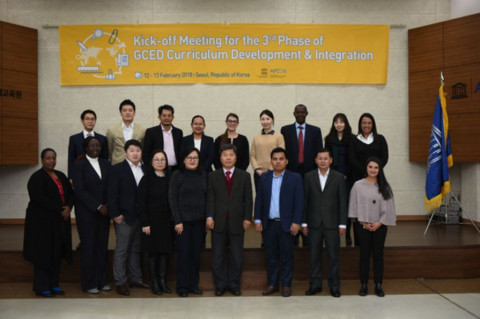 Kick-off Meeting for the 3rd Phase of GCED Curriculum Development & Integration 2018-02-21 APCEIU convened a Kick-off Meeting for the 3rd Phase of GCED Curriculum Development & Integration on 12-13 February 2018 in Seoul, Republic of Korea. This project has entered to its final year of the three-year project which had started since 2016. In this final year, it is planned to roll out and disseminate the GCED-integrated curriculum/teaching and learning aids developed based on the contexts of and demands from the target countries. Furthermore, a sustainable mechanism which ensures the effective usage of the final output will be established. During the Meeting, the delegations who gathered from Cambodia, Colombia, Mongolia and Uganda along with UNESCO-IBE and APCEIU shared the outcomes of the last year and discussed specific action plans for this year.In particular, this Meeting included an intensive discussion on the impact of the final output to be disseminated nation-wide. While recognizing the different entry points of GCED by country, all participants highlighted that it is critical to consider the characteristics of the country when it comes to its successful utilization.This Meeting was able to reaffirm on-going effort of GCED advocacy in the participating countries and solidify the close cooperation for fruitful finale of the three-year project. URL:Kick-off Meeting for the 3rd Phase of GCED Curriculum Development & Integration > APCEIU News - APCEIU (unescoapceiu.org)
  UNESCO celebrates the power of mother languages to build peace and sustainability 2018-02-21 Every two weeks a language disappears taking with it an entire cultural and intellectual heritage. On International Mother Language Day 2018, celebrated every year on 21 February, UNESCO reiterates its commitment to linguistic diversity and invites its Member States to celebrate the day in as many languages as possible as a reminder that linguistic diversity and multilingualism are essential for sustainable development. This year UNESCO also commemorates the 70th anniversary of the Universal Declaration of Human Rights and its bold statement that ‘no discrimination can be made on the basis of language’ and celebrates its translation into more than 500 languages. This is also supported in the 1960 Convention against Discrimination in Education which prohibits any discriminatory practices in education, notably discrimination based on language UNESCO Director-General Audrey Azoulay in her message for the day said: “A language is far more than a means of communication; it is the very condition of our humanity. Our values, our beliefs and our identity are embedded within it. It is through language that we transmit our experiences, our traditions and our knowledge. The diversity of languages reflects the incontestable wealth of our imaginations and ways of life.” UNESCO has been celebrating International Mother Language Day for nearly 20 years with the aim of preserving linguistic diversity and promoting mother tongue-based multilingual education. Importance of mother tongue in education Linguistic diversity is increasingly threatened as more and more languages disappear. Globally 40 per cent of the population does not have access to an education in a language they speak or understand. Nevertheless, progress is being made in mother tongue-based multilingual education with growing understanding of its importance, particularly in early schooling, and more commitment to its development in public life. Multilingual and multicultural societies exist through their languages which transmit and preserve traditional knowledge and cultures in a sustainable way.UNESCO uses the day to focus on linguistic diversity and multilingualism as an integral part of sustainable development, and in particular to realize targets 4.6 and 4.7 of Sustainable Development Goal 4 (SDG4) on education. The SDGs depend on linguistic diversity and multilingualism as a vital contribution to Global Citizenship Education as they promote intercultural connections and better ways of living together. The event will be marked at UNESCO Headquarters, Paris by a language experts’ debate on the theme "Our languages, our assets” in collaboration with the Organisation Internationale de la Francophonie. There will also be a presentation of the Global Education Monitoring Report on Language of instruction and literacy in multilingual contexts. Download the programme The idea to celebrate International Mother Language Day was the initiative of Bangladesh. It was approved at the 1999 UNESCO General Conference and has been observed throughout the world since 2000. In Bangladesh the 21 February is the anniversary of the day when Bangladeshis fought for recognition for the Bangla language. URL:https://en.unesco.org/news/unesco-celebrates-power-mother-languages-build-peace-and-sustainability
 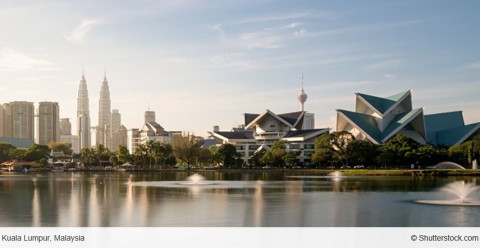 World Urban Forum – UNESCO demonstrates multi-pronged approach to resilient cities 2018-02-20 By 2050, the world will be two-thirds urban, placing cities at the frontline of global challenges and opportunities. Migration is a major factor of urbanisation, contributing significantly to economic development and cultural diversity. As people and assets concentrate in cities, these become increasingly vulnerable to the impact of climate change, disasters and conflicts. Yet if planned and managed well, cities will become an engine for sustainable development. For cities to be inclusive, safe and resilient, governments, mayors and local stakeholders need urban policies that integrate the soft power of culture, education, science and social integration, as suggested in the New Urban Agenda adopted at the Habitat III conference in 2016. UNESCO’s participation at the 9th World Urban Forum in Kuala Lumpur, Malaysia, 7-13 February 2018, demonstrated this with five events engaging international and local voices on how cities can forge a sustainable future. Cities in post-conflict and post-disaster situations face numerous challenges and were the focus of the networking event on “Culture, Reconstruction, Recovery” led by UNESCO and the World Bank. “Culture should be placed at the core of reconstruction and recovery processes by embedding cultural and natural heritage as well as intangible heritage and creativity into integrated strategies that rely on both people-centred and place-based approaches,” said Sameh Wahba, World Bank Global Director for Urban and Territorial Development, Disaster Risk Management and Resilience. Experts stressed that urban regeneration strategies need to use culture as a key resource, asset, and tool, and build on the “3-Ps” approach (people, places, policies) set out in the UNESCO Global Report, Culture Urban Future. The training event on “Creativity for Sustainable Cities: Leveraging Culture for Social Inclusion, Economic Development, and enhanced resilience” co-organized by UNESCO and UN Habitat highlighted the importance of cultural heritage, living heritage, and culture and creative industries in the shaping, implementation and assessment of culture-engaged urban development policies. “Culture is a key element to humanizing cities” said Christine Musisi, Director for International Relations in UN-Habitat. Virginio Merola, Mayor of Bologna (Italy), underscored that the major responsibility of mayors and local authorities is to enhance the “urban commons” and use culture to build the conditions for people from diverse social, cultural and generational backgrounds to live together peacefully. The importance of measuring the actual contribution of culture to urban development processes was underlined, to build not only on its economic value but also on its impact on education, people’s well-being, resilience and social inclusion. UNESCO’s event on “Building Urban Resilience” focused on how cities cope with the provision of water related services and natural hazards. Water services, for example, can be acutely affected by climate change. There are many replicable best practices and solutions for water management and policies, and disaster risk reduction. Dr Nicola Tollin, part of the UNESCO Chair of Sustainability at the Technical University of Catalonia, President of RECNET and Executive Director of the International Programme on Urban Resilience, RESURBE, demonstrated the need to bridge local and international climate action at the urban level, with projects that use nature-based solutions for water management and generate environmental, economic, social and climate co-benefits. The VISUS methodology, a science-based assessment methodology for school safety was also presented, along with the UNESCO International Hydrological Programme’s examples of knowledge sharing and exchange on water within the framework of the Megacities Alliance for Water and Climate (MAWaC), which are all useful tools and resources for enhancing the resilience of cities. As the number of international migrants worldwide has continued to grow rapidly in recent years, reaching 258 million in 2017 (UNDESA, 2017), and internal migration, though more difficult to determine the number of people moving, is vast, a networking event on “Integrating Migrants in Cities: Challenges and Opportunities” examined the importance of a holistic, intersectoral, and collaborative approach to integrating migrants in cities. UNESCO, in partnership with UNDP, Un-Habitat and the IOM, presented data from current research on migration trends and policy responses that can assist at national and local level to deal with the large scale movement of people, both internally and internationally. Among the findings that foster learning to live together sustainably in cities was the need for long term urban planning that integrates political, economic, cultural and social aspects of city life. Health and well-being of communities in urban spaces were discussed in UNESCO and ADB’s “Physical inactivity and Rising Non-Communicable Diseases” side event. Experts advocated for the creation of open and safe public spaces for sport to drive socioeconomic development in the Asia-Pacific region, particularly in tackling non-communicable diseases, a global issue on the rise all around the world. The Kazan Action Plan, adopted by the Ministerial Council on Physical Education and Sport in 2017, sets out a global road map linking sport, the SDGs and other important development frameworks. The panellists show-cased several local initiatives whereby cities that enhanced sport saw improvements in community well-being and belonging, especially for youth. For more information on UNESCO’s involvement in the 9th World Urban Forum, and its action for sustainable cities, visit here. URL:https://en.unesco.org/news/world-urban-forum-unesco-demonstrates-multi-pronged-approach-resilient-cities
 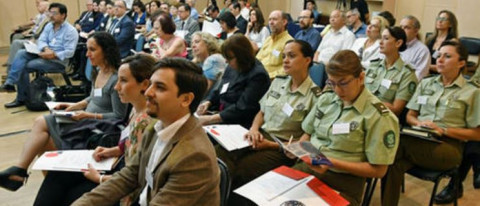 Seminar in Chile seeks to strengthen Holocaust education and the formation of a robust citizenship 2018-02-18 This is the second part of an event that began in Mexico and is one of the actions that was committed to at the Conference for International Holocaust Education. The event is part of a project financed by the International Holocaust Remembrance Alliance (IHRA) and is sponsored by UNESCO.The Jewish Interactive Museum of Chile organized the international seminar “Holocaust and Citizenship,” which took place on 22 January in Santiago, Chile. The purpose of the event was to raise awareness among opinion leaders of the importance of implementing education programs to prevent genocide, particularly programs on the Holocaust and citizenship development. At the event, the issue of the Holocaust was presented as a point of reference for examining the connections between violence, the weakening of democracy, justice, and human rights. The seminar featured important representatives of academia, the field of education, civil society, and the Chilean government. This is the second part of an event which was held in Mexico with the support of that country’s Memory and Tolerance Museum and Universidad Nacional Autónoma de México. Both seminars are part of the monitoring actions of the Conference for International Holocaust Education organized by UNESCO and the United States Holocaust Memorial Museum. The project is financed by the International Holocaust Remembrance Alliance (IHRA) and is sponsored by UNESCO. The seminar featured Nicolás del Valle, Assistant Program Specialist with the Regional Bureau for Education in Latin America and the Caribbean (OREALC/UNESCO Santiago). Del Valle highlighted the importance of this binational activity: “Like Mexico, Chile is part of the UNESCO Latin American Network for Education on the Holocaust and Other Genocides and is developing national initiatives regarding these matters. Teaching on these topics is essential for promoting reflection on the past that allows for a culture of peace and human rights to be valued as the basis for democracy and sustainable development,” he said. The organizers of this initiative will draft a publication during 2018 with contributions from both meetings to expand their scope. Education about the Holocaust and genocide UNESCO recognizes that teaching Holocaust history is essential to promoting respect for human rights, fundamental freedoms and the values of tolerance and mutual respect. UNESCO encourages UN member states to create educational programs that transmit Holocaust memory to future generations to prevent future atrocities. To that end, it provides pedagogical materials and a platform so that institutions, teachers, students and other interested parties can access teaching resources related to the topic. UNESCO also participates in national activities on these topics. On 1 February 2018, Cecilia Barbieri, the lead official and interim representative of the Regional Bureau for Education in Latin America and the Caribbean (OREALC/UNESCO Santiago), attended the commemoration of International Holocaust Remembrance Day at Chile’s former Congress building. The ceremony, which was organized under the slogan “The World Calls for Inclusion, Tolerance, and Brotherhood,” was organized by the Ministry of Foreign Affairs, the Jewish Community in Chile, and B’Nai B’rith. During the event, Chilean diplomat Samuel Del Campo, who served as consul in Romania, was honored. Between 1941 and 1943, Del Campo saved approximately 1,400 Jews by offering them Chilean documentation with special seals that offered them protection. Further information 09.06.2017 - UNESCO supports association between Chilean and Mexican organizations to strengthen Holocaust education Education about the Holocaust and genocide (UNESCO) URL:http://www.unesco.org/new/en/santiago/press-room/single-new/news/seminario_en_chile_busca_fortalecer_la_educacion_acerca_del/
  How will you ‘Love the Ocean’? Take one action for your ocean this Valentine’s Day! 2018-02-18 Show us your commitment to your ocean (and your health) – this Valentine’s day the Sea Change team are asking everyone to pledge one action to #LovetheOcean and encourage others to do the same by sharing your love across social media. It’s easy to say we love the ocean, but for many of us, our everyday actions tell a different story. Seas of plastic, declining fish stocks and ocean acidification are just some examples of the destruction caused to the ocean by our everyday activities, which also have a profound effect on our health and wellbeing. Our relationship with the ocean has become toxic and one-sided. After all, the ocean loves us in real ways – like giving us half the oxygen we breathe, climate regulation, food, medicines and a variety of recreational opportunities. The ‘Love the Ocean’ campaign aims to rebalance our relationship with the ocean and show our appreciation by pledging to take real action each day, sharing our pledges and actions online, and tagging them with #LovetheOcean. ‘Love the Ocean’ coincides with the final conference of the EU Horizon 2020 funded Sea Change project on 15 February 2018 at the UNESCO Headquarters in Paris, concluding three years of empowering and educating citizens to take action for our ocean. The conference will focus on the project’s achievements and plan for the coming years, maintaining the momentum of ocean literacy by linking with initiatives worldwide in the run up to the upcoming UN Decade of Ocean Science for Sustainable Development (2021-2030). Jon Parr, coordinator of the Sea Change project, is looking forward to the conference: “Sea Change has been looking to make a difference, to make a Sea Change, in our attitude in Europe, to our seas and ocean. We are gathering in Paris on the 15th February to celebrate what has been achieved and share our love for the ocean. We also want to look to the future, continuing that Sea Change. A lot has happened since Sea Change began and I feel confident that the recognition of the importance of our everyday lives on the ocean is growing and growing. We can all make positive changes and show our Love for the Ocean through #LovetheOcean.” We are asking for the public to post a photo or short video using the #LovetheOcean hashtag, showing what change they pledge to make to their daily lives. No change is too great or too small – you could make a pledge to take the bus to work, or simply to stop using disposable plastic drinking straws. Every positive action makes a difference to the health of our ocean! A selection of your posts will be viewed at the conference in Paris and will provide valuable insights to our team. You can also use our Facebook cover photo to share your support for the ocean across social media. The Sea Change project has sought to foster positive behaviour change by improving the ‘ocean literacy’ of citizens, whereby greater understanding will empower individuals to change their behaviour, creating an overall ‘sea change’ in how society views its relationship with the ocean. This will lead to healthy seas, healthy communities and ultimately – a healthy planet. We are promoting our ‘Love the Ocean’ campaign via Thunderclap now. Please click here for more information. Join other Sea Changers today: make your pledge using the #LovetheOcean hashtag and tag us on Facebook, Twitter and Instagram. Visit our campaign page at www.lovetheocean.eu and download our Press Pack right here! If you’re seeking further inspiration on how you can make your sea change, you can find lots of practical ideas in our video series on Vimeo or on the Sea Change project website. *** The Sea Change project is funded by the European Union's Horizon 2020 research and innovation programme under Grant Agreement n° 652644. The project began in March 2015 and will run until February 2018. The Marine Biological Association, UK (MBA) is coordinating the project. AquaTT is the project dissemination partner. The Intergovernmental Oceanographic Commission of UNESCO has coordinated the Sea Change work on marine governance by engaging policy actors and stakeholders around Europe to develop a roadmap for an effective science-society-policy interface for ocean sustainability. The Commission has moreover coordinated the development of the first-ever Massive Open Online Course (MOOC) on Ocean Literacy, From ABC to ABSeas: Ocean Literacy for All, attended by more than 500 students from all around the world. Jon Parr, Sea Change coordinator, is Deputy Director at the MBA. He has a wide remit covering operations, the development of the research infrastructure and the development of the knowledge exchange programme. He has worked with the National Biodiversity Network (NBN) and sits on the several groups including the NBN National Schemes and Societies Group and UKEOF Citizen Science Group. Jon is responsible for the Educational Programme of the MBA including the public Sea Life Survey, the Shore Thing Project and the Recorders conference. Jon organised and chaired a workshop for European Commission on Transatlantic Ocean Literacy. *** For more information, please contact: Francesca Santoro (f.santoro@unesco.org), Tel: +39 041 2601539 For more information on the Sea Change project, please visit:www.seachangeproject.eu URL:http://www.unesco.org/new/en/media-services/single-view/news/how_will_you_love_the_ocean_take_one_action_for_your/
 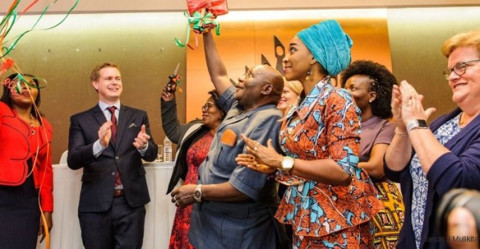 UNESCO and Sweden highlight sexuality education as a catalyst for development 2018-02-18 UNESCO and Sweden came together in sub-Saharan Africa in January, to pledge their commitment to comprehensive sexuality education (CSE) and galvanize regional action to ensure all children and young people have access to good quality, curriculum-based CSE. UNESCO representatives were joined by the Minister for Education of Sweden, Gustav Fridolin, who visited Zambia and South Africa to take part in high-level dialogues with Ministers and policy-makers from the Governments of Zambia, Zimbabwe, Ghana, South Africa, Ghana, Swaziland and Cote d'Ivoire. The Minister also took part in the regional launch of the revised UN International technical guidance on sexuality education, which aims to assists education, health and other relevant authorities in the development and implementation of CSE programmes and materials. Published by UNESCO in collaboration with UNAIDS, United Nations Population Fund (UNFPA), United Nations Children’s Fund (UNICEF), UN Women, and the World Health Organization (WHO), the Guidance facilitates development of accurate and age-appropriate knowledge, attitudes and skills that contribute to positive relationships, health and well-being, and respect for human rights and gender equality. Minister Fridolin said every young person has the right to CSE. “This makes for important steps towards gender equality, and is therefore an investment in development, economy and society as a whole. Comprehensive Sexuality Education of good quality is never an issue that concerns only girls. To reach shared and equal responsibility and healthy attitudes, sexual and reproductive health and rights and Comprehensive Sexuality Education are as important for boys and men, as they are for girls and women.” The Minister also led the launch of UNESCO’s Our Rights, Our Lives, Our Future (O3) programme, alongside the Ministers for primary and further education of Zambia. The O3 programme will strengthen CSE delivery for young people in 30 countries in sub-Saharan Africa. Patricia Machawira, Regional Health and Education Advisor at UNESCO, said that through the O3 programme, “we envision a sub-Saharan Africa where positive health, education and gender equality outcomes are a reality for children and young people,” before adding, “Young people are receiving confusing and conflicting messages about relationships, about sex and about gender. It’s critical that schools deliver scientifically accurate education that develops the skills, knowledge, attitudes, and competencies needed to navigate a healthy transition to adulthood. Government and the education sector in sub-Saharan Africa have both an opportunity and an urgent responsibility to scale up sexuality education programs.” The visit to sub-Saharan Africa highlighted comprehensive sexuality education as a catalyst for the achievement of Sustainable Development Goals (SDGs) 3, 4 and 5, around good health and well –being, quality education and gender equality. URL:https://en.unesco.org/news/unesco-and-sweden-highlight-sexuality-education-catalyst-development
 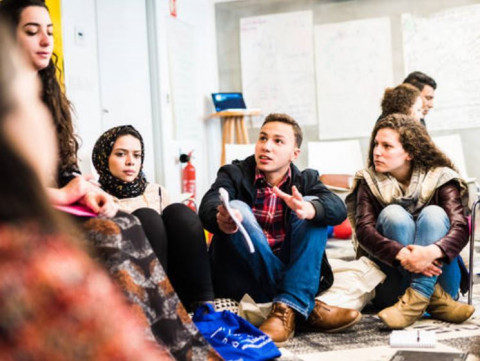 New project to tackle violent extremism in Jordan, Libya, Morocco and Tunisia 2018-02-17 A new two-year project on “Prevention of Violent Extremism through Youth Empowerment in Jordan, Libya, Morocco and Tunisia was launched by UNESCO on 1 February 2018. Funded by the United Nations Counter-terrorism Centre (UNCCT) and Canada and, this US$ 2 million project is a vital move towards engaging youth in the prevention of violent extremism, an issue that disproportionately affects young people throughout the region. The project starts from the principle that any lasting solution must put youth at the forefront of countering violent extremism. It will adopt an inclusive, multi-dimensional approach by combining issues such as youth, education, culture, and communication and information. More than 8000 young women and men and key practitioners will be trained through activities such as trainings on conflict-sensitive reporting; capacity building programmes for religious authorities to develop prevention of violent extremism (PVE) initiatives; countering online hate speech; and, creating new media spaces to disseminate alternative narratives by and for youth. UNESCO will work closely with partners such as Ministries of Youth, Education, Labour and ICT’s but also with civil society organizations such as youth, educational and cultural networks, local religious leaders, universities, etc. Partnership with private-sector companies is also on the agenda, particularly with the tech industry. The primary outcome of this project is to create an environment where young women and men are empowered, heard and engaged as change-makers in their communities. This project also aims at mainstreaming PVE through formal, non-formal and informal education. Finally, this project intends to mobilize media professionals and online youth communities to combat radicalization and online hate speech through trainings and the development of national and regional online campaigns. "UNESCO is among the most active in promoting dialogue among cultures and fighting violent extremism" said Audrey Azoulay, Director-General of UNESCO. This project shows the extent of UNESCO’s engagement in the UN's Youth, Peace and Security agenda. In this context, UNESCO is uniquely positioned to utilize its expertise and vast experience working with and for youth at the national, regional and international levels. See also UNESCO's work on the prevention of violent extremism URL:http://www.unesco.org/new/en/social-and-human-sciences/themes/youth/sv13/news/new_project_to_tackle_violent_extremism_in_jordan_libya_mo/
 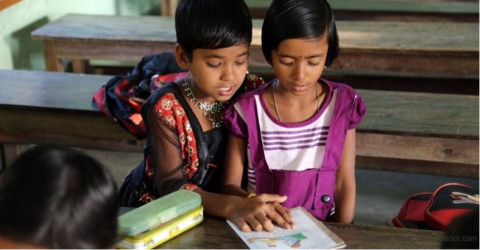 Why comprehensive sexuality education is important 2018-02-16 Did you know that only 34 % of young people around the world can demonstrate accurate knowledge of HIV prevention and transmission? And that two out of three girls in some countries have no idea of what is happening to them when they begin menstruating? These are some of the reasons why there is an urgent need for quality comprehensive sexuality education (CSE). Earlier this month, UNESCO published a fully updated International Technical Guidance on Sexuality Education, which advocates for quality CSE to promote health and well-being, respect for human rights and gender equality, and empowers children and young people to lead healthy, safe and productive lives. What is Comprehensive Sexuality Education? Comprehensive sexuality education is a curriculum-based process of teaching and learning about the cognitive, emotional, physical and social aspects of sexuality. It aims to equip children and young people with knowledge, skills, attitudes and values that will empower them to realize their health, well-being and dignity; develop respectful social and sexual relationships; consider how their choices affect their own well-being and that of others; and understand and ensure the protection of their rights throughout their lives. Why do young people need comprehensive sexuality education? Too many young people receive confusing and conflicting information about relationships and sex, as they make the transition from childhood to adulthood. This has led to an increasing demand from young people for reliable information, which prepares them for a safe, productive and fulfilling life. When delivered well, CSE responds to this demand, empowering young people to make informed decisions about relationships and sexuality and navigate a world where gender-based violence, gender inequality, early and unintended pregnancies, HIV and other sexually transmitted infections (STIs) still pose serious risks to their health and well-being. Equally, a lack of high-quality, age- and developmentally-appropriate sexuality and relationship education may leave children and young people vulnerable to harmful sexual behaviours and sexual exploitation. CSE plays a crucial role in addressing the health and well-being of children and young people. Applying a learner-centered approach, CSE not only provides children and young people with age-appropriate and phased education on human rights, gender equality, relationships, reproduction, sexual behaviours risks and prevention of ill health, but also provides an opportunity to present sexuality with a positive approach, emphasizing values such as respect, inclusion, non-discrimination, equality, empathy, responsibility and reciprocity. What does the evidence say about CSE? There is significant evidence on the impact of sexuality education. It emphasizes that: Sexuality education has positive effects, including increasing young people’s knowledge and improving their attitudes related to sexual and reproductive health and behaviors. Sexuality education – in or out of schools – does not increase sexual activity, sexual risk-taking behaviour or STI/HIV infection rates. Programmes that promote abstinence as the only option have been found to be ineffective in delaying sexual initiation, reducing the frequency of sex or reducing the number of sexual partners. Programmes that combine a focus on delaying sexual activity with other content are effective. ‘Gender-focused’ programmes are substantially more effective than ‘gender-blind’ programmes at achieving health outcomes such as reducing rates of unintended pregnancy or STIs.. Sexuality education has the most impact when school-based programmes are complemented with the involvement of parents and teachers, training institutes and youth-friendly services. Why have technical Guidance on sexuality education? Countries are increasingly acknowledging the importance of equipping young people with knowledge and skills to make responsible choices for their lives. CSE supports young people’s empowerment by improving their analytical, communication and other life skills for health and well-being in relation to sexuality, human rights, values, healthy and respectful relationships, cultural and social norms, gender equality, non-discrimination, sexual behaviour, violence and gender-based violence, consent, sexual abuse and harmful practices. What is new in the revised Guidance? The original international technical Guidance published in 2009 positioned sexuality education primarily as part of the HIV response. However, while HIV prevention remains important, evidence and practice demonstrate that sexuality education has a much broader relevance to other issues, not only for young people’s sexual and reproductive health but also for their overall wellbeing and personal development. The revised Guidance presents sexuality with a positive approach, recognizing that CSE goes beyond educating about reproduction, risks and disease. It reaffirms the position of sexuality education within a framework of human rights and gender equality. It and reflects the contribution of sexuality education to the realization of several internationally agreed commitments in relation to sexual and reproductive health, as well as the achievement of the goals in the 2030 Agenda in relation to health and well-being, quality and inclusive education, gender equality and women and girls empowerment. Download the International Technical Guidance on Sexuality Education. Learn more about UNESCO’s work in education for health and well-being. URL:https://en.unesco.org/news/why-comprehensive-sexuality-education-important
 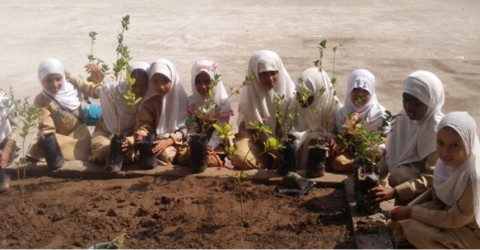 Sustainable Yemen programme recycles waste as school materials 2018-02-15 An innovative project recycling and transforming waste into educational tools and art forms is one of many sustainable development schemes coordinated by the local sub-unit of the Yemeni National Commission for UNESCO. The sub-unit, based in the province of Hodeidah with work extending to neighbouring areas, acts to coordinate and implement the multiple activities of projects on Education for Sustainable Development (ESD). It brings together educational, civil and private sector organizations to mobilize communities towards achieving the targets of the Sustainable Development Goals (SDGs) and improving their own environment. Since 2012, the initiative’s successes include training 60 teachers on the UNESCO course “Education and Learning for a Sustainable Future” and training 320 youth on project management and marketing. It has also established a youth foundation and community college and organized training of trainers. Project Manager Faisal Ali Ayed said: “The Hodeidah work is particularly important because it is the first project in Yemen that has succeeded in using ESD in a context of large population density and a high percentage of youth facing the multiple challenges of poverty and unemployment.” Other innovations include using teachers for e-learning, setting up of electronic libraries and collecting funds for poor students to provide breakfast, school meals, school uniform and school bags. Alongside these are awareness campaigns offering information and advice around healthy balanced food, early marriage and HIV/AIDS. Sustainable development clubs have also been established in some schools to promote community activities related to all dimensions of sustainable development (environmental, social and economic). Mr Ayed explained why the work had been so successful. “The project has a really dedicated team and collaborating partners. For that reason, the project has achieved real transformation in practices in schools and community and at the same time has received huge media attention so the impact is spread.” For the future, there are plans to expand the implementation of ESD projects, increase the number of the beneficiaries of educational institutions, in particular youth and women, spread the work to the neighbouring provinces of Hajjah and Rimah where six major projects will be implemented to train school principals, teacher trainers, educators, women and young people on ESD. An important aspect of the work is enabling young people and women to enter or re-enter the labour market. So far, 920 youth and women have received life and professional skills training and help on integration into the labour market. “The project has contributed to empowering women to participate in community development as well as changing society's vision of the role of women and enabling the acceptance of different roles for women in society,” said Mr Ayed. More on Education for sustainable development URL:https://en.unesco.org/news/sustainable-yemen-programme-recycles-waste-school-materials