
News
Catch up on what’s happening in the world of global citizenship education.
1,668 results found
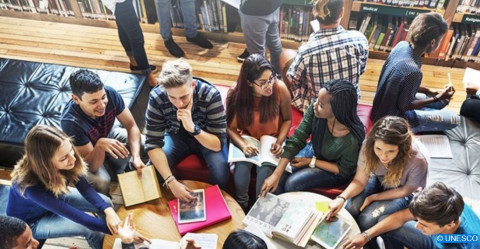 A New Chair to Prevent Radicalisation and Violent Extremism 2017-12-26 UNESCO, in cooperation with the University of Sherbrooke, University of Quebec in Montreal and Concordia University, has launched a new Chair on the Prevention of Radicalisation and Violent Extremism on 15 December 2017. This UNESCO Chair, hosted by the University of Sherbrooke in Montreal (Canada), will promote an integrated system of research, education, information, and documentary activities with the involvement of high-level researchers, teachers, and experts from all regions of the world. Particular attention will be paid to providing knowledge and facilitating exchange of good practices to prevent radicalisation and violent extremism, with a multidisciplinary and cross-regional approach. Capacity-reinforcement actions will notably target initiatives aimed at fostering youth participation and engagement, as well as knowledge-sharing initiatives in cooperation with schools, communities and media. The creation of this UNESCO Chair is a step further in the implementation of UNESCO Executive Board Decision 197 EX/Decision 46: “UNESCO’s role in promoting education as a tool to prevent violent extremism” and the achievement of Target 4.7 of the Sustainable Development Goal 4 on Education, ensuring that “all learners acquire the knowledge and skills needed to promote sustainable development, including, among others, through education for sustainable development and sustainable lifestyles, human rights, gender equality, promotion of a culture of peace and non-violence, global citizenship and appreciation of cultural diversity and of culture’s contribution to sustainable development”. UNESCO supports countries’ efforts to offer education programmes that build young people’s resilience to violent extremist messaging and foster a positive sense of identity and belonging. Young men and women empowerment is made possible through a coordinated approach on the Prevention of Violent Extremism involving all sectors of the Organization, in areas such as global citizenship education, youth participation, media and information literacy, and celebration of cultural diversity. URL:https://en.unesco.org/news/new-chair-prevent-radicalisation-and-violent-extremism
 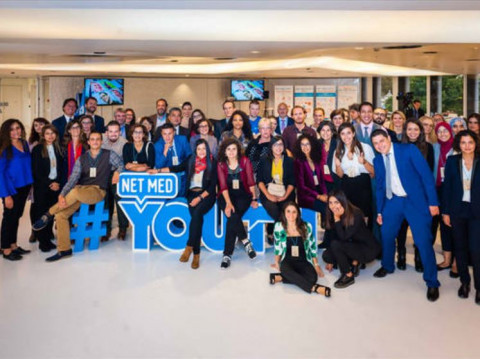 Supporting networks of mediterranean youth is vital 2017-12-26 With over 4.000 young women and men trained, 150 active members in 9 countries, 7 national youth policies revised or implemented, 12 studies on youth needs and aspiration produced, and a lot of exchange and networking experiences taking place across the Mediterranean, 2017 wraps up on a high note for UNESCO’s Networks of Mediterranean Youth (NET-MED Youth) Project ! “Supporting youth in the Southern Mediterranean region is vital,” says Nada Al-Nashif, Assistant Director-General for Social and Human Sciences at UNESCO. “Today’s youth are transforming their societies. We must harness their energies, capacities and ideas as partners for a common future built on peace, social justice and human rights.” Since its launch in February 2014, NET-MED Youth has trained over 4,000 young people in policy analysis, dialogue, strategic planning, advocacy, media, freedom of expression, communication, labor market policies and much more. The young members of the project make up today a strong regional network, with remarkable connections to its northern Mediterranean neighbors. “NET-MED Youth is not just a project, it is a vision and a network that UNESCO has put in place for young people to become active players in change and development processes in their countries,” explains Souria Saad-Zoy, Project Manager and Youth Programme Specialist at UNESCO. “The young people and youth organizations we have been partnering with inspire us to continue to strengthen a solid platform for youth to be leaders and actors of innovation.” Several key initiatives and achievements illustrate the uniqueness of NET-MED Youth, one of UNESCO’s flagship European Union-funded projects. In Tunisia, a pilot digital platform Jeun’Experts (young experts) puts a 100 active young people in the spotlight, with expertise in the fields of economics, politics, social and cultural dynamics, and media. The platform promotes their participation in public debate and a plural, fair and objective treatment of youth issues in the media and in the public sphere. In Lebanon, an online database was created by young people to highlight young professionals and experts. NET-MED Youth has also positioned youth from different countries in the region as opinion leaders on key youth-related issues such as on cultural heritage protection, the Sustainable Development Goals and the Youth, Peace and Security Agenda. At the level of public policies, young project members and coordinators have invested a lot of effort in the development and revision of national youth strategies in different countries. The first national youth policy was launched in Palestine after a series of trainings and consultations with youth. Young members from Morocco revised their national youth strategy and are currently working on adapting it to a pilot locality. Young Tunisians are in the phase of implementing their own national strategy. Jordanian youth are building a new one. And youth in Israel and Lebanon have built a large body of research and knowledge that will allow them to move on to the next stages. On the media front, NET-MED Youth members have led over 50 outreach actions that connected them to more than 100 national media outlets. These outreach and advocacy campaigns are one of the many results of trainings and regional and international learning opportunities for youth to ensure a better representation of their issues in mainstream media. Young members of NET-MED Youth are now trained in media monitoring, research and methodologies, advocacy, campaigning, media production and much more, to be the leaders and creators of inclusive and youth-friendly media content. The issue of youth unemployment has always been present in all of NET-MED Youth’s work. Both young people and national experts and institutions in the project’s beneficiary countries have learned a lot from capacity-building sessions about employment policy design. The first sets of skills projections on youth future skills needs are now produced in several countries. NET-MED Youth is more than the above-mentioned initiatives. It is a mass of young people, whose every-day lives are boosted by civic engagement, learning and making an impact. These young people, members of the project and other actors of civil society, are today’s superheroes. NET-MED Youth has succeeded in rallying young people beyond its initial working groups to develop their communities, to speak out, to be part of change, and to build tomorrow today. The project will continue until March 2018, laying the ground for a potential second phase, with the same energy and passion, and with an openness to further build relationships around the Mediterranean basin countries – north and south – and engage more youth around common actions for a more inclusive and a more sustainable future for all. More information about NET-MED Youth Brochure on NET-Med Youth Watch the video - Meet today’s Mediterranean superheroes | #BuildTomorrow URL:http://www.unesco.org/new/en/media-services/single-view/news/supporting_networks_of_mediterranean_youth_is_vital/
 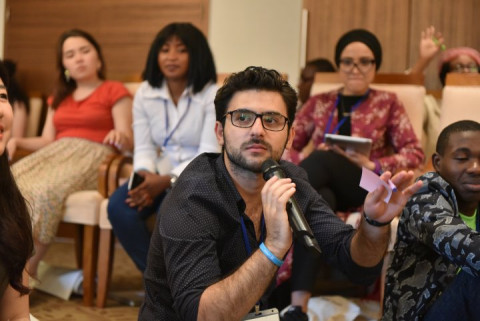 ‘J'ai commencé à zéro’: comment un réfugié syrien est en train de reconstruire sa vie à travers l’éducation 2017-12-25 When HadiAlthib fled Syria to escape military service in 2016, his education was not the first thing on his mind. Althib, 23, was most concerned about settling into his new life in Turkey. Once he arrived in Gaziantep, a city not far from the Syrian border, he focused on finding a job and a place to live. But as he settled into his new role managing youth development programs remotely for refugee camps and shelters in Syria, Lebanon and Jordan, he knew he wanted to go back to school. "I was struggling to have education. It was very hard because when I arrived to Turkey, I have nothing, nothing, nothing at all. I started at zero, maybe before zero," he told TIME. "I had no place to stay, I had nothing to do, but I had a plan that I should study." Nearly 18 months after his arrival in Turkey, Althib has found a way to continue his education. Like thousands of other refugees across the world, he has been taking online courses offered by universities as far-flung as Amsterdam and Baltimore, through programs that offer free classes to those who are displaced from their homes. For the full article, please follow the link below:http://time.com/4825289/world-refugee-day-education-hadi-althib/
 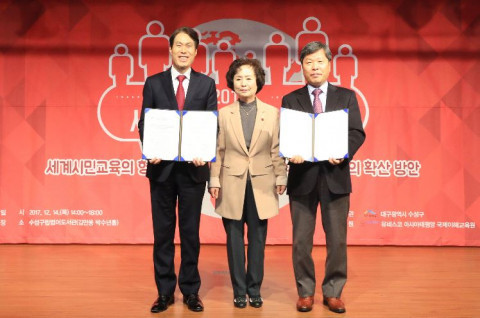 Partnerships with Suseong District and Chungnam National University 2017-12-24 APCEIU has entered an agreement with various stakeholders to promote and implement GCED at the local contexts. A Memorandum of Understanding (MOU) was signed with Suseong District of Daegu Metropolitan City to promote GCED in the educational programmes of the local government. Another MOU was signed with Chungnam National University to expand academic research and collaborative programmes on GCED. APCEIU, on 14 December 2017, signed an agreement with Daegu Metropolitan City’s Suseong District to advance GCED for future generations. This is part of Suseong District’s dedication to provide quality educational opportunities for its young citizens. The two organizations have agreed to the following: ▲ Mutual consultation on GCED ▲ Co-operation on the development of GCED education materials and contents ▲ Other various matters on the development of lifelong learning opportunities for residents. Also, on 20 December 2017, an MOU was signed between Chungnam National University (CNU) and APCEIU focusing on academic research on GCED. Both parties agreed to work together in exchanging educational and cultural programmes including ▲ Fostering cooperation and linkages to provide educational programmes for university students ▲ Collaboration on GCED research ▲ Co-organization of international events, workshops, and seminars and cooperation on inviting overseas resource persons ▲ Sharing information and ideas, as well as facilities for mutual development and overall cooperation in the areas as agreed upon. APCEIU, in partnership with the above institutions, will contribute to the realization and contextualization of GCED in different fields. URL:Partnerships with Suseong District and Chungnam National University > APCEIU News - APCEIU (unescoapceiu.org)
 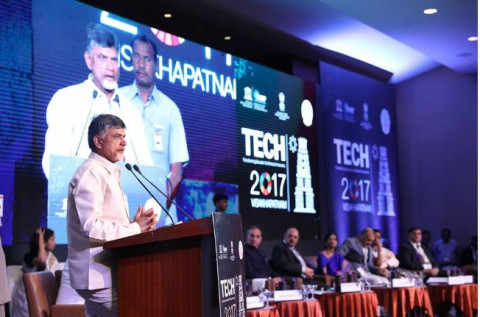 TECH 2017: an exciting 3 days with the best minds in education technology from around the world 2017-12-22 The three-day Transforming Education Conference for Humanity (TECH) 2017 organised by UNESCO MGIEP was held at Novotel Varun Beach, Visakhapatnam from December 16 – 18, 2017, focused on digital pedagogies for building peaceful and sustainable societies – through 21st century skills, schools and policies. The conference was attended by over 1,700 registered participants (including teachers, educators, learners, technology and gaming experts, amongst others) from more than 75 countries and witnessed highly engaging deliberations on the future of education, particularly on the innovative methods of teaching using technology. Over the 3 days, TECH comprised of 2 Headline Sessions, including that of award-winning Prof. Sugata Mitra, over 50 catalytic speakers, 100+ presenter sessions and a dedicated Learning and Startup Zone. TECH 2017 was supported by the State Government of Andhra Pradesh and the Ministry of Human Resource Development, Government of India. The first day of the Conference witnessed an exciting opening ceremony, graced by the Honourable Chief Minister of the State of Andhra Pradesh, Sri Nara Chandrababu Naidu, Dr. Satya Pal Singh, Honourable Minister of State for Human Resource Development, Government of India and Ms Audrey Azoulay, Director-General, UNESCO (on video). Addressing a full house at the TECH 2017, Sri Naidu expressed that “education is a key factor for any development” and added that “nothing can be achieved without education”. He further articulated the importance of technology in education and voiced his commitment to the future of education through digital pedagogies. Post his talk, Sri Naidu officially inaugurated the Learning & Startup Zone of TECH, which comprised immersive technologies by startups and other leading organisations in the field of education and technology such as Microsoft India, Samsung and Veative. The Opening Ceremony also witnessed the signing of two key Memorandums of Understanding (MOUs); the first MOU was signed between UNESCO MGIEP and the Economic Development Board of Andhra Pradesh to establish a “Games and Digital Learning Hub” while the second MOU was for the establishment of a strategic partnership between Samsung India and UNESCO MGIEP to launch Virtual Reality (VR) content and 360 films on two Indian Heritage Sites, the Sun Temple in Konark and the Taj Mahal in India. Additionally in a long term strategic partnership with the State Government of Andhra Pradesh, UNESCO MGIEP will work towards setting up a school for Difference Learning in Andhra Pradesh by 2018. The Ceremony was followed by a highly engaging 15 minute TECH talk by Dr. Anantha Duraiappah, Director, UNESCO MGIEP who spoke of the concept of flipping education and of embracing technology as a pedagogy. Dr. Duraiappah expressed that “technology should not be seen just as a delivery platform but as a pedagogical tool.” Following the TECH talk was a highly disruptive panel titled ‘We don’t need no Education’, with a diverse set of panellists including Prof. Sugata Mitra, Ms. Vera El Khoury Lacoeuilhe, Diplomat and Jordan Shapiro, world-renowned thought leader on global education – all of who debated their thought-provoking views on the goal of education. In addition, various breakout sessions were held by presenters during the day on varying themes from “The use of Artificial Intelligence in Distributed Co-Learning” to “Teaching History through Digital Fabrication”. Day 2 of TECH commenced with an exciting debate through UNESCO MGIEP’s flagship event, Talking Across Generations of Education (TAGe) that provided a platform to youth and policy-makers to exchange views on whether “technology increase or decrease the inequality gap in education”. TAGe was followed by a captivating talk by Prof. Sugata Mitra on “The Future of Learning” during which Prof. Mitra expressed the requirement of “learner-centric education”. Further, day 2 of TECH witnessed various engaging catalytic sessions as well as breakout sessions, debates and keynote sessions on digital pedagogies and neural learning as well as design thinking as a strategy for innovation. Eminent speakers included Kaushik Bellani, Managing Director – McGraw Hill Education India Pvt. Ltd., Vinnie Jauhari, Director – Education Advocacy, Microsoft and Sylvia Martinez, Co-author of Invent to Learn, Making, Tinkering and Engineering the Classroom. The last day of the Conference witnessed a talk by Heather Knight, Assistant Professor of Robotics at Oregon State University on ‘Developing Charismatic Robots for the Real World’. During her presentation, Prof. Knight presented by her Robot, Ginger, who kept the audience highly engaged. The Valedictory Ceremony, held on Day 3 to close the Conference, was graced by the Honourable Minister of Human Resource Development, State of Andhra Pradesh, Sri Ganta Srinivasa Rao as well as Y.S. Chowdary, Honourable Minister of State for Ministry of Science & Technology & Earth Sciences. Sri Ganta Rao expressed his commitment to the future of education through digital pedagogies and declared the state Government’s support to institutionalise the TECH as an annual event. He expressed that he would be “keen to see the various methods that UNESCO MGIEP will bring up in the future to advance its efforts”. TECH was sponsored by Microsoft India (Education Technology Partner), Samsung India, Dassault Systems, Veative (Immersive Learning Partner) and McGraw Hill (Learning Science Partner). The Knowledge Partners of the Conference included NMIMS, Ubisoft, Quebec Government, ISTE, Social Alpha, EDB and IYC. For details / information, contact:Mr. Abel CAINE, Senior Project Officer: a.caine@unesco.orgMs. Archana CHAUDHARY, Fundraising & Partnerships: a.chaudhary@unesco.orgMs. Akriti MEHRA, Communications Specialist: a.mehra@unesco.orgMs. Radhika BHATNAGAR, Communications Officer – Social Media & PR: r.bhatnagar@unesco.org Official TECH website: mgiep.tech Official photos and key highlights from event:http://bit.ly/2CLKY8Zhttp://bit.ly/2ktmPNy Pre-event Videos:Reasons to attend TECHAI in Learning, Superintelligence and Doing Things BetterVideo Games for Learning Related Links and Articles:http://www.thehindubusinessline.com/news/ap-govt-unesco-to-set-up-gaming-hub-special-school/article9996179.ecehttp://www.thehindu.com/news/cities/Visakhapatnam/experts-differ-on-use-of-technology/article21885866.ecehttps://timesofindia.indiatimes.com/city/visakhapatnam/vizag-in-race-to-get-unescos-difference-learning-school/articleshow/62125518.cmshttps://telanganatoday.com/unesco-gaming-hub-andhrahttp://www.thehansindia.com/posts/index/Andhra-Pradesh/2017-12-18/Technology-should-connect-people/346359https://www.deccanchronicle.com/nation/current-affairs/171217/samsung-signs-pact-with-unesco-mgiep.htmlhttp://www.thehindu.com/news/cities/Visakhapatnam/fiber-grid-connection-naidu-households-channels/article21823866.ecehttp://b-live.in/2017/12/16/samsung-india-unesco-vr-content-heritage/ URL:http://mgiep.unesco.org/tech2017/
 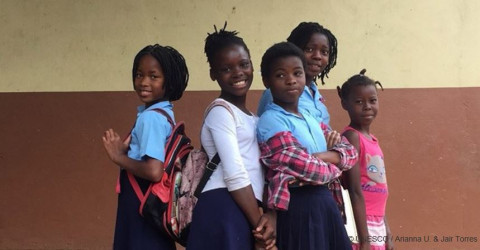 Improving school safety in Mozambique 2017-12-19 Disasters have a major impact on children, youth and education systems. Studies of disaster trends and the likely consequences of climate change suggest that each year 175 million children are likely to be affected by natural hazard related disasters alone. Mozambique is taking steps to improve the safety of its educational infrastructure, using a methodology developed by UNESCO and the University of Udine’s SPRINT-Lab, which facilitates risk assessments in school facilities and provides fact-based practical information to help decision-makers identify areas of concern and prioritize investments. The pilot project involved a stakeholders’ workshop to introduce the method and establish key partnerships for its adaptation to the Mozambican context, and several workshops to build local capacities to use the methodology and train relevant staff. Mozambique’s Ministry of Education and Human Development aims to apply the UNESCO-VISUS methodology for multi-hazard school safety assessment to about 100 schools in this initial phase of implementation.The stakeholders’ workshop, held in September 2017, was facilitated by Jair Torres, UNESCO, and Professor Edgar Peña, University of El Salvador, both VISUS experts who participated in the very first pilot implementation of this project in El Salvador in 2013. Implementation then began in November, with a series of trainings. The first covered the application and use of the UNESCO-VISUS methodology by decision makers. The second focused on the theoretical aspects of the methodology, to train teachers of the University of Eduardo Mondlane (UEM) as well as technical staff of the Ministry of Education and Human Development and of the National Institute for Disaster Management of Mozambique (INGC). The third and last workshop focused on the practical use of the methodology for assessments on the ground. Participants included teachers of the Faculty of Architecture of the UEM, as well as last-year students, who are now able to conduct risk assessments in schools using the methodology. The training concluded with a practical exercise: to survey six schools in Maputo City. The six schools surveyed were EPC (Complete Primary School) 3 de Fevereiro, EPC “A luta continua”, EPC São António de Polana, EPC do Alto Mãe, EPC de Mikadjuine, and EPC Unidade 7.With their training completed on 1 December, these professors, teachers, and students are now applying their knowledge to conduct a survey and assessment of 94 schools in the Maputo, Gaza, and Inhambane provinces. They are using VISUS paper codification forms as well as a dedicated mobile phone app, VISUS Finder. The data from the school survey and field assessment will be then processed and validated by the Safety and Protection Intersectoral (SPRINT) Lab of the Polytechnic Department of Engineering and Architecture of the University of Udine, Italy – UNESCO’s Scientific Partner for the VISUS methodology, and a UNESCO Chair on Safety Assessment. Once the validation is complete, this data will be available as individuals school reports for each school, and as a collective report addressed to the decision-makers of the Ministry of Education and Human Development of Mozambique. The individual reports will then be shared in a mapping tool as geolocalized data (GIS format). The conclusions of the surveys conducted during the pilot phase will be presented to the Government of Mozambique in the beginning of 2018. They will provide ready-to-use science-based information on school safety, to enable Mozambican decision-makers to make informed decisions about school safety and upgrading, allowing them to improve budgeting and to prioritize interventions and expenditures. The implementation of the UNESCO-VISUS methodology for multi-hazard school safety assessment in Mozambique was supported by UNESCO, the Global Facility for Disaster Reduction and Recovery (GFDRR) and the Belgian Development Cooperation Agency. More information:Photo gallerySchool Safety Assessment: VISUS MethodologyDisaster Risk Reduction Pilot projects:El SalvadorIndonesia URL:https://en.unesco.org/news/improving-school-safety-mozambique
 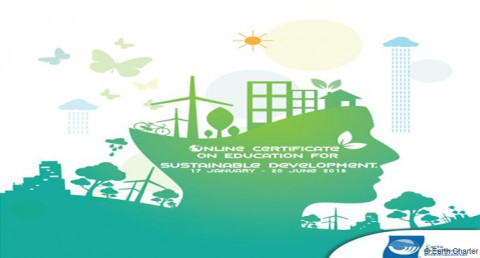 Online Certificate Programme on ESD to begin in early 2018 2017-12-18 This unique professional development programme seeks to strengthen the capacities and skills of the educators to integrate the values of sustainability in their areas of action, and develop educational programmes that promote a new awareness of our relationship with the environment and sustainable lifestyles.Unlike most programmes in sustainability, in these courses the Earth Charter is used as a central feature of this approach. The Earth Charter provides a broad, inclusive and powerful values-based orientation that can be infused within the missions and purposes of most educational programmes. The methodologies introduced are ones that can be applied to all learning across the curriculum and across grade levels. Register at: http://earthcharter.org/online-certificate-education-sustain...More information: apply@earthcharter.orgURL:https://en.unesco.org/news/online-certificate-programme-esd-begin-early-2018
 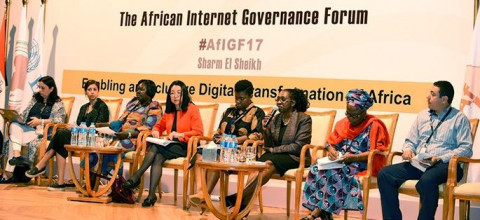 UNESCO consults on its draft Internet Universality Indicators at the North African and African Internet Governance Forum in Egypt 2017-12-15 Consulted on the future finalization of the draft Internet Universality indicators, the participants of UNESCO consultation event held in Egypt stressed the importance of developing effective mechanisms to monitor Internet freedom including online freedom of expression and privacy at the national level as well as ensuring the participation of multiple actors in Internet governance. UNESCO launched the second phase of its project to develop Internet Universality indicators at the fifth African School on Internet Governance, the first North African IGF and the sixth African IGF and took the opportunity to consult with African stakeholders gathered in Sharm El Sheikh, Egypt from 28 November to 6 December 2017. Representing UNESCO, Xianhong Hu presented the first draft Internet Universality indicators which combine both qualitative and quantitative indicators. The framework of indicators will seek to help governments and other stakeholders to assess online Rights, Openness, Accessibility, and Multistakeholder participation (known as the R-O-A-M principles). These first draft indicators are an interim outcome from UNESCO’s first phase of global consultation, which lasted from 29 March to 31 October 2017, included 24 face-to-face consultation meetings in 21 countries, and resulted in 165 online contributions. The participants shared their views about how efficient the indicators would be to tackle issues related to online rights, including censorship, surveillance, protection of digital sources for journalists, or online harassment and intimidation. As underlined by Chris Kabwato from Highway Africa, these Rights indicators are especially important since “increasing challenges are witnessed widely in African countries concerning online freedom of expression, freedom of information, privacy, personal data protection, artistic expression and right to cultural and linguistic diversity in cyber space”. Other participants insisted on the online rights of migrants and refugees and said that “in the light of very strict laws in establishing NGOs, the Internet has become the last resort for refugees and migrants to discuss their own issues.” On Openness indicators, some participants pointed out that “open data should be measured within a broader context, especially to see how digitized data are being used for public good, not only by governments but also by civil society and other stakeholders”. Consulted on the Accessibility indicators, Koliwe Majama from the Association for Progressive Communication (APC) stressed the importance of measuring “the extent to which various local communities can preserve their own cultural knowledge, and express themselves artistically or politically.” Other participants said that “in order to reach accessibility, increasing media and digital literacy is vital”. Ephraim Percy Kenyanito from Access Now noted that “it would be easy to increase access if we could use the money currently spent by governments on surveillance”. Regarding the Multi-stakeholder indicators, participants talked about how to measure a multistakeholder process and balance the different stakeholders’ interests. Xianhong Hu presented UNESCO’s new publication What if we all governed the Internet? Advancing multistakeholder participation in Internet governance which shares good multistakeholder practices based on inclusiveness; diversity; collaboration; transparency; equality; flexibility and relevance; privacy and safety; accountability and legitimacy; and responsiveness. Several crosscutting issues were also raised by the participants. Most participants stressed the link between Internet Universality indicators and the implementation of the Sustainable Development Goals (SDGs). Xianhong Hu confirmed that the Internet Universality indicators aim to highlight the Internet’s crosscutting role in enabling States to achieve all SDGs, along with other UNESCOs’ global priorities such as advancing gender equality and empowering youth through Internet governance. On the implementation of the indicators, Makane Faye from the African Union shared that the African Union has been working on education indicators as well as on indicators within the framework of the Information and communication technologies for development (ICT4D). Moctar Yedaly from the African Union presented the Organization’s ongoing process to endorse the African Union Declaration on Internet Governance which aims to advance Africa’s digital economy, and expressed his willingness to collaborate with UNESCO on its indicators’ project. This event was part of the four regional consultation fora that UNESCO will conduct globally to improve the draft Internet Universality indicators. UNESCO also welcomes online contributions in the six UN official languages until 15 March 2018. The indicators will be finalized and launched by June 2018. The project is being led by UNESCO in partnership with the Association for Progressive Communications Consortium and with the support of the Swedish International Development Cooperation Agency (Sida) and the Internet Society (ISOC). URL:https://en.unesco.org/news/unesco-consults-its-draft-internet-universality-indicators-north-african-and-african-internet
 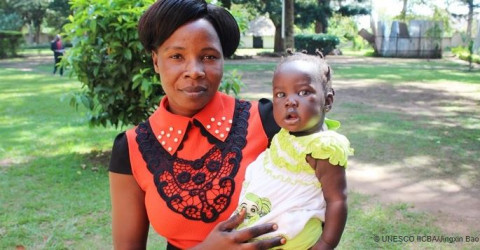 Teachers take centre stage at educational social dialogues in Uganda 2017-12-13 UNESCO supports the Government of Uganda through the CapED Programme to develop a framework for social dialogue on teacher issues and to organize regular social dialogues at regional and national levels. Two sub-regional social dialogues were held in Mbale and Gulu for the Eastern and Northern Regions of Uganda on the 14th and 16th of November 2017. Approximately 250 teachers, local government and ministry officials, private sector representatives and development partners participated. The events, which were organized by the Ugandan Ministry of Education and Sports (MoES), in collaboration with Uganda National Teacher Union (UNATU) with the support of Uganda’s CapED programme, allowed teachers to discuss the key role they play to achieve inclusive and equitable quality education, to identify strategies to improve performance and to celebrate World Teachers Day 2017. Social dialogues and teachers One major objective of the social dialogues is to empower teachers and give them a voice. A female teacher from the Eastern Region reflected that, “This is my first time attending a social dialogue. I liked it. It lets us bring our views - that means including teachers in the policy strategy and solving the problems that they have in their schools”. When asked the difference between this dialogue and previous meetings, she answered, “the attitude, knowing more about what a teacher is required to do and learning more about policy. Now I can sit down and discuss about my rights, really going through the matters with the knowledge that I have learned.” Indeed, teachers are centre stage at these dialogues, leading the discussion on salary issues, fairness and their need of professional growth, community appreciation and other aspects that help hold teachers accountable. UNATU and the MoES recorded their concerns and ideas for strategic solutions. The dialogues also served as a platform for information and knowledge sharing. The MoES presented the latest draft of the National Teacher Policy, which was developed with the support of CapED. The National Teacher Policy addresses the integration of ICT in teacher education, as well as the Teacher Motivation Framework. Performance and accountability Participants discussed the root causes of issues that affect school performance. Poverty was a top cause. Teachers are concerned about students who come to school with empty stomachs and the fact that many teachers cannot afford adequate meals either. “My students said ‘teacher, I am hungry.’ How could I blame them for a bad performance? They cannot concentrate. A starving child cannot be taught,” said a female primary school teacher from the Northern Region. Other factors influencing teachers' motivation and performance are recruitment, deployment and promotion. Teachers wish to have transparent and clear procedures and rules, which are linked to issues of political influence and corruption. During the social dialogue held in Mbale, a male head teacher asked, “how can you teach students about integrity when integrity is not practiced? Look at the education sector - pre-service teachers cheat in the exams and diplomas, teachers cheat in evaluations, officials cheat in promotions, and students cheat in schools.” School leadership is another key factor. Participants argued that many headmasters in Uganda are not competent in administrative and financial management and education planning, whilst good teachers tend to move to 'model schools'. “Leadership is different from management. It is about assuring and improving quality, accountability and motivation of a school and the teachers serving there,” emphasized Professor Joseph Oonyu from Makarere University. Teachers appreciate that qualifications, being equipped and up-skilled are crucial for school performance. During the dialogue, they called for sufficient and fair opportunities for continuous professional development. “We need to learn about new teaching methods and pedagogy. We don't want to be left behind by our students,” said one teacher from the Eastern Region. Women in teaching Female teachers' made up about half of participants. Three of them who attended the meeting in Gulu brought their infants. “I feel privileged to participate in this social dialogue. But it is not easy. I have to find a babysitter who will take care of my baby.” Said one teacher with a five-month old daughter, she added that, “sometimes people tell me that she is already in the hospital while I am teaching in the classroom. This is the biggest challenge that affects my performance, but it is not avoidable.” She is also faced with salary problems, rent issues due to the lack of staff quarters and challenges teaching at her level due to traditional ideas that consider girls' education as a waste of money and time. In spite of that, she has never doubted her career; “I think it is my inborn feeling to be a teacher. I am always being proud.” Another teacher, who attended the social dialogue with her 50-day old infant, had not received her salary in five months. Her primary concern was that once the 60-working-day maternity leave was over she would have to return to teach and wants the government to extend maternity leave to 90 working days. The way forward Everyone has a role to play to improve performance and accountability. Participants came up with strategies at school, district and national levels. These strategies start with government action including: harmonizing teachers' salary and guaranteeing the timeliness of payment, providing adequate continuous professional development opportunities for teachers, ensuring teachers' participation in education planning, enhancing school leadership and endorsing and implementing the National Teacher Policy. After the conclusion of the social dialogue held in Mbale, a teacher said, “I think it is going to be better. Because the discussion now is more detailed, and we talk about our concerns with no fear of being sent away of job.” UNATU plans to hold follow-up meetings with the participants in 2018, which requires the mobilization of more resources. Institutionalization of social dialogue is one of the key components of the CapED Programme in Uganda. IICBA provides technical support to the development of a framework for social dialogues on teachers' issues, as well as to the other CapED interventions such as the formulation of the new National Teacher Policy, Continuous Professional Development Framework, Quality Assurance Framework for Teacher Education and more. More information Policy Brief on Uganda National Teacher Policy Teacher Support and Motivation Framework for Africa: Emerging Patterns Recommendations from World Teachers' Day 2016 URL:https://en.unesco.org/news/teachers-take-centre-stage-educational-social-dialogues-uganda
 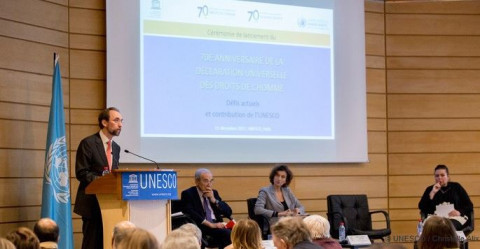 Launch of year-long campaign to commemorate 70th anniversary of the Universal Declaration of Human Rights 2017-12-13 On 11 December 2017, Audrey Azoulay, UNESCO Director-General, launched a year-long campaign to commemorate the 70th anniversary of the Universal Declaration of Human Rights alongside Mr Zeid Ra'ad Al Hussein, United Nations High Commissioner for Human Rights, H.E. Ms Zohour Alaoui, President of the UNESCO General Conference, and Mr Robert Badinter, former Minister of Justice and former President of the Constitutional Court of France. “This is an appropriate occasion for reaffirming alongside the High Commissioner, the centrality of human rights protection in the history and the mandate of UNESCO,” said the Director-General. It is also an occasion for “measuring the progress made and the challenges to be addressed.” Among those challenges the Director-General placed emphasis on four: the risks deriving from the ignorance and disregard of human rights; the dramatic consequences of terrorism and the rise of violent extremism; the resurgence of cultural relativism; and the regress of multilateralism. All these realities “call for new ways of defending and articulating human rights, (…) for stronger monitoring, (…) stronger alliances” and “for new rights, pushing forward the frontiers of dignity.” In his keynote address, the High Commissioner noted that despite the positive balance of impact over the years, we are at a critical juncture. Our commonly agreed principles are under growing pressure, the pillar of justice undermined and the sense of shame in the face of human rights violations depleted. We must stand up for human rights, using our own know-how for building the path to security and peace. The President of UNESCO’s General Conference stated that we cannot be satisfied with the progress made in the face of such challenges as the plight of refugees, the women victims of rape or modern forms of slavery and servitude. “There is no universality of human rights in all this,” she said. Mindful of the complementarities, she expressed the wish for a stronger cooperation and interaction between UNESCO and OHCHR. For Robert Badinter, UNESCO, the home of just causes, has a responsibility to act, building on the inexhaustible moral force of the Universal Declaration, against the degradation of the environment, the abhorrent violations of the dignity and physical integrity of women and girls and the discrimination and exclusion suffered by lesbian, gay, bisexual and transgender persons. Within the context of such efforts, it is fundamental to protect human rights defenders because “they are the salt of the earth,” he said. “Today, the Declaration remains the moral horizon of our time.” UNESCO is keen that the opportunity of the year-long mobilization across the organization and the entire UN – can prompt more coherent and comprehensive action, allowing us to better respond, in close collaboration with the full constellation of actors promoting human rights, to the development needs on the ground of our Member States. URL:https://en.unesco.org/news/launch-year-long-campaign-commemorate-70th-anniversary-universal-declaration-human-rights