
News
Catch up on what’s happening in the world of global citizenship education.
1,668 results found
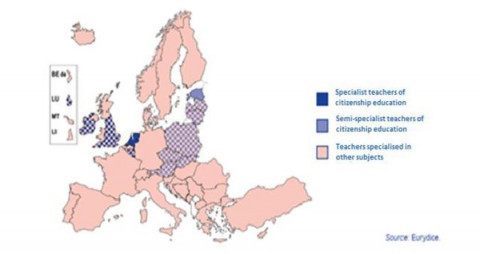 Eurydice Report pinpoints big gaps in citizenship teacher education for European schools 2018-05-29 Teachers generally responsible for teaching citizenship education in general secondary education and school-based IVET (ISCED 2-3), 2016/17 A European Commission report reveals significant differences between European countries’ government policies and recommendations affecting the implementation of citizenship education in schools. The Eurydice Report, Citizenship Education at School in Europe 2017, published in October 2017, offers a comprehensive study of national policies regarding citizenship education in schools across Europe. It includes policy analysis of 28 European Union Member States and 8 candidate countries from the European Economic Area. The report reveals, that despite progress in recent years, nearly half of the countries still have no regulations or recommendations on the development of prospective teachers' citizenship education competencies through initial teacher education (ITE). The chapters of the report are designed based on four different aspects of the Global Indicator for SDG4 Target 4.7 on Education for Sustainable Development and Global Citizenship Education; curriculum organization and content; teachers, learning and active participation; student assessment and school evaluation, and teacher education, professional development and support. Each chapter is followed by four case studies on recent policy initiatives in citizenship education in Belgium (Flemish Community), Estonia, France and Austria. Data for this qualitative report are partly provided by the Eurydice Network, and complemented by academic findings and inputs by the key policy actors. The Citizenship Education at School in Europe 2017 report includes a key chapter on government policies and recommendations related to ITE in citizenship education. As seen in the map above, in recent years, even if top-level education authorities have increased their efforts in ITE, there are still significant policy gaps in ITE across Europe. It shows that in the 2010/11 school year, only the United Kingdom specialised in citizenship education through ITE and in 2016/2017, this was available in four more education systems; Belgium (French Community), Ireland, Luxembourg and Netherlands. Since autumn 2017, ITE has also become available for the first time in Denmark. In addition, seven countries train prospective teachers during ITE to become semi-specialists of citizenship education, namely the Czech Republic, Estonia, Latvia, Lithuania, Austria, Poland and Slovakia. Through qualitative interviews, education authorities stated that they attempt to ensure that all prospective primary and secondary teachers acquire essential knowledge and competences for teaching citizenship education through ITE. Currently, only nine education systems have defined competencies to be acquired by all teachers which are particularly specific to citizenship education. Also, while the majority of education authorities organize or support opportunities for teachers' continuing professional development in this area of learning, there are limited opportunities for school heads. Education authorities have also not systematically issued guidelines for teachers on how to assess students in citizenship education. In just over a third of the education systems, there are no central level regulations or recommendations on suitable methods for classroom assessment in this area of learning. The report finally shows that education authorities give less attention to citizenship education in school-based initial vocational education and training (IVET) in comparison with general education. As efforts are made worldwide to meet the goals of the Education 2030 Agenda, UNESCO is committed to monitoring progress towards the achievement of Target 4.7, with a focus on Education for Sustainable Development and Global Citizenship Education. Regular reports, news, analyses, publications and links to data sets produced by UNESCO and its partner provide evidence on that progress. Eurydice Report URL:https://en.unesco.org/news/eurydice-report-pinpoints-big-gaps-citizenship-teacher-education-european-schools
 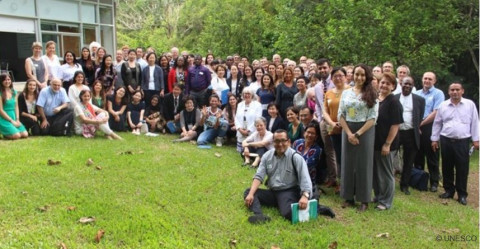 A look at the future of Education for Sustainable Development at Costa Rica event 2018-05-29 Over 90 Key Partners of the Global Action Programme (GAP) on Education for Sustainable Development (ESD) met in San Jose, Costa Rica, from 25 to 27 April 2018 to ‘look into the future of ESD, together’ and plan the work of the Partner Networks until 2019. As the GAP will end in 2019, UNESCO is carrying out a series of global consultations to reflect on the post-GAP period and the future of ESD. At the event, which took place at the Peace University in the Central Valley of Costa Rica, UNESCO consulted with the GAP Partner Networks on a draft position paper on the future of ESD. The three-day meeting, organized by UNESCO Headquarters and UNESCO San Jose in cooperation with Earth Charter, included discussion and planning on the work of the Partner Networks until 2019. At the opening, Ms Alicia Vargas, Vice Minister for Education of Costa Rica told participants “ESD is a just, inclusive, and society-building process as well as individual development.” She said that ESD was already part of the curriculum in Costa Rica, which contributes to the SDGs through formal and informal education. Ms Soo-Hyang Choi, Director of the Division for Peace and Sustainable Development at UNESCO said: “This is the first external consultation that we hold on the draft position paper. We welcome both positive and critical feedback from the partners, which prompts us to further reflect on the clarity of the position paper on the future of ESD.” The first day included interactive town-hall discussions using an online survey tool and subsequent debates over key questions. Issues addressed ranged from the importance of ESD to the achievement of the SDGs, to its role in promoting values and sustainable lifestyles, especially among youth. Questions also addressed the role of ESD in empowering local communities to act for sustainable development, the relevance of ESD in the context of extreme poverty, as well as the extent to which technological advances would change the discourse on sustainability and ESD. The second day built on these discussions through group visits to various ESD-related sites around San Jose. The sites ranged from green schools where ESD is integrated into the curriculum in creative methods, to an inclusive refugee-centre for women's empowerment through arts and cultural activities, and a national technical and vocational education and training (TVET) centre where ‘how to be sustainably productive’ is the priority. These site visits enabled participants to explore the practical and contextual insights on ESD in these communities and to interact first-hand with the people involved in these initiatives. In the afternoon, world café discussions allowed participants to reflect on the position paper in view of observations made during the site visits. Speaking of one visit Mr Hilary Ngide from the Centre for Community Regeneration and Development (CCREAD) in Cameroon said: "We visited an eco-school which is located in a forest: so the forest is also the classroom. It was very interesting to see how everyone in that academic community was involved in ESD, from the school leadership to the administration, teachers and students. ESD is about giving people autonomy to experiment sustainability in practical ways, and this is what we saw in this site visit. It resonates with the position paper on the role of the individual and empowering them as a community; which we strongly sensed in this school visit.” Ms Tintin Kartini from the Centre for Development of Early Childhood, Non-formal and Informal Education (Jayagiri Centre) in Indonesia, was impressed with what she described as ‘work with heart and hands in a high-risk community’ in a refugee centre where young women are building their capacities for life skills and are appreciated and recognized for their contribution to the community. The sharing of opinions, perspectives, priorities and good practices continued into the last day, which mainly centred on the successes and challenges of the current GAP flagship projects' implementation, which is funded by Japan. One such flagship projects was the youth leadership programme on ESD, which saw regional, local and national capacity-building workshops on ESD successfully organized for 292 youth from 93 countries in total, who then conducted their own workshops empowering over 11,000 youth around the world. Other flagship projects focused on the role of the local community in mobilizing ESD or on policy processes for integrating ESD into academic arenas and building the capacities of administrations and teachers. The closing of the meeting also celebrated the launch of a new UNESCO publication “ESD volume of Education on the Move series: ‘Issues and Trends in Education for Sustainable Development”. It aims at providing policy-makers, educators, and other stakeholders with state-of-the-art analyses of topical issues pertaining to ESD. The event comes at a time of heightened global interest on the contribution of ESD to the achievement of the SDGs. “This meeting has been extremely useful for us in helping design the post-GAP phase in consultation with all the partners, and we really hope that this process has been beneficial for you as well,” said Ms Soo-Hyang Choi. “We will aim to be as open as possible in reflecting these discussions in the final position paper.” Participants left the meeting newly inspired and committed to push forward on ESD and further build on collaborations, partnerships, and possibilities at both local and global levels. The draft position paper on the future of ESD will undergo a series of consultations including the Technical Consultation Meeting on the Future of ESD (July 9-10, Bangkok, Thailand) and will be presented to the 206th session of the UNESCO Executive Board for approval. More on Education for sustainable development URL:https://en.unesco.org/news/look-future-education-sustainable-development-costa-rica-event
  Education as a Tool for Prevention of Violent Extremism in South-East Europe for Peaceful Societies 2018-05-29 The Global Citizenship Education for Peaceful Societies in South-East Europe: a Sub-Regional Capacity-Building Workshop on the Prevention of Violent Extremism took place on 2-4 May 2018 in Venice, Italy. It aligned with the Doha Declaration implemented by United Nations Office on Drugs and Crime through its "Education for Justice" (E4J) initiative and was complimentary to UNESCO's ongoing efforts on Global Citizenship Education and the Prevention of Violent Extremism through Education. The workshop was organized jointly by UNESCO’s Section of Global Citizenship and Peace Education (GCPE) and UNESCO Regional Bureau for Science and Culture in Europe, with the support of United Nations Office on Drugs and Crime (UNODC). In attendance were 22 representatives from South-East European countries. The event was inaugurated by Ana Luiza M. Thompson-Flores, Director of the UNESCO Regional Bureau for Science and Culture in Europe, H.E. Ambassador Ali bin Jassim Al Thani, Permanent Representative of the State of Qatar to the United Nations and International Organizations in Vienna (Austria) and Gilberto Duarte of the UNODC, with greetings from the Italian National Commission for UNESCO. In her welcoming remarks, Ana Luiza M. Thompson-Flores underlined that it is through the transformative power of education that we can not only prevent violent extremism but also build peace – real, lasting peace – in minds of the young men and women that represent the future - of this region and of the world. “It is in this same collaborative spirit that we are working together to achieve the 2030 Agenda for Sustainable Development, and I am very pleased to note that your discussions in these days will work towards Sustainable Development Goal 4 on quality education, specifically towards Target 4.7.”, she added. The 3-day programme focused on the role of education in the prevention of violent extremism, followed by key tools and approaches for effective multi-stakeholder engagement, which provided a solid basis for the participants to formulate and present their draft country action plans on the last day. Lydia Ruprecht, Team Leader for Global Citizenship Education within UNESCO’s GCPE Section, introduced the 9 international experts who, in representation of their institutions (Arigatou International, CELL Foundation, the Georg Eckert Institute for International Textbook Research, Training Centre for International Cooperation, and Radicalisation Awareness Network RAN EU) support the workshop. The experts, along with the expertise of UNESCO and UNODC staff, facilitated exercises on varied topics. They ranged from the global PVE legal framework to potential causes of the Prevention of Violent Extremism through Education (PVE-E) in South-East Europe, linkages between education and violent extremism, what defines a “good practice”, inclusive education through quality textbooks, the power of media and information literacy, ethics education, polarization management and the role of the family in PVE-E. Lydia Ruprecht explained that democracy is key to enabling and keeping within reasonable limits activism, also for the evolution of laws to keep pace with society, and that “as educators, we should also be able to recognize our own subjectivity and know how this is interpreted and taught to students”. “There is a chance”, she finally stated “that they start questioning what they consider is truth and the real justice. It may lead them to the authorization, inquiry, critical thinking, self-questioning, and assumption to bridge or build some connections. I suggest we can conclude on our way so that we are reflecting our own assumptions about teaching content or approaches.” The primary outputs of the workshop will be a set of draft country action plans, as a basis for developing follow-up activities. The UNESCO Regional Bureau for Science and Culture in Europe will continue monitoring progress in the action plans’ preparation and implementation in participating countries. Photo album on Flickr: https://bit.ly/2rSNJBo URL:http://www.unesco.org/new/en/venice/about-this-office/single-view/news/improving_understanding_among_education_stakeholders_of_the-1/
 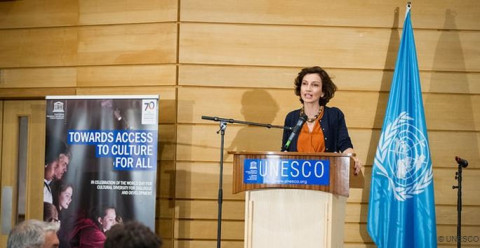 UNESCO Advocates Access to Culture on World Day for Cultural Diversity for Dialogue and Development 2018-05-25 UNESCO hosted an event, Towards Access to Culture for All, on 22 May at its Headquarters to celebrate World Day for Cultural Diversity for Dialogue and Development, and the 70th anniversary of the Universal Declaration of Human Rights. In her opening address, UNESCO Director-General Audrey Azoulay highlighted the importance of defending and promoting cultural diversity as a tool for dialogue and peace. “Cultural diversity is a fight, a political fight par excellence. A fight to defend the right to cultural diversity that is rooted in human consciousness, and to reaffirm the legitimacy of public policies to support culture and creativity.”In the two panel discussions that followed, high-level actors from the world of museums, the tech industry and international organizations offered a series of strategies to ensure that all people – regardless of age, gender, nationality or disability – are able to exercise the basic Human Right right to access culture. Karima Bennoune, the UN Special Rapporteur in the field of cultural rights, declared that “culture is not a luxury”, but is rather an integral part of human rights that States in particular have a responsibility to protect. Speaking of the link between culture, peace and development, she highlighted the example of Medellin, Colombia, a city that successfully employed a strong cultural policy to overcome conflict and division.Youma Fall, Director of “French language, culture and diversity” at l’Organisation internationale de la Francophonie, and Ghita Khaldi, Vice-President of the pan-African Arterial Network, stressed the importance of grassroots action, particularly in the African context, to promote access to culture and cultural diversity. As new technologies make culture appear more accessible than ever before, Octavio Kulesz, founder of the first e-publishing house in Latin America and one of the authors of the 2018 UNESCO report Re|Shaping Cultural Policies, emphasized the importance of ensuring cultural diversity in the digital environment. This environment should be inclusive and open to smaller independent players in addition to the dominant platforms, he argued.Amit Sood, Director of Google Arts & Culture, discussed how technology is responding to peoples’ demand to “access culture in different ways and different contexts.” He said that Google, through the Google Arts & Culture app, makes more than 6 million artefacts available online, supporting museum curators in telling the stories of objects in their collections. Vincenza Lomonaco, Ambassador and Permanent Delegate of Italy to UNESCO, described initiatives undertaken in Italy to expand cultural access for young people and among migrant communities. Léontine Meijer-van Mensch, Member of the International Council of Museums (ICOM) Executive Board, stressed that making museums more accessible means fostering diversity. She agreed that “digital technology is changing museums” and said that ICOM is working on a new Code of Ethics for Museums that responds to the new professional paradigm. A performance by Ensemble Son Joropo, a group of young musicians and singers from Puerto Carreño, Colombia, featured as the opening of the event. URL:https://en.unesco.org/news/httpswwwflickrcomphotos131897504n0827409205477inalbum-72157667222527757
 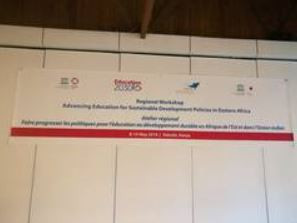 Regional Workshop: Advancing Education for Sustainable Development Policies in Eastern Africa 2018-05-24 UNESCO organises a regional workshop on advancing Education for Sustainable Development (ESD) policy development in Eastern Africa from 8 to 10 May, 2018, gathering 13 countries in Eastern Africa to learn from each other's experiences on national policies on ESD and to promote a sector-wide approach with various stakeholders in the countries collaborating to integrate ESD into their curricula and national education systems. UNESCO defines ESD as a concept that 'empowers learners to take informed decisions and responsible actions for environmental integrity, economic viability and a just society, for present and future generations, while respecting cultural diversity. It is about lifelong learning, and is an integral part of quality education. ESD is holistic and transformational education that addresses learning content and outcomes, pedagogy and the learning environment. It achieves its purpose by transforming society'. As the lead agency for ESD, UNESCO promotes and coordinates the Global Action Programme (GAP) on ESD endorsed by the UNESCO General Conference. For the UN General Assembly, the GAP is a follow-up to the UN Decade for Sustainable Development, around five Priority Action Areas: 1) Advancing policy; 2) Transforming learning and training environments; 3) Building capacities of educators and trainers; 4) Empowering and mobilizing youth; 5) Accelerating sustainable solutions at local level. In this context, UNESCO supports countries to develop or strengthen policies on ESD based on cross-sector and multi-stakeholder approaches including integrating ESD into international and national policies on education and sustainable development. UNESCO helps ministries of education and other sectors worldwide to design and implement policies on ESD to integrate ESD into curricula and national quality standards and develop indicators to establish standards for learning outcomes. Venue: Southern Sun MayfairDates: 8-10 May 2018Location: Nairobi, Kenya Contacts:Virginia Mumo Ntheketha, v.ntheketha@unesco.orgGaia Paradiso, g.paradiso@unesco.org Related documents: Education for Sustainable Development Goals: Learning Objectives (2017) UNESCO roadmap for implementing the Global Action Programme on Education for Sustainable Development Information Folder, Global Action Programme on Education for Sustainable Development (2017) Education 2030, Incheon Declaration and Framework for Action for the implementation of SDG4, Ensure inclusive and equitable quality education and promote lifelong learning opportunities for all (2016) URL:http://www.unesco.org/new/en/nairobi/about-this-office/single-view/news/regional_workshop_advancing_education_for_sustainable_devel/
 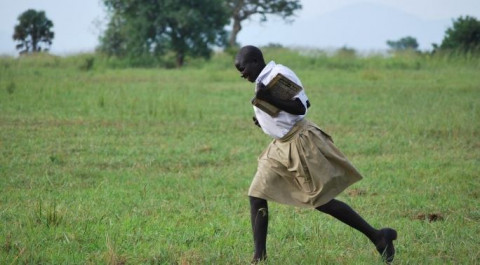 Education 2030 in Africa: A commitment to lifelong learning 2018-05-24 Participants in the Pan-African High-Level Conference on Education (PACE 2018) made an important commitment to promoting lifelong learning for all, particularly for those excluded from education and training. The event, which took place in Nairobi Kenya from 25 to 27 April 2018, aimed to chart a common way forward to ensure inclusive and quality education for all in Africa. Education ministers and vice-ministers, other high-level government officials, and representatives of international, regional and national United Nations organizations, pan-African and sub-regional organizations, civil society, youth and teacher organizations joined the discussions, which concluded with strong recommendations for developing Africa’s human and social capital through education within the context of the implementation of Sustainable Development Goal 4 and the Continental Strategy for Education in Africa 2016–2025, expressed in the Nairobi Declaration and Call for Action on Education. The Declaration recognized that ‘access to and quality of education and training at all levels remained critical challenges within the African continent with millions of children, young people and adults lacking foundational skills and relevant competencies needed for life and work in a globalized world’. It put the learning needs of out-of-school children and excluded young people and adults high on the list of priorities for national education policy and planning. Lifelong learning was high on the agenda. During the meeting, advances made in lifelong learning were highlighted and needs for further development identified, among them well-integrated, functioning lifelong learning systems. The Declaration included a commitment by national governments to promoting quality lifelong learning for all at all levels, using diverse and relevant modes of learning with flexible pathways between formal, non-formal and informal education and training models, including strengthened systems of recognition and equivalence, to cater for all children, youth and adults in and out of school. A further commitment was made to ‘increasing provision of effective and relevant literacy programmes for youth and adults leading to functional proficiency levels, integrating skills development for decent work and livelihood, health and responsible citizenship’. There are many opportunities in Africa today to ensure an inclusive, quality and transformative education for all – and these were reflected in the rich debate at the conference. Key for the region will be improved sector-wide coordination as well as inter-ministerial collaboration and partnerships, reinforced by strong legal frameworks, policies and strategies for ensuring lifelong learning for all, which will be key for a prosperous and more equitable Africa. URL:http://uil.unesco.org/lifelong-learning/education-2030-africa-commitment-lifelong-learning
 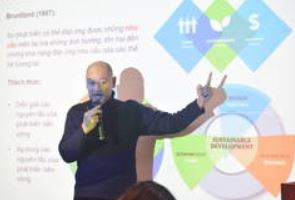 MOET and UNESCO conduct a series of ESD policy advancing workshops in the North, South, and Central of Viet Nam for educational policy makers and authorities 2018-05-24 Ha Noi, 9 February 2018 – UNESCO and the Department of Science, Technology and Environment (DSTE) under the Ministry of Education and Training (MOET) conducted a series of training workshops in Da Nang, Ha Noi, and Ho Chi Minh City for educational policy makers and authorities. These workshops were held within the framework of “Strengthening Education for Sustainable Development (ESD) Policy in Viet Nam” funded by the Japanese Funds-in-Trust (JFIT). Some 150 participants from all three regions (North, Central and South) of Viet Nam, including policy makers from the Departments and Bureaus of Education and Training, school managers, students and lecturers from Universities and Teacher Training Institutions, were provided with essential knowledge of sustainable development and the concept of ESD. The participants were also introduced to two key outputs of the aforementioned project: (1) ESD Policy Brief that provides an insight into Viet Nam’s ESD policies, their achievements, shortfalls and opportunities for further improvements; (2) ESD Advocacy Kit that guides educational stakeholders to review ESD policies if the current ones at their level (i.e. provincial and district levels) have ESD themes considered and integrated and how to advance ESD policies at different levels. The workshops were organized in an interactive manner and all participants were split into groups to actively engage in discussions on ESD policies in Viet Nam and to do exercises on using the ESD Advocacy Kit. All of the three workshops provided substantial inputs for the finalization of these two important documents. Dr. Le Trong Hung, Director General of DSTE – Coordinating Agency of the Project stated in his opening speech for the training in Ha Noi that, ESD is the key to achieving the internationally agreed Sustainable Development Goals (SDGs) by “empowering learners to take informed decisions and responsible actions for environmental integrity, economic viability and a just society, for present and future generations, while respecting cultural diversity”. It is an integral part of quality education that requires the involvement of various stakeholders to effectively integrate ESD into educational activities at schools. Participants of the training workshops were interviewed before and after the training as pre-and post-test. As a result, they were found to show their great appreciation for the workshops that helped them to acquire better understanding of ESD principles and gain initial ideas to promote ESD in their own work. Ms. Mai Thi Nhung from the Bureau of Education and Training of Hai Ba Trung District said that, “In light of the forthcoming comprehensive education reform, I am very excited but at the same time worried about how this education reform achieves its objectives. However, thanks to this workshop, I am now clear that education needs to focus on equipping learners with knowledge of sustainable development. This is extremely important for our future generations”. Besides, a lot of participants expressed the hope for having more trainings on ESD in the future for more educators especially in the current context which triggers the needs for integrating sustainable development issues in educational activities. For more information, please contact Ms. Binh Le, National Programme Officer for ESD Project at lt.binh(at)unesco.org , and visit our Facebook page @UNESCOOfficeinVietnam URL:http://www.unesco.org/new/en/hanoi/about-the-ha-noi-office/single-view/news/moet_and_unesco_conduct_a_series_of_esd_policy_advancing_wor/
 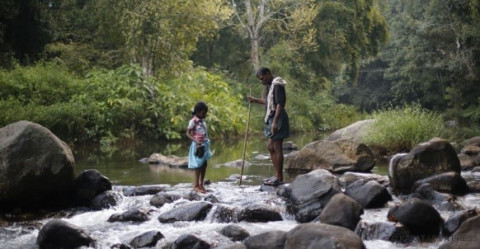 UNESCO Green Citizens exhibition at the European Parliament 2018-05-23 The UNESCO Green Citizens: Pathfinders for Change exhibition presents ten remarkable projects featuring men and women making a real contribution to education for sustainable development. It will be presented at the European Parliament in Brussels until 18 May. This edition, inaugurated in 14 May, is organized in partnership with Klorane Botanical Foundation and SIPA PRESS, under the patronage of Ms Elizabeth Morin-Chartier, MEP and Quaestor at the European Parliament, and with the support of the Mohammed VI Foundation for Environmental Protection. The UNESCO Green Citizens initiative has been launched in October 2015 on the occasion of the COP21 to shift the spotlight on men and women around the world - Pathfinders for change - who have launched remarkable projects in education or awareness for sustainable development to build a better future. Everyone can become a citizen of the planet The exhibition, through portraits and documentaries, pays tribute to people who give life to educational projects for sustainable development worldwide and help us move towards fairer and more inclusive green societies. In highlighting 30 amazing pathfinders for change for sustainable development who share their stories, it shows that everyone can become a citizen of the planet. The exhibition debuted at UNESCO Headquarters, Paris, in October 2015 and was subsequently seen on board the COP21 Climate Train, at the United Nations Headquarters in New York from February to April 2016, at the United Nations Office at Geneva from June to September 2016, at COP22 on November 2016 and on Moroccan airports from November 2016 to April 2018. Are you a pathfinder for change? Do you see people in your community making a change toward a more sustainable future? Or do you want to take part yourself and encourage others to learn about sustainable development? Then participate in the UNESCO Green Citizens web platform on which you can share your projects and discover other initiatives being implemented throughout the world. URL:https://en.unesco.org/news/unesco-green-citizens-exhibition-european-parliament?language=en
 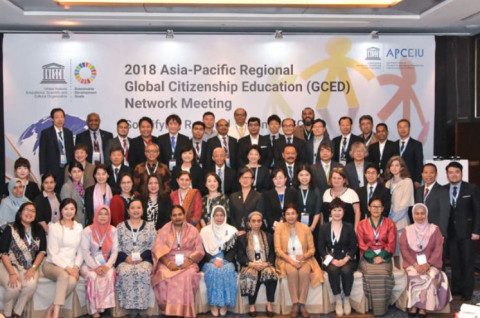 Solidifying Regional Action for GCED: Asia-Pacific Regional Network Meeting in Jakarta 2018-05-22 With the theme “Solidifying Regional Action for GCED”, APCEIU, together with UNESCO Bangkok Office and UNESCO Jakarta Office, co-organized the 2018 Asia-Pacific Regional GCED Network Meeting on May 3-4, 2018 in Jakarta, Indonesia. There were 55 representatives from 40 organizations across the Asia-Pacific representing government and inter-governmental organizations, academic/research institutions, and civil society organizations. This regional meeting takes stock in the existing GCED initiatives of actors in the region, and aims to address implementation challenges by enhancing partnership through a regional network for GCED. The meeting concluded with the formation of an Asia-Pacific Regional GCED Network, an open network for relevant and interested institutions to share their activities and contribute to regional action for GCED, to be led a core group of selected institutions. The Asia-Pacific GCED Network Meeting follows various initiatives that has contributed to the movement to incorporate GCED framework and concepts within education systems, in line with the inclusion of GCED in the sustainable development goals as Target 4.7. While the importance and normative definition of GCED itself has been extensively discussed in many occasions, the status of its implementation has not been sufficiently addressed. Addressing the call to systematically address GCED implementation and to provide a mechanism to strategically promote GCED, the meeting focused on identifying the remaining gaps and identifying potential ways forward. The meeting was composed of panel discussions and working groups. The panel sessions showcased initiatives that address different needs in each stage of the educational process to allow transformation of the learner through GCED, under the framework of GCED “Inputs-Processes-Outcomes”. The panel discussions addressed priorities and developed action plans for the region. Opening the meeting, Professor Arief Rachman, Executive Chairman of the Indonesian National Commission for UNESCO, praised the efforts of UNESCO and APCEIU in sustainably supporting the transformation of education in the Asia-Pacific. Ms Maki Hayashikawa, Director ai of UNESCO Bangkok, the Asia-Pacific Regional Bureau for Education, mentioned the vibrant discussions in previous occasions for GCED, and the need to elaborate systemized action by building a GCED Network. Mr Utak Chung, highlighted the importance of partnership at this stage, 3 years after the inclusion of GCED in the global goals. He encouraged the participants to utilize the most of the meeting to build human and institutional networks for GCED in the region. Finally, Mr Ananto Kusama Seta, Senior Advisor at the Indonesian Ministry of Education and Culture, mentioned that the existence of several entry points for GCED in Asia-Pacific education systems signifies the readiness of the region to accept and internalize GCED. The Asia-Pacific Regional GCED Network Meeting included a panel session dedicated on GCED country reports of countries from Southeast Asia. The panelists, who are senior-level officials at their respective ministries of education, highlighted that existing education policies already strongly support GCED concepts, as well as that of Education for Sustainable Development. However, it was highlighted that support both at the policy level and the implementation level is needed. The 2-day meeting concluded with the adoption of a foundation document that will lay the steps in creating an Asia-Pacific Regional GCED Network. The network aims to ▲ promote systematized knowledge sharing among GCED partners in the region, ▲ develop evidence base for GCED and linking it with the UNESCO GCED Clearinghouse, and ▲ harmonize and synergize actions to further promote GCED in the region. Activities of the network will be identified by the core group who will be managing the activities of the network. Related Article:http://www.unesco.org/new/en/jakarta/about-this-office/single-view/news/2018_asia_pacific_regional_gced_network_meeting_solidifying/URL:Solidifying Regional Action for GCED: Asia-Pacific Regional Network Meeting in Jakarta > APCEIU News - APCEIU (unescoapceiu.org)
 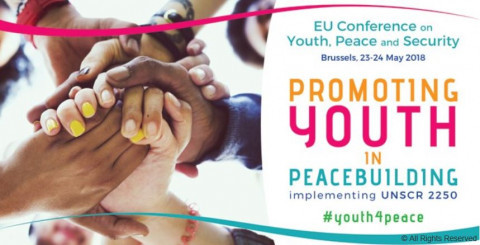 EU's Youth, Peace and Security event to focus on youth in promoting peace & security 2018-05-21 The youth population of the world is estimated 1.8 billion, the largest it has ever been. The crucial role that youth can play in promoting peace, security and peacebuilding will be the subject of an EU conference on "Youth, Peace and Security, Promoting Youth in Peace building" on 23-24 May in Brussels. It will bring together young NET-MED members with young peacebuilders, senior EU leaders, the UN, MEPs and civil society from Europe, Africa and the Mediterranean.You can join and follow all the discussions using the hashtag #youth4peace. The event is due to be opened by the President of the European Parliament Antonio Tajani and closed by EU High Representative/Vice President Federica Mogherini. The event is part of EU's implementation of the Youth, Peace and Security agenda, as set out in UN Security Council Resolution 2250 (UNSCR 2250) It builds on the work done at around various EU networks and initiatives to promote youth in peacebuilding, such as the Africa Union – European Union (AU-EU) Youth Plug-in Initiative and the Young Mediterranean Voices Plus initiative. The EU has held a regional consultation in September 2017 on Youth, Peace and Security in support of the global Progress Study on these subjects. In conflicts and instability around the world, young people are often the most directly affected and this event will have a series of thematic panels to debate some of the most pressing issues. The following issues will be discussed on 23 May in the European Parliament in Brussels: "Youth inclusion for conflict prevention and sustaining peace": This panel will look at how we can get young people more involved in preventing conflict. Preventing conflict and addressing its root causes. "Young people innovating for peace": This panel will discuss the unconventional and informal peacebuilding approaches and explore how young people harness the power of technology, media, sports and the arts to build peaceful and inclusive societies. "Empowering young people to prevent/counter violent extremism": The overwhelming majority of young people are peaceful. Simplistic approaches overexpose "youth at risk", stereotyping young men as "potential perpetrators" and young women as "potential victims", while neglecting the peaceful majority. "Protecting the human rights of youth": Protection is one of the five pillars of UNSCR 2250, and research shows that youth feel disproportionately affected by repressive governments, organised crime and gender-based violence. On 24 May at the European External Action Service (EEAS) there will be the closing session with the EU High Representative/Vice President Federica Mogherini and the young peacebuilders participating in the conference, reuniting her with some of the young leaders whom she has met in previous dialogue events. The interactive discussion between the High Representative/Vice President Federica Mogherini and the young peacebuilders, including NET-MED Youth members, will focus on the four main themes of the conference from the previous days and it will allow for validating the recommendations and conclusions of the conference in an inclusive way. The discussion on 23 May will be web streamed live from the European Parliament and on 24 and the closing session will be covered on social media by the EEAS using the #youth4peace hashtag. Download the programme of the EU Youth, Peace and Security Conference Learn more about the EEAS URL:https://en.unesco.org/news/eu-s-youth-peace-and-security-event-focus-youth-promoting-peace-security-0