
News
Catch up on what’s happening in the world of global citizenship education.
1,668 results found
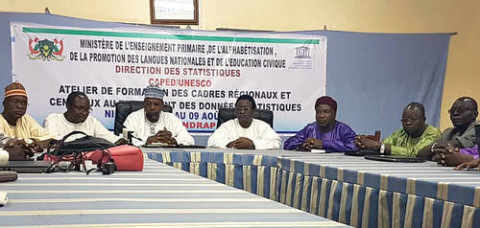 Strengthening data management for quality education in Niger 2018-09-20 "One cannot speak of quality education in the absence of rigorous and efficient management of statistical data, A GOOD PILOTING" said Mr Yahouza Ibrahim, Secretary General of the Ministry of Primary Education, Literacy, National Language Promotion and Civic Education of Niger. The production of reliable statistical data remains a priority for the Government of Niger in monitoring and evaluating performance in the implementation of the Education and Training Sector Programme 2014-2021. In this sense, the Directorate of Statistics of the Ministry of Primary Education, Literacy, National Language Promotion and Civic Education (MEP/A/PLN/EC) produces a statistical yearbook each year which compiles the information collected from each preschool and primary school (basic cycle 1). However, this yearbook does not provide all the data needed for the MEP/A/PLN/EC since it includes little data on literacy and non-formal education. Moreover, the data is collected at a time of the year that is out of step with the statistical period covered by the yearbook. The organization of simultaneous data collection for formal and non-formal education is therefore necessary to produce a single annual statistical yearbook for the sub-sector. To this end, UNESCO's Capacity Development for Education (CapED) Programme in Niger supported the MEP/A/PLN/EC to harmonize data collection for formal education (pre-school and primary levels), literacy and non-formal education and to reconfigure the data entry platform. Twenty-two managers from the regional and central levels of the Directorate of Statistics and the Directorate General of Literacy and Non-Formal Education were also trained in the use of the updated platform and in data processing under the same programme funded by Sweden, Finland and Norway. 358 heads of educational sectors and 206 inspection statisticians were then trained on techniques for completing questionnaires and checking the consistency of data before sending it back to the Directorate of Statistics. This CapED support makes it possible not only to collect relevant statistical data on the sub-sector as a whole but also to strengthen the capacities of the actors involved in conducting the process. The desire to fully involve all stakeholders in this process aims to deconcentrate control over the statistical information, data collection and processing system in order to make it sustainable. URL:http://www.unesco.org/new/en/media-services/single-view/news/strengthening_data_management_for_quality_education_in_niger/
 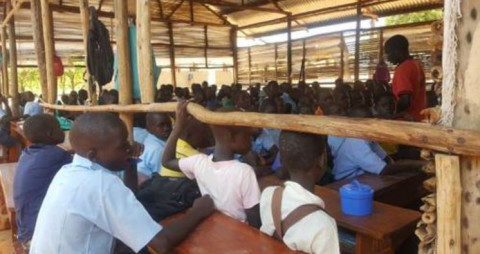 UNESCO and EU join forces to promote access to quality and safe education in Northern Uganda 2018-08-29 Uganda hosts almost 1.4 million refugees, a number expected to increase by the end of 2018. The constant influx of refugees has affected the education sector, while ethnic tensions amongst certain tribal groups have resulted in violence in schools. To address these issues, the European Commission is supporting UNESCO with 800,000 € in humanitarian funding to promote access to quality education that also addresses the unique issues relevant to children and young people within three refugee host districts of Northern Uganda. This will be done through education sensitive to post conflict situations that fosters inclusivity, social cohesion, resilience, respect and safe learning environments for all learners irrespective of their ethnic backgrounds. “Many refugee children have missed out on school and are left with psychological scars from the conflict and displacement they experienced. As refugees they continue to face many barriers to accessing education that is safe and of good quality. Since 2015, the European Union has consistently increased support for education in emergencies. By 2019, it will reach 10% of the EU humanitarian aid budget. Each child has the right to learn. Education provides children with support, protection and the skills to build a better future for themselves and the communities that host them,”said Isabelle D’Haudt, Head of Office for the European Commission’s Civil Protection and Humanitarian Aid Operations in Uganda. The EU-UNESCO project focuses on strengthening policies and practices in the education sector and building the capacity of teachers to implement conflict sensitive education programs which address the needs of children, help them overcome trauma and improve their well-being. “I welcome this first partnership of UNESCO with the EU on education in emergencies, which aims at building safe school environments in conflict situation to ensure the well-being of the most vulnerable children. Such cooperation is significant for UNESCO, an organization committed to ensure that education remains a top priority even in critical emergency circumstances,” said Paolo Fontani, UNESCO Representative to the European Institutions. The project supported with EU humanitarian aid, targets more than twenty thousand people, mainly children and young people. It will develop standardized guidelines and tools for conflict sensitive education. It also aims at conducting a systematic conflict analysis to help understand the causes, actors and dynamics of conflict, and to translate analysis into actions that can support conflict resolution and prevention. The two-year long project will eventually support the establishment of Psychological Support Programs for learners that have been affected by conflict to create a supportive learning environment and promote learners’ psychological well-being. As the UN lead agency for education, UNESCO plays an active role in promoting lifelong quality education for all people – children, youth and adults – as part of emergency response as well as long-term recovery. UNESCO’s work in this field is anchored in the Education 2030 Agenda, which aims to ‘develop education systems that are more resilient and responsive in the face of conflict, social unrest and natural hazards – and to ensure that education is maintained during emergency, conflict and post-conflict situations’. For more information, please contact:Project Coordinator UNESCO Uganda v.kisaakye@unesco.org URL:http://www.unesco.org/new/en/brussels/about-this-office/single-view/news/unesco_and_the_european_union_join_forces_in_northern_uganda/
 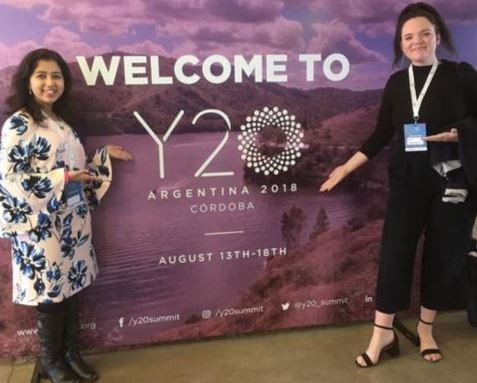 Y20 Summit in Argentina: Youth for Social Innovation 2018-08-27 The Y20, a Youth Summit organized in the framework of the G20 in 2018 in Córdoba, Argentina, from 13 to 18 August 2018, brought together youth from across the globe to discuss and propose innovative solutions to global challenges. This year, the Y20 gathered 46 official delegates from the G20 countries and 30 other young leaders. They were selected based on their exceptional profiles and experience in social innovation not only as ‘thinkers’ but also as ‘doers’ who are already creating social change in their communities and beyond. UNESCO nominated two brilliant young change makers to attend the event. The Summit produced Public Policy Recommendations created by youth for the G20 Leader’s Summit to take place in December 2018, and the Social Innovation Warehouse (SIW). “During the Y20, I was a member of the Sustainability Task Force, since that is my zone of expertise. My focus during this Summit was to collaborate with other youth delegates to work on our engagement in the SDG processes at the national, regional and international levels. Young people in many development nations are not that involved in the SDG processes and it is imperative that we make sure that policy review is a bottom-up approach, where young people all around the world are involved in all aspects of the gender-setting, decision-making and implementation”, says Kehkashan Basu, 18, member of the YouthofUNESCO community, about her experience in the Y20. The Social Innovation Warehouse, developed by the young participants during the Summit, is an international resource bank for communities, local governments and individuals to upload and find social innovation projects at international level. “I’m very hopeful. The Social Innovation Warehouse, which is an online platform, creates a new way we can share youth projects globally”, says Tamara Richardson, 22, participant of the 10th UNESCO Youth Forum. Guided by its Operational Strategy on Youth 2014-2021, UNESCO fully supports and seeks to promote the engagement of young women and men as key stakeholders in policy debates and action addressing global challenges, including those under the G20 process. One of UNESCO’s flagship initiatives in 2018-2019 is the “Youth Spaces” Initiative which consists in a global series of actions co-designed with youth that aims to present, develop and scale up youth-led innovative action. In line with the promise of Agenda 2030 to ‘Leave No One Behind’ the “Youth Spaces” also aspire to involve young people who do not have opportunities to become engaged in civic action. More information about the Y20 Read the Policy Recommendations Discover the Social Innovation Warehouse URL:http://www.unesco.org/new/en/media-services/single-view/news/y20_summit_in_argentina_youth_for_social_innovation/
 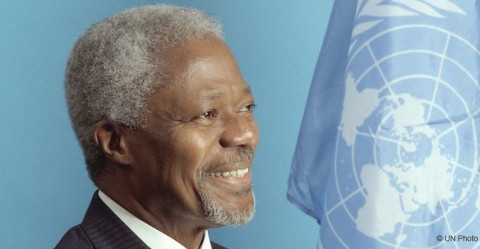 On the passing of Kofi Annan: the world loses a great defender of peace and modern multilateralism 2018-08-20 "I am deeply saddened to learn of the sudden death of former United Nations Secretary-General and Nobel Peace Prize laureate Kofi Annan," said Audrey Azoulay, Director-General of UNESCO. "A great defender of peace, he was the very embodiment of peace and of a resolutely modern vision of the United Nations. His conviction that a culture of peace should be developed was fully in line with the mandate and daily commitment of UNESCO. I remember his kindness, his determination and his absolute elegance. I would like to extend my sincere condolences to his family and friends, to his fellow Ghanaians and join the international community in saluting his tireless efforts for a better world and lasting peace through international cooperation.” In 2011, writing for a UNESCO publication, he said : “We need to act at a deeper level for the prevention of violent conflicts before they arise. We need a culture of peace. The first and fundamental principle of such a culture must be tolerance. This means welcoming and celebrating the differences that make our planet such a varied and richly textured place.” On 8 December 1998, he took part in UNESCO's celebration of the fiftieth anniversary of the Universal Declaration of Human Rights. He recalled that "United Nations action on human rights is one and indivisible. ‘All human rights for all’ is our common goal.” It is in this spirit that he has embarked on a vast reform of the United Nations. As we prepare to celebrate the 70th anniversary of the Universal Declaration of Human Rights, its committed vision of multilateralism and the central role of the United Nations remains as relevant as ever. URL:https://en.unesco.org/news/deces-kofi-annan-monde-perd-grand-defenseur-pon-passing-kofi-annan-world-loses-great-defender
 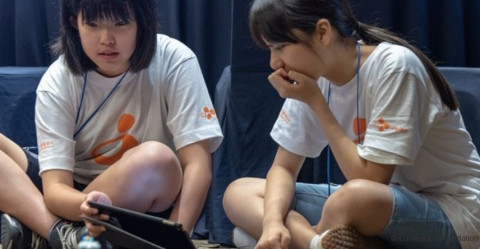 Le camp éducatif CJ-UNESCO offre aux filles les moyens d’accéder à l’éducation en STEM 2018-08-16 The CJ Group Donors Camp held a first ever CJ-UNESCO Girls’ Education Camp for Future Scientists from 16 to 18 June 2018 in South Korea to foster girls interest and talent in the fields of STEM (Science, Technology, Engineering, and Mathematics). The camp is part of the efforts made by CJ and UNESCO together through the UNESCO-CJ Partnership for Girls’ Education. While strides have been made in improving girls’ access to education around the world, girls are held back early in their education by biases and social norms that influence the quality of the education they receive and the subjects they study. This is particularly true for STEM education. Today, only 35% of higher education students studying STEM are women, and only 17 women have won a Nobel Prize in physics, chemistry or medicine compared to 572 men. In South Korea, the ratio of females in STEM professions is significantly low. Camp Director, Ji-sung Min, stated “it is a reality that girls’ entry into science and engineering fields is blocked in Korea. I hope that more girls will advance into the scientific community and grow to become the leaders of tomorrow through this camp.” The Girls’ Education Camp gathered 78 girls and young women aged 12 to 19 to engage in discussions, STEM-related activities and programmes including on Astronomy, Lego Robots, and Drone Making & Racing. Participating girls were tasked with particular obstacles to overcome through scientific creativity and problem-solving skills. According to UNESCO’s flagship report Cracking the Code: Girls’ and Women’s Education in STEM, girls appear to lose interest in STEM education with age. Cultivating girls’ interest in STEM education through programmes such as the CJ-UNESCO Girls’ Education camp is key to ensure that they take part in crafting solutions to improve lives and generate inclusive green growth that benefits all. We must continuously invest in their talent. The camp received an overwhelming positive feedback, with 96% of girls sharing their satisfaction with the approach. Girls particularly enjoyed the astronomy activity, which studied stars and constellations. Looking forward, 86% percent of participants responded that they would participate again or recommend the camp to their friends. Following its success, the Girls’ Education Camp aims to develop into a long-term and flagship education programme for girls and young women. Since 2014, the UNESCO-CJ partnership aims to provide a better educational environment and a brighter future for girls through education. CJ group is also a major contributor to the UNESCO Malala Fund for Girls’ Right to Education, which expands girls’ access to quality education, especially in countries affected by conflict and disaster. As South Korea’s largest entertainment company, CJ Group is spreading awareness on the importance of girls’ education through global cultural events, including MAMA (Mnet Asian Music Awards) and KCON, as well as popular television shows, such as Produce 101. UNESCO-CJ Partnership on girls’ education UNESCO Malala Fund for Girls’ Right to Education URL:https://en.unesco.org/news/cj-unesco-education-camp-empowers-girls-stem-education
  West African delegates map the future of Education for Sustainable Development in the Sahel 2018-08-15 Over 270 participants from 116 UNESCO Member States and Associate Members gathered in Bangkok, Thailand on 9 and 10 July 2018 to discuss which future direction governments and UNESCO should take in promoting Education for Sustainable Development (ESD). Among them 4 delegates were from West Africa (Sahel), representing the Ministries of Education and Higher Education from the Gambia, Mali and Senegal and an expert from a partner organization, ENDA Energie from Senegal, who actively contributed to the consultation. The consultation was timely to prepare future programme for ESD, as a follow-up to the UN Decade of Education for Sustainable Development (DESD 2005-2014) and a subsequent initiative, the Global Action Programme on ESD (GAP) on ESD, which will end in 2019. The future programme will be linked to relevant Sustainable Development Goals (SDGs). UNESCO Member States were invited to Bangkok to discuss a draft position paper on the future of ESD, prepared by UNESCO, to ensure the transparent and participatory preparation of the post-Global Action Programme through collecting input from the UNESCO Member States and to invite their commitment and ownership on the process. The technical consultation meeting provided opportunities for reflection and discussion in different settings, such as town hall debates touching on themes including the SDGs, transformative action, and technological future; a plenary interview with a sustainability practitioner who provided unique insights into sustainable lifestyles and values in a rural village; a plenary debate on consumerism and sustainable development, which discussed the challenges of reconciling economic growth and sustainable development and implications for the future of ESD. In preparing the future ESD programme, particular attention was paid to regional specificities. The second day was devoted to group work and regional discussions. Member States thus had the opportunity to discuss implementation at the country and the regional levels. During the regional discussion, the proposed roadmap for ESD implementation was discussed by reviewing the situation analysis of ESD implementation during the GAP period and emerging trends relevant to the future of ESD in African countries. Good practices were presented from Chad, Kenya, South Africa, Namibia and Senegal. Mr. Djimingue Nanasta, Programme Manager, Environment and Development Action (ENDA) from Senegal presented the gender equality good practice. The next step for UNESCO will be to finalize the position paper, integrating UNESCO Member States and Associate Members' comments, but also adding the feedback of a broader audience obtained through an online questionnaire. The final document will be submitted to the UNESCO Governing Bodies in 2019 for their decision on the future of Education for Sustainable Development. The information contained in the position paper will be used as baseline data in preparation of the new ESD program to be implemented from 2020 to 2030, in accordance with the sustainable development program. Links: Conference website ESD theme page Global Action Program on Education for Sustainable Development UNESCO Dakar Office on ESD UNESCO Bangkok Office on ESD Technical Consultation UNESCO-Japan Prize on ESD URL:http://www.unesco.org/new/en/dakar/about-this-office/single-view/news/west_african_delegates_map_the_future_of_education_for_susta/
 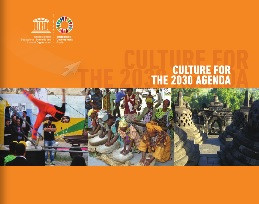 Culture as a tool for creating a climate of peace, a prerequisite for Sustainable development 2018-08-13 Launch of the UNESCO brochure "Culture for the 2030 Agenda", on 17 July 2018 at the United Nations Headquarters in New York. The brochure "Culture for the 2030 Agenda" was launched at a high-level business breakfast organized by UNESCO and the Permanent Mission of Peru to the United Nations, on the sidelines of the 2018 High-Level Political Forum. "It demonstrates the vast scope of culture's contribution to sustainable development. It aims to shape a clearer understanding of the crucial role of culture in implementing the 2030 Agenda, share best practices and showcase examples of UNESCO's activities" says Audrey Azoulay, the Director-General of the Organization, in the hope that "a renewed emphasis on culture will help spur greater intercultural dialogue to encourage a climate of peace, a prerequisite for sustainable development." URL:http://www.unesco.org/new/en/africa-department/resources/africa-department/news/culture_as_a_tool_for_creating_a_climate_of_peace_a_prereq/
 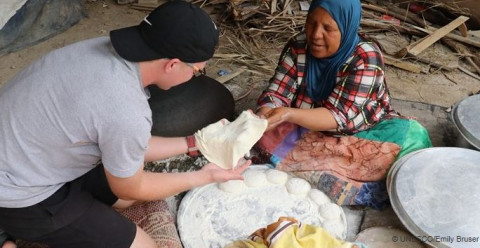 Town and country exchange on traditional sustainable development in Jordan 2018-08-12 An idea to transform people's views on rural people and traditional charity methods has grown into a ground-breaking initiative in Jordan. Zikra for Popular Learning, one of three winners of the UNESCO Japan Prize on Education for Sustainable Development (ESD) in 2017, is now looking at ways to expand its highly popular programme which brings people from urban settings to rural villages to learn first-hand about sustainable development. Co-founded by social entrepreneurs Rabee Zureika and fellow Jordanian Lama Khatieb, Zikra promotes 'exchange tourism' offering alternative learning to reconnect people with local knowledge. "I began to think about giving back using a model that did not impose the 'hero-victim' relationship on the recipient. Instead we work to get people inspired – both Jordanians and visitors from other countries – by encouraging them to stop considering rural people as simply ‘poor’ and to motivate positive behaviour changes in participants,” says Rabee. Zikra began in Ghor Al-Mazara'a, a village 100km south-bet of Jordan's capital Amman and in one of the country's poorest regions where the inhabitants are discriminated against because of their dark skin colour. To enhance the livelihoods of the villagers Zikra has supported them to welcome visitors who come to learn and engage with the local community. They pay a small amount to spend time in the village learning about food production, culture, and how best to use natural resources. "One of Zikra's most successful outcomes are the relationships and networks constructed between rural and urban community members," said Lama. The visitors do more than observe craftsmen like Khaled Nawasrah who builds artistic and intricate models of cars using wire, they get to try their hand at the skills too. The project has also established the School of Jameed drawing on local women's expertise in making a range of dairy products including the yoghurt traditionally produced in the area called Jameed. The women demonstrate the production of the yoghurt to visitors while teaching them about the wild plants and herbs special to the area that are used in its making. Despite challenges including accessing the very rural settings for the scheme and often fighting against slow bureaucracy Rabee and Lama are full of enthusiasm and ideas for the future. Since winning the Prize, Zikra has further developed an embroidery project working with female Syrian refugees who stitch storyboards based on local knowledge and stories from their hometown onto products such as bags which they then sell. They also plan a programme for architecture students to learn techniques used in the villages to build houses, roofing and ventilation systems using mud bricks. "We have found here that everyone has something to offer," says Rabee. The winners of this year's award, the 2018 UNESCO-Japan Prize on ESD, will be announced in September with an award ceremony to be held in Paris in October. The Prize, funded by the Government of Japan, consists of three annual awards of USD 50,000 for each recipient. It was awarded for the first time by the Director-General of UNESCO in 2015. The Prize and award winners recognize the role of education in connecting the social, economic, cultural and environmental dimensions of sustainable development. Read the full story about Zikra for Popular learning. URL:https://en.unesco.org/news/town-and-country-exchange-traditional-sustainable-development-jordan
 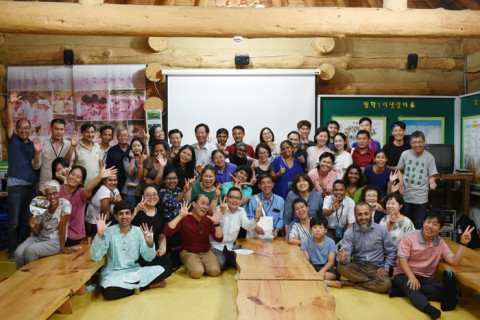 18th Asia-Pacific Training Workshop on EIU 2018-08-08 From July 20th to 28th, 31 professionals in the field of teacher education from 21 UNESCO member states gathered to attend APCEIU’s 18th Asia Pacific Training Workshop on Education for International Understanding (APTW), held in Seoul and Inje, Republic of Korea. As the world grows more interconnected and interdependent, so does the importance of instilling the concept of global citizenship education (GCED) into the world’s populace. Thus, capacity-building programmes like APTW foster and encourage the participants’ commitment to spreading GCED values throughout the global sphere. Though the workshop’s overarching goal was to strengthen understanding of the concrete concepts and issues of EIU and GCED, its purpose was to also enhance the participants’ training expertise and in turn the impact of their training on their respective regions. The nine-day programme consisted of lectures, in-depth discussions and seminars, field visits, and action plan development. Participants were given the opportunity to design localized GCED training programmes to implement in their regions with the help and guidance of a faculty of international GCED experts. Thorough discussion on the significance of global interconnectedness and a Culture of Peace helped participants instill those values both in themselves and in their action planning-relevant constituents for cultivating our global society’s future. A significant portion of the workshop was devoted to a visit to the DMZ Peace-Life Valley to further explore issues of peace and sustainability. With visits to Naetgang Village and the Fourth Tunnel, participants were able to witness firsthand how citizens and activists are working to correct deep historical divisions and lead sustainable livelihoods. In understanding the linkage between the national and international, participants could better understand and augment their skills in designing and implementing GCED-related programmes and development. Critically reflecting on and analyzing current educational issues provided participants the opportunity to renew their commitment and confidence in addressing such issues. As the workshop intended, it aimed to both enable and empower participants to propagate pedagogical themes and concepts under GCED. On the final day of the DMZ visit, attendees interweaved and placed their letters into a blanket of hope and aspirations for future generations into a time capsule, alluding to the continuing and future linkages between what they gained from the workshop and what will take place back home. URL:18th Asia-Pacific Training Workshop on EIU > APCEIU News - APCEIU (unescoapceiu.org)
 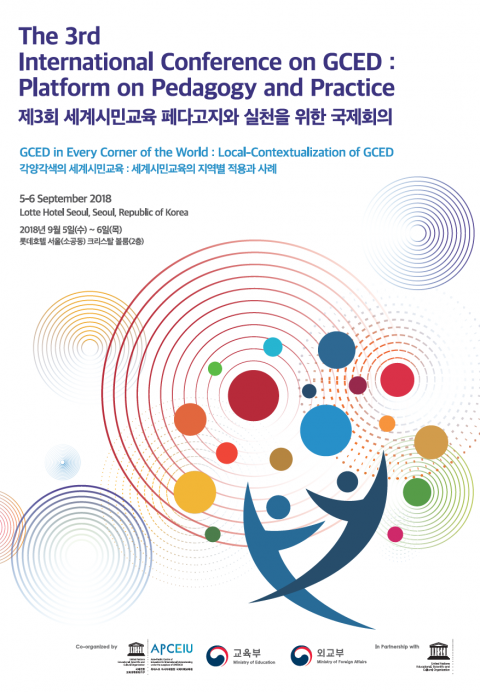 The 3rd International Conference on GCED: Platform on Pedagogy and Practice 2018-08-08 Co-organized by APCEIU, the Ministry of Education, and the Ministry of Foreign Affairs of the Republic of Korea, and in partnership with UNESCO HQ, the 3rd International Conference on GCED: Platform on Pedagogy and Practice will take place on 5-6 September 2018 at Lotte Hotel Seoul in Seoul, Republic of Korea. Global Citizenship Education (GCED) aims to foster global citizens to understand, appreciate, and act in terms of universal values such as peace, human rights, culture diversity, and sustainable development. GCED has emerged as one of the global goals in recognition of the prominent role of education while addressing interconnected global challenges. APCEIU organizes this Conference to be a prime platform to boost networking on GCED, proposed as an education goal of UN and UNESCO. The Conference, initiated in 2016, ranged over GCED’s role and direction under the United Nations Sustainable Development Goals (SDGs). Last year, the Conference touched upon the challenges GCED faces, while presenting pedagogical approaches and supportive conditions to put GCED in action. This year, the Conference plans to explore how to approach and apply concepts similar to GCED under the overarching theme ‘GCED in Every Corner of the World: Local-Contextualization of GCED’. Approximately 500 people consisted of policy makers, teachers, and experts from academia, international organizations, and NGOs are expected to participate. The Conference will share different characteristics when applying GCED based on culture and region. APCEIU hopes that this Conference can act as a platform to effectively spread and implement GCED while reflecting the local context fully. The 3rd International Conference on GCED welcomes everyone interested in GCED. Registration is available online until August 20 at http://gced.unescoapceiu.org/conference. URL:The 3rd International Conference on GCED: Platform on Pedagogy and Practice > APCEIU News - APCEIU (unescoapceiu.org)