
News
Catch up on what’s happening in the world of global citizenship education.
1,668 results found
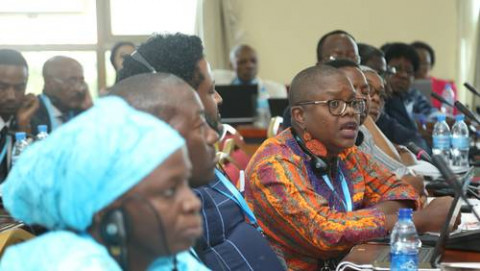 UNESCO Africa paves the Way for Quality Education for all through curriculum, teacher education and learning assessment 2018-08-07 UNESCO Offices in Africa (UNESCO Dakar, in close collaboration with UNESCO Regional Office in Eastern Africa and UNESCO Dar es Salaam) joined forces to organize the Regional Capacity Building Workshop on Alignment between Curriculum, Teacher Training and Learning Assessments, in Dar es Salaam, United Republic of Tanzania, from 25 to 27 July 2018. The workshop, financed by the Global Partnership for Education and UNESCO, in support of TALENT spearheaded by the Dakar regional office, saw the presence of education experts from 17 African countries (Benin, Burkina-Faso, Burundi, Cameroon, Central African Republic, Chad, Ethiopia, Gambia, Lesotho, Liberia, Malawi, Mali, Niger, Senegal, South Sudan, Tanzania (including Zanzibar) and Uganda. National teams, comprising of heads of curriculum design, teacher training and learning assessments from the sub-Saharan countries attended the three-day workshop aimed to strengthen the capacities of national delegates to address alignment of national curriculum, teacher training and learning assessment . The workshop was officiated by the Deputy Permanent Secretary in the Ministry of Education, Science and Technology (MoEST), Dr. Ave Maria Semakafu. In her opening statement, she reiterated the impact of mother-tongue language in promoting provision of quality education. She said, “African countries have been keen in using colonial languages as medium of instruction at different levels in their education systems which has led to poor educational standards”. The Director of the UNESCO Regional Office for Eastern Africa, Ms. Ann Therese Ndong-Jatta, commended UNESCO Dakar office for the organization of this important workshop. She acknowledged the support of the Global Partnership of Education (GPE) to the TALENT action programme for addressing some of the needs for strengthening the National Learning Assessment Systems of Sub-Saharan African countries. Recent data from the UNESCO Institute for Statistics (UIS) indicate that Sub-Saharan Africa has the single largest number – 202 million – of children and adolescents who are not learning. Estimates based on past trends suggest that across the region, nearly nine out of ten kids between the ages of about 6 and 14 will not meet minimum proficiency levels in reading and mathematics by the time they are of age to complete primary and lower secondary education. According to UIS, this learning crisis could threaten progress towards the Sustainable Development Goals (SDGs). The regional workshop addressed the issue of poor education quality from the perspective of the extent to which learning assessment, learning goals, standards, curriculum and pre- and in- service teacher training are all aligned and concur to form a coherent system that foster effective learning. The workshop was hosted by the Open University of Tanzania (OUT) and facilitated by a team of experts from UNESCO and OUT. Plans are underway to design a long-term course on alignment of curriculum, teacher training and learning assessments to be built upon the results of the regional workshop. In addition to the envisaged future long-term course, the TALENT Regional workshop will be followed by online training for eight weeks aiming to identify weaknesses in the curriculum development in African countries and learn new approaches to improve the processes and practices towards provision of quality education for all. The TALENT Regional Capacity building workshop on alignment between curriculum, teacher training and learning assessments is an important step toward ensuring the provision of quality education in a holistic manner by active and coherent involvement of the three vital pillars in education, i.e. curriculum, teacher education and learning assessment. Through the workshop, participants were able to identify main weaknesses in their respective learning assessment systems (at basic and/or secondary education levels), and learn from best practices in learning assessment system alignment with curriculum and teacher training. All the participating countries developed a national work plan and roadmap to improve the alignment of the learning assessment system in their country, which should be improved further and submitted to the workshop facilitators. Furthermore, the participants were introduced and registered to Moodle Platform supported by OUT, which will enable them to continue collaboration and participation in the additional eight weeks training on the same. This network will also give an opportunity to the group of practitioners, experts and education cooperation institutions to share further their experiences and expertise. URL:http://www.unesco.org/new/en/nairobi/about-this-office/single-view/news/unesco_africa_paves_the_way_for_quality_education_for_all_th/
 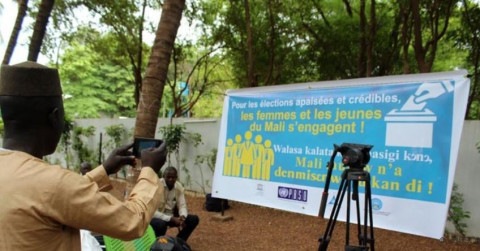 L’UNESCO et le MJCC lancent une campagne médiatique pour des élections apaisées au Mali 2018-08-06 Bamako, 27 July 2018 - In order to sensitize young people and women for a peaceful election in Mali, the Ministry of Youth and Citizen Construction, in partnership with UNESCO, launched the media campaign with a press briefing at the Bamako Youth House on Friday 27 July 2018. The ceremony was chaired by Mr. Amadou Koita, Minister of Youth and Citizen Construction, in the presence of Mr. Pierre Saye, representative of the Head of the UNESCO Office in Bamako, Ms. Albane Dorsaz, PBF project coordinator, project partners and a large number of media representatives. The general objective of this campaign is to raise awareness through messages that will equip young people and women with the values of justice, identity, self-respect, respect for others and citizenship for the peaceful conduct of elections in Mali. This media campaign will be done through radio messages in French, Bamanankan and Fulfulde and through other communication channels (tee shirt, cap, and banner). For a period of one month, synchronized messages will be broadcast on about twenty radio stations in the Mopti and Segou regions. In his address, the Minister thanked UNESCO and all the other partners working to consolidate peace in Mali. He encouraged Malians to vote massively in peace and especially to accept the results of the ballot boxes. Mr. Koita hoped that all political actors would be able to commit themselves to making the elections a "peaceful, free and transparent" process and, in the event of disputes, to resort to the institutions provided for that purpose. Mr. Saye recalled that the project "Young Actors for Peace and National Reconciliation", was set up to accelerate the implementation of the agreement for peace and reconciliation in Mali (resulting from the Algiers process), through the operationalization of the new Regional Support Teams for Reconciliation, as well as through the involvement and empowerment of youth and women in the implementation of the G5 Sahel youth strategy and the fight against cross-border trafficking and exploitation of youth. "So far, most of the peace-building projects have been implemented in northern Mali, but today the center of the country also has strong needs in terms of conflict prevention and resolution. These regions have experienced for several years a worrying increase in social and political tensions, marked by repeated episodes of collective violence," he mentioned. Mr. Saye, on behalf of his organization, congratulated the Government of Mali for its efforts and commitment to promoting peace and social cohesion before, during and after the presidential election. The ceremony ended with a series of questions / answers between the journalists and the representatives of the structures, followed by the symbolic presentation of the communication materials to URTEL Mopti representatives, partner of NGOs and representatives of the regional youth directorates. It should be recalled that the project "Young Actors for Peace and National Reconciliation" responds to the achievement of several Sustainable Development Goals, namely, SDGs 4: Quality Education, 5: Gender Equality, 10: Reduced Inequalities, 16: Peace, Justice and Effective Institutions and 17: Partnerships for Achieving Goals. It is being implemented in the Segou and Mopti regions, together with UNICEF and IOM, and aims to strengthen the role of young people in women as peacebuilders in Mali. ORTM report: https://youtu.be/B4UK7manzA0?t=1629Link to Photo: https://www.flickr.com/photos/155712355@N08/sets/72157699104921404 URL:https://en.unesco.org/news/unesco-and-ministry-youth-and-citizen-construction-launch-media-campaign-peaceful-election-mali
 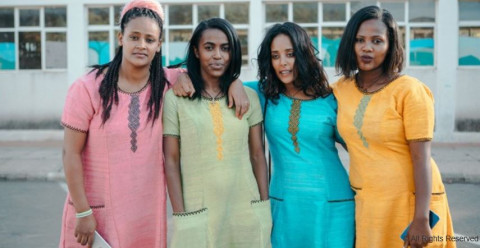 Yegna girl-band: harnessing the power of creativity for social change 2018-08-06 All over the world, young women are rising up – Exercising their rights to education; saying ‘no’ to early marriage and unintended pregnancy; and demanding equal employment opportunities. There is still a long way to go, but young women like Ethiopian girl-band, Yegna are paving the way to ensure that future generations of women and girls are even more empowered and supported. To find out more about their work harnessing the power of creativity for social change, we caught up with Teref; Zebiba; Eyerusalem; and Rahel as they endeavour to raise awareness of some of the biggest issues facing young women in Ethiopia and beyond! “Girls in our country face serious challenges every day, including early marriage, harassment and violence. Given these challenges, it is not surprising that many fail to reach their potential and drop out of school or get married very young. It is so important that we start breaking down the barriers that are holding girls and their communities back. If more girls are encouraged to reach their potential, it is good for everyone! Yegna is an acting and pop-group that uses the creative arts to raise awareness of issues such as migration, abuse, and school drop-out – issues that young girls in Ethiopia really face. The members of Yegna perform in a radio drama and a talk show but we also go on roadshows in order to bring our messages to the Addis and Amhara regions and to meet with young women, men and their parents. Using the arts to communicate a message is so effective because we’re not preaching or telling people what to do, but providing young women with positive role-models and appealing to them through the things they love – music, drama and real-life stories. This has more strength than you can possibly imagine. Yegna not only provides young women with an opportunity to come together to discuss challenges, but we also look at ways that together, those challenges can be overcome. Our aim is that, through doing this, we start to change how our society views girls and that this message is then passed on to future generations so that the impact is even bigger. We want girls from Ethiopia, where I am from, and from everywhere else in the world to continue supporting and empowering each other. Let’s not let anything hold us back. Be brave – the future is looking bright!” *** More information about UNESCO’s work with young women and men To join UNESCO’s youth community, visit www.facebook.com/UNESCOyouth Related link:https://www.youtube.com/watch?v=Z8DnfuUTD_k&feature=youtu.beURL:https://en.unesco.org/news/yegna-girl-band-harnessing-power-creativity-social-change
  Youth in Spain find their sustainable development voice 2018-08-03 An international conference bringing youth from Spain in contact with their global peers has its roots firmly in local community and school action. The International Youth Conference (CONFINT) is a global participation process which connects up youth from countries all over the world to talk, share and decide on how best to take action to improve the planet. The event, the first of which was held in Brazil in 2010, aims not only to promote the international exchange of experiences but to allow the greatest number possible of youth, teachers and communities to become locally involved in a real commitment to the planet. Joint Coordinator Paula Perez said: “For the first-ever conference Spain had participants from Galicia, the Basque Country and Canaries among other autonomous regions and it was a huge success. Everyone knew that it was something that had to be repeated.” CONFINT is built on four pillars: the concept of responsibility for young change-makers in society, youth electing youth as delegates, youth educating youth on the issues, with the help of young facilitators, and one generation learning from another to close any information gaps. It aims not only to bring about cross-cultural dialogue but also to give young people an understanding of how public institutions work and can be used to bring about change. The event is the culmination of several levels of engagement and action and is part of the work of the Sustainable Schools Network (“Escuelas Sostenible en Red”, ESenRED). The network, under the motto ‘Let’s care for the planet’ aims to bring together environmental and educational departments of public administrations which manage, encourage and coordinate environmental programmes in order to integrate Education for Sustainable Development (ESD) in primary and secondary schools. It is now present in 13 of the 17 Spanish autonomous regions, which is in 2,600 schools, reaching 55,000 teachers and almost one million students and its activities include organizing Youth Meetings, National Youth Conferences, European Youth Conferences, a Symposium for Teachers and a European project and community for teachers on eTwinning. The process leading to CONFINT begins at secondary school level where children are helped to undertake an assessment of local sustainability problems in their village or town. “They then decide what they will focus on, which can be as varied as a way to improve mobility access for disabled people or the best way to improve a piece of wasteland,” said Paula. “From there they set about how to change that by dealing with the local administration. All along the way we encourage as much communication with their families and local officials so everyone feels truly involved.” Once a year a conference is held at autonomous community level. In 2017, the event was held in Catalonia. “Even in Catalonia this has led to many interesting exchanges,” said Paula. “The South, for example, may not have been aware that in the North there was problems with a particular invasive plant and in the other direction, they learned about a particular type of snail destroying fruit. Together they worked to come up with shared solutions. The level of motivation was very high because the youth were truly protagonists.” This was followed by a state level conference where children were chosen to represent their community. “For 3 days youth from all over Spain and their teachers met to display their work. The role of the teacher here is crucial not only for original motivation but then to step back and let the children lead,” she said. “They came up with new vibrant ways of communicating about sustainability including flash mobs and a rap video.” Looking ahead Paula says the main goal is to further consolidate and incrementally increase the number of centres in Spain and the number of countries in Europe taking part in the conference. “This presents its own challenges as some countries have very few centres and levels of funding vary dramatically. We are supported by the state in Spain but for others funding is precarious,” she said. Now participants are gearing up for the next international conference which will be held in May in Lisbon but ultimately Paula would like to see a global conference. “We are not there yet but that would be a natural progression and long-term aid,” she said. “We want the best of both worlds; ideally to achieve worldwide participation without ever losing sight of the local implications of such work. One of the most satisfying aspects is that once youth are hooked they really stay with the ideas into adulthood and beyond. This is very inspiring for younger people just becoming aware of these ideas.” The International Youth Conference (CONFINT) was nominated for the UNESCO-Japan Prize on ESD in 2017. URL:https://en.unesco.org/news/youth-spain-find-their-sustainable-development-voice?language=es
 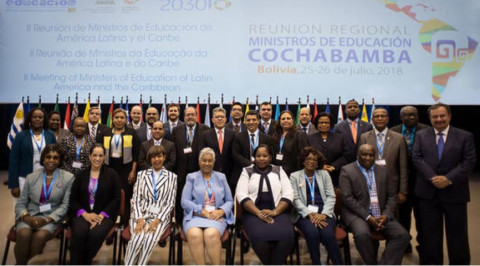 Ministers of Latin America and the Caribbean adopt Roadmap for moving towards quality, inclusive, equitable education 2018-08-01 -The Cochabamba Agreements: Regional Solidarity for Achieving SDG4-E2030 in Latin America and the Caribbean was approved at the II Regional Meeting of Ministers of Education of Latin America and the Caribbean, “Transforming Education: A Joint Response from Latin America and the Caribbean for Achieving SDG4-E2030.” -Among other things, the document establishes the adoption of the Regional Roadmap for the Implementation of SDG4-E2030 in Latin America and the Caribbean, an instrument that will support the countries’ efforts to achieve the targets of Sustainable Development Goal 4, which refers to lifelong quality, inclusive, equitable education. Education ministers and high-ranking officials from Latin America and the Caribbean approved the Cochabamba Agreements and the Regional Roadmap for the Implementation of SDG4-E2030 in Latin America and the Caribbean on 26 July 2018. The latter establishes a regional mechanism for moving towards Sustainable Development Goal 4 –Education 2030 together. The Roadmap is a frame of reference for the design and execution of regional actions in education and contains recommendations for the national implementation of public policy on this issue. It also supports coordinated and coherent progress on priority issues for the countries of the region such as the quality of education, equity and inclusion, teachers and education personnel and lifelong learning. The document was prepared collectively during two technical meetings following the I Regional Meeting of Ministers of Education of Latin America and the Caribbean (Buenos Aires, January 2017). Representatives of the countries of Latin America and the Caribbean on the SDG-E2030 Global Steering Committee (Argentina, Brazil and Bolivia), one Caribbean nation selected by GRULAC, the Group of Latin American and Caribbean Countries in the United Nations (Granada), UNESCO and UNICEF, sub-regional and regional organizations (CARICOM, CECC-SICA, the OAS and OEI) and representatives of civil society (CLADE and Education International) also participated in these meetings. A Commitment to Educational Integration The Cochabamba Agreements were endorsed by the representatives of the countries that attended the regional meeting in Bolivia. They are based on the Buenos Aires Declaration (2017), the first milestone in the regionalization of SDG4-E2030 that allowed the countries to contextualize the global decisions adopted in the Incheon Declaration emanating from the World Education Forum in May 2015 from this continent. The Buenos Aires Declaration provided a shared vision of the 2030 Education Agenda from Latin America and the Caribbean and was aimed at generating strategies and programs that seek to achieve these targets at the national and regional levels for 2017-2030. The countries agreed in Bolivia to create a mechanism for implementing the Roadmap. The executive secretariat will be the Regional Bureau for Education in Latin America and the Caribbean (OREALC/UNESCO Santiago). This mechanism consists of a Regional Steering Committee with two representatives from South America, two from Central America and Mexico, and three from the Caribbean, all of whom will be elected by the member states. UNESCO and UNICEF will serve as the permanent coordinating agencies of the committee and will receive support from regional inter-governmental organizations and two civil society organizations. The Regional Steering Committee shall establish four working groups that will drive specific actions in review, monitoring and reporting; policy and strategies; advocacy and communication; and finance and governance. The groups may seek the support of technical experts whenever necessary. In the agreements, the authorities committed to strengthen intersectoral collaboration and to explore opportunities for the participation of young people and adults in regional coordination mechanisms. They also agreed to meet every two or three years and to entrust OREALC/UNESCO Santiago with organizing regional meetings in coordination with the Regional Steering Committee and the hosting country. Roberto Aguilar, Minister of Education of the Plurinational State of Bolivia, thanked the people who made the event possible for their efforts. “It has been very important for us to give continuity to this shared effort, which has also allowed an historic participation of the Caribbean, resulting in complete integration of our region. I would like to thank you for your participation on behalf of the Bolivian people and our President, Evo Morales.” Claudia Uribe, Director of the Regional Bureau for Education in Latin America and the Caribbean (OREALC/UNESCO Santiago), highlighted the efforts made by regional authorities to build these collaborative mechanisms and said that, “As the executive secretariat, we are highly committed to further strengthening collaboration among countries so that the Roadmap effectively supports the achievement of the Sustainable Development Goal 4 - E2030 targets in our region.” ************ The Regional Meeting of Ministers of Education of Latin America and the Caribbean is the second such event held following the approval of the 2030 Sustainable Development Agenda, which was agreed to in September 2015. The Roadmap responds to the mandate of the Buenos Aires Declaration (2017), which, among other things, states that education should contribute to the elimination of poverty, reduction of inequities and protection of the environment through inclusive quality education and lifelong learning. In Buenos Aires, the regional authorities also agreed to create regional coordination mechanisms to achieve the education goals. They recognized the urgent need to increase the breadth of the changes, which means reexamining education, learning, teaching, policies and actions in Latin America and the Caribbean. The II Regional Meeting of Ministers of Education of Latin America and the Caribbean follows up on these mandates, which were established in 2017. Official website of the Cochabamba meeting Cochabamba Agreements Press Contact:Carolina Jerez Henríquez (OREALC/UNESCO Santiago)c.jerez@uesco.org, WhatsApp (+569) 92890175 URL:http://www.unesco.org/new/en/santiago/education-2030/cochabamba-meeting-2018/press/press-release-4/
  Vietnamese youth expressed their views on the future of STEM education at STEM-SPEAK Vietnam 2018-08-01 Vietnamese youth expressed their views on the future of STEM education at STEM-SPEAK Vietnam – In partnership with UNESCO, CED & MICROSOFT Hanoi, July 26-28th 2018- The United Nations Educational, Scientific and Cultural Organization (UNESCO) and Microsoft in cooperation with the Centre for Education and Development (CED) gathered thirty-eight Vietnamese youth from across the country to develop an inclusive Science, Technology, Engineering and Mathematics (STEM) vision by using the future at STEM SPEAK 2018. Taking place at the Green One UN House in Hanoi, UNESCO experts in Futures Literacy will systematically guide participants to step out of their comfort zone and to enter the unknown by exploring alternative futures. The purpose of the training is to allow them to explore their visions and innovative thoughts and elaborate a vision of a sustainable future with STEM. With the rapidly changing environment of Industry 4.0, young professionals need more than technical qualifications – they need to think creatively and identify innovative solutions to global challenges. It is with this in mind that the participants will turn their energies to rethink STEM education for the future. Predominately female, they come from a range of backgrounds and include students, teachers and researchers. Through the use of creative, innovative and unconventional approaches, STEM-SPEAK aims to combat a multitude of social issues including bridging the gender gap in STEM occupations and education. It also aims to identify problems that hinder the youth, especially young girls and women, to pursue a STEM career, and propose creative solutions to address these issues. “Technology is the key that open up various opportunities for growth and development. For Vietnam to rise and shine while racing the transformation journey, cultivating the mind of our next generation with STEM should be our top priority right now, and in the future,” stressed Ms Le Hong Nhi of Microsoft Philanthropies Vietnam, “This mission should be conducted at scale, continuously and most importantly, inclusive for everyone, especially females and the disabilities.” The UNESCO Representative to Viet Nam, Michael Croft, outlines the connection to the wider context. “STEM empowers youth to drive sustainable development. Everyone needs to be involved, including girls and young women, marginalized and vulnerable groups. Everyone should have a voice.” About STEM Futures Literacy UNESCO and CED seek to address the problems hindering robust and appropriate STEM programming, and aim to facilitate a common understanding and a more coordinated approach between the key partners in this area. The STEM Futures Literacy Workshop will allow selected Vietnamese youth representatives, notably female youth, to explore and make recommendations on the future of STEM through a gender lens. This is to ensure STEM is neither unreachable nor a privilege but a basis of education for youth from all backgrounds. The Futures Literacy Workshop allows youth to articulate their stand on STEM, touching upon barriers, challenges, fears, aspirations, desires, collected to create a clear portrait of youth aspirations for key stakeholder groups, including policymakers, researchers, educators and industry leaders. Following the STEM Futures Literacy Exercise, the participants will present their vision for STEM programming to key partners (government, IT industry actors, etc.) at the Global Vietnamese Young Intellectual Forum expected in later 2018. This will allow partners to better calibrate their support with a view to the identified flaws, gaps and needs vocalized by youth. This initial convening of young intellectuals aiming to assess effective ways to spur Vietnam’s sustainable development can serve as the start of a more institutionalized dialogue in the future. Contacts:Pham Thi Hai Yen, CED Program Officer, Email: yenpt@ced.edu.vnHai Ha Vu Thi, UNESCO Consultant for Youth Programming, Email: hh.vu-thi@unesco.org URL:http://www.unesco.org/new/en/hanoi/about-the-ha-noi-office/single-view/news/vietnamese_youth_expressed_their_views_on_the_future_of_stem/
 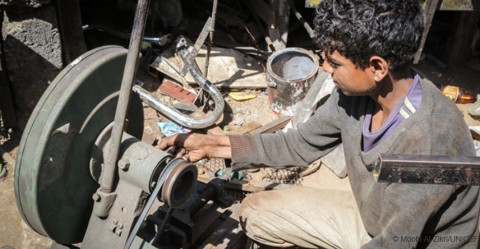 UNESCO and EU partner to improve youth opportunities and heritage restoration in Yemen 2018-07-30 The European Union has provided €10 million for UNESCO’s initiative, Cash for Work: Promoting Livelihood Opportunities for Urban Youth in Yemen. The initiative aims to create jobs in heritage restoration and preservation for young Yemenis, while promoting social cohesion and resilience through cultural programming. The initiative comes against a background of economic hardship, extensive population displacement, and heavy damages to infrastructure and heritage due to the ongoing conflict in the country. Its main objective is to create livelihoods opportunities for youth in Yemen through urban regeneration activities, including the restoration of specific buildings and World Heritage sites in historic urban centres damaged in the ongoing conflict. It also foresees the establishment of cultural programmes targeting the reinforcement of social cohesion and peace-building and to support for civil society. The project will seek to boost the resilience of poor and vulnerable groups with the objective of implementing full and equitable employment for women and men, young people and persons with disabilities. It foresees the implementation of equal pay for equal work. It also provides for the establishment of cultural programmes to promote local cultural products, social cohesion and dialogue. Another purpose of the project is to lay the ground for the development of sustainable tourism and strengthen efforts to protect natural heritage as well as cultural sites and landmarks. "Creating the conditions for sustainable employment and preservation of Yemeni culture is a very important element of the EU effort in this country. We are confident that this initiative will contribute to reducing the unemployment rate among youth in the Yemeni labour market, the preservation and restoration of cultural assets, skills development, and provide support to cultural industries" said the EU Head of Delegation, Antonia Calvo Puerta. Moreover, Anna Paolini, Director of the UNESCO Office for the Gulf Cooperation Council and Yemen, added “We are extremely pleased with this strategic partnership with the EU for its innovative approach to the safeguarding cultural heritage at risk through the empowerment of youth in Yemen. This project will not only provide livelihoods to youth and their families in this particular moment, it will also retain and strengthen competencies in conservation and restoration of built heritage, which will be necessary in the recovery phase of the country.” URL:https://en.unesco.org/news/unesco-and-european-union-partner-improve-youth-opportunities-and-heritage-restoration-yemen
 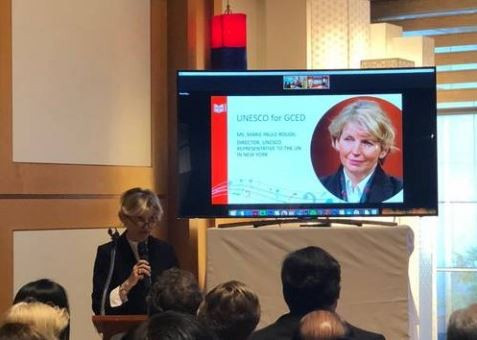 Cultural diversity and sustainable development – an intrinsic part of education for global citizenship 2018-07-27 New York: On 18 July 2018, at the margins of the High-level Political Forum 2018, UNESCO joined the discussion on education for sustainable development and global citizenship, held at the Permanent Mission of Korea to the United Nations. The event was organized by the Permanent Missions of the Republic of Korea and the State of Qatar to the United Nations, the NGO Steering Committee for an International Day of Education for Global Citizenship, and supported by UNESCO New York Office, the United Nations Academic Impact and the United Nations Alliance of Civilizations. More than 150 participants joined the gathering to celebrate the spirit of global citizenship, cultural diversity and sustainable lifestyles. The event featured interactive discussion with government officials, UN system and civil society leaders, as well as a cultural performance, which showcased music, dances and performances from different regions. In her keynote remarks, Marie Paule Roudil stressed that educating is a multiplier for the whole 2030 Agenda for Sustainable Development, by empowering learners to be positive change actors for more peaceful and resilient societies. Ms Roudil outlined UNESCO’s activities and efforts in defining and promoting Global Citizenship Education that aims to equip learners of all ages with values, knowledge and skills that instill respect for human rights, social justice, diversity, gender equality and environmental sustainability. Addressing the audience, Professor Jeffrey Sachs urged to scale up global investments to education to ensure that every child has an access to quality education. He called to further raise awareness about the Sustainable Development Goals, especially among young people, to “foster a knowledge about global challenges and ways to overcome them”. Distinguished ambassadors, UN officials, representatives of civil society and teachers exchanged views on how to further promote Global Citizenship Education, empower learners to take informed decisions, and assume active roles locally, nationally and globally. Former UN Secretary-General Ban Ki-moon addressed the audience by video message from his newly established Ban Ki-moon Centre for Global Citizens. Ambassador Park Chull-joo, Deputy Permanent Representative of the Republic of Korea to the United Nations, underscoring that diversity is one of the fundamental values of society, called to ensure that every person and culture is respected. He further outlined the importance of training teachers to teach Global Citizenship Education on the ground. Abdulrahman Al Hamadi, Charge d’Affairs, The Mission of the State of Qatar to the United Nations, emphasized that the cultural diversity, intercultural dialogue and tolerance greatly contribute to development processes and provide foundation for sustainable development. Global Citizenship Education is a strategic area of UNESCO’s Education Sector programme and builds on the work of Peace and Human Rights Education. UNESCO works by supporting Member States in their efforts to implement Global Citizenship Education, though awareness-raising, advocating for its implementation, and developing guidance and capacity-building tools, such as the Guide for policy-makers on preventing violent extremism through education, and the Teacher’s Guide on the Prevention of Violent Extremism. URL:http://www.unesco.org/new/en/unesco-liaison-office-in-new-york/about-this-office/single-view/news/cultural_diversity_and_sustainable_development_an_intrin/
 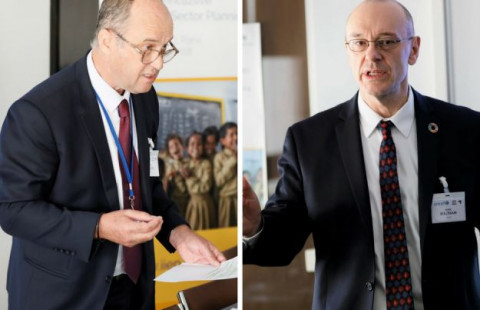 All children in school together: the quest for disability-inclusive education 2018-07-26 Children with disabilities face many barriers to quality education. In low- and lower middle-income countries, around 40 percent of primary school age children with disabilities are out of school and 55 percent at lower secondary school, according to the World Report on Disability. For those who are in school, it is typically a special school outside of the mainstream system. During a technical Round Table, co-organized by IIEP-UNESCO and UNICEF, from 18-20 July 2018, we spoke with two education specialists. Jim Ackers is the Head of Training at IIEP and Mark Waltham is a senior education advisor for UNICEF. IIEP: Jim, could you tell us how this Round Table came about with its focus on disability-inclusive educational planning? Jim Ackers: Inclusive education is a global priority today, as reflected in Sustainable Development Goal 4 for education. In its simplest terms, it means that all children - no matter who they are - can learn together in the same school. Many people agree with this principle, but for many countries implementing this principle at scale, especially in under-resourced systems is a significant challenge. We want to support countries respond to this challenge by helping ensure that they include children with disability in education sector planning and that all children ultimately have the opportunity to learn together. This is necessary from both a human rights and human capital perspective. This Round Table, which also included a two-week long online forum, convenes eight countries with representatives from government, disability person’s organizations, and development partners. The participants have the opportunity to discuss challenges and reflect on how they might enhance planning for inclusive education in future. The idea of the Round Table came during regional workshops on Inclusive Education in 2017 where Mark Waltham, Natasha Graham and I started to discuss the possibility of UNICEF and IIEP joining forces around inclusive education with a focus on disabilities. I saw IIEP’s training capacity as a key complement to what UNICEF and other partners are doing at the advocacy level and on the ground at the country level. Agreeing to work together on both the Technical Roundtable and on the future development of training materials on inclusive education was timely as other partners, including DFID have enhanced their commitment to addressing the needs of those with disabilities. IIEP: At the global level, we are seeing more consensus on the benefits of inclusive education. Mark, can you tell us how inclusive education first got on your radar? Mark Waltham: Like too many education advisers, I rarely used to think about children with disabilities. A large part of this omission was probably because I so rarely came across these children. Very occasionally, on a school visit, I would see a single kid on crutches at the back of a classroom but, for most of the time, children with disabilities were out of sight and out of mind. It simply never occurred to me that this was an indication of a deeper problem, that children with disabilities were being kept out of school, often hidden away in their houses out of shame or stigma. Over the years, I had missed many signals that I was guilty of a serious oversight. IIEP: What were some of these signals? Mark: The first came in 2006. I was working for AusAID, and we had drafted a policy paper pointing out that, in order to meet the MDGs, every single kid would need to start school that year. But we knew this wasn’t going to happen as so many children were effectively excluded from education – because there wasn’t a school nearby, because they didn’t speak the language of instruction, or because they had a disability. A second signal came in 2010, while I was working for DFID. The official figures had just been released for the enrolment rates during the years of the global economic crisis in 2007-2008. These clearly showed that the remarkable progress that had been made since 2000 had stalled, leaving around 60 million children out of school. Once again, we knew that many of these were children with disabilities, although there wasn’t enough data to develop any evidence-based policy proposals for how we should respond to this issue. My final conversion to inclusive education came in 2012 while working as the UNICEF focal point for the Out of School Children Initiative (OOSCI). The early country studies had started to come in, with facts and figures on which children were out of school and why they were excluded. Many studies found that children with disabilities were being systematically excluded from education and, crucially, they had the data to back it up. IIEP: Jim, How have you seen the concept of inclusive education evolve during your career? Jim: Prior to joining IIEP, I was the UNICEF Regional Education Adviser in Eastern and Southern Africa (2009-2014) and East Asia and the Pacific (2014-2017). In this role, I was responsible for co-ordinating cross-sectoral collaboration on children with disabilities. Back in the early 2000s, there was a focus on equity but there was little in the way of concrete commitment around the rights of children with disabilities. It was a huge challenge in terms of data and analysis and also in terms of actually addressing needs. A key question is how we respond to the needs of children with disabilities. While there is now global agreement on the need to have inclusive education systems there is still a lack of consensus on exactly what this means in terms of operationalisation. Part of the challenge is the scope - inclusive education must go far beyond addressing the rights of children with disabilities and extend to other groups such as ethnic and linguistic minorities, those affected by conflict and gender stereotyping, for example. However the need to be comprehensive can represent a serious challenge for education planning and finance, not least in resource poor countries as comprehensive inclusive policies can be difficult to implement. But this challenge should not be cited as a rationale for inaction: we must plan for progressive realisation and look for appropriate entry points. There is a strong momentum around disabilities at present so this is an opportunity that we are keen to respond to. IIEP: The Round Table is not the only event focusing on inclusive education. What does this signal? Mark: It is encouraging that the Technical Round Table is only one of the major events on inclusive education this year. In the following week, inclusive education is one of the four themes of the Global Disability Summit in London hosted by DFID, the Government of Kenya and the International Disability Alliance. And later in the year, the World Bank, USAID and UNICEF will be running a Clinic for Africa on Inclusive Education. With all of this attention on inclusive education, I’m increasingly hopeful that the millions of children with disabilities around the world who have been ignored and hidden away for so long will finally be able to realise their right to go to school and receive a good quality education. Jim: I agree, these are exciting times in terms of enhanced commitments to the rights of people with disabilities. If we all put the same energy and commitment into this work that we frequently see demonstrated by colleagues with severe and multiple disabilities, I am sure that we will make up for lost time and make rapid progress even in the most difficult of country contexts. URL:http://www.iiep.unesco.org/en/all-children-school-together-quest-disability-inclusive-education-4570
 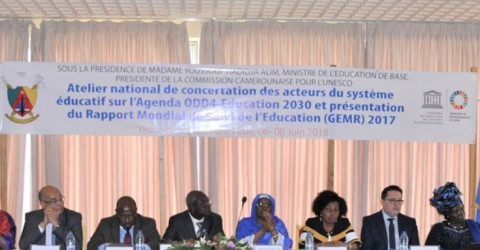 Advancing the right to education in Cameroon 2018-07-26 In order to align the new Sector Strategy for Education and Training (SSET) of Cameroon with the SDG 4- Education 2030 Agenda, the UNESCO Office in Yaoundé, in cooperation with the National Commission of Cameroon for UNESCO, organized from 6-8 June 2018 in Yaoundé, a National Consultation Workshop of stakeholders in education. The 3-day National Consultation Workshop brought together approximately 200 participants and commenced with an opening ceremony in the presence of Minister of Basic Education, Mrs. Youssouf Hadidja Alim. Participants included representatives of the various technical ministries involved, the parliament, technical and financial partners, representatives of civil society, NGOs, opinion leaders and teachers. A thematic Working Group was specifically devoted to the right to education, to discuss the legal gaps of the current national legislations and regulations inhibiting the full realization of the right to education and the achievement of SDG 4. The Working Group, chaired by Hon. Marlyse Douala Bell, member of the National Assembly and the Education and Youth Commission, provided the unique opportunity for participants to raise key issues that Cameroon faces with regard to achieving an inclusive, equitable and quality education for all. Recommendations were formulated in order to reinforce the institutional and legal framework by identifying the most urgent legal reforms that need to be undertaken. The Working Group agreed upon key steps of a Roadmap in order to follow-up on the discussions and recommendations made, with the aim to produce a country Report on the right to education to serve as a basis for future legislative reforms. This initiative in Cameroon falls within a larger scope of reviewing the legal frameworks of the countries of the Central African Region. The Nairobi Declaration and Call for Action on Education created a new momentum within Africa, with countries seeking to align their legal framework with SDG 4 Education 2030 commitments. UNESCO stands ready to provide technical assistance and strengthening of national capacities. Right to education URL:https://en.unesco.org/news/advancing-right-education-cameroon