
News
Catch up on what’s happening in the world of global citizenship education.
1,668 results found
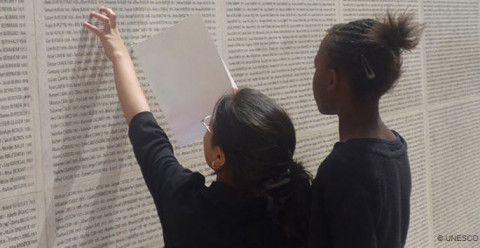 UNESCO’s policy guide to promote education about the Holocaust and genocide in Arabic speaking countries 2018-07-25 Teaching and learning about the Holocaust and genocide has contemporary relevance in today’s globalized world: it sheds light on the fragility of societies and the destructive power of anti-Semitism, racism and other forms of discrimination, as well as on citizens’ societal responsibilities. For this reason, UNESCO aims to advance teaching and learning about the Holocaust on a global level. To promote such teaching and learning in Arab speaking countries, UNESCO has now translated its policy guide on education about the Holocaust and preventing genocide into Arabic. “In the Arabic speaking world, unfortunately, such education does not exist,” explains Mina Abdelmalak, Arab Outreach Specialist at the U.S. Holocaust Memorial Museum, one of UNESCO’s partners. To fill this gap, the USHMM collaborates with student groups, educators and NGOs who are working on pluralism and human rights-related issues in Arabic speaking countries. Through their outreach programme, the USHMM focuses on societal challenges that are reflected in the history of the Holocaust. Those challenges exist in a range of variations in the Arab world today: “We highlight challenges such as propaganda, the fragility of democracy and the existence of extreme ideologies that promote hatred against groups of people. No society is immune from those challenges”, explains Mina Abdelmalak. Learning about the historical developments that led to the Holocaust can help learners to recognize the dynamics that may fuel conflict and mass violence. This can even help them to identify corresponding warning signs, and to better understand the dangers of propaganda, antisemitism, prejudice and scapegoating. In Tunisia, UNESCO and the USHMM have collaborated with academics and teachers who put this approach into practice: After they participated in the second International Conference on Education and the Holocaust (ICEH), they implemented a project that is ongoing at the national level. The ICEH was jointly organized by UNESCO and the USHMM in December 2017, the results obtained after the conference are noteworthy: “[The Tunisian ICEH participants] found some similarity between Nazi propaganda and ISIS propaganda”, says Mina Abdelmalak about the idea behind the project. “They are using the UN/USHMM traveling exhibition on the power of Nazi propaganda, “State of Deception”, which examines how the Nazis used propaganda to win broad voter support in Germany, to implement its radical programs and to justify war and mass murder.” As part of the project, the exhibition is displayed in English, French and Arabic in a range of locations, and is accompanied by workshops and cultural events. The topics covered range from the history of Nazi propaganda, helping learners to build critical thinking skills and to evaluate propaganda, to Tunisia’s history during the Second World War, including German occupation, and the long history of the Tunisian Jewish community. To support these and similar efforts, UNESCO promotes the translation of valuable education resources into Arabic. The Aladdin Project, launched under UNESCO patronage in 2009, has created a multilingual website with information about the Holocaust and Jewish life and has translated acclaimed literature documenting the Holocaust into several languages, including Arabic. The recently translated UNESCO policy guide on Education and the Holocaust and preventing genocide is an important addition to these resources. Being the first resource of its kind in Arabic, the guide was welcomed by Mina Abdelmalak: “the guide will hopefully open a door for more Holocaust education in the Arab world. There are no resources for policymakers or curriculum developers that presents the rationale for teaching about the Holocaust, in order to promote global citizenship, or tolerance and human rights, or even national histories.” The USHMM will use the translated guide to inform their exchanges and workshops with Arab audiences. UNESCO’s activities to promote education about the Holocaust and genocide directly contribute to the objectives of Global Citizenship Education (GCED) to equip learners with the knowledge, skills and competences that allow them to become critical thinkers and active and responsible global citizens that contribute to a more peaceful, tolerant, inclusive and secure world. GCED is one of the strategic areas of UNESCO’s Education Sector program for the period 2014-2021 and is guided by the Education 2030 Agenda and Framework for Action, notably Target 4.7 of the Sustainable Development Goals (SDG 4 on Education). Find out more about importance of teaching and learning about genocide and UNESCO’s related work. URL:https://en.unesco.org/news/unesco-s-policy-guide-promote-education-about-holocaust-and-genocide-arabic-speaking-countries
 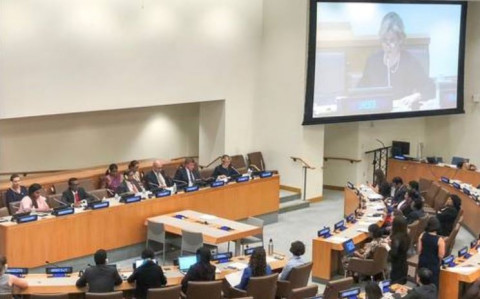 21 century skills for young people 2018-07-23 New York: On 17 July 2018, UNESCO co-organized a high-level event on “Youth Skills for Sustainability and Innovation” to mark the Word Skills Day during the High Level Political Forum. The celebration of the World Youth Skills Day, traditionally organized by the Permanent Missions of Portugal and Sri Lanka, together with UNESCO, ILO and the Office of the Secretary-General’s Envoy on Youth, brought together high-ranking officials, policy-makers, representatives of diplomatic community, UN entities, youth organizations and civil society. Representatives of business, tech-companies, labour organizations, experts in emerging technologies, including UCLA, HP Inc., U.S. Council for International Business, Black in AI, brought a new perspective to the discussion. This year, the observance of the Day under the theme “Youth Skills for Sustainability and Innovation” explored how to equip young people with quality, relevant, 21st century skills that prepare them for the future and to enable them to address the major challenges and opportunities of our times, such as the rapid digitalization and climate change. In his opening remarks, the President of the UN General Assembly H.E. Miroslav Lajcak urged the international community to invest in skills and education that equips youth not only with basic literacy skills but also with critical thinking, entrepreneurship skills and adaptability. Recalling the recently held Youth Dialogue, he outlined the importance of including young people in the decision-making and policy-implementation processes around the world and at all levels. "Young people need to take on a leading role in the global effort to create a sustainable world. It is crucial that we seize young people’s potential” - said the UN Secretary-General’s Envoy on Youth, Jayathma Wickramanayake. She outlined that quality education is key to succeed in the job market, and urged to ensure that young people are equipped with skills and knowledge to respond to technological innovations. Marie Paule Roudil, UNESCO Representative to the United Nations and Director of UNESCO office in New York, stressed that the emerging technologies hold a great promise to support economic growth and sustainable development as they have the potential to improve peoples’ lives, but at the same time present certain challenges related to privacy, security, consumer protection. To thrive in the digital economy, digital skills should go together with social-emotional skills, such as creative skills, learning techniques, entrepreneurial and transferable skills, - Ms Roudil said. Discussing the future of work, Guy Ryder, ILO Director-General emphasized that new technologies come with great hopes and opportunities, which can only be pursued only by working together to tackle the growing skills gap. He further stressed the importance of a dynamic lifelong learning and skills acquisition to respond to the changing trends of the job market. H.E. Mr. Mustafa Kamal (Minister of Planning, Bangladesh), Hon. Mr. Karunarathna Paranawithana (Deputy Minister of Science, Technology, Research, Skills Development and Vocational Training and Kandyan Heritage, Sri Lanka), H.E. Dr. Amrith Rohan Perera (Permanent Representative, Permanent Mission of Sri Lanka to the UN), H.E. Mr. Francisco António Duarte Lopes (Permanent Representative, Permanent Mission of Portugal to the UN) joined the discussion, sharing national experience and best practices in implementing policies and leverage innovation for youth skills development. Policy-makers, tech experts, representative of private sector and youth activists exchanged views and success stories on how to leverage innovation and emerging technologies, such as artificial intelligence, big data and machine learning to boost youth employment and skills acquisition. All agreed on the need for development of adaptive skills, including soft skills for problem solving and the entrepreneurship. Many underscored the need to ensure holistic and inclusive approach in applying new tools and technological advances. Since 2015, World Youth Skills Day is celebrated annually, providing an opportunity for representatives of Member States, the United Nations system, the private sector, civil society and youth organizations to share lessons learned and best practices on strategies to address and meet current and future skills needs. This year, as a part of the global campaign, World Youth Skills Day was observed globally by the majority of UNESCO-UNEVOC Centers organizing celebrations in 150 countries. URL:http://www.unesco.org/new/en/unesco-liaison-office-in-new-york/about-this-office/single-view/news/21_century_skills_for_young_people/
 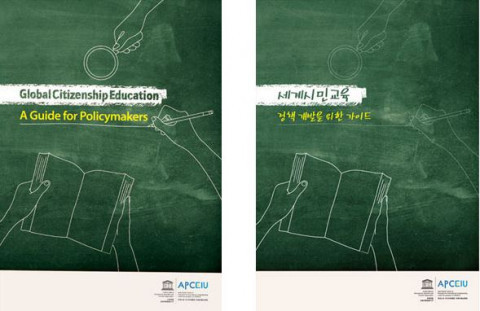 A Guide for Policymakers published to navigate integration of Global Citizenship Education to national education policies 2018-07-20 The Asia-Pacific Centre of Education for International Understanding (APCEIU) has published Global Citizenship Education: A Guide for Policymakers in order to assist UNESCO Member States to integrate and strengthen Global Citizenship Education (GCED) in their national education policies and further achieve Target 4.7 of Sustainable Development Goals. The Guide, which was developed in consultation with GCED experts, specialists from international education organizations and government officials from the countries’ ministries of education, suggests strategies in five priority action areas including policy review and development; curriculum review and development; capacity building; knowledge creation, sharing and dissemination; and monitoring and assessment. The strategies are designed to allow integration of GCED values and concepts into the countries’ current education system aligned with their priorities and contexts. While the Guide focuses on the formal education system, GCED principles and approaches it describes are equally relevant to non-formal education settings as well as projects and activities implemented by civil society organizations (CSOs) and non-governmental organizations (NGOs). The Guide was first released in English and Korean, and it will further be available in other languages including French and Arabic to be accessible for larger audience worldwide. APCEIU plans to introduce and disseminate the Guide through the GCED Global Network while at the same time organize related seminars at various venues on international education. Download link for PDF file: [English version] [Korean version]
  How does education about the Holocaust advance global citizenship education? 2018-07-20 UNESCO has commissioned a paper entitled “How Does Education about the Holocaust Advance Global Citizenship Education?” to demonstrate how teaching and learning about the Holocaust and genocide can meet key learning objectives and provide added value to GCED, highlighting the potential to mainstream education about the Holocaust in this framework. This paper supports UNESCO’s Policy Guide on Education about the Holocaust and preventing genocide, informed by the Organization’s longstanding work in education about the Holocaust and genocide and Global Citizenship Education (GCED). Through GCED, UNESCO aims to empower learners to assume active roles to face and resolve global challenges and to become proactive contributors to a more peaceful, tolerant, inclusive and secure world. "Working towards this goal requires both institutional and individual commitments”, expresses Doyle Stevick, the author of the paper and Associate Professor at the University of South Carolina. “Effective education can empower students with the knowledge, skills, and dispositions to advance and sustain this effort." For UNESCO, this implies providing learners of all ages with the cognitive, behavioural and social-emotional skills that strengthen their resilience against violent extremism and forms of group-targeted violence and empower them as responsible citizens. Education about the Holocaust and genocide can align with this understanding of GCED. GCED and education about the Holocaust are historically linked and deeply interconnected, though they may vary in overall orientation, scale and scope explains Doyle Stevick in the paper. “Education about the Holocaust and genocide and GCED both teach us that we all have a responsibility to act against injustice, whether in our own communities or in the global community.” The paper shows that the Holocaust’s historical significance and universal implications can provide an entry point to inform a longer process of dealing with the past. “People who study the Holocaust in places that are grappling with their own historical traumas often recognize commonalities that help them begin to engage their own experiences in new ways”, explains Doyle Stevick, underlining the global relevance of education about the Holocaust. The paper provides a critical examination of research regarding the contribution of education about the Holocaust to GCED’s three domains of learning, including examples of good practices, a terminology overview and an extensive bibliography. The paper is available via APCEIU’s GCED Clearinghouse. URL: https://en.unesco.org/news/how-does-education-about-holocaust-advance-global-citizenship-education-0
 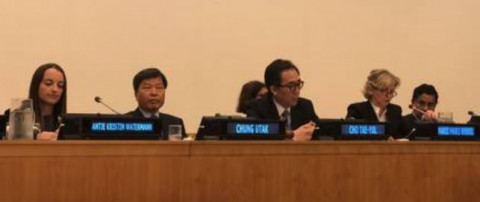 Why do education policymakers need to mainstream Global Citizenship Education: An Appeal of the 2030 Agenda 2018-07-20 New York, United Nations Headquarters: On 26 April 2018, the 2018 United Nations Global Citizenship Education Seminar was convened by the Permanent Mission of the Republic of Korea to the United Nations, United Nations Academic Impact, and the Asia-Pacific Centre of Education for International Understanding (APCEIU) under the auspices of UNESCO. With the theme of “The role of global citizenship education in the 2030 Agenda and beyond”, this year’s Global Citizenship Education Seminar aimed to shed new light on Global Citizenship Education (GCED) by exploring relevant concepts and methodologies already applied in other areas, and to seek opportunities for GCED to enhance and advance progress toward realizing sustainable development. Addressing the opening session, Ms. Marie Paule Roudil, Director of UNESCO Liaison Office New York and UNESCO Representative to the United Nations, recalled that GCED promotes the principles and values that help ensure the human rights of every individual across all regions of the world. As she pointed out, mainstreaming GCED in the education systems would support the development of values such as learning to live together, solidarity, empathy and respect of the other, as well as resolving conflict through peaceful means. Committed to support governments and educational stakeholders through the promotion of GCED, UNESCO has been: Leading the global advocacy and policy dialogue on GCED; Providing normative guidance, technical support, and capacity building on GCED; and: Focusing on Preventing Violent Extremism through Education. Building on the unique national experience of the Republic of Korea, Prof. CHO Hyo-Je, Professor of Sociology at Sungkonghoe University, delivered the keynote speech and shared insights on the synergy between GCED and the Universal Declaration of Human Rights. In the panel discussion and Q&A session followed, representatives from the academia, UN agencies, and NGOs exchanged views on the importance of the right to education, human rights education, GCED mainstreaming and branding, and the role of universities in experimental learning and research. In particular, Mr. Aaron Benavot, Professor of Global Education Policy at the State University of New York-Albany and former Director of UNESCO’s Global Education Monitoring (GEM) Report, cited GEM Report’s examination of national educational frameworks and textbooks. He called for more teachers’ training on GCED, and highlighted a whole-school approach, more decentralized education systems, and a strong policy commitment as favorable conditions for GCED mainstreaming. Increasingly complex and protracted crises, especially the rise of violent extremism, has led to ever-greater need for the benefits of GCED. Situated within the SDG Goal 4–Target 4.7, GCED has a crucial role in fostering peaceful, just and inclusive societies. GCED aims to empower learners to engage and assume active roles locally, nationally and globally, to face and resolve global challenges and ultimately to become proactive contributors to a more just, peaceful, tolerant, inclusive, secure and sustainable world. It builds on peace and human rights education and emphasizes the need to foster the knowledge, skills, values, attitudes and behaviors that allow individuals to experience a sense of belonging to the global community and to take informed decisions. URL:http://www.unesco.org/new/en/unesco-liaison-office-in-new-york/about-this-office/single-view/news/why_do_policy_makers_need_to_mainstream_global_citizenship_e/
 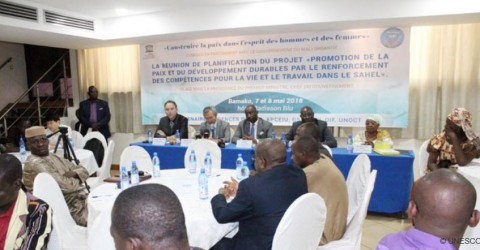 Promotion of Peace and Sustainable Development in the Sahel: A meeting held to develop the program's results framework and implementation schedule 2018-07-20 From 7 to 8 May 2018, Bamako hosted a planning meeting on the program "Reinforcement of Skills for Life and Work for Peace and Sustainable Development in the Sahel ". This two-day meeting enabled participants to develop a results framework, as well as an implementation schedule, through experience sharing with Sahelian countries, and with other countries such as Cabo Verde, the Gambia and Guinea Bissau. The opening ceremony was chaired by Mr. Tiéman Hubert Coulibaly, Minister of Foreign Affairs of Mali, representing the Prime Minister, in the presence of Mr. Chang Gwang-Chol, Director of the UNESCO Regional Office for West Africa (Sahel), Mr. Hervé Huot-Marchand, UNESCO's Representative in Mali, Mr. Kouldjim Guidio, representative of the Permanent Secretary of G5-Sahel, Mrs Diallo Kadia Maiga, Secretary General of the Malian National Commission for UNESCO and ISESCO, and participants from Sahelian countries, such as Burkina Faso, Mauritania, Mali, and Niger. Also in attendance were countries like Senegal, the Gambia, Cabo Verde and Guinea Bissau, as well as Mrs. Mbaranga Gasarabwe, Resident Coordinator of the United Nations System in Mali, who honored the ceremony with their presence. Mr. Chang thanked the Government of Mali for the warm welcome and accompaniment. “As we all know, youth is the lifeblood of a nation. It is the responsibility of all of us, governments, local authorities, traditional and religious leaders, social actors, international partners, etc., to accompany them in becoming responsible and resilient actors of change, citizens and leaders capable of taking control of their future and that of their country”. He welcomed the quality of the work and urged participating countries to have the various proposed activities validated by their competent authorities by the end of May 2018. Mr. Guidio reiterated the support and the principles of his institution, which are in line with the said meeting. “For the G5 Sahel, we cannot contain violent extremism and its consequences only through security measures alone. It will be vital to integrate governance and development aspects in the search for a lasting solution by member states," he said. For her part, Mrs. Mbaranga recalled that this meeting also supports the United Nations Secretary-General's Action Plan for the Prevention of Violent Extremism, adopted in 2016 and the UNESCO Executive Board's decision on the prevention of violent extremism. "If we do not envision where we are going, we will not be able to have either a steady culture or a lasting peace," she said. In his opening speech, Mr. Coulibaly recalled that Mali attaches great importance to this program, which concerns youth and sustainable development, adding that the first defense against barbarism, obscurantism is the strength of the spirit. “Beyond what must be cultivated in the hearts of men, it is obvious that we must arm all the Sahel countries, morally and intellectually, so that the development models chosen, especially the economic models can be solid”. Finally, he thanked UNESCO and the experts from other countries. The work took place in a participatory and interactive atmosphere. Participants unanimously recognized that problems were the the same in all Sahelian countries, hence the importance of joining efforts for an effective action. To do so, it is essential to rethink education systems, for all sections of the population and for all learners: students as trainers. During the meeting, the importance of considering the most vulnerable individuals was stressed, especially illiterate populations, so that they too could benefit from training and certifications, giving them a better chance to find a job. Participants also recalled that culture is an essential aspect that should not be neglected, thus it must be fully integrated into the implementation of the program through reconnecting young people to their heritage. Through this program, which will run for an initial period of three years, UNESCO will support countries in the Sahel, in particular Burkina Faso, Chad, the Gambia, Mauritania, Mali, Niger and Senegal, but also Guinea Bissau and Cabo Verde, under the overall coordination of the UNESCO Regional Office for West Africa (Sahel) and in collaboration with the UNESCO Regional Offices in Rabat and Yaoundé. The meeting was organized in collaboration with the Asia-Pacific Center of Education for International Understanding under the auspices of UNESCO (APCEIU) and the United Nations. You can listen to the radio debate on Mikado FM (Radio UN) at the following link:https://soundcloud.com/mikado-fm/parole-citoyenne-promotion-paix-et-developpement-durable-dans-la-region-du-sahelLink to report Studio Tamani (EU Radio):http://www.studiotamani.org/index.php/journaux/15528-les-titres-du-07-mai-2018-soirLink to ORTM News (3mn45):https://www.youtube.com/watch?v=OVPS4FGtufcLink to Flickr Photos:https://www.flickr.com/photos/155712355@N08/albums/72157695905250034 URL:https://en.unesco.org/news/promotion-peace-and-sustainable-development-sahel-meeting-held-develop-program-s-results
  Transforming education in Latin America and the Caribbean: countries in the region will review their policies and cooperation mechanisms at a ministerial meeting in Cochabamba 2018-07-19 -The II Regional Meeting of Ministers of Education of Latin America and the Caribbean “Transforming education: a joint response from Latin America and the Caribbean to achieve SDG4-E2030” — organized by the Regional Bureau for Education in Latin America and the Caribbean (OREALC/UNESCO Santiago) and the Ministry of Education of the Plurinational State of Bolivia — will follow up on the commitments made in the Buenos Aires Declaration (2017), in the framework of Sustainable Development Goal 4 (quality education) and the Education 2030 Agenda. -The city of Cochabamba will receive expert and official delegations from the ministries of education who will also participate in other regional meetings taking place from July 23 to 26, 2018. Ministers of education, senior officials and experts from Latin America and the Caribbean will meet in Bolivia to discuss and validate a regional Roadmap for implementing Sustainable Development Goal 4 (quality education, SDG4-E2030*). The objective of this meeting, organized by UNESCO and the Ministry of Education of the Plurinational State of Bolivia, is to follow-up on the commitments made in the Buenos Aires Declaration, which came out of the I Regional Meeting of Ministers of Education of Latin America and the Caribbean (Argentina, 2017). The declaration confirms that the priority topics for the region are lifelong learning, quality education, equity and inclusion, and teachers. In Cochabamba, the region’s ministers will formulate recommendations for educational policies and actions with an innovative and cross-sector perspective for each of the priority topics. They will also build consensus regarding the regional cooperation mechanisms needed to finance and monitor educational programs that meet the SDG4 goals. The meeting will be an opportunity to exchange ideas, review experiences, challenges and lessons learned in order to rethink education and define innovative approaches. The results of the discussions will be compiled into the Latin America and Caribbean Roadmap for the Implementation of SDG4-E2030, the proposal for which was prepared in 2017 and 2018 by the region’s Ministries of Education representatives, United Nations agencies, regional and international multilateral institutions and civil society organizations. The Roadmap will provide a shared strategic vision for advancing the Education 2030 Agenda across the region through the formulation of policy recommendations that can be implemented at national and regional levels. Background to the II Regional Meeting of Ministers In January 2017, the Ministers of Education of Latin America and the Caribbean, the region’s education community and other allies met in Buenos Aires to establish a shared vision on education priorities. “The authorities who were present agreed on the strategic guidelines and made decisions regarding the regional cooperation mechanisms that would be needed to achieve the education 2030 goals. The commitments made by the Member States are expressed in the Buenos Aires Declaration”, explains Claudia Uribe, director of the Regional Bureau for Education in Latin America and the Caribbean (OREALC/UNESCO Santiago). Uribe adds that in the ministerial meeting it was also acknowledged that in order to implement the SDG4‐ Education 2030 in the region “concerted efforts by all countries is needed. With this mandate, the UNESCO Regional Bureau for Education in Latin America and the Caribbean has organized regional meetings and forums prior to the II Regional Meeting of Ministers to combine these perspectives and generate concerted actions.” The II Regional Meeting of Ministers of Education of Latin America and the Caribbean will be hosted by the Government of the Plurinational State of Bolivia. Bolivia’s Education Minister, Roberto Aguilar, said that the institutions and citizens of Bolivia, and in particular of Cochabamba, are delighted to be receiving the participating delegations, especially the ministers of Education of Latin America and the Caribbean, at the regional meetings that will take place in his country at the end of July. More information: II Regional Meeting of Ministers of Education of Latin America and the Caribbean July 25 and 26, 2018, Cochabamba, Bolivia. UNESCO, Ministry of Education of the Plurinational State of Bolivia Annotated agenda Regional Meetings of Education of Latin America and the Caribbean July 23 to 26, 2018, Cochabamba, Bolivia. In 2015 the UN adopted the 2030 Agenda for Sustainable Development, an opportunity for countries and their societies to embark on a new path to improve the lives for all and not leave anyone behind. When the new agenda was approved in September 2015, the international community recognized that education was essential for the success of the 17 goals. The ambitions for the field of education are reflected in an essential way in the Sustainable Development Goal 4, which aims to “ensure inclusive and equitable quality education and promote lifelong learning opportunities for all.” Through the Incheon Declaration adopted at the World Education Forum in May 2015, UNESCO, as the United Nations’ specialized agency for education, was entrusted to lead and coordinate the Education 2030 agenda with its partners. The roadmap to achieve the ten targets of the education goal is the Education 2030 Framework for Action, adopted in November 2015, which provides guidance to governments and partners on how to turn commitments into action. ***** Media contact: Carolina Jerez HenríquezRegional Bureau for Education in Latin America and the Caribbean (OREALC/UNESCO Santiago)c.jerez@unesco.orgwww.unesco.org/santiago During the meeting in Cochabamba (July 25-26, 2018)WhatsApp (+569) 92890175 Website of the II Regional Meeting of Ministers of Education of Latin America and the Caribbean URL:http://www.unesco.org/new/en/santiago/education-2030/cochabamba-meeting-2018/press/press-release-1/
 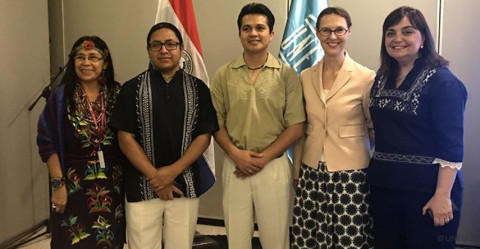 Major event organized by UNESCO for the promotion of indigenous languages in Paraguay 2018-07-16 On 3 July 2018, the International Seminar "Empowerment of speakers of the local language, communities and nations" was opened in Asunción, Paraguay. The opening session was attended by high-level representatives of the national and regional authorities, and UNESCO representative, who jointly acknowledged the importance of languages for creating truly inclusive societies for all citizens. During the three-day event, the participants in the Seminar presented the achievements and potential of the comprehensive language policies for sustainable development and urged all relevant stakeholders to take necessary measures for the integration of indigenous languages into the broad frameworks of policies and strategies in the countries of the Latin America and Caribbean (LAC) region. Taking advantage of the results of the International Conference on Multilingualism in Cyberspace, organized in November 2015 by UNESCO in San José, Costa Rica, the regional gathering in Paraguay provided an open space for elaboration of a set of concrete recommendations for the regional partners’ involvement in the organization of the 2019 International Year of Indigenous Languages and development of the UNESCO World Atlas of Languages. The set of recommendations calling upon for a joint regional effort include: Establishment of National Committees for the celebration of the International Year of Indigenous Languages. Establishment of Regional Monitoring and Cooperation Mechanisms. Establishment of a budget to safeguard and strengthen indigenous languages. Promote strategies to strengthen interculturality that contribute to combat linguistic and cultural discrimination. Strengthening of indigenous languages presence on the cyberspace. Holding sub-regional meetings and regional consultations for the elaboration of a strategic document concerning the promotion, access and support of indigenous languages in the LAC region; and, Declaration of the International Decade on Indigenous Languages 2020-2030. The International Seminar was organized by the Government of Paraguay and the Knowledge Societies Division of UNESCO, in close collaboration with the intergovernmental Information for All Programme (IFAP), national and regional language harmonization and documentation organizations, research and higher education institutions, civil society, particularly organizations of indigenous peoples in Paraguay and Latin America and Caribbean, as well as with the support of the Permanent Delegation and the National Commission of Paraguay for UNESCO. URL:https://en.unesco.org/news/major-event-organized-unesco-promotion-indigenous-languages-paraguay
 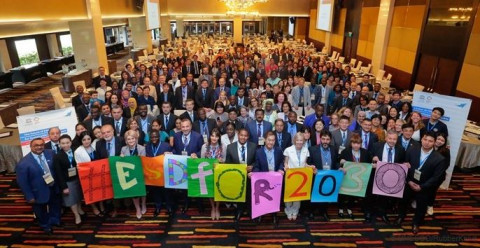 UNESCO Member States map the future of Education for Sustainable Development 2018-07-13 Over 270 participants from 116 UNESCO Member States and Associate Members gathered in Bangkok, Thailand on 9 and 10 July 2018 to discuss which future direction governments and UNESCO should take in promoting Education for Sustainable Development (ESD). With UNESCO’s Global Action Programme on ESD (GAP) ending in 2019, UNESCO is preparing the future programme for ESD, to be linked specifically to the Sustainable Development Goals (SDGs). UNESCO Member States and Associate Members were invited to Bangkok to discuss a draft position paper on the future of ESD, prepared by UNESCO. Opening the meeting, Ms Stefania Giannini, UNESCO Assistant Director-General for Education, said: “ESD is at the forefront of a major trend in education. We are increasingly asking if what people learn is truly relevant to their lives, if what they learn helps to ensure the survival of our planet. ESD can provide the knowledge, skills, values and attitudes that empower people to transform themselves and transform societies. ESD has therefore been duly recognized as part of the global education agenda – as a key element of Target 4.7 of Sustainable Development Goal (SDG) 4 on Education. ESD is also a key enabler for the achievement of all the SDGs.” Representing the Government of Japan, which kindly provided financial support to the meeting, Mr Yosuke Kobayashi, Director for International Strategic Planning at the Japanese Ministry of Education (MEXT), said: “The SDGs have strengthened the status of ESD, which fosters leaders who will build the sustainable societies of the future.” Mrs Watanaporn Ra-Ngubtook, Deputy Minister of Education of the host country Thailand, said: “In order to achieve the Sustainable Development Goals (SDGs), we need to help each other. We should start by sharing what we have already done.” The technical consultation meeting provided room for reflection and discussion in different settings, such as town hall debates touching on themes such as the SDGs, transformative action and the technological future, a world café session, panel debates, group work and regional discussions. An important theme was the role of community as a platform for ESD action. An inspiring example was presented by sustainability practitioner Ms Tomi Matsuba, who lives in the village of Omori, Japan, whose inhabitants practice a very special sustainable lifestyle. The unique village, part of the silver mining area of Iwami-Ginzan, which is inscribed as a UNESCO cultural heritage site, has reinvented itself by exploring alternative paths to prosperity rooted in values of sustainability. Another panel debate addressed the challenging relationship between sustainable development and economic growth, and how education could help reconcile the two. Professor Arjen Wals, who holds the UNESCO Chair at Wageningen University, Netherlands, said: “For the economy to grow, people need to buy new things all the time, which leads to the depletion of natural resources and the creation of waste and pollution. Furthermore, the current growth paradigm reduces human beings to consumers”. The panelists agreed that a fundamental change in the way we think and act was needed, and that education must promote alternative values to consumption. The meeting made apparent the great commitment of Member States and Associate Members to taking ESD into the future and implementing ESD as a key tool to achieve the SDGs. The lively discussions led to numerous suggestions to be included in a revision of the UNESCO position paper on the future of ESD. With the inputs from the meeting, UNESCO will further revise the position paper and conduct additional consultations online with the wider public in the coming months. The final position paper will be presented to UNESCO’s Executive Board in April 2019 and to UNESCO’s General Conference in November 2019 for approval, and to the UN General Assembly in autumn 2019 for acknowledgement. The new ESD programme, to be developed on the basis of the position paper, is scheduled to take effect at the beginning of 2020, and to cover the period until 2030, in line with the target date of the SDGs. Conference website UNESCO Bangkok Office URL:https://en.unesco.org/news/unesco-member-states-map-future-education-sustainable-development
  IOC-UNESCO launches new one-stop shop Ocean Literacy Portal 2018-07-12 The Intergovernmental Oceanographic Commission (IOC) of UNESCO is pleased to announce the launch of the Ocean Literacy Portal. This Portal has been developed to provide a one-stop shop for ocean literacy worldwide, by sharing existing global ocean knowledge. The resources will be accessible to citizens worldwide, from different backgrounds and of all ages, from students to educators, from researchers to policy makers. Ocean literacy is defined as the understanding of our influence on the ocean and the ocean’s influence on us. Ocean literacy is a way not only to increase the awareness of the public about the ocean, but it is as an approach to encourage all citizens and stakeholders to have a more responsible and informed behaviour towards the ocean and its resources. It is not just knowledge about the state of the ocean but a deeper understanding of our individual and collective responsibilities to take care of the ocean. The ocean literacy framework and approach has been developed by a group of educators and scientists in the United States, and then taken up, and adapted by European, Asian and African scientists and educators. While all these organizations and associations have been critical to promote ocean literacy nationally and regionally, the need for an international collaboration and exchange of good practices and experiences led to the engagement of UNESCO in ocean literacy, both through its Intergovernmental Oceanographic Commission (IOC) and its Education Sector. The high-level United Nations Conference to Support the Implementation of Sustainable Development Goal 14: Conserve and Sustainably Use the Oceans, Seas and Marine Resources for Sustainable Development, convened at United Nations Headquarters in New York from 5 to 9 June 2017, provided the platform to further promote the ocean literacy concept and framework internationally. A voluntary commitment #OceanAction15187, “Ocean Literacy for All: A Global Strategy to Raise the Awareness for the Conservation, Restoration, and Sustainable Use of Our Ocean”, was submitted by UNESCO in partnership with many institutions and other relevant partners. The main aim of the initiatives outlined in the Voluntary Commitment is to develop a global partnership to improve public knowledge across the world citizenry regarding our global ocean. In this context, IOC has, at the occasion of the 51st session of its Executive Council, launched the Ocean Literacy Portal,, developed with the support of the Government of Sweden. The Portal will serve as one-stop shop for ocean literacy worldwide to share resources, news and information about events and projects that are relevant for all ocean stakeholders, from different backgrounds and of all ages. The Portal has been built to respond to the need of the ocean literacy community to have access to educational resources that are based on rigorous scientific knowledge, that cover different themes, e.g. marine litter, ocean observation, marine policy, and that are useful for different users, such as educators, scientists, journalists, policy-makers and representatives of the private sector. In addition, the Portal users will have the opportunity to register for a collaborative workspace. Through the Ocean Literacy Collaborative Workspace – UNESTEAMS, experts from all around the world will be able to work directly with fellow members by co-working on topics and ideas and co-creating and developing new joint projects. This is a further step towards creating a collaborative network. “It is our hope that this platform will contribute to further information and communication regarding the understanding of our ocean,” said Francesca Santoro, IOC Programme Specialist in charge of ocean literacy activities. For more information, please contact:Francesca Santoro (f.santoro@unesco.org) URL:http://www.unesco.org/new/en/media-services/single-view/news/ioc_unesco_launches_new_one_stop_shop_ocean_literacy_portal/