
News
Catch up on what’s happening in the world of global citizenship education.
1,668 results found
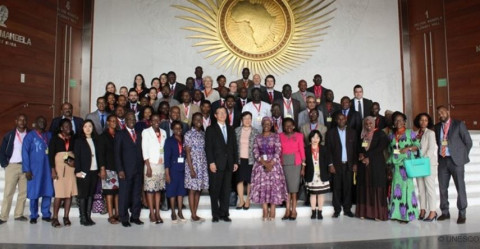 Harnessing youth and empowering teachers 2018-06-12 A consultation and experience sharing workshop between the Horn of Africa and the Sahel countries on peace-building and the prevention of violent extremism (PVE) was held by UNESCO’s International Institute for Capacity Building in Africa (IICBA) at the African Union (AU) Headquarters in Addis Ababa, Ethiopia from 22to 23May, 2018. Aimed at sharing experiences and exploring the possibilities of peace-building and the PVE through education, this workshop also marked the end of IICBA’s "Teacher Training and Development for Peace-building in the Horn of Africa" project (the Horn of Africa project, in Eritrea, Ethiopia, Kenya, Somalia, South Sudan and Uganda), as well as the start of its "Youth Empowerment for Peace and Resilience Building and Prevention of Violent of Extremism through Teacher Development in Sahel Countries" project (the ahel project, in Algeria, Burkina Faso, Cameroon, Central African Republic, Chad, Mali, Mauritania, Niger, Nigeria, Senegal, and Sudan.). In her opening remarks, Dr. Yumiko Yokozeki, Director of UNESCO-IICBA, expressed her gratitude to the Government of Japan for supporting the two projects. Experience-sharing Among 14 African Countries The workshop generated constructive inputs and synergy for action among participants, consisting of representatives from the Ministries of Education and teacher education institutions in 14 African countries, namely: Cameroon, Central African Republic, Chad, Eritrea, Ethiopia, Kenya, Mali, Mauritania, Niger, Nigeria, Senegal, Somalia, South Sudan and Uganda. It also consisted of representatives of the AU Department of Human Resources, Science and Technology (HRST), UNESCO offices in Abuja, Bamako, Dakar, Kampala, Nairobi, Rabat and Yaoundé, UNICEF West and Central Africa Regional Office, and One African Child Foundation. The Horn of Africa countries shared that the project complemented their existing peace-building efforts and supported them to go beyond its intended scope. This approach to addressing violent extremism was more systemic by improving the quality of teachers through interventions at the Teacher Training Institution (TTI) level. Initially the project was planned to train in-service and pre-service teachers at the secondary school level, but many countries scaled up to incorporate primary and tertiary educators as well as non-teaching staff and other stakeholders. Furthermore, by capacitating teachers, they demonstrated how the PVE activities can be carried out both in and outside of the classroom. Similarly, the Sahel countries, UNESCO field offices, and UNICEF shared experiences from their concluded and/or on-going projects, which illustrated the multifaceted approach that the UN is taking to tackle violent extremism. This includes capitalizing on existing societal strengths, for instance, working with local and religious leaders, restoring the trust between teachers and students, and working across formal and non-formal education sectors. The UN interventions also put emphasis on capacity building for youth peace-builders and marginalized groups such as prisoners and women/girls to enhance their understanding on media and information literacy and other topics related to the PVE. Youth Empowerment Ms. Victoria Ibiwoye, Youth Representative of the SDG4 Steering Committee, represented the voices and ideas of young people at the workshop. She emphasized her experience as the head of the One African Child Foundation, a youth-led organization aiming at transforming the lives of children in low-income communities through activity-based workshops and creative learning. Ms. Ibiwoye reminded the room that children need to be not only supported but also empowered to contribute to the communities with their own solutions. The discussions that followed explored more concrete examples, reaffirmed the important role to be played by youth and teachers, and underlined the need to optimize policy and pedagogy to enhance the effectiveness of teaching and learning, without overloading teachers. Participants also discussed how to guide young people to invest their time and potential for peace and development, and elaborated policy and educational approaches to harness young people for the PVE. To this end, they highlighted the significance of ICTs in an era where social media is an increasingly prominent platform for engagement. Some innovative solutions the Sahel countries already have in place include national funds for youth engagement, virtual universities, global citizenship education, and teacher trainings for security awareness. Transformative Pedagogy ‘Transformative pedagogy for peace-building is a necessary learner-centered approach, and it combines critical thinking, reflection, self-awareness, ethics and meaningful action’, presented Mr. Mame Omar Diop, Senior Programme Specialist on teacher policy and development for UNESCO-IICBA. The root causes of violence across participating countries ranged from ethnic and religious conflict to political and ideological differences, from scarce resources and poverty to illiteracy and unemployment. This makes it crucial for the PVE through education to be contextually relevant. Through critical thinking and community engagement, transformative pedagogy helps teachers to produce place-based content and allows for solutions that draw on local culture for peacebuilding. Critical thinking skills are central to the development of teachers and youth, which primarily enable them to analyze conflict objectively and promote productive and solution-seeking interaction. Therefore, students and teachers can both advocate for and challenge their environment in variety of ways. Next Steps In addition to introducing transformative pedagogy into their curricula, the Sahel countries expressed their intention to take on multi-sectoral approaches to the PVE, promote collaborations among ministries and across countries, tackle root causes of conflict in their communities, and prioritize capacity development at all levels. This will be further discussed in the follow-up and planning workshop that will be held in Dakar from 28-29 June 2018. Moving forward, at UNESCO-IICBA, we hope to continue engaging all countries in the Horn of Africa and the Sahel region and serve as a knowledge-sharing platform. Furthermore, a youth forum will be organized for empowering youth as peace-builders and advocates for the PVE. Based on the findings of needs assessment that is currently undertaken in the Sahel countries, we will develop additional study tools and training materials, including a school leadership manual with integrated concepts for leadership for peace. Workshop information Transformative pedagogy for peace-building: A guide for teachers School safety manual: Tools for teachers URL:https://en.unesco.org/news/harnessing-youth-and-empowering-teachers
 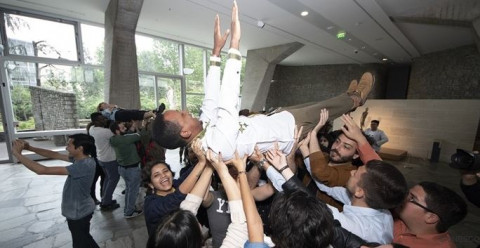 Youth leaders met at UNESCO with a mission to save the planet 2018-06-08 The energy and ideas of more than 70 youth leaders from 60 countries were harnessed for an Education for Sustainable Development conference, “Youth Saves the Planet”, held at UNESCO Headquarters from 14 to 16 May 2018. The event was organized by UNESCO, lead UN agency for the Education 2030 agenda, as part of the Youth Priority Action Area of the Global Action Programme (GAP) on ESD funded by Japanese Funds-In-Trust. The conference was the culmination of a series of eight capacity-building workshops on ESD, held from February 2017 to March 2018 in Almada (Portugal), Bangkok, Beirut, Brasilia, Dublin, Nairobi and New Delhi and to which 300 young leaders from 93 countries were selected to attend. Participants went on to conduct their own workshops in their communities reaching over 11,000 youth around the world. Of the 70 youth, around 50 were selected from the regional and national workshops, along with 20 young journalists (professionals and students) with potential to promote ESD. GAP Key Partners of Partner Network 4 (Youth Priority Action Area) and 14 facilitators from a range of countries also took part. Julie Saito from UNESCO’s Section for Education for Sustainable Development explained the objectives of the event. “Firstly it is being held to agree on a network platform for young leaders to facilitate collaboration and to continue scaling up of capacity-building activities,” she said. “Secondly, to engage ESD youth leaders and young journalists to increase visibility on ESD actions through media and communication outlets; and thirdly to provide input to the draft position paper on the future direction of ESD.” On the first day, youth representatives shared experiences and insights from the regional youth leadership training workshops as well as from local youth-led initiatives and good practices on ESD. Participants discussed progress in each region and were inspired by new ideas to improve and scale their own work. Ms. Ghada Zribi from Tunisia suggested a platform for global youth to share, uplift, and empower each other in an interactive and participatory approach. “The regional youth teams would now have the opportunity, network, and international society recognition to develop partnerships around the presented short and long-term frameworks.” They then had the chance to select from four parallel capacity-building sessions on fundraising; mentorship; scaling-up activities or evaluation and monitoring. In the afternoon youth discussed projects and actions for building collaboration on their initiatives and activities in relation to their chosen Sustainable Development Goals' (SDGs) interests. Ms Elizabeth Gandah, a Zimbabwean broadcast journalist summed up her experience. “I realized the need for communication on ESD as well as all other sustainable goal achievements. I learnt that young people are doing great things in saving the planet. I learnt how as a journalist I can play a role in ESD and how I can maximize on this platform actions towards my chosen SDGs.” At the end of day one Shakira Martin, President of the National Union of Students (NUS) in the UK gave an inspirational speech on her challenge as single mother from the poor family to fight for climate change and passion for ESD leadership. The second day began with capacity-building on how to become effective communicators on ESD whether through print media or video reporting and social media. Participants learnt how to produce stories to increase the visibility of ESD through communication outlets on their experience/learning at the conference or through highlighting their own work and its link to the SDGs. Participants also had the chance to learn about ESD practices for the SDGs being implemented by organizations in France. Five parallel sessions were organized on the following themes; a) education practices and SDGs (Teagir-Eco-Ecole); b) consumption and food production and SDGs (Main a la Pate); c) climate change and SDGs (CliMates); d) cultural dialogue and SDGs (Social Human Science Sector); and e) arts, culture, innovation, and SDGs (Greenovart, Ecoprod). The day included discussion on the networking mechanism and platform needed to facilitate collaboration and continue scaling-up youth action for ESD. Delegates pledged to create networks and start working on community and national projects that promote the wellbeing of people and the environment. They appealed to UNESCO to continue making resources available for skills development to run such projects and to ensure that the media is used regularly as a platform to promote sustainable development. The young journalists and leaders identified a general lack of awareness and education on sustainable development and a need to change mindsets and lifestyles as one of the key challenges the media could address. The last day focused on discussions and draft recommendations on the Future of ESD draft position paper, which will set out a post-GAP vision and future actions for promoting ESD globally and locally. Conference outputs included the first steps towards a collaborative network platform for ESD youth leaders who envisaged an online tool to include a website, social media such as Facebook, and team collaboration tools such as Slack. At the closure Chief of Section of ESD at UNESCO Headquarters, Mr Alexander-Leicht thanked everyone for their contributions. “UNESCO will continue to promote education for sustainable development, and young people will remain a clear cornerstone of our work,” he said. He added that as youth were key stakeholders and partners on ESD, he was happy to learn that young leaders and journalists had agreed to continue working together as a network. URL:https://en.unesco.org/news/youth-leaders-met-unesco-mission-save-planet
 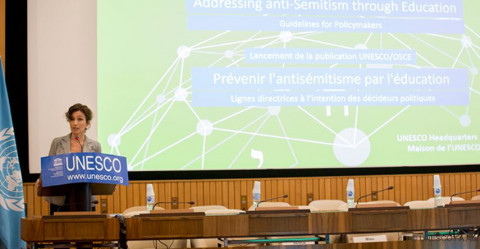 Preventing anti-semitism through education: UNESCO and OSCE launch first guide for education community 2018-06-06 UNESCO and the OSCE Office for Democratic Institutions and Human Rights (ODIHR) today released a joint publication, Addressing Anti-Semitism through Education – Guidelines for Policymakers, at a launch event at UNESCO Headquarters in Paris. The publication, Addressing Anti-Semitism Through Education – Guidelines for Policymakers, is the first on the subject by a United Nations agency. Produced with experts from the countries of Europe, Central Asia and North America, it examines the many and complex manifestations of anti-Semitic prejudice and discrimination and offers best practice recommendations to fight them through education. UNESCO is strongly committed to work on the prevention of violent extremism as part of its core mandate to promote global citizenship, a priority for the 2030 Sustainable Development Agenda. In this context, UNESCO promotes education systems that are able to equip learners with skills, attitudes and behaviours that allow them to assume active roles in facing and resolving global challenges, and to become proactive contributors to a more peaceful, tolerant and secure world. The publication is a new example of UNESCO’s contribution to the fight against anti-Semitism. UNESCO will organize a high-level debate on the subject within the framework of the General Assembly of the United Nations next September to mobilize the international community. “The struggle against anti-Semitism cannot be undertaken by Jewish communities alone. Fighting it means defending human rights and liberties, because racism and anti-Semitism are one and the same in that they share hate of otherness,” declared UNESCO Director-General Audrey Azoulay, at the launch ceremony. “In this fight, education is a major factor. It must be harnessed to prevent the rise in extremism and violence. It is our responsibility to support teachers and educators in their mission, those who sometimes feel helpless in facing the scope of unbridled prejudice.” ODIHR Director Ingibjörg Sólrún Gísladóttir, stressed the vital role of education in countering anti-Semitism, and all forms of intolerance: “Educators have access to a uniquely large audience of young people and have the opportunity to help them foster mutual respect and understanding, and thereby become responsible citizens. Resilience to language and ideas that incite discrimination can only be ensured by educating young people so that they are mindful of their own and others’ prejudices and capable of critical thinking, and that they feel responsible for making the societies in which they live cohesive ones.” On 22 May, UNESCO and ODIHR presented an outline of the publications to ministers responsible for education, culture, youth, media, communication and sport of the European Union’s 28 Member States, at a meeting chaired by Bulgaria. UNESCO and the Office for Democratic Institutions and Human Rights had earlier worked together on the publication of Guidelines for Educators on Countering Intolerance and Discrimination against Muslims (2011). **** More information Download the publication Media contact: Agnès Bardon, UNESCO Media Section: 33(0)145681764 a.bardon@unesco.org Thomas Rymer, ODIHR Spokesperson: +48 609 522 266, thomas.rymer@odihr.pl URL:https://en.unesco.org/news/preventing-anti-semitism-through-education-unesco-and-osce-launch-first-guide-education
 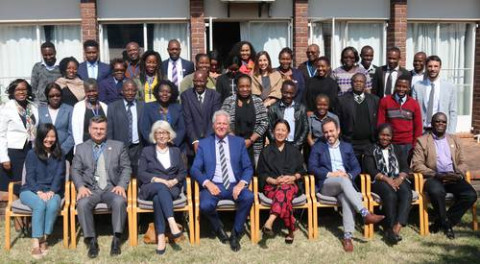 UNESCO ROSA staff commit to promote gender equality 2018-06-05 UNESCO Regional Office for Southern Africa (ROSA) staff undertook a gender equality training workshop from 29-30 May 2018 in Harare, Zimbabwe and committed to promote gender equality. The training equipped the staff with knowledge and skills to foster gender equality in their work. Speaking at end of the training workshop, UNESCO Regional Director for Southern Africa, Professor Hubert Gijzen urged staff to put into practice the knowledge and skills gained from the workshop. “We have gained a lot, learnt a lot and it’s now time for action,” he said.“Let us commit to build on the actions we started in this training and ensure that we champion gender equality in all our work,” added Prof. Gijzen. The training which was delivered by the UNESCO Division for Gender Equality in the Office of the Director General, explored key gender equality concepts, the UNESCO gender equality marker, gender mainstreaming and how to advocate for gender equality. To put into practice the various concepts taught, group sessions were held. Staff looked at the various work plans developed by the Office and evaluated their gender sensitivity. They also did the same with project concept notes developed by the Office. Several recommendations on improving these documents were put forward and will be used to refine the documents in the coming days. Gender is one of the two UNESCO global priorities. UNESCO believes that all forms of discrimination based on gender are violations of human rights, as well as a significant barrier to the achievement of the 2030 Agenda for Sustainable Development and its 17 Sustainable Development Goals. Women and men must enjoy equal opportunities, choices, capabilities, power and knowledge as equal citizens. Equipping girls and boys, women and men with the knowledge, values, attitudes and skills to tackle gender disparities is a precondition to building a sustainable future for all. For more information, please contact: f.manenji(at)unesco.org or p.awopegba@unesco.org. URL:http://www.unesco.org/new/en/harare/about-this-office/single-view/news/unesco_rosa_staff_commit_to_promote_gender_equality/
 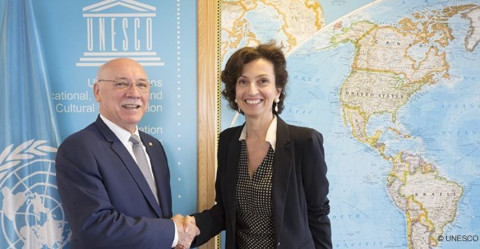 UNESCO and Paraguay committed to the empowerment of indigenous languages in the LAC region 2018-06-04 On 29 May 2018, the Director-General of UNESCO, Ms Audrey Azoulay, and the Minister of Foreign Affairs of the Republic of Paraguay, Mr Eladio Loizaga, signed an agreement concerning the organization of the international seminar “Empowerment of the local language speakers, communities and nations” that will be held on 3-5 July 2018 in Asunción, Paraguay. The international seminar aims at providing a substantive contribution to an update analysis at national and regional level, reinforcing the capacities of the countries from the region to address the issues of languages within the context of the various global commitments. To this effect, experts, Member States, UNESCO representatives and UNESCO Official Centres, as well as other relevant organizations will be attending the event in Asunción. Together with hosting the international seminar, with this agreement, the Republic of Paraguay joins the global efforts to promote, preserve and revitalize indigenous languages in the LAC region, in line with the objectives of the 2019 International Year of Indigenous Languages, declared by the United Nations General Assembly in 2016. On the agenda of the international seminar will be presentations of good practices, initiatives and concrete actions taken at national level in the framework of a multilingual context. There will be also a dialogue on the situations of languages in Latin America and the Caribbean region, and a debate on the regional contributions to the implementation of the international commitments to linguistic diversity. In addition, the participants will review the recommendations for implementing the Action Plan of the 2019 International Year of Indigenous Languages, as well as for creating regional collaborations and networks towards developing a Regional Atlas of Languages within the context of UNESCO World Atlas of Languages. This event contributes significantly to the realization of UNESCO’s mandate related to the promotion of cultural diversity and multilingualism which play a key role in fostering pluralistic, equitable, open and inclusive knowledge societies. URL:https://en.unesco.org/news/unesco-and-paraguay-committed-empowerment-indigenous-languages-lac-region
 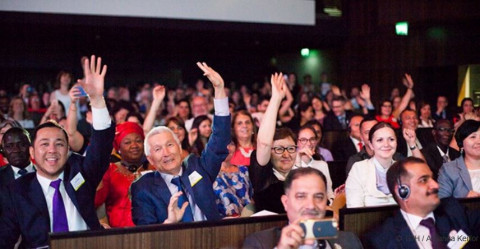 IFAP co-organized the World Congress on Justice for Children 2018-06-04 The 2018 World Congress on Justice for Children: “Strengthening Justice Systems for Children: Challenges, including disengagement from violent extremism” took place at UNESCO Headquarters in Paris from 28 to 30 May 2018. The event was co-organized by a consortium of international associations together with UNESCO’s Information for All Programme (IFAP). This World Congress brought together Ministers of Justice, Supreme Court judges, magistrates, lawyers, experts as well as representatives of the civil society, public and private institutions, academia and young people. It reviewed the progress made in ensuring the effective protection of the rights of children worldwide. Participants also debated the challenges related to the disengagement of young people from antisocial behavior and violent extremism. The Congress was opened by Avril Calder, President of the International Association of Youth and Family Judges and Magistrates (AYMJF). UNESCO’s Assistant Director-General Moez Chakchouk and the Chair of Information for All Programme and Deputy Permanent Delegate of Grenada to UNESCO Chafica Haddad also took part in the inauguration session of the Congress. In his opening speech, Mr Chakchouk stressed the relevance of the Congress theme for UNESCO and underscored that violent extremism is an affront to the principles of the United Nations, embodied in universal human rights and fundamental freedoms. “Security responses must be combined with preventive global and local actions, building on the transformative force of education, the sciences, culture, information and communication,” said Mr Chakchouk. “Through concrete initiatives to foster youth empowerment through ICTs, as well as critical thinking, tolerance and respect for universal values, UNESCO is equipping young people with the necessary knowledge and Media and Information Literacy (MIL) skills to expand their choices, to build new forms of global citizenship, and to become more resilient to manipulation through the Internet and social media.” In her opening remarks, Ms Chafica Haddad highlighted the decision of IFAP to put the issue of radicalization of youth in cyberspace as one of its main priorities: “We expect that this Congress will contribute to sharing promising practices and innovative approaches aimed at reducing the number of young people involved in radicalization schemes leading to violence,” she added. In the framework of the Congress, UNESCO also organized a workshop on “The Challenges of Child Protection on the DarkNet”, on 29 May. The workshop was moderated by Boyan Radoykov, from UNESCO’s Knowledge Societies Division. Panelists included Ms Chafica Haddad IFAP Chair, Ernesto Rodrigues, Director of the Latin American Youth Center (CELAJU), Nacira Salvan, Cercle des femmes de la cybersécurité (France) and Quentin Aoustin, Association Point de Contact (France). With some 900 participants from 97 countries, this World Congress fully achieved its objectives and was timely organized so as to feed with its outcomes the 6th review of the UN counter terrorism Convention. In her closing remarks Ms Chafica Haddad, Chair of IFAP thanked the consortium of supportive institutions for realizing this high-level world congress and underlined that “disarming processes of radicalization leading to violence must begin with education, with the promotion of human rights, the rule of law, and with dialogue across all lines”. As a conclusion, the common understanding was that it is not enough to counter violent extremism. A form of ‘soft power’ is required to prevent its emergence and the threats driven by distorted interpretations of culture, hatred and ignorance. The disarming process of radicalization must start as early as possible, on the benches of schools and it is urgent to educate even more children and Internet users about ethical online behaviour, privacy issues and the risks associated with the disclosure of personal data and other potentially sensitive information through social media. In this spirit, UNESCO’s IFAP is fully engaged in building resilience through information and media skills, supporting counter-narratives and online coalitions, and – more broadly - youth participation and empowerment. URL:https://en.unesco.org/news/ifap-co-organized-world-congress-justice-children
  UNESCO and OSCE Publish Guidelines to Reduce Prejudice and Promote Tolerance through Education 2018-05-31 UNESCO and the Office for Democratic Institutions and Human Rights (ODIHR) of the Organization for Security and Co-operation in Europe (OSCE) will launch new guidelines on Preventing Anti-Semitism through Education, Guidelines for Policy Makers on 4 June, at UNESCO Headquarters (11 a.m.-1 p.m., Room XI). The publication is designed to serve political leaders, teachers and young people with concrete ways to combat anti-Semitism. It also provides education systems with tools to strengthen young people's resilience to anti-Semitic ideas, violent extremism and all forms of discrimination. The guidelines notably explore ways of sensitizing educators’ to anti-Semitic stereotypes and conspiracy theories and responding to anti-Semitic acts and language at school, as well as developing learners’ understanding of news and media so as to resist manipulation. The publication is the UN’s first treatment of the subject in such a comprehensive manner. UNESCO and the ODIHR, with the support of the Council of Europe, had already worked together in 2013 on guidelines to combat intolerance and discrimination against Muslims. The publication’s launch event will begin with addresses by the Director-General of UNESCO, Audrey Azoulay, and the Director of OSCE/ODIHR, Ingibjörg Sólrún Gísldóttir. It will also feature testimonies of anti-Semitism today by the UNESCO Chair on Genocide Education at the USC Shoah Foundation. A roundtable discussion entitled “What educational policies to prevent antisemitism?” will follow with the participation of: Mina Abdelmalak, Arab Outreach Specialist, US Holocaust Memorial Museum, Washington D.C. Johanna Barasz, Deputy Deputy Head of the French Government’s Inter-ministerial Delegation for the Fight Against Racism, Anti-Semitism and anti-LGBT Hate Alina Bricman, President of the European Union of Jewish Students Jeremiah Ellis, Founder of the World Mosaic Project and member of the Advisory Group of Canada’s National UNESCO Commission Igor Ujhazi, in charge of the fight against anti-Semitism, World Jewish Congress UNESCO's action to combat anti-Semitism is part of the Organization's efforts to prevent violent extremism through education and to strengthen the capacities of education systems in this field. **** Media Accreditation: Djibril Kebe, UNESCO Media Section, d.kebe@unesco.org +33(0)145681741 Media Contact: Agnès Bardon, UNESCO Press Office, a.bardon@unesco.org, +33 (0) 1 45 68 17 64. URL:https://en.unesco.org/news/unesco-and-osce-publish-guidelines-reduce-prejudice-and-promote-tolerance-through-education
  Vienna+25: Building Trust – Making Human Rights a Reality for All 2018-05-30 “UNESCO works to ensure that women and men equal enjoy the right to access, participate in and contribute to cultural life. The International Cultural Conventions promote the inclusion of all community members in their implementation, enabling women and men to benefit equally from heritage and creativity”. The Vienna Declaration and Programme of Action was adopted by consensus at the World Conference on Human Rights on 25 June 1993 in Vienna, Austria. This Declaration together with the World Conference is considered a landmark document for the promotion and protection of human rights. From 22 to 23 May 2018, on the occasion of its 25th anniversary, the Austrian Federal Ministry for Europe, Integration and Foreign Affairs, in cooperation with the Office of the UN High Commissioner for Human Rights, the City of Vienna and the Ludwig Boltzmann Institute of Human Rights organised a High Level Expert Conference in Vienna to encourage States and other stakeholders to pursue further legal, institutional and practical improvements of human rights protection, both domestically and internationally. This conference brought together human rights stakeholders from diverse backgrounds, including Ms Saniye Gülser Corat, UNESCO’s Director for Gender Equality, who participated in the Working Group on Promotion of Equality in our Societies. While noting how progress in gender equality is stalling if not deteriorating in many parts of the world, Ms Corat discussed with experts how to address and prevent the further aggravation of inequalities along the trajectories of not only gender but ethnicity, age, disability, sexual orientation, religious, political, social or other status. She highlighted UNESCO’s unique and holistic contribution in overcoming such setbacks and presented examples of substantial progress especially focusing on gender equality. URL:https://en.unesco.org/news/vienna25-building-trust-making-human-rights-reality-all
 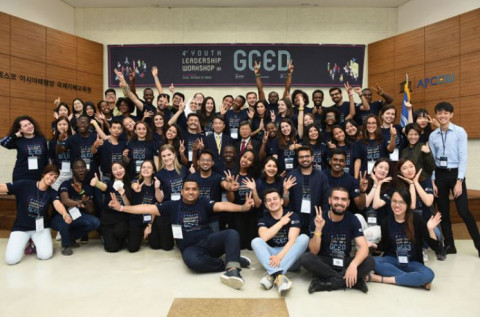 A Forum for GCED by Youth - The 4th Youth Leadership Workshop on GCED 2018-05-30 The 4th Youth Leadership Workshop on Global Citizenship Education (GCED) was held from 20 to 26 May 2018 in Seoul, Republic of Korea. In partnership with the GCED Youth Network and sponsored by the Ministry of Education of the Republic of Korea, the Workshop was held in APCEIU and Seoul Women’s Plaza. For this Workshop, 48 youth leaders from 46 developing countries in Asia-Pacific, Africa, Europe, Arab States and Latin America and Caribbean, who are in age between 18 and 24 and actively participating GCED activities in their regions, gathered together to participate in this event. This Workshop became an opportunity to further promote GCED, mobilize exchanges among youth and solidify the GCED Youth Network. Representing the GCED Youth Network, five core members facilitated the Workshop sessions especially on youth advocacy and led discussions on the future plans of GCED Youth Network. The GCED Youth Network was composed of members from the former United Nations Secretary General’s Global Education First Initiatives (GEFI) Youth Advocacy Group (YAG), alumni of APCEIU’s previous Youth Leadership Workshops as well as participants from the regional workshops on GCED. Started with a keynote speech by Mr. Oh Joon, Former Ambassador and Permanent Representative of the Republic of Korea to the United Nations, this Workshop composed with the lectures and workshop sessions including the roles of youth leader in the process of achieving SDGs 4.7, GCED from youth perspectives, introduction of Youth Advocacy Toolkit and APCEIU’s GCED initiatives, understanding local initiatives through study visits and GCED Youth Summit. Furthermore, by introducing regional initiatives of the core members from the GCED Youth Network, participants shared recommendations for youth activities for their future plans and increased their implementation capacities through identifying and discussing issues around GCED. Following the motto of GCED - “Think, Share and Act” - all participants shared their leadership activities and discussed about the priorities as well as key values of GCED, and then divided into five different regional groups of Asia-Pacific, Africa, Europe, Arab States and Latin America and Caribbean to establish future action plans on GCED. To continue their advocacy on GCED, the core members of GCED Youth Network will participate in the development of course materials for GCED Online Campus themed on Youth Advocacy and promote their GCED activities through offline as well as online. URL:A Forum for GCED by Youth - The 4th Youth Leadership Workshop on GCED > APCEIU News - APCEIU (unescoapceiu.org)
 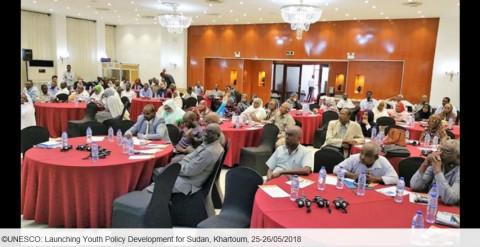 Launching Youth Policy Development for Sudan 2018-05-30 On 25-26 April 2018, UNESCO (the Khartoum and Cairo offices and the Headquarters) in cooperation with the Sudanese Ministry of Youth and Sports (moYS), the National Commission for Education, Science and Culture (NATCOM) and UNFPA organized a launching workshop for Youth Policy Development, and conducted a training program for the national team appointed to follow the policy development. The workshop took place in the Grand Holliday Villa Hotel and attracted about 50 relevant professionals. The opening session was addressed by the Minister of Youth and Sports, H.E. Dr. Abdelkarim Musa Abdulkarim, the Deputy General Secretary of the NATCOM, Dr. Abdelmahmoud Elnoor, the deputy director of UNFPA, Dr. Mohamed Elameen, and UNESCO Representative to Sudan, H.E. Dr. Pavel Kroupkine. Ms. Julia Stevenses, UNESCO expert, briefed the participants about the workshop objectives. After the break, Ms. Stevens conducted the training program, which was supported by Ms. Jana El Baba (the UNESCO Cairo office) and Mr. Kamil Elnabolsi (UNESCO consultant), and addressed the issues related to the theme “Holistic Youth Development and Youth Civic Engagement: Implications for Policy Making”. The training sessions ended on the second day afternoon, after which a closing session was addressed by the General Secretary of the NATCOM, Dr. Abdulgader Noureddin, the State Minister in MoYS, Dr. Mustafa Ahmed Mahmoud, and UNESCO Programme Officer, Dr. Aiman Badri. Then, the State Minister distributed training certificates. URL:https://en.unesco.org/news/launching-youth-policy-development-sudan