
News
Catch up on what’s happening in the world of global citizenship education.
1,668 results found
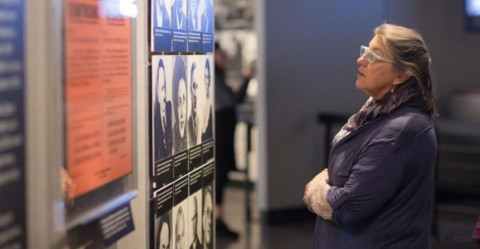 “Many learners are amazed to discover that racism did not start and end in South Africa." 2018-07-11 An interview with Linda Hackner on education about the Holocaust in South Africa Linda Hackner is the Senior Educator at the Cape Town Holocaust and Genocide Centre, which is one of three information centers operated under the auspices of the South African Holocaust and Genocide Foundation (SAHGF). In December 2017, Linda participated together with her colleague Arlene Sher from the Johannesburg Centre in the second International Conference on Education and the Holocaust (ICEH), organized by UNESCO and the U.S. Holocaust Memorial Museum (USHMM). Following their participation, they have developed an educational programme on the Nazi regime’s “science of race”, linked to the USHMM traveling exhibition “Deadly Medicine. Creating the Master Race”. The exhibition is to be displayed in five different South African cities, accompanied by guided visits and workshops. On 19 February 2018, the exhibition was inaugurated at the Cape Town Holocaust and Genocide Centre. Why is it important to teach about the Holocaust in South Africa? Our South African Constitution is based in part on the Universal Declaration of Human Rights. Yet when this Declaration was adopted in 1948 in direct response to the atrocities committed by the Nazi regime, South Africa abstained. This was because the South African government was already planning to formally legalize the Apartheid system. In South Africa, many racial laws had already been implemented prior to 1948. But the main pillar of Apartheid, the Population Registration Act No. 30, passed into law in July 1950. Following this Act, people were registered from birth as member of one of four “racial groups”. The Apartheid past is still very raw in our country. We find that studying Nazi Germany and looking at the human rights abuses that took place enables students to access their own dark history through the lens of the Holocaust. We also hope that learning about this period in history helps students to be more aware of the dangers of prejudices, stereotyping, of anti-Semitism and of all forms of racism that still beset our country today. How is the Holocaust addressed in the South African national curriculum? In our curriculum, we have two sections that specifically address the history of Nazi Germany, although in two very different ways. In 9th grade, when learners are about 14 years old, they study the failure of the Weimar Republic, the rise of Nazi Germany and the outbreak of the Second World War as part of their social science class. In total, the curriculum devotes about 15 hours of teaching time to this part of history. In 11th grade, South African learners can choose history as an elective. These classes cover pseudo-scientific concepts of race and eugenics, based on the historical examples of Nazi Germany and the indigenous peoples of Australia. This is why the “Deadly Medicine” exhibition that we are currently displaying in five South African cities is so pertinent to our learners. This is exactly what they are learning about! How do you integrate the exhibition into your work with students and adult groups? The Director of the Cape Town Holocaust Centre, Richard Freedman, who is also the Director of the Holocaust and Genocide Foundation, had been working for a long time to bring this wonderful exhibition to South Africa. When it became a reality, my colleague Arlene Sher and I went to Washington, DC to attend the International Conference on Education and the Holocaust (ICEH) in December 2017. We received great support from the USHMM on how to use the exhibition. Dr. William Meineke, historian at the Museum, came to the inauguration of the exhibition, which was invaluable for our educators. The support from USHMM and UNESCO, has allowed us to display the traveling exhibition in five South African cities: Cape Town, Stellenbosch, Johannesburg, Pretoria and Durban. We are also working together with the Namibian participants of the 2017 ICEH to bring the exhibition to Namibia in February 2019. In each location, we have school classes and educators visiting the exhibition. When we first launched the exhibition in February in Cape Town, learners self-guided through the exhibition using worksheets. However, we soon discovered that students were easily overwhelmed by the density of information. This is why we now start school visits with an introductory class on “race theory” and eugenics, followed by a guided tour of the exhibition. Based on these experiences, we have shared our experiences with our colleagues at the Johannesburg and Durban Holocaust Centres, so they are prepared to facilitate their own workshops and guided visits, once the exhibition is moved there. We hope to do the same with our Namibian colleagues. In addition to the school group visits, we also run workshops with diverse adult groups, including educators, teachers in training, law students, medical students and advanced psychiatric nurses. With each of these groups we focus on a different aspect of the exhibition. We cover for example how laws were used to institutionalize the Nazi regime’s racial ideology or how nurses participated in the mistreatment of patients with disabilities. We engage the workshop participants via case studies and discussions of broader ethical questions- from not only a historical perspective, but also ethical questions that they are facing in their work and life today. Could you give an example of how you link the Nazi regime’s “science of race” to the history of Apartheid in South Africa? There are actually very close historical links. A few years ago, a box was discovered in a cupboard at the University of Stellenbosch. In the box were artefacts; an eye color table belonging to Dr. Rudolph Martin, which the university acquired in 1924, and a hair color and texture table belonging to Eugen Fischer, an anthropologist and doctor, who had dedicated his research to serve the Nazi’s racial ideology. These were original artifacts that were used in South Africa to measure and to categorize people into so-called “racial groups”. So we could say that Nazi eugenics and racial ideology were the bedrock of the racial system here in South Africa. These artifacts were added to the “Deadly Medicine” traveling exhibition alongside excerpts from a doctoral thesis, which reveals how, why and where these instruments were used – among others in the town of Stellenbosch. With the permission of the USHMM, an additional panel was developed by the SAHGF in conjunction with the University of Stellenbosch to demonstrate the impact of the pseudo-science of race in the South African context. What impact has the exhibition on those who visit it and attend your workshops? Many of the children, who visit the exhibition, are amazed to discover that there is racism somewhere else in the world. For them, the topic of “racism” is solely linked to South Africa and the horrifying racial injustices that were committed during Apartheid. Through the exhibition, they understand that racism neither started nor ended in South Africa. It gives them a sense of “not being the only ones.” We have seen a similar impact through our workshops. For many participants, they are quite eye-opening experiences. One of the psychiatric nurses said: “I always thought wars are about guns, and machines, and soldiers. I was not aware that professional, educated people could be used as part of a political government for propaganda and to eliminate innocent and vulnerable people.” It is amazing to see how our visitors realize how learning about the past goes beyond studying history. They see that there is a link between the history of Nazi Germany and South Africa’s past, and even a link to the contemporary. The feedback that we receive shows clearly that establishing these links is very important. How has your ICEH follow-up project affected your work? Working with the “Deadly Medicine” exhibition opened new ways of how we teach this part of history. It has given us more knowledge and information and offered us a much broader approach to teaching about the Holocaust. We will continue with our work, hopefully making it constantly better, more relevant and especially more accessible to as many people as possible. The exhibition allowed us to broaden significantly the scope of our work. When we were in Stellenbosch, we were able to invite schools that would otherwise not been able to visit our Centres or permanent exhibitions. Many learners were exposed to the history of Nazi Germany for the first time. Some of them had never set foot in a museum before. In Stellenbosch, we made contact to many teachers from schools in remote areas. We have organized another educator workshop at the Centre in Cape Town in July that we hope will be attended by many of these teachers. All of this is possible, because we were able to bring the exhibition to them, thanks to UNESCOs and the USHMMs help! The support we have received also helped us to continue our programs in the Centre in Cape Town, while running the traveling exhibition simultaneously. We would not have had the capacity to do this otherwise. We are very grateful for that. Education about the Holocaust and genocide URL:https://en.unesco.org/news/many-learners-are-amazed-discover-racism-did-not-start-and-end-south-africa-also-exists
  #YouthOfUNESCO: Revolutionizing Education! 2018-07-11 Philippine Dolbeau is a 19-year-old entrepreneur who established her innovative start-up when she was only 15 years old. She is transforming education technology by integrating simple digital solutions to the education system, which facilitates the lives of teachers and improves security in schools for students. “It was a regular school day in 2014. I went home, switched on the TV and I saw a news item about a little boy named Charles, who had fallen asleep in the bus during a school trip. The bus driver didn’t notice him and he was left alone in the bus for 8 hours, without food and without water. All this happened, because the teacher didn’t have a registration system. I wanted to change that and make sure this wouldn’t happen again. That’s what inspired me to create my start-up NewSchool – to increase security in school environments and to make education a positive experience for students,” she says on how it all started. “NewSchool is an application designed essentially for teachers to digitally register their students with a Bluetooth system. The mobile application comes with a connected key holder, which allows students to be detected when carrying it. It also ensures that every student is rewarded for his efforts, thanks to a gamification system in the app where students earn points. When reaching a certain amount of points, he can exchange them with creative education contents such as videos or even templates for class presentations. It will soon have other functions, such as, facilitating borrowing books from libraries. In 2015, NewSchool started off as a small project for school – I entered an innovation competition with it, won and the next thing I find is developers from Apple calling me to help me out with the application.” She thinks that more resources should be provided to schools to continue the digital transformation. The world of education must adapt to the specificities of the new generations. “My mother is a teacher and I have always had a positive experience at school during my educational path. However, the French education system needs to change and the mindsets need to move towards digitalizing elements in education. Digital devices and technology are not here to make our lives more difficult, but to transform and facilitate education to provide a great learning experience for children and youth.” *** The UNESCO Youth Programme works to ensure that talented young people’s ideas and skills enact real change in areas related to UNESCO’s fields of competence. Youth are no longer just beneficiaries in the organization’s work, but essential actors in finding the solutions to some of the world’s biggest challenges. Download NewSchool (French)More on UNESCO’s work with youthJoin the UNESCO Youth Online CommunityContact: youth@unesco.org URL:https://en.unesco.org/news/youthofunesco-revolutionizing-education
 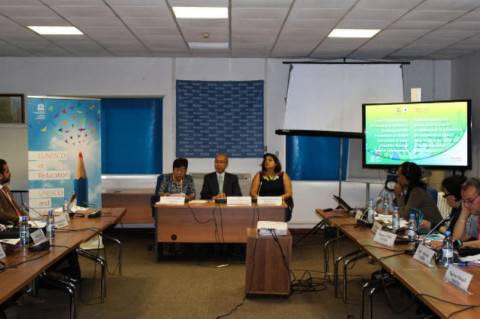 Teacher Educators in Sahel countries Met for Peace-building and PVE in Dakar 2018-07-09 In collaboration with UNESCO Dakar, UNESCO-IICBA organized a planning meeting for the project "Youth Empowerment for Peace and Resilience Building and the Prevention of Violent Extremism (PVE) in Sahel Countries through Teacher Development" from 28 to 29 June 2018 in Dakar, Senegal. Leveraging the success of the consultation workshop that was held in Addis Ababa in May 2018, this meeting aimed to discuss the contextualization of IICBA's teacher training material for peace-building, and to map out action plans for the upcoming trainings and Japan study tour. Thirty-two participants of this meeting consisted of representatives from the Ministries of Education and Teacher Training Institutions in Algeria, Chad, Cameroon, Central African Republic, Mali, Mauritania, Niger, Nigeria, Senegal, and Sudan, as well as colleagues from UNESCO-IICBA and UNESCO offices in Abuja, Bamako, Dakar, and Rabat. During the opening session, on behalf of Mr. Gwang-Chol Chang, Director of UNESCO Dakar, Mme Guiomar Alonso Cano welcomed all the participants. This was followed by remarks from H.E. Ambassador Shigeru Omori, Ambassador of Japan to Senegal. He highlighted the peace and security issues in this region and the imperative role that teachers and education could play. He was delighted to see that UNESCO, Sahel countries and Hiroshima University in Japan will have more exchange on PVE during the study tour in August 2018. In the end, Dr. Yumiko Yokozeki, Director of IICBA expressed her sincere gratitude to the Government of Japan for their generous and continued funding for IICBA's peace-building projects in the Horn of Africa and Sahel. She also appreciated the presence of participants and wished the workshop very fruitful outcomes. Ms. Eyerusalem Azmeraw, Project Officer of UNESCO-IICBA presented the project and IICBA's teacher training material on Transformative Pedagogy for Peace-building. Participants reviewed and discussed the material in group and provided inputs on how to improve and integrate it with the context of the Sahel countries. Upon their requests, religion divides, drugs, violence, poor governance and corruption as the root causes of conflict, and inter-religion/culture dialogue, sports and life skills as conflict resolutions will be added into the training material. IICBA will also work with participants and experts to collect good experiences and make the training material more practical for teachers in the classroom. Consolidated work-plans were submitted by countries before the conclusion of the workshop. Here are the upcoming activities in a nutshell: Japan study tour from 25 July to 8 August 2018; Needs assessment in July/August 2018; Finalization of the training material in September 2018; Training of Trainers in October 2018; Cascading of trainings from November 2018 to March 2019. URL:http://www.iicba.unesco.org/node/313
 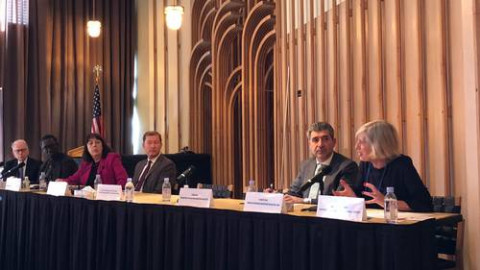 Harnessing the power of quality education – key for strengthening global action to prevent violent extremism 2018-07-05 On 29 June 2018, UNESCO joined the High-level side event “Harnessing the Power of Quality Education to prevent Violent Extremism”, held at the Institute of International Education in New York, at the margins of the sixth biennial Review of the Global Counter-Terrorism Strategy. The High-level event was organized by the Permanent Missions of Belgium and the State of Qatar to the United Nations, the Education Above All Foundation (EEA), and the Hamad Bin Khalifa University, member of Qatar Foundation for Education, Science and Community Development. The discussion brought together distinguished ambassadors, representatives of the diplomatic community, UN system, civil society and education experts, to highlight the crucial role of education in the prevention of violent extremism and countering radicalization and violent propaganda. Addressing the participants, Stefania Giannini, UNESCO Assistant Director-General for Education, outlined the crucial role of education in the prevention of violent extremism by strengthening learners’ resistance to violent extremist messages. Education creates the conditions that counter the spread of violent extremist ideas. To this end, she highlighted UNESCO’s Global Citizenship Education (GCED) programme programme that focuses on teaching values and installing behaviors for living in a world of diversity and change. Finally, Ms Giannini underscored the importance of cooperation with international partners, especially during conflict, as “tackling violent extremism requires coordinated action and joint efforts”. In the following expert roundtable on Harnessing the Power of Quality Education to Prevent Violent Extremism, participants shared information, best practices, research and activities on strengthening global action to prevent violent extremism, including by the engagement of youth. Professor Lynn Davis (Emeritus Professor of International Education at the University of Birmingham) emphasized that education is particularly important in teaching critical thinking and ensuring a transmission of universal values. Dr Reem Al Ansari (Professor of Law, Qatar University) linked the topic of the discussion with the rule of law and the implementation of the Sustainable Development Goal 16, and stressed that education is a part of remedy, but it should be done in a holistic framework as well as in respect to legal instruments. Mubarak Al Thani (Head of Advocacy, Education Above All Foundation) outlined that education is a powerful weapon against poverty, radicalization and conflict, emphasizing that the provision of quality education should be an integral part of the development assistance in conflict and post-conflict processes. The event featured further interventions by Ambassador Marc Pecsteen de Buytswerve (Permanent Representative of Belgium to the United Nations), Abdulrahman Yaaqob Y. A. Al-Hamadi (Deputy Permanent Representative of the State of Qatar to the United Nations), Dr. Ahmad M. Hasnah (President and Ex-officio Member, Hamad Bin Khalifa University, State of Qatar), Virginia Gamba, (UN Under-Secretary-General, Special Representative for Children and Armed Conflict), Michèle Coninsx (Assistant Secretary-General, Executive Director of the Counter-Terrorism Committee Executive Directorate (CTED)). URL:http://www.unesco.org/new/en/unesco-liaison-office-in-new-york/about-this-office/single-view/news/harnessing_the_power_of_quality_education_key_for_streng/
 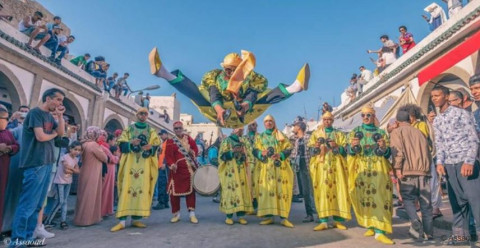 UNESCO and the City of Essaouira strengthen their cooperation to fight against racism and discrimination 2018-07-04 The UNESCO Office in Maghreb and the City of Essaouira organized a round table on the theme "Culture and Social Inclusion: what can the Coalition of Arab Cities against Racism, Discrimination, Xenophobia and Intolerance contribute?” on 22 June 2018, in Essaouira (Morocco), as part of the Gnaoua World Music Festival. The Festival, which is a major cultural event of the City of Essaouira, constitutes the ideal platform to spark a common reflection on the role of culture to foster social inclusion. The Mayor of the City, Hicham Jebbari, underscored the importance of creative activities, based on cultural heritage and in cooperation with local experts, to implement strategies for local public policies laying the ground for an environment of inclusion and equality of opportunities. In this regard, the City cooperates with the Essaouira Provincial Directorate of the Ministry of Culture and with civil society actors, including the Association Essaouira-Mogador. Linda Tinio-Le Douarin, Coordinator of UNESCO’s International Coalition of Inclusive and Sustainable Cities – ICCAR, presented several initiatives juxtaposing the cultural and social dimensions which are undertaken by member cities from each region – grants to associations to combat discriminations, establishment of centers for intercultural dialogue, equal opportunity programmes or cultural and sports festivals – which all aim to contribute to living together in urban spaces. From Montevideo to Bologna, from Vancouver to Essaouira and Indonesian cities, there are many examples of city projects attesting to the engagement to endorse human rights, gender equality, cultural diversity and social inclusion as drivers of peace and sustainable development. Representatives of the Essaouira Provincial Directorate of the Ministry of Culture and the Association Essaouira-Mogador, which are long-standing partners of the City, emphasized the pivotal role of civil society for cultural initiatives with social goals highlighting humanistic values in the fight against racism and xenophobia. In order to implement the Tunis Declaration, adopted by the Coalition of Arab Cities in April 2017, enhanced cooperation between UNESCO, the City of Essaouira and its partners will be ensured. The Coalition of Arab Cities, composed of 22 member cities, aims to establish a network of cities to share good practices at regional and international levels to improve policies to combat all forms of exclusion and discrimination. Since the end of 2017, Essaouira has become co-lead city with Nouakchott (Mauritania) of the Coalition of Arab Cities, which is part of the International Coalition of Inclusive and Sustainable Cities – ICCAR. URL:https://en.unesco.org/news/unesco-and-city-essaouira-strengthen-their-cooperation-fight-against-racism-and-discrimination
 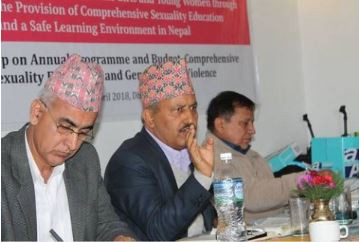 Comprehensive sexuality education and gender based violence on top priority: Education Minister (विस्तृत यौनिकता शिक्षा र लैंगिकतामा आधारित हिंसा उच्च प्राथमिकतामा : शिक्षा मन्त्री) 2018-07-04 UNESCO, jointly with the Ministry of Education, Science and Technology (MoEST) organized a two-day workshop in Dhulikhel on Comprehensive Sexuality (CSE) and Gender based Violence (GBV) on 6 - 7 April 2018. The workshop aimed to share the relevancy of CSE for improving education and health status of adolescent girls and young women and share the key updates of the project "Empowering Adolescent Girls and Young Women through the Provision of Comprehensive Sexuality Education and a Safe Learning Environment in Nepal." Minister for Education Giriraj Mani Pokhrel, Joint Secretaries and Under Secretaries of the MoEST, heads of the Department of Education, National Centre for Educational Development, Non-Formal Education Centre, and Curriculum Development Centre participated among the 50 policy makers in the workshop. Baikuntha Prasad Aryal, Joint Secretary of the MoEST and Chair of the Project National Steering Committee briefed the participants about the project. Balaram Timalsina, National Professional Officer of UNESCO highlighted the objectives of the workshop. While, Deergha Narayan Shrestha, Project Coordinator of UNESCO stressed on expected outcomes, implementing structure and key progress of the project. He stated, “The CSE and GBV is crucial, particularly in the district in far west and terai region, as there is high rate of female illiteracy, low enrolment of girls in school and other health and educational issues for adolescent girls and young women”. Prof. Ram Krishna Maharjan, Prof. Bhimesen Devkota and Dr. Khem Karki underscored the CSE related issues and rationale of CSE in Nepalese context showing the evidence of the success of the CSE for reducing HIV and Sexually Transmitted Infections and teenage pregnancy. Minister Pokhrel emphasized on the need of the CSE and GBV in Nepalese society to address various education and health issues. He instructed the participants to give high priority on CSE and GBV and prepare a plan for integrating them in the educational system. The initiative was supported under the Joint Programme of UNESCO – UNFPA – UN Women funded by KOICA ‘Empowering Adolescent Girls and Young Women through the Provision of Comprehensive Sexuality Education and a Safe Learning Environment in Nepal’. विस्तृत यौनिकता शिक्षा र लैंगिकतामा आधारित हिंसा उच्च प्राथमिकतामा : शिक्षा मन्त्री युनेस्कोले शिक्षा, विज्ञान तथा प्रविधि मन्त्रालयसँगको सहकार्यमा विस्तृत यौनिकता शिक्षा एवं लैंगिकतामा आधारित हिंसा सम्बन्धी एक कार्याशालाको आयोजना गरेको छ । उक्त दुई दिने कार्याशाला अप्रिल ६ र ७ मा धुलिखेलमा सञ्चालन गरिएको थियो । उक्त कार्यशाला किशोरी एवं युवा महिलाहरुको शिक्षा र स्वास्थ्य अवस्थामा सुधार ल्याउनका लागि विस्तृत यौनिकता शिक्षाको सान्दर्भिकताका बारेमा छलफल गर्ने र “नेपालमा विस्तृत यौनिकता शिक्षा एवं सुरक्षित सिकाइ वातावरणको व्यवस्थाका माध्यमबाट किशोरी तथा युवा महिलाहरुको सशक्तिकरण” परियोजनामा भईरहेका मुख्य प्रगतिहरुका बारेमा जानकारी गराउने उद्देश्यले आयोजना गरिएको थियो । कार्याशालामा शिक्षा मन्त्री माननीय गिरिराजमणी पोख्रेल, मन्त्रालयका सहसचिव एवं उपसचिवहरु, शिक्षा विभाग, शैक्षिक जनशक्ति विकास केन्द्र, अनौपचारिक शिक्षा केन्द्र र पाठ्यक्रम विकास केन्द्रका प्रमुखहरु लगायत ५० जना भन्दा बढी नीति निर्माताहरुको सहभागिता रहेको थियो । शिक्षा, विज्ञान तथा प्रविधि मन्त्रालयका सहसचिव एवं परियोजनाका लागि नेशनल स्टेयरिङ कमिटिका अध्यक्ष बैकुण्ठ k|;fb अर्यालले सहभागीहरुलाई परियोजनाका बारेमा जानकारी दिनुभयो । त्यसैगरी युनेस्कोका नेशनल प्रोफेशनल अफिसर बलराम तिमल्सिनाले कार्यशालfका उद्देश्यहरुमाथि प्रकाश पार्नुभयो । युनेस्कोका परियोजना संयोजक दीर्घनारायण श्रेष्ठले अपेक्षित उपलब्धीहरु, कार्यान्वयन संरचना एवं परियोजनाका मुख्य प्रगतिहरुका बारेमा जोड दिनुभयो । उहाँले “महिला निरक्षरताको दर उच्च रहेको, विद्यालयमा बालिकाहरु भर्ना हुने दर कम रहेको र किशोरी एवं युवा महिलाहरुका अन्य स्वास्थ्य एवं शैक्षिक सवालहरुका कारण खास गरेर सुदूर पश्चिम र तराइका जिल्लाहरुमा विस्तृत यौनिकता शिक्षा र लैंगिकतामा आधारित हिंसा सम्बन्धी सचेतना महत्वपूर्ण रहेको” उल्लेख गर्नु भयो । प्राध्यापक रामकृष्ण महर्जन, प्राध्यापक भिमसेन देवकोटा र डा. खेम कार्कीले विस्तृत यौनिकता शिक्षासँग सम्बन्धित सवाल र एचआईभी एवं यौनप्रसारित रोग तथा किशोरावस्थाको गर्भाधानमा कमी ल्याउन विस्तृत यौनिकता शिक्षाको उपादेयतामाथि जोड दिनु भयो । मन्त्री पोख्रेलले शिक्षा एवं स्वास्थ्य सम्बन्धी विविध सवालहरुलाई सम्बोधन गर्न नेपाली समाजमा विस्तृत यौनिकता एवं लैंगिकतामा आधारित हिंसा सम्बन्धी शिक्षाको आवश्यकता माथि जोड दिनु भयो । उहाँले विस्तृत यौनिकता शिक्षा र लैंगिकतामा आधारित हिंसालाई उच्च प्राथमिकतामा राख्न र यी विषयहरुलाई शैक्षिक प्रणालीमा एकीकृत गर्ने योजना तयार पार्नका लागि सहभागीहरुलाई निर्देशन दिनु भयो । कार्यशाला कोइकाको आर्थिक सहयोगमा युनेस्को, युएनएफपीए र युएन वुमनद्वारा सञ्चालित संयुक्त कार्यक्रम “नेपालमा विस्तृत यौनिकता शिक्षा एवं सुरक्षित सिकाइका वातावरणको व्यवस्थाका माध्यमबाट किशोरी तथा युवा महिलाहरुको सशक्तिकरण” अन्तरगत सञ्चालन गरिएको हो । URL:http://www.unesco.org/new/en/kathmandu/about-this-office/single-view/news/comprehensive_sexuality_education_and_gender_based_violence/
 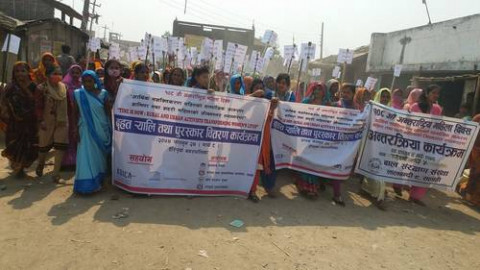 UNESCO marks International Women’s Day in five districts (पाँच जिल्लामा अन्तर्राष्ट्रिय नारी दिवस मनाउन युनेस्कोद्वारा सहयोग) 2018-07-04 On the 8 March UNESCO supported various events to mark the occasion of International Women’s Day (IWD) in five districts across the country – Sunsari in the Eastern region, Rauthat and Sarlahi in the Central region and Achham and Bajura in the Far-Western region. Around 250 people from various walks of life participated in a rally carrying signs and banners with slogans advocating for women’s rights and women empowerment in Sunsari district. In addition, a speech contest on “Role of local government on women empowerment” was held along with poem recitals, singing and dancing and the winners were awarded with cash prizes and certificates. The Women Development Officer Sushila Karki, from Sunsari District, highlighted the importance of IWD for the achievement of gender equality. Honourable Saraswati Pokharel, Deputy Spokesperson of Province No. 1, emphasized the importance of women’s rights and awareness. She stated, “It is a good opportunity for the local government to show some exemplary progress with women’s representation”. Deputy Mayor of Inaruwa municipality, Jamuna Pokharel, noted that proper education and skills were key to women’s self-employment and empowerment. Similarly, in the Far-Western region, IWD was celebrated with activities including a ward-level dohori song competition, a quiz contest, and an inter-school debate. Women from different parts of the districts came together to share experiences and learn from each other. The event gave women the opportunity to talk about issues affecting their everyday lives and share feelings through songs. They discussed important issues including menstrual hygiene, the negative consequences of early marriages, and gender-based violence. The events were organised by different stakeholders including the Office of Women and Children, Community Learning Centres, municipality representatives, and NGOs and was supported by UNESCO’s project funded by the Korea International Cooperation Agency (KOICA). पाँच जिल्लामा अन्तर्राष्ट्रिय नारी दिवस मनाउन युनेस्कोद्वारा सहयोग अन्तर्राष्ट्रिय नारी दिवसका अवसरमा आठ मार्चमा देशभर विभिन्न कार्यक्रमहरुको आयोजना गरियो । युनेस्कोको सहयोगमा पूर्वी नेपालको सुनसरी, मध्यमाञ्चलका रौतहट र सर्लाही एवं सुदुर पश्चिमका अछाम र बाजुरामा पनि यस्ता कार्यक्रमहरु सम्पन्न भएका छन् । सुनसरी जिल्लामा विभिन्न क्षेत्रबाट आएका लगभग २५० जना व्यक्तिहरु महिला अधिकार र महिला सशक्तिकरणको वकालत गर्ने नाराहरु लेखिएका चिह्न एवं व्यानरहरु सहित जुलुसमा सहभागी भएका थिए । यसका अतिरिक्त ‘महिला सशक्तिकरणमा स्थानीय सरकारको भूमिका’ विषयक वक्तृत्वकला प्रतियोगिताका साथै कविता–वाचन, गायन एवं नृत्य कार्यक्रमको अयोजना गरी विजेताहरुलाई नगद पुरस्कार एवं प्रमाणपत्र समेत प्रदान गरिएको थियो । कार्यक्रममा सुनसरी जिल्लाका महिला विकास अधिकृत सुशिला कार्कीले लैंगिक समानता प्राप्तिका लागि अन्तर्राष्ट्रिय नारी दिवसको महत्वमाथि प्रकाश पार्नुभयो । यसरी नै प्रदेश १ का उपसभामुख सम्माननीय सरस्वती पोख्रेलले महिला अधिकार र सचेतनाको महत्वमाथि जोड दिनुभयो । उहाँले भन्नुभयो, ‘स्थानीय सरकारलाई महिलाहरुको प्रतिनिधित्वका क्षेत्रमा उदाहरणीय प्रगति देखाउने अवसर छ ।’ इनरुवा नगरपालिकाका उपमेयर जमुना पोखरेलले महिलाको स्वरोजगार र सशक्तिकरणका लागि उचित शिक्षा र सिप जरुरी हुने उल्लेख गर्नुभयो । यसैगरी सुदुरपश्चिमाञ्चल क्षेत्रमा वडास्तरीय दोहोरी गायन प्रतियोगिता, हाजिरीजवाफ तथा अन्तरविद्यालय वादविवाद प्रतियोगिताको आयोजना गरी अन्तर्राष्ट्रिय नारी दिवस मनाइयो । जिल्लाका विभिन्न भागका महिलाहरु भेला भइ आआफ्ना अनुभवहरु आदानप्रदान गर्नुका साथै एकअर्काबाट सिकेका थिए । कार्यक्रमले महिलाहरुलाई गीतका माध्यमबाट उनीहरुको दैनिक जीवनमा प्रभाव पार्ने सवालहरुका बारेमा बोल्न एवं भावनाहरु अभिव्यक्त गर्ने अवसर प्रदान गरेको थियो । उनीहरुले महिनावारी हुँदा गर्नुपर्ने सरसफाइ, कम उमेरमा विवाह गर्दाका नकरात्मक असरहरु एवं लैंगिक हिंसा लगायतका महत्वपूर्ण सवालहरुमा छलफल गरेका थिए । कार्यक्रमहरु महिला तथा बालबालिका कार्यालय, सामुदायिक सिकाइ केन्द्र, नगरपालिकाका प्रतिनिधि तथा गैरसरकारी संस्थाहरु लगायतका विभिन्न सरोकारवालाहरुले आयोजना गरेका थिए । यी कार्यक्रमहरुको आयोजना गर्न कोरिया अन्तर्राष्ट्रिय सहयोग नियोग (कोइका)को आर्थिक सहायतामा सञ्चालित परियोजना अन्तर्गत युनेस्कोले सहयोग पुर्याएको हो । URL:http://www.unesco.org/new/en/kathmandu/about-this-office/single-view/news/unesco_marks_international_womens_day_in_five_districts/
 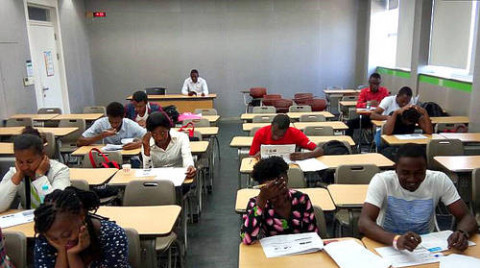 From Policy to Practice: Capacity-building Workshop on Prevention of Violent Extremism through Education (PVE-E) in West Africa and the Sahel 2018-07-03 UNESCO (Dakar, Headquarters and International Institute for Capacity Building in Africa-IICBA) and the Organisation Internationale de la Francophonie (OIF), represented by its Institut de la Francophonie pour l’éducation et la formation (IFEF), organized a follow-up capacity-building workshop on the prevention of violent extremism through education (PVE-E) in West Africa and the Sahel. This event took place in Dakar, Senegal, from 25 - 27 June 2018. In West Africa and the Sahel, violent extremism represents a growing threat to human rights and the culture of peace. In January 2017, the United Nations Security Council stressed the need to fight terrorism in the region with an explicit emphasis on the role of education in preventing violent extremism and radicalization. Quality, inclusive and relevant education will enable to shape citizens who promote justice and respect human rights, and thus build a more sustainable and just world. From 25 to 27 June 2018, UNESCO and IFEF organized a workshop aiming to strengthen the capacities of countries in West Africa and the Sahel, to design and implement relevant and effective formal, non-formal and informal PVE-E practices. Building on the progress made at meetings in Dakar in 2017 and this year in Bamako, this workshop assembled around 30 diverse education stakeholders from Burkina Faso, Côte d’Ivoire, the Gambia, Guinea-Bissau, Mali, Niger, and Senegal. Several PVE-E tools, approaches, and the recent activities were introduced by participating organizations, including OIF’s tools on the “Libres ensemble” initiative, as well as UNESCO’s Teachers’ Guide on managing classroom discussions in relation to the PVE-E and two newly published teachers’ guides on preventing anti-Semitism and facilitating media information literacy in educational settings. The workshop addressed building teacher capacities in managing personal biases and polemic discussions in the classroom, and engendering respect for student diversity and difficulties. It encompassed PVE-E beyond the classroom, covering a diverse range of topics from establishing interactive links between school and community and using media and socio-educational activities to build youth resilience, to diagnosing problems faced by young people struggling with violent extremism and developing approaches to support them. Participants were also introduced to the Change Makers Leadership Program, a PVE-E training program for teachers and students developed by the Johannesburg Holocaust and Genocide Centre (JHGC), which emphasized using case studies from the past to promote pluralism, prevent violent extremism and strengthen leadership among learners. "To prevent violent extremism, we need quality education that is relevant, inclusive and equitable. This is one of the priorities of the Ministry of National Education and the National Institute for the Development of Education in Guinea-Bissau.” Fatumata Ionton Camara, Research Fellow in Education Techniques, Guinea-Bissau. Participants expressed further needs in terms of advocacy for PVE-E amongst high-level authorities in their country, integration of PVE into education sector plans, curricula, development of pedagogical tools, training of formal and non-formal education personnel, and further involvement of communities and non-formal educational actors in the implementation of PVE-E. The organizers will ensure follow up on recommendations by continuing to develop the Learning to Live Together (LTLT) platform for exchange and experience sharing around issues pertaining to PVE and LTLT, and supporting countries in ownership and adaptation of the tools and practices. The workshop received support from the Rosa Luxemburg Foundation. URL:http://www.unesco.org/new/en/media-services/single-view/news/from_policy_to_practice_capacity_building_workshop_on_preve/
 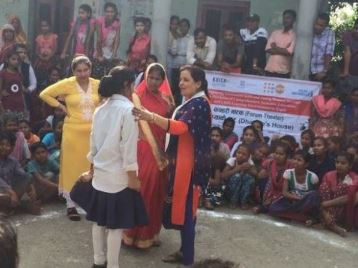 Street play to create awareness on gender-based violence seen by around 4000 people in 20 different villages (बीसवटा गाउँमा प्रदर्शित लैंगिक हिंसासम्बन्धी सचेतनामूलक सडक नाटकमा ४००० भन्दाबढी दर्शक सहभागी) 2018-06-29 Dhaniya’s House, a street play to raise awareness on gender-based violence, performed in the form of forum theatre, grabbed the attention of an audience of 4000, including over 1000 adolescent girls in Sarlahi and Rautahat districts. The play, organised under the joint programme of UNESCO-UNFPA-UN Women funded by KOICA “Empowering Adolescent Girls and Young Women through the Provision of Comprehensive Sexuality Education and a Safe Learning Environment in Nepal” was performed from 18 to 22 June 2018 in 20 villages. The audience was engaged by inviting volunteers to role plays during the performance. This interactive approach generated a meaningful discussion between actors and audience on issues related to several types of violence against women and girls. Communities with the highest school dropout rates of girls were selected for the performances. The positive engagement from the locals during the performances showed that the communities are adopting improved menstrual hygiene and sanitation practices and supporting a safe learning environment for girls. “I will send my daughter to school with proper care even while she has her period. I will ask the school authority to provide good toilet facilities in the school for girls like my daughter,” Kishan Yadav of Debahi Municipality said after watching the play. “My community is not fully aware of these issues and I may face criticism for taking a stand but I have to do what is best for my daughter’s education,” he added. The local participants said that the interactive nature of the play and the fact that it was in their native languages, significantly increased its impact. Rama, a middle-aged woman from Debahi municipality, participated as a problem-solving actor and found the role very empowering although she anticipated criticism from some members of the local community. “The play was really nice but people here still cannot speak up about the issues that were raised, they are still hesitant. I am really happy that you provided this platform so that I was able to speak out about the problems our girls face during menstruation. I know I will be scolded by the community for speaking in front of everyone as a woman, but I thought that it was necessary.” बीसवटा गाउँमा प्रदर्शित लैंगिक हिंसासम्बन्धी सचेतनामूलक सडक नाटकमा ४००० भन्दाबढी दर्शक सहभागी सर्लाही र रौतहट जिल्लामा लैंगिक हिंसाका विरुद्ध चेतना जगाउन कचहरी नाटकका रुपमा मञ्चन गरिएको सडक नाटक धनियाको घरले यी जिल्लाका १००० किशोरीहरु सहित ४००० भन्दाबढी दर्शकहरुको ध्यान आकृष्ट गरेको छ । कोइकाको आर्थिक सहयोगमा युनेस्को, युएनएफपीए र युएनवुमनद्वारा संयुक्त रुपमा सञ्चालित ‘नेपालमा विस्तृत यौनिकता शिक्षा एवं सुरक्षित सिकाइको वातावरणका माध्यमबाट किशोरी तथा युवा महिलाहरुको सशक्तिकरण’ कार्यक्रम अन्तरगत जून १८ देखि २२ सम्म २० वटा गाउमा मञ्चन गरिएको उक्त नाटकको प्रस्तुतिका क्रममा दर्शकहरुलाई समेत स्वयंसेवक पात्रका रुपमा अभिनय गर्न निम्त्याइएको थियो । यसप्रकारको अन्तरक्रियात्मक विधिका कारण महिला र बालिकामाथि हुने विभिन्न प्रकारका सवालहरुसँग सम्बन्धित विषयमा अभिनयकर्ता र दर्शककाबीच अर्थपूर्ण छलफल गर्न संभव बनाएको थियो । विद्यालय छाड्ने उच्च दर भएका समुदायका महिलाहरुलाई नाटकको प्रस्तुतिका लागि छानिएको थियो । प्रस्तुतिका क्रममा उनीहरुले देखाएको सकरात्मक संलग्नताले समुदायले रजश्वला हुँदा गर्नुपर्ने सरसफाइसम्बन्धी व्यवहारमा सुधार ल्याउने तथा बालिकाका लागि सुरक्षित सिकाइको वातावरण निर्माण गर्नमा सहयोग पुर्याउनेछन् भन्ने देखाउँछ । नाटक हेरिसकेपछि देवही नगरपालिकाका किसान यादवले भन्नुभयो, “म मेरी छोरीलाई महिनावारीको बेलामा समेत विद्यालय पठाउनेछु । मेरी छोरी लगायत सबै छात्राहरुका लागि राम्रो शौचालयको व्यवस्था गर्न विद्यालयसँग सम्बन्धित अधिकारीहरुलाई भन्नेछु ।” वहाँले अगाडि भन्नुभयो, “मेरो समुदाय यस सवालमा पूर्णरुपले सचेत छैन, यस विषयमा अडान लिँदा मैले आलोचनाको पनि सामना गर्नुपर्ला तर मेरी छोरीका लागि जे गर्दा सबैभन्दा उचित हुन्छ, मैले त्यो गर्नुपर्छ ।” अन्तरक्रियात्मक हुनुका साथै आफ्नै भाषामा पनि भएका कारण नाटकको प्रभाव अत्यन्तै बढ्न गएको स्थानीय सहभागीहरुले बताएका थिए । समस्या सुल्झाउने अभिनयकर्ताका रुपमा सहभागी देवही नगरपालिकाकै एकजना महिला रमाले आफूले खेलेको भुमिका अत्यन्तै सशक्तिकरण गर्ने खालको भएको बताउँदै यदि साँच्चै यहि भूमिका वास्तविक जीवनमा पनि निभाउने हो भने केही स्थानीयहरुले आलोचना पनि गर्न सक्लान कि भन्ने अनुमान गर्नुभयो । उहाँले भन्नु भयो, “नाटक साँच्चै नै राम्रो छ तर यहाँका मान्छेहरु यहाँ उठाइएका सवालहरुमा त्यति बोल्न सक्दैनन् । तपाइहरुले यो मञ्च उपलब्ध गराइदिनु भयो र मैले हाम्रा किशोरीहरुले महिनावारीहुँदा सामना गर्नुपरेका समस्याका बारेमा बोल्न पाउँदा साँच्चै नै खुशी लागेको छ । एक जना महिला भएर सबैका सामुन्ने बोल्दा म माथि गालीगलौज गरिनेछ भन्ने मलाइ थाहा छ ,तर पनि बोल्नु आवश्यक थियो भन्ने मैले ठाँने ।” URL:http://www.unesco.org/new/en/kathmandu/about-this-office/single-view/news/street_play_to_create_awareness_on_gender_based_violence_see/
 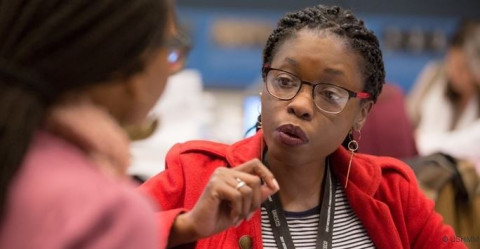 “We are trying to use teaching about the past as a platform to teach tolerance within the Namibian community.” 2018-06-29 An interview with Ndapewoshali Ashipala on education about the Holocaust and genocide in Namibia. Ndapewoshali Ashipala works for the Museum’s Association of Namibia. Together with her colleague Memory Biwa, they created a project to advance education about the Holocaust and genocide in Namibia, including the first Namibian exhibition on the 1904 genocide against the Herero and Nama that will be displayed in all 14 Namibian states. Why is it important to teach about the Holocaust in Namibia? It is important because Namibia has a similar history to the Holocaust. There was a genocide in Namibia in 1904 when Namibia was under German colonial occupation. There are many similarities with the genocide of the Jewish people, including concentration camps, racial science and the order to exterminate a group of people. There are more similarities even in the way in which the genocide was carried out. The Namibian school curriculum foresees teaching about the Holocaust, but not the genocide in Namibia. So we want Namibian learners to understand the history, especially now in the context of the reparation negotiations between the Namibian government and the German government. We want students to learn about this history, because the average Namibian does not know much about this genocide - some don’t even know that it happened at all. Since students have some understanding of the atrocities perpetrated by Nazi Germany, we want to link lessons on the genocide in Namibia to the Holocaust, helping students to better understand what happened in Namibia in 1904 and what is happening today. For us, this also means to teach about other forms of discrimination, racism and tribalism that also have been very present in Namibia, because of our colonial past, especially during the Apartheid government, a regime that emphasized ethnical barriers. We had a class system based on races and ethnicity. Even among black people, we were divided into tribes and ethnic groups in a way that considered certain groups “closer to white”. The more you were considered ”close to white”, the more privileges you got. This influenced your living situation, what job you could have and the kind of education you could receive. All of that is still, even 28 years after Namibia’s independence, very rife in our society. The [colonial] system managed to convince people, that were pretty much the same and had lived together, that they should hate each other and that some of them were better than others. This has always been an underlying issue in Namibia. Very recently, two members of the parliament were fired from their positions because of tribalist comments and there has been a little bit of violence, tribal related violence, in the South of Namibia. It is becoming a very big issue within the Namibian community as well. It is starting to erupt again. So with our exhibition, called “The Namibian Genocide – Learning from the Past”, we are trying to teach about the Holocaust and the genocide [in Namibia] to show that this is what can happen if you continue to push the narrative of “us vs. them.” What role can education play in addressing difficult and violent episodes in Namibia’s history? What could be improved in this regard in the Namibian education system? The Namibian national curriculum does not include much on the genocide in Namibia, but it covers the crimes of Nazi Germany. Up until grade 10, history is a compulsory subject, but it is very general and more factual, along the lines of “this happened on that day”. It is only in grades 11 and 12, where history is an elective, that the curriculum becomes more detailed, involves learners and demands a more critical reflection of history.In the Namibian education system, we focus very much on STEM-subjects like science, technology and mathematics. This is the model that our country has gone with to give us economic independence. Because of that, history is seen as that sort of subject that only those kids take that could not get into the STEM-subjects. History is often the last choice of many students; only very few are taking history in grade 11 and 12 and are educated about our violent past. However, these lessons are also mostly focused on our independence struggle and less on the Holocaust or the genocide in Namibia. [With our ICEH Team], we are trying to supplement the history curriculum. That is why we are working with different entities like the National Institute for Education and Development (NIED), who are responsible for developing the Namibian curriculum. We are working with them to develop our exhibition from something that is “just” visited into something that is incorporated in classrooms. Which steps are you taking with your 2017 ICEH Team to contribute to advancing education about the Holocaust and genocide in Namibia? The team before us has already developed an exhibition [on the genocide against the Herero and Nama in Namibia]. What we are doing now is to review it, because we have now received government input. Because it is such a sensitive time and subject, we have to make sure to use appropriate terminology and that the exhibition is in compliance with the government’s and our donors’ legislative requirements. We just had a workshop with the people who are developing the curriculum and chief education officers from all over the country and they reviewed the content. There were a few changes, so we are working on adjusting those and then we are going to reprint the exhibition. We have funding from the Ministry of International Relations and Cooperation, to have our exhibition travel the country, alongside the “Deadly Medicine” exhibition from the U.S. Holocaust Memorial Museum. There will be an official launch for each of Namibia’s 14 regions. We will have teachers and learners come to visit the exhibition. Every teacher who will visit the exhibition will receive a guidebook, which includes a printed version of the exhibition and additional questions for classroom discussions. The guidebook will also be made available for regional education departments and will serve to supplement the current curriculum until our teaching materials are incorporated in the official curriculum. In the end, the exhibition will probably come back to the Museum’s Association of Namibia, where we will loan it out for specific events. But first, our aim is to get it to all regions, and we have a very big country, so this is going to take us about two years. How was the joint initiative of UNESCO and the USHMM beneficial to the development of your project? The 1904 genocide is a very sensitive subject to raise in public, especially now in the context of the negotiation of the Namibian government and Germany. Due to the ongoing discussions, we needed time to create the exhibition. The support and patronage of UNESCO and the USHMM have helped to give international legitimacy to the exhibition and we are now receiving the official support of the Namibian government to display it. What do you hope to achieve with this project? Our project and exhibition are called “Learning from the past” and this is very much what we are hoping to achieve. We are trying to use teaching about the past as a platform to teach sensitivity and tolerance within the Namibian community. And not just tolerance about race but also other issues that are discussed in our communities, like gender-based violence, sexism, homophobia and any type of “–ism” or phobia. We are trying to heal a community, which is much divided on religious and traditional issues. That is why we are trying to build a community who sees itself as one, rather than divided into “us vs. them”, that sees the beauty of diversity instead of exaggerating differences. We are trying to build a multicultural community, in which everybody plays a beautiful role. In this context, talking about teaching “tolerance” is even a bit mild, it is more teaching appreciation of the other for their differences and loving their differences as opposed to seeing them as something to fear or hate. Find out about UNESCO’s work in education about the Holocaust and genocide URL:https://en.unesco.org/news/we-are-trying-use-teaching-about-past-platform-teach-tolerance-within-namibian-community