
News
Catch up on what’s happening in the world of global citizenship education.
1,668 results found
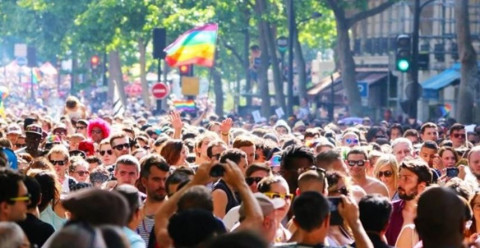 ¿Los sistemas educativos son inclusivos con respecto a las personas LGBTI? La UNESCO se asocia a una organización de jóvenes LGTB para responder a esta pregunta 2018-06-27 A global consultation on the LGBTI vision for how to make the 2030 Sustainable Development Agenda for education and health more inclusive, is being jointly launched by UNESCO and youth organization MAG Jeunes LGBT. The inputs of lesbian, gay, bisexual, transgender, intersex (LGBTI) youth will be collected through a web-based consultation conducted by MAG Jeanes LGBT and supported by a UNESCO-led social media campaign. The results of the consultation will be presented at the 2nd biannual Equal Rights Coalition (ERC) conference in August 2018 in Vancouver, Canada. The ERC is an intergovernmental coalition of 39 countries that advances the human rights of LGBTI people and promotes inclusive development in both member and non-member countries. In advance of the social media campaign, UNESCO Permanent Delegations of Canada and Chile, also co-chairs of ERC, are hosting a briefing meeting on 22 June 2018 at UNESCO Headquarters in Paris, sharing information about the ERC conference and UNESCO’s contribution to it, as well as the associated international consultation. “We know that a significant proportion of LGBT students experience homophobic and transphobic violence in school, a far higher prevalence than their non-LGBT peers. They are more likely to feel unsafe in school, miss classes, or even drop out; which negatively impacts their education, employment prospects and well-being,” said Christophe Cornu, Senior Programme Specialist and Team Leader in the Section of Health and Education at UNESCO. “Through this global consultation, we hope to learn more about these experiences, and in turn support Member States to provide safe and inclusive learning environments for all students. This is critical to effective learning, to meet human rights commitments, including the right to education and the other rights of the child, and to achieve the Sustainable Development Goals (SDGs), in particular SDG4.” The web-based consultation hosted by MAG Jeanes LGBT will run until 11 July 2018, and the associated social media campaign from 25 to 29 June 2018. Resources Out in the Open Report Web-based consultation: Arabic - Chinese- English - French - Russian - Spanish UNESCO social media: @UNESCO MAG Jeanes social media: Facebook @MAG.LGBT, Twitter @mag_jeunes_lgbt School violence and bullying Homophobic and transphobic violence in education URL:https://en.unesco.org/news/are-education-systems-lgbti-inclusive-unesco-teams-lgbt-youth-organization-find-out
 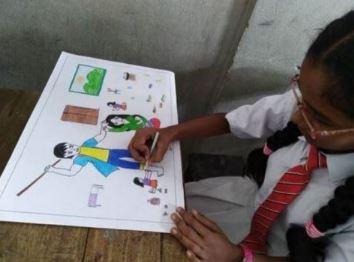 School girls express gender-based violence through art (छात्राहरुबीच लैङ्गिक हिंसा सम्बन्धी चित्रकला प्रतियोगिता) 2018-06-26 When school girls from Sunsari district were given the opportunity to express their feelings on gender-based violence through art, they painted a bleak picture of modern Nepali society. On June 16, 42 adolescent girls, who came from 16 different schools and included representatives from grades five through 10, participated in an art competition organised by the Nawayug Community Learning Centre. The objective of the competition was to raise awareness among school students and community members on gender-based violence through art, and the initiative was supported under the joint programme of UNESCO-UNFPA-UN Women funded by KOICA “Empowering Adolescent Girls and Young Women through the Provision of Comprehensive Sexuality Education and a Safe Learning Environment in Nepal”. Snehalata Paudel, Rashi Mehata, and Srijana Mehta were declared the winners of the three different categories. The students shared their motivation and inspiration for expressing their feelings on a range of harmful practices related to gender-based violence including dowries, physical domestic violence, and selective-sex abortions. Snehalata, a grade nine winner from Bhagawati Secondary School shared her personal struggle with gender-based violence. “My own experience inspired me to speak up against gender-based violence. I lost my parents when I was a small child and I had to quit school and start working where I faced violence as a young girl. I was then taken in by my uncle and aunt and I rejoined school again last year. I believe that girls and women should be strong and united and raise their voices against violence.” Rashi, another winner of the grade five to eight category, explained that her childhood interest in drawing has motivated her to use her talent to raise awareness on social issues such as gender-based violence. Her winning piece of art showed how domestic violence affects children psychologically. “I have seen this kind of violence in my neighborhood,” she added. Sadly gender-based violence and violence against women is not limited to one specific community, but is common across the whole country and data recorded by the Nepal Police shows an increasing number of incidents of violence against women and girls. Over the last five years, over 2000 cases of serious violence against girls and women were recorded by the police every year, with most of the cases involving school-age girls. The teachers and civil society members in Sunsari district said that such violence often hampers the education and growth of adolescent girls, highlighting the importance of awareness programmes such as this art competition to boost the self-confidence of the students. “Such events help a great deal to start a dialogue at the school level as well as at the community level, but they need to be conducted more frequently. It is very important for the empowerment of women” stated Khemraj Pokharel, Chairperson of Nawayug Community Learning Centre. छात्राहरुबीच लैङ्गिक हिंसा सम्बन्धी चित्रकला प्रतियोगिता सुनसरी जिल्लाका स्कूलका छात्राहरुलाई जब कलाका माध्यमबाट लैङ्गिक हिंसा सम्बन्धी आफ्नो अनुभूति व्यक्त गर्नका लागि अवसर प्रदान गरियो, उनीहरुले आधुनिक नेपाली समाजको एउटा निराशलाग्दो चित्र कोरे । नवयुग सामुदायिक सिकाइ केन्द्रद्वारा जून १६ मा आयोजित चित्रकला प्रतियोगितामा सुनसरी जिल्लाका १६ वटा विद्यालमा ५ देखि १० कक्षासम्म अध्ययनरत ४२ जना किशोरीहरुले भाग लिएका थिए । कलाका माध्यमबाट लैङ्गिक हिंसाकाबारेमा विद्यार्थी एवं समुदायका सदस्यहरुका माझ चेतना जगाउने उद्देश्यले कोइकाको आर्थिक सहयोगमा युनेस्को, युएनएफपीए र युएनवुमनद्वारा संयुक्त रुपमा सञ्चालित ‘नेपालमा विस्तृत यौनिकता शिक्षा एवं सुरक्षित सिकाइको वातावरणका माध्यमबाट किशोरी तथा युवा महिलाहरुको सशक्तिकरण’ कार्यक्रम अन्तर्गत उक्त चित्रकला प्रतियोगिताको आयोजना गरिएको हो । प्रतियोगितामा सहभागीहरुमध्येबाट स्नेहलता पौडेल, राशी मेहता र सृजना मेहता तीनवटा छुट्टाछुट्टै समूहमा विजयी घोषित भएका थिए । विद्यार्थीहरुले दाईंजो प्रथा, शारीरिक घरेलु हिंसा एवं भ्रूणपहिचानका आधारमा गरिने गर्भपतन लगायत थुप्रै हानिकारक अभ्यासहरुका बारेमा आफ्ना अनुभूतिहरु अभिव्यक्त गर्न कसरी उत्पे्ररित र प्रोत्साहित भए भन्नेबारेमा आफ्ना अनुभवहरु साटेका थिए । पुरस्कार विजेता मध्येकी एक भगवती माध्यामिक विद्यालयका नौ कक्षामा अध्ययरत स्नेहलताले लैङ्गिक हिंसाका विरुद्ध आफूले गरिरहेको व्यक्तिगत संघर्षका बारेमा बताएकी थिइन् । ‘मेरो आफ्नै अनुभवले मलाइ लैङ्गिक हिंसाका विरुद्ध बोल्न उत्प्रेरित गरेको हो । म सानै हुँदा मैले मेरा अभिभावकहरु गुमाएँ, त्यसपछि मैले विद्यालय छाड्नु पर्यो र काम गर्न जानु पर्ने भयो, जहाँ एउटी बालिकाका रुपमा मैले हिंसाको सामना गर्नुपथ्र्यो । मलाइ मेरा काकाकाकीले फेरि फिर्ता ल्याउनु भयो र गतवर्ष देखि फेरि विद्यालय जान थालेँ । मलाइ लाग्छ बालिका र महिलाहरु बलियो र एकताबद्ध हुनुपर्छ र हिंसाका विरुद्ध आफ्नो आवाज बुलन्द गर्नुपर्छ ।’ त्यसरी नै कक्षा पाँच देखि नौसम्मको समूहबाट विजयी अर्का विजेता राशीले आफूले बाल्यकालदेखि नै चित्रकलामा रुची राख्ने गरेको र सोही प्रतिभाले लैङ्गिक हिंसा जस्ता सामाजिक सवालहरुका बारेमा चेतना फैलाउन अभिप्रेरित गरेको बताइन् । पुरस्कृत चित्रकलामा उनले घरेलु हिंसाले कसरी वालवालिकाहरुलाई मानसिकरुपमा असर पार्दछ भनेर देखाएकी थिइन् । उनले भनिन्, ‘यसप्रकारको हिंसा मैले मेरै छरछिमेकमा देखेकी छु ।’ लैङ्गिक हिंसा एवं महिला विरुद्धको हिंसा कुनै एक खास समुदायमा मात्रै सिमित नभै समग्र देशै भरि फैलिएको दुःखद अवस्था छ । नेपाल प्रहरीको तथ्यांकले महिला र बालिकामाथि हुने हिंसाका घटनाहरुको संख्यामा बृद्धि भैरहेको देखाएका छन् । गएका पाँचवर्षमा, हरेक वर्ष बालिका र महिलामाथि हुने गरेका २००० भन्दा बढि गम्भीर प्रकृतिका हिंसाका घटनाहरु प्रहरीले दर्ता गरेको छ जसमा अधिकांश घटनाहरुमा विद्यालय जाने उमेर समूहका बालिकाहरु पर्ने गरेका छन् । सुनसरी जिल्लाका शिक्षक एवं नागरिक समाजका सदस्यहरुले यस्तो हिंसाबाट किशोरी छात्राहरुको शिक्षा र वृद्धिविकासमा असर पार्ने भन्दै विद्यार्थीहरुको आत्मविश्वास बढाउन चित्रकला प्रतियोगिता जस्ता चेतना जगाउने कार्यक्रमहरु महत्वपूर्ण हुने विचार राखेका थिए । नवयुव सामुदायिक सिकाइ केन्द्रका अध्यक्ष खेमराज पोखरेलले ‘यस्ता कार्यक्रमहरुले विद्यालयका साथसाथै समुदाय स्तरमा संवाद गर्नका लागि प्रशस्तमात्रामा सहयोग पुर्याउन सक्छन्, तर तिनीहरुलाई बारम्बार आयोजना गरिरहनु पर्दछ । महिलाहरुको सशक्तिकरणका लागि यो धेरै नै महत्वपूर्ण छ’ भन्नुभयो । URL:http://www.unesco.org/new/en/kathmandu/about-this-office/single-view/news/school_girls_express_gender_based_violence_through_art/
 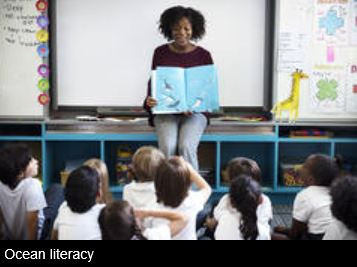 Schools in over 30 countries to trial ocean literacy manual 2018-06-21 Schools in thirty-six countries* around the world will take part in a pilot project to test the Intergovernmental Oceanographic Commission’s (IOC) latest flagship publication, Ocean Literacy for All – A Toolkit, through the UNESCO Associated Schools Network (ASPnet). Ocean literacy is defined as the understanding of our influence on the ocean, and the ocean’s influence on us – including as a major regulator of the Earth’s climate. As such, ocean literacy is an essential tool for all citizens, whether we live along the coastline, up on the mountains or in a landlocked country. As top priorities for ASPnet, Education for Sustainable Development (ESD) and climate change contribute to reorient education toward building more sustainable communities. Ocean Literacy for All – A Toolkit is a two-volume publication: Volume 1 covers the history and definition of ocean literacy and its seven principles, while Volume 2 contains fourteen practical lesson plans. These lesson plans are linked to the ocean literacy principles, as well as Sustainable Development Goal (SDG) 14 targets, but also relate to all other SDGs, highlighting the cross-cutting nature of ocean knowledge. The lesson plans give out tips on how to adapt the activities to student groups of different ages (from 6-18 years), as well as to non-formal contexts (outside of the school). The Spanish version of the toolkit was recently published, with the release of the French version expected shortly. Member States wishing to test the toolkit through ASPnet are invited to select a maximum of ten schools in their country, ideally from different levels and branches: primary, lower and upper secondary, technical and vocational schools. In each school, at least one male and one female teacher should participate in the testing, scheduled from September 2018 to March 2019. In order to facilitate the process, the IOC and ASPnet will: organize in September 2018 three webinars for the heads of schools and teachers involved, in English, Spanish, and French; distribute a teacher’s guide in the English, French and Spanish; provide an online questionnaire to be completed by the teachers after the testing with their students. The IOC will collect and analyze the feedback and disseminate the results to all participants and ASPnet by June/July 2019. Based on these comments, the IOC will revise and further develop the teaching materials. Ocean Literacy for All – A Toolkit was launched during the International Ocean Literacy Conference (4-5 December 2017, Venice, Italy), where over 100 participants from 30 countries contributed to design a roadmap on ocean literacy for the next three years. The publication was produced jointly by UNESCO’s Regional Bureau for Science and Culture in Europe (Venice, Italy) and IOC. It builds on the “Ocean Literacy for All” initiative, an IOC voluntary commitment to the UN Ocean Conference (New York, USA, June 2017), and the Call for Action issued at the end of the Conference which calls on all stakeholders to “support plans to foster ocean-related education […] to promote ocean literacy”. ASPnet schools serve as international laboratories for developing, experimenting and validating innovative educational material developed by UNESCO or its partner organizations. For more information, please contact: Francesca Santoro (f.santoro@unesco.org) *** * The countries are: Argentina, Belarus, Belgium, Brazil, China, Costa Rica, Côte d'Ivoire, Dominican Republic, France, Gambia (The), Ghana, Greece, Guyana, Indonesia, Japan, Kiribati Republic, Lao (People's Democratic Republic), Latvia, Lebanon, Lithuania, Madagascar, Mauritius, Micronesia (Federate States of), Mozambique, Namibia, Nigeria, Peru, Portugal, Republic of Korea, Rwanda, Saint Lucia, Spain, Thailand, Togo, Uganda, United Arab Emirates URL:http://www.unesco.org/new/en/media-services/single-view/news/schools_in_over_30_countries_to_trial_ocean_literacy_manual/
 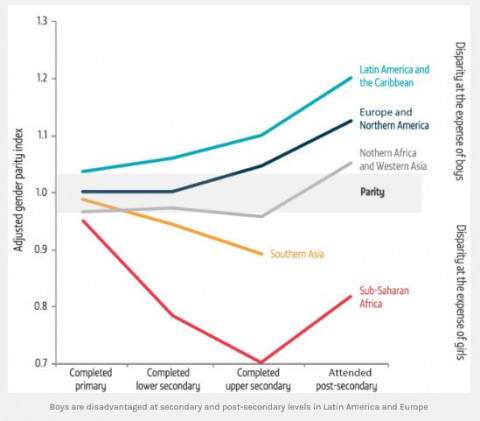 Did you know? There are just as many boys out of school as girls 2018-06-21 This Sunday is International Father’s Day. What better time than this to shine the education spotlight on boys. Because, I’ll bet many of you do not know that there are just as many boys out of school as girls. While girls are less likely to enter school in the first place in many countries, a GEM Report paper, Don’t forget the boys, shows that boys are at a higher risk globally of not progressing and completing their education. They also perform less well in reading assessments worldwide. We won’t achieve gender equality in education if we ignore one half of the story. While many of those used to hearing campaigners for girls’ education might be doubtful of the truth in this, the stats hold up. 132 million children out of school are girls, but 132 million are also boys. In 2016, 6% of countries had fewer boys than girls enrolling in primary, 17% in lower secondary and 45% in upper secondary. That year, there were 5 million more girls than boys out of school at primary level, but 2 million more boys than girls out of school at the lower-secondary level, and 4 million more men than women out-of-school at the upper-secondary level. These figures vary per region. Girls are at a distinct disadvantage from primary through to upper secondary school in sub-Saharan Africa, for example. Meanwhile boys are falling far behind in each of the education levels in Latin America and the Caribbean. In this region, for instance, for every 100 girls, 96 boys completed primary, 94 completed lower secondary, 91 completed upper secondary and only 83 were attending some form of post-secondary education. In some countries, there have been some surprising changes. In India, Senegal, the Gambia, and Nepal, for example, where there were far fewer girls enrolled in secondary school than boys in 2000, the situation by 2016 had reversed leaving boys further behind. In some countries, such as Bangladesh, analysis shows that the reversal of the gender gap is, in part, because of the campaigns put in place to encourage girls to go to school. As our new paper shows, boys often drop out of school because of the necessity to work due to poverty. Even, in Italy, only 83 poor young men completed upper secondary school and only 66 poor men attended post-secondary education for every 100 poor young women. Socio-cultural perceptions of the role of boys among students, teachers and parents can also result in low expectations, disengagement from school and dropout. Boys are often more likely to experience corporal punishment than girls, for instance, which can lead them to drop out of school. The GEM Report shows that ensuring both girls and boys complete at least secondary school is key for achieving gender equality across society. A survey in Brazil, Chile, Croatia, India and Rwanda showed that men who had not completed secondary education were more likely to express discriminatory views on gender. The survey showed that less educated men were also more likely to be physically or sexually violent in Bangladesh, Papua New Guinea, Indonesia and Cambodia. Paternal education is linked with stronger immunization uptake for children, even after taking maternal education into account. In short, we believe undoubtedly in the importance of improving girls’ education opportunities so that we can achieve gender equality in education. But pitting boys and girls against each other runs counter to an inclusive approach to education. RECOMMENDATIONS Be wary of streaming classes according to ability, which can disadvantage boys. Avoid disciplinary practices such as banning class entry, suspension or expulsion, which have a negative impact on boys’ motivation to complete their schooling. Reduce cost of schooling for poor households with conditional cash transfers, as has helped in Jamaica and Nicaragua. Prioritise and promote boys’ reading and literacy skills with teaching and learning strategies that focus on active learning, and promote individual mentoring. URL:https://gemreportunesco.wordpress.com/2018/06/15/did-you-know-there-are-just-as-many-boys-out-of-school-as-girls/
 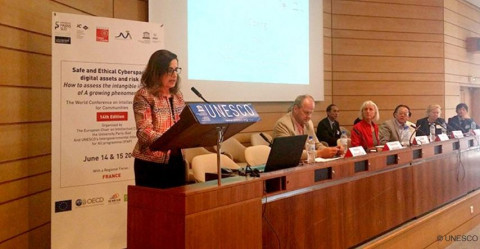 Safe and ethical cyberspace in the focus of a world conference co-organized by IFAP 2018-06-20 The World Conference on “Intellectual Capital for Communities”, organized by the European Chair on Intellectual Capital of the University Paris-Sud and UNESCO’s intergovernmental Information for All Programme (IFAP), took place at UNESCO Headquarters in Paris on 14 and 15 June 2018 under the theme: “Safe and Ethical Cyberspace, digital assets and risk: How to assess the intangible impacts of a growing phenomenon?”. About 100 participants followed the sessions. The growing importance of cyber-security in knowledge-based economies has generated concerns about the risks of data integrity, data confidentiality and data accessibility. Moreover, cyber-security is also related to the well-functioning of the infrastructure, which is integrated to the Internet. The 14th Edition of the World Intellectual Capital conference focused on the junction between cybersecurity, digital assess and risks. In the opening session on “Digital transformation, ethical cyberspace and the policy agenda”, moderated by Boyan Radoykov, from UNESCO’s Knowledge Societies Division, the IFAP Chair and Deputy Permanent Delegate of Grenada Ms Haddad introduced the priorities and projects of the Information for All Programme. “Following its five year Strategic Plan outlined till 2021, IFAP will address emerging challenges, which are inherent to technological development such as the Internet of things, algorithmic decision-making and Artificial Intelligence (AI), including the risks associated with increased surveillance, profiling and data privacy, with the uncertain impact of huge data and continued digitalization of communication, employment, equality and empowerment,” said Ms Haddad. According to Prof. Ahmed Bounfour, Holder of the European Chair on Intangibles, the economic loss of a cyber-security is difficult to measure when it is mainly related to the intangibles. A recent joint research project (Hermeneut) on cyber-security led by the University of Paris-Sud within the European Chair on Intangibles, attempts to quantify the tangible and intangible losses generated by cyber-attacks. “At the macro level, scenario-specific parameters suggest the presence of cascading effects of cyber-attacks resulting from sectors dysfunction. The most critical sectors affected by cyber-attacks are the ICT sector itself, the motion picture, video and television programme production and the legal and accounting activities sector,” said Prof. Bounfour. Guillaume Poupard, Director General of ANSSI, the French National Agency on protection of information systems, informed that cybercrime assessment is below of reality as victims, including SMEs, are “ashamed and try to forget”. Steeling digital material is growing by mafia groups and states and reaches in public domain, administration and private sector historically high levels. The moderator, Mr Radoykov, recalled UNESCO’s first-ever conference on information ethics organized in Monaco, in 1995. The risks were seen in the visionary approach, and so was the massive need for awareness raising of Member States about the challenges at stake. He also mentioned the IFAP Code of Ethics for the Knowledge Societies that was an important contribution to the global efforts aiming at addressing the info-ethical dimensions of the emerging knowledge societies and their social implications. “We need to further promote the basic values and principles that are to be convincingly enshrined in the knowledge societies such as peace and democracy, free flow of information in the public domain, tolerance, cultural and linguistic diversity, solidarity, etc.” He ended by emphasizing that “It is our role, it is our task and it is our utmost responsibility to ensure the progress of civilization in cyberspace”. Mr Ferrara, DG Connect of the European Union, informed via videoconference on “Building Cybersecurity for EU Resilience, Deterrence and Defence”. The proposal of DG connect is a voluntary European cybersecurity certification framework with Recommendation for a coordinated response to large-scale cybersecurity attacks. In his keynote address on cyber risks, Mr Indrajit Banerjee, Director of Knowledge Society Division of UNESCO’s Communication and Information Sector underlined that UNESCO acknowledges the potential of the Internet for fostering sustainable human development and building more democratic societies, and for enhancing the free flow of information and ideas throughout the world. UNESCO has actively contributed to the international debates on Internet governance in particular through its participation in the Internet Governance Forum (IGF). The mandate of the IGF is to discuss the development of open, transparent and inclusive Internet policy. IGF 2018 will be hosted in November by UNESCO. URL:https://en.unesco.org/news/safe-and-ethical-cyberspace-was-focus-world-conference-co-organized-ifap-last-week
 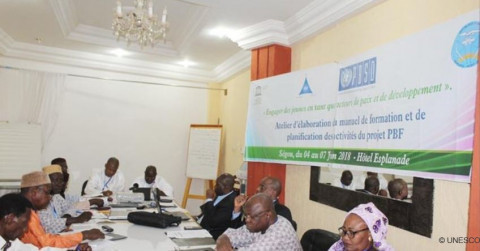 Peacebuilding Programs in Mali: the planning of activities has been developed in a participatory way 2018-06-18 The UNESCO Office in Bamako organized, from 4 to 7 June 2018 in Ségou, a workshop on the development of the Training and Activity Planning Manual of the Peacebuilding Fund (PBF) Program, called "Young Actors for Peace and National Reconciliation". The program aims to actively involve young people in the implementation process of the Agreement for Peace and National Reconciliation in Mali. The opening ceremony was chaired over by Mr. Mohamed Elmehdi Ag Moulou, in charge of mission at the Ministry of National Reconciliation and Social Cohesion, with him, Pierre Saye, representative of the UNESCO Head of Office in Bamako, and some twenty participants from the Ministries of Youth and Citizen Construction; National Reconciliation and Social Cohesion; National Education; the Promotion of Women, Children and Families and Non-Governmental Organizations (NGOs), as well as resource persons. In his speech, Mr Ag Moulou thanked UNESCO for its support to the implementation of the peace and national reconciliation agreement. He recalled that the workshop was held in the logical continuation of the efforts of the Government and its partners in the search for peace and stability in Mali for the well-being of the people. Mr. Saye recalled that young people are at the heart of the 2030 agenda with its sustainable development goals and that UNESCO is acting on all fronts to support them as a key actor at the local level, national and global levels. According to Mr. Saye, despite young people who are vulnerable to radicalization and violent extremism, humanitarian crises also affect women and girls who are at risk of sexual exploitation and abuse. "Aware that no society will prosper and no peace agreement will last unless women and girls are empowered to take action on peacebuilding and reconstruction, the PBF places this imperative at the center of all the efforts that the Government, the entire United Nations system and all peace actors have made to address fragilities, conflicts and violence, "he stressed. During four days of work, the exchanges, which took place in a participatory and interactive atmosphere, led to the elaboration of a draft training manual for trainers of the project "Young Actors for Peace and National Reconciliation" with modules on conflict management, citizenship, intercultural dialogue, democracy, gender and GBV( Violence Based on Gender) and cross-border trafficking. During the work, the participants also identified and validated, with the implementing partners, the activities as well as the implementation schedule and defined the roles and responsibilities of the parties involved in the implementation of the project. Press briefing A press briefing was held at the end of the workshop. The occasion was used to further inform the media in Ségou about the activities planned under the PBF program, but also about UNESCO's role in the implementation of the peace agreement and national reconciliation. Mr. Saye said that the role of the media is of paramount importance, in an approach of synergy of action essential in the context of the upcoming elections. "The involvement of everyone, especially local communities, communities and the State, is the essential credo for peace in Mali," he insisted. Funded to the tune of 1.4 billion FCFA by the Peacebuilding Fund of the Stabilization and Recovery Section of MINUSMA, this program aims to strengthen the commitment of young people and women as peace actors in order to strengthen social cohesion, community dialogue, living together and developing the potential of young people. The project, which will last 18 months, will be implemented in 25 municipalities in the Ségou and Mopti regions, benefiting 3,400 direct beneficiaries, including 2,500 young women and men, and 900 women. Link:https://www.flickr.com/photos/155712355@N08/sets/72157696016296151URL:https://en.unesco.org/news/peacebuilding-programs-mali-planning-activities-has-been-developed-participatory-way
  Participate in the citizen awareness survey on disaster preparedness 2018-06-14 Earthquakes, floods, wildfires and other natural hazards can have disastrous effects, causing massive losses and damages all over the world. Scientists and practitioners, national authorities at all levels, non-governmental organizations and associations, UN and international organizations are working on activities and programmes aiming to prevent disasters. However, the impact of these efforts is rather limited, if the local population is not aware of their area's environmental risks. To build a more resilient society, citizens should be part of the disaster risk management systems at local and national levels. In line with the actions on disaster risk reduction, UNESCO strengthens the resilience of communities to withstand natural hazards and climate change impacts. UNESCO encourages the development of technological systems and devices - such as I-REACT (Improving Resilience to Emergencies through Advanced Cyber Technologies), the VISUS school safety assessment method and the educational TANAH application, and assists governments and communities in coping with natural hazards. UNESCO along with the I-REACT project partners is launching this survey to assess the readiness of citizens around the world to cope with natural hazards. Should you live in a region exposed to earthquake, floods, wildfires or other natural hazards, please take a few minutes to fill in this survey, available in English, French, Spanish and Chinese. URL:https://en.unesco.org/news/participate-citizen-awareness-survey-disaster-preparedness
 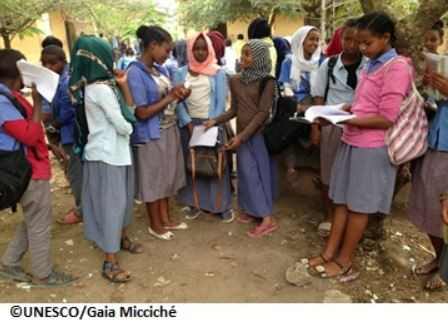 Advancing Gender Responsive Education in Ethiopia 2018-06-14 Education experts, curriculum development experts, deans, teacher educators, and school teachers have been trained to address gender inequalities in education in Ethiopia. Girls face major issues in the Ethiopian education system due to their family, social and cultural backgrounds. Female learners’ stay, completion and learning achievements drop visibly from upper primary grades up to secondary levels and worsen at preparatory, technical and vocational education and training, and tertiary levels. Only 30 per cent of female learners join universities, of which only one fourth actually manage to complete their studies (MoE, 2014). This issue calls for focused and participatory interventions, and equitable and targeted educational approaches. Interventions and approaches should include increasing awareness on gender disparities in education, revising education policies and strategies, as well as ensuring improvements in curriculum, teaching and learning, and teacher training. Under the UNESCO-HNA Partnership for Girls' and Women's Education on "improving quality and relevance of education for adolescent girls in Africa", UNESCO-IICBA provides technical backstopping in gender responsive pedagogy and teacher training. UNESCO-IICBA recently developed a comprehensive Gender Responsive Education (GRE) toolkit with the aim to equip education professionals with adequate knowledge and skills to enable them to institute GRE in schools, colleges of teacher education and universities. The toolkit contributes to the enhancement of institutional capacities to develop gender responsive curricula, evaluate teaching and learning materials, create gender responsive classrooms and interactions, and eliminate stereotypes in teaching and learning practices. A training workshop on the utilization of the GRE toolkit was organized by UNESCO-IICBA in collaboration with the UNESCO Addis Ababa Liaison Office in Adama, Ethiopia on 14-18 May 2018. The training targeted curriculum writers, teacher education experts, school teachers, teacher educators and deans of teacher education institutions (TEIs). The training focused on conceptual and practical issues of gender in education policies and programmes, explaining theoretical and practical aspects of gender mainstreaming and orienting on the use of the toolkit in day-to-day professional practices. One of the participants, Ms. Sergework Sisay, Guidance and Counselling Officer at the College of Education and Behavioural Studies of Kotebe Metropolitan University, commented, “before taking this training I was viewing the issue only from my theoretical knowledge of the matter; linking the concepts with practical experience the training provided me with new insights and it increased my level of sensitivity on the issue. Now, gender is going to be a concrete part of my professional life.” As a result of the training, participants are now equipped to advance gender mainstreaming principles and practices in policies, standards, and teaching and learning, as well as in the management of schools, TEIs and universities. Following the agreed action plan, participants will create a learning community, where they will transfer their knowledge and skills in planning, managing and evaluating the implementation of educational programmes from the perspective of gender responsiveness. Ultimately, they will enhance accountability in the Ethiopian education system to ensure an adequate provision of GRE. UNESCO-IICBA will continue to promote gender-responsive learning environments for girls and women in Africa through institutional capacity development, networking and advocacy. The UNESCO-HNA Partnership for Girls’ and Women’s Education is a five-year partnership formed in 2014 to accelerate gender equality in education in seven countries in Africa and Asia. Under the Partnership, the project on "Enhancing the quality and relevance of education for adolescent girls" focuses in particular on gender-responsive teacher training and professional development. URL:http://www.iicba.unesco.org/node/306
 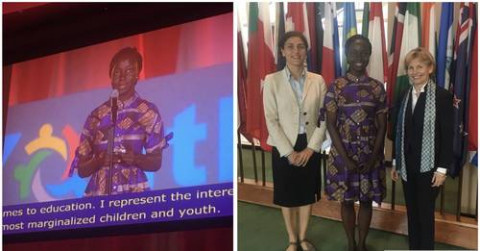 Young people are the active agents of change in the world 2018-06-14 In an effort to bring the United Nations closer to young people, the Youth Dialogue welcomed young voices through interactive panel discussions and open mic where youth representatives of diverse backgrounds shared their ideas, needs and concerns on education, employment, and the prevention of radicalization and extremism. Participants agreed that today’s young people are the SDG generation as the world cannot achieve the 2030 Agenda without engaging them in the decision making and implementation processes in a structural, meaningful and inclusive manner. More attention should be given in particular to young women and girls, children and young people on the move, young people with disabilities, young people affected by conflicts, among others. Quality and inclusive education for all is key to fully realize everybody’s potential, to become active global citizens, and to prevent radicalization and violent extremism. It is important to adapt education and skills training to the local context, with a stronger focus on the blue and green economic development. Besides skills for the future job market, it is equally important to foster the soft skills of young people, including empathy, social values, and citizenship skills, which could work hand in hand with academic education. In her video message to the participants, Ms. Audrey Azoulay, Director-General of UNESCO, referred to the youth as “the present and the future” and reiterated UNESCO’s mandate. She confirmed that “education is the bedrock and one of the most transformational forces for eradicating poverty, mitigating climate change, and coping with the profound shifts driven by accelerating globalization and the fourth Industrial Revolution”. She emphasized that education is not only about creating “workers of the future”, but also about creating “global citizens of the future”, who “respect cultural diversity, care for the planet, and defend the development of human values”. She concluded with UNESCO’s commitment to “working with young people to create better education and employment opportunities and to build harmonious resilient societies”. Ms. Victoria Ibiwoye addressed the audience as the youth representative of the SDG-Education 2030 Steering Committee, a global coordination platform hosted by UNESCO that monitors the progress towards SDG4 with young people as implementing partners. Highlighting education’s power as “a great equalizer and a solution to lasting peace”, she called for putting the right to education at the centre of decision making processes. Facing the new and changing job market, she said, it is crucial for the education to equip young people with soft skills, including critical thinking, complex problem solving, media literacy, peacebuilding and conflict resolution, as embedded in the Target 4.7 of SDG 4. Links: Full video of the Youth Dialogue: Part 1, Part 2UN articles:World needs generation of self-empowered ‘superheroes’, UN youth forum toldTonga’s flamboyant Olympic flag-bearer brings inspiring message of self-belief to youth at UN Headquarters URL:http://www.unesco.org/new/en/unesco-liaison-office-in-new-york/about-this-office/single-view/news/young_people_are_the_active_agents_of_change_in_the_world/
  South Sudan undertakes a national review of its culture policy to promote peace-building and sustainable development 2018-06-13 UNESCO supported the Ministry of Culture, Youth and Sports to organize a national review of their Culture Policy on 7 June 2018 with the aim of promoting the diversity of cultural expressions through policies and measures to foster creativity, intercultural dialogue and social cohesion for peaceful co-existence among the diverse ethnic communities of South Sudan. On 7 June 2018, UNESCO and the Ministry of Culture, Youth and Sports convened key national institutions for a one-day workshop at the UNESCO Office in Juba to shape national instruments and measures to provide guidance and promote opportunities for all South Sudanese to experience culture, participate and develop their creative abilities to promote quality and artistic renewal. The workshop was led by UNESCO expert Mr. Stephen Chifunyise and engaged participants in discussion on how to develop a national culture policy to protect and promote the diverse cultural and creative industries in South Sudan as well as to foster intercultural exchange and international cooperation. The workshop was followed by a two-day training of local stakeholders from 8 to 9 June on how to develop project proposals and apply for funding from the UNESCO International Fund for Cultural Diversity (IFCD) under the 2005 Convention for the Protection and Promotion of the Diversity of Cultural Expressions, which was ratified by South Sudan in 2016. Following the launch of UNESCO’s 2018 Global Report: Re-Shaping Cultural Policies, UNESCO is using the lessons learned and recommendations of the report to support the efforts of the national authorities to review their culture policy and strengthen their capacities to effectively implement the UNESCO 2005 Convention. The review and capacity- building workshop brought together national authorities from the Ministry of Culture, Youth and Sports, Transition National Legislative Assembly, national focal points of UNESCO Conventions, NGOs, foundations, practitioners of creative industries, artists, young film-makers and culture activists. The workshops were funded and organized by the UNESCO Office in Juba in close collaboration with the Ministry of Information, Culture, Youth and Sports in South Sudan. The revision of South Sudan’s culture policy is focusing on including the guiding principles of the three UNESCO conventions ratified by the Republic of South Sudan in 2016 related to World Heritage, Intangible Cultural Heritage and Cultural Diversity. “Finalizing the national culture policy will be a step forward in supporting systems of governance for culture, the creation, production, distribution, and access to a diversity of cultural goods and services,” said Mr. Chifunyise. “South Sudan’s culture policy can also help to promote the mobility of artists and cultural professionals in the cultural and creative industries,” he added. Incorporating culture in the development frameworks of South Sudan will help the country to achieve the 2030 Sustainable Development Goals and ensure human rights and fundamental freedom of expression, information and communication, promote gender equality to leverage women’s contributions towards creative economy. “UNESCO is confident that the participatory process of culture policy review provides an opportunity for South Sudanese to have a say on what policies and measures they want to support the richness of the diverse cultural expressions of the people of South Sudan,” said Mr. Sardar Umar Alam, Head of the UNESCO Office in Juba. Additional InformationUNESCO Creativity page Contacts:Mr. Becu Thomas,Culture Programme Officer, UNESCO-JubaTel: +211 920 001 084E-mail: t.morita@unesco.orgOr please visit UNESCO website: http://www.unesco.org/new/en/juba/home/ URL:http://www.unesco.org/new/en/nairobi/about-this-office/single-view/news/south_sudan_undertakes_a_national_review_of_its_culture_poli/