
News
Catch up on what’s happening in the world of global citizenship education.
1,668 results found
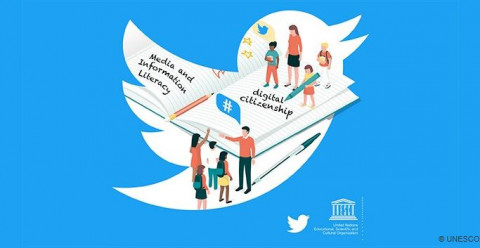 UNESCO partners with Twitter on Global Media and Information Literacy Week 2018 2018-10-26 Twitter has joined UNESCO on Global Media and Information Literacy (MIL) Week 2018, to enhance the global reach and the impact of this flagship initiative led by UNESCO. The two organizations hope that combining their global reach, more impetus can be given to promoting more media and information literate citizenry in online spaces. According to Ronan Costello, Public Policy Manager of Twitter, “by joining forces with UNESCO we can together amplify healthier messages and conversations on Twitter and other social media platforms.” He was speaking at the opening plenary session of the Global MIL Week 2018 Feature Conference in Lithuania. The annual Global MIL Week is a major occasion for stakeholders around the world to review and celebrate the progress achieved towards MIL for all. This year’s edition is celebrated from 24 to 31 October 2018. UNESCO hopes to extend the cooperation with other social media platforms and technological intermediaries in order to promote MIL. The endeavour comes at a time when countries around the world have increased their interests in and demand for MIL. Director for Freedom of Expression and Media Development, Guy Berger, welcomed the partnership with Twitter. “Other Internet companies should consider also stepping up, because this is an issue in which the whole industry, as part of society, has a stake,” he said. “When a company’s business is to provide a communications service, that enterprise should also be sure to empower people to use that service – especially by boosting critical Media and Information Literacy skills,” he said. Karen White, the Twitter Director of Public Policy for Europe, said: “Twitter's partnership with UNESCO for Global Media & Information Literacy Week is a reflection of a common challenge being met with international cooperation. “Our need for media and information literacy skills is more and more acute as we consume content from an increasingly wide range of sources. Through this collaboration between public and private organisations, we complement each other's capacity to address the challenge. Our message for the week is simple: #ThinkBeforeSharing,” said. As part of the co-operation this year, two Twitter emojis specially designed for Global MIL Week 2018 were launched on the 23 October. One is connected to the official hashtag #GlobalMILWeek. As well as the thematic campaign #ThinkBeforeClicking and #ThinkBeforeSharing. The other emoji illustrates the #MILCities theme and way forward for MIL expansions in cities and communities around the world. MIL Cities aims to promote creative MIL learning in cities. The three hashtags for Global MIL Week will be available in 11 languages. The localized hashtags are listed below: French: #SemaineMondialeEMI, #PenseAvantDePartager, #PenseAvantdeCliquer Spanish: #SemanaGlobalAMI, #PiensaAntesDeCompartir, #PiensaAntesDeDarClick Chinese (Simplified): #全球媒介和信息素养周, #先想再分享, #先想再点击 Chinese (Traditional): #全球媒介和信息素養週, #先想再分享, #先想再點擊 Arabic: #فكر_قبل_المشاركة, #فكر_قبل_الضغط Portuguese: #SemanaDeEducaçãoEmMídia, #PenseAntesDeCompartilhar, #PenseAntesDeClicar Hindi: #सोचकेशेयरकरो, #SochKeShareKaro Japanese: #世界メディア情報リテラシーウィーク, #シェアする前に考えよう, #クリックする前に考えよう Korean: #미디어리터러시 German: #ErstDenkenDannTeilen, #ErstDenkenDannTeilen, #ErstDenkenDannKlicken Bahasa Indonesian: #MingguLiterasiMedia, #PikirSebelumSebar, #PikirSebelumKlik UNESCO and its partners invite the global MIL family and community to crowdsource MIL conversation around these hashtags. In addition to the amplification of MIL learning content from MIL CLICKS Twitter channel and identified partners’ Twitter pages, Twitter is also joining hands with UNESCO in the co-production of a new edition of Twitter Educators Guide, which will include specific sections focusing on MIL learning. For more information please contact Alton Grizzle, a.grizzle@unesco.org or Jing Xu, ji.xu@unesco.org URL:https://en.unesco.org/news/unesco-partners-twitter-global-media-and-information-literacy-week-2018
  Social justice and equity: key principles for guiding action on the right to education 2018-10-25 “There is a widespread concern today over the growing inequalities around the world, not only among nations but also within countries,” says Mr Kishore Singh, former UN Special Rapporteur on the Right to Education. He spoke to UNESCO about the state of the right to education to mark the 70th anniversary of the Universal Declaration of Human Rights. “The gap between rich and poor all over the world caused by unbridled neo-liberal economy has become dramatic and its impact on education systems and the right to education is quite serious, resulting in increasing disparities and inequities in education,” he says. According to the former UN Special Rapporteur, “the empowering role that education can play in reversing this growing inequality is of paramount importance, but the first step would be to expand opportunities for good quality public education so that all children have access to education as a right.” International legal framework of the right to education Mr Singh emphasizes that the right to education without discrimination or exclusion is an internationally recognized universal right. In 1945, before the Universal Declaration of Human Rights was proclaimed, UNESCO’s Constitution clearly formulated the mission of the Organization and the responsibility of Member States for ensuring “full and equal opportunities for education for all”. The UNESCO Convention against Discrimination in Education, adopted in 1960, laid down two fundamental principles of the right to education: equality of opportunity in education and non-discrimination. This Convention influenced other UN human rights conventions adopted subsequently as regards the provisions on the right to education, Mr Singh observed. Education as a public good The former Special Rapporteur says that States have an obligation and responsibility to comply with international norms and principles, and to take normative actions to ensure that the right to education is fully realized and to preserve education as a public good. “The right to education is an overarching right, essential for the exercise of all other human rights,” he says. “Its ‘empowering role’ can lift people out of poverty and equip them with skills, competencies and values that are beneficial not only to themselves, but to society as a whole.” Safeguarding education from forces of privatization Mr. Singh stated that the mushrooming of privatization of education over the past few decades is a matter of deep concern, threatening the concept of education as a public good. “Education is being commercialized, leading to greater inequities in society and gross violation of the principles and norms of the right to education. Because of this phenomenon and false propaganda in favour of privatization, the public education system is shrinking while privatization creates a social segregation and inequities.” “The privatization in education is a big threat to the Education 2030 Agenda and runs counter to the commitments by governments from all over the world to ensure good quality education free of costs, at least till secondary stage,” states Mr Singh. “In private educational institutions run by individual proprietors and enterprises, peoples’ economic status determines access to education, based often on exorbitant and unregulated fee.” He emphasizes that any discrimination based on economic status or social situation is outlawed by UNESCO’s Convention against Discrimination in Education and other international human rights conventions. And the Convention on the Rights of the Child adds “property” among the prohibited ground of discrimination in access to education. The former Special Rapporteur stresses the urgent need of stringent regulatory measures, with sanctions for fraudulent practices. Concern about use of digital devices in education On the use of ICTs in education and digital devices, Mr Singh recognizes the benefits these entail for providing access to information but he is also concerned about the ‘digital divide’ and inequality that these create. Pointing out that these are mere tools and should not be allowed to substitute face-to-face learning pedagogies and human contact in imparting education, Mr Singh warns against multiple risks that use of ICTs and digital devices carry, especially as regards human faculty for concentration and reflections. “Digital devices in education are yet another commercial entry points, and unfortunately, they can also be used in a negative way by fostering access to pornographic sites with risk of sexual abuse or exploitation, cyberbullying , as well as to content that is aggressive and violent etc. while undermining the quality of learning. ” For Mr Singh, social justice and equity are two core principles of the United Nations system for peace and development. “Social justice and equity should remain at the forefront of measures taken by States in order for the right to education to be protected, promoted and fully and equally enjoyed by all citizens.“ Join UNESCO’s #RightToEducation campaign and help spread the word about this key human right that has the power and potential to transform lives around the world. URL:https://en.unesco.org/news/social-justice-and-equity-key-principles-guiding-action-right-education
 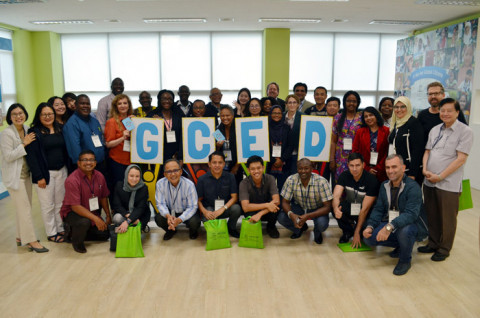 Follow-up Activity of the 3rd Global Capacity-Building Workshop on GCED: Capacity-Building Workshop on GCED for Educators in Ghana 2018-10-12 APCEIU organized the 3rd Global Capacity-Building Workshop on GCED from 29 August to 11 September, 2018. This workshop covered diverse thematic areas including peace, human rights, sustainable development, cultural diversity and prevention of violent extremism and this year, participants had an opportunity to participate in the 3rd International Conference on GCED from 5 to 6 September as session moderators or presenters, and expand their networks on GCED. The participants were composed of 29 professionals in the field of teacher education, teacher training, curriculum development and education policy of 27 UNESCO member states from the Asia-Pacific, Africa, Arab States, Latin America and Europe for this workshop and they participated in the lectures, hands-on activities, field and school visits and action plan development on GCED. As a follow-up activity of this workshop continued for 3 years, APCEIU co-organized a Capacity-Building Workshop on GCED for Educators in Ghana with the Ghana National Commission for UNESCO and National Commission for Civic Education (NCCE) from 17 to 19 September 2018 in Cape Coast, Ghana. This three-day workshop was especially for the civic educators from NCCE, UNESCO Associated Schools Project Network (ASPnet) school teachers and educators from the University of Cape Coast’s Education School to raise their understanding of GCED reflecting national education system. Aimed to ensure that civic educators in Ghana are provided with the knowledge, attitudes and skills to promote global citizenship, this workshop also introduced GCED from Ghanaian perspective by the 1st Global Capacity-Building Workshop on GCED participant Mrs. Joyce Afutu, who is a Communication & Cooperation Affairs Director at NCCE and provided thematic lectures including human rights, sustainable development, and prevention of violent extremism by local experts. This workshop was facilitated in the participatory format through presentations, group works and activities to help participants deepening their understanding on GCED as well as internalize its concepts to develop action plans respective to their own educational contexts. As parts of the workshop, Mrs. Ama Serwah, Secretary-General of Ghana National Commission for UNESCO introduced Ghanaian education policies and promised to support programmes on GCED, and Mrs. Josephine Nkrumah, Director of NCCE, emphasized on GCED practices in local context. During the workshop, participants worked in groups to share their best practices and at the end, established detailed action plans to be implemented in their educational settings. URL:Follow-up Activity of the 3rd Global Capacity-Building Workshop on GCED: Capacity-Building Workshop on GCED for Educators in Ghana > APCEIU News - APCEIU (unescoapceiu.org)
 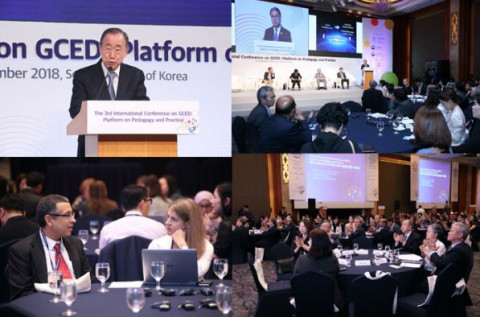 The 3rd International Conference on GCED: Sustainable and robust platform for GCED 2018-10-11 Since Global Citizenship Education (GCED) has been inscribed in Target 4.7 of the Sustainable Development Goals, it gained international attention as an imperative education agenda. In response to the ongoing demand for exchanging international, intensive, professional and practical information regarding GCED, APCEIU has been organizing the International Conference on GCED annually since 2016, in order to gather a wide variety of stakeholders of GCED from all over the world. Co-organized by APCEIU, the Ministry of Education and the Ministry of Foreign Affairs of the Republic of Korea, in partnership with UNESCO, the 3rd International Conference on GCED: Platform on Pedagogy and Practice was held on 5-6 September 2018 in Seoul, Republic of Korea. Under the overarching theme of ‘GCED in Every Corner of the World: Local-Contextualization of GCED’, the Conference intends to touch upon how GCED has been and or can be perceived differently based on the local, national and regional contexts. The Conference explored and shared regional, national and traditional concepts which address same or similar values to those that are at the core of GCED. During the two-day Conference, more than 600 educators, policy makers, scholars and youth representatives from 63 different countries had attended. Park Chun-ran (Vice Minister of Education of the Republic of Korea), Cho Hyun (2nd Vice Minister of Foreign Affairs of the Republic of Korea), Ban Ki-moon (the 8th Secretary-General of the United Nations), Leonor Briones (Secretary of Department of Education of the Philippines) took part in the Conference. This Conference attempted to provide interactive sessions which encourage participants to actively participate in, consisting of various plenary sessions and concurrent sessions. The plenary sessions intended to give an integrated overview on the theme of the Conference, while the concurrent sessions were comprised of diverse programmes such as panel discussions, case presentations, participatory workshops, theatre and TEDtalk-style speeches. The first day of the Conference was initiated by a keynote speech by Moon Chung-in, Special Advisor to the President for National Security and Foreign Affairs, under the theme ‘Localizing Global Citizenship Education: Challenges and Tasks’. The importance of GCED and its localization through networking and solidarity were discussed through the example of GCED textbooks developed by Gyeonggido Office of Education. The plenary session 1 was a panel discussion which brought together a panel of experts and from respective fields. Entitled ‘GCED in the context of the Korean peninsulaㅡits contribution to peacebuilding and reconciliation efforts’, the panel discussion explored the relevance of the notion of GCED in advancing the principle of “learning-to-leave-together” in the Korean context. The panellists discussed the importance of unification education, the understanding of clear division of the two Koreas in the way of perceiving the concept of peace, and the successful example of German-French, German-Polish joint compilation of history textbook. The plenary session 2 took the format of a town hall meeting in which all the participants exchanged their perspectives with the GCED experts from Senegal, Colombia and Philippines. The participants shared their views and ideas through question-and-answer session which aimed to raise awareness among participants about the diverse forms and expressions of GCED that exist around the world and how its core values are reflected in education systems. In the concurrent session 1 titled ‘Do classrooms respond to the local realities?’, the participants discovered how GCED has been practiced in teacher-training programmes. Also, this session touched upon the comparative studies on GCED in the system of formal education in Korea, Japan and China and GCED integrated curricula responding to local contexts based on the cases from Cambodia, Mongolia, Uganda and Colombia. The plenary 3 was led by a brief performance that embodied an ethos of global citizenship. The performance entitled ‘GCED Play ㅡ Here, hear’ was given by the Philippine Educational Theater Association (PETA). The session was designed to provide hands-on experience wherein the audience can feel the importance and message of GCED through the medium of theatre by creating different sounds. The second day kicked off with the plenary session 4 called ‘GCED Talks’. The speakers shared their genuine stories about the power of GCED transforming lives by introducing the cases of ‘Chocotogo’ cooperative promoting community-centric efforts, and advocacy activities of ‘Global Citizen’ using online platform and social media to mobilize the youth around the world. The concurrent session 2 was composed of three sessions under the theme of ‘It takes a village to raise a child as a global citizen’. One of the sessions took the format of policy talk based on the APCEIU’s publication, 『GCED: A Guide for Policymakers』. Also, in a different room, the participants were able to learn about the transformative power of GCED by introducing women/youth-led and community-based practices in India, Philippines and Costa Rica. In another session, a participatory workshop facilitated by the Suseong-gu Office invited participants to engage in an exercise based on a scenario of a polar bear cub and his attempt to find his lost mother using different props, followed by a video of destruction of the earth by humans. The key message of these activities was that even small things can have an impact to change the world. Lastly, comprised of distinctive three sessions, each session in the concurrent session 3 addressed ‘today and tomorrow of GCED’. One of the sessions delivered the added-values of ICT in GCED as ICT can facilitate the GCED pillars of cognition, socio-emotional connection and behaviour. Participatory workshops of drawing comics and playing theatre for transformative pedagogy were conducted in parallel. The 3rd International Conference on GCED provided a global platform for exchange, interaction and dialogue on GCED, acting as a bridge between the countries across the globe in implementing GCED. You can find more detailed information on the Conference at:http://gced.unescoapceiu.org/conference URL:The 3rd International Conference on GCED: Sustainable and robust platform for GCED > APCEIU News - APCEIU (unescoapceiu.org)
 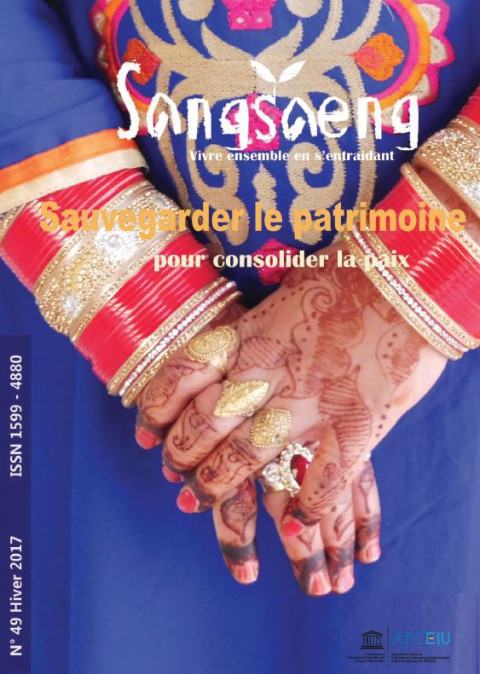 French Version of SangSaeng No. 49 Published 2018-10-10 The French version of the 49th issue of SangSaeng (Winter 2017), "Sauvegarder le patrimoine pour consolider la paix", has been published. The French version was translated and produced by the UNESCO Office in Dakar - Multi sectoral Regional Office for West Africa (Sahel) with the support of APCEIU.This edition of SangSaeng aims to examine heritage in its different contexts and to help identify our responsibilities as a global community to understand and tolerate other people’s heritages. Download link for PDF file:[English version] [French version]
 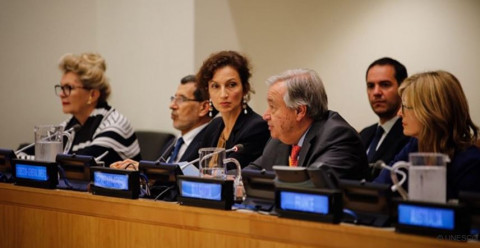 Education to prevent racism and discrimination: the case of anti-Semitism 2018-10-08 Education as the primary factor in preventing all forms of racism and discrimination was the main focus of a high-level event organized by UNESCO at the 73rd United Nations General Assembly today. Through the lens of its program to prevent anti-Semitism, UNESCO sought to mobilize Member States’ commitment in the fight against all forms of intolerance and to strengthen the organization’s overall efforts to prevent racism and discrimination. In her remarks opening the session on The power of education to prevent racism and discrimination: the case of anti-Semitism, Director-General Audrey Azoulay highlighted the importance of working as one: “this requires the mobilization of all member states”, she said, “and education is the best tool at our disposal to prevent all forms of intolerance and discrimination and to ensure equal respect for every woman and man,” adding “antisemitism undermines fundamental rights in general. To address it is to defend fundamental freedoms. It is to defend the equal dignity of all human beings.” In the presence of Antonio Guterres, Secretary General of the United Nations, the event included the participation of the Prime Minister of Morocco, Saadeddine Othmani, and Ministers representing Argentina, Australia, Bulgaria, France, Hungary, Mexico, the Netherlands, Norway, Spain, and the United Kingdom. Several hundred government officials and senior representatives of civil society organizations were also in attendance. Ronald S. Lauder, President of the World Jewish Congress, also delivered a speech. Professor Deborah Lipstadt, of the Modern Jewish History and Holocaust Studies program at Emory University and Mina Abdelmalak, Arab Outreach Specialist at the Initiative on Holocaust Denial and Antisemitism of the United States Holocaust Memorial Museum were also among the speakers. UNESCO’s extensive work in the field of preventing violent extremism through education has included publications such as Guidelines for Educators on Countering Intolerance and Discrimination against Muslims and co-publishing earlier this year with the Organization for Security and Cooperation in Europe (OSCE), the first-ever policy guidelines on Addressing anti-Semitism through education. *** Media contact: Aurélie Motta-Rivey, +33 7 72 44 89 91, a.motta-rivey@unesco.org URL:https://en.unesco.org/news/education-prevent-racism-and-discrimination-case-anti-semitism
  New data reveal that one out of three teens is bullied worldwide 2018-10-03 Almost one-third of young teens worldwide have recently experienced bullying, according to data released for the first time by the UNESCO Institute for Statistics (UIS), which is the official data source for the Sustainable Development Goal on education. The new data show that bullying affects children everywhere, across all regions and countries of different income levels. They were collected from in-school surveys that track the physical and emotional health of youth. The Global School Health Survey (GSHS) focuses on children aged 13 to 17 years in low-income regions. Similarly, the Health Behavior in School-Age Children (HBSC) targets young people aged 11 to 15 years in 42 countries, primarily in Europe and North America. Bullying refers to violence between peers/students which is characterised as “intentional and aggressive behavior occurring repeatedly where there is a real or perceived power imbalance.” “Data are the key to change,” said Silvia Montoya, UIS Director. “They can reveal who is affected by bullying and point the way to better programming by both national governments and international and non-government organizations. Over time, trends can point out whether interventions are working. Ultimately, the more knowledge we have, the more we are able to channel resources to children who need help the most.” Globally boys are slightly more at risk of bullying in schools than girls. The data – which do not include sexual or other forms of gender-based violence – show that more than 32% of boys experience bullying in school, compared to 28% of girls. Yet when looking at the 10 countries where children report the highest incidences of bullying, the median rates tell a slightly different story. In these 10 countries, a staggering 65% of girls and 62% of boys report bullying, revealing that where bullying is most pervasive, girls are more widely impacted. External factors also have a role in bullying Socioeconomic and immigrant status also play a part in bullying, according to the HBSC data on children from Europe and North America. In these regions, socioeconomic status – based on parents’ wealth, occupation and education level – is the most likely predictor of bullying: two out of five poor youth are negatively impacted. This compares to one-quarter of teens from wealthier families. Finally, also based on the HBSC data, immigrant children tend to be more vulnerable to bullying than their locally-born counterparts. As migration around the world reaches new peaks, it is worth asking whether bullying will further complicate the ability of this vulnerable group to learn. UNESCO will release a short report on 8 October 2018, looking deeper at a large number of international data sources on bullying and other forms of school violence, and revealing trends in prevalence over time. A full version of the report, available in January 2019, will present an analysis of effective national responses to school violence and bullying through country case studies. Together with the annual compilation and analysis of global data on bullying by UIS, these reports will help countries understand the scale of school violence and bullying, and put in place the policies and actions needed to ensure that all children learn in safe, supportive and inclusive school environments, as agreed in the SDG4 framework. What are the main takeaways of the data? One-third of youth globally experience bullying in school. Boys experience slightly higher rates of bullying than girls overall, but in countries where bullying is most pervasive, girls are more vulnerable. Low socioeconomic status is the main predictor of whether young teens in wealthy countries will experience bullying in schools. Immigrant youth in wealthy countries are more likely to experience bullying in schools than locally-born youth. *** For more information, contact: Amy Otchet, UNESCO Institute for Statistics, Montreal (Canada), a.otchet@unesco.org, tel: +1 514 343 7933 URL:https://en.unesco.org/news/new-data-reveal-one-out-three-teens-bullied-worldwide
 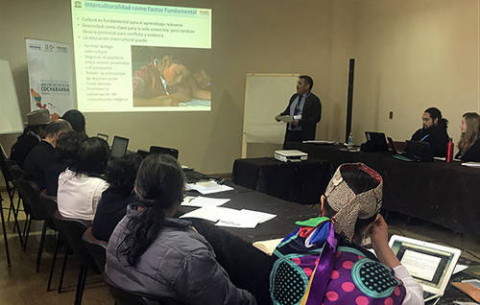 Specialists on indigenous knowledge provide recommendations on intercultural education to Latin American and Caribbean ministers 2018-10-01 The proposals on education, which were the result of discussions held at the II International Workshop on Indigenous Knowledge in Latin America, are part of UNESCO's work on intercultural issues. The points raised adopt a comprehensive and human rights approach and are linked to the global aims of the 2030 Agenda. These recommendations are intended to guide actions in education and intercultural issues through to 2030. A proposal prepared by experts in indigenous themes in education, with contributions from leaders and ministerial representatives from Mexico, Guatemala, Ecuador, Peru, Bolivia, Chile, Paraguay, Panama and Argentina, was presented to the Education Ministers of Latin America and the Caribbean on July 26 during the II Regional Ministerial Meeting in Cochabamba, Bolivia. The recommendations focus on respect for and appreciation of indigenous knowledge in education; the incorporation of indigenous knowledge as a prerequisite of interculturality in state policies at all levels of education; the progress made in terms of gender equity and inclusion of indigenous knowledge; and strengthening the commitment of states to foster policies that revitalize and promote indigenous languages. Points of the proposals The recommendations are the result of discussions held at the II International Workshop on Indigenous Knowledge in Latin America, held on July 24, 2018 in Cochabamba. In his inauguration speech, Roberto Aguilar, Minister of Education of the Plurinational State of Bolivia and host of the meeting, stressed the importance of these issues in the region: "As countries of Latin America and the Caribbean, one of our fundamental objectives is to bring renewed value to, recover, strengthen and project in time all that is represented by native peoples within the framework of our existence as peoples and states, and which are projected as part of the rights of indigenous peoples and nations." The presentation of the workshop’s conclusions to the ministers detailed the following points: Respecting and recognizing the value of indigenous knowledge in education: Recover and recognize the value of indigenous knowledge from a complementary perspective in terms of multicultural and intercultural societies; incorporate and expand indigenous knowledge in various areas; promote research policies, documentation and the deepening of indigenous knowledge through community methodologies and practices specific to peoples and on the basis of their languages. Incorporating indigenous knowledge as a prerequisite of intercultural issues and state policy at all levels of education: Ensure the binding and protagonistic participation of indigenous peoples in the definition of policies and implementation of inter-, intra- and multilingual education; make progress in the area of teacher training, recognizing teachers as central subjects, and with the participation of parents in intercultural, bilingual, intracultural and multilingual education, ensure pertinent and relevant training processes, certifying their work and paying decent wages; and promote the development of autonomous regional curricula in accordance with the socio-cultural characteristics of the indigenous peoples. Making progress in gender equity and the inclusion of indigenous knowledge: Promote debate and research, from the worldview of indigenous peoples and women, the issues of gender inequality, sexuality and sexual diversity; guarantee institutional mechanisms for recognizing and certifying authorship and intellectual property rights with respect to the wisdom and knowledge acquired and researched by indigenous women; ensure access to quality education at all levels and promote the participation of indigenous women in positions of leadership and political decision making; and promote procedures for presentations against any type of discrimination and violence against indigenous girls and women. Strengthening the commitment of states with respect to the promotion of policies for the revitalization and promotion of indigenous languages: Create and strengthen institutions dedicated to the research and promotion of indigenous languages; implement linguistic policies from within the communities that allow progress to be monitored in the teaching and training processes of teachers of indigenous languages; promote the use of indigenous languages as a right in all public and private institutions and services; make legal progress with policies for the dissemination and assessment of indigenous languages and multilingualism in the media and social networks (ICTs); promote the generation and financing of materials and books in indigenous languages; develop, together with indigenous organizations in Latin America, a common reference framework for teaching indigenous languages, taking into account local realities; and promote a regional indigenous knowledge network that will be at the forefront of actions carried out within the framework of the International Year of Indigenous Languages in 2019. The document emphasizes that the Education 2030 Agenda is also a call to value the diversity and multilingualism that characterizes the peoples and territories of the region. Its implementation requires a special political will on the part of states to ensure the full development of indigenous knowledge and languages in educational processes, thus ensuring quality lifelong education for all. In this regard, Atilio Pizarro, Chief of the Planning, Management, Monitoring and Evaluation Section of the Regional Bureau for Education in Latin America and the Caribbean (OREALC/UNESCO Santiago) indicated that these recommendations will imply "the coordination of actions that are already being developed. What UNESCO offers is to help coordinate these proposals, contribute towards efforts and resources, and provide assistance so that this issue is recognized and incorporated into the educational policies of the region, in accordance with the challenges presented by the E2030 Agenda." Más información: Download the recommendations presented to the ministers (pdf) II International Workshop on Indigenous Knowledge in Latin America II Regional Meeting of Ministers of Education of Latin America and the Caribbean https://connect.unesco.org/new/es/santiago/education-2030/cochabamba-meeting-2018/side-events/ii-international-workshop-on-indigenous-knowledge/,DanaInfo=www.unesco.org+ ***** In its 2018-2019 Action Plan, the Indigenous Knowledge Network, coordinated by the Regional Bureau for Education in Latin America and the Caribbean (OREALC/UNESCO Santiago), will continue to coordinate meetings on intercultural issues, as well as to provide advice on the development of national and subregional reports, among other interventions. Similarly, it was announced in Cochabamba that the III International Workshop on Indigenous Knowledge in Latin America will be held in Santiago, Chile in January 2019. URL:http://www.unesco.org/new/en/media-services/single-view/news/especialistas_sobre_saberes_indigenas_entregaron_recomendac/
 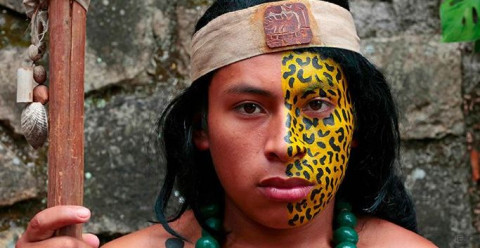 L’UNESCO inaugure le site web de l’Année internationale des langues autochtones 2018-10-01 The International Day of the World's Indigenous People's is well-timed for UNESCO to launch a special website dedicated to the International Year of Indigenous languages (IY2019) which will be commemorated by UNESCO’s members and partners throughout 2019. The website will contribute to raising the awareness about this International Year and about the urgent need to preserve, revitalize and promote indigenous languages around the world. There are some 6.000-7.000 languages in the world today. About 97% of the world’s population speaks only 4 % of these languages, while only 3 % of the world speak 96% of all remaining languages. A great majority of those languages, spoken mainly by indigenous peoples, will continue to disappear at an alarming rate. Without appropriate measure to address this issue, the further loss of languages and their associated history, traditions and memory would considerably reduce the rich tapestry of linguistic diversity worldwide. On the website iyil2019.org, relevant stakeholders and interested parties can find information about the plans for celebrating the IY2019, the actions and measures to be taken by United Nations Agencies, Governments, indigenous peoples’ organizations, civil society, academia, public and private sector, and other interested entities. Furthermore, this website will include a calendar of events, partners’ space for collaboration, access to resources in video, audio, image and text formats, and information about different partnership modalities and sponsorship benefits. Users will learn as well about events in their respective regions, discover how to participate, contribute and benefit from the rich variety of activities. Please register and become a part of this global initiative. https://en.iyil2019.org/ URL:https://en.unesco.org/news/unesco-launches-website-international-year-indigenous-languages-iyil2019
  Gender Views: Understanding gender identity, gender expression and sexual orientation, and promoting the inclusion of LGBTI people 2018-09-24 The Division for Gender Equality has recently launched Gender Views, a new version of the “brown bag lunches”. The very first meeting took place on 18 September at UNESCO Headquarters in Paris. UNESCO’s Director for Gender Equality, Ms Saniye Gülser Corat launched the series and presented the speaker of the day, Mr Damiano Giampaoli, a Programme Specialist in the Division for Gender Equality and also UN-Globe Co-coordinator for UNESCO. He gave a talk on “Understanding gender identity, gender expression and sexual orientation, and promoting the inclusion of LGBTI people”. Addressing and preventing violence and discrimination is key to achieve Agenda 2030 and its fundamental principle of leaving no one behind. For Mr Giampaoli, “understanding gender diversity is crucial to promote human rights for all”. Around 50 colleagues participated at the meeting, both in person and online. One of them mentioned feeling “very comfortable asking questions on a topic of my interest, the atmosphere was very open”. Ms Christelle Delarue, founder of Mad&Women and next speaker at the Gender Views meeting, was also present and gave a short introduction on the next debate, which will be on the theme “Fighting gender stereotypes through innovative solutions in ‘feminist advertising’”. The next meeting will take place on 25 October at UNESCO Headquarters, from 12.30 to 13.30, Room 6.080. The series of meetings are an opportunity to address some of the most compelling questions and aspects of UNESCO work on Gender Equality as well as to share experiences and perspectives. Participation is open to all UNESCO personnel at HQ and colleagues in field offices will be able to join through videoconference. You can also volunteer to come and present during one of the future sessions! For more information, please contact Damiano Giampaoli: d.giampaoli@unesco.org; and gender.equality@unesco.org See all the pictures here URL:https://en.unesco.org/news/gender-views-understanding-gender-identity-gender-expression-and-sexual-orientation-and