
News
Catch up on what’s happening in the world of global citizenship education.
1,668 results found
 UNESCO releases new research on youth and violent extremism on social media 2017-12-01 Does social media lead vulnerable individuals to resort to violence? Many people believe it does. And they respond with online censorship, surveillance and counter-speech. But what do we really know about the Internet as a cause, and what do we know about the impact of these reactions? Violent extremism is becoming a major challenge for many societies today and is threatening the security and fundamental rights of citizens all over the world. Violent extremism is an affront to the principles of the United Nations, embodied in universal human rights and fundamental freedoms. With a mandate to foster cooperation and solidarity through communication and information, UNESCO supports its Member States and civil society actors in responding to extremism and radicalization on the Internet. All over the world, governments and Internet companies are making reactive decisions on the basis of assumptions about the causes and remedies to violent attacks. The challenge is for analysis and responses to be firmly grounded. The need is for policy constructed on the basis of facts and evidence, and not founded on hunches or driven by panic and fearmongering. It is in this context that UNESCO releases the study titled Youth and violent extremism on social media. This work provides a global mapping of research (mainly during 2012-16) into the assumed roles played by social media in violent radicalization processes, especially as they affect youth and women across all the regions of the world. Reviewing more than 550 published studies from scientific and “grey literature” covering titles in English, French, Arabic and Chinese languages, the research finds that violent extremists are indeed heavily spread throughout the Internet and that there is a growing body of knowledge about how terrorists use cyberspace. Less clear, however; is the impact of this use, and even more opaque is the extent to which counter-measures are effective. The study concludes that research on the subject is still at a budding stage, and it urges caution about the results and interpretations. The literature reviewed in the study provides no definitive evidence on a direct link between the specificities of social media and violent radicalization outcomes on youth. Likewise, there is no definitive evidence about the impact of counter-measures. Nevertheless, as a whole, the literature does point towards some possible understandings. Indeed, rather than being initiators or causes of violent behaviors, the Internet and social media specifically can be facilitators within wider processes of violent radicalization. The literature shows that violent extremists use characteristics of social media to attract younger audiences, to disseminate extremist, violent and criminal content, to identify potential participants, and foster one-on-one dialogue with young people. However, as pointed out by this study, actual violent radicalization is not reducible to Internet exposure, but generally entails the mediation of several complex processes, including complex social-psychological processes and person-to-person communication in conjunction with other offline factors. A major output of the study is a 16-point recommendation list for Member States, the private sector, Internet intermediaries, social media, civil society, and Internet users. It recommends for instance that those actors could consider to encourage the participation of youth in decision-making processes, deepen engagement between Member States, civil society organizations and local communities, promote Media and Information Literacy (MIL) strategies, support research on the subject, ensure professional and conflict-sensitive journalistic coverage, manage expressions of hate online without compromising rights to freedom of expression, or educate Internet users about ethical online behavior and privacy issues. The research was conducted for UNESCO by independent experts Séraphin Alava, Divina Frau-Meigs, Ghayda Hassan (with the collaboration of Hasna Hussein and Yuanyuan Wei) and will be promoted and launched at various UNESCO events. It was prepared with the support of the Information for All Programme (IFAP) of UNESCO. The full publication is available in English here. A summary information brochure is also available in English, French, and Arabic.
 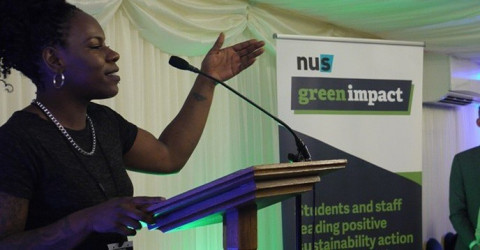 Sustainable behaviour-change programme “Green Impact” celebrates its 10th anniversary 2017-11-30 The National Union of Students (NUS) of the United Kingdom, a key partner of the UNESCO Global Action Programme on ESD (GAP), celebrated the 10th anniversary of its “Green Impact” programme on 27 November with a reception at the British Houses of Parliament. “Green Impact” had won NUS the UNESCO-Japan Prize on Education for Sustainable Development in 2016. “Green Impact is NUS' sustainability accreditation scheme – which now operates in students' unions, universities, colleges, hospitals, fire stations and other institutions, not only in the UK, but abroad too! The reception at the Houses of Parliament gathered an array of over 200 of Green Impact's stakeholders and supporters – from students' union staff advocates, to NUS officers past and present, to sponsors and university staff. [...] Invitees listened to a series of both interesting and entertaining speeches; outlining the history of Green Impact, its place in the wider student and environmental movements, and the evolution of NUS' sustainability work overall. First up was Baroness Jenny Jones - the first Green Party life peer in the House of Lords - who spoke about the inextricable links between sustainability and social justice. "Control over resource-use is not fairly distributed," she said, "and neither is the way that environmental impacts are felt." Jenny highlighted that injustice relating to environmental and climate change is felt within generations, as well as between them. Addressing those in the room, she said: "Our generations have benefitted from the huge upsides of rampant consumerism, but the price of buying happiness today is unhappiness for the next generation." She ended on a positive note: "The younger generation have a greater sense of this than most who have gone before them. NUS has an important role to play to play by coming up with the positive and practical ways that students can make a difference," she concluded. […] Next spoke Julia Heiss from UNESCO. Julia opened with an optimistic analysis of the House of Commons' aesthetic. "This seems an appropriate location," she said, "as green is already the official colour!" Last year, NUS was awarded a UNESCO-Japan award, and is now one of nine global laureates for Education for Sustainable Development. Julia said that Green Impact was a "unique" nomination, "entirely student-led... [using] simple and scalable ideas, aiming to change people's behaviour towards sustainability." She called the programme "an excellent example of youth leadership," and an example of a long-held UNESCO ethos regarding "the critical importance of youth in bringing about lasting and sustainable environmental changes, to reach the targets of the UN's Sustainable Development Goals." She thanked Green Impact for "empowering change through innovations and actions," and wished the programme a happy birthday – and many more to come! The following speaker was of unparalleled importance to Green Impact's success: its founder, Anna D'Arcy! "The reason we’re all here tonight is thanks to the University of Northumbria's rugby team, 2004," she said. She went on to explain that her idea, for Green Impact, arose with her desire to stop the colossal pizza box wastage at the students' union – and that the first obstacle to tackle was the rugby team. "What would it take to get them not just engaged," she asked, "but actively wanting to care and get involved?" She came up with "an annual environmental competition for students' unions with a glamorous awards ceremony attached." At the time, there was little-to-no precedent for such a scheme, so Anna approached NUS for backing - which she very much received. "My experience with NUS has been invaluable," said Anna, "it's given me the confidence to carry out the environmental work I'm doing now. I was very fortunate that NUS is a dynamic place, where students can turn up with an idea and be listened to." […] Green Impact has worked with over 470 institutions to date, clocking up 300,000 sustainability actions. [NUS President, Shakira Martin] closed the event by stating her pride that the NUS was "equipping students to tackle the world's greatest challenges" through "sustainability with inclusivity and liberation at its core." ” Click here to read the full article on the NUS website
 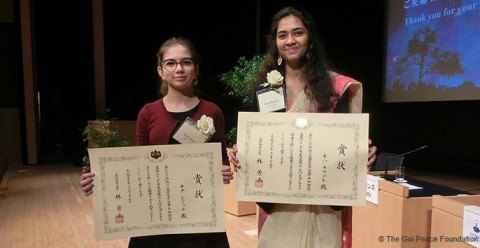 Winners of 2017 Young People Essay Contest awarded by Japanese Minister of Education 2017-11-30 The Goi Peace Foundation, a key partner of the UNESCO Global Action Programme on ESD (GAP), is pleased to announce the winners of the 2017 International Essay Contest for Young People. The theme of this year's contest was LEARNING FROM NATURE. From among 15,441 entries from 155 countries, the following winners were selected: First Prize Children's category: Neda Simic (Age 12, Bosnia and Herzegovina)Youth category: Neha Rawat (Age 22, India) Second Prize Children's category: Lê Hoàng Mai (Age 13, Vietnam) and Chiaki Oyadomari (Age 14, Japan)Youth category: Itsuki Umino (Age 16, Japan) and Anna Grigoryan (Age 20, Armenia) The complete list of winners and their winning essays are available here. The First Prize winners presented their essays and received their awards from the Minister of Education, Culture, Sports, Science and Technology of Japan at a ceremony held at Nikkei Hall in Tokyo on 25 November 2017. The annual essay contest is organized in an effort to harness the energy, imagination and initiative of the world's youth in promoting a culture of peace and sustainable development. It also aims to inspire society to learn from the young minds and to think about how each of us can make a difference in the world. Guidelines for the upcoming 2018 International Essay Contest for Young People will be announced here at the end of January 2018.
 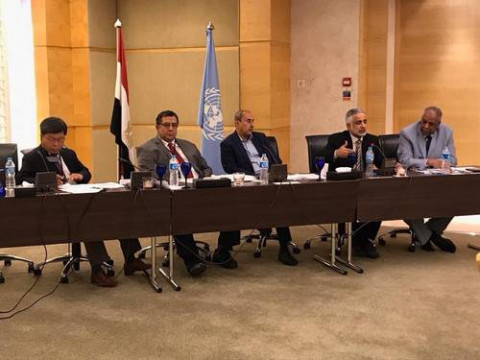 Launching of the Arab States Regional GCED Network in Luxor 2017-11-29 UNESCO Beirut has been actively working on promoting Global Citizenship Education (GCED) at the regional level with the aim of assisting education authorities in the development and implementation of GCED policies, learning content and practices. Capitalizing on this momentum with the goal to solidify global action on GCED, UNESCO Beirut and the Asia-Pacific Centre of Education for International Understanding (APCEIU), under the auspices of UNESCO and in cooperation with King Abdullah bin Abdulaziz International Centre for Interreligious and Intercultural Dialogue (KAICIID), organized the 2017 Arab States Regional GCED Networking Meeting from 13-14 October 2017 in Luxor, Egypt. Held under the Patronage of H.E. Dr. Tareq Shawki, the Minister of Education in Egypt, and H.E. Mr. Mohamad Bader, Governor of Luxor, the meeting aimed at mapping different GCED programmes in the region and exploring areas of possible collaboration or exchange. Around 40 participants took part in the meeting, representing GCED-implementing institutions from the region, including participants representing National / Regional and International Organizations, Civil Society Organization, Ministries of Education, Teacher Training Institutes, Academia & Universities, and Research Institutes. The meeting served as a platform to discuss and develop strategies towards the scaling-up of efforts in the promotion of GCED at the regional level. According to Mr Fadi Yarak, Director General of Education at Lebanon’s Ministry of Education, the meeting “was a great occasion to meet stakeholders and partners from different parts of the Arab world, interested in GCED. It also allowed the participants to brainstorm about the common, universal values, that are at the heart of GCED, and that should be promoted by educators and integrated into curricula”. As to Nazhira Al-Harthi, the director of “Citizenship Programmes” at Oman’s Ministry of Education, she considered that the two-day meeting was of “great value, as it introduced the participants to different GCED initiatives taken at the regional level”. She highlighted that the meeting served as a platform “to discuss the contextualization of GCED in the Arab region, and to brainstorm on future projects and actions to be taken to promote and consolidate GCED in Arab states”. A key outcome of the meeting was the launching of the Arab States Regional GCED Network. The latter intends to serve as: an “Accelerator” for GCED, to enhance the impact and accelerate the delivery and mechanisms towards the achievements of SDG 4.7 ; a “Bridge”, to connect the different institutions and organizations within and beyond the region, and to connect with other stakeholders to know about GCED; and a “Community” of practice to strengthen the institutional and individual learning capacity through monitoring, data collection, and evaluation. The Arab States Regional GCED Network includes education partners from the Arab region, who have expertise in GCED, and agree to consult and share information and ideas with each other.
 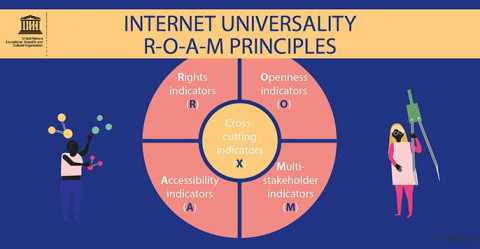 Your further inputs needed! Help UNESCO finalize the draft Internet Universality Indicators 2017-11-29 UNESCO is pleased to present the first draft of “Internet Universality Indicators”, as an interim outcome following the first phase of consultation which included 24 face-to-face consultation meetings in 21 countries and attracted 165 online contributions in six UN official languages. UNESCO thus kicks off the second phase of the consultation and invites all stakeholders to provide further inputs on these proposed indicator framework and indicators till 15 March 2018. Stakeholders are invited, in this second consultation, to review the first draft indicators document and respond to the three questions below by 15 March 2018. All submissions should be sent via email (internetstudy@unesco.org), and/or through an online submission platform to be available in six UN official languages in late December 2017. Submitters are also requested to indicate their name, organizational and stakeholder affiliation, country and nationality if applied. All submissions will be published on the Internet Universality website for transparency purposes, unless submitters indicate they would prefer to be anonymous. General enquiries can be issued to UNESCO focal point Xianhong Hu (link sends e-mail) and Josselyn Guillarmou (link sends e-mail). Consultation questions: Are there any additional themes, questions or indicators which you believe should be included in the framework? Are there any suggestions that you wish to make in respect of the proposed themes, questions and indicators which are included in the framework as it stands? What sources and means of verification would you recommend, from your experience, in relation to any of the questions and indicators that have been proposed? The indicator framework is structured around the four ROAM Principles of UNESCO Internet Universality concept (openness, accessibility, and multi-stakeholder participation), alongside cross-cutting Indicators concerned with gender and the needs of children and young people, sustainable development, trust and security, and legal and ethical aspects of the Internet. There are a mix of quantitative and qualitative Indicators. UNESCO’s Internet Universality Indicators were developed to enrich the stakeholders’ capacity for assessing Internet development, broaden international consensus, and foster online democracy and human rights towards knowledge societies engaged in sustainable development. These Indicators will help governments and other stakeholders to assess their own national Internet environments and to promote the values associated with Internet Universality. The work on the project to define Internet Universality Indicators is being led for UNESCO by the Association for Progressive Communications (APC), and the draft Internet Universality indicators will be finalized by the end of April 2018. The consultation document of draft Internet indicators is available at this link.
 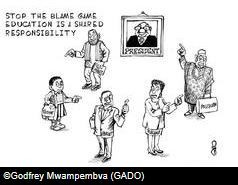 Education, a shared responsibility 2017-11-29 The day after its global launch, the Global education monitoring report (GEM) 2017-18 entitled “Accountability in education: meeting our commitments” was launched on 25 October 2017 for the West and Central African region. This event was organized by UNESCO and the Regional coordination group on SDG4-Education 2030 in West and Central Africa (RCG4-WCA), bringing together around fifty participants, with numerous representatives of development partners in education. It allowed for an in-depth exchange of views between different families of actors on each one’s responsibility in the realization of the right to education. The launch of the GEM report represents, every year, an opportunity for education actors to get together in order to address progress made towards SDG4 and to reflect on a particular topic, this year’s being accountability in education. Fueled by the conclusions and recommendations of the report, the discussions focused on collective action and shared responsibility, a very timely debate given the educational context characterized by the multiplication of actors. Indeed, while governments remain the guarantors of the right to education, SDG4 is an ambitious goal that cannot be achieved without the efforts and support of all actors, including non-state actors such as development partners, civil society, teachers, economic actors, communities, families or students. This reconfiguration of the educational context requires that the roles and responsibilities of each stakeholder be clearly defined, known and engaged. As the “voice of the voiceless” according to the words of ANCEFA regional coordinator Ms. Teopista Birungi, civil society has a key role to play, in order to make governments accountable though awareness raising, organization and mobilization of communities. At the same time, civil society organizations are aware that they themselves are accountable to the communities they serve. Citizen-led assessments presented here by Ms. Binta Rassouloula Aw Sall of the PAL Network (Peoples Action for Learning Network), are at the interface between research, communities and decision makers. These can contribute to improving accountability in education, including non-formal education, by fueling advocacy and policy dialogue. Through communication with families, capacity building and community mobilization, they have an impact on the development of sector policies. Finally, for M. Marc Bernal, representative of the UNESCO Institute for Statistics, the production, collection and analysis of data, in a holistic approach and based on the collaboration of all actors, are of major importance to improve accountability. In addition, it should be ensured that these data are credible, reliable, and widely disseminated to all concerned users. In sum, this launch was a great opportunity to reflect on the challenges faced by West and Central Africa regarding shared responsibility, and to re-think current models of existing education systems, the appropriateness of the actions carried out by partners and the relevance of their contributions for quality and inclusive education for all. In particular, the discussions focused on how different approaches on accountability can contribute to the realization of SDG4 and other SDGs. Finally, quoting the closing words of the RCG4 Chair, Mr. Gwang-Chol Chang, “We hope that this is only the beginning and that reflections on this issue will continue after this event with all the stakeholders, within the framework of the RCG4 and beyond”. More information:UNESCO Dakar website
 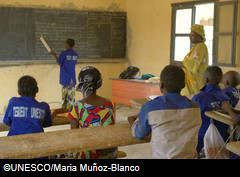 SDG4 and Inclusive Education: Inclusion of Refugees in National Education Systems 2017-11-29 A workshop on “Education Planning and Refugees: Inclusion of refugees in National Systems and increased Participation of UNHCR in Sector Planning Mechanisms”, organized by UNHCR, was held on 15-17 November 2017 in Dakar, Senegal. Bringing together a diversity of education actors, the gathering aimed at increasing understanding and collaboration among countries and partners on relevant international frameworks and discussing how to better include refugees and IDPs in national education sector planning in a region that is particularly affected by refugee and IDP crisis. UNESCO was invited to join participants from 10 countries of Francophone Africa, including Ministry of Education representatives, UNHCR national staff, representatives from GPE Coordinating Agencies and Local Education Groups, as well as various regional and international organisations, to present its work at both the regional and national levels towards the integration of SDG4 in education sector planning and to stimulate reflection on opportunities for the inclusion of refugees. Recognizing the importance of lifelong learning, flexible pathways between and recognition of diverse means and modes of learning, with renewed emphasis on equity and inclusion, SDG4-Education 2030 provides an opportunity for countries to rethink their education systems to make them more relevant to the needs of societies and individuals including vulnerable groups such as refugees and IDPs, and for partners to rethink their type of support and strengthening of capacities. Through the Education 2030 Framework for Action, countries have committed to “developing more inclusive, responsive and resilient education systems to meet the needs of children, youth and adults in these contexts, including internally displaced persons and refugees.” The Framework for Action also includes as an ‘indicative strategy’ under Target 4.5: “Ensure that education policies, sector plans and budget planning include risk assessment, preparedness and response to emergency situations for education, and initiatives that respond to the education needs of children, youth and adults affected by disaster, conflict, displacement and epidemics, including IDPs and refugees”. While education systems need to become more resilient, responsive in the face of conflict, social unrest and natural hazards and able to provide learning during emergencies, conflict and post-conflict situations, they also serve a critical role in preventing and mitigating conflict and in promoting social cohesion and peace. Through group work, workshop participants reflected on the main challenges faced by their countries in terms of the inclusion of refugees into national planning with regard to systems’ governance, teaching and learning, data, analysis and information systems, and partnership/financing, including policy options to address them in light of the SDG4-ED2030 vision. The Education Systems’ Strengthening Task Team of the Regional Coordination Group on SDG4-ED2030 for West & Central Africa (RCG4-WCA), chaired by UNESCO Regional Office in Dakar, is further collaborating on a number of tools that countries and partners can use in support of SDG4 integration into national education planning. More information:http://www.unesco.org/new/en/dakar/education/sector-wide-policy-and-planning/
 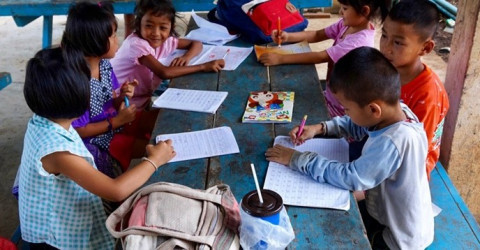 UNESCO girls’ and women’s education prize-winner provides stateless girls with life skills and education 2017-11-27 “Girls have the right to be taught,” says Sompop Jantraka, founder of the Development and Education Programme for Daughters and Communities Center in the Greater Mekong Sub-Region (DEPDC), northern Thailand, one of the two laureates of the 2017 UNESCO Prize for Girls’ and Women’s Education. Funded by the government of China, the Prize supports outstanding work to advance girls’ and women’s education globally by awarding USD 50,000 annually to each recipient. Prevention through education In northern Thailand, the Golden Triangle is an area sharing the borders with Laos and Shan State connected to Myanmar where many stateless people are struggling for survival. “We cannot wait until a country becomes safe,” says Sompop. Hundreds of thousands of young children, girls more than boys, are not in school. Many start work as young as 10 years old. “Prevention has good value because you can bring a big change to the lives of girls,” explains Sompop. The DEPDC is founded on prevention and provides stateless children, in particular girls, with safety and access to education. “We are a boarding school. We have buildings. We have a house, class, playground.” Through this effort, families understood that sending their children to work at a young age is not the answer. Sompop found that many girls supported by DEPDC have gone on to become teachers or village leaders. Flexible learning, survival education Given the situation facing stateless children in the area, DEPDC has established flexible teaching methods that can more effectively help children obtain life skills. Based on the Flexible Learning Strategies for Out of School Children and Youth developed by UNESCO Bangkok, the DEPDC provides various forms of non-formal education and vocational training adapted to children’s background and needs. On top of teaching reading, writing, mathematics and science, “the curriculum is focused on safety, how to save your life, how to identify at-risk situations, how to live your life in a very hard situation. It’s survival education.” The project is also providing counselling as well as rehabilitation programmes. Sompop explains that “[stateless] children need more than education, they need care, love and support.” Expanding across borders Collaborating with the government and national authorities is crucial for the work of the DEPDC. The Centre works with national authorities and immigration officers to ensure children can come into the State and attend school. It has also developed partnerships with domestic and international organizations. Winning the Prize will help the DEPDC be recognized for their work and offer a platform to discuss sensitive issues. Many children on the other side of the border work on the streets or cross to find a job each day. The Prize will support the expansion of the project to reach these children and facilitate the adaptation of the project to other communities, and across the border. Sompop initiated this project rescuing and rehabilitating 19 underage girls at-risk of sexual exploitation. Today, more than 7,000 girls along the borders of Thailand have enrolled in the Center, the Half Day School and the Youth Leadership Training Programme and over 100,000 children and women have indirectly benefited from the Center’s programmes and training activities. Almost all children and youth (90%) involved in the project have built strong life and social skills, and are protected from all forms of exploitation. The DEPDC is also raising awareness globally by hosting 10 groups of international students with backgrounds in social development, law, and psychology who contribute to this project as volunteers. Sompop firmly believes that “if more and more people recognize the importance of education and the equal rights of girls, the next generation can benefit more equally from social and economic development.” -- The Development and Education Programme for Daughters and Communities Center in the Greater Mekong Sub-Region (DEPDC) (link is external) is recognized for its project entitled “Education and Life Skills Training Programme to Help Stateless Children and Women Migrating from Shan State to Thailand”. The innovative project uses education and life skills training to protect stateless and migrant girls and women from the risks of human trafficking and sexual or labour exploitation. It also works on the rehabilitation of girls and women who have fallen prey to these abuses. DEPDC on Twitter (link is external) DEPDC on Facebook (link is external) Learn more about the 2017 Laureates Learn more about the UNESCO Prize for Girl’s and Women’s Education
 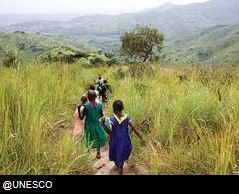 Sub-Saharan Africa Conference on Education for Sustainable Development (ESD): Local sustainable solutions for cities and communities 2017-11-24 UNESCO, in partnership with FAO, IOM, UN Environment, UNFPA, UN-Habitat, UNHCR, UNICEF and UN Women, is convening, from 7 to 9 December 2017, a Conference to support the Member States of the Sub-Saharan Africa region with the implementation and monitoring of the Sustainable Development Goals (SDGs) in cities and urban communities through Education for Sustainable Development (ESD). Africa is one of the continents that most vulnerable to climate change. The continent is expected to face more frequent droughts, desertification, floods and more intense storms. Sea levels are rising in low-lying coastal areas, where large numbers of poor people tend to live, areas considered the most susceptible to climate change impacts. In the same vein, Africa is home to large populations of refugees in both rural and urban settings that have been displaced due to conflicts. Education for Sustainable Development (ESD) can help address several major needs in the region, especially by developing greater synergies between school and community and re-aligning education with local contexts. As the lead agency for ESD, UNESCO is promoting the Global Action Programme (GAP) on ESD, the official follow-up to the UN Decade of ESD. It aims at generating and scaling up ESD action at all levels and in all areas of education, and in all sustainable development sectors. In this context, UNESCO and eight UN agencies (FAO, IOM, UN Environment, UNFPA, UN-Habitat, UNHCR, UNICEF and UN Women), are convening a Conference for the Sub-Saharan Africa region on 7 to 8 December 2017 on the GAP priority 5: Accelerating sustainable solutions at local level. It focuses in accelerating sustainable solutions and scaling up ESD actions at local level in Sub-Saharan Africa, taking into account regional priorities in addressing sustainability issues, and the urban specificities in the region. The provision of ESD awareness to cities and local authorities through policy dialogue and exposure is expected to result in enhanced sustainable development learning opportunities for their citizens and non-citizens (i.e. refugees and migrants).This conference will work with cities and communities in Sub-Saharan Africa, connecting the dots of other GAP areas: policy, capacity building, youth, etc. It will also focus on youth, educators, formal and non-formal education. As envisaged by target 4.7 of SDG 4, ESD can contribute to knowledge and skills acquisition necessary for sustainable lifestyles, human rights, gender equality, promotion of a culture of peace and non-violence, global citizenship, and appreciation of cultural diversity and of culture’s contribution to sustainable development.The 17 Sustainable Development Goals (SDGs) and the African Union’s Continental Education Strategy for Africa (CESA 16-25) provide the wider context for further scaling up and mainstreaming of ESD. Venue: Safari Park HotelContact person:Schéhérazade Feddal: S.Feddal(at)unesco.orgGaia Paradiso: g.paradiso(at)unesco.org Related documents: The African Union Continental Strategy for Africa (CESA) in English and French Education 2030: Incheon Declaration and framework for action, in English and French Education for Sustainable Development: Learning Objective in English, French and Portuguese UNESCO Roadmap for implementing the Global Action Programme on Education for Sustainable Development in English and French Global Education Monitoring Report PLANET 2016: Education for environmental sustainability and green growth in English UNESCO Global Report on Culture for Sustainable Urban Development in English UNESCO Inclusive and Sustainable CITIES series 2016: Cities Welcoming Refugees and Migrants: Enhancing effective urban governance in an age of migration, in English UNCTAD, Economic and Social Council, Commission on Science and Technology for Development 2016: Smart cities and infrastructure – Report of the Secretary-General in English UN Environment, 2012: Arusha Declaration on Africa’s post Rio+20 strategy for sustainable development. The African Ministerial Conference on the Environment, 14th Regular Session of AMCEN, 7-14 September 2012, Arusha, United Republic of Tanzania, in English IOM, World Migration Report 2015: Migration and Cities: New Partnerships to Manage Mobility in English and French UN Habitat, 2016. World Cities Report in English
 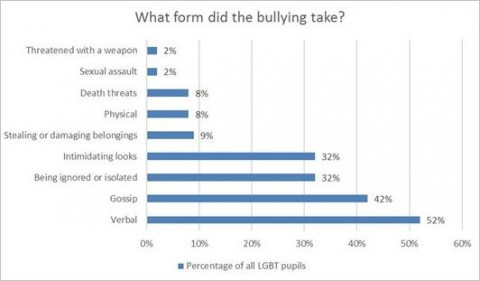 The Stonewall School Report 2017: Bullied for being LGBT in Wales 2017-11-23 Stonewall, the lesbian, gay, bi and transgender (LGBT) equality charity in the United Kingdom has revealed that many LGBT pupils are at risk of being bullied in Welsh schools. In partnership with the Centre for Family Research at the University of Cambridge, Stonewall conducted a survey with young LGBT people on their experiences in secondary schools and colleges across Britain. Between November 2016 and February 2017, 3,713 LGBT young people aged between 11 and 19 years old, including 267 living in Wales, completed an online questionnaire. The School Report Cymru 2017 is based on the responses of the participants living in Wales. Bullying is part of many LGBT pupil’s daily lives The study shows that more than half of LGB pupils are bullied at school in Wales, and the percentage goes up to 73 % for transgender pupils. Three in five LGBT pupils 'frequently' or 'often' hear homophobic language in school, and half 'frequently' or 'often' hear transphobic language. Bullying experienced by Welsh students is mostly psychological. Students are reluctant to talk about the bullying: nearly half of LGBT pupils who experience bullying never tell anyone about it. Risks of self-harm and suicide The report shows that 77 % of transgender youth and 61 % of LGB pupils have deliberately harmed themselves and 41% of transgender pupils and 21% of LGB pupils have tried to take their own life. Responses and recommendations Only a quarter of bullied LGBT pupils in Welsh schools say that teachers intervene when bullying occurs. Just three in ten LGBT pupils report that teachers or school staff consistently challenge homophobic, biphobic and transphobic language. Stonewall recommends that the Welsh Government should make LGBT-inclusive sex and relationships education a mandatory part of the curriculum. It stresses that all teachers, school staff and governors should be trained on tackling anti-LGBT bullying. The report recommends that Estyn (the Inspectorate for Education and Training in Wales) should play an active role in inspecting the extent to which schools provide a safe and inclusive environment for LGBT pupils. As the world moves forward on the implementation of the Education 2030 Agenda, UNESCO is committed to monitoring the progress towards the achievement of Target 4.a.2 focusing on School based Violence and Bullying. UNESCO has published its School Violence and Bullying Global Status Report as the reference for prognosis and response framework.