
News
Catch up on what’s happening in the world of global citizenship education.
1,668 results found
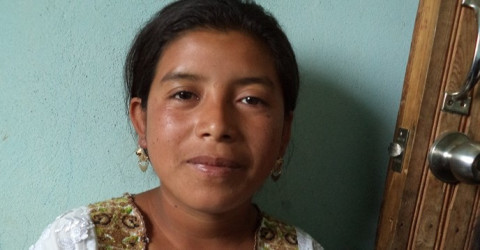 New project to improve the education of indigenous girls and women in Guatemala 2017-11-16 Indigenous girls, adolescents and young women in Totonicapán, Guatemala, will assert their right to education in two UNESCO Malala Centers, which will be created as part of a new project supported by the UNESCO Malala Fund for Girls’ Right to Education, set to start in 2018. Francisca had no choice. When she reached third grade, she had to leave school. She started working in the fields and taking care of her siblings to help her parents. For most indigenous girls in Guatemala living in a poor family with many siblings, studying is out of the question. As of 2018, the UNESCO Malala Fund for Girls’ Right to Education will support the creation of an educational model for the girls, adolescents and young women of Totonicapán in Guatemala, through the establishment of two UNESCO Malala Centers. The new project, led by the UNESCO Guatemala Office, aims to facilitate the right to education for adolescent girls and indigenous young women, especially those marginalized from education because of gender, ethnicity, rurality and poverty. In Guatemala, 11% of girls and adolescents between 11 and 19 years old have not received a formal education. In fact, adolescent girls aged 15 to 19 years represent the highest percentage of those who cannot read or write. The average national number of years of schooling for girls is 4 to 6 years; in areas with a predominantly indigenous population, it is 2.6 years on average (National Survey of Living Conditions (ENCOVI) of the National Institute of Statistics (INE), 2015). Educational systems in many countries can be entrenched in traditional or patriarchal traditions. Guatemala, for example, has not yet established a gender equality policy that supports girls, adolescents and young women in situations of subordination and undervaluation. The new project will therefore also work to strengthen policies that promote girls’ and you women’s education as part of the national education system. Two municipalities of Totonicapán, Santa María Chiquimula and San Andrés Xecul, were selected for the establishment of the two UNESCO Malala Centers. In these two municipalities, the indigenous population is over 98%, the family poverty index is between 73% and 89%, the illiteracy of young people is over 59%, access to health services is restricted and the number of births per 1000 women is over 69.8. This new project builds on the “Saqilaj B'e: A clear Path to Assert the Rights of Indigenous Adolescent Girls in Guatemala” project, which was carried out by the education team of the UNESCO Guatemala Office between 2013 and 2017. It facilitated the educational reinsertion of more than a thousand girls and indigenous women from two departments of Guatemala: Huehuetenango and Totonicapán, and Francisca was one of the project beneficiaries. When Francisca turned 19, representatives of the project came to her community and offered her support to continue her studies in the Accelerated Primary Program of the Ministry of Education. With that support, Francisca was able to complete primary school. She is now working as a cook in a cafeteria where she earns money for herself and her family. Her dream is to complete high school and continue studying to become a professional chef. For Francisca, "education is a food that makes us grow". Lessons have been learned with the Saqilaj B'e project on how to reduce the obstacles for girls and young women from Totonicapán to access education. Today, with the new project, UNESCO wants to continue supporting these girls, adolescents and young indigenous women and many others, so that they can achieve their dreams.
  Science for Peace Declaration calls for responsible use of knowledge for peaceful development 2017-11-16 The 2017 World Science Forum brought together more than 1,000 delegates from 120 countries to discuss critical global issues and the potential of science to address them holistically on 07-10 November in Jordan. The concluding Science for Peace Declaration is global call for action to strengthen the ties between science and society to attain the Sustainable Development Goals (SDGs). It is a reflection on “the role of science in building a future that promises greater equality, security and opportunity for all, and in which science plays an increasingly prominent role as an enabler of fair and sustainable development.” The Declaration defines peace as “far more than the absence of conflict. It implies an absence of fear and the full realization of a whole and healthy life. It encompasses an equal access to the resources and potential of our planet.” It is built on five principles: · The equitable and sustainable management of natural resources is essential to avoid conflicts and to promote peaceful development; · The preservation of scientific capacities, threatened by global migration trends, is key to peace, sustainable development, resilience and recovery; · Diversity is a key enabler of excellence in science, technology and innovation and is essential to optimise its relevance and impact; · A commitment to the fulfilment of the universal right to science, and · Support of the launch of a regional science forum for the Arab World. The Declaration, adopted by the representatives of the scientific community, policy-makers, industry and civil society together, is a commitment to the responsible and ethical use of scientific knowledge in addressing the great challenges facing humankind. The 8th World Science Forum was organized under the leadership of the Royal Scientific Society of Jordan, together with the founding organisations: UNESCO, the Hungarian Academy of Sciences and the International Council for Science (ICSU). Organized every two years, the World Science Forum is one of the leading events of global science policy today. It serves as a platform for dialogue between the scientific community, policy-makers and representatives of industry and the civil society on emerging issues affecting science, policy and society, to set out the common tasks ahead in tackling these issues.
 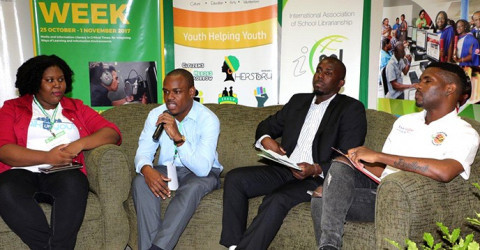 UNESCO releases new publication: Survey on Privacy in Media and Information Literacy with Youth Perspectives 2017-11-16 The Global Media and Information Literacy (MIL) Week 2017 was the launching pad for a new comprehensive UNESCO study that explores MIL as defense of one’s privacy. The publication, “Survey on Privacy in Media and Information Literacy with Youth Perspectives”, combines two studies. One addresses how MIL providers globally - schools, teachers, practitioners, experts etc. - are responding to the need for people to comprehend the privacy of both themselves and others. The second study investigates young people’s knowledge, attitudes and practices in relation to privacy and online safety, and how they perceive MIL in relation to this. The 1735 youth surveyed do not portray passivity or obliviousness in their online activities. On the contrary - most of them indicated that privacy is important to them. Over 90% place heavy emphasis on self-empowerment as the most effective means of staying safe online through the acquisition of information, media and technological competencies. Their responses to questions like “My Government has the right to know all personal information about me if it will keep me safe online” or “The Internet should be an open space free from control by government or big business” underscore the need for critically engagement by youth themselves. The research also reveals that MIL education programmes of the 231 providers surveyed addressed minimally privacy. When addressed, it is most often covered as a minor topic absorbed into other MIL topics and not as a standalone topic or module. This research is published as part of the UNESCO Series on Internet Freedom that began in 2009 and that explores the changing legal and policy issues of the Internet. The UNESCO-UNAOC University Network on Media and Information Literacy and Intercultural Dialogue (MILID) and UNESCO conducted one aspect of the research, with the other aspect was implemented by UNESCO. Authors of the publication are Sherri Hope Culver, Director of the Center for Media and Information Literacy (CMIL) at Temple University, USA and Alton Grizzle, UNESCO’s Programme Specialist. Mr Joe Cannataci, the United Nations Special Rapporteur on the Right to Privacy, in the Foreword noted, this “is a work of enormous scope and ambition, with the result that it has made me realize how important it is to be sustained and built upon for the next several decades.” He continued, “ …the next new projects we should pursue is to research and devise privacy-rich MIL curricula for all children and youth… starting points to be considered should include the conceptual and development frameworks for MIL so usefully outlined in Chapter 1.” The study also theorizes how privacy and MIL relate to the context of sustainable development. It illuminates the social, economic and environmental implications for both individuals and organizations alike. In addition, the study provides recommendations on building privacy literacy via MIL. This includes development of multimedia strategies, online and offline, to reach young people in rural and remote communities with interventions like MIL MOOCs. It also urges stronger proliferation of MIL training, more transparency from both government and business on how they access and use peoples’ personal information, and the inclusion of youth in the entire process as actors and not only as beneficiaries or part of the problem. Contact: Alton Grizzle, a.grizzle@unesco.org
  UNESCO General Conference proclaims 16 May as International Day of Light 2017-11-15 The 39th Session of the UNESCO General Conference has today proclaimed the date of May 16th as the International Day of Light. The proclamation of this annual International Day will enable global appreciation of the central role that light and light-based technologies play in the lives of the citizens of the world in areas of science, technology, culture, education, and sustainable development. It will provide is an enduring legacy to UNESCO’s highly successful International Year of Light in 2015 that reached over 100 million people in over 140 countries. The proposal was adopted during the 39th session of the General Conference of UNESCO, which just came to a close today in Paris, France. The proclamation of this annual International Day will enable global appreciation of the central role that light plays in our daily lives in areas of science, culture, education, sustainable development, and in fields as diverse as medicine, communications and energy. On the most fundamental level, through photosynthesis, light is at the origin of life itself, and the many applications of light have had a transformative impact on society. Light-based technologies are increasingly providing solutions to global challenges in, energy, education, agriculture, and community health. Applications of light-based technologies are key enablers to achieving the Sustainable Development Goals, especially in the developing world. The broad theme of light will allow many different sectors of society to participate in activities around the world that will raise awareness of science and technology, as well as art and culture and their importance in achieving the goals of UNESCO in promoting education, equality and peace. The first International Day of Light celebration is planned for 16 May 2018. This date marks the anniversary of the first operation of a laser beam, on 16 May 1960 by Theodore Maiman. The International Day of Light was introduced to UNESCO by sponsors Ghana, Mexico, New Zealand and the Russian Federation, and supported at the UNESCO Executive Board and the General Conference by 27 countries: Argentina, Colombia, Czech Republic, Democratic Republic of Congo, Dominican Republic, Ecuador, Egypt, Finland, Iran, Ivory Coast, Kenya, Lebanon, Madagascar, Malaysia, Morocco, Nicaragua, Serbia, South Africa, Sudan, Sweden, Nigeria, Paraguay, Qatar, Togo, Vietnam, Uganda and Zimbabwe. Partners worldwide are now making plans for an ambitious series of outreach and education activities in May 2018, with special focus on students, young people and the public at large. In addition, a flagship inauguration leaders in areas of education, industry, design and lighting will take place on 16 May 2018 at UNESCO headquarters in Paris, France. The International Day of Light is administered from UNESCO’s International Basic Science Programme by a Steering Committee that also includes representatives from: the American Institute of Physics (AIP), the American Physical Society (APS), Bosca, the European Centres for Outreach in Photonics (ECOP), the European Physical Society (EPS), the International Association of lighting Designers (IALD), the International Centre for Theoretical Physics (ICTP), the IEEE Photonics Society (IPS), the International Commission on Illumination (CIE), lightsources.org - the international network of accelerator based light sources, Light: Science and Applications, The Optical Society (OSA), Philips Lighting, the International Society for Optics and Photonics (SPIE), the Synchrotron-Light for Experimental Science and Applications in the Middle East (SESAME) and Thorlabs. UNESCO welcomes all partners who wish to get involved in the International Day of Light either through organizing their own activities or by supporting the flagship event on May 16 2018 at UNESCO headquarters in Paris. For event registration, enquiries about partnership opportunities, and any other questions, please contact: Jean-Paul Ngome Abiaga: jj.ngomeabiaga@unesco.org International Basic Sciences Programme, UNESCO, Paris, France Jorge Rivero González: dayoflight@eps.org International Day of Light Secretariat & Press Officer URL:https://en.unesco.org/news/unesco-general-conference-proclaims-16-may-international-day-light
 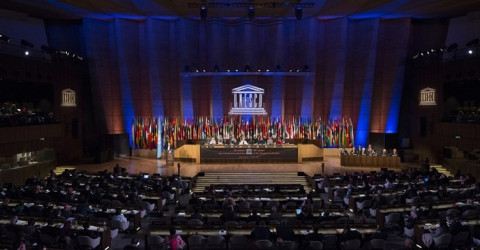 UNESCO Member States adopt recommendations of Education Commission 2017-11-15 UNESCO Member States adopted the recommendations presented by the Education Commission at the 39th General Conference, which concluded today - 14 November 2017.Among the key items approved were UNESCO’s role in the implementation of SDG4-Education 2030, the Draft Programme and Budget for 2018-2021 and “Academic Mobility Convention”. Implementation of SDG4-Education 2030 Member States endorsed UNESCO’s role in the implementation of SDG4-Education 2030. This includes leading and coordinating the Education 2030 and acting as the focal point for education within the overall 2030 Agenda. UNESCO has been entrusted with the challenging task of leading and coordinating SDG 4-Education 2030 by: undertaking advocacy to sustain political commitment; facilitating policy dialogue, knowledge sharing and standard setting; monitoring progress towards the education targets; convening global, regional and national stakeholders to guide the implementation of the agenda; and functioning as a focal point for education within the overall SDG coordination architecture. The General Conference also emphasizing the importance of human rights education and training, particularly in relation to target 4.7, for the fulfilment of the 2030 Sustainable Development Agenda. The Draft Programme and Budget for 2018-2021 The Draft Programme and Budget for 2018-2021 was approved at the Plenary, ensuring that UNESCO fully aligns its programme and resources to meet the ambitious Sustainable Development Goal 4 and other education-related targets. This will be driven by two-pronged approach, structured around two Main Lines of Action: 1. Supporting the implementation of SDG 4-Education 2030 at country level, through eight Expected Results; and 2. Leading the coordination and review/monitoring of SDG 4-Education 2030 at global and regional levels, through two Expected Results. In operationalizing Main Lines of Action 1 and its eight Expected Results, UNESCO, including its education-related Institutes, will seek to support Member States in making progress towards the seven targets and two means of implementation of SDG 4 and five other SDGs. Actions under these Expected Results will be contextualized to be responsive and attentive to distinct regional needs and local realities. UNESCO will coordinate and review/monitor SDG 4-Education 2030 at global and regional levels. Under Main Lines of Action 2, work will focus on two areas. First, it will facilitate global and regional coordination within the context of the evolving global governance structure of education, build and strengthen partnerships with UN agencies, international organizations and civil society, conduct high-level advocacy for Education 2030 and report on SDG 4 as part of UN SDG reporting. Second, it will ensure a global Education 2030 observatory function through research and foresight to guide global policy and inform dialogue on the future of education, as well as a review and monitoring function for the implementation of SDG 4-Education 2030. This will contribute to the overall attainment of SDG 4 and SDG 17. “Academic Mobility Convention” Member States approved the continuation of the preparation of UNESCO’s Academic Mobility Convention (Global Convention on the Recognition of Higher Education Qualifications) and its possible adoption at the next session, in November 2019. This future Convention aims to provide a global framework of universal principles and rules for the recognition of higher education titles, diplomas and certificates. The General Conference reaffirmed that a global convention will improve academic mobility, enhance international cooperation in higher education, and will represent a significant step forward towards global academic mobility and trust in higher education systems. The future Convention will be a major step forward for the rights of students to have their higher education qualifications assessed in a fair, transparent and non-discriminatory manner by national competent authorities. It will also strengthen cooperation in higher education and enhance trust in higher education systems in view of ensuring quality in education, in line with the Sustainable Development Goals.
  A Quick Win in Monitoring How Much Children Learn 2017-11-14 By Nadir Altinok (Associate Professor of Economics, Université de Lorraine, France) and Silvia Montoya, Director of the UNESCO Institute for Statistics (UIS)This blog was originally published by the Global Partnership for Education (GPE) The news that more than more than half – 617 million – children and adolescents of primary and lower secondary school age worldwide are not reaching minimum proficiency levels in reading and mathematics is a wake-up call for educators and for statisticians. Without such data, we would be unaware of the learning crisis that threatens progress towards the Sustainable Development Goals (SDGs) – a crisis that demands an urgent response from education ministries, most certainly, but also from the world’s data gatherers. In an ideal world, progress towards SDG 4 would be monitored through reliable, high-quality data, comparable across countries, and compiled efficiently at regular intervals. But in the real world, there is no framework to pull together the many different types of learning assessments and to produce internationally comparable data on the core skills that are so critical for children’s learning and for their future prospects. A pragmatic approach to gather data on learning It will take time to develop the methodological tools and political consensus needed to produce globally-comparable indicators on learning. We need a more immediate approach to producing the cross-nationally comparable data needed to report progress towards SDG 4, and a reality check on what is possible, given the timeframe. The new statistics on reading and mathematics have emerged from a groundbreaking approach tested by the UNESCO Institute for Statistics, captured in a new database and a paper, Mind the Gap. It is grounded in a methodology that uses all possible results from international and regional student achievement tests in order to obtain comparable results for the proportion of students reaching minimum proficiency levels in both primary and secondary education. By applying the criterion that some countries took part in different assessments simultaneously, the methodology links assessments by using the results of these “doubloon countries” – countries that participate in both regional and international assessments. This approach is efficient because it does not re-invent the wheel, nor does it require additional instruments or, importantly for cash-strapped statistical offices, additional costs. In effect, we have found a pragmatic way to recognize the education contexts within regions while still producing data that can be compared internationally. Our overall approach to linking is very similar to the “Ring Comparison” methodology, which is widely used to improve the quality of purchasing parity indices. For the first time, data on learning are comparable The result is a much-needed international dataset for more than 160 countries or locations between 1995 and 2015. To the best of our knowledge, the database provides the largest and most internationally comparable information available for monitoring progress towards SDG 4. What’s more, it provides the level of disaggregation needed to report on SDG 4 and assess both quality and equity in education. It may well be the first study to provide comparable data on learning. So how does it work? After populating the database with all the available assessment results, the methodology applies two alternative benchmarks to assess proficiency across countries. The first benchmark is the basic proficiency level used by the Southern and Eastern Africa Consortium for Monitoring Education Quality (SACMEQ) in its regional survey on students at the end of primary school. The second benchmark is the minimum proficiency level defined by the International Association for Evaluation of Educational Achievement (IEA) for the Progress in International Reading Literacy Study (PIRLS) and Trends in International Mathematics and Science Study (TIMSS) – international assessments with global coverage involving, for the most part, middle- and high-income countries. At secondary level, we used the benchmarks set by the OECD’s Programme for International Student Assessment (PISA), which includes about 70 countries facing very different education contexts. Because these benchmarks apply only to children who are in school, we also developed a methodology to estimate the situation for those who are out of school. As explained in our paper, Counting the Number of Children Not Learning, it is essential to recognize that the children who never enrol or drop out have little chance of reaching any benchmarks, and that those who start school later than they should will struggle. Three reasons why the new approach works The new database has three key advantages over previous research approaches. First, while previous research focused mainly on mean scores, this approach results in a new international benchmark for tracking students who achieve minimum proficiency. The threshold is carefully designed to offer an accurate but fair perspective when comparing the results of countries in different regions and at different stages of education development. Second, even though our methodology is based mainly on countries that participate in both regional and international assessments, it generates estimations that span countries, education levels and skills. While previous research used only a single methodology, we are using these “ring” or “doubloon” countries to provide alternative estimations of the results. In other words, we can provide confidence intervals for estimates of the proportion of students reaching a minimum level of proficiency in reading and mathematics around the world. Third – and perhaps most importantly – this approach makes it possible to report the data needed for SDG 4 by tracking the proportion of students achieving minimum levels over time and to distinguish between different sub-samples for equity purposes. By providing comparable scores across time (between 1995 and 2015) and across different groups within each country, our international dataset includes more than 16,000 combinations of results for students reaching the minimum levels. The sub-samples included in our dataset are mainly gender-based, or distinguish between location, socio-economic levels, languages spoken at home and immigration status. This is a major and crucial leap forward, given the emphasis within the SDGs on equitable progress. Next step: Continuing to improve the comparability of data Although the new dataset has its limitations, it is a much-needed barometer that provides an initial reading of the performance of national education systems while offering a set of common parameters for SDG reporting. Now we want to broaden the debate on measurement and improve the comparability and coverage of data. The good news is that we have the support of the regional and international assessment agencies, who are actively pursuing options to link their assessment results and share items across tests. Together, we are finding concrete ways to improve the comparability of student achievement tests and reduce estimation bias in reporting on progress towards SDG 4.
 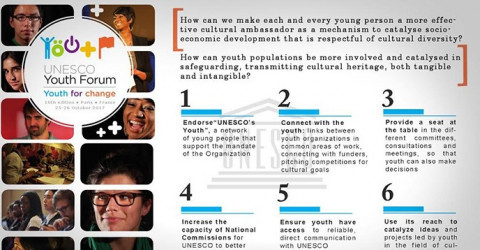 Youth Forum Presentation at the Culture Commission 2017-11-14 Appealing to the need to strengthen efforts to promote culture, not only as a cultural emergency, but also as a security and humanitarian imperative, UNESCO, Italy and Iraq inaugurated today the 3D replica of the Lamassu Statue of Nimrud. On 6 November 2017, Irina Bokova, Director-General of UNESCO, Mr Francesco Bandarin, Assistant Director-General for Culture of UNESCO, H.E. Mr Faryad Rawandozi, Minister of Culture of Iraq, Mr. Francesco Rutelli, President of Associazione Incontro di Civiltà and H.E. Vincenza Lomonaco, Ambassador and Permanent Delegate of Italy to UNESCO, Chairperson of the Culture Commission of UNESCO's 39th General Conference, unveiled the reproduction of the Lamassu Statue of Nimrud. “I cannot think of a more powerful symbol for this General Conference than this moment of unity. UNESCO’s position is very clear -- anywhere culture is threatened or destroyed, we must respond with more culture, more knowledge, more evidence of the role of heritage for peace, with stronger efforts to protect it for future generations”, declared Irina Bokova. In the Spring of 2015, the Statue of Lamassu, which once protected Ashurnasipals II’s North-West Palace in the ancient capital of the Assyrian Empire, was deliberately destroyed by ISIL/Da’esh. In response to the ruthless attacks by extremist armed groups suffered by Iraq in recent years, the Associazone Incontro di Civiltà, presided by Mr Francesco Rutelli, led the initiative to rebuild the Bull of Nimrud, with the support of the Fondazione Terzo pilastro – Italia e Mediterraneo, using 3D printing and robotic engineering. The replica reflects the joined efforts of the international community in responding to these threats, which have recently resulted in the adoption of the historic UN Security Council Resolution 2347 (link is external), the first resolution to address exclusively the protection of cultural heritage in the event of armed conflict. Following up on this resolution, an Appeal on “Protecting culture and promoting cultural pluralism: The key to lasting peace” will be presented at the Plenary of the Cultural Commission of UNESCO’s 39th General Conference by its Chairperson, H.E. Ms Vincenza Lomonaco. The appeal affirms that the protection of culture and heritage - both tangible and intangible - is not only a cultural emergency, but also a security and humanitarian imperative. This message is embodied in the Statue of the Lamassu of Nimrued, which will be displayed at UNESCO Headquarters for the duration of the General Conference, standing as a symbol of the Organization’s commitment to share history and transmit the values it carries to future generations, before being offered to Iraq in solidarity with the Iraqi people.
  UNESCO Member States adopt Declaration of Ethical Principles in relation to Climate Change 2017-11-14 UNESCO has just announced the adoption of a global Declaration of ethical principles in relation to climate change, at the 39th Session of its General Conference (Paris, 30 October to 14 November). UNESCO’s 195 Member States have solemnly proclaimed a broad consensus on the text, as a recognition that, at its core, climate change is an ethical issue. UNESCO’s Declaration aims to help governments, businesses, and civil society mobilize people around shared values on climate change. lt sounds the alarm that, unless ethical principles become the basis of climate action, both climate change and responses to it could create unacceptable damage and injustice. Among other ethical principles, a science-based approach to decision-making about climate is crucial. "Decision-making based on science is critically important for meeting the mitigation and adaptation challenges of a rapidly changing climate. Decisions should be based on the best available knowledge from the natural and social sciences," the text says. At every level, climate action requires a responsible approach. This could improve decision-making, by framing interests in terms of shared values. In addition, UNESCO’s Declaration advocates for sustainability, solidarity and the prevention of harm. Assisted by leading experts, including negotiators of multilateral climate treaties, scientists from the lntergovernmental Panel on Climate Change and ethicists, UNESCO has for the past ten years facilitated discussion on ethics of climate change, examining how to promote fairness and address climate change at the same time. The process was initiated in 2008, when the World Commission on the Ethics of Scientific Knowledge and Technology ("COMEST"), a global advisory body of experts, started framing the issues and urging policy responses. In 2015, the adoption of the 2030 Agenda for Sustainable Development, followed by the Paris Climate Agreement, marked a turning point in the history of international cooperation on climate change Taken together, these embody a new global agenda for poverty reduction, human rights and dignity, social inclusion and dialogue, and more sustainable paths to development. This agenda fully includes - in Sustainable Development Goal (SDG) 13 – the idea that everyone should address the challenge of climate change urgently. The Executive Secretary of the UN Framework Convention on Climate Change (UNFCCC), Patricia Espinosa (link is external), has been crystal clear: "Implementing the Paris Agreement requires action on the ground and for that we need to mobilize everybody! We need to mobilize governments - not only national governments - governments at all levels. We need to mobilize civil society, scientists, private sector - everybody needs to be mobilized." In a show of support for this UNESCO Declaration, government representatives have asked UNESCO to disseminate and promote the Declaration. UNESCO will continue to be fully engaged in this endeavour.
 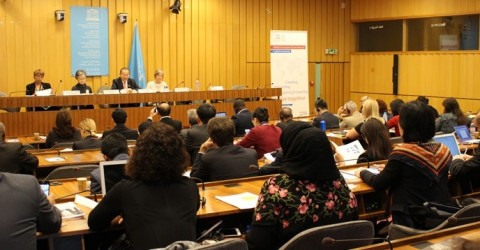 Strengthening governance, action and visibility of the UNESCO Associated Schools Network 2017-11-13 At the margins of the 39th session of the General Conference, a side event on the UNESCO Associated Schools Network (ASPnet): “Innovative and collaborative teaching and learning in the context of Education 2030” took place on 3 November 2017. The objectives of the meeting were to present and discuss the measures taken to implement the recommendations of the 2016 Evaluation of ASPnet carried out by UNESCO’s Internal Oversight Service, and the means deployed to strengthen its contribution to the implementation of the Education 2030 agenda, in particular SDG 4 and Targets 4.7 and 4.c. Around 100 participants - ASPnet National Coordinators, Secretary-Generals of National Commissions for UNESCO and other representatives of Member States, NGOs and UNESCO Institutes and Centers- shared their interest and support for the achievements and the future outlook of the Network. ASPnet as an effective tool to spread UNESCO’s values and priorities In his opening address, Mr Qian Tang, Assistant Director-General for Education, underlined the role played by ASPnet in promoting UNESCO’s values and in nurturing respect for diversity and a spirit of international solidarity. He also highlighted the efforts engaged by UNESCO in order to reinforce the governance, management and quality assurance of ASPnet as per the recommendations elaborated in the context of the evaluation of ASPnet in 2016. Mr Tang gave an overview of the achievements accomplished, including notably the production of a new Guide for the ASPnet National Coordinators and the roll out of an Online Tool for ASPnet (OTA) to boost the network’s potential as a global community of principals, teachers and students committed to transformative education. Prospects for cooperation and partnership In addition to reinforcement of UNESCO’s support to ASPnet in building global citizenship and promoting sustainable development, Mr Tang evoked the important contributions made by Japan, through funding for the ASPnet pilot project on the whole-school approach to climate change in 25 countries, and by China, through hosting of an International Conference for ASPnet National Coordinators from 40 countries in April 2017. These contributions have accelerated the revitalization of the ASPnet and opened new avenues for cooperation and partnership, notably the contribution of USD 1 million received from China and the proposal made by the Hainan Provincial Government in China to establish a Category II Center for ASPnet. In closing, Mr Tang recalled that education is essential to the success of the 2030 Agenda and that ASPnet has a long-standing experience in educational innovation that transforms teaching and learning. Thus, it has the capacity to make a significant contribution to its implementation. He said: “We will make sure that ASPnet will remain a priority in Education Sector.” Strengthen the identity of the network and support it to stand out The ASPnet International Coordinator Sabine Detzel presented highlights of the new Guide for ASPnet National Coordinators, which aims to further professionalize the Network through its governance structure, membership and quality assurance. The Guide defines the role and the responsibility of the National Coordinators, appointed and supported by their National Commissions for UNESCO, and clarifies the requirements and process for admission as well as the management of schools’ membership. After recalling the history of the network and its mission, she underlined the strong engagement of ASPnet in contributing to the achievement of the SDGs with a particular focus on Targets 4.7 and 4.c of SDG 4. ASPnet’s thematic action areas - Global Citizenship, Sustainable Development and Sustainable lifestyles and Intercultural Learning - were aligned to the SDG context. The network’s contributions will be driven via activities, projects, international celebrations as well as thematic collaboration among the member schools, facilitated through the Online Tool for ASPnet. Building a central base for knowledge sharing, collaboration and powerful outreach With the rise of ICTs and social media services, UNESCO has launched in 2016 an Online Tool for ASPnet (OTA) operating in English, French and Spanish. OTA provides an effective vehicle for interactions and partnerships beyond borders among the Network members. Fouzia Belhami presented the tool, which aims to streamline and improve the management of the Network, strengthen communication and collaboration among its members and increase the visibility of ASPnet and its global community. She underlined the accessibility of the Directories of the National Coordinators and the more than 11,000 members along with news, information and resources from, for and on the members that are regularly updated. Moreover, Ms Belhami stressed the importance of the collaborative space, exclusively reserved for the ASPnet members to exchange, interact and work together. In addition, OTA is a great open window to find peers with the same interest for twining and collaborating to make their contributions to the Agenda 2030. Maximizing appropriate channels of communication, participation and cooperation UNESCO makes every effort to provide the necessary support to ASPnet’s work at national and regional level. Sabine Detzel presented the means deployed to ensure regular communication with National Coordinators, dissemination of information and resources and opportunities in relation to UNESCO’s actions. In this spirit of guidance and support, she listed some of the important resources elaborated and shared over the last two years, which include a new Guide for the Use of the ASPnet logo, the Tutorial for OTA, three Guides for ASPnet schools and pedagogical materials and action ideas for the celebration of 12 International Days. In addition, she emphasized the success of the project on the whole-institution-approach to climate change, funded by Japan, with over 262 schools in 25 countries participating, and the global art contest “Opening hearts and minds to refugees” where 16 schools have been awarded. Moreover, some 25 countries benefitted from the UNESCO Participation Programme funding support to organize ASPnet meetings and schools’ projects at national level. Among the innovations of this biennium, Ms Detzel mentioned the participation of over 100 ASPnet Teachers, students and National Coordinators in major international conferences on Climate Change (COP 21, 22 and 23), School Violence and Bullying, Peace and Sustainable Development - the Role of Education, and Girls’ and women's education in STEM. Finally, she projected an outlook of the workplan for 2018-2020. The extrabudgetary funding of one million dollars will significantly enhance the possibilities of UNESCO to support the global ASPnet community in adding value to the Agenda 2030 by teaching and learning to live together. Interventions from the audience showed the appreciation and adhesion of Member States and partner organizations with regard to the reform measures taken by UNESCO and the strong prevailing interest for the ASPnet and its important work. Mr Alexander Leicht, Chief of Education for Sustainable Development and Global Citizenship Education in the Education Sector concluded: “We note your support to ASPnet at international level and in your respective countries and will continue to strengthen the network and provide support to its programmes.”
  Science for Global Understanding 2017-11-13 This editorial was originally published in Science, 10 Nov 2017: Vol. 358, Issue 6364 (link is external). Since its founding in 1945, the United Nations Educational, Scientific, and Cultural Organization (UNESCO) has been a leading convener and advocate for the natural and social sciences and the humanities. Every year since 2001, on November 10, UNESCO’s World Science Day reminds us of the importance of science for sustainable development and peace. This year’s theme, “Science for Global Understanding,” also underpins the debates of scientists and policy-makers from around the world who are convening in Jordan this week at the UNESCO World Science Forum. One of their key concerns is the growing criticism of scientific integrity and denial of scientific findings. Building trust in science and fostering scientific excellence is central to all of UNESCO’s work. Institutions that originated in UNESCO, such as the European Organization for Nuclear Research (CERN) or the Synchrotron-light for Experimental Science and Applications in the Middle East (SESAME), or globalscience networks such as the UNESCO Chairs, aim both to advance science, technology, and innovation (STI) and to use science to promote understanding and cooperation across nations. One of UNESCO’s primary means of engaging the global science and policy community, the UNESCO Science Report, focuses on global trends for STI and regional assessment of the performance of STI systems. The latest edition in 2015, for example, tracks investments in science and participation in the scientific workforce and provides data on the gender gap in science by country and by field. In response to this challenge, the UNESCO project for STEM and Gender Advancement provides a set of tools to assess gender equality in STI ystems and to improve related policies to close the gap. Together with Chad, Egypt, Libya, and Sudan, UNESCO’s International Hydrological Programme is engaged in a project to promote rational and equitable management of the Nubian Sandstone Aquifer System to the benefit of the region’s communities, ecosystems, and economies. Science for development of sustainable livelihoods for local communities is also at the heart of the UNESCO Man and the Biosphere Programme. This is particularly important in postconflict situations, such as in the Trifinio Fraternidad transboundary biosphere reserve located between El Salvador, Guatemala, and Honduras. The first transboundary biosphere reserve in Central America, it represents a regional model for sustainable economic development, reconciliation, and resilience. Resilience is also at the core of the debate at the UN Climate Change Conference (COP23) currently taking place in Bonn. The growing pressures of climate change and stress on natural resources through pollution, overuse, and mismanagement are fueling conflicts and violent extremism and forcing an increasing number of people to flee their homes. This calls for sound, inclusive STI, cooperative approaches between the sciences and among different knowledge systems, and standing up to climate change deniers among scientists and policy-makers. The United Nations’ Agenda 2030 for sustainable development recognizes the central role of STI in enabling the international community to respond to global challenges. With the support of all its member states and partners, UNESCO’s programmes aim at harnessing the full potential of knowledge to bring about transformative change that can lead to a sustainable future. We are reminded on this World Science Day that global understanding calls on all of us to nurture, strengthen, and defend sound science across borders and disciplines. –Flavia SchlegelAssistant Director-General for Natural Sciences, UNESCO