
News
Catch up on what’s happening in the world of global citizenship education.
1,668 results found
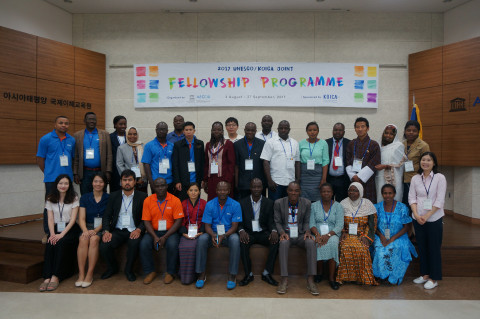 2017 UNESCO/KOICA Joint Fellowship Programme Launched 2017-08-04 2017 UNESCO/KOICA Joint Fellowship Programme was launched on the 4th of August at Asia-Pacific Centre of Education for International Understanding (APCEIU). The programme is into its 11st year of implementation and a total of 25 educators from 13 African and 4 Asian countries participate in the Programme this year. Co-sponsored by UNESCO Headquarters and the Korea International Cooperation Agency (KOICA), the programme runs for two months under the 4 main themes: “Teacher Training for Basic Education,” “Use of ICT for Education (or e-learning),” “Leadership in Global Education (Global Citizenship Education)”, and “Girl’s Education.” This programme aims to enhance participants’ capacities and reorient their perspectives on education development through training. Various sessions on different topics in diverse forms will be provided to broaden the viewpoints of participants and to help them gain a deeper understanding on the topics as well as practical skills applicable to each participant’s contexts. In particular, participants are encouraged to learn about education development through analyzing the Korean experiences in reflective ways. For this, participants will conduct individual (research) project throughout the duration of the programme. As part of the programme, a two-day workshop to develop GCED teaching and learning materials will be held under the topic of “Teachers.” Through the workshop, participants are expected to produce two story books that will introduce the stories of teachers in different parts of the world. The produced story books will be later utilized as learning materials for children in Africa, Asia-Pacific, and beyond. Also, participants will take field visits to GCED relevant sites in Korea, including the DMZ (Demilitarized Zone) in Inje, Gangwon Province, study visits to elementary and secondary schools which implement GCED at school-level, and will be given an opportunity to interact with Korean educators and students. This year’s programme is set to focus on strengthening the competencies and practical skills of participants through practicum and place-based learning, and on producing more concrete outcomes, such as individual project outcomes that can take a form of lesson plans, training modules and action research. URL:2017 UNESCO/KOICA Joint Fellowship Programme Launched > APCEIU News - APCEIU (unescoapceiu.org)
 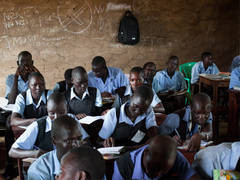 Making textbooks inclusive for learners in South Sudan 2017-08-01 A three-day capacity building workshop on textbook development and evaluation concluded on 21 June 2017 in Juba, South Sudan. Opening the event, the Director General of the Directorate of Quality Assurance and Standards Mr. Omot Okony Olok expressed his gratitude for UNESCO’support to the Ministry of General Education and Instruction (MoGEI) and called on the participants to make good use of the input and discussions at the training.The training focused on making textbooks inclusive in terms of the content they provide to learners. In today’s diverse world, textbooks and other learning materials have a major influence in making children tolerant and welcoming of others. Religious, gender-based and cultural differences could be sources of tension and violence if they are not addressed in a constructive manner. The exercises and discussions in the workshop highlight this very important aspect of textbook content and the need to make it inclusive. The workshop comes at the right time as South Sudan, having developed its first ever curriculum, is now engaged in producing textbooks that support the curriculum. The experts of the Directorate of Quality Assurance and Standards are expected to use the information and knowledge acquired from the workshop for a positive learning outcome by South Sudanese children. "The issue of inclusivity is a burning issue for such a young country as South Sudan,” said Mr. Odur Nelson, Director General of Alternative Education Systems in the Ministry of Education, who participated in the workshop. “Education is a major vehicle through which this can be achieved; textbooks are an integral part of this."The workshop was organized in partnership with the Section for Education for Sustainable Development and Global Citizenship at UNESCO Headquarters, the Quality Assurance and Standards Directorate in the Ministry of General Education and Instruction, Republic of South Sudan, and the UNESCO Juba Office. Twenty-one high level technical staff who work in the area of curriculum and textbook development participated in the workshop. Three of the 21 participants are from the Teacher Training College in Maridi, former Western Equatoria State. "Teacher training has to take account of textbook development and evaluation in order to make teachers aware about their contents," said Mr. Kenyi Jafar, one of the three participants from the teachers' college. The Section for Education for Sustainable Development and Global Citizenship provided a set of useful materials to share knowledge on textbook selection and production with the participants who took part in the training.Learn more about Textbook Development at UNESCO.
  Experts meet on how best to address anti-Semitism through education 2017-07-18 Some 50 experts, including representatives of governments and international organizations, met to discuss effective practices and educational approaches to addressing anti-Semitism at an event at UNESCO Headquarters, Paris on 13 July 2017.The main focus of the event, organized by the OSCE Office for Democratic Institutions and Human Rights (ODIHR) and UNESCO, was the joint development of a guide for educational policy-makers. The guide will offer comprehensive approaches to respond to the challenge of anti-Semitism in classrooms and will draw on guidelines already developed by international and national stakeholders. ‘Education is one of the strongest means of building a society free of anti-Semitism and other forms of discrimination,’ said Jan Henrik Fahlbusch, ODIHR Adviser on Combating Anti-Semitism. ‘Today's discussion has shown the need to provide policy recommendations and good practices to governments on how to achieve this goal most effectively.’The meeting of representatives from OSCE participating States and UN Member States gave participants the opportunity to provide feedback on the outline of the policy guide. It follows a meeting of an ODIHR education experts group held on 10 and 11 July, also at UNESCO Headquarters.A human rights issueThe participants explored current discussions on how anti-Semitism is understood and manifests itself. Along with examining effective practices, key policies and sustainable methods for addressing anti-Semitism through education, they also highlighted the educational contexts in which it can be addressed, such as human rights and Global Citizenship Education.“Anti-Semitism is a human rights issue. It has a negative impact on society as a whole, and not only on the group affected. Preventing anti-Semitism through education should therefore be an effort to equip young people with the skills to reject anti-Semitic views, as well as all forms of prejudice, while understanding better the specifics of anti-Semitism over time,’ said Karel Fracapane, Senior Project Officer at UNESCO Education Sector.This event was organized as part of the German-funded “Turning Words into Action to Address Anti-Semitism” project of OSCE/ODIHR, which addresses the issue by focusing on three components: security, education and coalition building. The education policy guidelines are scheduled to be ready in 2018.
 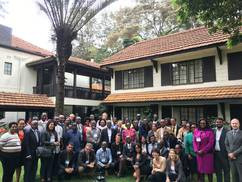 Sustaining our World through Transformative Teaching and Learning 2017-07-13 In the framework of the 2030 Education Agenda, the UNESCO Regional Office for Eastern Africa, with the support of the Government of Japan, organized a regional technical workshop under the umbrella of education for sustainable development and global citizenship education to support member states unpacking the Sustainable Development Goal SDG 4.7 in their national policies and practices.The workshop gathered over 80 participants’ representatives from ten countries under the UNESCO Regional Office for Eastern Africa (Comoros, Djibouti, Kenya, Madagascar, Mauritius, Seychelles, Somalia, South Sudan, Tanzania and Uganda) as well as partners, such as IOM, UNFPA, UNICEF, UNEP, UNHCR, UNWOMEN, WFP, Arigatou International, Aga Khan Foundation, Interpeace, JICA, Teachers Against Violent Extremism and the Southern African Development Community (SADC).The workshop was opened with very strong and timely messages. Dr. Evangeline Njoka, representing the Cabinet Secretary- Ministry of Education-Kenya, opened the workshop emphasizing that ´countries must make deliberate efforts to ensure that ESD and GCED are enshrined in the education systems and always strive to nurture a culture of peace and tolerance in our children and youth´. The representative of the Japanese Ambassador in Kenya also emphasized the importance of ESD which ´provides competencies and opportunities to contribute to the prosperity of nations while at the same time creating a global community of environment sensitive individuals and communities´.Talking about the 2030 Education Agenda, Ann-Therese Ndong-Jatta, the Director of the UNESCO Regional Office for Eastern Africa, insisted on the need to re-orient our systems and ensure that communities not only learn to be or to do, but also learn to live together and therefore to move from a “transmission” model of teaching to a “transformative” model of teaching and learning.The Regional Director of UNEP underlined that ´it is through education that we can strengthen peace and value transmission as fundamentals of human relationships´. The importance of inclusion was also highlighted through the representative of the UNHCR Regional Director who reiterated how much the issue of refugees is at the heart of the 2030 Education Agenda in Africa and also worldwide in order to leave no one behind.The workshop was an opportunity to clarify frameworks and concepts of ESD and GCED, as well as the monitoring of the SDG 4 Target 4.7. Subsequently, the following four thematic areas outlined further concepts and good practices from countries and key partners: 1) Promoting peace education/prevention of violent extremism through education (PVE-E), 2) ESD and the Global Action Programme (GAP), 3) Empowering learners through health education for sustainable lifestyles, and 4) Defining and addressing GCED through inclusion (including gender equality) and cultural diversity. An extensive session on harmonization of curriculum and integration of approaches, such as ESD and GCED and related areas, was also held with including concrete illustrations of curriculum integration and teachers training. The workshop was key to reiterate critical perspectives within the 2030 Education Agenda such as the role of teachers as the main decision makers and students as the main protagonists of education reforms and systems.Participants agreed on key regional recommendations to address peace education and PVE, ESD, GCED, Health Education and other related issues such as inclusion and gender equality. Country teams also discussed translating the SDG 4.7 in their national education strategic plans, more specifically the integration in policy, curriculum, teachers training and student’s assessment. They presented their priorities and action plans at the end of the workshop.The main result of the workshop was also the agreement to establish a community of practice/online platform to implement these recommendations with a focus on knowledge sharing, resource materials dissemination, capacity development and partnerships including, among others, civil society organizations, African economic communities, higher education institutions, UNESCO institutes, sister UN agencies and other partners. This community of practice will be critical to bridge gaps and ensuring key players in ESD And GCED are brought together to build synergy.Read the presentation of the workshop and the related documents by clicking here
 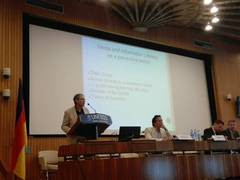 Prevention of violent extremism: the role of educational media 2017-07-06 The prevention of violent extremism (PVE) through education is increasingly gaining importance. The workshop “Prevention of Violent Extremism through Educational Media: Sharing Good Practices” highlighted the role of educational media, such as textbooks, curricula, and teaching materials, in this context.National delegations to UNESCO, education officials, teachers, teacher educators, NGOs and research experts came together in a workshop on 26 June 2017 at UNESCO Headquarters to share experiences on the role of educational media to prevent violent extremism through education. The workshop entitled ‘Prevention of Violent Extremism through Educational Media: Sharing Good Practices’ was co-organised by the Permanent Delegation of Germany to UNESCO, and the Georg Eckert Institute for International Textbook Research. The event aimed to identify the main challenges to PVE through educational media share expertise on policies and good practices and provide impulses for further action.According to H.E. Mr Stefan Krawielicki, Ambassador and Permanent Delegate of Germany to UNESCO, this comes down to a common core task: “enabling young people to change perspective.” In this spirit, his opening remarks outlined the workshop and the challenges ahead: How can educational media enhance the prevention of violent extremism? Which challenges remain for policy makers and educators and how can they be overcome?In the first session, Alexander Leicht, Chief of UNESCO’s Section of Education for Sustainable Development and Global Citizenship, gave an overview of existing UNESCO initiatives on PVE, and emphasized inclusion and respect for diversity as the “single most important policy principle” that we need to promote in an education system to build resilience to the messages of violent extremism. Eckhardt Fuchs, director of the Georg Eckert Institute for International Textbook Research, highlighted the importance of textbooks in PVE and discussed how we can learn and build on successful past history textbook revisions through bilateral commissions which addressed controversial and sensitive issues. Eleni Chistodoulou, senior researcher at the Institute, discussed the many challenges that educators face when being given the task to integrate PVE in the classrooms. She also suggested ways to overcome them and in particular, advised caution regarding certain educational policies that can have the adverse effect “leading to stigmatization and stereotyping rather than empowering students”. Ms Christodoulou shared some good practices of PVE in educational media from the UK, Germany as well as from regional and international organizations.The second session included a mini roundtable where teachers and teacher educators from France, Belgium and Lebanon shared their first-hand experiences both in formal and informal educational settings. They highlighted the role of Media and Information Literacy in helping students build resilience, the role of Citizenship Education in PVE and shared some of the difficulties that they have experienced. Jo Ritzen, Chair of the CELL foundation and former Minister of Education of the Netherlands, discussed the importance of revising textbooks as part of PVE and announced an initiative to establish a ‘Global Agreement’ to reduce divisive stereotypes in textbooks. Other non-governmental organizations such as the Violence Prevention Network also shared their strategies and experiences. A core issue throughout was the need to develop the necessary competencies for young people to resolve conflicts in a peaceful and democratic manner, especially in a school context.A report on the event will be made available by the Georg Eckert Institute for International Textbook Research.Links UNESCO Clearinghouse on Global Citizenship Education Plan of Action to Prevent Violent Extremism Education about the Holocaust
 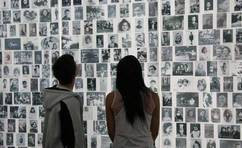 UNESCO supports association between Chilean and Mexican organizations to strengthen Holocaust education 2017-06-13 The goal of these actions is to support policies based on human rights and active citizenship through education, addressing difficult past events through the lens of Holocaust history to contribute to shaping modern values.On June 8, 2017, Chile’s Interactive Jewish Museum and Nenemi Paxia- Sinergias Educativas A.C., in alliance with Mexico’s Museum of Memory and Tolerance and Universidad Nacional Autónoma de México (UNAM) launched a binational initiative to raise awareness among political figures about the importance of strengthening education on genocide and mass atrocities, particularly the Holocaust, at the Museum of Memory and Tolerance in Mexico City.The initiative includes two seminars: one held on June 8 in Mexico and one to be organized in Chile during October 2017. The actions are implemented as a follow-up to the Conference for International Holocaust Education, which UNESCO and the United States Holocaust Memorial Museum (USHMM) organized in 2015.Both events are being sponsored by UNESCO and explore the role of education in addressing difficult events from the past through the lens of Holocaust history in order to shape modern values.The goal of the seminars is to contribute to the construction of a robust citizenry through the creation of communities and networks that bring together diverse stakeholders from academia, education, civil society, government and the media to reflect and exchange ideas.In this dialogue, the Holocaust is the main reference for examining links to citizenship building, including violence and its legacy, the fragility of democracy, justice, human rights and security as well as memory and the role of new technologies in the dissemination of anti-Semitism, racism and xenophobia. Key issues that were discussed during the seminar include the need to think about citizenship in Latin America in the 21st century and the creation of educational public policies related to these issues.Both Chile and Mexico are part of the UNESCO Latin American Network for Education on the Holocaust and Other Genocides and have developed national initiatives to support education on the Holocaust and genocide.***The Conference for International Holocaust Education is a joint initiative that seeks to support and promote the efforts of educational stakeholders to develop strategies and activities designed for national audiences regarding Holocaust history and, more broadly, genocide and mass atrocities.The project also draws on the support of the International Holocaust Remembrance Alliance (IHRA).More information: Holocaust and Citizenship Program (includes program) Conference for International Holocaust Education United States Holocaust Memorial Museum (USHMM)
 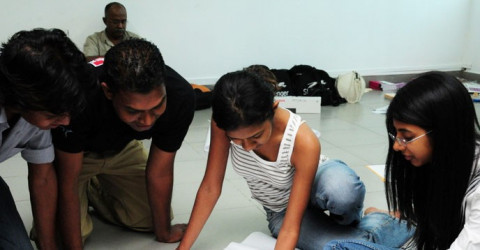 More efforts are needed to mainstream values like tolerance and the appreciation of cultural diversity within National Education Policies 2017-06-09 An analysis of different themes and concepts associated with Global Citizenship Education (GCED) reveals that within the main topics associated with GCED, appreciation of cultural diversity and tolerance are less likely to be reflected in national education policies, curriculum and teacher education.UNESCO commissioned an analysis of the country reports to the fourth and fifth consultations on the implementation of the Recommendation concerning Education for International Understanding, Cooperation and Peace and Education relating to Human Rights and Fundamental Freedoms (1974) in light of Target 4.7 of the Sustainable Development Goal on Education. The analysis included 57 reports from 2012. These series of key findings are presented ahead of the forthcoming data from 2016.The analysis of country reports from 2012, found that concepts related to human rights and fundamental freedoms, and peace and non-violence are broadly included in the national education policies (88%), curriculum (86% and 72% respectively) and in teacher education (54% and 16% respectively).However, concepts related to cultural diversity and tolerance are less likely to be reflected in national education policy (67%), less likely to be mandatory in curricula (68%), and less likely to be mandatory in teacher education (16%). The first of the two groups of concepts related to peace, non-violence, human rights and fundamental freedoms, which have to do with the individual rights and non-contestable ideals, seem to be more widely and easily accepted, while cultural diversity and tolerance, which require proactive efforts to embrace and accept differences, less so.As is shown below, in all areas - especially in teacher education - concepts related to cultural diversity and tolerance are less like to be reflected, vis-à-vis the other two related groups of concepts.UNESCO’s support to the global momentum for GCED has advanced the conceptualization and operationalization of GCED, notably with the publication of the GCED Topics and Learning Objectives in eight languages.UNESCO has received 82 country reports with data from 2016 and data will be available by mid-2017.As the world moves forward on the implementation of the Education 2030 Agenda, UNESCO is committed to monitoring the progress towards the achievement of Target 4.7, with a focus on Education for Sustainable Development and Global Citizenship. Regular reports, news, analyses, publications and links to data sets produced by UNESCO and its partner provide evidence that indicate how the world is progressing towards the achievement of the Target.
 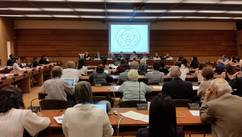 Global citizenship at the heart of discussion on human rights education in Geneva 2017-06-02 Bringing together Member States, UN agencies and civil society, the seminar provided a valuable opportunity to explore connections between initiatives from around the world promoting Human Rights Education in response to SDG Target 4.7What is Human Rights Education and how is it connected to SDG Target 4.7? What current trends, initiatives and examples can be identified from around the world and what are the interconnections between them? These questions were the focus of the seminar “How can human rights education be promoted through the Education 2030 Agenda, especially target 4.7?”, held on 30 May 2017 in the Palais des Nations, Geneva.Moderated by Claire de Lavernette, Chair of the NGO Working Group on Human Rights Education and Learning, the event was opened by H.E. Mr Maurizio Enrico Serra, Ambassador, Permanent Representative of Italy, and Mr Abdulaziz Almuzaini, Director of the UNESCO Geneva Liaison Office. The panel featured Ms Lydia Ruprecht of the Section of Education for Sustainable Development and Global Citizenship, UNESCO; Mr Gilberto Duarte Santos, Crime Prevention and Criminal Justice Officer, UNODC; Ms Elena Ippoliti, Human Rights Officer, OHCHR, and Ms Giorgia Magni of IBE-UNESCO.SDG Target 4.7 stands as an unparalleled recognition of the importance of education in achieving sustainable development that is just, peaceful and inclusive. In this context, the seminar offered a timely opportunity to learn about action in Human Rights and Global Citizenship Education from around the world in support of the Education 2030 Agenda.In his opening remarks, Mr Almuzaini welcomed the discussion as “an occasion to highlight new synergies, to encourage complementary action, and to explore fresh perspectives for shared initiatives.” He went on to stress that “realising the full potential of Human Rights Education requires the cooperation and mobilisation of actors and partners across all sectors, and at all levels.”Representing the States Platform on Human Rights Education and Training comprising Brazil, Costa Rica, Italy, Morocco, The Philippines, Senegal, Slovenia and Thailand, Ambassador Serra emphasised the importance of international cooperation in education as the basis for building peace, underscoring that “all countries can learn by coming together” to advance Human Rights Education around the world.As the United Nations’ specialized agency for education, UNESCO has been entrusted to lead and coordinate the implementation of the Education 2030 Agenda through the Education 2030 Framework for Action, working with Member States, civil society and a broad range of partners around the world.Ms Ruprecht presented UNESCO’s transversal action in the field of Global Citizenship Education, from the establishment and monitoring of targets for the implementation of SDG 4.7, to working with Member States to build capacities across learning environments. Emphasising that “Global Citizenship Education can take many forms around the world”, she highlighted its role in “empowering learners with the values, behaviours, attitudes and knowledge to contribute as citizens”.Mr Duarte Santos shared perspectives on UNODC’s work on Education for Justice (E4J), which builds on and complements UNESCO’s programme on the Prevention of violent extremism through education (PVE-E). He stressed the importance of inter-agency cooperation in advancing Human Rights Education around the world.This message of collaboration was echoed by Ms Ippoliti, who outlined OHCHR initiatives to raise awareness of fundamental rights and freedoms through education, building skills and capacities on the ground in line with the Plan of Action on the World Programme for Human Rights Education.Highlighting the “cross-cutting relevance of Global Citizenship Education to education systems and curricula”, Ms Magni emphasised the role of IBE in research, training and capacity building, as well as in facilitating dialogue between stakeholders.The diversity of complementary approaches and initiatives shared by the speakers prompted lively discussion on multiple dimensions of human rights education, including the challenges of monitoring progress, the role of civil society in advancing human rights education action in non-formal settings, and the need to promote examples of positive impact and good practices to further multiply synergies and opportunities for learning.Going forward, the information and perspectives shared during the event are expected to support the work of Member States in promoting Human Rights Education and Training within the Human Rights Council and beyond.To find out more about UNESCO’s programme on Global Citizenship Education, please visit: http://en.unesco.org/gcedTo learn about UNESCO’s role in leading the Education 2030 Agenda, please visit: http://en.unesco.org/education2030-sdg4
 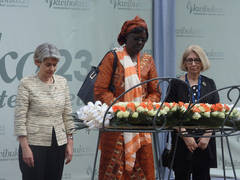 Never Forget, Never Again: Director-General at Kigali Genocide Memorial 2017-05-12 On 10 May 2017, UNESCO Director-General Irina Bokova visited the Kigali Genocide Memorial in Gisozi, a site for remembrance and learning, where she lay a wreath in memory of the victims of the 1994 genocide against the Tutsi of Rwanda.The memorial was chosen by survivors as a place of dignified burial for nearly 300,000 of the victims of the genocide, during which one million women, men and children were assassinated in just over 100 days.This is a site where survivors come to recollect and students to learn about the 1994 genocide and the importance of prevention and peacebuilding through educational programmes and tours.Ms Bokova was taken on a guided tour of the Memorial, which documents the historical roots of the gradual dehumanization of the Tutsis, goes on to describe the planning of the genocide and its execution, the muted response of the international community, the justice and reconciliation process through the international tribunal in Arusha and the local gacaca courts, and educational programmes developed to teach about the genocide and make peace a cross-cutting theme in school curricula. The memory of the savagery is chillingly rendered through life-size photographs of children captioned with their hobbies and the manner in which they were killed, along with belongings and remains of victims, machetes and other weapons used by the killers and testimonies of survivors. “Here in the Kigali Genocide Memorial, I wish to pay tribute to the memory of the victims of the genocide that targeted the Tutsis of Rwanda in 1994, and to the memory of all children, men and women who perished,” said the Director-General. “I wish to express UNESCO’s commitment to stand by the people of Rwanda in its struggle for truth and justice. This is a struggle to build solidarity with and between victims of all mass atrocities, on all continents, throughout history. This is a struggle to educate, to teach about the genocide, to equip people with skills and knowledge to resist hatred and to prevent other genocides. Never forget, never again”.During an earlier meeting on the margins of the Transform Africa Summit, she presented President Paul Kagame with UNESCO’s recent guide for policy makers on “Education about the Holocaust and Preventing Genocides”, noting also close cooperation with Rwanda on education to prevent genocide and build a culture of peace.
 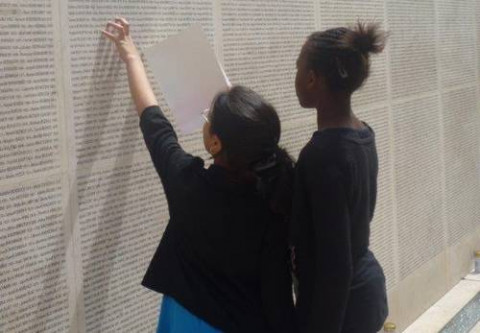 UNESCO publishes policy guide on education about the Holocaust and preventing genocide 2017-05-12 UNESCO ‘s policy guide on Education about the Holocaust and preventing genocide provides effective responses and a wealth of recommendations for education stakeholders who wish to engage in or to reinforce this education. The publication will serve as a resource for policy-makers, curriculum developers, textbooks writers and publishers, and teacher educators. It suggests key learning objectives for education about the Holocaust, as well as topics and activities aligned with educational frameworks relevant to Global Citizenship Education, a priority of the 2030 Education Agenda and a pillar of the Sustainable Development Goal 4 on Education. The policy guide shows how education about the Holocaust, and more broadly genocide and mass atrocities, can meet some of the world's educational policy priorities. It also provides policy-makers with rationales to teach about the history of genocides in a variety of contexts. The policy guide identifies key areas of implementation: curricula, textbooks, professional development, classroom practices, cooperation with museums, memorials and the civil society, adult education, and commemorative activities. The new publication builds on the expertise of many Holocaust and genocide related organizations, including the United States Holocaust Memorial Museum. It contains various links to historical and educational resources relating to several cases of genocides and mass atrocities and explains how they can be taught. The guide focuses primarily on the history of the genocide of the Jewish people by Nazi Germany and its collaborators. Some principles and policies outlined are applicable to other cases of genocide and mass atrocities. Examining difficult pasts such as the Holocaust has a powerful impact on young people because it helps learners identify the roots of prejudice and enhance their critical thinking against racism, antisemitism and all forms of prejudice. It allows them to navigate moral dilemmas of the past as well as of the present, and reflect on their role as citizens to protect and uphold human rights. As people commemorate Yom HaShoah, UNESCO encourages programmes that strengthen a culture of prevention and foster understanding of the causes and consequences of the Holocaust and how genocide can happen.