
News
Catch up on what’s happening in the world of global citizenship education.
1,668 results found
 Seminar in Azerbaijan on Rise of Violent Extremism and Lessons of the Holocaust 2017-05-08 UNESCO Director General Irina Bokova will open an international seminar focusing on the Rise of Violent Extremism and Lessons of the Holocaust, in Baku, Azerbaijan, on 5 May 2017, in the context of the 4th World Forum on Intercultural Dialogue.Organized by the Aladdin Project, a Paris-based NGO promoting intercultural relations, in partnership with UNESCO, the seminar will explore how education can mitigate the rise of violent extremism and promote intercultural dialogue. It will explore also how education about past genocide and mass atrocities, such as the Holocaust, can contribute to better intercultural relationships. The seminar will gather international figures involved in supporting intercultural dialogue globally such as Mustafa Ceric, Grand Mufti emeritus of Bosnia Herzegovina; Bakthiar Amin, former Minister for Human Rights in Iraq and Zalmay Khalilzad, former U.S. ambassador to the United Nations, as well as high-level representatives of all faiths in Azerbaijan. It will also involve Holocaust scholars and educators, notably Dorit Novak, Director General of Yad Vashem (Israel) and Prof. Steven Katz, academic advisor to the International Holocaust Remembrance Alliance (IHRA). Teachers and education policy-makers of Azerbaijan will also participate in the discussions to identify measures that can be taken to foster tolerance and intercultural dialogue through education in the region.UNESCO published the first-ever policy guide on Education about the Holocaust and Preventing Genocide last month. It provides effective responses and a wealth of recommendations for education stakeholders who wish to engage in or to reinforce this education.
  Teaching and Learning about the history of genocide 2017-04-25 UNESCO‘s new policy guide on Education about the Holocaust and preventing genocide provides effective responses and a wealth of recommendations for education stakeholders.What is education about the Holocaust?Education about the Holocaust is primarily the historical study of the systematic, bureaucratic, state-sponsored persecution and murder of six million Jews by Nazi Germany and its collaborators.It also provides a starting point to examine warning signs that can indicate the potential for mass atrocity. This study raises questions about human behaviour and our capacity to succumb to scapegoating or simple answers to complex problems in the face of vexing societal challenges. The Holocaust illustrates the dangers of prejudice, discrimination, antisemitism and dehumanization. It also reveals the full range of human responses - raising important considerations about societal and individual motivations and pressures that lead people to act as they do - or to not act at all.Why teach about the Holocaust?Education stakeholders can build on a series of rationales when engaging with this subject, in ways that can relate to a variety of contexts and histories throughout the world. The guide lists some of the main reasons why it is universally relevant to engage with such education.Teaching and learning about the Holocaust: Demonstrates the fragility of all societies and of the institutions that are supposed to protect the security and rights of all. It shows how these institutions can be turned against a segment of society. This emphasizes the need for all, especially those in leadership positions, to reinforce humanistic values that protect and preserve free and just societies. Highlights aspects of human behaviour that affect all societies, such as the susceptibility to scapegoating and the desire for simple answers to complex problems; the potential for extreme violence and the abuse of power; and the roles that fear, peer pressure, indifference, greed and resentment can play in social and political relations. Demonstrates the dangers of prejudice, discrimination and dehumanization, be it the antisemitism that fuelled the Holocaust or other forms of racism and intolerance. Deepens reflection about contemporary issues that affect societies around the world, such as the power of extremist ideologies, propaganda, the abuse of official power, and group-targeted hate and violence. Teaches about human possibilities in extreme and desperate situations, by considering the actions of perpetrators and victims as well as other people who, due to various motivations, may tolerate, ignore or act against hatred and violence. This can develop an awareness not only of how hate and violence take hold but also of the power of resistance, resilience and solidarity in local, national, and global contexts. Draws attention to the international institutions and norms developed in reaction to the Second World War and the Holocaust. This includes the United Nations and its international agreements for promoting and encouraging respect for human rights; promoting individual rights and equal treatment under the law; protecting civilians in any form of armed conflict; and protecting individuals who have fled countries because of a fear of persecution. This can help build a culture of respect for these institutions and norms, as well as national constitutional norms that are drawn from them. Highlights the efforts of the international community to respond to modern genocide. The Military Tribunal at Nuremberg was the first tribunal to prosecute “crimes against humanity”, and it laid the foundations of modern international criminal justice. The Convention on the Prevention and Punishment of the Crime of Genocide, under which countries agree to prevent and punish the crime of genocide, is another example of direct response to crimes perpetrated by Nazi Germany. Educating about the Holocaust can lead to a reflection on the recurrence of such crimes and the role of the international community.What are the teaching and learning goals?Understanding how and why the Holocaust occurred can inform broader understandings of mass violence globally, as well as highlight the value of promoting human rights, ethics, and civic engagement that bolsters human solidarity. Studying this history can prompt discussion of the societal contexts that enable exclusionary policies to divide communities and promote environments that make genocide possible. It is a powerful tool to engage learners on discussions pertaining to the emergence and the promotion of human rights; on the nature and dynamics of atrocity crimes and how they can be prevented; as well as on how to deal with traumatic pasts through education.Such education creates multiple opportunities for learners to reflect on their role as global citizens. The guide explores for example how education about the Holocaust can advance the learning objectives sought by Global Citizenship Education (GCED), a pillar of the Education 2030 Agenda. It proposes topics and activities that can help develop students to be informed and critically literate; socially connected, respectful of diversity; and ethically responsible and engaged.What are the main areas of implementation?Every country has a distinct context and different capacities. The guide covers all the areas policy-makers should take into consideration when engaging with education about the Holocaust and, possibly, education about genocide and mass atrocities. It also provides precise guidelines for each of these areas. This comprises for example curricula and textbooks, including how the Holocaust can be integrated across different subjects, for what ages, and how to make sure textbooks and curricula are historically accurate. The guide also covers teacher training, classroom practices and appropriate pedagogies, higher learning institutions. It also provides important recommendations on how to improve interactions with the non-formal sector of education, through adult education, partnerships with museums and memorials, study-trips, and the implementation of international remembrance days. More on Education about the Holocaust
 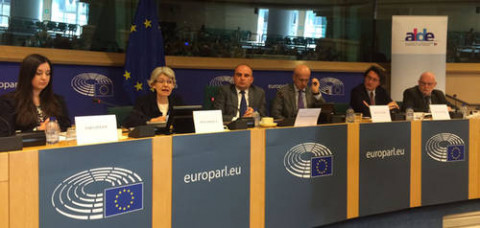 L’UNESCO et le Parlement européen s'unissent contre l'extrémisme violent 2017-04-25 “Building a more just, more peaceful, more sustainable future for all must start on the benches of school,” said the UNESCO Director-General, Irina Bokova, in her keynote address on 21 March, during an event on the role of “Education for preventing violent extremism” held at the European Parliament, organized in partnership with UNESCO. This was held on the eve of the first anniversary of devastating terrorist attacks in 2016 against Brussels. The event took place in the presence of Mr Pavel Telicka, Vice-President of the European Parliament, and was led by Mr Ilhan Kyuchyuk, Member of the European Parliament, as well as Members of the European Parliament. On this occasion, the Director-General called for new forms of education and for new approaches to education. “We need education of quality that reaches every girl and boy, education that promotes dialogue and understanding between cultures,” she said. “Education today must be about learning to live in a world under pressure, it must be about new forms of cultural literacy.” This was echoed by Pavel Telicka, who said young people "are not born as terrorists," and Ilhan Kyuchyuk, who underlined the vital importance of education, skills and opportunities for employment, "to empower young people while respecting human rights and fundamental freedoms." Irina Bokova said “we must act early, not just to counter violent extremism, but to prevent its rise,” underlining that education as the most powerful way to build peace, to disarm processes that can lead to violent extremism. “We need to build the defences of peace in the minds of women and men, starting with education,” declared the Director-General highlighting the importance of ‘soft power’ to counter a threat that draws on an exclusive vision of the world, based on false interpretations of faith, hatred and intolerance. The event featured a Panel Discussion that explored “How to prevent violent extremism and radicalisation through education”. Paolo Fontani, UNESCO Representative to the European Institutions, moderated the panel that included Professor Pat Dolan, UNESCO Chair Child and Family Research Centre, Hans Bonte, Federal Representative for the constituency of Brussels-Halle-Vilvoorde and Mayor, and Sara Zeiger, Senior Research Analyst, Hedayah. Professor Pat Dolan stressed the vital importance of nurturing empathy in young people, to build engagement and advance empowerment while deepening solidarity. "For all this, education is key." Mayor and MP Hans Bonte shared the experience of the city of Vilvoorde in preventing and countering radicalisation leading to violent extremism -- the city having seen a steep challenge of radicalised young people travelling to Syria. "Young people face enormous stress today," he said. "This is something we must face in discussing what education we need and the shape of educational systems, to support young people, keep them in learning. We have to work on all sides, with youth and on schools -- this is where we will win or lose." He underlined the need for bridge-building at the local level to deepen the sense of belonging and solidarity for young people of all backgrounds. Sara Zeiger, of Hedayah, the International Centre of Excellence for Countering Violent Extremism, based in Abu Dhabi, UAE, spoke of the need for comprehensive approaches to education for maximal impact, tailored to specific contexts. She shared good practices from two cases in Pakistan and in Nigeria, to foster critical thinking and resilience building as well as employment skills, in young women and men. Discussion followed on the importance of strengthening media literacy with young people as well as deepening dialogue with religious representatives -- including to counter hate speech on the Internet, while respecting human rights. The vital role of supporting teachers was underlined in all this. "We must provide young people with a renewed sense of belonging, with new skills, and new confidence in the future -- and this must start on the benches of schools," concluded Irina Bokova.
 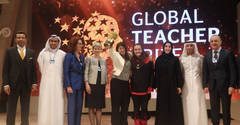 Global Citizenship Takes Centre Stage at Dubai Forum 2017-04-25 UNESCO Director-General Irina Bokova asserted the capital role of global citizenship education for peace, sustainable development and human dignity during her participation in the fifth Global Education & Skills Forum (GESF) in Dubai, on 18 and 19 March.Gathering over 2,000 delegates from public, private and social sectors, the Forum focused on the theme “How to make real global citizens.” The Director-General recalled that UNESCO, a partner of the Forum, had fought hard for global citizenship education to be featured as a target in Sustainable Development Goal 4, encompassing “a holistic vision of why education cannot wait.”During a panel on education in emergencies organized with Plan International, Dubai Cares and the World Food Programme, she stressed the urgent need for political and financial mobilization. “We must look at the consequences of not acting – in terms of poverty reproduction, the destruction of the fabric of communities and societies. This is not only a humanitarian concern but one about peace and security.”During a parliamentarian-style chamber debate with Camfed’s Lucy Lake, former Greek Prime Minister George Papandreou and Rebecca Winthrop from Brookings, she defended education as an answer to the rise of populism. This calls for educational transformation through two angles: first universal access to quality education with equity and inclusion as yardsticks; second, a fresh focus on contents that foster new values and skills for new times. “We need education that both provides relevant skills for the markets of today and tomorrow and education that promotes critical thinking, understanding between cultures, that strengthens democratic values, and the resilience of societies and the planet based on new forms of global citizenship.”She also participated in the first meeting of the Atlantis Group, which brings together former ministers of education to help address global education challenges. Against the backdrop of rising inequality, climate change and technology disruptions, she stated that “the prerequisite should be that education is a public good. This should be the basis of all work to empower teachers, leverage technology, match skills with work, promote social mobility and living together.”Opening the Forum, Mr Sunny Varkey, founder and chairman of the Varkey Foundation, affirmed that education should help children from every country, culture and faith learn that there is more that unites than divides and provide the inspiration and tools to make a positive imprint on the lives of others. OECD’s Andreas Schleicher emphasized the potential of technology to “liberate learning from past conventions, connect learners and create a more collaborative culture.”Announced from the European space station in a star-studded ceremony, the USD 1 million Global Teacher Prize was awarded to Canada’s Maggie MacDonnell, who teaches in Salluit, an Inuit community deep in the Arctic. The 50 finalists of the Prize, now in its third edition, were at the Forum giving master classes and participating in debates. The Prize is awarded by the Varkey Foundation, under the patronage of HH Sheikh Mohammed bin Rashid Al Maktoum, UAE Vice President, Prime Minister and Emir of Dubai.On the sidelines of the Forum, the Director-General met with the Deputy Ruler of Dubai and Minister of Finance of the UAE, HH Sheikh Hamdan bin Mohammed bin Rashid Al Maktoum. She expressed profound gratitude for his contribution to the renovation of Room I at UNESCO Headquarters, as well as his generous support to education through a number of initiatives, including the UNESCO-Hamdan Prize for Outstanding Practice and Performance in Enhancing the Effectiveness of Teachers, a post-diploma course on curriculum design and the literacy and life skills project for youth and women in Somalia. In exchanging views on the refugee crisis, His Highness shared his concerns and commitment to assist in meeting educational needs.During the Forum, the Director-General also met with Mr Jamiyansuren Batsuuri, Minister of Education, Culture, Science and Sports of Mongolia, Mr Orhan Erdem, Deputy Minister of National Education of Turkey, and Mr Nikolay Denkov, Minister of Education of Bulgaria.
 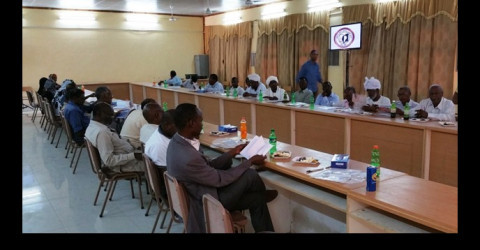 Global Citizenship Education Workshop in Baht Al Ruda, Sudan 2017-04-25 On the 12th April 2017, The UNESCO Khartoum office in collaboration with the UNESCO Beirut regional office, Ministry of Education (MoE), National Centre for Curriculum and Education Research (NCCDER), UNESCO National Commission (NATCOM) and the National Council for Literacy and Adult Education (NCLAE), have conducted orientation workshop on Global Citizenship Education (GCED) at the National Institute of Education Bakht Al Ruda (*) in Ad Douiem, White Nile state. During the opening session H.E. Dr. Pavel Kroupkine, the Representative of UNESCO to Sudan, emphasized the UNESCO’s commitment to promote the national initiatives in integrating the global citizenship values in the Sudanese education system, both formal and non-formal parts of it, expressed a gratitude for the efforts made by the MoE in GCED adopting, and listed various joint activities, conducted by UNESCO with the active participation of partners from the Sudanese Education Sector. Dr. Muawia Gashi, the Head of the NCCDER overviewed the Sudan’s participation in forming the Arab region road map for promoting / adopting GCED and briefed the participants of the workshop on GCED principles and on the expected role of the NCCER in influencing the current stage of curriculum development in Sudan. Mr. Mohammed Hammad, the General Secretary of the NCLAE, convoyed the wishes of H.E. Dr. Souad Abdelrazig, the Minister of Education of Sudan, for a beneficial workshop and thanked UNESCO for supporting the NCLAE to provide capacity building for trainees in the training center of Shendi as well as Sudan’s participation in regional and international literacy activities. He expressed the NCLAE commitment to mainstream GCED in the curriculum, overviewed current efforts of the NCLAE experts, and invited the NCCER to collaborate on integrating GCED in the Sudanese Education system. @UNESCO: Global Citizenship Education Workshop in Baht Al Ruda, Sudan. Stage. 12/04/2017 The technical session started with a presentation by Dr. Muawia Gashi of the UNESCO’s developments in GCED, including the regional Arab road map for GCED promotion. The discussion focused on the national versus international values and on the global citizenship versus puritanism. After refreshments, the fifty researchers of the NCCDER were divided into four groups to take an exercise in integrating one of the GC values into a specific subject. At the end of the workshop, each group presented how they integrated selected values, the technique they used and the challenges they faced in the integration process. The workshop recommendations focused on the need for more discussions on Sudan selection of GC values and on integration of GCED. The workshop stressed on the importance of taking more concrete steps now rather than later, so as to catch up with the current process of new curriculum matrix and the formal education books from grade one to grade twelve (for both academic and vocational education, formal and non-formal education). The workshop recommended a close collaboration between the NCCER and the NCLAE in mainstreaming GCED in the Sudanese Education System overseen by the establishment of a joint technical committee to overview the process. The workshop stressed on the necessity of the advanced capacity building in GCED integration for NCCER and NCLAE experts, and requested UNESCO’s support in bringing in the international expertise. @UNESCO: An exhibition of textbooks of the Institute of Education Bakht Al Ruda in the Institutes’ museum. 12/04/2017© UNESCO
 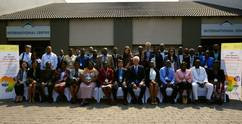 Identifying strategies and solidifying regional action for Global Citizenship Education 2017-04-25 The 2017 Sub-Saharan Africa Regional Global Citizenship Education (GCED) Network Meeting under the theme ‘’Identifying Strategies and Solidifying Regional Action for GCED’’ opened on 6 April 2017 in Johannesburg, South Africa. The meeting that is taking place from 6-7 April 2017 is co-organized by the UNESCO Regional Office for Southern Africa (ROSA) and the Asia-Pacific Centre of Education for International Understanding (APCEIU).In her remarks, the Deputy Secretary General for South Africa National Commission Ms. Lefika Chetty, highlighted the importance of global citizenship education.“It is obvious, especially within the overall context of accelerating global peace, that individuals and communities without a satisfactory level of basic education risk becoming marginalized not only within their own society but from the global society too,” she said.Officially opening the workshop, UNESCO Regional Office for Southern Africa, Director and Representative, Professor Hubert Gijzen said while Global Citizenship might be a relatively new term in African countries, components of GCED such as human rights, citizenship, international relations, peace, conflicts resolution, democracy, and environmental education are not new in the lexicon of Africa.“In sub-Saharan Africa, UNESCO has been supporting GCED implementation through existing programmes in Education for a culture of peace, sustainable development, human rights, democracy, citizenship and good governance, conflict management, as well as the prevention of violent extremism,” he said.Prof. Gijzen urged stakeholders in GCED to strengthen partnerships and explore possible synergies to solidify region-wide action for GCED. “In your discussions, I suggest you also consider engagement with the regional economic communities in Africa (e.g. SADC) as well as the African Union Commission on Education”, he said. Speaking at the same event, the Director of APCEIU, Dr. Chung Utak thanked the UNESCO Regional Office for Southern Africa (ROSA) for their cooperation in the organization of the meeting, which according to him came at the most opportune time, as participants gathered to take a step further in the realization of GCED by exploring potential collaboration through forming human and institutional network for GCED in Africa. He urged stakeholders to work together saying fostering global citizenship was everyone’s agenda.“Fostering global citizenship is not just one of the UN or UNESCO’s agenda. It is every educator’s agenda, every teacher’s agenda. It is everyone’s agenda,” he said. The meeting has three objectives: (1) To strengthen delivery mechanisms of GCED programmes towards improving impact within the region, and ensuring inclusive participation of stakeholders; (2) To improve the scope and outreach of GCED programmes within the region, addressing the priorities and needs of different sub-regions and groups; and (3) To catalyze political engagement and leadership to ensure commitment of stakeholders. Capitalizing on this momentum, the meeting is calling upon partners across Africa to solidify action on GCED. It jumpstarted the formation of the Africa Regional GCED Network, would map different GCED programmes in the region, and explore areas of possible collaboration in light of solidifying regional action on GCED. About 50 representatives from GCED government institutions, Civil Society Organizations, and UNESCO entities from Sub-Saharan Africa and HQ are attending the meeting. Through presentations, panel discussions and group works, they will develop strategies towards the scaling-up of efforts in the global promotion of GCED.For more information, please contact: c.medel-anonuevo(at)unesco.org or aw.coulibaly(at)unesco.org
 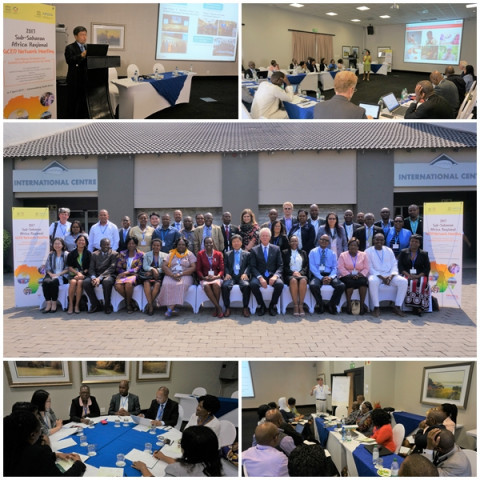 Johannesburg Meeting explored solidifying GCED Action in Africa 2017-04-20 Co-organized by APCEIU and the UNESCO Regional Office for Southern Africa (ROSA), the 2017 Sub-Saharan Africa Regional Global Citizenship Education (GCED) Network Meeting was held on 6-7 April 2017 in Johannesburg, South Africa. The meeting brought about 50 representatives from Sub-Saharan Africa education-related ministries, civil society organizations, universities and research institutions and UNESCO entities to develop strategies and solidify regional action for GCED, in light of its realization as an integral part of the Sustainable Development Goals (SDGs). The meeting held discussions and group work that identified existing action of different stakeholder groups on GCED, challenges, and ways forward. In particular, the meeting shone light on the importance of GCED in promoting transformative education and developing solutions with the region’s pressing challenges. The meeting also identified ways on how to implement SDG Target 4.7, to ensure that learners in the region are provided with knowledge and skills that promote sustainable development and global citizenship.Representing the host country, Ms Lefika Chetty, Deputy Secretary-General of the South African National Commission for UNESCO, at the opening of the meeting highlighted the urgency of GCED to leave no one behind in her congratulatory remarks, saying that, “It is obvious, especially within the overall context of accelerating global peace, that individuals and communities without a satisfactory level of basic education risk becoming marginalized not only within their own society but from the global society too.” Initiating the opening remarks from the organizing institutions, Mr Hubert Gijzen, Director of the UNESCO Regional Office for Southern Africa, explained that GCED, while relatively new to Africa, has existed in the region, and is an opportunity to rethink about the role of education, and a way to integrate all the dimension of sustainable development. In his words, he mentioned that “Global Citizenship may be a relatively new term in African countries. However, components of GCED such as human rights, citizenship, international relations, peace, conflicts resolution, democracy, and environmental education are not new in the lexicon of Africa.” Mr Utak Chung, Director of APCEIU, urged participants towards collaboration towards GCED, as it is everyone’s agenda. “Fostering global citizenship is not just one of the UN or UNESCO’s agenda. It is every educator’s agenda, every teacher’s agenda. It is everyone’s agenda,” he said. The meeting showcased the diverse efforts of institutions in the various sub-regions of Sub-Saharan Africa towards the promotion of GCED. It highlighted the different perspectives of stakeholder groups, ranging from governments, civil society organizations including the youth, research groups, higher education institutions, and international organizations including UNESCO and its related entities. At the same time, the meeting showed the diverse concepts embedded in GCED, including human rights, peace, and gender equality, among others, which has been implemented in the region for a long time. Participants voiced the importance of GCED in reinforcing the role of education in addressing current challenges of the region, including resolving conflict and the prevention of radicalization amongst the youth. They also discussed on strategies at the organizational, thematic and regional levels, identified priorities, and developed strategies to strengthen promotion of GCED. With the development of the strategies, follow-up plans were drawn where the key message is coordination and communication. Ms Ann Therese Ndong-Jatta, Director of the UNESCO Regional Office for Eastern Africa, congratulated the participants for their seriousness and commitment for GCED. She urged that participants to utilize the network formed in this meeting as a stepping stone towards building peace through education for Africa building on existing work, and to promote inclusiveness. The meeting jumpstarted the formation of the Africa Regional GCED Network, which is expected to map different GCED programmes and explore possible collaboration in light of solidifying regional action for GCED in Africa. Related Link: http://www.unesco.org/new/en/harare/about-this-office/single-view/news/identifying_strategies_and_solidifying_regional_action_for_g-1/ URL: Johannesburg Meeting explored solidifying GCED Action in Africa > APCEIU News - APCEIU (unescoapceiu.org)
 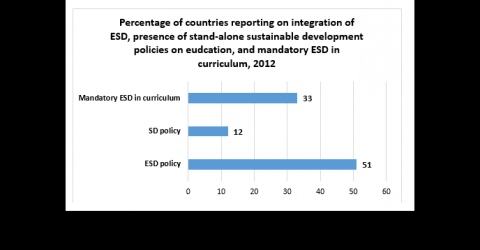 Education for Sustainable Development (ESD) is becoming an integral part of national education policies 2017-04-17 Country reports from UNESCO Member States reveal that more than half have integrated ESD into their national education policies.UNESCO commissioned an analysis of the country reports to the fourth and fifth consultations on the implementation of the Recommendation concerning Education for International Understanding, Cooperation and Peace and Education relating to Human Rights and Fundamental Freedoms (1974) in light of Target 4.7 of the Sustainable Development Goal on Education. The analysis included 57 reports from 2012. These series of key findings are presented ahead of the forthcoming data from 2016.The analysis reveals that in 2012, 51% of responding countries positively reported on the integration of Education for Sustainable Development (ESD) into national education policies.Meanwhile, the percentage of countries reporting to have a stand-alone education national policy, plan or law for sustainable development (SD) in 2012 was 12%. In 2012, 33% of reporting countries reported that ESD is mandatory in curricula, which indicates the significance and visibility of ESD within the national education policies. The development of specific education policies on sustainable development appears to lag behind the rate at which the education sector is integrating an overall ESD agenda in national education policies.UNESCO has received 82 country reports with data from 2016 and data will be available by mid-2017.As the world moves forward on the implementation of the Education 2030 Agenda, UNESCO is committed to monitoring the progress towards the achievement of Target 4.7, with a focus on Education for Sustainable Development and Global Citizenship. Regular reports, news, analyses, publications and links to data sets produced by UNESCO and its partner provide evidence that indicate how the world is progressing towards the achievement of the Target.
 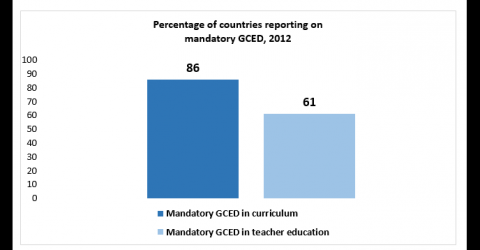 Teachers’ capacity to deliver Global Citizenship Education (GCED) could be strengthened 2017-04-14 Global Citizenship education is found to be present in the curriculum across countries, but it is not as likely for it to be included in pre-service and in-service teacher education.UNESCO commissioned an analysis of the country reports to the fourth and fifth consultations on the implementation of the Recommendation concerning Education for International Understanding, Cooperation and Peace and Education relating to Human Rights and Fundamental Freedoms (1974) in light of Target 4.7 of the Sustainable Development Goal on Education. The analysis included 57 reports from 2012. These series of key findings are presented ahead of the forthcoming data from 2016.Data from 2012 shows that 86% of reporting countries have included GCED as mandatory in the curriculum, while only 61% reported having mandatory GCED in teacher education. This suggests that there is need to reinforce GCED teacher education to deliver the mandatory curriculum.UNESCO has received 82 country reports with data from 2016 and data will be available by mid-2017.As the world moves forward on the implementation of the Education 2030 Agenda, UNESCO is committed to monitoring the progress towards the achievement of Target 4.7, with a focus on Education for Sustainable Development and Global Citizenship. Regular reports, news, analyses, publications and links to data sets produced by UNESCO and its partner provide evidence that indicate how the world is progressing towards the achievement of the Target.
 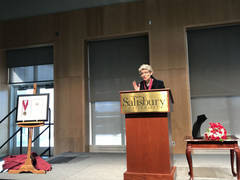 Director-General stresses the role of Education for Preventing Violent Extremism at Salisbury University 2017-04-10 On 6 April, as part of her visit to the United States of America, Director-General Irina Bokova gave a lecture on “Preventing Violent Extremism in the 21st Century: Fostering a New Generation of Global Citizens” at Salisbury University in Maryland. Some 400 students and university staff attended the event, which was part of the “One Person Can Make a Difference” lecture series hosted by the Bosserman Center for Conflict Resolution.On this occasion, the Director-General was awarded the President’s Medal of Salisbury University. "I present this medal to Ms Irina Bokova, the Director-General of UNESCO, in recognition of her lifelong dedication and service to the global community of Nations, and for her major contribution to ensuring that girls have equal access to education and are empowered in their communities as women; advancing dialogue among people and nations by building our common heritage; and promoting diversity," said Dr Janet Dudley-Eshbach, President of Salisbury University. In her lecture, the Director-General reflected on ways for peace, the challenges of its construction and the difficulties related to its maintenance. “Across the world, we see conflicts changing shape, with culture moving to the frontline. […] We have seen intentional destruction of irreplaceable cultural landmarks, and organized looting for illicit trafficking. […] All of this is part of the same strategy of “cultural cleansing”. This seeks to destroy identities by eliminating heritage and cultural markers”, she stated.The Director-General highlighted the importance of soft power in the struggle against violent extremism, emphasizing that radicalization, false interpretations of faith, hatred and intolerance cannot be countered through the exclusive use of hard power. She emphasized the crucial importance of education in fostering peace and preventing radicalization, underscoring that combatting violent extremism begins on the benches of school.“Violent extremists are made – they are fueled. Young people are learning to hate – we must teach them peace. Violent extremists promote fear and division – we must respond with skills, with opportunities for civic engagement, for intercultural dialogue. Violent extremists preach exclusion and hatred. We must teach human rights, dignity, tolerance and solidarity.”Referring to UNESCO's programme on Global Citizenship Education, the Director-General commended Professor Brennen, UNESCO Chair for Rural Community, Leadership and Youth Development. "Professor Brennen is one of UNESCO's greatest champions in the United States. His contribution to Global Citizenship Education is outstanding" she said. The event at Salisbury University was by Professor Brian Polkinghorn, Distinguished Professor and Executive Director of the Bosserman Center for Conflict Resolution at Salisbury University and Professor Mark Brennen, UNESCO Chair for Rural Community, Leadership and Youth Development at the Pennsylvania State University.