
News
Catch up on what’s happening in the world of global citizenship education.
1,668 results found
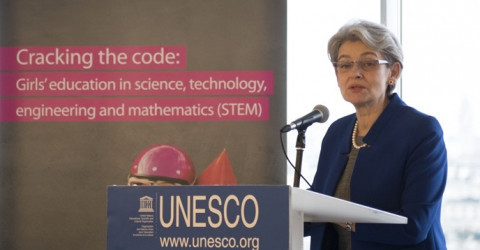 UNESCO supports countries to crack the code, advance gender equality in STEM education worldwide 2017-11-13 “Girls and women are key actors in crafting solutions to improve lives and generate inclusive, green growth that benefits us all,” said UNESCO’s Director-General Irina Bokova in her opening remarks. But she noted that “far too few girls are in school, and far too few of them pursue studies in STEM subjects. Even fewer go on to lead STEM careers.” Still today, girls and women around the world face steep challenges hindering their education opportunities. This is of particular concern in the fields of STEM, where girls and women are significantly under-represented. To support Member States in their efforts to advance gender equality in education, the event shared UNESCO’s latest findings on girls’ and women’s participation, achievement and continuation in STEM education. UNESCO’s cutting-edge report Cracking the code: girls’ and women’s education in STEM finds that only 35% of all students enrolled in STEM-related fields at higher education are female. In mathematics and engineering in particular, girls’ represent only 5% and 8% of all students, respectively. The report goes deeper. It finds that the potential contributions and talent of millions of women are put aside due to a variety of factors from girls’ own perceptions of their abilities to systemic and educational biases. To respond to these hindering factors, the report offers targeted actions on four levels (learner, parents and peers, school and society) to increase girls’ and women’s participation and engagement in STEM disciplines. “Listening to different perspectives and approaches was helpful in the way that we look at the scope of business,” said Executive Vice President of the CJ Group, Heekyung Jo Min, highlighting her inspiring experience from the three-day UNESCO International Symposium and Policy Forum held in August 2017 in Bangkok, Thailand. She further stated, “we need more of us in the private sector to engage on this issue, and to help girls’ and women’s take their righteous place in tech or engineering companies and in laboratories.” The Symposium explored gender inequalities in STEM education and shared innovative solutions empowering girls and women that could be replicated worldwide. Watch the outcomes video of the Symposium (link is external). “Only 50% of capacities are utilized. We need to utilize 100% of the talent available from women and men,” shared Amandine Clerc, student from the Associated Schools network (ASPnet). Inspired by the Symposium, Clerc is now thinking of re-orienting her studies to science fields and has founded a STEM club in her school. Looking at the way forward, participants discussed the importance of continued cooperation across all sectors to further momentum on this topic during a moderated discussion bringing together experts and partners. Relevant tools and initiatives, such as the TeachHer partnership and the UNESCO-L’Oréal for Women in Science (link is external) were highlighted for their key role in promoting girls and women in STEM education and careers. Teachers have a strong role in engaging girls in STEM fields. Farah Ouechtati, member of the panel and UNESCO-L'Oréal International Fellow, shared that she was inspired and encouraged to continue in sciences by her biology teacher, a woman. UNESCO promotes gender equality in and through education systems from early childhood to higher education, in formal, non-formal and informal settings and in all intervention areas from planning infrastructure to training teachers.
  How Malta is implementing Global Citizenship Education 2017-11-10 In the Republic of Malta, Global Citizenship Education (GCED) is being implemented through religious and ethics education and social studies in primary and secondary schools. Since 2015, it is a legal requirement for schools to implement education that prevents people from being drawn into violent extremism. David Degabriele, Assistant Director of Curriculum at the Directorate for Learning and Assessment Programmes of Malta’s Ministry for Education and Employment said: “It is a matter of fact that violent extremism does not know any boundaries irrespective of race, gender, age and other characteristics. Malta is no exception to this and with today’s immediacy, instant sharing of world news and instant and uncontrolled communication methods, dealing with different cultures, values, believes and ways of lives are bringing new challenges that need to be addressed.” According to Mr Degabriele, this approach to GCED changed the focus of learning from a wholly content-oriented programme to one that is student-focused. “We switched from learning questions and answers to discussions of personal experiences and responses; and from differences being defined denominationally within the tradition, to an acknowledgment of the variety of people in Maltese society today and respect for the diversity of their religions and beliefs.’’ He said implementing GCED on the island was facilitated by UNESCO’s guidance documents and in particular, the Teacher’s Guide on the Prevention of Violent Extremism. In reviewing how GCED can be embedded in curricula, a Learning Outcomes Framework was produced which would be implemented in the school year 2018-2019. Mr Degabriele, who took part as a National Expert in the EU Commission’s working group in Brussels on promoting citizenship and the common values of freedom, tolerance and non-discrimination through education, said: “Increasingly, the need for professional education resources is being felt. As educators, our endeavours in promoting solidarity, a sense of belonging and responsibility are never enough. We as educators have an important role to play in pupils’ holistic formation and hence the high degree of relevance of [UNESCO] Teachers’ Guide.” Since its inception, UNESCO has been committed to promoting a culture of peace and non-violence, particularly through Global Citizenship Education (GCED). GCED aims to empower young people to become active contributors to face and resolve global challenges and build a more peaceful, tolerant, inclusive and secure world. GCED is highlighted in Target 4.7 of the 2030 Agenda for Sustainable Development. URL:https://en.unesco.org/news/how-malta-implementing-global-citizenship-education
 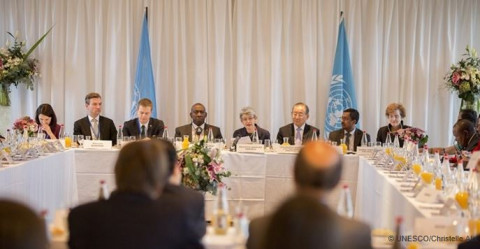 Operationalization of SDG4 and role of capacity development in education 2017-11-09 UNESCO Director-General Irina Bokova hosted a Ministerial Breakfast meeting of the Capacity Development for Education (CapED) Programme on 2 November 2017 at UNESCO Headquarters in Paris. The side-event of the 39th Session of the General Conference brought together the Prime Minister of Madagascar and some 20 Education Ministers, including the Ministers of the three donor countries Finland, Norway and Sweden, to discuss the operationalization of SDG4 and the role of capacity development in education to make progress towards the Education 2030 Agenda. The CapED Programme is a delivery platform, supporting Least Developed Countries to achieve key national priorities in the context of SDG4, to ensure inclusive and equitable quality education and promote lifelong learning opportunities for all. To this end, it focuses on three priority areas: education policies and plans, skills for life and work, and teachers. As Ministers took the floor, UNESCO’s work through CapED provided the guiding thread for common challenges and best practices to be shared.Ms Bokova opened the meeting by describing CapED as a trusted programme that supports capacity development in 25 countries, responding to national needs and priorities, hailing it as “implementation in action”. The Prime Minister of Madagascar, H.E. Mahafaly Olivier Solonanadrasana, explained in his keynote speech how the CapED Programme has supported the development of a new Education Sector Plan with a stronger focus on SDG4 targets and corresponding monitoring tools with the technical assistance of UNESCO’s Institute for Statistics (UIS). He also discussed the Programme’s support in strengthening the TVET system and TVET programmes for out-of-school youth in rural areas. He spoke of concrete results arising from these developments, for instance, that 81% of young people found employment or launched their own businesses after taking part in the CapED-supported training programmes. Strengthening capacity development Through UNESCO’s CapED SDG4 Pilot Programme, capacity development has been strengthened in 10 countries to look at how policies, plans, legislation, data and monitoring systems can better embrace the Education 2030 Agenda. In this context, the Minister of Cambodia shared with participants how UNESCO has supported the development of an SDG4 roadmap, which will guide their next education strategic plan “to ensure that we are moving to reach those goals by 2030.” While the Minister of Mozambique focused her intervention on how CapED is providing key elements to strengthen the right to education, in particular in relation to SDG4 targets 1, 4 and 5, as the country prepares a new education law. Improving data collection and monitoring of progress towards national education priorities and SDG4 targets is another critical area that many countries seek capacity development. The Minister of Myanmar mentioned CapED’s support in developing data and announced that the country’s first-ever education statistical yearbook would be published in 2018. Sustained domestic and international financing is needed to accomplish SDG4. CapED, through technical support from IIEP, has supported Senegal to finalize its National Education Accounts. The Minister of Senegal broached this topic, declaring that this work allowed Senegal to analyse the financing of Education and to make projections with an improved allocation of financial resources. Similarly, the Norwegian Minister also discussed funding, expressing his country’s belief that education is central to achieving all the SDGs and of the concerning decrease in donor support in education over the last 6 years. He explained that this was partly why the Norwegian government has placed education at the top of their development agenda. The issue of gender equality was also discussed. The Minister of Niger shared some highlights from the CapED Programme in his country, which trains teachers to approach STEM subjects with gender-sensitivity, promoting girls to pursue these scientific subjects. While the Minister of Sweden presented good examples in gender equality in education and stated that, “CapED is a vital tool for strengthening the education systems in the countries where it is most needed and I know it makes a real difference on the ground.” Since two-thirds of all non-literate adults worldwide are women, Chad’s Minister discussed the question of literacy. He underscored the importance of partnerships if we are to make headway on target 4.6 and how Chad has used literacy materials produced with CapED support and funding from the Global Partnership for Education (GPE) to make 32,000 youth and adult learners literate. Alice Albright, the Chief Executive Officer of GPE was also present. She stated that we “look forward to continuing to work with all of you on furthering the goals of CapED and in general SDG4.” Supporting teacher training Teachers constitute one of the key means to implement SDG4 and one of CapED’s three priority areas. The Programme focuses on three intervention areas for this priority: teacher policy development, training and gender-sensitive approaches. Lao PDR discussed how CapED supported enhancing teacher capacities by training 2,000 primary school teachers across the country to teach basic literacy skills. Teachers are also invaluable when crises and emergencies become a major barrier to education. In Syria, CapED has supported teacher training through a ‘catch-up’ programme for children who missed 4 years of schooling and a second chance programme for children who did not pass final exams in primary to decrease repetition rates. The SDG4-Education 2030 Agenda has given increased emphasis to skills for work and CapED has worked in this area for a number of years. Finland’s Minister emphasized the importance of TVET declaring that it should be viewed as an equal alternative to standard education. She also discussed the significance and development of TVET in Finland and outlined current Finnish TVET reform. Liberia is also undertaking a major reform of its TVET system. Its Minister noted the establishment of an Inter-ministerial Task Force for TVET and CapED’s support leading to major improvements in TVET governance in the country. The Assistant Director-General for Education, Mr Qian Tang reflected on his personal involvement in CapED and welcomed the Ministerial Meeting as a facilitator of a face-to-face dialogue between donor and beneficiary countries. Mr Tang also discussed CapED’s role as a delivery platform, pulling together many sources of funding and different entities such as headquarters, field offices and institutes around the globe to deliver as one.
  UNESCO and Brookings highlight ways to chart progress in Global Citizenship Education 2017-11-09 The Brookings Institute, with input from UNESCO, published a guide, which gathers best practices and tools to measure Global Citizenship Education (GCED). Measuring Global Citizenship Education, a Collection of Practices and Tools(link is external), aims to provide guidance for educators, policymakers, NGOs, civil society, and researchers and at the same time help measure progress towards Target 4.7 of Sustainable Development Goal 4, which includes GCED. The toolkit is the result of the collective efforts of the Global Citizenship Education Working Group, a collegium of 90 organizations and experts co-convened by the Brooking Institutions(link is external), UNESCO, and the United Nations Secretary General’s Global Education First Initiative’s Youth Advocacy Group. The working group met at several occasions in Bogota, Paris and Dakar between July 2014 and April 2015. The working group took as its definition of GCED any educational effort that aims to provide the skills, knowledge, and experiences and to encourage the behaviours, attitudes, and values that allow young persons to be agents of long-term, positive changes in their societies. The toolkit catalogues 50 profiles of assessment efforts, each describing practices and tools to measure GCED at classroom, local, and national levels. The survey does not represent an exhaustive list but serves as a living document that will grow as the field of GCED itself grows around the world. URL:https://en.unesco.org/news/unesco-and-brookings-highlight-ways-chart-progress-global-citizenship-educationResource URL:https://gcedclearinghouse.org/resources/measuring-global-citizenship-education-collection-practice-and-tools
 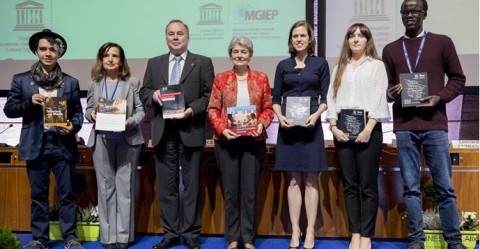 What works to prevent violent extremism 2017-11-08 The UNESCO Intersectoral Team on the Prevention of Violent Extremism and the UNESCO Mahatma Gandhi Institute of Education for Peace and Sustainable Development (MGIEP) organized a side event “What Works and What Doesn’t in the Prevention of Violent Extremism: A Discussion on UNESCO’s Actions and Launch of UNESCO’s Latest Publications”, as part of the 39th session of the UNESCO General Conference on 3 November 2017 at UNESCO Headquarters in Paris. The gathering highlighted UNESCO’s efforts in preventing violent extremism with a variety of approaches across all sectors of society. Irina Bokova opened the event with UNESCO’s vision of how to respond to this complex challenge. “Across the globe, societies suffer horrendous acts of terrorism, minorities are persecuted, cultural diversity is attacked.… journalists are being silenced… schools are destroyed, children are taken hostage.… humanity’s cultural heritage is being pillaged and looted, to finance more terrorism … cultural cleansing is pursued to weaken the grounds for peace…Violent extremism is a red thread tying this picture together,” she said. “There is no single cause for its rise -- nor is there a single trajectory leading someone to extremist violence. But we do know it is not enough to counter this threat -- we must prevent it, and this is UNESCO’s leading strength.” UNESCO’s unique approach to PVE was presented through the publications launched on this day, including UNESCO’s intersectoral brochure Preventing Violent Extremism Worldwide, the Education Sector’s Preventing violent extremism through education: A guide for policy-makers, the Communication and Information Sector’s publication Youth and Violent Extremism on Social Media: Mapping the Research and Terrorism and the Media: A Handbook for Journalists, and UNESCO MGIEP’s #YouthWagingPeace: A Youth-led guide on Prevention of Violent Extremism through Education. Various approaches to prevent violent extremism The opening was followed by a discussion on different approaches to the prevention of violent extremism. “Education is the key […] every child should find his or her place as an active member of society” said H.E. Pekka Puustinen, Permanent Delegate of Finland to UNESCO and co-chair of the Group of Friends of PVE. However this requires ‘’equal opportunities for all; otherwise we feel that some bricks are missing in the prevention of violent extremism.” Chafica Haddad, Chair of the Intergovernmental Information for All Programme, underlined the importance of ‘’nurturing a responsible internet behavior to teach youths to live together peacefully’’. Reflecting on the challenges engaging youth, Carolyn Nash, one of the leading co-authors of the MGIEP publication, called to go beyond tokenism and proceed to a ‘’cultural shift [as we need] to include unheard voices in the conversation’’. Participation is key. ‘’Peace and compassion have to be lived, they cannot be learned’’, stressed Carolyn Nash. Arts and culture can help trigger the needed transformations. As indicated by Leonardo Párraga, Executive Director of the Fundación BogotArt, an artistic experience can help breakdown prejudices that lead people to see each other as enemies. This is necessary to prevent violent extremism, and extreme violence that is prevalent in Latin America. Linked to the event, the Anne Frank House’s traveling exhibition “Let me be myself - The life story of Anne Frank” connects the life story of Anne Frank to contemporary experiences of discrimination and exclusion. The exhibition is on display until 4 November 2017. UNESCO addresses PVE through an intersectoral approach, which includes education, youth engagement and empowerment, media and online-coalitions, and the protection of cultural heritage and diversity. Learn more about UNESCO’s work on Prevention of Violent Extremism and the UNESCO Mahatma Gandhi Institute of Education for Peace and Sustainable Development (MGIEP). URL:https://en.unesco.org/news/what-works-prevent-violent-extremism
 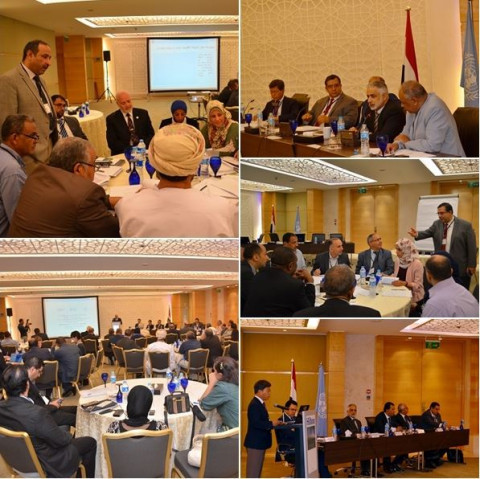 Commitment of Stakeholders to the Realization of GCED Network in the Arab States 2017-11-07 Co-organized by APCEIU and the UNESCO Regional Bureau of Education for the Arab States (UNESCO Beirut) and King Abdullah Bin Abdulaziz International Centre for Interreligious and Intercultural Dialogue (KAICIID), the 2017 Arab States Regional Global Citizenship Education (GCED) Network Meeting was held during 13-14 October 2017 in Luxor, Egypt. The meeting brought about 50 representatives from 30 GCED-implementing institutions in the region and this included participants representing the government, national, regional and global organizations, teacher training institutes, universities and civil society organizations. They gathered to develop strategies towards the scaling-up of efforts in the global promotion of GCED, especially in the context of the Arab region. The meeting was composed of plenary sessions and working group discussions to share good practices and effective implementation strategies for GCED. In particular, the meeting sessions were divided into three main topics: framing GCED within a global/regional agenda-setting process, scaling up of good GCED initiatives and developing network strategies. The meeting also facilitated institutions to form and strengthen a regional network for GCED. In the opening speech, Mr. Chung Utak, Director of APCEIU mentioned the goal of the GCED Network Meeting and emphasized the importance of network and partnership among the stakeholders, stating that “We are gathered here to take a step further in the realization of GCED by exploring potential collaboration through forming human and institutional network for GCED in the Arab States”. Dr. Hamed Al Hammami, Director of UNESCO Regional Bureau for Education in the Arab States emphasized new paradigm shifts in education, saying that “We need to have changes. If we need to have new pedagogies ? all should be based on human rights ?. Once again, we would be sincere to have a new form of education that focuses on new variables ? education that is human based ? we should focus on students ? to have social development.” During the session of ‘Scaling up of good GCED initiatives’, participating institutions provided presentations on GCED such as practices and activities. Dr. Reda Hegazi, First Under Secretary for Education from Egypt presented GCED in the New National Education Strategy. Also, Dr. Hassan Nazem, UNESCO Chair for Intercultural and Interreligious Dialogue at the University of Kufa in Iraq emphasized the role of youth as global citizens and presented about promoting citizenship among youth in Iraq. During the second day of the meeting, participants had an interactive group discussion in working groups on developing network strategies. Facilitated by Dr. Mohammed Abou Nimer, Professor of American University and Senior Adviser to KAICIID, led the working groups to discuss challenges, needs and upscaling opportunities and tools regarding the promotion GCED. Participating institutions agreed on Terms of Reference about the aim of the Network and identified role and responsibilities of network members. All agreed that the goals of the Arab States Regional GCED Network are to become “Accelerator”, “Bridge” and “Community” for GCED. Network members are expected to meet regularly through a webinar or e-conference and report about their work on GCED. Also, they are encouraged to share information about upcoming events and to collect publications and resources for the UNESCO GCED Clearinghouse. APCEIU expects that the Arab States Regional GCED Network would enable to promote the commitment of stakeholders through sustained advocacy and outreach, as well as continuous exchange of information on GCED and co-organization of collaborative activities such as meetings, conferences and research programmes in order to scale-up efforts on promoting GCED in the regional and global level.URL:Commitment of Stakeholders to the Realization of GCED Network in the Arab States > APCEIU News - APCEIU (unescoapceiu.org)
 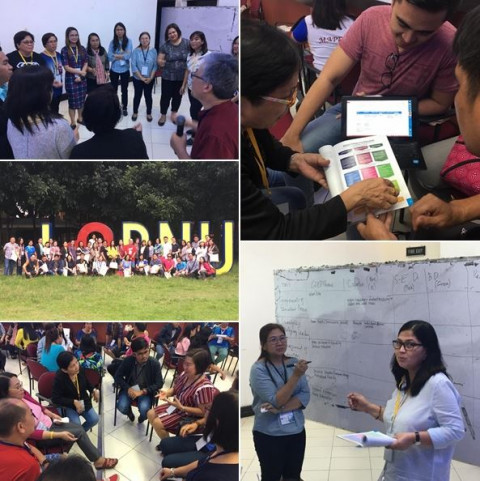 A Workshop on Embedding GCED in the New Teacher Education Curriculum in the Philippines 2017-11-07 APCEIU co-organized a workshop on embedding GCED in the new teacher education curriculum in the Philippines from 24 to 26 October 2017. This workshop was co-organized by the Philippine Normal University, the Philippine National Commission for UNESCO, and the National Association of UNESCO Clubs in the Philippines. A total of 50 participants consisting of deans and professors of colleges of education and basic education teachers from all regions of the Philippines attended the workshop with the objective of reinforcing the effective incorporation of GCED in the teacher education curriculum in the Philippines. In the Philippines, a new teacher education curriculum has been introduced to prepare teachers for the newly approved K-12 (Kindergarten to Grade 12) curriculum in the basic education sector. Against this background, the workshop aimed to raise participants' awareness about GCED and enhance their understanding of the key concepts, practices, pedagogy and facilitation strategies for GCED and discussed methods for embedding GCED into the new teacher education curriculum. By the last day of the workshop, the participants shared their ideas on measures for incorporating GCED into the mandatory courses offered at teacher education institutions in the Philippines including: Assessment, Teaching Profession and Pedagogy. Finally, the participants presented their action plans to put GCED into practice in their respective institutions. As this workshop was also a realization of an action plan of a Filipino participant of the 17th Asia-Pacific Training Workshop held by APCEIU in July 2017, the workshop built a positive outlook on the continuous spread of GCED in teacher education in the Philippines. URL:A Workshop on Embedding GCED in the New Teacher Education Curriculum in the Philippines > APCEIU News - APCEIU (unescoapceiu.org)
 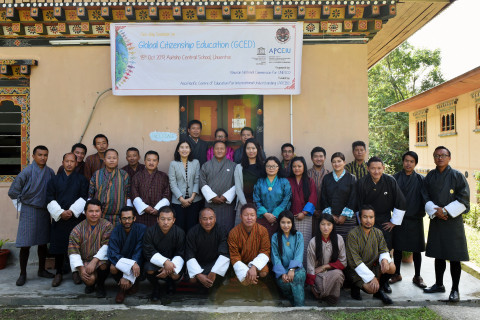 Teacher’s Seminar in GCED: Spreading the Culture of Peace to Teachers in Bhutan 2017-11-07 Co-organized by Asia-Pacific Centre of Education for International Understanding (APCEIU) and Bhutan National Commission of UNESCO (BNCU), Workshop in Bhutan on GCED (Global Citizenship Education) took place for two days between 14 and 15 of October 2017 in Lhuentse District(Dzongkhag), Bhutan. The Workshop in Bhutan on GCED is the second post-Fellowship programme, Fellowship Good Practices & On-site Training, following the workshop held in Lesotho last July. The case of Ms. Dechen Pelden (2014 Fellowship Participant from Bhutan) on “Teacher Training on Project-based Learning(PBL) and GCED Pedagogies” has been selected as one of the three good practices, and the Workshop has been implemented to further encourage her efforts to enhance the capacity of the teachers in the district of Lhuentse, Bhutan. After the completion of the Fellowship Programme in 2014, Ms. Dechen has shared the knowledge gained during the two months training by hosting teacher’s workshop on Project-based Learning and GCED at her school as well as assisting her colleagues to carry out actual projects with their students in the classroom scene. The first day of the Workshop invited teachers of Autsho Central School located in Lhuentse District to learn about Project-based Learning and ways of materializing it in class. Ms. Dechen facilitated the session by first giving the basic concept and the steps of constructing projects in classes. She also provided several examples from her past experiences where she co-taught project-based classes on accounting. Discussions and dialogues on ways of implementation were carried out, and the teachers of Autsho Central School were grouped together based on the subjects they teach to generate actual lesson plans to be utilized in classes. The second day of the workshop was a platform for teachers in Lhuentse District to build the participants’ capacities and share their own experiences in the field of GCED. The Workshop gathered 26 principals, UNESCO Club/ASPnet coordinators and district focal persons to deepen their understanding on GCED and present their practices of integrating GCED during classroom teaching or club activities. The participants also addressed challenges they have faced while implementing GCED initiatives and discussed on ways of further enabling Global Citizenship Education in the context of Bhutan. Ms. Dechen will continue to share her knowledge on Project-based Learning with other teachers in Bhutan through facilitating six more workshops across the Lhuentse District. URL:Teacher’s Seminar in GCED: Spreading the Culture of Peace to Teachers in Bhutan > APCEIU News - APCEIU (unescoapceiu.org)
 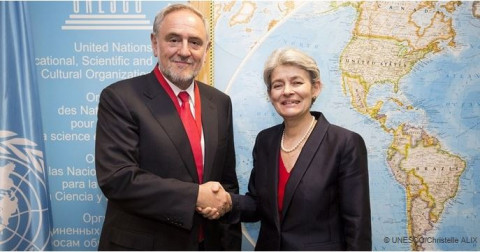 UNESCO and World Jewish Congress to cooperate on Holocaust education website 2017-11-07 The Director-General of UNESCO, Ms Irina Bokova, and the Chief Executive Officer of the World Jewish Congress (WJC), Mr Robert Singer, announced on 1 November 2017 that both organizations will work together to develop a new interactive website on the history of the Holocaust. The platform will help counter messages of Holocaust denial and distortion that are circulating on the Internet and social media. The website will provide essential historical information about the Holocaust and its legacy, and in particular, the way that it continues to influence the modern world. It will include testimonies of survivors, and latest news updates on instances of Holocaust denial, and other Holocaust-era related issues. At the heart of the website will be the “Educate A Friend” feature, which will enable users to ‘nominate’ a friend to receive automatic emails containing information and facts. Witnesses and survivors of the Holocaust are passing on and younger generations are grappling with the legacy of this difficult history and its meaning for today. New challenges for educators arise with the proliferation on social media of false information and hate-speech, including antisemitism and Holocaust denial. Likewise, these events still deeply trouble societies across Europe, where the genocide of the Jewish people took place, but also in other areas of the world where this history resonates. The website will therefore also serve as a support tool for a large communication campaign on social media, which will reach out to young people and provide them with accurate, basic facts about how the Holocaust happened and importantly, how group-targeted violence can erupt in modern societies. Initially, the website will be available in English, French, and Spanish. The site will be available in other UN languages at a later stage. The World Jewish Congress is an Official Partner of UNESCO, with associate status since 2012. URL:https://en.unesco.org/news/unesco-and-world-jewish-congress-cooperate-holocaust-education-website
 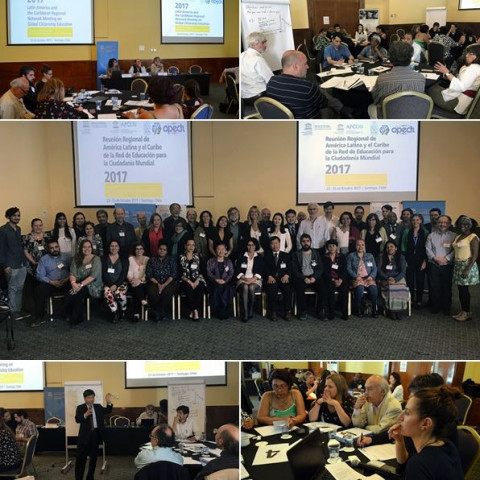 Building Solidarity and Contextualizing GCED in Latin America and the Caribbean through a Regional Network 2017-11-06 Co-organized by APCEIU and the UNESCO Regional Bureau of Education in Latin America and the Caribbean (OREALC/UNESCO Santiago) in collaboration with the University of Chile’s Chilean Observatory of Educational Policies (OPECH), the Latin America and the Caribbean Regional Network Meeting on Global Citizenship Education; “Towards a world without walls: global citizenship education in the SDG 4 - E2030 Agenda” took place on October 23-24, 2017 in Santiago, Chile. There were 45 participants representing civil society organizations, academic/research institutions and authorities from the region. This regional meeting built upon the achievements thus far in promoting GCED in the region. The meeting was composed of panel discussions and working groups on the concept of GCED and the implementation of SDG 4 Target 4.7 in Latin America and the Caribbean. On the first day, the sessions and panel discussions dealt with the concept of GCED and its adaptation in the varied contexts of Latin America. Also, panel discussion suggested the role of education systems and pedagogical strategies in the construction of a just, peaceful and more inclusive society. On the last day, the sessions included indicators and measurements of GCED and the formation of the LAC (Latin America and the Caribbean) GCED Network. The meeting discussions led to designing a framework for a LAC GCED Network. Initiating the meeting, Ms. Cecilia Barbieri, Director ai of OREALC/UNESCO Santiago expressed appreciation to APCEIU and OPECH for co-organizing the network meeting and emphasized the significance of promoting GCED in Latin America and the Caribbean. She mentioned that “The role of educational systems such as informal and non-formal pedagogy is important in developing the concept of GCED in the specific contexts within the region.” Following Ms. Barbieri, Mr. Utak Chung, Director of APCEIU, in his remark asserted that “GCED should be contextualized in the region to promote the universality of the world and particularities of the region” and quoted ‘Buen vivir’ and ‘La Convivencia’, the essential philosophy of ‘Learning to Live Together’ manifested in Latin America. To contextualize and regionalize GCED, participants discussed on ‘Hidden Citizenships’, ‘Excluded Citizenships’ and ‘Emerging Citizenships’ in Latin America. In the presentations and discussion, it was said that ‘Hidden Citizenships’ are historically denied and marginalized citizenships such as those of Afro-descent, indigenous and rural communities and ‘Excluded Citizenships’ are citizenships of migrants, children, women and displaced populations. ‘Emerging Citizenships’ suggests the rights of women and youth as deliberative actors. Also, participants debated on the global, regional and local measurements of GCED. The discussion focused on the indicators, learning assessments and evaluations to measure social transformation in Latin America. Afterwards, Mr. Jesus Redondo from Chile and Mr. Nestor Lopez from Argentina gave presentations on the importance and development of networks, followed by practical participatory activities and interactive group works where participants discussed strategies and mapped out the short/long-term objectives and activities of the regional network for GCED. Participants agreed in continuing to develop a community of practice on GCED for the region that will enhance information exchanges among network participants. Follow-up activities of the regional network for GCED is expected to be implemented leading to the next high-level education meeting of the region. URL:Building Solidarity and Contextualizing GCED in Latin America and the Caribbean through a Regional Network > APCEIU News - APCEIU (unescoapceiu.org)